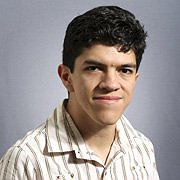
Prof. Dr.-Ing. Richard Membarth is a Research Professor for System-on-a-Chip and AI at the Edge Computing at Technische Hochschule Ingolstadt (THI). He is affiliated with the Hardware-Software Co-Design group and holds a secondary position at the German Research Center for Artificial Intelligence (DFKI) Saarbrücken. Co-creator of DSL frameworks like AnyDSL and Hipacc Key contributor to MetaDL (AI metaprogramming) and PRIME (predictive rendering) His research bridges GPU computing , domain-specific languages , and compiler technology , with recent work on Vulkan SPIR-V compilation and device-driven SpMV algorithms . Notable awards include the HiPEAC Paper Award (2018) and multiple Best Paper Awards for his compiler frameworks.
Prof. Dr. Haris Gačanin is a faculty member at RWTH Aachen University, affiliated with the Institute for Distributed Signal Processing under the College of Electrical Engineering. His research focuses on integrating machine learning with wireless communication systems, particularly in industrial IoT, edge computing, and network optimization. Current academic rank: Professor Contact: harisg@dsp.rwth-aachen.de Research Interests: Wireless systems, machine learning, signal processing, and network optimization. Key contributions include: Adaptive resource allocation in IIoT and vehicular networks AI-driven channel estimation and feedback mechanisms Security-oriented emitter identification via metric learning Federated/transfer learning for edge environments Hardware-efficient deep learning models for mmWave and THz communications Methodological Focus: Combines reinforcement learning, attention mechanisms, and robust neural architectures with practical implementations on FPGA and vehicular systems.
Jingling Xue is a Scientia Professor at the School of Computer Science and Engineering at the University of New South Wales (UNSW) in Sydney, Australia. As an IEEE Fellow of the Computer Society, he leads the Programming Languages and Compilers research group, focusing on practical applications of compiler optimization and program analysis techniques. His work bridges theoretical foundations with real-world software systems, particularly in developing open-source tools for large-scale program analysis. Professor Xue received his B.Eng and M.Eng degrees from Tsinghua University in 1984 and 1987, respectively, followed by a PhD from the University of Edinburgh in 1992. His academic journey has established him as a leading figure in programming languages and compiler technology. Xue's research spans programming languages, compiler technology, and program analysis with emphasis on practical relevance. His current projects include compiler techniques for improving parallelism and locality, pointer/alias analysis for million-line-scale programs, and static/dynamic analysis for detecting bugs and security vulnerabilities in real-world applications like web browsers and Android apps. His group actively develops open-source tools to support scientific replicability and reproducibility in these areas. His recent publications demonstrate a strong focus on applying program analysis techniques to modern challenges including AI compilers, homomorphic encryption, security vulnerability detection, and graph processing systems. The work shows evolution from traditional compiler optimization to addressing emerging domains like privacy-preserving computation and deep learning systems while maintaining rigorous theoretical foundations. Scientific Awards: Best Paper Award at CGO'13 Best Paper Award at CGO'16 Distinguished Paper Award at ECOOP'16 Distinguished Paper Award at ICSE'18 Distinguished Paper Award at ISSTA'19 Distinguished Paper Award at ASE'19 Distinguished Artifact Award at ISSTA'23 Best Artifact Award at FSE'23 Distinguished Paper Award at ASE'23 Test-of-Time Award at CGO'21 Professor Xue has successfully supervised 30 PhD students to completion, many of whom now work as professors or researchers in academia and industry. He has served as Program Chair for major conferences including LCTES'13, CC'18, CGO'20, and General Chair for LCTES'20. His group currently focuses on memory safety in Rust, smart contract analysis, AI compilers, compilation for privacy-preserving computation, and adversarial attacks in deep learning. The Programming Languages and Compilers group maintains strong connections with industry partners, translating theoretical advances into practical tools for real-world software development challenges. Their work on pointer analysis, memory safety, and compiler optimizations continues to influence both academic research and industrial practice.
Prof. Birte Glimm is a full Professor and Chair of the Institute of Artificial Intelligence at the University of Ulm. She holds leadership roles in academic governance, including as Dean of Studies for Cognitive Systems and Computer Science programs. Her research focuses on knowledge representation, automated reasoning, and semantic web technologies, with applications in autonomous systems and intelligent assistants. She has led projects like the 'Companion-Technology for Home Improvement' and contributed to standards such as SPARQL 1.1 Entailment Regimes. Education: PhD (2008) from the University of Manchester under Prof. Ian Horrocks, BSc from Hamburg University of Applied Sciences (2004), and prior industry experience in communication design. Research Interests: Development of efficient reasoning algorithms for Description Logics, ontology-based data management, and explainable AI. Her work emphasizes scalability, dynamic knowledge processing (e.g., for autonomous vehicles), and natural language explanations of automated reasoning. She co-leads the DFG-funded KEMAI research training group and previously led the BMBF project 2LIKE. Awards: Google Faculty Award (2017), Mileva Einstein-Marić-Preis (2016), and multiple best paper awards. She has served on numerous conference committees and editorial boards, including the OWL 2 Conformance Specification. Teaching: Courses on Knowledge-Based AI, Semantic Web Foundations, and programming for cognitive systems. She coordinates curricula for Computer Science and AI programs at Ulm. Labs/Teams: Institute of Artificial Intelligence; contributions to Collaborative Research Centers SFB/TRR 62 and EU projects in AI for industry.
Prof. Dr.-Ing. Richard Membarth is a faculty member at Technische Hochschule Ingolstadt , where he holds the professorship for System-on-a-Chip and AI for Edge Computing. He is also affiliated with the German Research Center for Artificial Intelligence (DFKI) as a Senior Researcher and Team Leader for Compiler Technologies and High-Performance Computing, and with the Saarland University Computer Graphics Lab . His research spans GPU computing, domain-specific languages, and compilers. PhD from Friedrich-Alexander University Erlangen-Nürnberg (2013) Postgraduate diploma from Auckland University of Technology His research focuses on: Parallel computer architectures and programming models Automatic code generation for embedded to HPC systems Image processing, computer graphics, and deep learning applications Domain-specific languages for performance-portable code Recent publications highlight compiler design, GPU acceleration, and parallel algorithms. Scientific awards include the HiPEAC Paper Award (2018) and GPCE Best Paper Award (2015) . Professional roles include organizing High-Performance Graphics conferences as Treasurer (2024-2025) and Papers Chair (2020).
Corina Dima is a Researcher at the University of Stuttgart's Analytic Computing group (KI), specializing in natural language processing and computational linguistics. Her work bridges theoretical linguistics with practical applications in semantic composition, knowledge graphs, and biomedical entity linking, with strong collaborations at both the University of Stuttgart and University of Tübingen. Dr. Dima earned her PhD from the University of Tübingen in 2019 with a dissertation on composition models for nominal compounds. Her research focuses on semantic interpretation of multi-word expressions, distributional semantics, and German language processing, contributing foundational work on transformation weighting models and annotation schemes for compound-internal relations. Her publication trends reveal a strategic evolution from core NLP challenges (prepositional phrase attachment, noun compound interpretation) toward biomedical applications (WikiMed-DE) and knowledge graph evolution (Wikidated). Recent work emphasizes German-language biomedical entity linking and efficient composition models that balance performance with parameter reduction, demonstrating consistent innovation in dataset construction and model design. As part of the Analytic Computing research group, Dr. Dima contributes to the University of Stuttgart's artificial intelligence initiatives, particularly in semantic web technologies and knowledge-driven NLP systems. Her collaborative projects with Steffen Staab and Erhard Hinrichs highlight her integration within a leading European research ecosystem focused on scalable language understanding solutions.
Yuankai Wu is a Researcher at the Chair of Media Technology , Technical University of Munich , focusing on Human Activity Understanding and Computer Vision . He received a B.Sc. in Electrical Engineering (2017) from Ruhr West University of Applied Sciences and an M.Sc. in Electrical Engineering and Information Technology (2020) from TUM. His work explores Human-Object Interaction Understanding and 3D Geometric Features for Assistive Robotics . Education : B.Sc. (Ruhr West), M.Sc. (TUM) Affiliation : Chair of Media Technology, TUM Research Themes : Human activity modeling, vision-driven robot assistance, action anticipation His publications (2022–2025) address topics like TSCL for action segmentation, MistSense for mistake detection, and Neural Painted Radiosity Fields for 3D reconstruction. Collaborative projects span embodied interaction , contextual alignment , and scan-to-CAD estimation .
Sebastian Bader is a research scientist at the Institute for Visual & Analytic Computing at the University of Rostock, where he contributes to the Chair of Mobile Multimedia Information Systems. His work bridges artificial intelligence, human-computer interaction, and healthcare applications, particularly in assistive technologies. Doctoral Degree: Dr. rer. nat. in Neural Symbolic Integration, TU Dresden, 2009 (summa cum laude) His research interests focus on neuro-symbolic AI, human activity recognition, and intelligent assistive systems for dementia care and neurorehabilitation. He investigates how AI can support clinical interventions, improve patient monitoring, and enhance explainability in medical contexts. His work emphasizes ethical considerations, real-world usability, and integration with sensor and robotic systems. The recent publications highlight a strong trend in applying AI to healthcare, particularly in modeling patient behavior, evaluating robotic assistance, and developing explainable and ethical AI systems. Topics span from underwater robotics to Alzheimer’s diagnostics, showcasing interdisciplinary expertise. He supervises Bachelor's and Master's theses on topics such as visualizing uncertainty in ML, semi-automatic test generation using LLMs, and building probabilistic digital shadows of the Port of Rostock. Sebastian Bader actively collaborates with medical researchers and industry partners, and his projects include "SAMi" (sensor-based activity management for dementia) and "E-BRAiN" (robot-assisted neurorehabilitation). He contributes to both technical AI development and real-world deployment in healthcare environments.
Wray L. Buntine is a faculty member at Monash University in Melbourne, Australia, specializing in machine learning, natural language processing, and Bayesian methods. His research bridges theoretical foundations and practical applications, with a strong focus on NLP innovations, topic modeling, and efficient learning techniques. His research interests span: Machine Learning : Bayesian neural networks, active learning, and low-resource model optimization. Natural Language Processing : Topic modeling, machine translation, LLM evaluation, and dialogue systems. AI Applications : Healthcare (e.g., medication recommendation), education (e.g., dialogue classification), and graph-based anomaly detection. Recent publications (2023–2025) demonstrate a shift toward LLM-centric research, including automatic evaluation of topic models, uncertainty-aware language agents, and logical verification frameworks. His work frequently integrates Bayesian approaches with deep learning, emphasizing model interpretability and data efficiency. While no awards or grants are detailed in the source text, Buntine leads collaborative projects across NLP and ML, often co-authoring with researchers at Monash University and international institutions. Labs or teams are not explicitly referenced.
Roland Leißa is an Assistant Professor in the School of Business Informatics and Mathematics at the University of Mannheim, Germany. His research focuses on programming languages, compilers, and domain-specific languages (DSLs) for high-performance computing across heterogeneous architectures. He teaches courses on parallel programming, compiler construction, and advanced programming topics. His work emphasizes automatic parallelization, intermediate representations, and program optimizations, particularly through partial evaluation techniques. He has contributed to tools like MimIR, AnyDSL, and FLOWER, which address challenges in GPU programming, FPGA synthesis, and ray tracing. Roland leads research on abstracting industrial and scientific application problems into reusable, theoretically sound compiler solutions. His projects span sequence alignment accelerations, dataflow compilation, and vectorization strategies, targeting modern hardware including GPUs and SIMD architectures. Contact: leissa@uni-mannheim.de | Personal Website | ORCID: 0000-0002-2444-6782
Prof. Dr. Christoph Quix is a Professor at RWTH Aachen University's Department of Information Systems & Databases. His research focuses on semantic data management, data lakes, and knowledge-driven approaches to data integration. Research interests include: Semantic foundations of dataspaces and knowledge representation Development of semantic data reservoirs (SEDAR) for heterogeneous datasets Federated data integration in distributed systems Applications in industrial contexts including Internet of Production and Industry 4.0 Knowledge graph creation and management systems (KGraphX) His recent publications demonstrate a consistent focus on semantic approaches to data management, with particular emphasis on industrial applications. The work bridges theoretical foundations of ontology-based data access with practical implementations in data lake architectures and knowledge graph systems. Currently advises PhD students on topics including: Natural language interfaces for semantic data lakes Automatic ontology mapping generation Federated learning applications in industrial data spaces
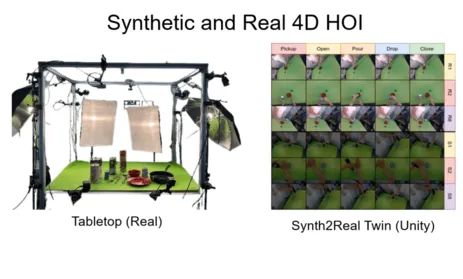
Marsil Zakour is a Ph.D. Candidate and Researcher at the Chair of Media Technology (Technical University of Munich). He holds a Master of Science in Computer Science from TUM (2021) and a Bachelor of Science in Software Engineering from Al-Baath University (2016). His work focuses on 3D reconstruction, understanding, and synthesis of hand-object interactions. Research Interests 3D Hand-Object Interaction Modeling Human Activity Understanding Computer Vision Machine Learning Key Projects Centre for Tactile Internet with Human-in-the-Loop (CeTI) 5G Testbed Bayern (eHealth focus) KMU-Innovativ: KIMaps IEEE P1918.1.1 Haptic Codecs Publications His research spans action segmentation, embodied AI, and 3D object feature modeling, with recent works on procedural mistake detection (ICCV 2025), vision-language models (CVPR 2025), and domain adaptation (IROS 2024). Supervision Zakour mentors students in projects like Hand Pose Estimation Using Multi-View RGB-D Sequences , requiring expertise in computer vision and deep learning frameworks.
Prof. Yoshiyasu Rai is an Assistant Professor of Theoretical Econometrics and Statistics at the University of Mannheim's Department of Economics. His research focuses on econometrics and statistical modeling, with a strong emphasis on machine learning and knowledge graph embeddings. He holds a Ph.D. in Economics from the University of Wisconsin-Madison and degrees from Keio University, Tokyo. His work bridges theoretical econometrics with computational methods, addressing challenges in large-scale data analysis and distributed systems. Key contributions include advancements in knowledge graph embeddings, parameter server optimization, and scalable machine learning frameworks. Education: BA and MA in Economics (Keio University), Ph.D. in Economics (University of Wisconsin-Madison). Research Interests: Theoretical Econometrics Machine Learning Applications Knowledge Graphs and Embeddings Distributed Systems for Large-Scale Data Optimization Algorithms Articles trends focus on knowledge graph embeddings, parameter server design, and scalable machine learning techniques. Recent work emphasizes adaptive systems, dynamic resource allocation, and reproducible research through libraries like LibKGE. Labs/Teams: Involved in the Junior Professorship for Theoretical Econometrics and Statistics at the University of Mannheim, focusing on interdisciplinary data analysis projects.
Armando Solar-Lezama is an Associate Professor at the Massachusetts Institute of Technology (MIT) where he leads the Computer Aided Programming Group within CSAIL. His research bridges programming languages, formal methods, and machine learning to advance program synthesis techniques for real-world applications. His primary research focuses on software synthesis with applications spanning high-performance computing, information flow security, and probabilistic programming. He investigates how to automatically generate correct and efficient programs from specifications, with recent work emphasizing neurosymbolic approaches that combine neural networks with symbolic reasoning for complex synthesis tasks. Analysis of his publication trends (2021-2025) reveals a strategic evolution from foundational synthesis algorithms toward practical applications in probabilistic programming and security-critical systems. His work consistently integrates machine learning with formal verification, demonstrating growing emphasis on coarse-to-fine synthesis methods and knowledge compilation techniques for discrete probabilistic models. Award highlights: SIGPLAN Milner Award As leader of MIT's Computer Aided Programming Group, Solar-Lezama mentors graduate researchers and collaborates across institutions. His extensive service as Program Chair for POPL 2025 and committee roles at premier conferences (PLDI, POPL, SPLASH) demonstrates significant community leadership. While specific grant details aren't provided, his sustained publication output in top venues indicates robust funding support. He directs the Computer Aided Programming Group at MIT CSAIL, which develops tools for program synthesis, verification, and analysis. Current projects focus on neurosymbolic programming frameworks, probabilistic program synthesis, and security-aware compilation techniques that integrate information flow control with high-performance computing optimizations.
Dr. Michael Johannes Barz is an Associated Member at the Deutsches Forschungszentrum für Künstliche Intelligenz (DFKI) in Saarbrücken, Germany, where he conducts research within the Ubiquitous Media Technology Lab (UMTL). His work bridges human-computer interaction with artificial intelligence, focusing on gaze-based interaction, eye tracking, and interactive machine learning systems. Dr. Barz has established himself as a significant contributor to the field with over 50 publications spanning from 2015 to 2024. His research interests center on gaze-based interaction , mobile eye tracking , user modeling , and interactive machine learning , with recent work expanding into cognitive load measurement using digital pen technology and mixed reality applications for industrial training. Dr. Barz has developed influential tools like IMETA for eye tracking annotation and pEncode for visualizing pen signals, demonstrating his commitment to creating practical research methodologies. Dr. Barz's publication record shows consistent contributions to top-tier conferences including ACM ETRA, IEEE VR, and the International Conference on Intelligent User Interfaces. His 2022-2024 work reveals increasing focus on making AI systems more transparent and interactive, with publications on explaining machine learning model explanations and interactive deep learning frameworks. His research often involves interdisciplinary collaboration across computer science, cognitive science, and educational technology. Special recognition for an outstanding review at ACM ETRA 2020 Active conference reviewer for IJCAI, ACM IUI, KI, ACM ETRA, and IEEE VR Journal reviewer for Journal of Eye Movement Research Dr. Barz has contributed to teaching as an assistant for 'Intelligent User Interfaces' at TU Kaiserslautern and 'Artificial Intelligence' at Saarland University. His current research suggests strong engagement with both theoretical advancements in interactive machine learning and practical applications in educational and industrial contexts, particularly through the MASTER-XR project for mixed reality manufacturing training. The Ubiquitous Media Technology Lab provides the collaborative environment where Dr. Barz develops his innovative approaches to human-AI interaction.