Dr. Stefan Klus is a Lecturer at the School of Mathematics and Physics, University of Surrey. His research focuses on data-driven model reduction, transfer operator approximation, and kernel-based machine learning applied to dynamical systems. He specializes in interdisciplinary applications across quantum physics, fluid dynamics, and computational biology. Education: PhD in Industrial Mathematics (2011, Paderborn University) and Habilitation (2020, Freie Universität Berlin). Research Interests : Data-driven modeling and reduced-order methods Koopman operator theory and transfer operators Machine learning for dynamical systems (e.g., Deeptime library) Tensor decompositions and quantum systems analysis Graph-based analysis (e.g., microbiome dynamics) Publications : Klus has contributed to over 50 peer-reviewed articles, with recent work emphasizing: Kernel methods for quantum chemistry and physics Tensor-based approaches for high-dimensional systems Applications in climate science (e.g., Pacific SST modeling) Agent-based modeling and social systems Technical Contributions : Co-developer of the Deeptime Python library for dynamical modeling Pioneer in Koopman operator-based model reduction Advanced graph kernel methods for microbiome analysis
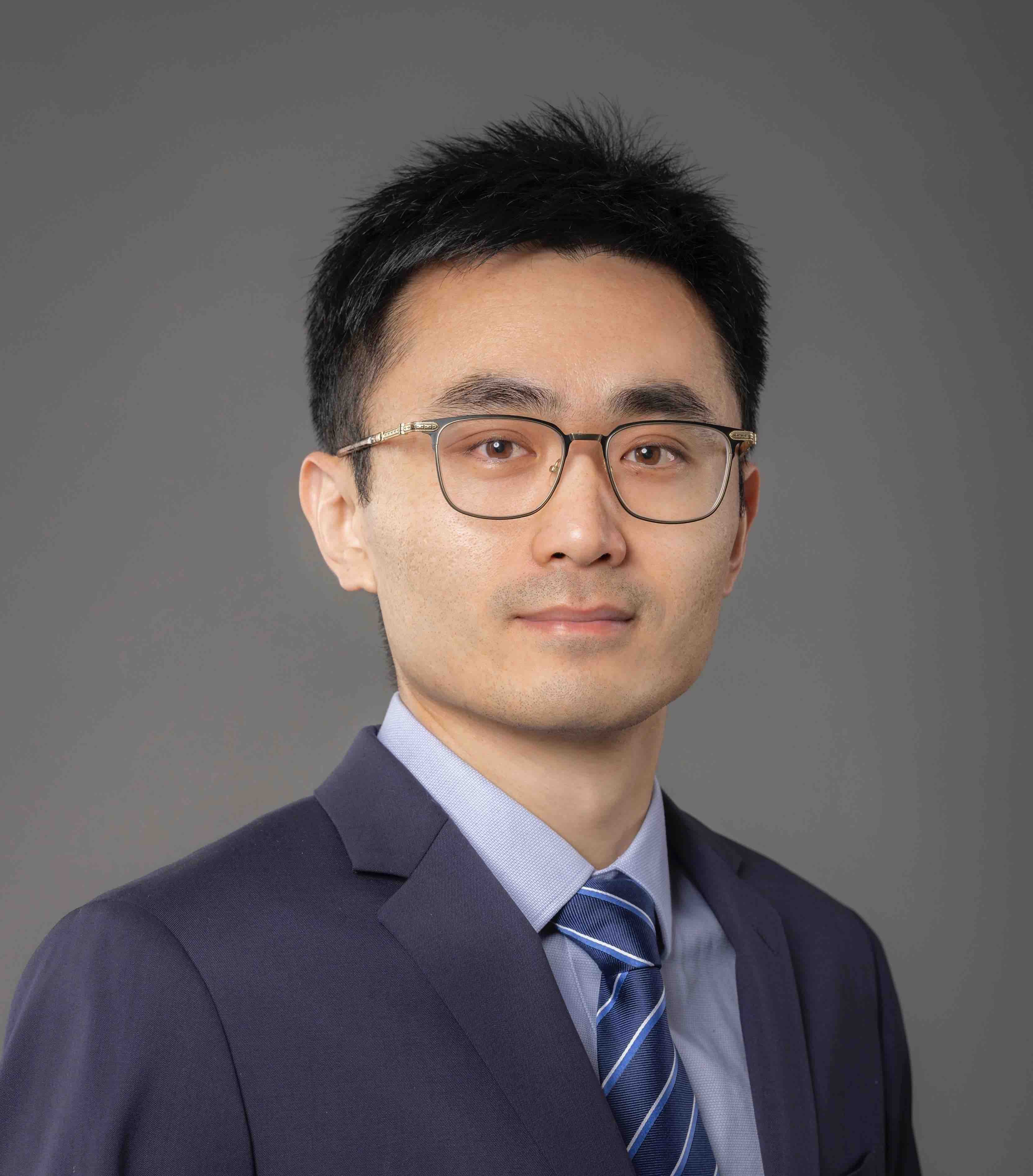
Xiajun Jiang is an Assistant Professor in the Department of Computer Science at the University of Memphis, joining in Fall 2024. He holds a PhD in Computing and Information Sciences from Rochester Institute of Technology (2024), an M.S. in Computer Science from the University of Southern California (2018), and a B.S. in Electrical Engineering and Automation from Zhejiang University (2016). His research focuses on adaptive AI computing, physics-informed deep learning, and their applications in healthcare, particularly in medical imaging and cardiac simulation. Key contributions include hybrid neural state-space modeling for electrocardiographic imaging and physics-informed frameworks for bi-ventricular electrophysiological simulations. Education: PhD, Rochester Institute of Technology, 2024 M.S., University of Southern California, 2018 B.S., Zhejiang University, 2016 Research Interests: Machine learning for healthcare Adaptive computing in AI models Physics-informed deep learning His work bridges machine learning and biomedical engineering, with applications in cardiac imaging and electrophysiology. Recent articles highlight advancements in hybrid models for ECGI and meta-learning approaches for personalized cardiac simulations. He has reviewed for top conferences like ICLR, NeurIPS, and MICCAI, and contributed to projects like the Computational Biomedical Lab (CBL).
Dr. Min Liu is a Professor and the Abdallah H. Yabroudi Endowed Professor in Sustainable Civil Infrastructure at Syracuse University, where she directs the Syracuse University Infrastructure Institute. She holds a Ph.D. in Engineering Project Management from UC Berkeley, and prior degrees from National University of Singapore and Xi’an University of Architecture and Technology. Her research focuses on integrating human and engineering aspects in construction planning, with emphasis on Lean Construction, Digital Twin design, and machine learning applications. She has published over 50 articles in top-tier journals and won prestigious awards such as the 2021 ASCE Thomas Fitch Rowland Award. Dr. Liu advises numerous graduate students and postdocs, offering positions in Construction Engineering and Management. Her lab develops innovative approaches for infrastructure project delivery, worker mental health, and bridge preservation strategies. Education: Ph.D. in Engineering Project Management, UC Berkeley (2007) MSCE, Xi’an University of Architecture and Technology (1997) MSc in Building Science, National University of Singapore (2001) BSc in Civil Engineering, Qingdao University of Technology (1994) Research Highlights: Large language models for construction planning reliability Ontology-based knowledge systems for construction methods Lean techniques for worker mental health improvement Socioeconomic analysis of bridge preservation strategies Awards: 2021 ASCE Thomas Fitch Rowland Award Multiple Best Paper Awards (2017-2018) "Thank a Teacher" awards (2011-2018) Her advising record includes notable students like Chuanni He (2023 Chinese Government Award) and Gongfan Chen (2022 Three-Minute Thesis Award). Current opportunities include Ph.D. financial support and postdoc positions. Dr. Liu’s work appears in journals like ASCE Journal of Management in Engineering and Engineering, Construction and Architectural Management.
Dr. Wibowo Hardjawana is a Senior Lecturer in Telecommunications Engineering at the School of Electrical & Computer Engineering , University of Sydney. He holds a PhD from the University of Sydney and serves as an ARC DECRA Research Fellow. His research focuses on wireless network softwarisation, enabling programmable radio interfaces to address traffic elasticity in 5G/6G systems. Education : PhD (University of Sydney) Grants : ARC DP210100744 (2021), ARC DECRA DE140101114 (2014) His work spans 5G/6G network architectures , machine learning for wireless systems , and open radio interfaces . Key contributions include graph representation learning for interference management, Bayesian neural network detectors for OTFS modulation, and NOMA decoding techniques . Recent publications analyze ultra-reliable low-latency communications , UAV-enabled networks , and stochastic geometry in wireless systems . He has collaborated with institutions in China, Indonesia, and UAE, and engaged with industry partners like Telstra and Ausgrid.
Ken Duffy is a Professor and Chair of the Department of Mathematics at Northeastern University, with a joint appointment in the Department of Electrical and Computer Engineering. He joined Northeastern in 2023 and previously served as Interim Chair of the latter department. Previously, he was a professor at the National University of Ireland, Maynooth, where he directed the Hamilton Institute (2016–2022) and co-directed the Science Foundation Ireland Centre for Research Training in Foundations of Data Science. He earned a PhD in Mathematics from Trinity College Dublin. His research focuses on collaborative, multi-disciplinary algorithm design using probability and statistics, with applications in digital circuits, DNA, and network coding. Notable contributions include the Royal Statistical Society’s Applied Probability Section (co-founded in 2011) and numerous award-winning papers in IEEE conferences and journals. Recent work emphasizes decoding algorithms like GRAND (Guessing Random Additive Noise Decoding), applied to error correction, wireless systems, and biomedical imaging. His articles address topics like soft-output decoding, interference mitigation, and cellular lineage tracing. Awards: Best Paper Awards (IEEE ICC 2015, IEEE TNSE 2019), COMSNETS Best Demo (2022–2023), and the IEEE Ellersick Award (2024). Advising: The SFI Centre he co-directed funded over 120 PhD students. Labs/Teams: Hamilton Institute, Royal Statistical Society’s Applied Probability Section, and collaborative projects in cellular dynamics and secure communication.
Dr. Vagelis Papalexakis is an Associate Professor and Ross Family Chair in the Computer Science & Engineering Department at the University of California, Riverside. His research focuses on data science, machine learning, and tensor methods, with applications in multi-aspect/multi-modal data analysis. He holds a Ph.D. from Carnegie Mellon University and a Diploma/M.Sc. from the Technical University of Crete. Affiliations: Ross Family Chair, Bourns College of Engineering, UCR Education: Ph.D. in Computer Science, Carnegie Mellon University M.Sc./Diploma in Electronic & Computer Engineering, Technical University of Crete His work emphasizes interpretable insights from complex datasets, including tensor-based defenses against adversarial attacks, graph representation learning, and scalable algorithms for high-dimensional data. Notable awards include the NSF CAREER Award (2021), IEEE DSAA Next Generation Award (2021), and ICDM Tao Li Award (2022). Grants include NSF funding for railway safety (CISE MSI: RPEP CPS), USDOT transportation research, and NVIDIA GPU grants. He leads projects in AI ethics, misinformation detection, and gravitational wave analysis. His lab collaborates with industry (e.g., Cisco, Instacart) and national labs (e.g., Lawrence Livermore).
Ling Zhao is a distinguished Professor at the School of Management, Huazhong University of Science and Technology, China, with extensive research contributions spanning artificial intelligence, machine learning, information systems, and biomedical applications. With over 150 publications since 2008, Dr. Zhao has established herself as a leading researcher in multiple interdisciplinary domains, particularly in applying computational methods to solve complex real-world problems. Dr. Zhao's research interests encompass a broad spectrum of cutting-edge topics including artificial intelligence, machine learning, data mining, control systems, and information systems. Her work demonstrates exceptional versatility, bridging theoretical computer science with practical applications in healthcare, transportation, cybersecurity, and business management. Notably, she has made significant contributions to sentiment analysis, medical image processing, algorithmic management, and privacy-preserving data analysis. Her research methodology often combines deep learning approaches with domain-specific knowledge to develop innovative solutions. Analysis of Dr. Zhao's recent publications (2023-2025) reveals a strong focus on interdisciplinary applications of AI, with particular emphasis on healthcare informatics (medical image analysis, disease diagnosis), human-computer interaction (algorithmic management effects), and advanced machine learning techniques (graph neural networks, multimodal learning). Her work shows a consistent trend toward increasingly complex and integrated systems that address real-world challenges across multiple domains. Dr. Zhao has made substantial contributions to academic advising and research mentorship, though specific student names aren't detailed in the available publications. Her research has been supported by various grants enabling work in AI applications, biomedical engineering, and information systems. Dr. Zhao maintains active collaborations with researchers across China and internationally, as evidenced by her co-authorship patterns. While specific laboratory information isn't explicitly mentioned in the publication records, Dr. Zhao appears to lead or be significantly involved in research groups focusing on AI applications in management and healthcare. Her work on medical imaging, sentiment analysis, and control systems suggests involvement in multiple specialized research teams addressing different application domains through computational approaches.
Bohan Chen is a Postdoctoral Scholar Research Associate in the Department of Computing and Mathematical Sciences. Their work focuses on advancing graph-based machine learning techniques and their applications in environmental science, remote sensing, and AI-driven analysis. Research interests include graph neural networks, active learning strategies, hyperspectral image analysis, and knowledge graph integration. Notable contributions include the development of the GLL layer for neural networks, the CUSP permafrost dataset, and hybrid models for multispectral image processing. Key research trends span theoretical advancements in graph-based learning and practical applications such as environmental monitoring, SAR data analysis, and pandemic modeling. Their work bridges computational methodologies with real-world environmental and societal challenges. Advising and grants: No student advisees listed. Contributions include foundational research without explicit grant mentions in provided text. Labs/teams: No specific lab or team affiliations mentioned in the text.
Diego Garlaschelli is a Professor of Theoretical Physics at Leiden University, affiliated with the Leiden Institute of Physics (LION) and the Biological, Soft and Complex Systems department within the Faculty of Science. His research focuses on the structure, dynamics, and physics of complex networks in financial, economic, social, neural, and biological systems. Combining statistical physics, information theory, and data science, his group explores interdisciplinary topics such as systemic risk in financial networks, mesoscopic organization in neural systems, and mathematical modeling of networks using maximum-entropy ensembles. Garlaschelli’s work emphasizes collaboration across fields like mathematics, computer science, economics, and neuroscience. Recent grants include NWO Open Competition funding for projects on network theory and systemic risk. He advises several PhD candidates, including Alessio Catanzaro, Francesca Giuffrida, and Jingjing Wang. His publications span high-impact journals like Nature Physics , Nature Reviews Physics , and Science , addressing topics from ensemble equivalence in networks to cultural diversity models. Key research themes include: (1) statistical physics of constrained systems, (2) financial network reconstruction from limited data, (3) early-warning signals for economic instabilities, and (4) information-theoretic bounds for large data structures. Garlaschelli co-leads the Leiden Complex Network Network (LCN2), fostering Dutch network science collaboration.
Sandrine Dudoit is a Professor and Chair of the Department of Statistics at the University of California, Berkeley. She earned her PhD in Statistics from UC Berkeley in 1999 and joined the faculty in 2001. Her research focuses on statistical methodology and computing with applications to genomics, biomedical research, and precision health. She co-founded the Bioconductor Project , an open-source software initiative for biological data analysis, and leads interdisciplinary projects in single-cell transcriptomics and computational biology. Education: PhD in Statistics (UC Berkeley, 1999), M.Sc. in Mathematics (Carleton University, Canada). Research interests include high-dimensional statistical learning, single-cell RNA-Seq analysis, stem cell differentiation in the olfactory system, and statistical computing. She collaborates with biologists like John Ngai to study neuroepithelial regeneration using cutting-edge sequencing technologies. Recent work emphasizes trajectory inference, biomarker discovery, and methodological advances in handling high-dimensional genomic data. Her lab develops tools for normalization, clustering, and differential expression analysis in large-scale biological datasets. She teaches courses on statistical genomics and serves as a leader in UC Berkeley’s Division of Computing, Data Science, and Society (CDSS). Advising: Supervises PhD students in statistical methodology, computational biology, and bioinformatics. Grants: Active in securing funding for interdisciplinary research projects in genomics and data science. Labs/Teams: Core member of the Center for Computational Biology (CCB) and contributes to the Bioconductor community.
Ivan Viola is an Associate Professor at the Institute of Computer Graphics and Algorithms, part of the Faculty of Informatics at TU Wien, Austria. He holds a leave of absence until December 2024 while also being affiliated with King Abdullah University of Science and Technology (KAUST) as an Associate Professor funded by the Vienna Research Groups program. His research focuses on visualization techniques in medicine, biological sciences, and earth sciences, with a specialty in illustrative visualization and DNA-nanotechnology applications. Viola has contributed over 100 scientific works and serves as a reviewer and panelist for major conferences in computer graphics and visualization. Education: M.Sc. (2002) and Ph.D. (2005) in Computer Graphics from TU Wien. Postdoctoral research at the University of Bergen (2006-2011), where he became Full Professor before returning to TU Wien. Research Interests: Whole-cell visualization Molecular modeling Interactive 3D environments Biomedical visualization Data-driven colormap techniques Awards: IEEE VIS 2017 Best Paper Honorable Mention, 'Best Overall Concept' for CellView, and multiple visualization awards. Active in EuroVis and IEEE VIS organizing roles. Grants & Supervision: Leads the Visualization Group at TU Wien, supervising student projects and master’s theses. Involved in grants like the Vienna Research Groups program. Labs/Teams: Visualization Group at TU Wien, collaborating on projects like CellView and Molecumentary.
Patrick T. Brandt is a Professor of Political Science, Public Policy, and Political Economy at the University of Texas at Dallas , affiliated with the School of Economic, Political and Policy Sciences . His work integrates advanced statistical methods with political science, focusing on time series analysis, machine learning, and Bayesian modeling to study political dynamics. His research spans international relations , political economy , terrorist targeting , and conflict forecasting . He specializes in developing novel models for event count time series, including the Bayesian Poisson Vector Autoregression and MS-BVAR packages for R. His NSF-funded projects focus on event data generation and real-time conflict forecasting. Recent publications emphasize domain-specific language models (ConfliBERT variants), graph neural networks for conflict prediction, and machine translation challenges in political text analysis. He maintains the OpenEvent Data Repository and develops software like MSBVAR and PESTS for academic use. Scientific Awards : Robert H. Durr Award for Best Methodology Paper, Midwest Political Science Association (2006)
Dr. Matt Bonney is a Lecturer in Space Engineering at Swansea University, affiliated with the School of Aerospace, Civil, Electrical and Mechanical Engineering. He holds a position in the Department of Aerospace Engineering and is actively involved in postgraduate supervision. His research focuses on digital twin technology, nonlinear structural dynamics, mechanical joint modeling, seismic reliability, and uncertainty quantification, with recent emphasis on digital twin security and thermo-mechanical coupling in assembled structures. Dr. Bonney's expertise spans multi-physics joint modeling and multi-disciplinary development of digital twins, with international collaborations. He teaches modules such as 'Advanced Space Systems' (EG-M334) and 'Aerospace Systems' (EGA220), emphasizing space system design, orbital mechanics, and cyber-physical security. His research highlights include the development of a Python Flask-based digital twin operational platform, contextualization of information in digital twin processes, and experimental studies on frictional interfaces. His work on uncertainty quantification and seismic reliability has applications in nuclear reactor systems and civil engineering structures. Dr. Bonney currently supervises a PhD student focusing on nonlinearities in thermal-mechanical joints. His research outputs include over 30 peer-reviewed publications, with contributions to journals like Mechanical Systems and Signal Processing and Data-Centric Engineering .
Dr hab. Krzysztof Węcel serves as Professor and current Head of the Department of Economic Informatics at Poznan University of Economics and Business (UEP), appointed on October 4, 2024. His primary affiliation spans over 25 years with UEP's Department of Economic Informatics, which maintains one of Poland's longest-running academic websites since 1998. He holds dual recognition through habilitation from University of Potsdam (2020) and professorship conferred by UEP (June 24, 2020). His academic milestones: Habilitation degree in Economic Informatics, University of Potsdam (2020) Professor title, Poznan University of Economics and Business (2020) Węcel's research centers on Semantic Technologies and data quality assessment across multilingual Wikipedia, with emphasis on company information verification, citation analysis, and open data applications. His work bridges Big Data analytics with practical business solutions, particularly in maritime logistics where he pioneered evolutionary algorithm-based AIS data processing. Current investigations focus on generative AI's dual role in creating and combating disinformation, including ChatGPT's impact on academic writing and fake news propagation. Recent publications (2022-2025) reveal three dominant trends: First, systematic analysis of Wikipedia's reliability across languages during crises like the pandemic and Ukraine war. Second, development of AI-driven fact-checking frameworks (e.g., OpenFact project's CLEF 2023 victory). Third, exploration of generative AI's societal impact ranging from student creativity to disinformation campaigns. Scientific awards received: Best Paper Award at ICIST 2017 Conference Award for most innovative article at NATCON 2018 conference Microsoft Azure for Research Award (2016) As academic advisor, he leads the 'Semantic Technologies' diploma seminar attracting high-achieving students, with participants winning the 29th UEP Foundation Competition (2025) and Eurostat's Web Intelligence Challenge (2024). His grant portfolio includes the 'Maritime Big Brother' project (2017) for ship voyage prediction using AIS data and Microsoft Azure funding for Wikipedia quality enhancement. Ongoing initiatives include OpenFact (fake news detection) and GOBLIN projects. He actively collaborates with SKN Data Science student circle (evidenced by 2024/2025 inaugural meeting) and international consortia like CLEF and QOD workshops. Departmental leadership involves managing the OpenFact research team that achieved top results in CheckThat! Lab competitions, alongside maritime data analytics groups applying evolutionary algorithms to shipping networks.
Yan Huang is an Associate Professor in the Department of Software Engineering and Game Development at Kennesaw State University (KSU). His work bridges Federated Learning (FL) and Cybersecurity Education , with a focus on personalization and privacy in distributed systems. Research spans Machine Learning , Extended Reality (XR) , and Data Privacy . He has served as Editor of WCMC and Program Co-Chair for CyberSciTech 2020-2024. Research Trends: Recent publications emphasize Federated Learning for non-IID data, VR-based Cybersecurity Education , and Privacy-Preserving Algorithms in IoT and social media analytics. Key subfields include personalized learning architectures, graph learning, and game-theoretic privacy frameworks. Scientific Awards: Excellent Paper Award (Tsinghua Science and Technology, 2021) Best Paper Award (Future Generation Computer Systems, 2019) Best Paper Awards at IEEE SmartWorld 2021, COCOA 2019, and WASA 2019 Grants: Led over $600,000 in NSF and NSA-funded projects, including VR cybersecurity education for K-12 and XR engineering curricula. His lab recruits VR/AR Research Assistants via industry partnerships.