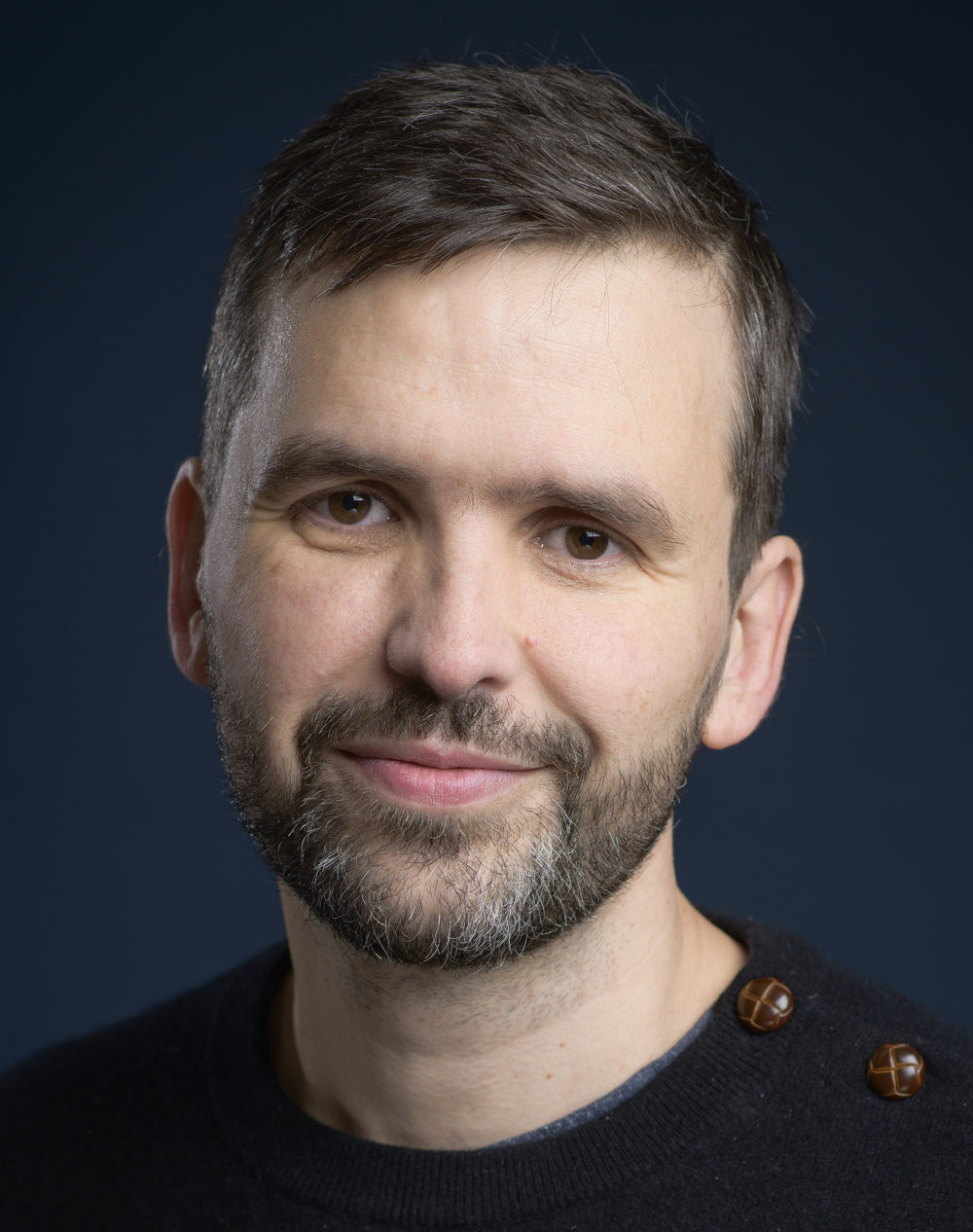
Kasper Green Larsen is a Professor in the Department of Computer Science at Aarhus University. His research focuses on theoretical computer science, machine learning, algorithms, and data structures. He has made significant contributions to boosting algorithms, PAC learning theory, and computational geometry. His work often bridges algorithm design with complexity theory, addressing challenges in optimization, memory efficiency, and lower bounds analysis. Key research areas include: Algorithmic Learning Theory (e.g., boosting, bagging, and PAC learners) Data Structure Design (e.g., invertible Bloom tables, succinct representations) Computational Complexity (e.g., lower bounds for dynamic and oblivious algorithms) Geometric Algorithms (e.g., hierarchical searching, range queries) Recent publications emphasize foundational advancements in learning theory (e.g., optimal weak-to-strong learning) and data efficiency (e.g., memory-reduced Bloom filters). His work frequently appears in top conferences like IJCAI, ICALP, and SODA, reflecting rigorous theoretical contributions with practical implications.
David Kempe is a Professor in the Thomas Lord Department of Computer Science at the University of Southern California (USC), part of the Viterbi School of Engineering. His research focuses on algorithms, theoretical computer science, and their applications to networks, auctions, mechanism design, and information flow. He has advised numerous Ph.D., M.S., and undergraduate students, many of whom now hold prominent roles in academia and industry. His research has been supported by grants including NSF CAREER, Sloan Fellowship, and ONR Young Investigator awards. Kempe organizes conferences such as STOC 2018 and co-founded the USC Theory Group, fostering collaboration through regular meetings and seminars. His work bridges algorithmic foundations with real-world applications, addressing challenges in fairness, network dynamics, and machine learning. Key achievements include developing voting rules with optimal metric distortion and algorithms for fair matching under uncertainty. His publications span influential topics in social networks, game theory, and data science. Collaborations with industry (e.g., Facebook, Snapchat) highlight applied contributions to recommendation systems and media matching.
Professor Zhifeng Bao is a faculty member at RMIT University's School of Computing Technologies. His research focuses on enhancing data usability across heterogeneous domains, including structured, unstructured, and spatial-temporal data. His work spans database management, keyword search optimization, social network analysis, and spatio-textual data processing. He coordinates the course COSC1169: Intranet and Internet Data Engineering and supervises PhD/Masters students in projects such as trajectory data processing, data asset valuation, and edge computing optimization. Research interests emphasize improving data accessibility and efficiency through methodologies like query relaxation, visual analytics, and provenance tracking. His recent projects include cost-effective edge node placement, traffic accident risk prediction, and differentially private federated learning. Teaching and supervision activities highlight a commitment to bridging theory and practical data engineering challenges.
Affiliations and Roles Michael Bronstein is a Professor at the Università della Svizzera italiana (USI) in the Faculty of Informatics and the Institute of Computational Science . He holds the Chair in Machine Learning and Pattern Recognition at Imperial College London and serves as Head of Graph Learning Research at Twitter . Previously, he was affiliated with the Dalle Molle Institute for Artificial Intelligence (IDSIA USI-SUPSI) as an Adjunct Professor. Education Ph.D. in Computer Science, Technion–Israel Institute of Technology (2007) Visiting appointments at Stanford University, MIT, Harvard University, and Tel Aviv University Research Interests Bronstein's work focuses on geometric deep learning , graph representation learning , and non-rigid shape analysis . He pioneered methods for extending machine learning to non-Euclidean domains like graphs and manifolds. His research combines theoretical advancements in spectral geometry with practical applications in computer vision, robotics, and medical imaging. Publications Trends His articles emphasize geometric deep learning frameworks, functional maps for shape correspondence, and spectral methods for manifold analysis. Key themes include invariant representations, partial shape matching, and applications in 3D reconstruction and graph neural networks. Awards and Honors Five ERC Grants Royal Society Wolfson Research Merit Award IEEE and IAPR Fellowships World Economic Forum Young Scientist Advising and Entrepreneurship Bronstein is a serial entrepreneur, founding companies like Novafora , Invision (acquired by Intel), and Fabula AI (acquired by Twitter). His academic advising spans PhD and Master’s students in machine learning and geometry processing. Labs and Teams Active in the Institute of Computational Science at USI and leads Twitter’s Graph Learning Research team, focusing on real-world applications of geometric deep learning.
Prof. Keng Hock, Mark Goh is a Professor at the National University of Singapore (NUS) Business School, holding a joint appointment as Director (Industry Research) at The Logistics Institute-Asia Pacific (TLI-AP). He specializes in logistics, supply chain strategy, and operations research. He earned his PhD from the University of Adelaide on a fully funded scholarship and has held adjunct and visiting roles globally. His research focuses on supply chain risk management, healthcare logistics, and strategic decision-making, with over 400 publications in top journals. Notable contributions include work on multi-criteria supplier selection, supply chain resilience, and AI ethics in e-commerce. He has received the Supply Chain Educator Award and is recognized in global directories like *Who’s Who in Asia and the Pacific Nations*. Prof. Goh advises public and private sector organizations on logistics strategy and sits on industry committees such as the World Economic Forum’s Global Advisory Council on Logistics. His current projects emphasize syncretic value-driven logistics models and sustainable recycling frameworks. He leads collaborative research teams addressing global supply chain challenges through interdisciplinary approaches. His articles reflect cutting-edge advancements in AI-driven decision models, risk networks in construction, and data ownership strategies in digital platforms. These contributions underscore his role as a thought leader in logistics and operations research, blending academic rigor with real-world industry applications.
Camelia D. Brumar is a PhD Candidate in Computer Science at Tufts University and a Visiting PhD Student at Harvard University's Visual Computing Group. She co-founded Boston Vis , a collaborative network for visualization researchers in the Greater Boston Area. Education: B.S. in Theoretical Mathematics from University of Maryland, College Park Research Focus: Systematic visualization design for decision-making processes, bridging gaps between problem spaces and design spaces through qualitative methods Her work intersects Visual Analytics , Human-Computer Interaction , and Machine Learning , with recent publications on decision-making taxonomies, dimensionality reduction explanations, and knowledge graph visualization. Key trends include: Interactive predicate logic for pattern explanation Domain expert challenges in automated data science Anomaly reasoning frameworks Medical AI applications for embryo grading Scientific Achievements: Organizer of Boston Vis (2024) Tutorial presenter on LLMs for research paper interaction (2024) IEEE Visualization 2024 Doctoral Colloquium participant Contributor to Dagstuhl Seminar on provenance in automated data science (2023) Industry experience includes roles at Tableau Research , Alife Health , and Bose Corporation , with collaborations spanning MIT Lincoln Laboratory, National Renewable Energy Laboratory, and Worcester Polytechnic Institute.
Tiago Prince Sales is an Assistant Professor in the field of Semantics, Cybersecurity & Services, actively contributing to foundational research in conceptual modeling, ontology, and information systems. His work bridges formal methods with practical applications in digital platforms, cybersecurity, and knowledge representation. Assistant Professor, Semantics, Cybersecurity & Services Active in international research communities (FOIS, ER, BPMDS, RCIS) Key focus: Ontology, Domain Modeling, Interoperability, Digital Platforms Recognized with multiple best paper awards His research centers on the development and application of formal conceptual models using frameworks such as OntoUML and the Unified Foundational Ontology (UFO). He investigates how domain models can enhance system design, improve interoperability, and support risk analysis in complex information systems. His work often integrates empirical insights with theoretical rigor, aiming to address real-world challenges in modeling. The recent publications highlight a strong trend toward ontological engineering in cybersecurity (e.g., phishing attack modeling), digital platform taxonomy, and FAIR data planning. These works demonstrate a consistent focus on creating reusable, semantically rich models that support both human understanding and machine processing across domains. The integration of modeling with data science and security indicates a forward-looking research agenda. Best paper award at FOIS 2023 Best paper award at ER 2022 EMMSAD 2025 Best paper award Tiago Prince Sales actively mentors and collaborates with researchers, though no formal students are listed. He has secured recognition through competitive awards and leads significant research outputs, including datasets and open models. His involvement in organizing top-tier conferences such as FOIS 2024 reflects leadership in the academic community. While specific grants are not listed, his productivity suggests external funding support. He contributes to open science through Zenodo-hosted datasets like the OntoUML Vocabulary and GO-Plan method, and participates in collaborative teams focused on knowledge graphs, FAIRification, and model-driven engineering. His role in organizing the FOIS 2024 conference underscores his integration within leading research networks in formal ontology and conceptual modeling.
Ammar Mian is an Associate Professor at Université Savoie Mont Blanc, affiliated with the LISTIC lab and Polytech Annecy-Chambéry. He holds a PhD from CentraleSupélec (2016-2019) and conducted postdoctoral research at Aalto University (2019-2020). His research focuses on statistical signal processing, machine learning, and Riemannian geometry with applications in remote sensing and frugal computations. He leads the Qanat project, an experiment tracking tool for reproducible research. Research interests include covariance-based methods for SAR image analysis, robust detection algorithms for sonar and GPR systems, and optimization on Riemannian manifolds. His work emphasizes reproducibility in ML and efficient computational techniques for resource-constrained environments. Key contributions include real-time SAR time-series change detection, robust classification using second-order deep learning models, and novel methods for handling missing data in EEG signals. His recent articles (2023-2025) explore reproducibility frameworks, GPR-based object classification, and Riemannian geometry applications. No awards listed, but maintains active collaborations through LISTIC and industry partnerships. Advises students via internship programs (e.g., Federated ML energy cost analysis). Lab work involves developing open-source tools like Qanat for experiment management and reproducibility.
Schahram Dustdar is a Full Professor of Computer Science and head of the Distributed Systems Group at TU Wien (Vienna University of Technology), Austria. He has held significant international academic positions, including Honorary Professor at the University of Groningen (2004–2010) and Visiting Professor at the University of Seville (Dec 2016–Jan 2017) and UC Berkeley (Jan–Jun 2017). His research interests lie at the intersection of distributed computing, cloud services, and intelligent data systems. He actively contributes to advancing the fields of services computing, cloud infrastructure, web technologies, and data-driven financial modeling. His work emphasizes scalable, robust, and knowledge-aware systems, particularly in financial data visualization and transaction network analysis. The most recent publications highlight his focus on modeling financial transaction networks using constraint satisfaction and developing visualization frameworks that incorporate incremental domain knowledge. These works reflect a strong trend toward integrating formal methods with interactive data systems for enterprise and financial applications. ACM Distinguished Scientist (2009) IBM Faculty Award (2012) IEEE Fellow (2016) Elected Member of Academia Europaea Schahram Dustdar has supervised multiple research projects and leads a vibrant research group at TU Wien. He has been involved in editorial leadership as Editor-in-Chief of Computing (Springer) and Associate Editor for top-tier journals such as IEEE Transactions on Cloud Computing, IEEE Transactions on Services Computing, ACM Transactions on the Web, and ACM Transactions on Internet Technology. His editorial roles and international visiting positions indicate extensive collaboration and grant-related activities, though specific grants are not detailed in the text. He leads the Distributed Systems Group at TU Wien, a research team focused on building next-generation distributed computing platforms, cloud services, and intelligent data processing systems with real-world applications in finance, enterprise systems, and large-scale data analytics.
Christian Kühn is a Professor of Multiscale and Stochastic Dynamics at the Technical University of Munich (TUM), affiliated with the TUM School of Computation, Information and Technology. He has been an External Faculty member at the Complexity Science Hub Vienna since 2017, reflecting his interdisciplinary engagement in complex systems research. His academic background includes a BSc in Mathematics from Jacobs University Bremen (2005), an M.A.St. from the University of Cambridge (2006), and a PhD in Applied Mathematics from Cornell University (2010). He held postdoctoral positions at the Max Planck Institute for the Physics of Complex Systems in Dresden and the Vienna University of Technology, where he also served as an APART-Fellow and Leibniz Fellow. Christian Kühn's research lies at the intersection of differential equations, dynamical systems, and mathematical modeling. He focuses on multiscale problems, the impact of noise and uncertainty in deterministic and stochastic systems, and adaptive networks. Central phenomena of interest include bifurcations, pattern formation, and scaling laws. His work bridges theoretical developments with applications in epidemiology, neuroscience, and complex network dynamics. His recent publications (2021–2024) reflect a strong trend in analyzing nonlinear and stochastic dynamics on networks, with applications ranging from epidemic modeling to synchronization and critical transitions. Key themes include explosive phenomena, adaptive network behavior, moment closure methods, and non-Markovian systems, demonstrating a consistent focus on foundational aspects of dynamical systems with practical relevance. Notable scientific awards include: Richard-von-Mises Prize, GAMM (2017) Lichtenberg Professorship, VolkswagenStiftung (2016) Best Paper Award, TU Vienna (2014) Leibniz Fellow, Oberwolfach (2013) APART-Fellow, Austrian Academy of Sciences (2012) While specific details about advised students are not provided, his role as a full professor and active researcher suggests involvement in mentoring graduate students and postdoctoral researchers. His work has been supported by prestigious grants such as the Lichtenberg Professorship. He leads research in multiscale and stochastic dynamics, contributing to both theoretical advances and interdisciplinary applications. Kühn is part of vibrant research environments at TUM and the Complexity Science Hub Vienna, collaborating with leading scientists in network science, applied mathematics, and complex systems. His work continues to advance the understanding of critical transitions and nonlinear behavior in high-dimensional and stochastic systems.
Raphaël Troncy is an Assistant Professor at EURECOM's Data Science Department, specializing in Semantic Web technologies, Knowledge Graphs, and Natural Language Understanding. He teaches courses like 'Human-computer interaction for the Web' and 'Semantic Web technologies.' His research focuses on semantic data integration, knowledge graph applications, and recommender systems. Notable projects include DOREMUS (musical work graph), entity2rec (knowledge graph-based recommendations), and 3cixty (city exploration knowledge bases). He actively contributes to semantic web challenges and conferences, winning multiple awards including the 2018 Best Poster Award at ESWC and 2015 First Prize in the Semantic Web Challenge. Troncy's work spans cultural heritage digitization (e.g., Odeuropa olfactory data modeling), cybersecurity anomaly detection (NORIA-O ontology), and interdisciplinary projects like SILKNOW's silk textile knowledge graph. He leads development of tools like DAGOBAH for semantic table interpretation and KG Explorer for knowledge graph exploration. Education: Not explicitly stated in text Labs/Teams: Active in EURECOM's Data Science group, collaborating on projects involving knowledge graphs, AI, and semantic technologies
Koushik Sen is a Professor in the Department of Electrical Engineering and Computer Sciences at the University of California, Berkeley. He holds a B.Tech from IIT Kanpur and M.S./Ph.D. from UIUC. His research focuses on Software Engineering, Programming Languages, and Formal Methods, emphasizing tools like DART, CUTE, and Jalangi for improving software reliability. He leads projects such as CORVETTE and Sky Computing Lab, and collaborates with Samsung Research America on JavaScript analysis. Sen has received prestigious awards including the Sloan Fellowship and ACM SIGSOFT Impact Award. Education: B.Tech, Indian Institute of Technology, Kanpur M.S. and Ph.D., University of Illinois at Urbana-Champaign Research Interests: Software Testing, Verification, Symbolic Execution, Security, and Quantum Computing. His work bridges automated testing (e.g., concolic testing) with machine learning for bug detection and program synthesis. Projects include Hindsight Logging for ML reproducibility and quantum circuit optimization (QFAST). Awards: NSF CAREER, IFIP Manfred Paul, ACM SIGSOFT Distinguished Paper (multiple), and Sloan Fellowship. Advising: Supervised over 30 students/postdocs, leading to faculty roles at UBC, CMU, and industry positions at Google, Facebook, and Samsung. Labs/Teams: Berkeley Center for Responsible, Decentralized Intelligence (RDI), EPIC Data Lab, and Sky Computing Lab. Active in quantum computing and hardware fuzzing (RTL-FuzzLab).
Yann Ponty is a tenured CNRS Researcher at the Computer Science Department (LIX) of École Polytechnique (Institut Polytechnique de Paris, France). He leads the AMIBio team and serves as Deputy Director of LIX. His work focuses on developing bioinformatics methods at the intersection of computer science, mathematics, and molecular biology, particularly for RNA structure prediction, design, and evolution. He holds leadership roles in the ISCB Board of Directors (2025-2027) and the HDR referent for the IDIA department (CS&Interactions) at IP Paris. Research Interests: RNA folding/design/evolution, RNA-RNA/RNA-protein interactions, random generation, enumerative combinatorics, discrete algorithms, parameterized complexity, RNA visualization Key Contributions: Developed algorithms for RNA inverse folding, pseudoknot modeling, and dynamic programming optimization Collaborations: Partnerships with institutions like Simon Fraser University, Boston College, and Université Paris-Saclay His recent publications (15 most recent) span RNA structure prediction, pseudoknot partition functions, linear-time inverse folding algorithms, and parameterized sampling techniques. The work emphasizes dynamic programming, combinatorial approaches, and integration of experimental data for improving RNA modeling. Scientific awards include election to the ISCB Board of Directors (2025-2027) and leadership roles in academic networks like GdR BIM. He actively contributes to software development (VARNA, RNANR, SPARCS, IncaRNAtion, RNARedPrint) and serves as Associate Editor for Bioinformatics (OUP). Teaching engagements include graduate-level courses in combinatorial optimization, RNA bioinformatics, and algorithms at Université Paris-Saclay and École Polytechnique.
Joanna Cecilia da Silva Santos is an Assistant Professor in the Department of Computer Science and Engineering at the University of Notre Dame , where she leads the Security and Software Engineering research lab (S 2 E) . She earned her Ph.D. and M.Sc. in Computing and Information Sciences from Rochester Institute of Technology (RIT) and a B.Sc. in Computer Engineering from Federal University of Sergipe (UFS) . Research Interests: Her work focuses on the intersection of Software Engineering and Software Security , with specific emphasis on Code Generation , Program Analysis , Software Architecture , and Quantum Software Engineering . Recent projects include evaluating large language models for code generation, detecting regular expression denial-of-service vulnerabilities, and creating taint-based analysis tools for Java security. 2025: Code generation benchmarks, LLM performance in programming assignments 2024: Frameworks for secure code generation, ReDoS analysis, static analysis of deserialization 2023: GitHub Copilot complexity prediction, vulnerability characterization 2022: Transformer-based code smell detection, security evaluation datasets Scientific Awards: 2017 Best Paper Award at ICSA 2020 JOBS Workshop Research Pitch Competition Winner 2023 Distinguished Reviewer at ESEC/FSE 2014 CAPES Scholarship for Masters at RIT 2013 3rd Place Paper at XIII ERBASE Her research group engages in empirical studies of code vulnerabilities, automated security tools, and educational applications of language models, with funding reflected in multiple peer-reviewed publications.
Xin (Eric) Wang is an Assistant Professor in the Computer Science Department at the University of California, Santa Barbara (UCSB) , and serves as Head of Research at Simular AI. His research focuses on Multimodal and Embodied AI Agents , blending methodologies from machine learning, computer vision, natural language processing, and robotics. Education: Ph.D. in Computer Science, UC Santa Barbara B.Eng. in Computer Science, Zhejiang University Research Interests: Natural Language Processing Computer Vision Multimodal AI Embodied AI Trustworthy AI Systems His work emphasizes agents that collaborate with humans in complex environments, addressing ethical design and generalizable reasoning. Awards: Best Paper Awards at CVPR 2019 and ICLR 2025 Google Faculty Research Award, 2022 eBay & Cisco Faculty Awards (2022–2024) Amazon Alexa Prize Awards (multiple years) Advising & Grants: Supervised students Dr. Xuehai He and Dr. Jing Gu. Secured grants from Microsoft, Adobe, eBay, and Snap. Organized workshops on vision-language research and embodied AI. Labs/Teams: Leads the ERIC Lab at UCSB, focusing on multimodal agent systems and ethical AI design.