Hua Lu is a Professor in the Department of People and Technology Programming, Logic and Intelligent Systems at Roskilde University in Denmark. His research focuses on computer science with specialties in database systems, data mining, spatial data processing, and AI/ML applications for databases. He leads projects on AI-powered spatial databases and data-driven systems. His research interests span multiple domains including data science fundamentals, IoT data streams, location-based services, and database optimization techniques. Recent publications demonstrate strong focus on spatial-temporal data processing, machine learning integration with databases, and practical applications of data science. Professor Lu has received multiple scientific awards including Best Paper nominations and runner-up awards at premier conferences, recognizing his contributions to database and mobile computing research.
Prof. Daniel Merkle is a Professor in the Department of Mathematics and Computer Science at the University of Southern Denmark. His research focuses on computational systems chemistry, algorithmic methods for chemical reaction networks, and graph-based approaches in computational biology. He is actively involved in interdisciplinary projects addressing microbiome-driven diseases and computational systems chemistry. Merkle has held leadership roles in EU-funded initiatives and international research networks, including the COST Actions on complex chemical systems and origins of life. He contributes to teaching committees and organizes international conferences like the Dagstuhl Seminar on Algorithmic Cheminformatics. His research interests span chemical graph rewriting, pathway realizability, reaction database curation, and algorithmic design for biochemical systems. Recent work includes advancements in synthetic chemistry frameworks (e.g., ChemReservoir), efficient extraction of reaction rules (SynTemp), and formal modeling of unbalanced chemical reactions using ITS Graphs. Merkle’s projects, such as MATOMIC and TACsy, address microbial community metabolism and train computational systems chemists. He has published over 110 research outputs and actively engages in peer review and editorial roles. Key collaborations include work with Flamm, Stadler, and international research teams on computational methods for chemical systems. His contributions to open-source tools and algorithmic frameworks have advanced both theoretical and applied aspects of systems chemistry.
Peter Schneider-Kamp is a Professor of Data Science at the Department of Mathematics and Computer Science, University of Southern Denmark. His research focuses on Artificial Intelligence, Machine Learning, Privacy-Preserving Techniques, and Algorithms. He has led projects such as the Danish Foundation Models initiative and the PREPARE cardiovascular disease project. His work spans synthetic data frameworks (e.g., Syntheval), quantization-aware neural networks (BitNet), and autonomous drone systems (Drones4Safety). He has been honored with awards including the Researcher Award 2014 and the Friedrich-Wilhelm-Preis 2009. Key research interests include optimizing sorting networks, termination analysis, and UAV-based infrastructure inspection. He has contributed to over 112 publications and actively participates in academic activities like organizing the 13th ACM SIGPLAN Symposium on Principles and Practice of Declarative Programming. Schneider-Kamp also engages in educational roles, teaching courses such as DS806 and DM564 on database systems. His projects highlight interdisciplinary impact, including cardiovascular disease risk estimation (PREPARE) and AI-driven health advice analysis. He collaborates internationally, with recent work featured in venues like the International Conference on Agents and Artificial Intelligence.
Theis Erik Jendal is a Researcher at the Department of Computer Science, Aalborg University, affiliated with the Technical Faculty of IT and Design. He specializes in Recommender Systems and Knowledge Graphs, focusing on areas like explainable AI, graph neural networks, and inductive recommendation architectures. He participates in the Poul Due Jensen Professorate in Big Data and Artificial Intelligence (2019–2025), addressing challenges in query processing, knowledge graphs, semantic web, and open data. Key research interests include hypergraph models for explainable recommendation, gated architectures in knowledge graphs, and addressing challenges in knowledge graph embeddings. His work emphasizes interpretability, similarity search, and practical use cases in AI systems. Contributions include 5 peer-reviewed publications since 2020, spanning conferences like ECIR and CIKM, and a dataset contribution to the Yelp Collaborative Knowledge Graph (Zenodo, 2023). His research bridges theory and application, particularly in improving recommendation systems through advanced graph-based methodologies.
Alexandros Gelastopoulos is a Research Fellow at the Institute for Advanced Studies in Toulouse with a PhD in Mathematics from Boston University (2019). His research employs mathematical modeling to study biological and social systems, focusing on probability theory, stochastic processes, and reinforcement dynamics in social contexts like cumulative advantage and ranking-based behaviors. Primary research interests include analyzing how popularity rankings influence social systems, studying brain oscillations for memory functions, and exploring decision-making paradoxes. His work often bridges mathematical rigor with behavioral sciences to uncover mechanisms driving social inequalities and neural computations. His publication trends show strong emphasis on social dynamics (e.g., lock-in effects, reinforcement processes) and computational neuroscience (e.g., neural rhythms, memory substrates), using stochastic modeling and empirical validation across disciplines. European Commission's Seal of Excellence (2024) Collaborates extensively with international researchers on projects involving mathematical sociology and behavioral experiments. Teaches game theory and mathematical courses while developing expository materials on real analysis and information theory.
Jakob Gulddahl Rasmussen is an Associate Professor at the Department of Mathematical Sciences, Aalborg University, within The Faculty of Engineering and Science. His research focuses on spatial statistics, point processes, and statistical modeling with applications in electrical engineering and network analysis. He is actively involved in projects related to smart distribution grids, semiconductor layout design, and problem-based learning methodologies. Research Projects: Data Analytics in Smart Distribution Grids (2024–2028) Statistics-Based Layout Design Tool for Paralleled Semiconductors (2020–2022) PBL og matematik: Hvordan kan PBL fungere på universitetets grundfag? (2018–2019) Point process on linear networks (2013–2018) Research Interests: Statistical modeling of complex systems Applications of point processes in engineering Network analysis and stochastic processes Integration of PBL in university-level mathematics education His recent publications highlight advancements in anomaly detection in power grids, statistical network modeling, and pedagogical innovations in STEM education.
Christian S. Jensen is a Professor at the Department of Computer Science, Aalborg University, affiliated with The Technical Faculty of IT and Design. His primary research focuses on data management, spatiotemporal systems, and AI-driven solutions for mobility and cyber-physical systems. He leads projects like DiCyPS (Data-Intensive Cyber-Physical Systems) and MALOT (Managing Mobility Data Quality for Location of Things). He has published over 700 papers, with recent work emphasizing time series forecasting, trajectory analysis, and edge computing. Notable contributions include frameworks like Memory Guided Transformers and TEAM for traffic prediction. His work has been recognized with awards including the IEEE TCDE Impact Award (2019) and the Order of Dannebrog (2016). Jensen actively collaborates internationally, holding roles in organizations like the Max Planck Institute and the Villum Foundation. His research bridges theory and practice, addressing real-world challenges in smart cities, energy systems, and autonomous driving.
Nicolò Gozzi serves as a Senior Research Scientist at the National Research Council of Italy (CNR), specializing in computational approaches to public health challenges. His work bridges epidemiology, network science, and data analytics to address complex disease dynamics through interdisciplinary collaboration with institutions including Northeastern University and the Bruno Kessler Foundation. Gozzi's research focuses on Computational Epidemiology, Digital Epidemiology, Network Science, and Data Science. He pioneers methods for modeling behavioral responses during pandemics, analyzing mobility networks, and developing forecasting systems. His work integrates digital surveillance with traditional epidemiological frameworks to study vaccine impacts, health inequities, and intervention effectiveness—particularly evident in his extensive contributions to COVID-19 and influenza research. Analysis of his 15 most recent publications reveals a consistent trajectory in modeling infectious disease dynamics through computational frameworks. His work spans behavioral epidemiology (examining vaccination decisions and risk compensation), network resilience (assessing mobility patterns during interventions), and digital infrastructure applications (including cybersecurity analogies). A defining characteristic is his use of real-world data for policy-relevant forecasting, demonstrated through projects like Influcast and RespiCast. Gozzi leads or contributes to critical public health infrastructure projects including Epydemix (an open-source epidemic modeling toolkit), AWaRe (global antimicrobial stewardship), Influcast (influenza forecasting), and RespiCast (European respiratory disease hub). These initiatives emphasize collaborative, data-driven approaches to disease surveillance and intervention planning across multiple geographic and institutional contexts.
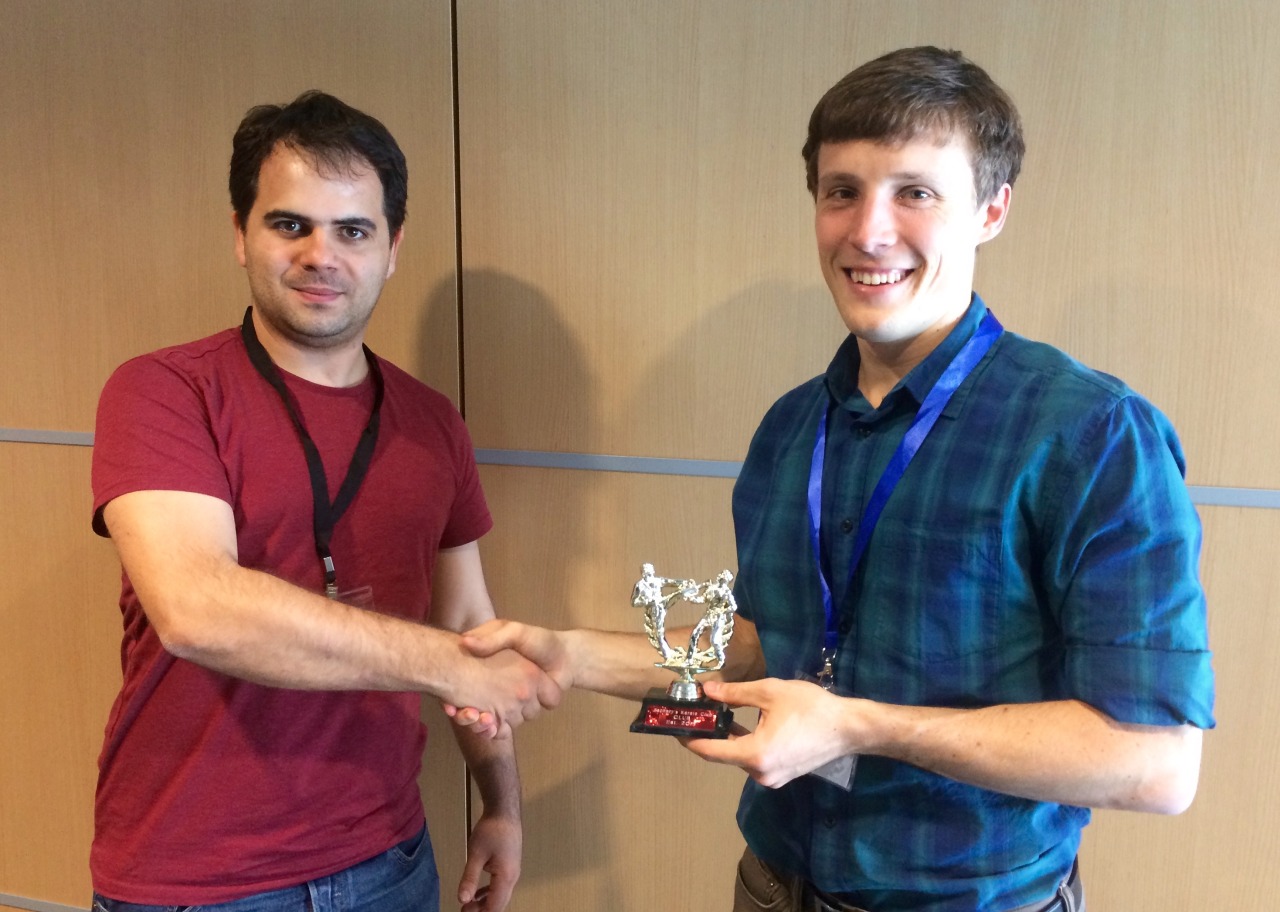
Tiago de Paula Peixoto is a Professor of Complex Systems and Network Science at the Institute of Science and Technology Austria (IT:U), where he leads the Inverse Complexity Lab. He has previously held faculty positions at Central European University (2019–2024) and the University of Bath (2016–2019), and conducted postdoctoral research at the University of Bremen and Technical University of Darmstadt. He holds a PhD in Physics from the University of São Paulo (2008) and a habilitation in Theoretical Physics from the University of Bremen (2017). His research lies at the intersection of statistical physics, computational statistics, information theory, Bayesian inference, and machine learning , with a central focus on inverse problems in network science . His group develops principled mathematical and computational models to infer the local interaction rules of complex systems from observed macroscopic behavior. Key research themes include statistically sound pattern detection in networks, network reconstruction from indirect data, uncertainty quantification, generative modeling of modular hierarchies and latent spaces, and scalable inference algorithms. His recent publications (2020–2025) reflect a consistent focus on advancing the theoretical and algorithmic foundations of network inference. A major theme is the development of Bayesian and information-theoretic frameworks for robust network reconstruction, moving beyond simplistic heuristics like correlation thresholding. He has pioneered methods for posterior sampling to quantify uncertainty and for minimum description length to prevent overfitting. His work also addresses scalability, with algorithms achieving subquadratic time complexity. Applications span diverse domains, including social systems (migration flows), political networks, and biological systems. Erdős–Rényi Prize from the Network Science Society (2019) Alexander von Humboldt Foundation Fellowship (2008) Karate Club Club Prize (6th recipient) Peixoto advises a vibrant group of PhD students and postdoctoral researchers, including Thomas Robiglio, Sebastian Kusch, Martina Contisciani, and Bukyoung Jhun. His former students include Felipe Vaca, Lizhi Zhang, and Silvia Guerrini. He has not received any specific grant mentions in the text, but his group’s sustained activity suggests successful funding. His lab is strongly committed to open science, with most of their methods implemented in the widely used graph-tool library, which is extensively documented and freely available. The lab organizes events like the annual Inverse Complexity Retreat and participates in major conferences such as NetSci and STATPHYS. The group is actively recruiting new PhD candidates and postdocs, indicating ongoing expansion and research momentum.
Ernests Lavrinovics is a PhD fellow at the Department of Computer Science , Aalborg University , affiliated with the Technical Faculty of IT and Design and Data, Knowledge and Web Engineering research group. His work focuses on Natural Language Processing (NLP) , Large Language Models (LLMs) , and addressing challenges in machine translation and knowledge graph integration for resource-poor languages. His research explores critical NLP themes including hallucination detection in LLMs , adapter-based regularization techniques for multilingual transfer, and multitask benchmark development for creole languages. He contributes to datasets like MultiHal and CreoleVal , emphasizing semantic grounding and cross-lingual evaluation. Recent publications analyze adapter architectures as regularizers in low-resource settings (ACL 2025) He co-developed MultiHal (2025), a multilingual dataset for LLM hallucination evaluation His work spans knowledge graph applications , transfer learning , and multilingual representation challenges As an active academic, he has organized events like the Copenhagen NLP Symposium (2025) and AAU NLP Symposium (2024). He participates in technical programs at venues such as ACL and MRL Workshops , with citations in Scopus and Mendeley readership.
Arthur Matsuo Yamashita Rios De Sousa is an Assistant Professor in the School of Computing at the Tokyo Institute of Technology, where he conducts interdisciplinary research bridging applied mathematics, statistical physics, and data science. His work focuses on the modeling and analysis of complex systems through stochastic processes, time series analysis, and network science. His primary research interests include: Applied Mathematics and Probability Theory Statistical Physics and Econophysics Complex Systems and Network Science Time Series Analysis and Forecasting Symbolic Dynamics and Entropy-Based Methods Power-Law and Heavy-Tailed Distributions His recent publications demonstrate a consistent focus on developing quantitative methods for analyzing financial time series, sales data, and other real-world complex systems. The articles span topics such as volatility modeling, network-based market analysis, multiscale entropy, and symbolic dynamics, reflecting a strong integration of theoretical physics and practical data science applications. Notable trends in his research include the use of entropy measures for regime detection, modeling of heavy-tailed phenomena in economics, and the application of complex networks to multivariate systems. These efforts contribute to both fundamental understanding and practical tools in econophysics and data-driven science. There are currently no listed scientific awards or honors in the provided text. Dr. Yamashita advises students in computational and quantitative research, particularly in areas related to data analysis of complex systems. While specific grant funding is not mentioned, his sustained publication record suggests active research support. He likely contributes to collaborative projects involving financial data modeling, nonlinear dynamics, and interdisciplinary applications of statistical physics. He is involved in academic events such as the Econophysics Colloquium and workshops at the Complexity Science Hub, indicating participation in international research networks focused on complex systems science.
Michele Coscia is an Associate Professor in the Department of Computer Science at the IT University of Copenhagen (ITU), where he conducts research at the intersection of network science, digital humanities, and data analytics. He leads the NERDS research group and supervises PhD students and postdoctoral researchers working on financial crime detection, archaeological networks, and work environment modeling. PhD in Computer Science, University of Pisa (2012) Former researcher at the Center for International Development (CID), Harvard University (6 years) Visiting researcher at Barabási Lab, Northeastern University His research focuses on developing and applying network science methodologies such as noise-corrected backboning , node attribute analysis , and network variance to study complex systems. His work spans diverse domains including: Archaeology : Inferring social and biological relationships from material culture at Neolithic sites like Çatalhöyük. Cultural Analytics : Mapping Italian music networks, analyzing Wikipedia’s gender bias, and studying ideological polarization on social media. Social Media Dynamics : Investigating meritocracy vs. topocracy, intolerance feedback loops, and information virality on platforms like Reddit and Twitter. Sports Analytics : Analyzing predictability trends in team sports and the impact of economic systems on league competitiveness. His publications appear in high-impact journals such as Science Advances , EPJ Data Science , and Applied Network Science . He is the author of The Atlas for the Aspiring Network Scientist , a comprehensive open-access textbook now in its second edition, which covers graph theory, machine learning on graphs, and statistical foundations of network analysis. Recent trends in his work show a growing emphasis on interdisciplinary applications of network science, particularly in archaeology and cultural studies, often in collaboration with institutions such as Aarhus University and the National Research Center for Work Environment. His research consistently promotes open science, with datasets and code publicly shared. Co-PI on a Villum Synergy project applying network analysis to Roman Empire archaeological data Active contributor to the CUDAN (Cultural Data Analytics) community Developing methods for uncertain and incomplete network data Michele Coscia’s work demonstrates a strong commitment to methodological innovation and real-world impact across the humanities, social sciences, and computational domains.
Christian Graugaard is a Professor of Sexology at Aalborg University, affiliated with the Faculty of Medicine and the Department of Clinical Medicine. He is a key member of the Center for Sexology Research and leads Project SEXUS, aiming to study Danish sexual behavior comprehensively. His work emphasizes the intersection of biological, psychological, and cultural factors in human sexuality, challenging simplistic gender-based stereotypes. Research interests include gender differences in sexual behavior, societal norms influencing sexual health, and the cultural dimensions of human sexuality. He actively participates in public discourse, as seen in his DR-podcast interview on 'Ramt af kærlighed,' where he discussed the complex interplay between biology and culture in shaping sexual identities. Though no specific awards or grants are detailed here, his publications span advanced technical domains like spatiotemporal data analysis, federated learning, and trajectory modeling, suggesting interdisciplinary research collaborations. His work on systems like OneDB and SWASH highlights contributions to distributed computing and data science, which may underpin his methodologies in large-scale sexual behavior studies. He currently holds no listed students or formal advisees in the provided texts, and his involvement in labs/teams is limited to the Center for Sexology Research and Project SEXUS.
Petr Taborsky is a postdoctoral researcher affiliated with the Department of Applied Mathematics and Computer Science at the Technical University of Denmark (DTU). His work focuses on artificial intelligence, machine learning, and computational methods within the Cognitive Systems group. Research interests include Bayesian inference , deep learning generalization , and graph-based learning , with applications in high-performance computing and federated learning . Key contributions involve developing the Bayesian Cut method for clustering and analyzing gradient noise in AI models. Recent publications highlight trends in European HPC/AI collaboration (2025) Bayesian graph cut techniques (2022) Statistical modeling in machine learning (2021)
Holger Dell is a Lecturer in Theoretical Computer Science and Algorithms at the IT University of Copenhagen. His research focuses on computational complexity, graph theory, and algorithmic efficiency. Active in polynomial-time algorithms and oracle-based methods Contributions to edge estimation in hypergraphs and fairness in node embeddings Key collaborations with BARC (Basic Algorithms Research Copenhagen) project Research trends show expertise in causal modeling, finite field polynomial solving, and graph embedding techniques. Recent work emphasizes algorithmic fairness and abstract causal relationships. Participated in a major project funded by the Villum Foundation (2017-2024) as a collaborator.