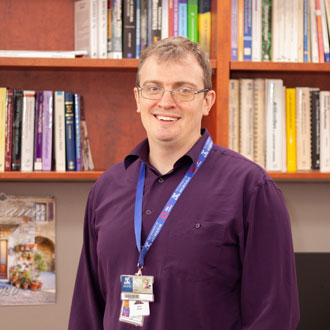
Bakhtiar Sadeghi is a Doctor of Philosophy researcher at the Faculty of Science and Engineering, Macquarie University. His work bridges Cybersecurity with Ethics and Decision Making , focusing on the application of Serious Games for professional training and ethical awareness development. This interdisciplinary approach aligns with Macquarie University's commitment to innovative research in technology and social responsibility.
Dr. Janni Leung is an NHMRC Development Fellow and Associate Professor at the National Centre for Youth Substance Use Research (NCYSUR), University of Queensland. With qualifications in public health, sociology, and psychology, their research focuses on the epidemiology of substance use and mental health disorders. They specialize in systematic reviews, meta-analyses, and statistical modeling to assess population-level impacts of addiction, informing policy in Australia and globally. Their work has generated over 100 publications with significant citation impact. Research Interests: Dr. Leung's program investigates comorbid substance use and mental health disorders, leveraging advanced epidemiological methods. Key areas include: Global patterns of cannabis, tobacco, and alcohol use Digital influences on substance use (social media, vaping) Treatment-seeking behaviors and barriers Development of diagnostic tools (e.g., Gaming Disorder Identification Test) Preventable disease burden from substance misuse Publication Trends: Their recent work demonstrates strong emphasis on meta-analyses of global substance use patterns, digital influences on youth behavior, and methodological innovations in causal inference. Longitudinal designs and cross-national comparisons dominate their 2023-2025 output, with consistent focus on policy-relevant outcomes. Awards & Recognition: NHMRC Development Fellowship (ongoing) Top 1% citation impact for 30% of publications Professional Engagement: Actively supervises students in addiction research, offers methodological consultation for systematic reviews and statistical modeling, and presents regularly at conferences including APSAD. Based at UQ St Lucia campus with cross-campus collaborations.
Professor Douglas Creighton is a Deakin Distinguished Professor and Director of the Institute for Intelligent Systems Research and Innovation (IISRI) at Deakin University. With a career spanning complex systems modeling, AI, and agent-based simulation, he leads a 100-strong research team working on real-world defense, transport, med tech, and advanced manufacturing solutions. His current research program includes three pillars: systems thinking and quantitative analytics, computational intelligence, and agent-based modeling. PhD in Industrial/Systems Engineering from Deakin University Bachelor of Engineering (Systems Engineering) and Bachelor of Science (Physics) from Australian National University His research strengths include smart transport systems, simulation modeling, robotics, and data analytics. Recent publications focus on stress quantification via EEG analysis, video instance segmentation, and ethical AI implementation in rail systems. He has developed trust estimation algorithms for autonomous agents and contributed to frameworks for rural community health engagement. Scientific recognition includes: SAE Mobility Engineering Excellence Gold Award (2016) IISRI Excellence in Industry Collaboration Award (2020) Three best paper awards at IEEE conferences As a supervisor, he currently guides research on: Mental stress quantification using brain connectivity Multi-cloud decision architecture Immersive technology for Industry 5.0 repair engineers Causal loop diagram representation for public health His industry collaborations span Australian Defence, Alstom Transport, Boeing, and rail/water organizations. Current grants include projects with the Australian Electoral Commission, Flame Security International, and advanced aerial mobility research.
Professor Geoff Webb is a world-leading data scientist at Monash University , serving as Director of the Monash University Centre for Data Science within the Faculty of Information Technology . His research focuses on leveraging data science to enable evidence-based decision making and derive actionable insights through artificial intelligence, machine learning, and big data analytics. Core expertise in data mining , bioinformatics , and computational biology Developed Magnum Opus software and contributed to the Weka machine learning workbench Recipient of the Eureka Prize for Excellence in Data Science and leadership roles in major data mining conferences Research Interests Professor Webb's work spans artificial intelligence , machine learning , and data analytics , with a focus on black-box user modelling , interactive data analytics , and statistically-sound pattern discovery . His recent publications highlight advancements in Bayesian networks , time series analysis , and genomic data interpretation , demonstrating his interdisciplinary impact. Scientific Contributions AI in healthcare : EHR-ML framework for clinical records analysis Biological applications : KcatNet for enzyme prediction, PFresGO for protein function Data mining innovations : OPUS search algorithm, proximity forest techniques As a technical adviser to data science company Froomle , he bridges academic research with real-world applications. His work has been recognized through numerous research awards and leadership as Editor-in-Chief of Data Mining and Knowledge Discovery for a decade.
Distinguished Professor Chin-Teng Lin is a leading academic at the University of Technology Sydney (UTS) , where he serves as Co-Director of the Australian AI Institute (AAII) and Director of the Computational Intelligence and Brain Computer Interface Lab . With a career spanning decades, he has pioneered advancements in artificial intelligence (AI) and brain-computer interfaces (BCI) , focusing on human-machine collaboration, wearable EEG systems, and neuroergonomics. School of Computer Science, UTS Co-Director, Australian AI Institute Director, Computational Intelligence and BCI Lab Lin’s research interests are deeply rooted in machine-intelligent systems , cognitive neuroscience , and human-centric AI . He has developed groundbreaking technologies like fuzzy neural networks (FNNs) in 1992, which revolutionized AI by integrating human-like reasoning. His work extends to multi-agent reinforcement learning for cybersecurity, wearable EEG devices for real-world applications, and neurofeedback interventions for chronic pain management. His research outputs include over 950 peer-reviewed publications , with a focus on deep learning , transformer models , and clustering algorithms . Articles like the MGRW-Transformer (2025) and Autonomous Clustering (2025) highlight his leadership in interpretable AI and parameter-free methods. Scientific awards and recognitions include: IEEE Fellow (2005) IFSA Fellow (2012) IEEE Fuzzy Systems Pioneer Award (2017) Outstanding Achievement Award, Asia Pacific Neural Network Assembly Lin has supervised 72 PhD candidates , 30 postdoctoral fellows , and 237 research Masters students since 1992, mentoring notable alumni such as Dr. Zehong Cao (ARC DECRA Fellow) and Prof. Chia-Feng Juang (IEEE Fellow). His funding portfolio includes $10M+ from the US Army Research Lab , $3.8M from the Australian Defence Innovation Hub , and $30.2M in industry collaborations .
Dr. Andrew Peng is a Lecturer (Research) at the Australian Artificial Intelligence Institute (AAII) within the Faculty of Engineering and Information Technology at University of Technology Sydney (UTS), Australia. With dual PhDs from UTS (2015) and Beijing Institute of Technology (2013), he has published 45 peer-reviewed papers across top venues like IEEE ICDM, COLING, and Frontiers in Molecular Biosciences. Education: Dual PhD (2013-2015) from Beijing Institute of Technology and University of Technology Sydney His research focuses on Data Science , Artificial Intelligence , and Healthcare Analytics , addressing challenges in medical data analysis, unstructured clinical text processing, and federated learning frameworks. Recent publications explore: Deep graph clustering for community detection Privacy-preserving medicine shortage detection via social media Time-aware medication recommendation using dynamic treatment regimes Knowledge tracing enhancements for online education Contrastive learning approaches for ICD coding Hypergraph-based sequential diagnosis prediction Dr. Peng has secured over AUD $1M in external research grants and serves as Subject Coordinator for undergraduate/postgraduate courses. He contributes to professional leadership through roles as Web Chair at AJCAI 2021 and ADMA 2021, PC member for major conferences, and reviewer for journals like NeurIPS and AAAI. His work spans collaborations with universities, industry, and government agencies.
Dr. Bin Liang is a Senior Lecturer at the University of Technology Sydney (UTS), working within the Faculty of Engineering and Information Technology and the Data Science Institute. He joined UTS in December 2018 as a Lecturer and was promoted to Senior Lecturer in July 2022, following his postdoctoral fellowship at Data61 (CSIRO). PhD in Computer Vision, Pattern Recognition, and Machine Learning from Charles Sturt University, Australia (2012-2015) Masters in Computer Science from Taiyuan University of Technology, China (2009-2012) BEng in Computer Science from Taiyuan University of Technology, China (2005-2009) Dr. Liang's research spans data mining, machine learning, computer vision, pattern recognition, and survival analysis, with a strong focus on practical applications in critical infrastructure. His work develops sophisticated machine learning frameworks for anomaly detection, failure prediction, and optimization in water infrastructure, flood mapping, and real estate appraisal. He has pioneered approaches that integrate graph neural networks with temporal analysis for pipe failure prediction and has made significant contributions to water quality optimization through data-driven methods. His research consistently bridges theoretical advancements with practical implementation in industry settings. His recent publications demonstrate a clear trajectory toward increasingly sophisticated models that capture complex temporal and spatial relationships in infrastructure data. There's a notable emphasis on multimodal learning approaches and domain generalization techniques that enhance model robustness across diverse application scenarios. His work on anomaly detection frameworks like MLAD shows innovation in grouping sensors by temporal characteristics for more accurate monitoring. 2022 – AWA R&D Excellence Award (NSW) 2022 – UTS Medal for Research Impact 2022 – Finalist for 2021-22 AWA Young Water Professional of the Year Award (NSW) 2020 – Finalist for the Best Paper Award of the ICARCV 2020 2019 – Industrial & Primary Industries Merit at the Victorian iAwards 2018 – Australian Museum Eureka Prize for Excellence in Data Science Dr. Liang actively supervises Masters Research and PhD students, focusing on data science applications for infrastructure management. His research has been supported through industry partnerships with water utilities and other infrastructure organizations, translating academic research into practical solutions that reduce water loss, improve infrastructure reliability, and enhance environmental sustainability. His work on pipe failure prediction and leak detection has directly contributed to operational improvements in water distribution networks. As a core member of the Data Science Institute at UTS, Dr. Liang collaborates with interdisciplinary teams working on data-driven solutions for urban infrastructure challenges. His research group focuses on developing scalable machine learning models that can be deployed in real-world settings, often working directly with industry partners to validate and implement their approaches. This industry-academia collaboration ensures that his research remains grounded in practical challenges while pushing the boundaries of data science methodology.
David Ascher is Head of the Computational Biology and Clinical Informatics laboratory at the Baker Institute, Deputy Director of Biotechnology at The University of Queensland, and Head of Systems and Computational Biology at Bio21 Institute. He holds honorary positions at Cambridge University, FIOCRUZ, and the Tuscany University Network. His educational background includes: Bachelor of Biotechnology Bachelor of Science (Honors) Bachelor of Laws Doctor of Philosophy David's research focuses on computational biology and bioinformatics, particularly in modeling biological data to understand fundamental processes. His work centers on developing tools to unravel the genotype-phenotype link, using computational and experimental approaches to assess the effects of mutations on protein structure and function. His group has created a platform of 40 widely used programs for variant effect prediction, which are applied in clinical settings for hereditary diseases, rare cancers, and drug-resistant infections. His recent publications span structural biology, genomics, and drug discovery, with a strong emphasis on protein dynamics, mutation impact prediction, and computational tools for biomedical research. The work often bridges basic science and clinical applications. Scientific awards and fellowships include: Anders Young Investigator Award (2017) Dr Álvaro Romanha Award (2017) Jack Brockhoff Early Career Researcher Award (2016) Dr Antoniana Ursine Krettli Award (2016) Dr Naftale Katz Award (2015) TJ Martin Award (2014) Bionomics Best Thesis Award (2014) NHMRC Investigator Fellowship (2020–2024) MDHS Research Fellowship (2019) NHMRC CJ Martin Fellowship (2014–2018) Victoria Fellowship (2013) Churchill Memorial Trust Fellowship (2013) David Ascher leads the Computational Biology and Clinical Informatics laboratory, which develops computational tools for clinical applications. His work is supported by major grants including the NHMRC Investigator Fellowship. He has not publicly listed his advisees, but his laboratory likely mentors students and researchers in computational biology.
Zhang Fangyi is a research fellow at Queensland University of Technology's School of Electrical Engineering and Robotics, specializing in robotics, computer vision, and machine learning. With a PhD completed in 2018 titled 'Learning real-world visuo-motor policies from simulation,' Zhang has established a strong research trajectory focusing on bridging the gap between simulation and real-world robotics applications. Zhang's research interests center around robotic perception and manipulation, with particular expertise in sim-to-real transfer techniques, tactile sensing systems, and graph neural networks. Their work spans multiple domains including robotic grasping, fabric manipulation, face clustering algorithms, and graphene-based sensor development. A consistent theme throughout Zhang's research is the development of robust systems that can effectively transition from simulated environments to real-world applications. The publication record shows a clear evolution from foundational work in sim-to-real transfer (2015-2019) toward more specialized applications in tactile sensing and material science (2021-2024). Recent work demonstrates expanding interests into graphene-based sensor technology while maintaining core expertise in robotic perception. Zhang frequently collaborates with leading researchers at QUT including Peter Corke, with whom they've published multiple papers on robotic grasping and tactile sensing. Zhang's research has practical applications across multiple domains including assistive robotics, sensor development, and computer vision systems. Their work on laser-induced graphene sensors shows particular promise for next-generation tactile interfaces and wearable technology.