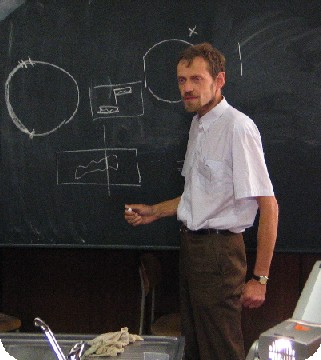
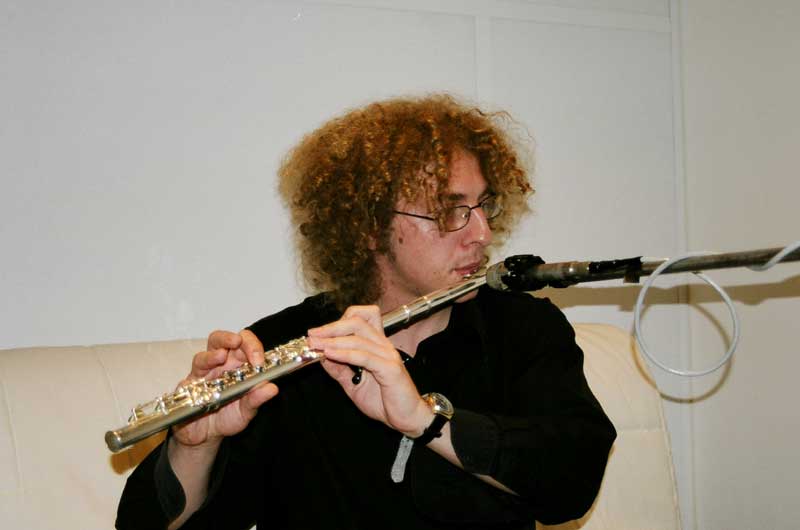
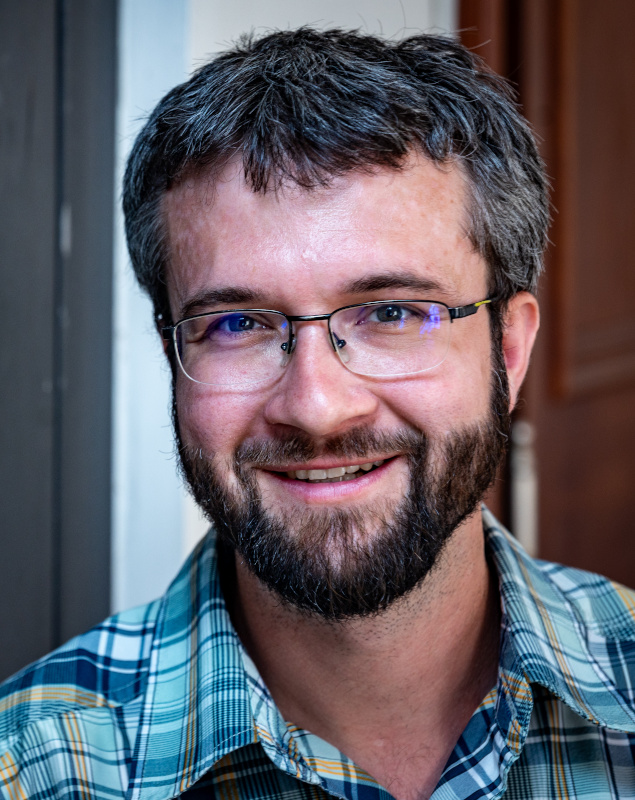
Jan Rataj is a Professor at the Faculty of Mathematics and Physics , Charles University , specializing in Integral Geometry , Geometric Measure Theory , and Stochastic Geometry . He has been affiliated with Charles University since 1991 and has held visiting positions at universities in Jena, Karlsruhe, Ulm, and Aarhus. Research interests focus on geometric probability, convex geometry, and measure theory Teaches courses on Measure and Integration Theory , Geometry , and advanced topics in geometric measure theory Scientific contributions include coauthoring 2 monographs and ~50 research papers. His work explores: Random measurable sets and perimeter analysis Stochastic modeling of microstructures Geometric functionals and invariants Applications to spatial statistics and probability theory He supervises PhD students and leads the Seminar of Stochastic Geometry , which examines topics like: Max-stable random fields Convex body reconstruction Point process analysis
Martin Balko is an Associate Professor at the Department of Applied Mathematics, Faculty of Mathematics and Physics, Charles University in Prague. He previously held postdoctoral positions at Ben Gurion University of the Negev (2017–2018) and the Alfréd Rényi Institute of Mathematics (2016–2017). His research focuses on graph theory, classical combinatorics, Ramsey theory, and combinatorial geometry. His recent work explores topics such as Ramsey numbers of ordered graphs and hypergraphs, geometric graph representations, and extremal problems in discrete geometry. He has contributed to advancements in probabilistic methods for random point sets and combinatorial characterizations of graph drawings. Best paper award at the 23rd International Symposium on Graph Drawing & Network Visualization (GD 2015) He teaches courses including Algorithmic Game Theory and Geometric Seminar, emphasizing computational geometry and combinatorics. He is actively involved in supervising student presentations and mentoring in discrete mathematics.
Martin Koutecký is an Associate Professor at the Institute of Informatics, Faculty of Mathematics and Physics, Charles University in Prague, Czech Republic. His research primarily focuses on parameterized complexity of integer programming, combinatorial optimization, and computational social choice. He completed his PhD under Petr Kolman at Charles University and conducted postdoctoral research at Technion (Haifa, Israel) under Asaf Levin and Shmuel Onn. Research Interests: Koutecký's work bridges theoretical computer science and optimization, with emphasis on: Designing efficient algorithms for integer programming under structural constraints Applying optimization techniques to computational social choice problems Developing parameterized approaches for combinatorial optimization Exploring geometric perspectives in election modeling and bribery problems Publication Focus: His recent articles (2020-2025) demonstrate consistent work in algorithm design for optimization problems, particularly in integer programming variants and computational social choice. Key themes include block-structured IP, parameterized complexity, election modeling, and convex optimization. Methodological innovations frequently involve polyhedral theory, approximation algorithms, and complexity analysis.
Professor Martin Loebl is a distinguished academic at the Department of Applied Mathematics, Faculty of Mathematics and Physics, Charles University in Prague. His extensive teaching portfolio includes Discrete and Continuous Optimization, Linear Programming, Nonlinear Optimization, Game Theory for intelligent networks, and Linear Algebra. His office is located in room S 325 on the 3rd floor in Lesser Town, Malostranské nám. 2/25, Prague 1. Loebl's research spans the breadth of discrete mathematics with particular emphasis on graph theory, combinatorial optimization, and applications to statistical physics. His work bridges theoretical mathematics with practical applications in network optimization, market equilibria, and critical distribution systems. He has made significant contributions to Kasteleyn theory, dimer models, Ising model applications, matroid theory, and matching theory. Analysis of his recent publications reveals a strong focus on the intersection of discrete mathematics with economic and social systems. His work increasingly addresses real-world challenges such as resource allocation during crises, market design, and fair division problems. The publications demonstrate sophisticated applications of graph theory and combinatorial optimization to game-theoretic models and distribution systems, with growing emphasis on practical implementations of theoretical frameworks. Scientific Awards: Prize of Rector of Charles University for the book 'Topics in Discrete Mathematics: Dedicated to Jarik Nešetřil on the Occasion of his 60th birthday' Professor Loebl coordinates the H2020-MSCA-RISE-2018 project 'Combinatorial Structures and Processes (CoSP)' and previously coordinated the Czech Ministry of Interior's 'Critical Distribution System (CRISDIS)' project motivated by the COVID-19 pandemic. His research has practical applications in winter road maintenance routing, market equilibria design, and critical goods distribution systems. He maintains an active research laboratory focused on discrete mathematics applications, with particular emphasis on translating theoretical results into practical algorithms for optimization problems in network design, resource allocation, and market mechanisms. His group has produced significant work on dimer models, Kasteleyn orientations, and their applications to statistical physics problems.
Jan Kratochvíl is a Professor at the Department of Applied Mathematics within the Faculty of Mathematics and Physics at Charles University in Prague. His contact information includes the email honza@kam.mff.cuni.cz and his office is located in room S 226 on the 2nd floor of the building at Malostranské nám. 2/25, Prague 1. His research focuses on applied mathematics, with particular emphasis on discrete mathematics, graph theory, combinatorics, algorithms, and computational complexity. These fields reflect his contributions to theoretical computer science and mathematical problem-solving.
Jan Bok is a postdoctoral researcher in the ERC Synergy grant POCOCOP at the Department of Algebra, Faculty of Mathematics and Physics, Charles University. Previously, he held postdoctoral positions at LIMOS laboratory (University of Clermont Auvergne) and was a PhD student/researcher at the Computer Science Institute, Charles University under advisor Jaroslav Nešetřil. His research focuses on constraint satisfaction problems, graph homomorphisms, algorithms, complexity, and cooperative game theory. He has authored/co-authored over 30 publications, with recent work addressing multigraph covering, cooperative game extensions, and signed graph homomorphisms. His research also includes studies on universal algebra, combinatorial methods, and chemical graph theory. He collaborates widely and maintains active profiles on arXiv, Google Scholar, and zbMATH.
Jiří Švancara is a Lecturer at the Department of Theoretical Computer Science and Mathematical Logic (KTIML) within the Faculty of Mathematics and Physics at Charles University in Prague. His academic career focuses on Artificial Intelligence, particularly Multi-Agent Path Finding (MAPF), where he has established himself as a prominent researcher with numerous publications in top-tier conferences. His research interests span across Multi-Agent Path Finding , Robotics , Algorithm Design , and Constraint Satisfaction Problems . Švancara has made significant contributions to the field of MAPF, developing novel approaches for large-scale maps, temporal uncertainty handling, and efficient solving methods. His work bridges theoretical foundations with practical applications in robotics and transportation systems. Analysis of his recent publications reveals a strong focus on improving the scalability and robustness of MAPF algorithms. His research explores graph pruning techniques for large maps, handling temporal uncertainty in path execution, and comparing different objective functions for optimization. He has also investigated applications of MAPF in autonomous intersections and train routing systems, demonstrating the practical relevance of his theoretical work. Best Paper Award for 'Multi-agent Path Finding on Real Robots: First Experience with Ozobots' at IBERAMIA 2018 Švancara actively teaches multiple courses including Introduction to Artificial Intelligence, Propositional and Predicate Logic, and Algorithms and Data Structures. His teaching spans both theoretical foundations and practical implementation, with students engaging in programming assignments that reflect current AI challenges. His research collaborations are extensive, with frequent co-authorship with Roman Barták and other researchers in the field, indicating strong integration within the international AI research community. His laboratory work involves practical implementations of MAPF algorithms, including testing on real robots as evidenced by several publications describing experiments with Ozobots and other robotic platforms. This hands-on approach connects theoretical research with tangible robotic applications, providing valuable validation for his algorithmic contributions.
Martin Svoboda is a Lecturer at the Department of Software Engineering , Faculty of Mathematics and Physics, Charles University, Prague. His work focuses on multi-model data management, social network analysis, and XML/linked data processing. University: Charles University School: Faculty of Mathematics and Physics Department: Department of Software Engineering Role: Lecturer Education: Doctoral Thesis: Correction of Invalid Trees with Respect to Regular Tree Grammars (2015) Master's Thesis: Processing of Incorrect XML Data (2010) Bachelor's Thesis: Information System for Small User Group Collaboration (2007) Research Interests encompass: Unified multi-model data processing Influence maximization in social networks Graph data efficiency Big Data and NoSQL systems Querying/indexing linked data XML document correction Publications highlight trends in multi-model data unification, XML correction techniques, and social network analysis, with a strong emphasis on category theory and graph-based approaches. Scientific Recognition: Dean’s Award for Best Master Thesis (2010) Best Poster Award at Reasoning Web Summer School (2012) Projects include grants from the Czech Science Foundation (20-22276S, 2010–2012), Technology Agency of the Czech Republic (TH03010276, 2018–2020), and international collaborations like NoSQL-Net (Germany, 2014).
Jiří Fiala is an Associate Professor at the Department of Applied Mathematics (KAM), Faculty of Mathematics and Physics, Charles University in Prague, Czech Republic. His academic career spans over two decades with significant contributions to graph theory and computational complexity. He has held positions at prestigious institutions including University of Kiel (Germany), University of Bergen (Norway), and University of Oregon (USA) as a Fulbright fellow. Dr. Fiala completed his Master's degree (Mgr.) at Charles University in 1997 followed by his PhD in 2000. His academic journey progressed from research and teaching assistant (2000-2008) to his current position as Associate Professor since 2008. His research focuses on graph algorithms and their computational complexity , with particular emphasis on restricted graph classes including bounded width structures, topological restrictions, and geometric intersection graphs. He has made significant contributions to algebraic graph theory , especially in homomorphisms and covering projections, as well as graph coloring and distance labeling problems. His work on Hamiltonian properties of graphs represents another important research direction. Analysis of his recent publications (2021-2025) reveals a continued focus on computational complexity of graph covering problems across various graph structures including regular trees, multigraphs with semi-edges, and disconnected multigraphs. His work frequently intersects with computational geometry, particularly in graph drawing problems related to outerplanar graphs and forest structures. The consistent publication record across top venues demonstrates sustained research productivity in theoretical computer science and discrete mathematics. Scientific recognition includes being awarded a Fulbright fellowship for research at the University of Oregon (2012-2013). His habilitation thesis Structure and Complexity of Locally Constrained Graph Homomorphisms (2007) represents a significant scholarly achievement. Dr. Fiala maintains active research collaborations, particularly with Jan Kratochvíl (45 joint publications), Daniël Paulusma (19), and Jan Bok (12), among others. His teaching responsibilities include advanced courses such as Introduction to Parameterized Algorithms for the winter term 2025-2026. His work is well-documented through comprehensive publication records available via DBLP, ResearcherID, ORCID, and Scopus.
Assoc. Prof. Petr Kolman is an academic at the Department of Applied Mathematics , Charles University , where he serves in advisory bodies of the faculty management. His research focuses on theoretical computer science , combinatorial optimization , and graph algorithms , particularly in approximation techniques and network flow problems . He has taught courses such as Linear Algebra 1/2 and Mathematical Programming and Polyhedral Combinatorics . Recent publications highlight his work on spanning tree congestion (2025), length-bounded cuts (2020), and treewidth-based extended formulations (2020). His research spans algorithms , flow theory , and graph modification problems . He maintains contact through kolman@kam.mff.cuni.cz and office hours in Prague Malostranské nám. 2/25, 2nd floor, room S225 .
Pavel Valtr is an Associate Professor at the Department of Applied Mathematics , Faculty of Mathematics and Physics , Charles University in Prague. His research focuses on discrete and computational geometry , combinatorics , and Ramsey theory , with applications in stochastic geometry and probabilistic methods. His academic interests include: Discrete and computational geometry Classical combinatorics Probabilistic methods in combinatorics Ramsey theory Stochastic geometry Valtr has published extensively in top-tier journals, contributing to areas such as convex polygons in point sets, geometric graphs, Ramsey-type theorems, and visibility problems. His work often intersects with algorithmic and structural aspects of discrete geometry. He actively supervises bachelor and master theses in combinatorics and computational geometry, and teaches courses such as Geometric Seminar , Foundations of Combinatorics and Graph Theory , and Seminar on Combinatorial Problems . For collaborations or thesis supervision, he can be reached at valtr@kam.mff.cuni.cz .
Václav Potoček is a Lecturer in the Quantum dynamics, optics and information (Q³) group at the Department of Physics, Faculty of Nuclear Sciences and Physical Engineering, Czech Technical University in Prague. His office is located in the Břehová building, room B509, and he can be reached at vaclav.potocek@fjfi.cvut.cz. Dr. Potoček's research focuses on quantum walks, quantum optics, and measurement and information in quantum mechanics. His work explores fundamental aspects of quantum dynamics with applications in quantum information processing. He has made significant contributions to understanding quantum walks, their symmetries, and their implementation in photonic systems. His recent publications reveal a consistent focus on quantum walk phenomena, quantum measurement theory, and optical implementations of quantum information protocols. The research shows progression from theoretical foundations to experimental realizations, particularly in photonic quantum walk implementations. Scientific recognition includes: Editor's Suggestion in Physical Review A (2017) Featured in Physics for Physical Review Letters (2015) J. Opt. Highlights of 2014 Dr. Potoček has supervised several students including Matyáš Staněk (Master's thesis 2020/21, Bachelor's thesis 2018/19), Elisabeth Andriantsarazo (Doctoral thesis 2020/21, Master's theses 2019/20, 2018/19), and Filip Němec (Master's thesis 2019/20, Research project 2018/19). His research involves collaboration with international groups from Germany, Hungary, Great Britain, Japan, and Greece. He is an active member of the Q³ research group which focuses on quantum dynamics, quantum information, and quantum optics, investigating quantum walks, open quantum systems, and quantum information processing algorithms.
Libor Barto is a full professor at the Department of Algebra, Faculty of Mathematics and Physics, Charles University, Prague, Czech Republic. He is a leading researcher in universal algebra and computational complexity, with a strong focus on constraint satisfaction problems (CSPs) and their algebraic foundations. He leads the ERC Synergy Grant POCOCOP and previously led the ERC Consolidator Grant CoCoSym, and is deeply involved in advancing the algebraic theory of promise constraint satisfaction. Research Interests: His primary research areas include universal algebra, computational complexity, constraint satisfaction problems (CSP), promise constraint satisfaction problems (PCSP), clone theory, and the algebraic approach to logic and computation. He investigates the interplay between algebraic structures and computational tractability, particularly through polymorphisms, minions, and Taylor algebras. The recent articles reflect a strong trend in unifying algebraic approaches to CSP, exploring promise variants, approximation through plurimorphisms, symmetries in structures, and the role of Weisfeiler-Leman hierarchies. His work often appears in top-tier journals and conferences such as the Journal of the ACM, SIAM Journal on Computing, and LICS. Fellow of the Learned Society of the Czech Republic (since 2024) ERC Synergy Grant (POCOCOP, 2023–2029) ERC Consolidator Grant (CoCoSym, 2018–2023) Charles University Research Center (UNCE) Grant (PI, 2024–2029) Libor Barto advises PhD students and leads research teams under major grants like POCOCOP and CoCoSym. He has secured substantial funding from the European Research Council and the Czech Science Foundation (GACR). He is actively involved in the academic community as an editor of Algebra Universalis and Acta Scientiarum Mathematicarum , and has served on program committees for LICS, ICALP, and STACS. He has organized major workshops, including at the Fields Institute and multiple AAA and SSAOS conferences. He is involved in several research labs and collaborative teams, particularly through the Department of Algebra at Charles University, the POCOCOP project (with M. Bodirsky and M. Pinsker), and the CoCoSym ERC team. His work fosters international collaboration with researchers in France, Germany, Austria, Poland, Canada, and the USA.
Dr. Jakub Yaghob is a researcher at the Faculty of Mathematics and Physics , Charles University , specializing in computer science and parallel computing. He teaches advanced programming topics including Compiler Principles , Parallel Programming , and Cloud Computing . Research Interests : Parallel data stream processing, virtualization technologies, semantic web infrastructures, and performance optimization Teaching : Advanced C++ programming, virtualization administration, and computer systems architecture Technical Expertise : Design of parallelization frameworks, astrophysical data analysis, and hybrid CPU-GPU systems His publications focus on: Optimizing stream data processing across distributed architectures Developing domain-specific languages like Bobolang Performance evaluation in educational programming contexts Applications of parallel computing in astrophysics
Pavel Veselý is an Assistant Professor at the Computer Science Institute of the Faculty of Mathematics and Physics, Charles University, Prague, Czech Republic. His research focuses on the design and analysis of efficient algorithms and data structures, particularly in streaming, online, and approximation algorithms, with applications in bioinformatics and data privacy. His research interests include: Streaming algorithms for quantile estimation, geometric problems, and adversarial robustness Online algorithms, especially in scheduling and buffer management Approximation algorithms, including shortest superstrings and their use in genomic data (k-mer sets) Randomized algorithms and algorithmic data privacy His recent work has advanced the state of the art in streaming quantile estimation (KLL sketch), indexed k-mer representations using masked superstrings, and streaming facility location in high dimensions. His publications appear in top venues such as FOCS, STOC, PODS, and SODA. Notable scientific awards include: Best Paper Award at PODS 2021 2022 ACM SIGMOD Research Highlight Award Supervision of award-winning student theses, including Dean’s Award and Czech-Slovak competition wins He actively advises students, including PhD and master’s level researchers, and leads a research group focused on data sketches and streaming algorithms. He has taught courses such as Algorithmic Data Privacy, Randomized Algorithms, and Streaming Algorithms, and previously served as a postdoc at the University of Warwick under Graham Cormode.