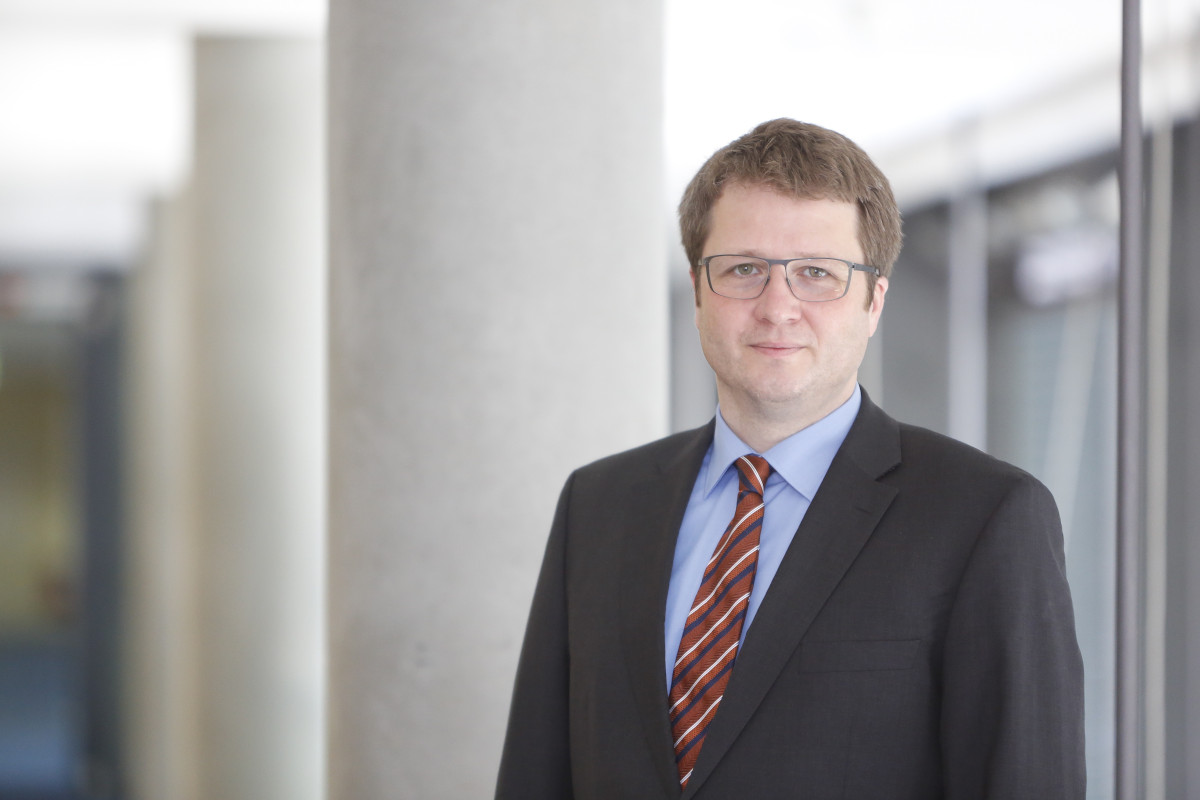
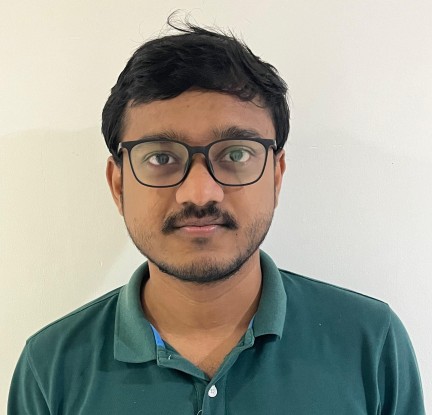
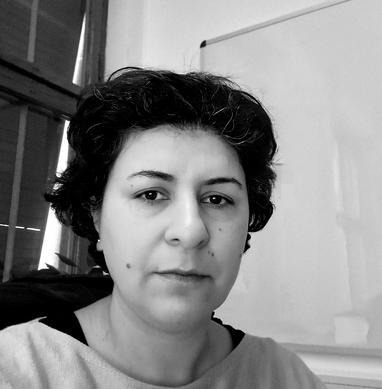
Matthias Keicher is a Postdoc and Research Manager at the Chair for Computer Aided Medical Procedures at the Technical University of Munich , affiliated with the IFL Lab at Klinikum Rechts der Isar. His work focuses on deploying AI for clinical applications, particularly vision-language models and large language models for structured report generation and decision support systems. Education: Dipl.-Ing. in Mechanical Engineering and Management from TUM (2006-2013) Industry Experience: Former CTO and Managing Director at SurgicEye GmbH (2016-2018) Research Interests: Medical Vision-Language Models (VQA, structured reporting) Multimodal Deep Learning for diagnostics Interpretable AI with generative models Decision support systems integrating patient data Article Trends: Over 2024-2014, his publications span surgical phase recognition (TeCNO), vertebral fracture grading (iMIMIC best paper), chest X-ray classification (FlexR), radiology report generation (RaDialog), and toxin prediction (ToxNet). Keywords include Medical Imaging, Graph Networks, Language Models , with subfields like 3D Computer Vision, Federated Learning, Clinical Reasoning . Scientific Awards: MICCAI iMIMIC 2023 Best Paper Teaching: He organizes two lectures ( Computer Science for Medical Students , Innovation Generation in Healthcare ) and tutors courses such as Deep Learning for Medical Applications and Machine Learning in Medical Imaging . Labs & Teams: Works at the IFL Lab (Intelligent Future Lab) in Munich, leading a research team funded by the DIVA project focused on vision-language models in clinical settings.
Anton Dignös is a professor at the Free University of Bozen-Bolzano , specializing in temporal databases , time series analysis , and database systems . His research focuses on efficient query processing for interval data, temporal joins, and schema design, with significant contributions to in-memory and time series databases. Key research areas include: Temporal Data Management : Advanced techniques for interval and duration queries. Time Series Analytics : Machine learning integration and pattern detection. Schema Optimization : Automated design and tuning of database schemas. Visual Analytics : Tools for period data comparison and correlation analysis. His work spans collaborations with researchers like Johann Gamper and Michael H. Böhlen , addressing challenges in healthcare systems, industrial applications, and financial data analytics. Notable contributions include algorithms for temporal anti-joins , range-duration queries , and machine learning-based anomaly detection .
Prof. Dr. Andreas Harth holds the Chair of Business Information Systems, especially Technical Information Systems, at Friedrich-Alexander University Erlangen-Nuremberg (FAU), where he has been a faculty member since 2018. He also serves as a department head at the Fraunhofer IIS-SCS in Nuremberg. His academic work spans both theoretical research and practical applications in decentralized information systems, with strong connections to industry through numerous collaborative projects. Harth completed an apprenticeship as a banker before studying computer science. He earned his doctorate from the Digital Enterprise Research Institute at the National University of Ireland, Galway, and completed his habilitation at the Karlsruhe Institute of Technology. His academic journey included teaching and research stays at the universities of Heidelberg, Innsbruck, Stanford, and Southern California, providing him with a global perspective on information systems research. His research focuses on developing methods and technologies for decentralized information systems found in the World Wide Web and blockchain environments, with applications in companies. He investigates data integration using Semantic Web and Linked Data technologies, process modeling languages, and their applications in the Internet of Things, Web of Things, and Industry 4.0 contexts. His work bridges theoretical computer science with practical business applications, particularly in data sovereignty and decentralized architectures. Analysis of his recent publications reveals a strong trend toward Solid protocol applications, knowledge graph technologies, and the integration of large language models with semantic web technologies. His research increasingly focuses on practical implementations in enterprise settings, healthcare data management, and manufacturing systems, demonstrating the real-world applicability of his theoretical work. As a member of FAU's research focus on Digitalization and Innovation, Harth collaborates with strategic partners including the Fraunhofer Institute for Information Systems (IIS) and major German industrial companies. His work contributes significantly to FAU's position as one of Germany's most research-intensive universities, particularly in the fields of business informatics and decentralized systems.
Dr. Stavros Nousias is a researcher at the Chair of Computing in Civil and Building Engineering at the Technical University of Munich , focusing on applications of Artificial Intelligence in the Built Environment . His work bridges Knowledge Representation and Reasoning , Geometry Processing , and Machine Learning to advance construction informatics and digital twinning. Research Interests: AI for building evacuation prediction, technical drawing segmentation, BIM optimization, and respiratory disease modeling. Publications: 15+ peer-reviewed articles on topics including graph neural networks for construction simulations, pulmonary airflow analysis, and heritage site monitoring. Supervised Theses: Guided projects on AI-based BIM command prediction and robotized construction simulation . Labs: Active in the BIM-Lab and Robotic Fabrication Lab . Teaching: Co-instructor for courses like Artificial Intelligence in Engineering and Computation in Engineering 1 .
Mahdi Vasighi is currently serving as an Assistant Professor at the Department of Computer Science and Information Technology, Institute for Advanced Studies in Basic Sciences (IASBS) in Zanjan, Iran, a position he has held since February 2012. Prior to this, he was a Post-doc Researcher at the same institution from February 2011 to February 2012. He has also served as a Visiting Researcher at the Milano Chemometrics and QSAR Research Group, University of Milano - Bicocca, Milan, Italy from September to October 2009, and as a Guest Lecturer at the Pasteur Institute, Tehran, Iran since September 2016. Dr. Vasighi earned his educational qualifications from the Institute for Advanced Studies in Basic Sciences (IASBS) in Zanjan, Iran, where he completed his Ph.D. in Chemometrics in May 2010 and his M.Sc. in Analytical Chemistry between 2002 and 2005. His undergraduate education was in Pure Chemistry at Imam Khomeini International University, Qazvin, Iran, from 1998 to 2002. Dr. Vasighi's primary research interests lie at the intersection of bioinformatics, machine learning, and data analysis. His work focuses on structural bioinformatics, particularly on modeling relationships between biological sequences and their corresponding structure or function. He has made significant contributions to the field of self-organizing maps with dynamic structure, developing innovative approaches like the Directed Batch Growing Self-Organizing Map (DBGSOM) that enhance topology preservation and visualization of high-dimensional data. His research spans multiple domains including protein structural classification, cancer diagnostics using fluorescence spectroscopy, and drug discovery for diseases like COVID-19. Dr. Vasighi's publication record demonstrates a strong trajectory in applying machine learning techniques to solve complex problems in bioinformatics and medical diagnostics. His recent work shows an increasing focus on applying computational approaches to healthcare challenges, including cancer detection, protein analysis, and drug discovery for viral diseases. He has successfully bridged the gap between theoretical machine learning advancements and practical applications in biology and medicine, with a particular emphasis on developing interpretable models that can be used by domain experts. Dr. Vasighi has actively contributed to the academic community through teaching and conference organization. He has served as Local Chair for the International Conference on Contemporary Issues in Data Science 2019 (CiDaS 19) and as Scientific Committee Member and Organizing Chair for previous CICIS conferences. His teaching portfolio includes graduate courses in Artificial Neural Networks, Computational Data Mining, Bioinformatics, Statistical Pattern Recognition, and Multimedia Systems. Dr. Vasighi has supervised numerous MSc students, with over twenty graduated students and nine current students listed in his profile. His research has been supported through collaborations with institutions like the Pasteur Institute, where he worked on projects related to nuclear magnetic resonance-based screening of thalassemia and determination of coronary heart disease risk using NMR spectra of plasma lipoproteins. Through his Directed Batch Growing Self-Organizing Map (DBGSOM) package and other software contributions, Dr. Vasighi has made his research tools accessible to the broader scientific community. His work continues to push the boundaries of how machine learning can be applied to solve challenging problems in bioinformatics and medical diagnostics.
Daniel Huson is a Professor of Algorithms in Bioinformatics at the University of Tübingen , affiliated with the Faculty of Science and actively contributing to the Computer Science Department . He has held this position since 2002 and previously served as Senior Staff Scientist at Celera Genomics (1999-2002) and Post-Doc at Princeton University and the University of Pennsylvania (1997-99). Education: PhD in Mathematics, Bielefeld University (1990, summa cum laude) Habilitation in Mathematics, Bielefeld University (1997) Studied Mathematics and Physics, University of Washington (1980-86) Research Interests: Designing algorithms for bioinformatics and computational biology Metagenomic data analysis using tools like MEGAN and SplitsTree Phylogenetic networks and evolutionary modeling Microbiome dynamics and industrial bioproduction optimization Development of interactive software for biological data visualization Exploring autocatalytic reaction networks in early biochemistry Scientific Contributions: Developed MEGAN, a widely used metagenome analysis tool Created SplitsTree for phylogenetic network analysis Published extensively on microbiome analysis, metagenomic binning, and evolutionary relationships Contributed to power-to-gas technology and bioelectrochemical systems Awards & Grants: Royal Society of New Zealand International Leader Fellowship (2020-22) PLOS Computational Biology Research Prize (2017) Technology Transfer Prize of the IHK Reutlingen (2016) Co-organizer of major conferences (GCB, RECOMB, ISMB, etc.) Leadership Roles: Head of Computer Science Department (2011-14) Founding member of Computomics (since 2012) Faculty member of IMPRS 'From Molecules to Organisms' (since 2011)
Professor Ute Schmid is a Full Professor of Cognitive Systems at the University of Bamberg, where she has been a faculty member since September 2004. She leads the Cognitive Systems Group within the Bamberg Center of AI (BaCAI), focusing on creating AI systems that generate human-like explanations and reasoning processes. Her research bridges cognitive science and artificial intelligence to develop methods for explanation generation, inductive programming, and interactive machine learning. Professor Schmid's work emphasizes practical applications of explainable AI across diverse domains including image classification, medical diagnosis, and educational technologies. Her research on contrastive explanations, near misses, and human-AI alignment has significantly advanced the field of XAI. She has also pioneered research on AI literacy, recognizing the growing importance of basic AI understanding for responsible tool usage by non-experts. Her publication record demonstrates exceptional productivity and impact, with numerous articles in top-tier venues including Nature Machine Intelligence, IEEE Transactions on Visualization and Computer Graphics, and the Journal of Web Semantics. Her 2025 paper 'Aligning generalization between humans and machines' represents a significant theoretical contribution to understanding human-machine cognitive alignment. Professor Schmid actively contributes to gender diversity research in computer science through studies examining why women pursue PhDs in the field. She has also made important contributions to computing education, investigating how students acquire programming skills and how AI tools like code generators are integrated into learning processes. As an educator and researcher, Professor Schmid maintains strong international collaborations, with co-authors spanning multiple countries and institutions. Her interdisciplinary approach is evident in her diverse publication venues and collaborative work that bridges computer science, cognitive science, education, and application domains.
Professor Dirk J. Lehmann is a Professor of Data Science in IoT at Ostfalia University of Applied Sciences, Faculty of Computer Science, where he has been employed since May 2022. He holds significant leadership roles including Deputy Head of the Institute for Information Engineering (since 2024), Research Officer of the Faculty of Computer Science (since 2023), and membership in multiple committees including the Admissions Committee for Digital Technologies and the Digital Technologies Examination Board. Professor Lehmann's extensive academic journey includes: Part-time professorship in Data Science in IoT at Ostfalia University (2020-2022) Senior Specialist for Digitalization, AI, and Visual Analysis at IAV GmbH (2018-2023) Assistant Professor of Visual Data Analysis at Nazarbayev University, Kazakhstan (2017) Visiting professorships at TU Graz, Austria and Universidad Rey Juan Carlos, Spain (2016-2017) Researcher at Otto-von-Guericke University Magdeburg (2009-2017) His research expertise centers on Visual Analytics and Data Science, with particular emphasis on high-dimensional data visualization, categorical data analysis, and IoT applications. Professor Lehmann leads the Data Science in IoT working group, conducting research across three main areas: visual data analysis, distributed data analysis using AI methods, and applied data analysis in geology, climate data, medicine, and industrial processes. His methodological contributions include innovative visualization techniques for complex datasets across multiple domains. Analysis of Professor Lehmann's 15 most recent publications (2017-2025) reveals a consistent focus on advancing visualization techniques for complex data analysis. His work spans categorical data visualization (CatNetVis), biological data analysis (D. Melanogaster research), optimization of star coordinate systems, and interactive exploration methods for large datasets. These publications appear in top venues including IEEE Transactions on Visualization and Computer Graphics and EuroVis, demonstrating both theoretical rigor and practical application across diverse domains from healthcare to environmental science. As an educator, Professor Lehmann teaches a comprehensive range of courses from foundational mathematics to advanced machine learning and visualization techniques. He actively supervises student projects and theses, emphasizing clear project definitions with measurable acceptance criteria. His international collaborations span institutions in Israel, Saudi Arabia, China, Austria, and Spain, reflecting a global research perspective that bridges academic theory with industry applications, particularly through his previous role at IAV GmbH, a Volkswagen subsidiary.
Professor Klaus Chantelau is a faculty member at Schmalkalden University of Applied Sciences, specializing in Applied Digital Image Processing within the Faculty of Computer Science. He maintains his office in Building F, Room 0205, with office hours held every Thursday from 12:00-13:00. Professor Chantelau teaches a diverse range of courses including Peripheral Systems, Digital Media Standards, Image Processing, Selected Chapters of Image Processing, Image Search Engines, and Model-Based Coding for Computer Science students, while also teaching Modeling, Simulation and Visualization for Business Informatics students. His research primarily focuses on image and video analysis, with his current project GraVis (Graph-based descriptors for describing people in videos) representing cutting-edge work in video analytics. Professor Chantelau leads the Video, Audio and Graphics Laboratory (F 0206), providing essential facilities for practical work in digital media processing. He also serves as Program Coordinator for the Master's program in Applied Media Informatics, demonstrating his leadership within the academic community. With a strong academic foundation including a Diploma in Physics (1988) and Doctorate in Mathematics (1991) from TU Berlin, followed by seven years as a Research Associate at the Heinrich Hertz Institute for Communications Technology Berlin GmbH, Professor Chantelau brings substantial expertise to his teaching and research activities.
Dr. Norman Forschack is a Researcher in the Department of General Psychology and Methodology at the University of Leipzig, focusing on neural mechanisms of attention and sensory processing. His work centers on alpha-band oscillations and their role in modulating perceptual awareness across visual and somatosensory domains using multimodal neuroimaging techniques. His research interests include cognitive neuroscience, attentional control mechanisms, and sensory perception dynamics. Forschack investigates how feature-based and spatial attention selectively enhance target processing while suppressing distractors, with particular emphasis on the neural correlates of conscious and unconscious perception. His experimental paradigms integrate EEG, fMRI, and behavioral measures to dissect attentional templates in visual search and somatosensory contexts. Analysis of his 2020-2025 publications reveals consistent exploration of alpha oscillations as modulators of attentional selection, with increasing sophistication in multimodal approaches. Recent work examines depth perception in attentional shifts, color chromaticity effects, and learning-induced plasticity in distractor processing, demonstrating how oscillatory dynamics shape both perceptible and imperceptible stimulus processing. Forschack contributes to a DFG-funded project (2018-2023) led by Matthias Müller investigating alpha oscillations in selective attention. His collaborative work with Till Nierhaus, Arno Villringer, and others spans neuroimaging methodology development and theoretical advances in attention models. As part of Leipzig University's cognitive neuroscience infrastructure, he operates within the General Psychology and Methodology department, contributing to experimental design frameworks and data analysis pipelines for attention research.
Fang Zhao serves as Junior Research Group Leader of the Multimedia group at FernUniversität Hagen's Center of Advanced Technology Assisted Learning and Predictive Analytics (CATALPA) since April 2021. As a cognitive and educational psychologist, she conducts interdisciplinary research on multimedia learning and multitasking within this university-funded research center, collaborating with partners across psychological and educational domains. Her academic credentials include a 2024 Habilitation from FernUniversität Hagen, a Ph.D. in Psychology from University of Koblenz Landau (2012-2015), an M.A. in Linguistics and Translation Studies from Durham University, U.K. (2010-2012), and a B.A. in Linguistics and English Language from Henan University, China (2006-2010). Dr. Zhao's research examines how individuals process multimedia information through text-picture integration, interactive simulations, and video-based instruction, with particular focus on exploration-exploitation dynamics in learning environments. Her sequence learning investigations extend to multitasking scenarios involving basic sequences, timing patterns, and complex hierarchical structures like Origami folding. This work bridges cognitive theory with practical educational technology applications through rigorous experimental methodologies. Recent publication analysis reveals consistent emphasis on optimizing visual representations for data comparison, measuring cognitive load in online learning, and evaluating guidance structures in asynchronous courses. Her research demonstrates that while interactive elements are generally preferred by learners, their educational benefits remain context-dependent with significant individual differences in effectiveness. Leading the Multimedia junior research group at CATALPA, Dr. Zhao directs investigations into how interactive and multimedia components influence learning processes across diverse student populations. The team operates within an interdisciplinary framework that integrates psychological theory with technological innovation to develop predictive analytics for learning enhancement.
Dr. Emmanouil Athanasiadis is a bioinformatician at the University of Cambridge's Department of Haematology, with dual affiliations at the Wellcome Trust Sanger Institute and Medical Research Council (MRC) Stem Cell Institute. His research integrates computational biology with medical applications, focusing on single-cell genomics, cancer biology, and cardiovascular disease mechanisms since 2016. His educational foundation includes: BSc in Biomedical Engineering from Technological Educational Institution of Athens (2004) MSc in Medical Physics from University of Patras (2006), funded by State Scholarships Foundation of Greece PhD in Medical Physics from University of Patras (2010), supported by National State Scholarship Foundation Athanasiadis specializes in developing computational frameworks for biological data interpretation. His work spans single-cell RNA sequencing analysis in haematopoiesis, medical imaging algorithms for cancer diagnostics, and drug repurposing pipelines. Key contributions include SPNsim for pulmonary nodule simulation and ChemBioServer for chemical compound analysis, demonstrating his dual expertise in algorithm development and biomedical application. Publication analysis reveals a trajectory from medical imaging (2007-2012) to genomic network analysis (2013-2016), culminating in current single-cell and spatial transcriptomics research. His work consistently bridges computational innovation with clinical questions in oncology, haematology, and cardiovascular disease, with strong emphasis on open-source tool development. His scientific recognition includes: Computational award from Greek Research and Technology Network for 'GRAND' project Multiple presentation prizes at national medical conferences Continuous academic distinctions from State Scholarships Foundation of Greece K. Karatheodoris research scholarship He has secured EU funding through FP7 projects including 'PIK3CA Oncogenic Mutations' and 'NOISEPLUS', and maintains active collaborations across Cambridge, UCL, and Greek research institutions. His teaching contributions include lecturing in biomedical engineering programs at Technological Educational Institution of Athens (2010-2016). Current work centers on single-cell RNA sequencing analysis within Cambridge's haematology research ecosystem, particularly investigating transcriptional dynamics in blood cell development and cancer evolution through collaborative projects with Sanger Institute.
Dr. Markus Nielbock serves as Head of Science Media Service at the Center for Astronomical Education and Public Relations, part of the House of Astronomy (HdA) affiliated with the Max Planck Institute for Astronomy (MPIA) in Heidelberg. With a background in physics and astronomy research, he transitioned to focus on science communication and education after serving as project scientist for the Herschel Space Telescope. His research interests center on astronomy education, particularly the development of didactic materials for secondary schools, public relations for astronomical institutions, and the ESO Science Outreach Network. He actively supervises students teaching physics and organizes numerous public lectures and events to engage the community with astronomy. Dr. Nielbock's publication record shows a strong focus on educational materials, with recent work emphasizing exoplanet science, celestial navigation techniques, and space exploration education. His 15 most recent publications (2018-2024) demonstrate consistent output in reputable educational journals like Science in Schools and astroEDU, covering diverse topics from exoplanet atmospheres to historical navigation methods. As an educator, he has taught the block course 'Introduction to Astronomy for Secondary School Teachers' annually since 2016, developed numerous instructional videos on astronomical concepts, and created extensive teaching materials through the 'Space for Education' project. His outreach extends to radio interviews discussing recent astronomical discoveries and maintaining an active social media presence focused on astronomy communication.
Palash Bera is a researcher at TU Darmstadt, working in the AG Liebchen group. His research interests include theoretical computer science, discrete mathematics, combinatorics, graph theory, graph drawing, computational geometry, network visualization, and information visualization.
Dr. Salam Traboulsi is a Researcher at Stuttgart University of Applied Sciences (HFT Stuttgart), affiliated with the Competence Center for Digitalization in Research, Teaching & Economics since 2019. She holds a PhD in Computer Science from the University of Toulouse, France (2008). Her work bridges technology and urban innovation, with a focus on developing scalable solutions for modern cities. Research Focus: Dr. Traboulsi specializes in: Smart City ecosystems integrating IoT and 5G Precision technologies for urban positioning and navigation Data management frameworks for large-scale sensor networks Open-source IoT platforms for building efficiency and environmental monitoring Cloud and grid computing infrastructures Key Projects: She leads/contributes to: iCity 2: UDigiT4iCity – Developing urban digital twins using IoT building data and 5G sensor networks iCity 1 – Foundational research on intelligent urban infrastructure systems Publication Trends: Her recent work (2020-2024) emphasizes 5G-enabled urban solutions, including fleet management optimization, indoor positioning systems, and IoT analytics for smart buildings. Earlier research (2005-2013) focused on distributed computing, storage virtualization, and information retrieval systems, demonstrating consistent expertise in large-scale data infrastructure. Academic Engagement: She serves as a scientific reviewer for journals and conferences and teaches in the surveying study area at HFT Stuttgart.