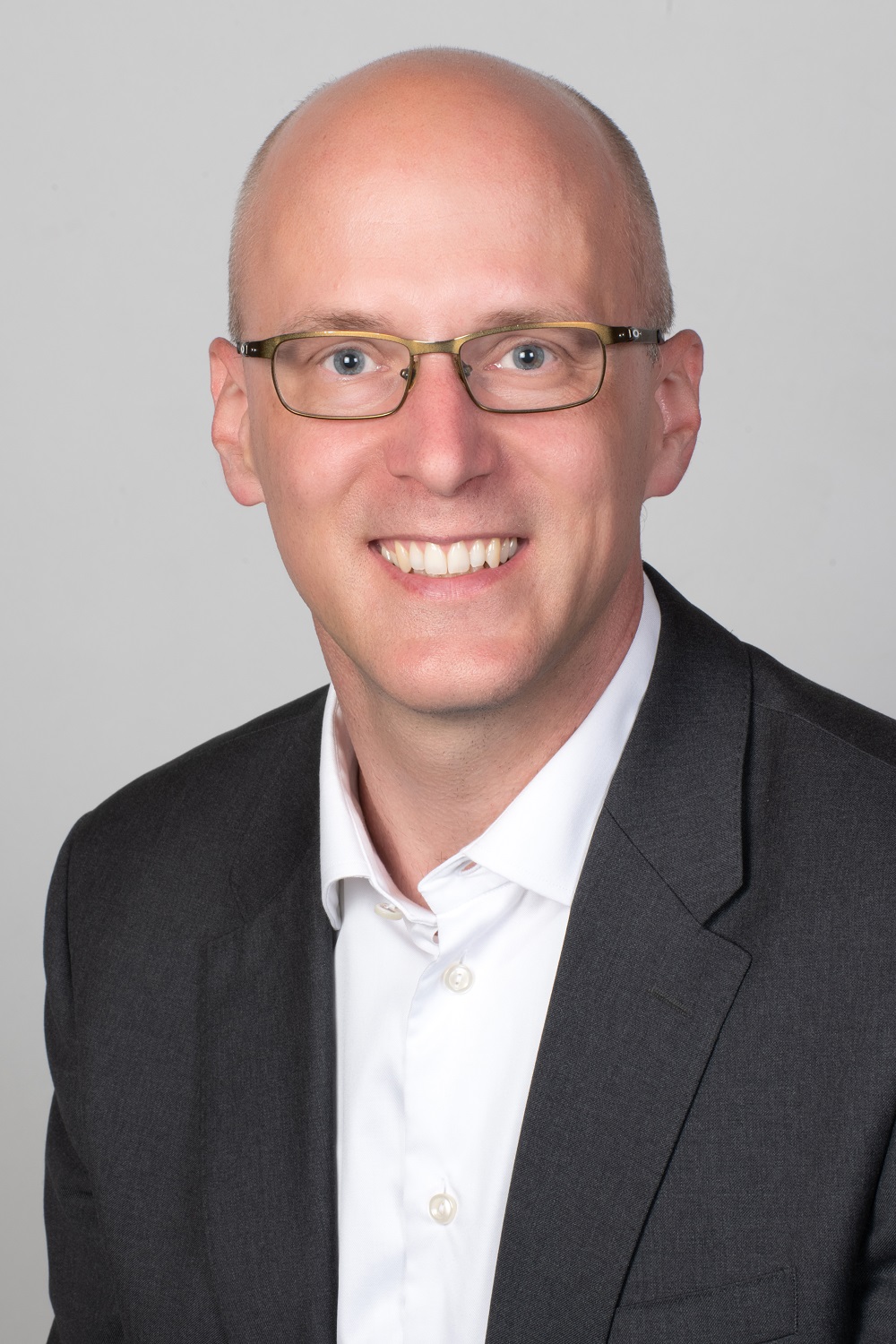
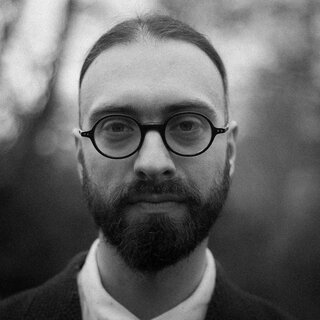
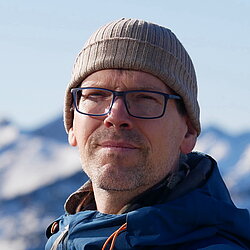
Prof. Dr. Matthias Tichy is a Full Professor and head of the Institute of Software Engineering and Programming Languages at Ulm University, Germany, since 2015. His research focuses on domain-specific languages (DSLs), model-driven engineering (MDE), self-adaptive software , and cyber-physical systems , with an emphasis on safety-critical applications and graph transformation formalisms. He employs empirical research methods to evaluate technical contributions and human factors in software engineering. University: Ulm University Role: Professor & Institute Head Research Interests span domain-specific languages for mechatronic systems, collaborative modeling , performance prediction in model transformations, and software evolution in industrial contexts. His work often bridges graph transformations and safety assurance for self-adaptive systems. Recent Publications highlight trends in model versioning (e.g., operation-based caching), DSL design (e.g., flowR for R code analysis), and automotive software testing (e.g., clustering test case specifications). He frequently collaborates with international institutions on topics like cyber-physical systems and IoT resilience . Key Collaborations include projects with Chalmers University, University of Gothenburg, and industrial partners like dSPACE GmbH. His grants and industry partnerships focus on automotive software , robotics , and self-healing systems .
Prof. Dr. Helge Rhodin is a faculty member at the University of Bielefeld, serving as Head of the Visual AI for Extended Reality Group within the Faculty of Engineering. His research activities are centered at the Center for Cognitive Interaction Technology (CITEC), a central academic institute at the university focused on interdisciplinary research in cognitive systems, robotics, and human-computer interaction. His office is located in CITEC building room 3-225, with secretariat contact via susanne.strunk@uni-bielefeld.de. Professor Rhodin's research focuses span multiple cutting-edge areas in computer vision and artificial intelligence. His primary interests include Computer Vision, Artificial Intelligence, Extended Reality, Human-Computer Interaction, 3D Reconstruction, and Motion Capture. His work demonstrates strong interdisciplinary connections between the university's 'Socio-Technical World' strategic research area, which examines how humans, robots, and AI interact in complex environments. Analysis of Professor Rhodin's recent publications reveals a consistent focus on advancing techniques for human and object representation in virtual and augmented environments. His work spans from fundamental computer vision techniques like keypoint detection and motion capture to advanced applications in digital twin generation, neural rendering, and animal behavior analysis. Notably, his research shows practical applications in sports science (particularly skiing analysis) and biological motion tracking. Within the university governance structure, Professor Rhodin serves as a member of both the Habilitation Committee and the Faculty Conference of University Professors within the Faculty of Engineering, indicating his active participation in academic leadership and quality assurance processes.
Jordi Tura i Brugués is an Associate Professor at the Leiden Institute of Physics (LION) and a Principal Investigator in the Applied Quantum Algorithms group. He holds a double degree in mathematics and telecommunications engineering from the Polytechnic University of Catalonia and a Master's in Applied Mathematics (Algebra and Geometry). Prior to joining Leiden, he completed his Ph.D. at ICFO - The Institute of Photonic Sciences under Prof. Maciej Lewenstein and Dr. Remigiusz Augusiak, followed by postdoctoral work at the Max Planck Institute of Quantum Optics under Prof. Ignacio Cirac. Research Focus : Quantum algorithms, device-independent quantum information, tensor networks, quantum machine learning, entanglement theory, and convex optimization. Funding : Supported by an ERC Starting Grant and former fellowships including Marie Curie, Alexander von Humboldt, and CELLEX-ICFO-MPQ. Collaborations : Active in international conferences (QIP, QCrypt) and collaborations visualized via his network graph. Scientific Awards : ERC Starting Grant CELLEX-ICFO-MPQ Fellowship Marie Curie Individual Fellowship Alexander von Humboldt Postdoctoral Fellowship Other Interests : Programming competitions, football (supporting FC Barcelona), and violin performance with orchestras like Bruckner Akademie Orchester.
Nadeen Fathallah is a researcher at the University of Stuttgart, affiliated with the Analytic Computing group at KI. Her work spans AI applications for accessibility, computer vision, and knowledge engineering. Research Focus: Web accessibility, ontology learning, and LLM-based solutions for Deaf/Hard of Hearing communities Projects: Key contributor to the IKILeUS project (Integrated AI in Teaching) at the University of Stuttgart Teaching: Has served as teaching assistant and assistant lecturer at German International University, German University in Cairo, and The Knowledge Hub Her research explores: Automated detection/correction of web accessibility violations (e.g., AccessGuru platform) Improving video captions using large language models Accessibility tools for tabular data (EchoTables) Ontology learning pipelines (NeOn-GPT, LLMs4Life) Recent work shows a focus on combining LLMs with domain-specific challenges across multiple fields, particularly emphasizing inclusive design principles. Contact details: Office at Universitätsstraße 32, Stuttgart, Germany (Room: 2.312b). Available via +49 711 685 88130.
Professor Dr. Tom Hanika is affiliated with the University of Hildesheim , working in the Intelligent Information Systems (IIS) division within the Institute of Computer Science. His research bridges formal concept analysis , machine learning , and knowledge representation , focusing on geometric interpretations of data and explainable AI systems. Research Themes: Intrinsic dimensionality, lattice structures, and hybrid human-AI collaboration Teaching: Offers courses in databases, C++ programming, and semantic technologies Contact: Office (SC.C. 2.03), Phone +49 5121 883-40312, Email via contact form Recent publications highlight his work on geometric data analysis and formal context manipulation , including applications in graph neural networks, ordinal pattern recognition, and conceptual lattice visualization. His Collaborative Hybrid Human AI Learning framework demonstrates practical implementations of these theories. Current projects explore dimensionality resilience in machine learning models and topic flow visualization in academic networks, reflecting his dual focus on theoretical foundations and applied knowledge systems.
Zafeirakis Zafeirakopoulos is a researcher at the National and Kapodistrian University of Athens (Greece) in the ELIDEK project led by Prof. Maria Chlouveraki. His academic career includes roles as an assistant professor at Gebze Technical University (2016-2022) and postdoctoral research at University of Athens (Greece), Galatasaray University (Turkey), and University of Geneva (Switzerland) under the Eccellenza project of Prof. Jehanne Dousse. PhD in RISC - Research Institute for Symbolic Computation (supervised by Prof. Peter Paule and Prof. Matthias Beck) Current affiliations: Mathematics department of National and Kapodistrian University of Athens Service roles: Information Director of ACM SIGSAM, Associate Editor of ACM CCA His research focuses on symbolic computation, discrete mathematics, and computational geometry. He has developed algorithms for parametric curve topology (PTOPO) and linear Diophantine systems (Polyhedral Omega), emphasizing efficiency and geometric interpretations. Recent work involves Julia/Maple implementations for practical applications. Publication trends highlight interdisciplinary work in symbolic algorithms, polyhedral geometry, and combinatorial optimization. He actively contributes to international conferences like ACA 2025 (co-organizer) and SCALE 2022.
Prof. Shmuel Avidan serves as a Professor in the School of Electrical Engineering at Tel Aviv University's Iby and Aladar Fleischman Faculty of Engineering. Holding a Ph.D. from Hebrew University's School of Computer Science (1999), he brings extensive industry experience from Adobe, Mitsubishi Electric Research Labs, MobilEye, and Microsoft Research to his academic role. His educational trajectory features: Ph.D. in Computer Science, Hebrew University of Jerusalem (1999) Avidan's research centers on pixel-centric computational problems, with seminal contributions in video object tracking and 3D object modeling from 2D images. His work spans computer vision, image processing, and machine learning, emphasizing practical applications in industrial settings. Current investigations explore neural rendering, foundation models, and diffusion-based architectures for visual understanding. Recent publications (2023-2025) demonstrate concentrated innovation in neural radiance fields (NeRF), category-agnostic pose estimation, and texture-aware segmentation. These works increasingly integrate foundation models with domain-specific applications in medical imaging, autonomous systems, and materials science, reflecting a strategic shift toward scalable vision systems. Though specific awards aren't documented in source materials, his prolific publication record and sustained industry partnerships signify substantial field impact. His research group maintains active collaboration with leading technology firms, translating academic discoveries into real-world solutions. Professor Avidan mentors graduate students in computer vision while securing competitive grants for projects at the intersection of theoretical computer vision and industrial implementation. His lab focuses on developing robust algorithms for challenging visual environments, particularly in autonomous driving and medical imaging contexts. Leading an active research group within Tel Aviv University's Electrical Engineering department, he drives innovation in neural rendering and vision-language models. The team regularly contributes to premier conferences including CVPR, ICCV, and ECCV, maintaining strong industry ties through ongoing partnerships with automotive and imaging technology companies.
Adam Misik is a researcher at the Chair of Media Technology (Prof. Steinbach) within the College of Engineering at the Technical University of Munich. He earned a B.Sc. in 2019 and M.Sc. in 2022 in Electrical Engineering and Information Technology, with study visits at EPFL and Télécom ParisTech. Since June 2022, he has been an external PhD student at Siemens AG. His research focuses on multimodal sensor data analysis using computer vision and deep learning techniques, particularly for 3D reconstruction and localization problems. His work intersects with fields like haptic communication , indoor mapping , and human activity understanding . Key publication trends include point cloud registration , hyperbolic learning , and equivariant neural networks . Recent works address surface material classification (2025), CAD model retrieval (2025), and SLAM systems (2024). Education: B.Sc. (2019), M.Sc. (2022) in Electrical Engineering and Information Technology, TU Munich Current Role: External PhD student at Siemens AG since 2022 Research Affiliation: Chair of Media Technology at TU Munich, part of the Munich Institute of Robotics and Machine Intelligence (MIRMI)
Dr. Inka Hähnlein is a Researcher at the Department of Educational Psychology within the Faculty of Philosophy III at Martin Luther University Halle-Wittenberg. Her academic trajectory includes doctoral studies at the University of Passau and ongoing research positions focused on educational psychology and technology-enhanced learning since 2018. Her research explores: Epistemological beliefs and metacognitive processes in learning Knowledge modeling and domain representation methodologies Instructional interventions for teacher education Technology-mediated learning environments She has developed specialized instruments like the StEB inventory for assessing teacher candidates' epistemological frameworks. Hähnlein's publications demonstrate strong emphasis on: Experimental studies in mathematics education Knowledge visualization techniques Psychometric validation of educational assessments Technology-supported teacher development Her work frequently employs quasi-experimental designs and knowledge modeling approaches. As a member of the university's Commission on the Future of Studies and Teaching, she contributes to pedagogical development. She also prepares examination materials for state teaching certifications in psychology, demonstrating teaching-related engagement despite her primary research focus.
Yannick Rudolph, M.Sc., is a Research Associate at the Institute for Business Information Systems (IIS) within Leuphana University of Lüneburg. His work focuses on Machine Learning , Artificial Intelligence , and Data Science , with particular emphasis on multiagent systems, explainability, and network modeling. His research interests span Temporal and spatiotemporal modeling of complex systems Deep learning architectures (CNNs, VAEs, GNNs) Information propagation analysis in neural networks AI applications in sports analytics and digital transformation Recent publications highlight trends in masked autoencoders , event classification in soccer , and conditional dependency modeling , reflecting his expertise in integrating theoretical machine learning with real-world application domains. Contact: yannick.rudolph@leuphana.de | Office: C 4.318b, Universitätsallee 1, Lüneburg, Germany
Klaus Stein is a part-time lecturer at the Chair of Heritage Conservation , Otto-Friedrich University of Bamberg. His work bridges digital technologies , spatial modeling , and cultural heritage through interdisciplinary research projects. Co-leader of the UrbanMetaMapping project (BMBF-funded) analyzing WWII war damage maps Developed KTF (Wiki-based terminology framework) for SMEs Contributed to COM (Communication-Oriented Modeling) DFG research network Active in EMN-MOVES project for age-friendly mobility solutions His research focuses on digital heritage , social network analysis , and collaborative GIS , with over 20 years of publications in spatial cognition and information systems . While his primary role involves teaching in the Master's program in Digital Heritage Technologies , he also contributes to open-source GIS and web mining methodologies. Key projects include: Find Diversity (BioDiv2Go): Promoting biodiversity awareness via location-based games Virtual Spaces : Digital reconstruction of historical church color schemes
Prof. Dr. Alexander Ecker is Professor of Data Science at the Institute of Computer Science, University of Göttingen, and concurrently holds the prestigious Max Planck Fellow position at the Max Planck Institute for Dynamics and Self-Organization. Since 2020 he also serves on the Executive Board of the Campus Institute Data Science in Göttingen. He leads the Neural Data Science research group, comprising 14 PhD students and 2 postdoctoral researchers, focusing on the interface of machine learning and computational neuroscience. His educational background includes a Dr. rer. nat. in Neuroscience (2014) from the Graduate School of Neural and Behavioral Sciences/IMPRS, University of Tübingen, followed by post-doctoral and group-leader positions at the University of Tübingen and the Max Planck Institute for Biological Cybernetics. Research Interests Machine Learning & Deep Learning: developing novel algorithms for representation learning and generative modeling. Computational Neuroscience: large-scale data-driven modeling of visual cortical circuits. Visual Perception: bridging biological vision and computer vision via biologically inspired architectures. His work has produced a steady stream of influential publications (2019-2025) in leading journals such as Nature Communications , Nature , Nature Methods , PLOS Computational Biology , ICLR , NeurIPS , and CVPR . The publications trend toward integrating high-resolution neural recordings with state-of-the-art machine-learning models to uncover principles of sensory processing, neuron-type classification, and behavior. Scientific Awards & Honors Max Planck Fellow, Max Planck Institute for Dynamics and Self-Organization (ongoing) Executive Board Member, Campus Institute Data Science, Göttingen (since 2020) Teaching, Advising & Grants Regularly teaches advanced courses: “Deep Learning for Image Synthesis”, “Current Topics in Deep Learning”, and “Graph Machine Learning”. Supervises 14 current PhD students and 2 postdocs within the Neural Data Science Group. Offers numerous Bachelor’s and Master’s thesis projects, with topics ranging from neuronal morphology clustering to primate vocalization analysis. Leads or co-leads large collaborative consortia with labs in Göttingen, Tübingen, Baylor College of Medicine, and other institutions across the US and Germany. Labs & Teams The Neural Data Science Group operates at the Institute of Computer Science, University of Göttingen, and is tightly integrated with the Max Planck Institute for Dynamics and Self-Organization. The group maintains active collaborations with over a dozen partner laboratories, including groups led by Fabian Sinz, Andreas Tolias, Thomas Euler, Tim Gollisch, and Viola Priesemann, fostering an interdisciplinary environment that spans computer science, physics, biology, and psychology.
Fabian Dombrowski is a Researcher at the Educational Media Information Center (IZBM) of the Leibniz Institute for Educational Media (GEI) since 2023. He contributes to projects like The Evolution of the Textbook (MWK) and a DFG-funded initiative on Digitization and Indexing of Historical Textbooks focusing on religious education. Previously, he worked on the DFG OCR4all project. Education: MA in Latin, European Ethnology, and History (with Digital History focus) from Humboldt University Berlin Research Focus: Digital methods for historical analysis, knowledge systems' evolution, and materiality of recording techniques (card indexes, textbooks, databases) Technical Expertise: Named Entity Recognition (NER), Named Entity Disambiguation (NEL), OCR technologies, and network modeling for reconstructing historical relationships His publications emphasize interdisciplinary approaches combining Digital Humanities with History of Knowledge , featuring projects like SchulbuchEvolution and DigiRel . He actively presents at conferences on topics like Textbook Digitization and Prosopographic Data Mining , while contributing to educational datasets on historical German textbooks.
Alexander Wolff is a Professor at the Chair of Algorithms and Complexity within the Institute of Computer Science at the University of Würzburg. His work focuses on graph drawing, computational geometry, and algorithmic complexity, with applications in geographic information systems and network visualization. Chair of Algorithms and Complexity, Institute of Computer Science, University of Würzburg (since 2009) Managing Director, Institute of Computer Science (2011–2013, 2015–2017) Editorial roles in journals like JoCG and JGAA Conference leadership in Graph Drawing (GD) and SOFSEM His research explores geometric graph representations, obstacle numbers, and parameterized complexity. Recent publications address level planarity, polyhedral surface adjacency, and metro map visualization. Collaborative projects include algorithmic quality assurance and interactive industrial network visualization. Wolff’s work bridges theoretical graph algorithms with practical applications, such as optimizing public transport schematics and enhancing data accessibility. He has supervised numerous PhD students and co-authored over 100 publications, with editorial and organizational roles in major computational geometry and graph drawing conferences.
Prof. Dr. Didier Stricker is a leading academic in computer science, serving as Scientific Director at the German Research Center for Artificial Intelligence (DFKI) and Professor at the University of Kaiserslautern-Landau (RPTU). His career spans over two decades, including leadership roles at Fraunhofer IGD and founding the Augmented Vision research unit at DFKI/RPTU, which now includes ~30 researchers. Education: Electrical Engineering (Technical University of Grenoble, Karlsruhe) PhD: Computer Vision-based Calibration and Tracking Methods for Augmented Reality (2002, TU Darmstadt) His research focuses on virtual and augmented reality , computer vision , human-computer interaction , and on-body sensor networks . He leads major EU/national projects like LUMINOUS (Language-Augmented XR) and SHARESPACE (Ethical Hybrid Shared Spaces), with industrial partnerships including Sony, Google, and John Deere. Recent publications emphasize 3D reconstruction , neural network optimization , and XR systems . Key trends include event camera processing , scene flow estimation , and multimodal AI for industrial applications . He holds patents in AR tracking and has received the 2006 Innovation Prize from the German Society of Computer Science. Scientific Awards : Innovation Prize (2006) Best Paper/Demonstration Awards at ISMAR, EUSIPCO, CVPR, and ICRA As a reviewer for journals and conferences in VR/AR and computer vision, he contributes to shaping research standards. His lab ( AG Augmented Vision ) combines academic and industrial collaborations to advance cognitive interfaces and extended reality systems.