Stefan Balke is a Researcher at the AudioLabs Erlangen, Friedrich-Alexander-Universität Erlangen-Nürnberg (FAU), focusing on wind music research and Music Information Retrieval (MIR). Previously, he held a PostDoc position at the Institute of Computational Perception, JKU Linz (2018–2019) and later worked as a Data Scientist and Team Lead in industry. He temporarily served as a professor at Hochschule Weserbergland in 2023/24. Education: PhD (Dr.-Ing.) in MIR from FAU (2018), Electrical Engineering studies at Leibniz Universität Hannover (2008–2013). Research Interests: Music Information Retrieval, Deep Learning, Jazz and Wind Music Analysis, Dataset Development. His work includes creating datasets like ChoraleBricks (wind music) and JSD (jazz structure analysis), and tools like trackswitch.js for audio visualization. Grants & Projects: Secured 35k€ funding for his orchestra through the 'Engagiertes Land' program (2024). Collaborated on exhibits such as 'The Listening Machine' (Ars Electronica) and 'Con Espressione!' (mathematics of music exhibition). Contributions: Active on GitHub with repositories for datasets (choralebricks, jsd) and tools. Co-developed web-based audio tools and contributed to open-source projects like Sonic Visualiser and librosa.
Florian Frommlet holds positions in two faculties: the Faculty of Business, Economics and Statistics (Department of Statistics and Operations Research) and the Faculty of Computer Science (Research Group Visualization and Data Analysis). His academic rank is Senior Lecturer. His research focuses on statistical methodologies, optimization, and computational statistics, with applications in genomics and data analysis. Key research interests include statistical properties, high-dimensional data analysis, and genome-wide association studies. He has contributed to projects such as Optimal selection procedures in genome wide association studies (2010–2014), funded by research grants. Notable publications span topics like multiple testing procedures and semidefinite programming bounds in combinatorial optimization. No academic awards or formal advisees are listed. His interdisciplinary work bridges statistics, computer science, and genomics, reflecting his dual affiliation across faculties.
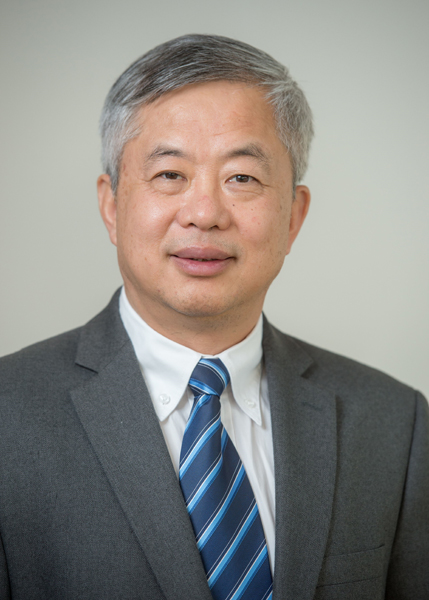
Chen Chang-Wen is a Chair Professor of Visual Computing at The Hong Kong Polytechnic University (2021–present). Previously, he was Empire Innovation Professor at the University at Buffalo (2008–2021) and held leadership roles including Dean of the School of Science and Engineering at CUHK Shenzhen (2017–2020). His research focuses on multimedia systems, signal processing, and communication. He is a Fellow of IEEE and SPIE, and has received numerous awards including the Alexander von Humboldt Research Award (2010) and the SUNY Chancellor's Award (2016). Chen has authored over 420 publications and holds three US patents. His work emphasizes interdisciplinary applications in visual computing, including contributions to autonomous systems, edge networks, and video quality assessment. He currently serves as Editor-in-Chief of IEEE Transactions on Systems, Man, and Cybernetics: Systems and leads initiatives in global university rankings and accreditation for engineering programs.
Daniel Pahr is a University Assistant and PreDoc Researcher at the Department of Computer Graphics at TU Wien. His work focuses on innovative methods for physicalizing digital data, particularly in medical and educational contexts. He holds a BSc and MSc in Computer Science from TU Wien, with his Master's thesis titled Vologram: Educational Craftworks for Volume Physicalization exploring affordable anatomical sculpture creation from medical imaging data. Current roles include teaching in courses like Introduction to Visual Computing and Seminar in Computer Graphics . His research emphasizes data physicalization through tangible artifacts, combining computer graphics with hands-on education. Notable projects include elastic volume physicalization techniques and interactive educational sculptures. Recent work investigates physical representations of dynamic processes and network visualizations, with publications in IEEE Transactions on Visualization and Computer Graphics and Computers & Graphics. His research bridges computational methods with tangible interaction, aiming to enhance understanding through multisensory learning tools.
Michaela Tuscher is a PreDoc Researcher in the Visual Analytics department at Technische Universität Wien (TU Wien), focusing on interdisciplinary research at the intersection of Computer Science, Art History, and Cultural Heritage. Her work emphasizes dynamic social network analysis and information visualization techniques. Education: Diploma Thesis (2023) on quantitative evaluation of visual content interpretation at TU Wien. Projects: Involved in ArtVis (2022–2027), SANE (2024–2027), and VaCoViCu2 (2023–2027). Contact: michaela.tuscher@tuwien.ac.at | +43-1-58801-193706 Her research spans network visualization, survey methodologies, and visual analytics in artistic contexts. Recent publications include peer-reviewed articles in Computer Graphics Forum (2025) and conference contributions at EuroVisShort (2024) and EuroVis (2024).
Jules Wulms is a researcher at the Institute of Logic and Computation, Vienna University of Technology (TU Wien), within the Faculty of Informatics. His work focuses on computational geometry, algorithm design, and visualization techniques. He has contributed to areas such as graph drawing, geometric algorithms, and dynamic data structures. Wulms' research emphasizes theoretical foundations with applications in spatial data analysis and information visualization. His academic contributions include studies on planar graph modifications, dynamic point labeling, and reconfiguration problems in modular robotics. Wulms collaborates frequently with institutions like TU Wien and international conferences, publishing in venues like the Journal of Computational Geometry and ACM Transactions on Spatial Algorithms and Systems. His doctoral thesis, available online, further details his foundational work in algorithmic complexity and geometric computing. Key themes in his publications include optimizing geometric structures (e.g., minimizing corners in grids), developing efficient algorithms for dynamic datasets, and exploring stability in kinetic frameworks. While no specific awards are listed, his extensive publication record highlights his impactful contributions to theoretical computer science and computational geometry.
Overview Pedro Hermosilla Casajus is an Assistant Professor at the Department of Computer Vision within the Faculty of Informatics at Technische Universität Wien (TU Wien). His research focuses on advanced computer vision techniques with applications in medical imaging, 3D scene understanding, and deep learning methodologies. He is actively involved in teaching multiple courses including Fundamentals of Computer Vision, Deep Learning for Visual Computing, and Scientific Research and Writing. Projects & Collaborations MyeFLOW (2020–2025) : Developing automated analysis systems for flow cytometry data. EVOCATION (2018–2022) : Real-time shape acquisition technologies. Modeling the World at Scale (2020–2026) : Large-scale 3D modeling techniques. Research Highlights His work bridges computer vision with medical diagnostics, particularly in measurable residual disease detection using flow cytometry. He explores geometric deep learning for 3D point cloud analysis and scene graph generation, advancing unsupervised semantic segmentation methods. Recent contributions include stylized Gaussian splatting for neural rendering and open-vocabulary 3D scene understanding frameworks. Teaching He teaches core courses like Fundamentals of Computer Vision and supervises student projects in medical informatics, visual computing, and human-centered computing.
Stefan Neumann is an Assistant Professor at TU Wien, funded by a WWTF VRG grant, and an associate faculty member at the Complexity Science Hub. His research focuses on algorithms for data science and social network analysis, including opinion dynamics, graph algorithms, and scalable algorithms with provable guarantees. He coordinates the Machine Learning curriculum for the Master's program at TU Wien. Education: Ph.D. from the University of Vienna (advised by Monika Henzinger), postdoc at Brown University with Eli Upfal, and WASP assistant professor at KTH Royal Institute of Technology. He won the Heinz Zemanek Award and an Award of Excellence from the Austrian federal government. Research interests include: Foundations of data science: Practical algorithms with theoretical guarantees Social network analysis: Impact of timeline algorithms on polarization Graph algorithms and dynamic data structures Projects include Towards Trustworthy Recommendation Systems for Online Social Networks (2023–2031, funded by Vienna Science and Technology Fund). Teaching: Courses on machine learning, algorithms, and research writing. Advises PhD students like Sebastian Lüderssen and manages a team of student assistants. Labs/Teams: Active in TU Wien's Machine Learning Research Unit and collaborates with the Complexity Science Hub on interdisciplinary projects.
Martin Nöllenburg is a Full Professor in the Department of Algorithms and Complexity at TU Wien, Vienna University of Technology. He holds roles as Curriculum Coordinator for the Bachelor and Master’s programs in Theoretical Informatics and Algorithms and Complexity. His research focuses on algorithm engineering, computational geometry, graph algorithms, and information visualization. He leads projects such as 'Parameterized Graph Drawing' and 'Human-Centered Algorithm Engineering', funded by WWTF and FWF. His research interests span algorithm design, graph drawing, and visualization techniques for networks and biological systems. Recent work includes advancements in boundary labeling, graph bundling, and metro map visualization. He has supervised over 20 graduate students, producing impactful contributions to visualization and algorithmic research. Key contributions include the development of GDmetriX (a NetworkX extension for graph metrics) and studies on dynamic map labeling and combinatorial optimization. He actively participates in academic governance, serving on TU Wien’s Faculty Council and Curriculum Commission.
Sara Di Bartolomeo is a Researcher in the Algorithms and Complexity group at the University of Technology Vienna , Faculty of Informatics. Her work focuses on advanced graph visualization techniques and network analysis. Projects: Simultaneous Multiprojection Graph Visualization (FWF-funded), ArtVis (2022–2027), SANE (2024–2027), SMGV-Esprit (2024–2027) Contact: sara.bartolomeo@tuwien.ac.at Her research emphasizes graph algorithms , computational geometry , and data visualization , particularly in handling uncertainty and physicalization of networks. Recent publications explore animated node-link diagrams, game-based network analysis, and BioFabric pattern optimization. Contact: sara.bartolomeo@tuwien.ac.at
Henry Ehlers is a PreDoc Researcher and PhD Candidate at the Vienna University of Technology (TU Wien), working within the Faculty of Informatics, Institute of Visual Computing & Human-Centered Technology, specifically in the Computer Graphics Group (E193-02). He holds the position of University Assistant (Univ.Ass.) and is actively pursuing his doctoral studies under the supervision of Renata Raidou since 2021, with expected completion in 2024. His research focuses on advanced visualization techniques, particularly in the areas of network and graph visualization. Ehlers specializes in biological network visualization, compound graphs, uncertainty visualization, and data physicalization. His work bridges theoretical computer science with practical applications in visual analytics, creating innovative methods for representing complex network structures and making them accessible to domain experts. Analysis of his publication record reveals a strong emphasis on improving network visualization techniques, with particular focus on biological applications, uncertainty representation, and physical data representations. His research trajectory shows increasing sophistication in addressing visualization challenges across multiple domains including biology, environmental science, and social networks. Recent publications demonstrate his leadership in developing novel interaction techniques and visualization metaphors for complex data structures. Ehlers is actively involved in multiple research projects including ArtVis (2022-2027), SANE (2024-2027), and SMGV-Esprit (2024-2027), which support his research in visualization techniques. His collaborative approach is evident in his extensive co-authorship network across international institutions and research groups at TU Wien. As a member of the Visualization Group led by Renata Raidou, Ehlers contributes to the team's mission of developing innovative visualization solutions for complex data challenges. His work particularly focuses on creating more intuitive and effective ways to represent network structures through both digital and physical means, pushing the boundaries of how we interact with complex relational data.
Philipp-Lorenz Glaser is a PreDoc Researcher at the Department of Business Informatics, Technische Universität Wien. His research focuses on conceptual modeling, enterprise architecture, machine learning applications, and knowledge graph construction. Role: PreDoc Researcher (E194-03) Contact: philipp-lorenz.glaser@tuwien.ac.at His work explores methods for encoding semantic information in conceptual models to improve machine learning applications, with a focus on FAIR datasets and hybrid modeling approaches. Key themes include: Enterprise architecture modeling practices Graph-based data representation Integration of textual and graphical modeling Development of modeling tools (e.g., Sprotty-based solutions)
Ricardo Baeza-Yates serves as Director of Research at the Institute for Experiential AI at Northeastern University's Silicon Valley campus. He also maintains part-time professor positions at Universitat Pompeu Fabra in Barcelona and Universidad de Chile in Santiago. Previously, he was VP of Research at Yahoo Labs (2006-2016) and CTO of NTENT, a semantic search technology company. His academic career spans over three decades with significant contributions to both industry research and academia. Dr. Baeza-Yates earned his Ph.D. in Computer Science from the University of Waterloo, Canada, in 1989. His academic journey includes professorships at Universidad de Chile (1989-2004), ICREA Professor at Universitat Pompeu Fabra (2004-2005), and ongoing part-time appointments at both institutions since 2004 and 2006 respectively. His research spans algorithms, information retrieval, web search and mining, data science, with increasing emphasis on responsible AI and ethical considerations in technology. He is particularly renowned for his work on bias in search systems, algorithmic fairness, and the societal impacts of AI. His expertise uniquely bridges technical aspects of search and data mining with ethical and societal implications, making him a leading voice in the responsible AI movement globally. His recent scholarly output demonstrates a strong focus on bias detection, fairness metrics, responsible technology development, and the societal impacts of algorithms. The work spans technical machine learning and information retrieval while increasingly addressing ethical and social dimensions across diverse application areas from finance to healthcare to social media. Dr. Baeza-Yates has received numerous prestigious awards throughout his distinguished career: 2019 Corresponding Member of the Brazilian Academy of Sciences 2019 Award Salvà i Campillo to the Person of the Year 2018 National Research Award for applied research and technology transfer 2012 ASIS&T Best Information Science Book Award for Modern Information Retrieval 2011 IEEE Fellow for contributions to computer science development 2009 ACM Fellow for contributions to information retrieval algorithms 2002 Corresponding member Chilean Academy of Sciences As an educator and mentor, Dr. Baeza-Yates has advised numerous students throughout his academic career at multiple institutions. His textbook 'Modern Information Retrieval' has become a standard reference in the field, influencing generations of computer scientists. He has secured significant research funding through his leadership roles at Yahoo Labs and academic grants, demonstrating his ability to bridge theoretical research with practical applications. Dr. Baeza-Yates is actively involved with the DATA Lab at Northeastern University's Khoury College of Computer Sciences and previously founded the Web Science and Social Computing Research Group at Universitat Pompeu Fabra. He serves on multiple high-impact advisory boards including the Global AI Ethics Consortium, Global Partnership on AI, and IADB's fAIr LAC Initiative for Latin America and the Caribbean, reflecting his global influence in shaping responsible AI practices.
Prof. Dr.techn. Davide Ceneda is a researcher at TU Wien, affiliated with the Visual Analytics Research Group (E193-07). His work focuses on advancing guidance systems and methodologies within visual analytics, emphasizing user-centered design and mixed-initiative interactions. He holds a doctoral degree in guidance-enriched visual analytics (2020). Research Interests: Visual analytics, guidance design, human-computer interaction, temporal data visualization, and user-assisted systems. His recent studies explore trust models in AI-driven guidance, task-driven frameworks, and automated assistance mechanisms. Publications: Ceneda’s recent work includes papers on guidance-enhanced temporal networks (TimeLighting), dual evaluation methodologies, and the Lotse framework. His research highlights a consistent focus on improving user experience through structured guidance. Collaborations: Works closely with experts like Silvia Miksch and Alessio Arleo. Co-developed COVIs for pandemic data analysis and contributed to the Circle of Thrones radial infographic project. Awards: No specific awards mentioned, but publications reflect high-impact contributions to the field.
Prof. Silvia Miksch is a full professor in the Department of Visual Analytics at TU Wien. Her research focuses on visual analytics, time-oriented data visualization, and human-computer interaction. She leads projects in cultural heritage analysis, fraud detection, and pandemic data visualization. Her work bridges computer science with digital humanities, emphasizing user-centric design and uncertainty modeling. Key contributions include guidance systems for VA environments and network visualization frameworks for art history. Affiliations: TU Wien (since 2000+) Research Labs: Network Lab, Visual Analytics Research Group Recent projects explore temporal patterns in artist exhibitions, parameter space exploration, and pandemic data communication. She has advised over 20 PhD/Master’s students, many contributing to VA systems like COVIS and NEVA. Awarded the VGTC Visualization Technical Achievement Award (2024) for foundational work in temporal visualization. Active in IEEE VAST and serves on journal editorial boards. Her labs develop open-source tools for interactive data exploration.


.jpg)