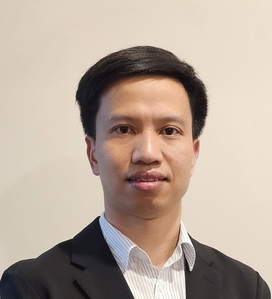
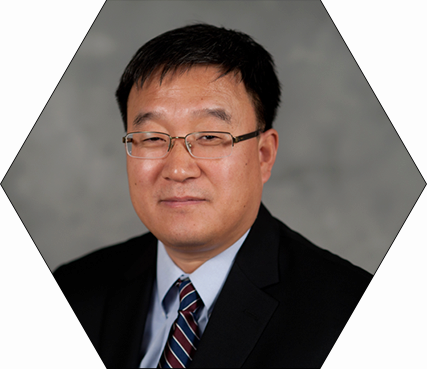
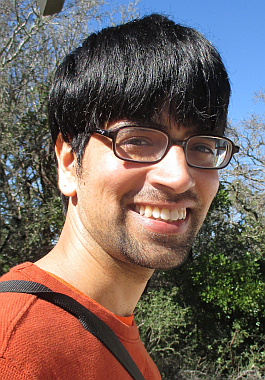
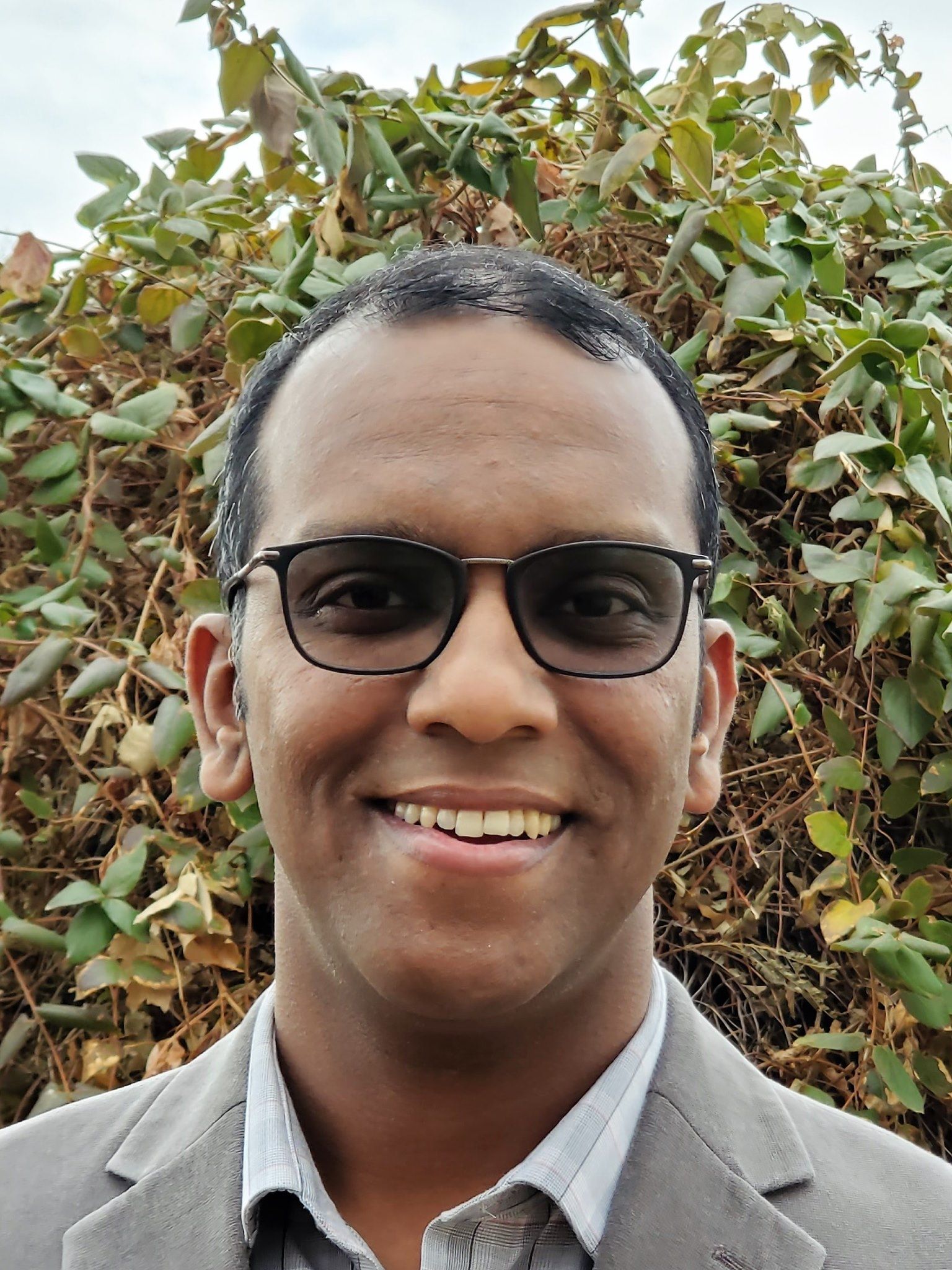
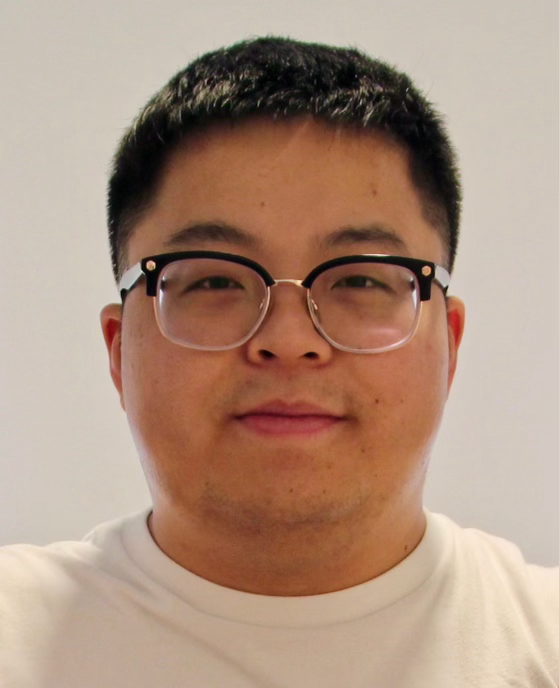
Alaa Alameldeen is an Associate Professor in the School of Computing Science at Simon Fraser University (SFU), part of the Faculty of Applied Sciences. Previously, he worked as a Research Scientist at Intel Labs (2006–2020) and held an Adjunct Faculty position at Portland State University (2008–2018). He earned a PhD in Computer Sciences from the University of Wisconsin-Madison (2006), and earlier degrees from Alexandria University, Egypt. His research focuses on computer architecture, including memory systems (processing-in-memory, cache/memory compression, security), energy-efficient architectures, and hardware-software co-design for machine learning. He advises PhD and MSc students in these areas and teaches advanced computing science courses. Key contributions include innovations in memory hierarchies, cache compression techniques, and mitigating hardware vulnerabilities. His work has been published in top conferences (e.g., ISCA, MICRO, HPCA) and patented in areas like near-memory processing and error correction. Alameldeen currently leads a research group exploring secure and high-performance memory architectures. He has supervised multiple graduate students, with many progressing to roles at leading tech companies and academic institutions.
Professor David Taubman is a distinguished academic serving as Professor and Deputy Head of School (Research) at the School of Electrical Engineering and Telecommunications (EE&T) at the University of New South Wales (UNSW) in Sydney, Australia. He is also co-director of Kakadu Software Pty. Ltd. and its affiliates Kakadu R&D and Kakadu GPU. With a career spanning over three decades, Professor Taubman has made significant contributions to the field of image and video compression, most notably as the author of the EBCOT coding algorithm adopted in the JPEG2000 international standard. Professor Taubman earned his B.Sc. in Mathematics and Computer Science (1986) and B.E. (Medal) in Electrical Engineering (1988) from the University of Sydney, followed by an M.Sc. (1992) and Ph.D. (1994) in Electrical Engineering from the University of California at Berkeley. His professional journey includes engineering work at the Electricity Commission of N.S.W. (1988-1990), research positions at Hewlett-Packard Laboratories in Palo Alto (1994-1998), and an academic career at UNSW where he progressed from Senior Lecturer (1998-2003) to Associate Professor (2004-2009) and finally to Professor (2009-present). He has held various leadership roles including Head of the EE&T Telecommunications Research Group (2003-2014), Head of the EE&T Signal Processing Research Group (2014-present), Director of Research for the School of EE&T (2011-2016), and Deputy Head of School (Research) since 2017. Professor Taubman's research interests center on image and video compression, with particular expertise in JPEG2000 standards and implementations. His work spans signal processing, wavelet transforms, scalable video coding, motion modeling, and multimedia systems. He has pioneered numerous compression algorithms and frameworks, including the EBCOT coding algorithm that became central to the JPEG2000 standard. His recent research focuses on efficient motion modeling with cuboidal partitioning, learned lifting-based transform structures, and high-throughput implementations of JPEG2000 for video applications. His work bridges theoretical foundations with practical implementations, as evidenced by the commercially successful Kakadu Software tools that have garnered around 500 commercial licensees. Analysis of Professor Taubman's recent publications reveals a consistent focus on advancing compression technologies with particular emphasis on scalability, efficiency, and adaptability. His work spans traditional image compression (JPEG2000 extensions), video coding (cuboid-based partitioning for UHD/360-degree video), and emerging applications (nanopore sequencing data compression). A notable trend is the integration of machine learning techniques with traditional compression frameworks, as seen in his work on learned lifting-based transform structures. His research maintains strong connections to real-world applications across diverse domains including medical imaging, astronomical data processing, and genomic sequencing. IEEE Fellow Engineers Australia Fellow (by invitation) Professor Taubman has served as Associate Editor for the IEEE Transactions on Image Processing for two four-year appointments (2003-2005 and 2010-2013). He has been actively involved in numerous research grants focused on image and video compression technologies, particularly those related to the JPEG2000 standard and its extensions. His work has received significant industry support, reflected in his consultancy with various U.S., Japanese, and Australian corporations. He has also contributed to international standards development as a member of Standards Australia Technical Committee MS-065 (mirroring ISO TC42 on Digital Photography) and as a constitutional member of Standards Australia Technical Committee IT-029 (Coded Representation of Picture, Audio and Multimedia/Hypermedia Information). Professor Taubman co-directs Kakadu Software Pty. Ltd. and its research affiliates Kakadu R&D and Kakadu GPU, which have developed the commercially successful Kakadu Software tools for JPEG2000. His research group at UNSW focuses on advanced image and video compression techniques, with particular expertise in wavelet-based methods, scalable coding, and motion modeling. The group maintains strong industry connections and has contributed significantly to the development and standardization of image compression technologies worldwide.
Walid G. Aref is a Professor of Computer Science at Purdue University since Fall 1999. His research focuses on database systems, spatial and spatio-temporal data management, query processing, and indexing. He has led projects funded by NSF, NIH, and industry partners. Aref is a Fellow of the IEEE and has received awards including the NSF CAREER Award (2001) and VLDB’s Ten-Year Best Paper Award (2016). He serves as Editor-in-Chief of ACM Transactions on Spatial Algorithms and Systems and has authored numerous influential papers. Education: BSc/MSc from Alexandria University (Egypt), PhD from University of Maryland (1993). Research Interests: Extending database functionality for emerging applications like spatial, graph, and sensor databases. Notable contributions include the Chameleon project, AQWA system for big spatial data, and privacy-preserving Casper framework. Selected Projects: NSF-funded work on multi-predicate spatial queries, in-memory graph relational systems, and adaptive spatio-textual processing. Systems like Tornado (spatio-textual streams) and LocationSpark (distributed spatial data) exemplify his contributions. Awards: Multiple best paper awards, IEEE Fellow, and leadership roles in ACM SIGSPATIAL.
Fattane Zarrinkalam is an Assistant Professor in the School of Engineering at the University of Guelph. She holds a PhD from Ferdowsi University of Mashhad, Iran, and completed a Postdoctoral Research Fellowship at Ryerson University (2018–2020). Her research focuses on social media mining, semantic technologies, and user modeling, with applications in healthcare, legal tech, and e-commerce. She is a Vector Institute Postgraduate Affiliate and serves on editorial boards for journals like Information Processing & Management and IEEE Transactions on Network Science and Engineering . Her work emphasizes actionable insights from social data, including sarcasm detection, user interest prediction, and fairness in social media analytics. Zarrinkalam has contributed to over 30 peer-reviewed publications and holds multiple patents in data analysis and social media sentiment modeling. Education: PhD, Ferdowsi University of Mashhad, Iran Postdoctoral Fellowship, Ryerson University Research Scientist, Thomson Reuters Labs Research Interests: Semantic interpretation of social content User modeling via temporal analysis Social good applications (e.g., mental health, telecommunication) Fairness in social media mining Recent Work Trends: Her articles span network representation learning, dynamic user interest prediction, and interdisciplinary applications. Notable themes include neural networks for sarcasm detection, heterogeneous graph embeddings, and leveraging Twitter data for psychological insights. Awards & Service: Co-chair, International Workshop on Mining Actionable Insights from Social Networks (MAISoN) Editorial board roles for top journals Labs & Teams: Involved in interdisciplinary collaborations at the Vector Institute and partnerships with industry on legal tech and social analytics projects.
Xiaowen Zhang is a Professor of Computer Science at the College of Staten Island (CSI), City University of New York (CUNY), and a Doctoral Faculty Member at the CUNY Graduate Center. His academic work bridges theoretical and applied research in cybersecurity, information systems, and network technologies. Dr. Zhang holds a Ph.D. in Computer Science from the CUNY Graduate Center (2007) and a Ph.D. in Electrical Engineering from Northern Jiaotong University (1999), along with an M.A. from CUNY Queens College, an M.S. from Northern Jiaotong University, and a B.S. from Shanxi University. His research focuses on Cryptography, Information Security, Cybersecurity, Secure Biometrics, RFID Security & Privacy, Information Retrieval, and Wireless Sensor Networks . He explores both foundational cryptographic methods—such as secret sharing schemes and hash functions—and their practical implementations in secure systems, including RFID authentication protocols and data visualization platforms for sensor networks. The analysis of his recent publications reveals a consistent focus on security mechanisms in distributed and wireless environments . His work frequently combines cryptographic theory with system-level implementations, particularly in RFID and sensor networks. There is a strong trend toward privacy-preserving protocols, efficient data retrieval, and secure information sharing , often leveraging mathematical structures like Latin squares and Bloom filters. Dr. Zhang has been actively involved in mentoring students, as evidenced by numerous co-authored publications with graduate and undergraduate researchers. His contributions span journals such as Security and Communication Networks , Journal of Applied Security Research , and International Journal of Security and Networks , as well as major conferences including IEEE LISAT, ACM CODASPY, and IEEE Sarnoff Symposium.
Dr. Lesley Batty is a Reader in Ecological Education at the School of Geography, Earth and Environmental Sciences, University of Birmingham. She plays key leadership roles as Head of Wellbeing and Head of Employability and Placements within the School, reflecting her strong commitment to student development and inclusive education. Her educational background includes a PhD from the University of Sheffield, an MRes and BSc from the University of Reading, and a Postgraduate Certificate in Learning and Teaching from the University of Birmingham. She is a Senior Fellow of the Higher Education Academy and a HEFi Scholar, underscoring her excellence in teaching. Dr. Batty's research centers on the ecology of industrial pollution, particularly in post-mining landscapes. She investigates phytoremediation techniques for contaminated soils, focusing on heavy metals and polycyclic aromatic hydrocarbons (PAHs). Her work extends to ecological education, where she explores inclusive teaching practices, barriers in STEM laboratories, and the integration of employability skills into the curriculum. She is actively involved in national educational policy through her role as Lead Secretary of the British Ecological Society Special Interest Group in Teaching and Learning and as an Associate Editor for the Journal of Geochemical Exploration. Her recent publications reveal a dual focus: one stream on environmental contamination and remediation (e.g., metal and PAH pollution in brownfield sites, phytoremediation with bacteria and chelates), and another on innovative pedagogy in geography and ecology (e.g., virtual field trips, inclusive lab practices, and the future of fieldwork education). This reflects her unique position at the intersection of environmental science and educational leadership. Senior Fellow of the Higher Education Academy (HEA) HEFi Scholar Lead Secretary, British Ecological Society Special Interest Group in Teaching and Learning Dr. Batty is a dedicated educator and researcher who bridges the gap between environmental science and pedagogical innovation. She has made significant contributions to both her field of research and the national discourse on ecological education. Her leadership in student wellbeing and employability, combined with her research on pollution and inclusive learning, demonstrates a holistic approach to academic life. She actively supervises research, as evidenced by her co-authorship with doctoral researchers, and welcomes PhD applications in her areas of expertise. She is a key member of several research groups, including those focused on Physical Geography, Global Biogeochemistry, and Environmental Health Sciences at the University of Birmingham. Her collaborative work, especially in large consortia on conservation education, highlights her strong network and impact in the academic community.
Associate Professor Sonny Pham leads research in artificial intelligence at Curtin University's School of EECMS. His work balances theoretical foundations with practical applications in computer vision, data mining, and deep learning. As head of the IAMAI research group, he collaborates with industry partners on security systems, healthcare AI, and sustainable technologies. His research explores: Computationally efficient deep learning architectures Compressed sensing for high-dimensional data Robust statistical methods for real-world problems Applications in computer vision and industrial automation Recent publications demonstrate a focus on medical imaging interpretation and efficient neural networks, with applications spanning radiology report generation, semantic segmentation for autonomous systems, and cybersecurity. His team's work consistently bridges theoretical AI advancements with industrial applications. Honors include: Multiple WANMA Awards (2021-2024) for industry-impactful research INCITE Award for social impact technology (2024) IEEE Young Author Best Paper Award (2010) Over $5M in competitive research funding including MRFF and DFAT grants He leads the IAMAI research group with 12+ graduate students and coordinates Curtin's Master of Artificial Intelligence program. Industry collaborations include Alcoa Australia, iCetana, and HyprFire.
Jianjun (Jan) Shi is the Carolyn J. Stewart Chair and Professor at the H. Milton Stewart School of Industrial and Systems Engineering (ISyE) and holds a joint appointment with the George W. Woodruff School of Mechanical Engineering at Georgia Institute of Technology. He previously served as the G. Lawton and Louise G. Johnson Chair Professor of Engineering at the University of Michigan. His research focuses on system informatics and control for manufacturing and service systems, with notable contributions to quality improvement, cyber-physical systems, and data-driven methodologies. B.S. & M.S. in Electrical Engineering, Beijing Institute of Technology (1984–1987) Ph.D. in Mechanical Engineering, University of Michigan (1992) Dr. Shi’s research interests include process modeling, control systems, and quality engineering. He pioneered methodologies for in-process quality improvement and developed advanced frameworks for high-dimensional data analysis in manufacturing. His work integrates statistical methods, machine learning, and system informatics to enhance operational efficiency and product quality. He has published over 150 peer-reviewed papers and secured $19 million+ in research grants from NSF, DOE, and industry partners. His lab, the System Informatics and Control Group, collaborates with automotive, aerospace, and pharmaceutical sectors. Shi leads initiatives such as the Quality Science Center at the Chinese Academy of Sciences and serves on editorial boards of journals like IIE Transactions and ASME Transactions . Recipient of the IIE Albert G. Holzman Distinguished Educator Award (2011) Fellow of INFORMS, ASME, and IIE Academician of the International Academy for Quality Shi advises 26 Ph.D. graduates, many of whom hold faculty positions or leadership roles in industry. His research group’s innovations have been implemented in global manufacturing systems, yielding significant economic impacts. Current work includes 4D printing, cyber-physical system resilience, and federated learning for industrial data.
Sofya Raskhodnikova is a Professor in the Department of Computer Science at Boston University, part of the College of Arts and Sciences. She holds a Ph.D. from MIT and has held positions at Penn State University and postdoctoral fellowships at the Hebrew University of Jerusalem and the Weizmann Institute of Science. Her research focuses on sublinear-time algorithms, data privacy, approximation algorithms, and complexity theory. She is a recipient of the NSF CAREER Award and has contributed significantly to the theoretical foundations of privacy-preserving computation and algorithm design. Education: Ph.D. in Computer Science from MIT (2003), postdoctoral research at Hebrew University of Jerusalem and Weizmann Institute of Science (2003–2006). Visiting positions at UCLA, Harvard University, and the Simons Institute for the Theory of Computing. Research Interests: Sofya’s work bridges theoretical computer science and practical applications, emphasizing algorithms that operate efficiently on large datasets. Key areas include property testing (e.g., monotonicity, sortedness), differential privacy, and sublinear-time algorithms. She explores how algorithms can analyze data while preserving privacy guarantees and minimizing computational resources. Publications: Over 50 peer-reviewed articles in top venues such as STOC, FOCS, and SODA, with recent contributions focusing on dynamic graph algorithms under privacy constraints and robust property testing against adversarial noise. Professional Activities: Editor for ACM Transactions on Computation Theory and Algorithmica ; program committee chair for WOLA 2021 and CSR 2022; active in mentoring initiatives like Sigma Camp and Artemis. Advising & Students: Current advisees include Ephraim Linder and Debanuj Nayak. Notable alumni include Iden Kalemaj (Meta Research) and Nithin Varma (Max Planck Institute). She has supervised over 15 Ph.D. students and postdocs, fostering a collaborative research environment.
Jay Pujara is a Research Associate Professor in the Department of Computer Science at the University of Southern California (USC), affiliated with the Viterbi School of Engineering and the Information Sciences Institute (ISI). He directs the Center on Knowledge Graphs and leads research in artificial intelligence, specializing in knowledge graph construction, scalable machine learning, and probabilistic models. Education : PhD in Computer Science (University of Maryland, 2016), MS and BS in Computer Science from Carnegie Mellon University (2005 and 2004), with minors in Robotics, Mathematical Sciences, and Logic & Computation. Research Interests : His work focuses on probabilistic models for dynamic data, knowledge graph construction, entity resolution, and applications in NLP and social network analysis. He emphasizes scalable algorithms and real-world impact in domains like finance, climate science, and healthcare. Awards : Includes the SWSA Ten-Year Award (2023), Best Paper Awards at IUI 2019 and ISWC 2013, and grants totaling over $9M from DARPA, NSF, and industry partners. Grants & Mentorship : Principal Investigator on projects like "Artificial Domain-Understanding and Collaborative Agency" (DARPA) and "Explainable and Robust AI Agents" (NSF). Mentored over 50 students in PhD, MS, and undergraduate programs, focusing on knowledge graphs, NLP, and machine learning. Labs & Teams : Leads ISI’s Knowledge Graph and Neurosymbolic AI teams, coordinating the Open Knowledge Network (OKN) and tools like KGTK. Active in academic service, including roles on PhD admissions committees and ISI’s Space Management Committee.
Venkatesan Guruswami is a Chancellor's Professor in the Department of Electrical Engineering and Computer Sciences and Professor in the Department of Mathematics at the University of California, Berkeley. He previously served as faculty at Carnegie Mellon University for 13 years and held a Miller Research Fellowship at UC Berkeley. His research focuses on Theoretical Computer Science , particularly in Error-Correcting Codes , Approximation Algorithms , Quantum Computing , and Hardness of Approximation . Guruswami has made groundbreaking contributions to list decoding and quantum code constructions, with works featured in Science Magazine and the Journal of the ACM (where he serves as Editor-in-Chief). Education : B.Tech (1997, IIT Madras), Ph.D. (2001, MIT), Miller Research Fellowship (2001-02, UC Berkeley) Research Areas : Theory of error-correcting codes, approximation algorithms, pseudorandomness, probabilistically checkable proofs, and quantum coding theory Guruswami's recent work explores quantum LDPC codes , parameterized inapproximability , and stream decodable codes . He has received prestigious awards including the NSF CAREER award , David and Lucile Packard Fellowship , and Sloan Research Fellowship . His advising spans a wide range of students and postdocs, with notable contributions to coding theory and computational complexity .
Bruno Tiago da Silva Gomes is a Researcher in the Department of Electronics and Informatics at Vrije Universiteit Brussel (VUB), Belgium. His work focuses on FPGA-based hardware acceleration, biomedical signal processing, and embedded systems. He leads several high-impact projects, including ENACT (environmental health interventions) and Tech4Health (future health technologies). His research spans FPGA design, machine learning acceleration, and real-time signal processing. Education: PhD in Electronics and Informatics (2019, VUB), supervised by Professors Touhafi and Braeken. His thesis addressed streaming application acceleration on FPGAs. Research interests include Field-Programmable Gate Arrays (FPGA), biomedical sensors (e.g., photoplethysmography), beamforming, and high-level synthesis. He has co-authored over 60 publications and holds an h-index of 439. Key projects include OZR4103 (power-efficient AI for biomedical applications) and NSIS3 (decarbonisation technologies). His work integrates hardware-software co-design for edge computing and secure TinyML systems. Advising includes a Master’s thesis on PPG signal analysis. He contributes to datasets like the AMIVU Acoustic Map Imaging Dataset.
Abdullah Mueen is a Professor and Associate Chair in the Department of Computer Science at the University of New Mexico (UNM), where he has been since 2013. Previously, he worked as a Scientist in the Cloud and Information Sciences Lab at Microsoft Corporation. Research Interests : His work focuses on Temporal Data Mining , with emphasis on efficiency , interactivity , and interpretability . Key areas include Blockchain Data Mining (e.g., BitLink for Bitcoin cluster analysis), Seismic Data Mining (e.g., PAW for aftershock detection), and Social Media Mining (e.g., DeBot for Twitter bot detection). Article Trends : His recent publications span four domains: Seismology : Algorithms for earthquake data analysis (e.g., focal depth inference, aftershock classification). Blockchain : Temporal linkage of Bitcoin addresses (BitLink) and cryptocurrency fraud detection. Traffic Safety : Multi-LiDAR data fusion for real-time road safety monitoring. Time Series Methods : Innovations like MASS similarity search and DAMP anomaly detection for massive datasets. Scientific Awards : ACM SIGKDD Test-of-Time Award (2022) UNM Provost Research Leader Award UNM School of Engineering Junior Faculty Research Excellence Award KDD 2012 Doctoral Dissertation Contest Runner-Up KDD 2012 Best Paper Award Advising and Grants : He has mentored 11 PhD students now employed at institutions like Microsoft, Meta, and Lawrence Livermore National Lab. His research is funded by NSF , NIH , DARPA , AFRL , NEC , Exxon , Microsoft , and LANL .
Dong Li is an Assistant Professor in the Department of Computer Science and Electrical Engineering (CSEE) at the University of Maryland, Baltimore County (UMBC). His research focuses on wireless sensing, mobile computing, wearable sensing, multi-modal sensing, and smart health, aiming to develop affordable and accessible technologies to address healthcare equity and environmental sustainability challenges. He holds a PhD from the Manning College of Information and Computer Sciences at the University of Massachusetts Amherst, an M.Eng. in Software Engineering from Shanghai Jiao Tong University, and a B.S. in Computer Science from the University of Electronic Science and Technology of China. His work has been published in prestigious venues such as MobiCom, SenSys, IPSN, UbiComp, and HotNets. Key research themes include anomaly detection via knowledge graphs, privacy prediction models for social networks, and interactive recommendation systems. His interdisciplinary approach integrates machine learning, data mining, and cybersecurity to tackle real-world problems in health and environmental sustainability. Dr. Li’s contributions span theoretical advancements and practical system development, with a focus on bridging the gap between cutting-edge research and societal impact. His recent publications highlight innovations in data stream processing, weak supervision frameworks, and privacy behavior analysis in online platforms.
Li-Yang Tan is an Assistant Professor of Computer Science at Stanford University , focusing on theoretical computer science. His research emphasizes computational complexity, machine learning theory, and algorithm design. Education: Ph.D. in Computer Science from Columbia University , advised by Rocco Servedio His work explores: Boolean function complexity Decision tree learning algorithms Circuit lower bounds Computational-statistical tradeoffs Query complexity Massively parallel algorithms Recent publications analyze computational-statistical tradeoffs via NP-hardness, improve decision tree learning techniques, and establish direct sum theorems for query complexity. His research often bridges complexity theory, learning theory, and algorithm design, with applications in pseudorandomness and correlation clustering. Awards: Best Paper Award at FOCS Best Paper Award at CCC Best Paper Award at SAT Sloan Fellowship Li-Yang collaborates with students and researchers including Guy Blanc, Caleb Koch, and Carmen Strassle. He has delivered invited special issue papers at FOCS, CCC, and SAT conferences.