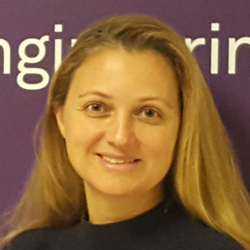
Prof. Amel BOUZEGHOUB is a Professor at Telecom SudParis, affiliated with the SAMOVAR research center. Her work focuses on AI, IoT, and data-driven systems with applications in smart environments, robotics, and education. She has contributed to over 50 peer-reviewed publications spanning machine learning, reinforcement learning, and semantic data processing. Research Interests: Her research bridges theoretical advances in machine learning with practical applications in smart homes, autonomous systems, and educational technology. She explores topics like human activity recognition, anomaly detection in social networks, and real-time data stream processing. Recent Trends: Her 2023-2024 work emphasizes explainable AI, reinforcement learning for autonomous systems, and multi-agent frameworks for stream reasoning. Earlier contributions include IoT-based supply chain traceability and distributed human activity recognition models. Grants & Projects: Key contributions include the ANR INCOME project on multi-scale context management for IoT systems and ACMES initiatives in educational technology. Labs/Teams: Active within the SAMOVAR lab at Telecom SudParis, collaborating with international teams in AI and robotics research.
Aaron Sidford is an Associate Professor in the Department of Management Science and Engineering and the Department of Computer Science at Stanford University. He holds a PhD in Electrical Engineering and Computer Science from MIT, advised by Jonathan Kelner. His research focuses on optimization theory, algorithm design, and computational complexity, with significant contributions to convex optimization, graph algorithms, numerical linear algebra, and machine learning theory. He has taught courses such as Introduction to Optimization Theory (MS&E213/CS269O) and Discrete Mathematics and Algorithms (CME305/MS&E316), emphasizing theoretical foundations and large-scale problem-solving. His work bridges continuous and discrete optimization, often leading to efficient algorithms with proven convergence guarantees. Award highlights include the Best Paper Award at FOCS 2022 and COLT 2022, along with notable recognitions for contributions to dynamic graph algorithms and convex optimization. He advises PhD students focusing on optimization theory and its applications, and his research has been supported by grants from NSF, ONR, and industry partnerships. His current research explores cutting-edge techniques in optimization, including faster max-flow algorithms, memory-efficient convex optimization, and adaptive gradient methods. He collaborates widely, contributing to both theoretical advancements and practical algorithmic implementations.
Neil Hurley is an Associate Professor and Head of School in the School of Computer Science at University College Dublin. He holds a BSc and MSc from University College Dublin and a PhD from Trinity College Dublin. Before academia, he worked at the Hitachi Dublin Laboratory from 1989 to 1999, leading research in parallel computing and knowledge-based systems. He joined UCD in 1999 and founded the Information Hiding Laboratory in 2001, focusing on digital content security. His research spans recommender systems, social network analysis, high-performance computing, and data hiding technologies. He has secured over €1 million in research funding from agencies like Enterprise Ireland and the EU. His teaching includes coordinating modules on Artificial Intelligence, Recommender Systems, and Computational Science. He has reviewed for journals such as IEEE Transactions on Image Processing and serves on the EMPS Graduate School Board. His recent work emphasizes scalable recommendation algorithms, privacy-preserving distributed systems, and strategic network analysis.
Yuepeng Wang is an Assistant Professor at the School of Computing Science, Simon Fraser University, Canada. He received his PhD and MSc from the University of Texas at Austin and BEng (honors) from the University of Science and Technology of China. Previously, he was a postdoctoral researcher at the University of Pennsylvania. Academic Honors: Distinguished Paper Award (OOPSLA'24, OOPSLA'17) Research Focus: Programming languages, formal verification, program synthesis, software engineering, and databases His research combines program verification and synthesis techniques across database applications, smart contracts, and software refactoring. Recent work focuses on SQL query equivalence, smart contract verification, and synthesis-driven database transformations. He supervises multiple graduate students and teaches advanced courses in programming languages and formal verification. He has contributed 15+ publications to top venues including PLDI, OOPSLA, ICSE, and POPL. His service includes program committee roles at POPL'26, SAS'25, and artifact evaluation committees for OOPSLA'23 and CAV'20. He also received the Distinguished Reviewer Award from PLDI'24.
Yan Zhang is a Professor in the Department of Informatics at the University of Oslo's Faculty of Mathematics and Natural Sciences, with a dual affiliation at Simula Research Laboratory in Oslo, Norway. Zhang leads cutting-edge research at the intersection of networking, artificial intelligence, and next-generation communication systems, with particular focus on digital twin networks, 6G technologies, and intelligent edge computing. Zhang's research interests span Internet of Things , Edge Computing , Digital Twin Networks , Wireless Communications , Vehicular Networks , and Federated Learning . Their work bridges theoretical foundations with practical implementations, addressing critical challenges in network architecture, resource optimization, and AI integration for future communication systems. Recent projects have focused on applying diffusion models to network optimization, developing secure federated learning mechanisms resistant to data poisoning, and creating energy-efficient solutions for maritime IoT networks. Analysis of Zhang's recent publication portfolio reveals a strong trend toward integrating artificial intelligence with next-generation networking infrastructure. The research demonstrates significant contributions to digital twin technology for 6G networks, with increasing focus on practical implementation challenges including location uncertainties, imperfect prediction conditions, and energy efficiency constraints. Zhang's work consistently addresses real-world deployment scenarios across multiple domains including intelligent transportation, maritime networks, and UAV swarms. Zhang has served as guest editor for special issues on Digital Twin for 6G Internet of Everything and Empowering Future Mobile Networks With Large Models, reflecting leadership in these emerging research areas. Current research directions include applying generative AI techniques like diffusion models to network optimization problems, developing robust security mechanisms for federated learning in IoT environments, and creating seamless service migration frameworks for mobile edge computing systems. Zhang's work frequently addresses the practical challenges of implementing theoretical concepts in real-world networking scenarios, with growing emphasis on energy efficiency and reliability under uncertain conditions.
Abdelmounaam Rezgui is an Assistant Professor in the Department of Computer Science and Engineering at New Mexico Tech, where he directs the Cloud Computing and Big Data (C2BD) Lab. He holds a Ph.D. from Virginia Tech and specializes in developing efficient cloud computing solutions for big data applications. His research focuses on cloud computing optimization, big data management, and distributed systems design. Key areas include: Efficiency improvements for cloud platforms supporting big data workloads Fault-tolerant architectures for distributed systems Social computing and network analysis techniques Service-oriented computing paradigms Recent publications demonstrate strong emphasis on cloud infrastructure optimization, distributed computing frameworks, and AI-assisted system maintenance. Research consistently addresses practical challenges in large-scale data processing across federated environments. Awards and recognitions include: Best student paper award at IEEE ISCC 2016 Best paper award at ICICS 2016 He has advised multiple graduate students including 9 PhD candidates and 2 MS students, with research often supported through cloud computing infrastructure grants. As director of the C2BD Lab, he leads projects investigating volunteered federated clouds, hardware failure prediction systems, and efficient data processing frameworks. The lab collaborates with industry partners on practical cloud computing implementations.
Dr. Min Chen is an Assistant Professor in Computer Science at Vrije Universiteit Amsterdam's Faculty of Science, with joint affiliation to the Network Institute. Her research focuses on security and privacy challenges in machine learning systems. Her work addresses privacy vulnerabilities in AI through techniques like differential privacy and membership inference attack prevention, with applications to graph neural networks, facial recognition, and text-to-image models. Recent publications explore dataset copyright auditing, poisoning attacks against recommender systems, and privacy-preserving graph data publication. Dr. Chen develops practical frameworks including DPMLBench for privacy algorithm evaluation, PrivGraph for graph anonymization, and FACE-AUDITOR for biometric system compliance. Her research advances both theoretical foundations and practical implementations for trustworthy AI systems.
Professor Madhu Chetty is a distinguished academic in Information Technology at Federation University Australia's Institute of Innovation, Science and Sustainability (IISS). He also serves as the Director of AI and ML Stream within the Health Innovation and Transformation Centre (HITC). With over 35 years of tertiary teaching, research, and leadership experience in Australia and overseas, Professor Chetty has held academic positions at the University of Melbourne, Monash University, and the National Institute of Technology, India. His notable visiting appointments include Indian Institute of Technology Bombay, University of Warwick, Jawaharlal Nehru University, and Delft University of Technology. Amity University, India conferred on him a 'Citation and Lifetime Professorship'. Professor Chetty's research focuses on applying Artificial Intelligence (AI), Machine Learning (ML), Large Language Models, and Blockchain to problems in bioinformatics, health, and energy trading. His interdisciplinary work contributes to FedUni's strategic research centers in Health and IT. Key research areas include modeling genetic networks for cardiovascular and eye disease research, mental health applications using AI techniques for analyzing biopsychosocial data, drug repurposing with IBM collaboration, and blockchain algorithms for energy trading funded by the Qatar government. His publication record shows a consistent focus on computational approaches to biological problems, with recent work emphasizing genetic network modeling, mental health applications of AI, and blockchain technology. The research demonstrates a progression from foundational work in protein structure prediction to current applications of AI in healthcare and energy systems, with a strong emphasis on translating computational methods to real-world problems. 2021 Overall Award for Excellence in Graduate Research Supervision 2024 Dean's award for excellence in PhD thesis (awarded to one of his students) 2021 Vice Chancellor's Certificate of Commendation for Excellence in Community Engagement and Impact Professor Chetty has supervised over 22 PhD students to completion and currently supervises 5 PhD students across diverse topics including dementia prediction, drug repurposing, cancer classification, and mental health. His leadership extends to editorial roles for journals, conference organization, and development of publicly available software tools like GRAMP and GlobalMIT for genetic network analysis. He has secured substantial research funding totaling over $1.1 million as lead investigator, including projects funded by NHMRC, Qatar Research, Development and Innovation, and industry partners. As an academic leader, he has served as Deputy Head of School, member of the School Leadership Team, and HDR Coordinator. His professional service includes roles as General Chair of IEEE International Conference and Vice Chair of the IEEE Victorian/Tasmanian Section, demonstrating significant contribution to the broader academic community.
Prof. Dr. Hasan Demirel is a Professor at the Department of Electrical and Electronic Engineering, Eastern Mediterranean University (EMU). He holds a PhD from Imperial College London (1998) and joined EMU in 2000 as Assistant Professor, advancing to full Professor by 2014. He served as Department Chairman (2014–2020) and Acting Rector/Provost (2020–2023). His research focuses on AI and biomedical image processing, with over 75 SCI publications, 100 conference papers, and 8,700 citations. He has supervised 14 PhD and 29 MSc students. Education: PhD in Electrical and Electronic Engineering, Imperial College London (1998) MSc in Electrical Engineering, King's College London (1993) BSc in Electrical and Electronic Engineering, Eastern Mediterranean University (1992) Research Interests: Prof. Demirel specializes in AI-driven biomedical image processing, including applications in cancer diagnosis, Alzheimer’s disease classification, and facial emotion recognition. His work integrates deep learning, image fusion techniques, and signal processing for healthcare solutions. Professional Contributions: He has served as an associate editor for 15+ journals, reviewed conferences, and chaired sessions. Active in IEEE Signal Processing Society and Cyprus Turkish Chamber of Electrical Engineers. Administrative Roles: Acting Rector/Provost, EMU (2020–2023) Chairman, Department of Electrical and Electronic Engineering (2014–2020) Deputy Director, Advanced Technologies Research and Development Institute Member, EMU Technopark Executive Council
Professor Hubert T.H. Chan is an Associate Professor at the Department of Computer Science, University of Hong Kong, and serves as Programme Director for the BEng(CompSc) programme. He holds a PhD from Carnegie Mellon University (2007) and previously worked as a postdoc at Max-Planck-Institut für Informatik in Germany. His research focuses on algorithms, combinatorial optimization, discrete metric spaces, and security & privacy, with applications in graph theory, network analysis, and privacy-preserving mechanisms. Education: PhD in Computer Science, Carnegie Mellon University, 2007 BEng (Computer Science), details not specified in text Research interests emphasize algorithmic design for dynamic systems, privacy in data aggregation, and efficient optimization techniques. His work bridges theoretical computer science with practical applications in network security and distributed systems. Key grants include Hong Kong RGC-funded projects on oblivious data structures, spectral hypergraph analysis, and dynamic metric problems (2012–2018). His publications span top conferences like SODA, FOCS, WWW, and ICML, addressing challenges in clustering, sorting, privacy, and graph decomposition. He oversees research groups exploring hypergraph learning, secure computation, and algorithmic privacy. His lab's work often intersects with real-world systems, emphasizing both theoretical rigor and practical relevance.
George Papadopoulos is a Professor of Informatics at the University of Cyprus. He holds a Ph.D. from the University of East Anglia (1989) and has held academic and research roles at institutions including NCSR Demokritos, Aristotle University of Thessaloniki, and the University of East Anglia. His research focuses on Component-Based Systems, Parallel/Distributed Systems, and Cooperative Information Systems. He leads the Software Engineering and Internet Technologies (SEIT) Laboratory and has contributed to EU-funded projects like SciChallenge and AsTeRICS. Key contributions include development of adaptive middleware architectures, context-aware systems, and educational platforms such as the DIGICOMPASS training course. His work spans academic-service integration, assistive technologies for accessibility, and AI applications in healthcare and dementia care. Over 150 peer-reviewed publications reflect his expertise in software engineering, ubiquitous computing, and e-learning systems. Current roles include editorial board memberships for journals like Computing and IEEE Transactions on Education . Active in professional service through EU projects, he emphasizes interdisciplinary collaboration across computing, education, and healthcare domains.
Alex Pothen is a Professor of Computer Science at Purdue University, affiliated with the Department of Computer Science within the College of Science. He joined Purdue in Fall 2008 and is a distinguished academic with fellowships from SIAM (2018), ACM (2022), and AMS (2024), as well as the George Pólya Prize in Applied Combinatorics (2021). His research focuses on combinatorial scientific computing (CSC), parallel algorithms, graph theory, and bioinformatics, with applications in computational surgery, power grid modeling, and quantum computing. Education : Ph.D., Applied Mathematics and Computer Science, Cornell University (1984) Master's Degree in Chemistry, Indian Institute of Technology, New Delhi (1978) Research Interests : Alex's work bridges discrete mathematics and computational science. Key areas include: - CSC : Applying combinatorial methods to solve engineering and scientific problems. - Graph Algorithms : Developing efficient parallel algorithms for matching, coloring, and partitioning. - Bioinformatics : Analyzing flow cytometry data and immunophenotyping. - Algorithmic Differentiation : Innovations in Jacobian/Hessian computation. - Quantum Computing : Exploring quantum annealing for optimization problems. Awards and Recognition : SIAM Fellow (2018) ACM Fellow (2022) AMS Fellow (2024) George Pólya Prize in Applied Combinatorics (2021) Graduate Mentoring Award (Purdue University) Named 'Most Inspiring Teacher' by students Grants and Leadership : - Directed the CSCAPES Institute (2006–2012), a DOE-funded initiative enabling petascale simulations. - Co-PI on the ExaGraph Project , funded by the DOE's Exascale Computing Program. - Editor of journals including the SIAM Journal on Scientific Computing and the Journal of the ACM.
Madhu Sudan is the Gordon McKay Professor of Computer Science at Harvard University's John A. Paulson School of Engineering and Applied Sciences (SEAS), where he also serves as Director of Graduate Studies. He holds a B.Tech. from IIT Delhi (1987) and a Ph.D. from UC Berkeley (1992). Prior to Harvard, he was at MIT (1997–2015), IBM Research (1992–1997), and Microsoft Research (2009–2015). His research focuses on the theories of computation and communication, with notable contributions to probabilistically checkable proofs (PCP theorem), list-decoding algorithms for error-correcting codes, and sublinear-time algorithms. Education: B.Tech., Indian Institute of Technology Delhi, 1987 Ph.D., University of California, Berkeley, 1992 Research Interests: Communication and computing under errors Coding theory and its applications Property testing and sublinear algorithms Algebraic methods in computation Awards and Honors: Nevanlinna Prize (2002) IEEE Hamming Medal (2016) Member, National Academy of Sciences (2017) Infosys Prize in Mathematical Sciences (2018) Fellow of ACM, IEEE, and AMS Teaching and Service: Current courses: Algebra and Computation , Coding Theory Directed Graduate Studies in Computer Science at Harvard Editorial roles: Foundations and Trends in Theoretical Computer Science , Theory of Computing Research Groups: Member of Harvard's Theory of Computation group, collaborating on projects in coding theory, complexity theory, and distributed computing.
Varun Kanade is an Associate Professor in the Department of Computer Science at the University of Oxford. He holds a Tutorial Fellowship at Lady Margaret Hall, where he contributes to undergraduate teaching and academic governance. His research focuses on theoretical computer science and machine learning, with particular emphasis on algorithms, computational learning theory, and the theoretical foundations of deep learning. Key research areas include: Artificial Intelligence and Machine Learning, Algorithms and Complexity Theory, and their intersections with topics like transformers, robust learning, and algorithmic fairness. He actively explores foundational issues such as in-context learning in transformers, representational capabilities of neural architectures, and statistical learning theory. Varun’s work has been published in top venues across machine learning and theoretical computer science. His recent research trends emphasize understanding the theoretical underpinnings of modern AI systems, including their generalization properties, robustness to adversarial attacks, and fairness considerations. He has also contributed to algorithmic advancements in areas like matrix completion, online clustering, and distributed learning. Varun currently advises PhD students Satwik Bhattamishra and Charles London, building on a track record with past students such as Bryn Elesedy and Pascale Gourdeau. His academic contributions span over two decades, with publications ranging from foundational studies in computational learning to applications in distributed systems and evolutionary algorithms.
Seda Ogrenci is a Professor of Electrical and Computer Engineering and Computer Science at Northwestern University. She holds affiliations with the McCormick School of Engineering and leads the Ogrenci-Memik Lab. Her research focuses on thermal-aware design, edge AI/ML acceleration, and energy-efficient computing systems. She teaches courses like EECS 303 (Advanced Digital Design), EECS 355 (FPGA Design), and EECS 459 (VLSI Algorithmics). Education includes a PhD in Computer Science from UCLA, MS in Electrical and Computer Engineering from Northwestern, and BS from Bogazici University. Her work spans thermal management, 3D stacked memory systems, and reconfigurable architectures. She authored the book Heat Management in Integrated Circuits (2016) and holds patents on thermal sensors and energy harvesting. Recent projects include ML-based real-time control at the edge, FPGA-accelerated ML monitoring, and in-pixel AI for X-ray detectors. Awards include the NSF CAREER Award (2006) and EECS Best Teacher Award (2013). She advises students like Dawei Li and Yingyi Luo and contributed to grants on thermal-aware HPC systems.