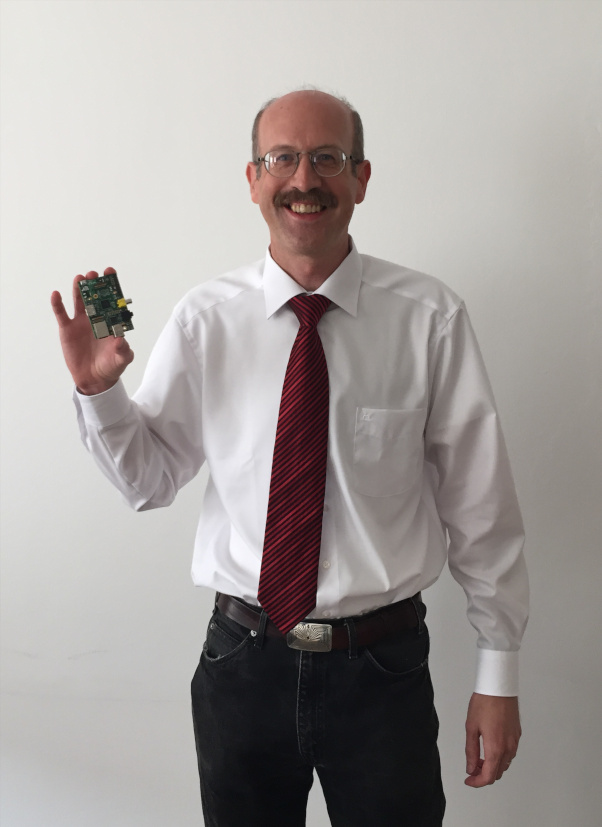
Prof. Dr. Sven Helmer is a Professor in the Department of Informatics at the University of Zurich. Previously held positions include Associate Professor at the Free University of Bozen-Bolzano and Senior Lecturer at Birkbeck, University of London. He obtained his PhD from the University of Mannheim. Research Focus: Database technology, big data analytics, query optimization, and distributed systems. Key interests include scalable indexing, time series analysis, and semantic computing. Recent Publications: Work spans query optimization, graph data structures, and educational methodologies in data science. Dominant themes include scalability in database systems and algorithmic innovations for dynamic data. Awards: Distinguished Reviewer Award, ICDE'20 Best Paper Award, ADBIS'17 Best Teacher Award 2013 Contact: Binzmühlestrasse 14, CH-8050 Zürich. Office BIN 2.E.09. Email: helmer@ifi.uzh.ch. Phone: +41 44 635 67 28.
Michael Kapralov is an Associate Professor in the School of Computer and Communication Sciences at École Polytechnique Fédérale de Lausanne (EPFL) , where he leads research at the Theory Group . His work spans multiple departments including the Laboratory of Theory of Computation 4 and the Doctoral Program in Computer Science and Communications . Kapralov's research focuses on theoretical computer science , particularly sublinear algorithms for big data analysis , with applications in streaming , sketching , sparse recovery , and Fourier sampling . University: EPFL School: School of Computer and Communication Sciences Department: Theory Group Academic Rank: Associate Professor Education: Kapralov earned his Ph.D. in Computer Science from Stanford iCME under the supervision of Ashish Goel . He subsequently held postdoctoral positions at the Mit CSAIL Theory of Computation Group with Piotr Indyk and as a Herman Goldstine Postdoctoral Fellow at IBM T. J. Watson Research Center . Ph.D.: Stanford iCME (2012), advisor: Ashish Goel Postdoctoral: MIT CSAIL (2012-2014), IBM Watson (2014) Research Interests: Kapralov's work addresses fundamental challenges in processing large-scale data through rigorous mathematical models. His contributions include advancements in sublinear algorithms , streaming complexity , spectral sparsification , sparse Fourier transforms , and differential privacy . He has developed techniques for dimension-independent signal processing , kernel ridge regression , and graph spanners , with theoretical guarantees and practical implications for machine learning and data analysis. Scientific Awards: Kapralov received the ERC Starting Grant SUBLINEAR (2018-2023) and the Gene H. Golub Dissertation Award (2012). Advising: He has supervised numerous Ph.D. students and postdoctoral researchers, including Ekaterina Kochetkova , Grzegorz Gluch , Kshiteej Sheth , and Amir Zandieh , many of whom have taken academic or industry positions at institutions like UC Berkeley, National University of Singapore, and Google Zurich. Collaborations and Teaching: Kapralov co-organizes the Turing Course for high school students, leads the Reading Group on Foundations of Deep Learning , and contributes to academic initiatives such as Theory Coffee and the Swiss Winter School on Theoretical Computer Science . He teaches courses like Sublinear Algorithms for Big Data Analysis and Algorithms II , focusing on advanced algorithm design and analysis.
Patrick Thiran is a Full Professor at the École Polytechnique Fédérale de Lausanne (EPFL) in Switzerland, affiliated with the School of Computer and Communication Sciences and the Department of Computer Science. His research focuses on network science, wireless networks, machine learning, and complex systems. Laboratoire de la dynamique de l'information et des réseaux Chair in Communication Systems Teaching: Modèles stochastiques pour les communications, Networks out of control His work explores the fundamental properties of wireless networks , source localization in large-scale networks , and network tomography . Recent publications demonstrate expertise in graph neural networks, epidemic modeling, and stochastic optimization. His 15 most recent publications show consistent contributions to network science, machine learning, and wireless communications, with a focus on graph algorithms , source localization , and network dynamics . Key subfields include metric dimension , community detection , and Bayesian optimization . He has advised numerous PhD students including Elahi Sepehr, Fua Raphaël Andrew, and Kuroda Daichi, reflecting his significant contributions to graduate education and research mentorship.
Marco Mattavelli is a Professor at the École Polytechnique Fédérale de Lausanne (EPFL), affiliated with the School of Engineering (STI) and the Microsystems Engineering Laboratory (MM). His research focuses on data compression, hardware design for embedded systems, biomedical electronics, and blockchain/metaverse applications. He leads the GRAMM lab and has contributed to standards like MPEG-G for genomic data. His work spans FPGA-based systems, signal processing, and implantable medical devices. Education and affiliations: EPFL faculty since at least 2000, with roles in teaching and research. Collaborations include MPEG standards development, multidisciplinary projects in genomics and biomedical engineering. Research interests emphasize interdisciplinary innovation: genomic data compression, high-performance embedded systems, and leveraging blockchain for digital assets. His lab develops cutting-edge solutions for medical devices and energy-efficient electronics. Publications highlight contributions to neural clustering algorithms, genomic compression, and metaverse data analysis. Over 200 publications in top venues like IEEE Transactions and conferences like DCC, ICASSP, and BioCAS. Grants and labs: Active in securing research funding for projects in biomedical sensors, heterogeneous computing, and genomic standards. The GRAMM lab is central to his research activities.
Volkan Cevher is an Associate Professor at the Swiss Federal Institute of Technology Lausanne (EPFL), where he leads the Laboratory for Information and Inference Systems (LIONS). He also serves as an Amazon Scholar and previously held positions as a Research Scientist at the University of Maryland (2006-2007) and Rice University (2008-2009), as well as a Faculty Fellow at Rice University (2010-2020). Dr. Cevher received his B.Sc. (valedictorian) in electrical engineering from Bilkent University in Ankara, Turkey, in 1999 and his Ph.D. in electrical and computer engineering from the Georgia Institute of Technology in 2005. His research spans machine learning, optimization theory, signal processing, and their applications. He focuses on developing theoretically grounded algorithms for robust machine learning, with particular emphasis on non-convex optimization, adversarial training, and distributed learning. His work addresses fundamental challenges in optimization landscapes for neural networks and min-max problems like GANs and robust reinforcement learning. Dr. Cevher's recent publications demonstrate strong trends in optimization for machine learning, with significant contributions to adversarial robustness, federated learning, and efficient training methods. His work bridges theoretical foundations with practical applications across multiple domains including NLP, computer vision, and reinforcement learning. Dr. Cevher has received numerous prestigious awards including: IEEE Fellow (2024) ELLIS fellow ICML AdvML Best Paper Award (2023) Google Faculty Research award (2018) IEEE Signal Processing Society Best Paper Award (2016) ERC Consolidator Grant (2016) ERC Starting Grant (2011) As head of the Laboratory for Information and Inference Systems at EPFL, Dr. Cevher leads a research group focused on advancing the theoretical foundations of machine learning and optimization. His lab has secured significant funding through competitive grants including multiple ERC grants. He actively mentors PhD students and postdoctoral researchers, with many of his advisees going on to successful careers in academia and industry. The Laboratory for Information and Inference Systems (LIONS) at EPFL is a leading research group in optimization and machine learning, known for developing theoretically sound algorithms with practical impact. The lab collaborates extensively with industry partners and other academic institutions worldwide.
Dimitri Van De Ville is a Full Professor of Bioengineering at École Polytechnique Fédérale de Lausanne (EPFL) and the University of Geneva (UniGE), affiliated with the School of Engineering at EPFL and the Faculty of Medicine at UniGE. He leads the Medical Image Processing Laboratory (MIP:Lab) at Campus Biotech in Geneva and is a key figure at the CIBM Center for Biomedical Imaging. His work bridges signal processing, computational neuroscience, and clinical neuroimaging. Education: M.S. and Ph.D. in Computer Science, Ghent University, Belgium (1998, 2002) Post-doctoral Fellow, Biomedical Imaging Group, EPFL (2002–2005) His research focuses on advancing non-invasive brain imaging through methodological innovations in signal and image processing. He investigates the dynamic and network aspects of brain function using fMRI and EEG, with a special emphasis on dynamic functional connectivity, graph signal processing, and real-time neurofeedback. His work has demonstrated that EEG microstate sequences exhibit scale-free dynamics, linking fast electrophysiological events to slow hemodynamic changes. He pioneered connectivity decoding and contributed to the development of sparsity-based deconvolution methods for fMRI. The recent articles reflect a strong trend toward modeling brain function as a dynamic network process. Key themes include graph signal processing on brain connectomes, decomposition of transient brain activity, and the use of machine learning to decode brain states. His work increasingly integrates structural and functional data to understand brain organization at multiple scales. Scientific Awards: Technical Achievement Award, IEEE EMBS (2024) Fellow, EURASIP (2023) Distinguished Lecturer, IEEE Signal Processing Society (2021–2022) Fellow, IEEE (2020) Leenaards Award (2016) NARSAD Independent Investigator Award (2014) NeuroImage Editors' Choice Award (2013) Pfizer Research Award (2012) Van De Ville has secured substantial research funding through grants such as the SNSF Professorship and has advised numerous researchers. He plays a major role in the scientific community as founding chair of the EURASIP BISA SAT and former chair of the IEEE BISP TC. He has held editorial roles in top journals including IEEE Transactions on Signal Processing , SIAM Journal on Imaging Sciences , and Imaging Neuroscience . He leads the Medical Image Processing Laboratory (MIP:Lab) at Campus Biotech, which specializes in developing advanced signal processing tools for neuroimaging. The lab is part of a broader collaborative ecosystem involving EPFL, UniGE, and the CIBM, fostering interdisciplinary research in biomedical imaging and brain science.
Prof. Dr. Hanspeter Schmid serves as a Professor at the University of Applied Sciences and Arts Northwestern Switzerland (FHNW) within the School of Engineering and Environment, specifically at the Institute for Microelectronics. He also holds a part-time position as a senior lecturer at ETH Zurich teaching Analog Signal Processing and Filtering. Dr. Schmid earned his diploma in electrical engineering (1994), post-graduate degree in information technologies (1999), and Doctor of Technical Sciences (2000), all from ETH Zurich. His career began at ETH Zurich as a teaching assistant in 1994, progressing to research assistant and junior lecturer in analog integrated filters. From 2000-2005, he worked as an analog-IC designer with Bernafon AG developing hearing aid IC platforms. He joined FHNW's Institute of Microelectronics as a research fellow in 2005 and became a full professor in February 2012. His research focuses on fast low-power circuits for sensor electronics, signal integrity in analog signal processing, and sigma-delta modulation. Dr. Schmid's scholarly work bridges theoretical foundations with practical applications, particularly in switched-capacitor circuits, noise analysis, and measurement methodologies. His publications consistently address both theoretical aspects and implementation challenges in analog circuit design. Dr. Schmid has held significant professional positions including IEEE CAS Analog Signal Processing Technical Committee Co-Chair (2008-2010), Associate Editor for IEEE Transactions on Circuits and Systems I (2007-2011) and II (2016-2017), member of the ESSCIRC technical committee until 2019, and Distinguished Lecturer of the IEEE CAS Society (2011-2012). At FHNW, he teaches Signal Processing, Analog Circuits, and Mixed-Signal Circuits while participating in research projects such as "Authenticity in Music," collaborating with the Academy of Music to develop digital simulation methods for electronic equipment. His academic work spans educational and research domains, contributing to advancements in microelectronics and signal processing with practical applications in sensor technology and audio systems.
Nicolas Courty is a Full Professor in Computer Science at University of Brittany South since 2018, where he leads the Obelix research team at IRISA (Institut de Recherche en Informatique et Systèmes Aléatoires). His research sits at the intersection of machine learning and Earth Observation, with a focus on optimal transport theory and its applications. Dr. Courty obtained his PhD in 2002 from INSA Rennes and his Habilitation à diriger des recherches in 2013, with early work focused on computer graphics and animation. Since 2014, he has developed expertise in optimal transport and its applications to machine learning, becoming a principal investigator in an ANR Chair program on AI (OTTOPIA) in 2020, focusing on applied optimal transport for Remote Sensing. Since 2024, he serves as co-director of Cluster SequoIA, a center of excellence in artificial intelligence research and training in Brittany. His research interests span optimal transport, statistical learning, kernel methods, manifold and geometric approaches to machine learning, with applications to computer graphics, vision, and remote sensing. He is particularly known for pioneering work at the intersection of non-Euclidean geometry and optimal transport, developing novel methods for dimensionality reduction, domain adaptation, and representation learning in complex data spaces. Analysis of his recent publications reveals a strong trend toward geometric machine learning, with increasing focus on non-Euclidean spaces (particularly hyperbolic geometry), sliced optimal transport methods, and applications to remote sensing and neuroscience. His work consistently bridges theoretical advances in optimal transport with practical applications in Earth observation, demonstrating a commitment to both theoretical rigor and real-world impact. Best paper prize at Eurographics 2024 Stanford/Elsevier's Top 2% Scientist Rankings Multiple papers accepted at top conferences including NeurIPS (with oral presentations), ECCV, BMVC, and Eurographics As principal investigator of the ANR Chair program OTTOPIA, Dr. Courty has secured significant research funding for applied optimal transport in Remote Sensing. His leadership extends to directing the Obelix research team at IRISA and co-directing Cluster SequoIA, demonstrating his growing influence in the AI research community in Brittany. He is actively involved in mentoring researchers and fostering collaborations across institutions. Dr. Courty leads the Obelix research team at IRISA, which focuses on the intersection of machine learning and Earth Observation. Under his direction, the team has developed innovative approaches to applying optimal transport theory to remote sensing data, contributing significantly to the field of geospatial AI. The team's work has practical applications in environmental monitoring, land use classification, and climate change analysis.
Elvin Isufi is an Associate Professor at the Delft University of Technology (TU Delft) , where he co-founded and co-directs AIdroLab , one of the 24 TU Delft AI Labs. His research focuses on fundamental and applied graph-based data processing with applications to water networks, flood modeling, infrastructure systems, and recommender systems. Elvin obtained his Ph.D. from TU Delft in graph signal processing and completed his master's and bachelor's studies at the University of Perugia in Italy. He has been mentored by renowned academics including Prof. Alejandro Ribeiro (postdoc), Prof. Geert Leus (Ph.D.), and Prof. Paolo Banelli (master's/bachelor's). His research integrates signal processing , machine learning , and mathematical modeling to develop techniques for graph signal processing, graph neural networks (GNNs), and higher-order network analysis. Key application domains include water distribution networks , flood modeling , and recommender systems . His work addresses critical challenges such as stability analysis of GNNs, dynamic graph processing , and physics-informed machine learning . Recent publications highlight advancements in multi-scale hydraulic GNNs for flood prediction, carbon footprint-aware recommender systems , and simplicial vector autoregressive models for edge flow analysis. His research group includes Ph.D. students like Bishwadeep Das and M.Sc. students exploring topics such as online edge flow prediction and topological signal processing . 2021: Audience Choice Award, IEEE Data Science and Learning Workshop 2022: Best Student Paper Award, IEEE DSLW 2023: Top 3% Recognition Award, ICASSP Elvin actively supervises students in graph machine learning projects, emphasizing requirements like Python and PyTorch/TensorFlow expertise . He provides structured thesis project themes covering dynamic graph analysis , physics-informed GNNs , and self-supervised learning for networked data.
Luiz Chamon is an Assistant Professor (tenure-track) and Hi!PARIS Chair holder at the Center for Applied Mathematics (CMAP) , École polytechnique, Paris, France. His research bridges machine learning with control theory and signal processing, focusing on intelligent systems that extract, process, and act on information under constraints. Research Interests: He specializes in constrained learning frameworks for machine learning, with applications to reinforcement learning, statistical signal processing, and optimization. His work includes adversarial robustness, safe policy design, and duality analysis in constrained settings. Article Trends: Recent publications span differential equation solving (ICLR 2025), primal-dual sampling (NeurIPS 2024), and resilient reinforcement learning (IEEE Trans. Autom. Control 2024). Common themes include constrained optimization, robustness, and bridging theory with practical applications in wireless systems and graph signal processing. Scientific Awards: Hi!PARIS Chair (2025) ELLIS Scholar (2025) Best Student Paper Award (ICASSP 2020) Best Paper Award (ICASSP 2020) Top 50 Most Accessed Articles in IEEE TSP (2019) Grants & Projects: Currently leads a 4-year ANR JCJC project on "Beyond (Robust) Learning: Striking Compromises in Machine Learning" (2024). Previously involved in technical reports on aircraft vibroacoustics and wireless power systems. Labs & Teams: Heads a research group at École polytechnique developing tools for constrained learning, collaborating with institutions like University of Pennsylvania and IMPRS-IS. Organizes tutorials and panels on constrained learning and career development.
Ambrus Gergely is a Research Fellow affiliated with the Geometry Department at the Hungarian Academy of Sciences. His work bridges discrete mathematics, convex geometry, and probability theory, focusing on geometric configurations, optimization, and combinatorial problems. Research Interests: Discrete Mathematics, Convex Geometry, Probability Theory, Discrete Analysis Grants: Combinatorics in Geometry and Number Theory (2020-2025), Limits of discrete structures (ERC, 2014-2019) His recent publications address vector balancing, Helly-type theorems, and geometric optimization, with a focus on convex bodies, planar sets avoiding unit distances, and extremal problems in discrete geometry. He has made significant contributions to understanding the interplay between convex geometry and probabilistic methods. Scientific Awards: János Bolyai Research Fellowship (Hungarian Academy of Sciences, 2015) Grünwald Géza Memorial Medal (Bolyai János Matematikai Társulat, 2009) Rényi Kató Award (Bolyai János Matematikai Társulat, 2006) Ambrus is part of the GeoScape Research group at the Rényi Institute, collaborating on problems related to convex sets, tight frames, and geometric algorithms.
Prof. Hans-Peter Hutter is a Professor of Computer Science at the ZHAW School of Engineering, specializing in Deep Learning-based Automatic Speech Recognition, Conversational User Interfaces, and Human-Centered Computing. He leads the Human-Centered Computing research group at InIT/ZHAW and has held this position since 2005. His work focuses on accessibility technologies, mobile usability, and inclusive design for visually impaired users. Education: Dr. sc. techn. ETH in Computer Engineering (ETH Zurich, 1996) Dipl. El.-Ing. ETH in Electrical Engineering (ETH Zurich, 1986) Research Interests: Advancing accessibility in digital systems (e.g., accessible PDFs, navigation aids for visually impaired users) Speech recognition and dialogue systems Mobile application design principles Service engineering and platform development His recent work emphasizes multimodal interaction, accessible document remediation, and SLAM systems for navigation assistance. Projects: Leading the InCrowd-VI dataset project for indoor navigation Developing MathNet for mathematical expression recognition Creating accessible tourism services in Lake Constance region Grants & Labs: Active in EU-funded and industry collaborations, leading the InIT Institute founded in 2002. Collaborates with organizations like SwissICT and ACM.
PD Dr. Yosuke Morishima is a Senior Lecturer and Group Leader at the University Psychiatric Clinics Basel (UPK Basel) under the University of Basel. His research focuses on neuropsychiatric disorders, neuroimaging techniques, and neurophysiological interventions. He specializes in studying schizophrenia, psychosis risk, self-experience disorders, and neurobiological mechanisms of mental health conditions through advanced electrophysiological (ERP/EEG) and neuroimaging (fMRI, DTI) methods. Key research interests include: Neural correlates of self-consciousness and pre-reflective experience Clinical applications of transcranial stimulation (tACS, TMS, tDCS) Neuroimaging of brain connectivity in psychosis and depression Neurobiological basis of social emotions like embarrassment Pharmacological and immunological factors in mental disorders His work integrates computational neuroscience, clinical psychiatry, and neurotechnology to develop novel diagnostic markers and therapeutic interventions. Recent studies explore sleep modulation for depression and phase-synchronized neurostimulation techniques. As a Group Leader, he oversees projects on: Multimodal neuroimaging in psychiatric populations Neural network dysfunction in high-risk psychosis Closed-loop sleep interventions His team collaborates across disciplines, combining electrophysiology, MRI, and behavioral modeling to advance understanding of mental health disorders.
Freya Behrens is a Researcher at the Statistical Physics of Computation Laboratory (SB) within the École Polytechnique Fédérale de Lausanne (EPFL). Her work bridges statistical physics and computational systems, focusing on topics like neural networks, cellular automata, and AI applications in education. She investigates phase transitions in attention mechanisms and the theoretical underpinnings of deep learning. Recent publications explore AI's impact on higher education and the interplay between Hessian matrices and decision boundaries. Her research integrates interdisciplinary methods from physics and computer science, addressing questions such as how memorization occurs in neural networks and the dynamics of spin glasses. Freya’s contributions span theoretical frameworks (e.g., dynamical cavity methods) and applied AI systems (e.g., knowledge graph exploration). While no specific grants or awards are listed, her work demonstrates engagement with cutting-edge challenges in machine learning and computational modeling. She is affiliated with EPFL’s School of Basic Sciences, reflecting her foundational research in physics and mathematics-driven computation.
Maria Giulia Preti is a Senior Scientist at MIPLAB, Research Staff Scientist at the CIBM Center for Biomedical Imaging (Switzerland), and a Lecturer (Maître-Assistante) at the University of Geneva. She holds a PhD in Bioengineering from Politecnico di Milano (2013) and completed postdoctoral research in Dimitri Van De Ville’s group at EPFL. Her work focuses on integrating neuroimaging techniques (fMRI, DTI, EEG, fNIRS) with graph signal processing to study brain function-structure relationships in health and disease. Key clinical applications include Alzheimer’s disease, epilepsy, multiple sclerosis, and stroke. She has pioneered methods like groupwise fMRI-guided tractography to study neurodegenerative pathologies. Education: PhD in Bioengineering (2013), Politecnico di Milano MSc in Biomedical Engineering (2009), Politecnico di Milano BSc in Biomedical Engineering (2007), Politecnico di Milano Research emphasizes multimodal neuroimaging integration and computational neuroscience. Notable achievements include developing connectome embedding techniques and demonstrating brain fingerprinting via spectral signatures. She received the Progetto Rocca fellowship (2011) supporting her work at MIT/Harvard Medical School. Ongoing projects investigate structure-function coupling dynamics, drowsiness markers, and DBS mechanisms in depression. Labs/Teams: MIP:Lab (part of the Van De Ville group at EPFL and University of Geneva collaborations).