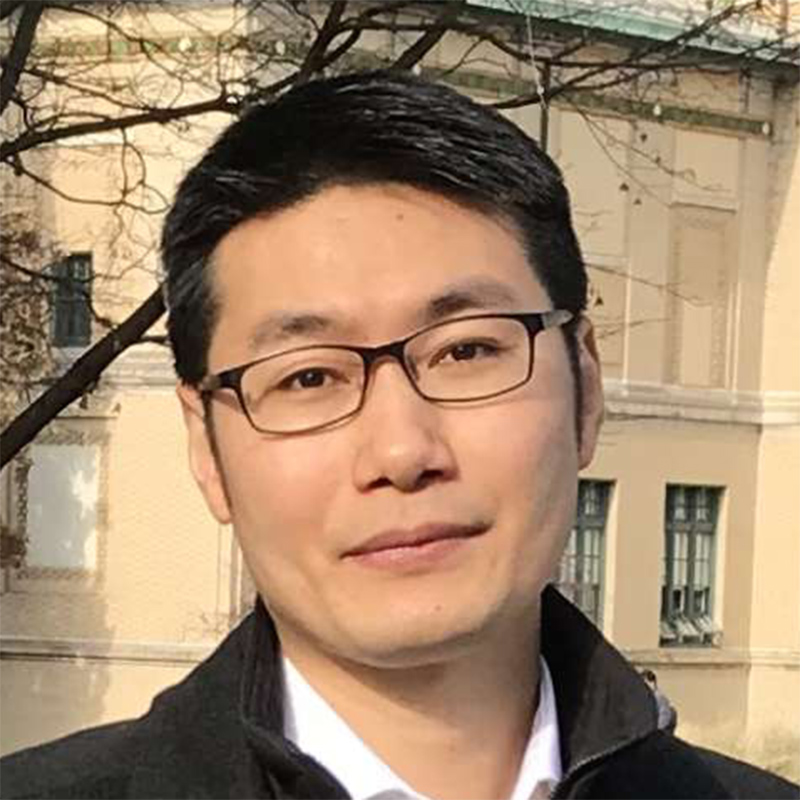
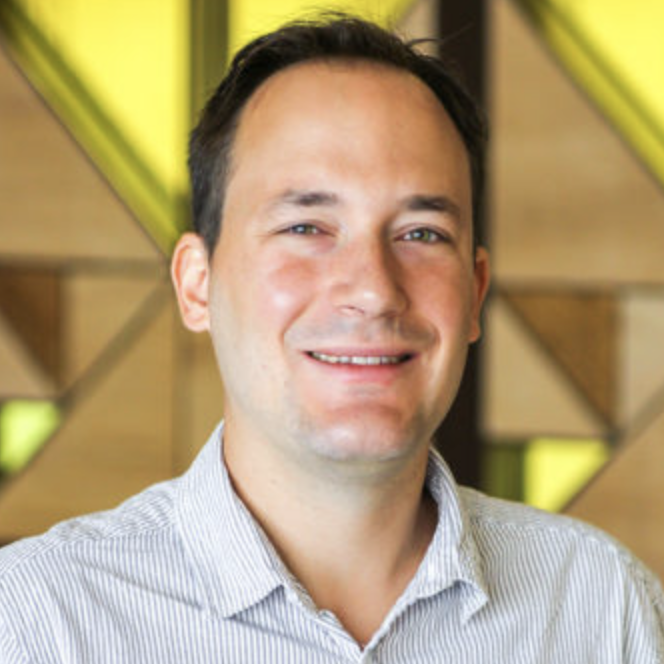
Kun Zhang is a Professor at Carnegie Mellon University's Department of Philosophy and an affiliate faculty member in the Machine Learning Department. His research bridges causal discovery, machine learning, and philosophical foundations of AI, with applications in neuroscience, computational finance, and climate analysis. His work focuses on: Automated causal discovery from heterogeneous data Causality-based learning for transfer and deep learning Philosophical principles of causation and machine learning Recent research trends emphasize causal representation learning, nonparametric modeling, and real-world applications across biomedical, financial, and Earth sciences. He leads the Causal Learning and Reasoning (CLeaR) group at CMU and collaborates with the Center for Integrative AI (CIAI) at MBZUAI.
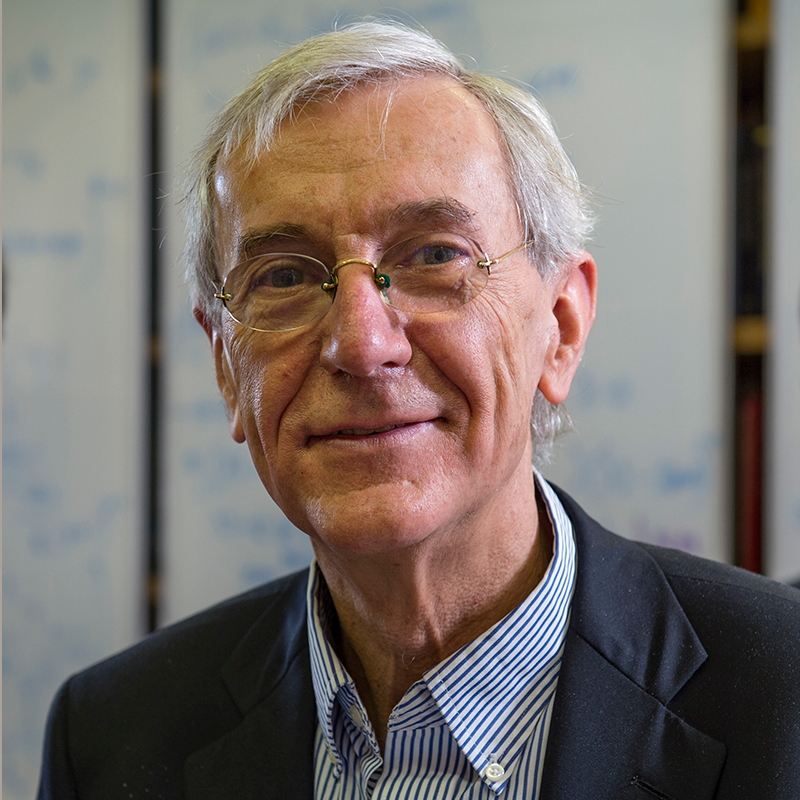
Prof. José M. F. Moura is the Philip L. and Marsha Dowd University Professor at Carnegie Mellon University's Electrical and Computer Engineering Department. He holds a courtesy appointment in BioMedical Engineering. A member of the US National Academy of Engineering and Portugal Academy of Sciences, he is an IEEE Fellow and AAAS Fellow. His research focuses on signal processing, graph signal processing, and data science, with contributions to projects like SPIRAL and cognitive networks. He co-founded SPIRALGEN and led the CMU-Portugal Program, fostering collaboration between CMU and Portuguese institutions. Moura has received prestigious awards, including the IEEE Jack S. Kilby Medal and the 2023 IEEE Haraden Pratt Award. His work spans sensor networks, distributed algorithms, and urban science, with over 40 PhD students supervised and numerous grants from DARPA, NSF, and industry. Education: DSc (MIT, 1975), M.S./EE (MIT, 1973), Licenciado EE (Technical University of Lisbon, 1969). Research Interests: Signal processing on graphs, distributed decision systems, SPIRAL library, time reversal imaging, bioimaging, and urban science. Key projects include the DARPA-funded SPIRAL and SMART initiatives. Recent Articles: Focus on machine learning, graph signal processing, and distributed systems. Notable works include 'Natural Language Does Not Emerge Naturally' (2017) and 'SPIRAL: Extreme Performance Portability' (2018). Awards: IEEE Jack S. Kilby Medal (2023), US National Academy of Engineering membership, and multiple fellowships. Recognized for contributions to statistical and graph signal processing. Grants & Funding: Over $100M in programs like CMU-Portugal, DARPA's BRASS, and NSF grants. SPIRAL's commercialization via SPIRALGEN reflects his translational impact. Labs/Teams: Leads the Time Reversal Imaging Lab (TriLab), collaborates with CenSCIR (Critical Infrastructure Research), and directs the CMU-Portugal Program's dual degree initiatives.
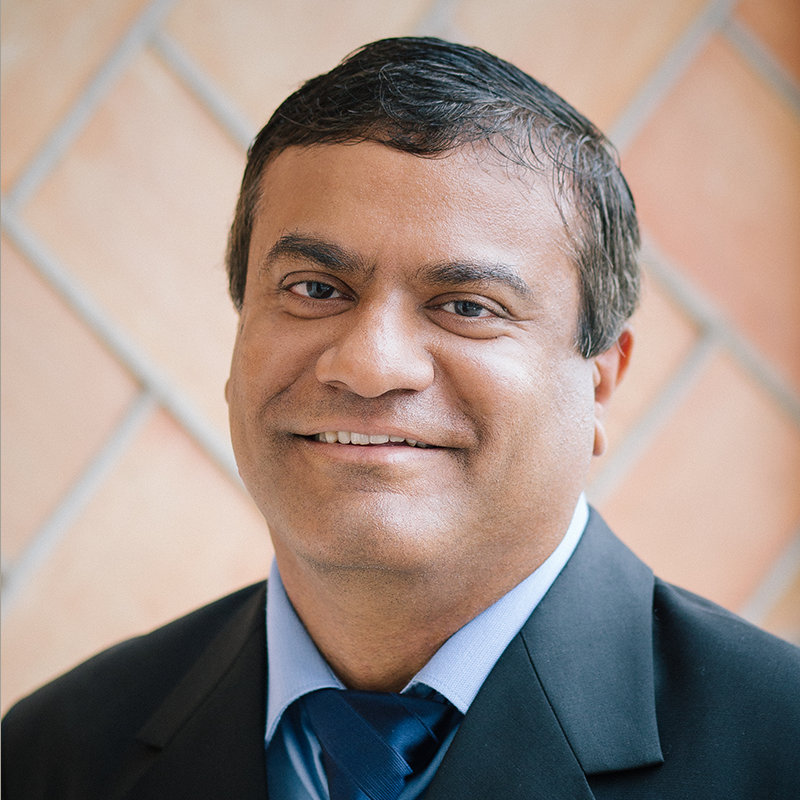
Rohit Negi is a Professor in the Department of Electrical and Computer Engineering at Carnegie Mellon University (CMU), affiliated with the College of Engineering. He holds a Ph.D. (2000) and M.S. (1996) in Electrical Engineering from Stanford University, and a B.Tech. from the Indian Institute of Technology Bombay (1995). His research focuses on wireless communications, networking, information theory, and cyberphysical systems, with emphasis on ad hoc networks, sensor networks, and power systems. Key roles include leading research on capacity of ultra-wideband (UWB) networks and joint optimization frameworks for physical/MAC/network layers. He has advised numerous Ph.D. and M.S. students, with notable alumni in industry (e.g., Qualcomm, Samsung) and academia (e.g., University of Florida). Research sponsors include NSF (including a Career Award), Texas Instruments, and industry partnerships. He has published extensively in IEEE journals/conferences, focusing on scheduling algorithms, secure communication, and power systems optimization. Notable awards include a 2012 IEEE Smart GridComm Best Paper Award and the President of India Gold Medal (1995). Teaching contributions include developing courses like 18-450 (Digital Wireless Communications) and co-designing the Intel Instructional Wireless Lab. His professional activities include editorial roles for IEEE Transactions and NSF review panels. Current research explores cyberphysical systems, smart grid state estimation, and reconfigurable RF-FPGA systems. Collaborations span disciplines like machine learning and network science, reflecting his holistic approach to engineering challenges.
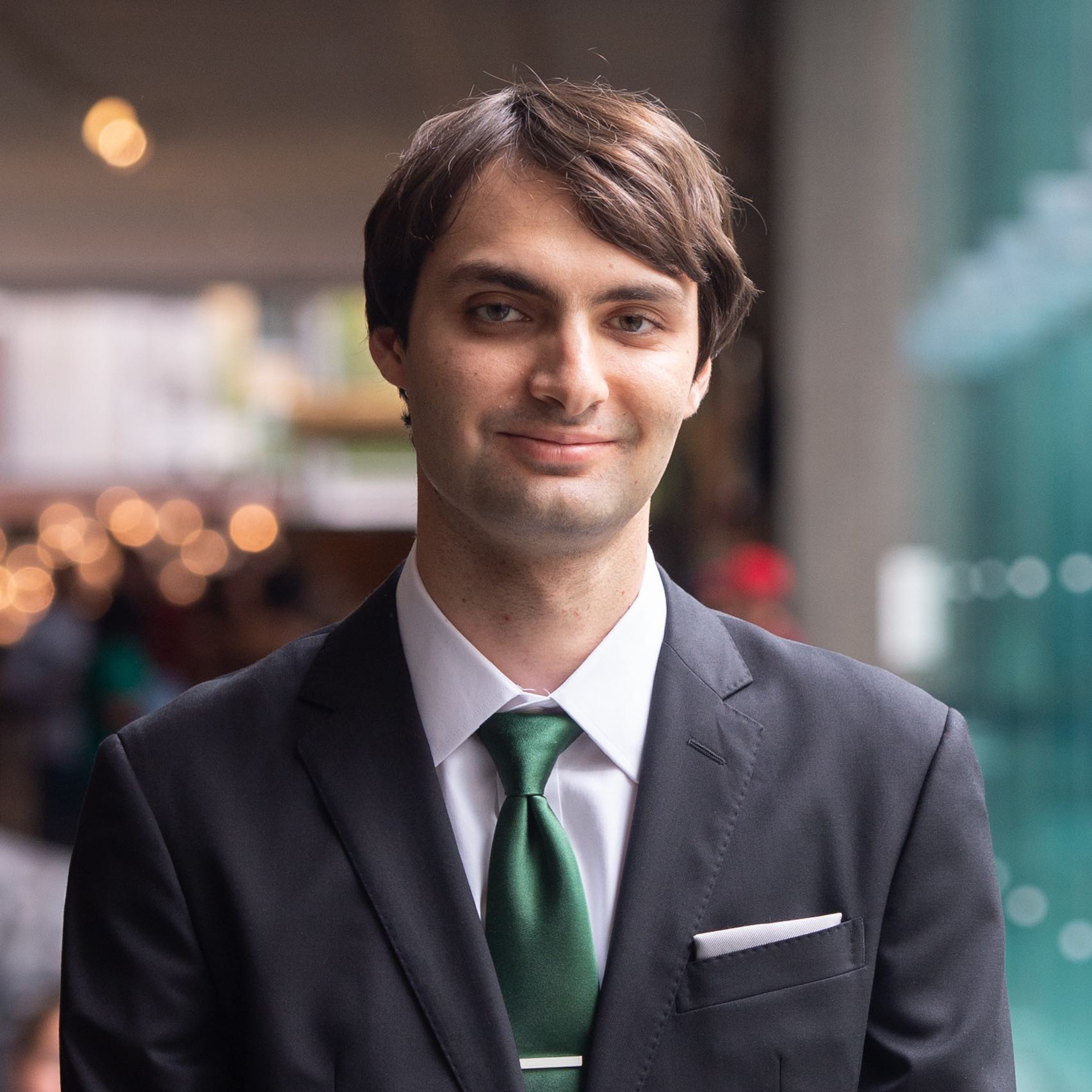
Peter Manohar is a postdoctoral researcher in the Computer Science and Discrete Math group at the Institute for Advanced Study , focusing on Theoretical Computer Science with emphasis on algorithms, coding theory, and cryptography. His work explores spectral algorithms for semirandom and smoothed instances of NP-hard constraint satisfaction problems, linking these methods to coding theory, extremal combinatorics, and cryptography. Education: PhD in Computer Science from Carnegie Mellon University, advised by Venkatesan Guruswami and Pravesh K. Kothari B.S. in EECS from UC Berkeley, advised by Alessandro Chiesa and Ren Ng Research Trends: His recent publications highlight advancements in spectral refutation techniques, locally decodable/correctable codes, and connections between complexity theory and coding. Articles span venues like FOCS, STOC, APPROX, and arXiv, reflecting his interdisciplinary approach. Awards: He has received prestigious NSF and Cylab Presidential Fellowships, along with ARCS scholarships during his PhD. His work on quantum proofs (TCC 2019) and constraint satisfaction problems has been recognized in invited journal special issues. Teaching & Collaboration: Peter has taught courses at Carnegie Mellon, including Quantum Computing and Computer Graphics. He interned at TTIC in Summer 2023 and co-organized CMU's Theory Club, demonstrating active engagement in academic communities.
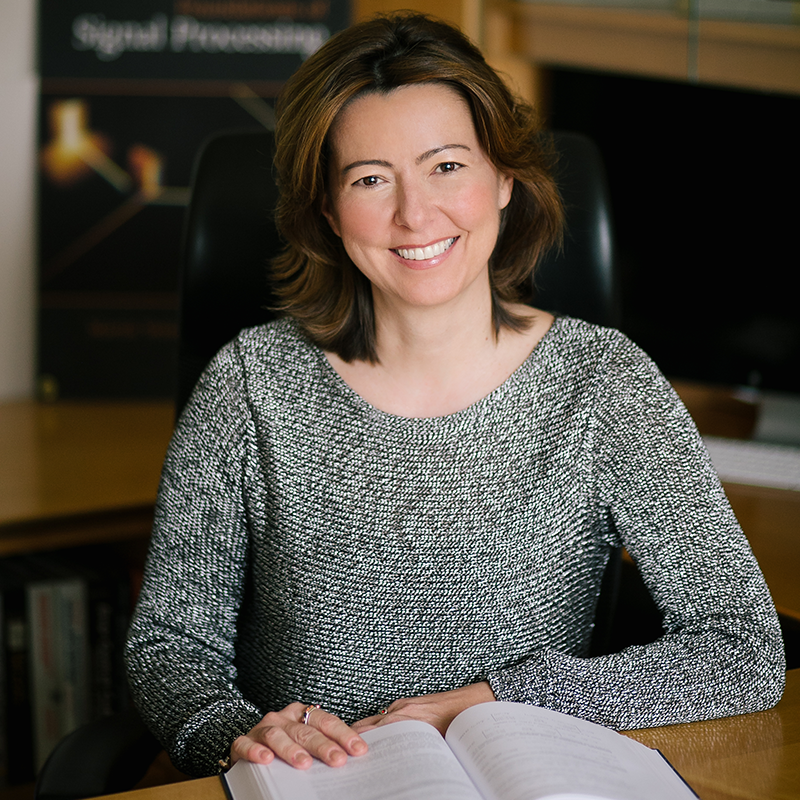
Jelena Kovačević is the William R. Berkley Professor and Dean of the Tandon School of Engineering at New York University, the first woman to hold this position since the school's founding in 1854. Previously, she served as Hamerschlag University Professor and Head of Electrical and Computer Engineering at Carnegie Mellon University (CMU) until 2018. She holds a Dipl. Electr. Eng. from the University of Belgrade (1986), and MS and PhD degrees from Columbia University (1988, 1991). Her research focuses on biomedical imaging, multiresolution techniques (wavelets, frames), data science, and graph signal processing. She has authored influential books, including *Wavelets and Subband Coding* (1995) and *Foundations of Signal Processing* (2014), and co-authored over 150 publications. Awards include the IEEE SPS Technical Achievement Award (2016), Belgrade October Prize (1986), and Fellowships from IEEE and EUSIPCO. She has held editorial roles at major journals and conferences, including Editor-in-Chief of IEEE Trans. on Image Processing (2002–2006). Her leadership extends to roles like General Chair of ISBI and advisory positions in national initiatives. Her teaching spans advanced signal processing courses at CMU and Columbia, emphasizing practical applications in biomedical imaging and engineering. She has been recognized for educational excellence, including the edX Prize (2018) and contributions to online courses on criminal justice and psychology.
Robert Kass is the Maurice Falk University Professor of Statistics and Computational Neuroscience at Carnegie Mellon University, with affiliations in the Department of Statistics & Data Science, Machine Learning Department, and Neuroscience Institute. He has served as Department Head of Statistics for 9 years and held leadership roles in academic societies. Ph.D. in Statistics (University of Chicago, 1980) B.A. in Mathematics (Antioch College) Postdoctoral training at Princeton University His research bridges statistics and neuroscience, focusing on: Statistical methods for neural data analysis Bayesian inference and graphical models Point process modeling of spike trains High-dimensional and time-series analysis Computational neuroscience education Recent publications span computational neuroscience, emphasizing phase coupling analysis, latent variable modeling, and cross-population dynamics, with methodological innovations in neural data interpretation. As founding Editor-in-Chief of Bayesian Analysis and Executive Editor of Statistical Science , he shaped academic discourse in statistics. Key scientific recognitions: Outstanding Statistical Application Award (ASA) Distinguished Achievement Award (COPSS) National Academy of Sciences member (2023) He co-authored the influential textbook Analysis of Neural Data and developed international workshops like Statistical Analysis of Neuronal Data (2002-2017), advancing neuroscience methodology globally.
David Choi is an Associate Professor at the Heinz College, part of Carnegie Mellon University's Dietrich College of Humanities and Social Sciences, with a courtesy appointment in the Department of Statistics. His expertise lies in statistics and machine learning applied to network data, including community detection and causal inference in social networks. He holds a PhD in Electrical Engineering from Stanford University (2004) and has held roles at MIT Lincoln Laboratory, Harvard University, and UC Berkeley. Research focuses on network models involving latent variables, exploratory data analysis, and interference effects in network experiments. His work bridges statistical methodology with practical applications in public policy and social sciences. Recent studies include analyzing Medicaid expansion impacts, single-cell network construction, and Alzheimer's disease microglia regulation. Prominent publications address network clustering, dynamic network analysis, and causal inference in experimental settings. Technical reports explore structured blockmodels and exposure mappings in experiments. Contact: Hamburg Hall 2118B, davidch@andrew.cmu.edu.
Anderson Ye Zhang is an Assistant Professor in the Department of Statistics and Data Science at the Wharton School, University of Pennsylvania, with a secondary appointment in the Department of Computer and Information Science. He holds a PhD from Yale University and previously served as a William H. Kruskal Instructor at the University of Chicago. His research focuses on the theoretical and applied aspects of statistics and machine learning, emphasizing spectral methods, synchronization problems, clustering, and network analysis. Education: PhD in Statistics and Data Science, Yale University (2018) Bachelor's degree from Zhejiang University (2012) Research Interests: His work addresses foundational challenges in spectral analysis, group synchronization (e.g., phase synchronization, permutation synchronization), ranking systems, and high-dimensional clustering. He develops algorithms with provable guarantees for problems such as Gaussian mixture models, stochastic block models, and item response theory. Recent Trends in Publications (2021–2025): His articles emphasize spectral methods for synchronization and clustering, with a focus on optimality in high-noise regimes, privacy-preserving learning, and efficient algorithms for complex data structures like human response models and anisotropic covariances. His work bridges statistical theory and computational practice. Awards & Grants: 2025: Sloan Research Fellowship, NSF CAREER Award 2019: New Researcher Award (ICSA) 2018: Francis J. Anscombe Award Grants: NSF DMS-2440180 (CAREER: Statistical Inference in Group Actions) NSF DMS-2112988 (Ranking from Comparisons) Academic Contributions: He has advised multiple collaborative research projects with postdocs and students, particularly on spectral methods and synchronization problems. His teaching spans advanced statistical theory and linear models at Wharton and the University of Chicago.
Dejan Slepčev is a Professor and Associate Dean for Faculty and Graduate Affairs at the Mellon College of Science, Department of Mathematical Sciences, Carnegie Mellon University. His research focuses on applied analysis, with applications to data science, collective behavior of particle systems, and energy-driven systems. He holds a Ph.D. from the University of Texas at Austin. His research interests include partial differential equations, calculus of variations, optimal transportation, and their applications to machine learning tasks such as clustering and classification. He develops mathematical frameworks for analyzing variational and PDE-based problems on random data samples, improving algorithms for data science. He also studies systems of interacting particles, particularly those modeling collective behavior in biological and physical systems, and energy-driven systems involving pattern formation and interface evolution. His work bridges theoretical analysis and computational methods, addressing challenges in data analysis, image processing, and the dynamics of complex systems. Key contributions include studies on spectral clustering, graph-based semi-supervised learning, and the continuum limits of discrete variational problems. Education: Ph.D., University of Texas at Austin.
Dr. Eduardo Feo Flushing is an Assistant Teaching Professor in the Software and Societal Systems Department at Carnegie Mellon University's School of Computer Science , based in Pittsburgh, PA. His role involves academic instruction and research at the intersection of software engineering, societal computing, and intelligent systems. Research Focus: His work spans robotics, distributed AI, and networked systems, with applications in critical domains. Primary research themes include: Multi-robot coordination for spatially distributed tasks Machine learning in healthcare diagnostics and renewable energy Wireless network optimization for mobile systems Human-robot collaboration under uncertainty Publication Trends: Recent articles (2021-2025) demonstrate a strong emphasis on applied machine learning (LLMs for medical ECG, deep learning for solar panel inspection) and advanced robotics (indoor mapping, task allocation in communication-constrained environments). Earlier work (2016-2020) focused on foundational aspects of multi-robot coordination, optimization, and wireless network resilience.