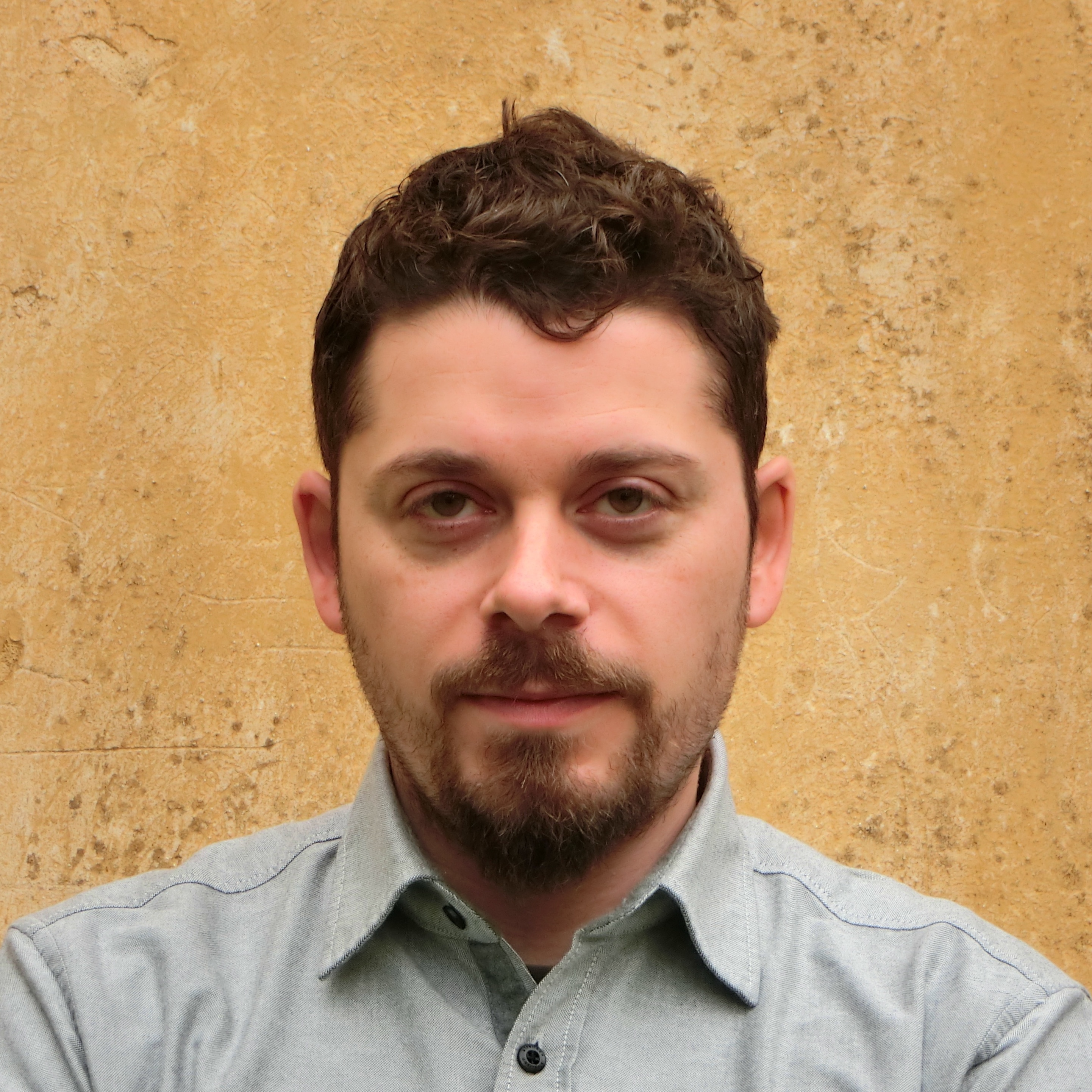
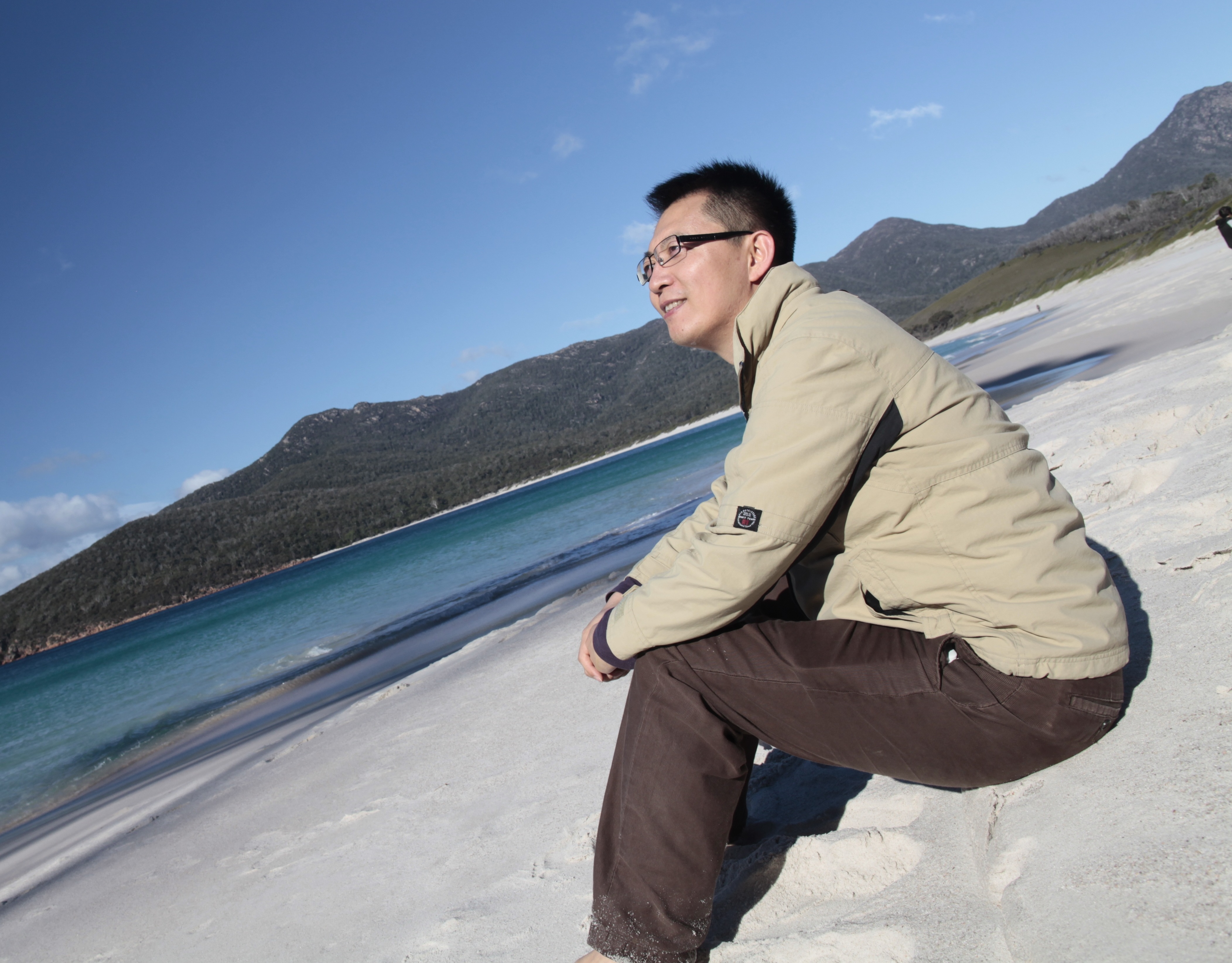
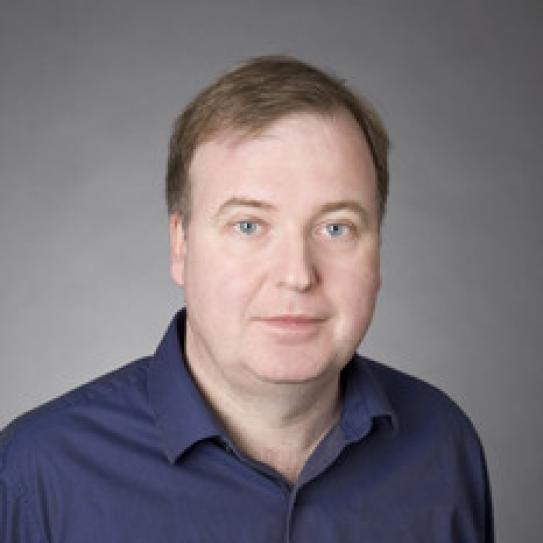
Joachim Gudmundsson is Professor and Head of School of Computer Science at the University of Sydney, holding SOAR and ARC Future Fellowships. His research develops algorithms for computational geometry problems including spatio-temporal analysis, graph spanners, geometric approximation, and trajectory mining. Key research domains: Spatio-temporal pattern analysis Graph spanners and approximation algorithms Trajectory clustering and map matching Geometric network optimization Multi-robot coordination algorithms Recent publications demonstrate strong focus on trajectory analysis algorithms under Fréchet distance, geometric graph decompositions, and pattern formation in multi-robot systems. Work increasingly addresses dynamic and real-world graph structures. Recognized with prestigious fellowships: SOAR Fellow (Sydney Research Accelerator) ARC Future Fellow (Australian Research Council)
Professor Melinda Hodkiewicz is a leading academic at the University of Western Australia (UWA), affiliated with the School of Engineering's Mechanical Engineering department. Her work focuses on advancing maintenance, asset management, and safety practices through data-driven approaches, particularly in Technical Language Processing (TLP) and industrial ontologies. She has held significant roles such as the BHP Fellow for Engineering for Remote Operations (2015–2022) and leadership in the $8.8M Australian Government-funded Training Centre for Transforming Maintenance through Data Science. Research interests include applying TLP to maintenance and safety texts, ontology development for industrial interoperability, and advancing standards like ISO 23726. Awards include the MESA Medal (Lifetime Achievement in Asset Management) and Fellow of the Australian Academy of Technology and Engineering (ATSE). She has contributed to international standards (ISO 55000 series) and served on boards of organizations like NOPSEMA and MRIWA. Her work aligns with UN SDG 4 (Quality Education) and SDG 9 (Industry, Innovation & Infrastructure). Key contributions include developing the Industrial Ontology Foundry's Maintenance Working Group, creating open-source tools like OpenBoltRF for wind turbine analysis, and advancing semantic quality assurance frameworks for maintenance procedures. Her research bridges technical language processing with industrial applications, enhancing safety and operational efficiency in sectors like mining, energy, and offshore engineering. Education: BA(Hons) in Metallurgy (University of Oxford, 1985), PhD in Engineering (UWA, 2014) Grants: ARC Training Centre for Transforming Maintenance (2019–2025), ARC Hub for Offshore Floating Facilities (2014–2021) Advisory Roles: Standards Australia EL-069 (Automation Systems), ISO TC184/SC4 (Industrial Data)
Du Huynh is an Associate Professor at the School of Physics, Mathematics and Computing, Department of Computer Science and Software Engineering, The University of Western Australia (UWA). She holds a 0.8 FTE appointment and has served as Graduate Research Coordinator since 2013. Her research focuses on Computer Vision, Machine Learning, Object Detection, and Video Analytics with applications in mineral processing, intelligent transportation systems, and medical imaging. She has secured over $3M in ARC grants and is a Chief Investigator in the Australian Centre for Quantum Growth ($18M funding). Education: BSc (Hons) and PhD in Computer Science from UWA. Prior to UWA, she lectured at Murdoch University for five years. Research Highlights Developed algorithms for automated mineral ore analysis, pedestrian trajectory prediction, and surgical instrument detection. Received three Best Paper Awards (ICPR2014, Kenneth Clarke Journal 2019, AusDM2022) and multiple award nominations. Editorial roles include PLOS One, Journal on Artificial Intelligence, and guest editorships for special issues in CVIU and Electronics. Grants & Projects Lead investigator in quantum computing algorithms for real-time optimization ($3M ARC funding). Collaborations with industry (e.g., Main Roads WA) on traffic video analytics and drone-based prediction systems. Academic Contributions Developed courses in Computer Vision, Machine Learning, and Java Programming. Supervised numerous HDR students and served on technical committees for WACV, ICCV, and DICTA conferences.
Heikki Mannila is a Professor of Computer Science at Aalto University, with a focus on algorithms for data analysis, data mining, and machine learning. He previously held the title of Academy Professor (2004–2008) and served as Vice President for Research and Education at Aalto University (2009–2012) and President of the Academy of Finland (2012–2022). His research emphasizes the interplay between theoretical computer science and practical applications in fields like environmental science, linguistics, and paleontology. Education: Ph.D. in Computer Science, University of Helsinki, 1985 Research Interests: Algorithmic methods for data analysis and mining Machine learning applications across disciplines Interdisciplinary collaborations in paleontology, linguistics, and environmental science House of AI initiative for AI-driven multidisciplinary research Recent Work: Recent publications explore multilinear transforms, Hadamard decomposition problems, and applications in recommendation systems and environmental data analysis. His work bridges theoretical foundations and real-world problem-solving. Awards: Academy Professor of Finland (2004–2008) Grants & Labs: Initiator of the House of AI at Aalto University Past leadership roles in national research policy and funding Collaborations: Worked with institutions like TU Wien, Max Planck Institute, Microsoft Research, and Nokia Research, emphasizing cross-sectoral innovation.
Robin Keskisärkkä is a Researcher at the Department of Computer and Information Science at Linköping University. His work focuses on ontology engineering, semantic web technologies, data stream processing, and their applications in areas like circular economy, healthcare informatics, and sustainability. He has contributed to advancing methods for handling uncertainty in real-time data streams and developing domain-specific ontologies for diverse fields such as ice hockey and criminal investigations. Key research interests include RDF stream processing, semantic complex event processing (CEP), and the integration of large language models for ontology generation. His recent work explores digital product passports for circular economy frameworks and longitudinal health outcomes analysis in oncology. He has also conducted studies on text simplification techniques for Swedish language. His technical contributions span query languages for streaming data (e.g., RSP-QL*), semantic event boundary detection, and cross-domain ontology networks. His research bridges theoretical computer science with practical applications in environmental sustainability, public health, and criminal justice systems.
Dr. John Liagouris is an Assistant Professor at Boston University's Faculty of Computing and Data Sciences, appointed since July 2022. Previously, he served as an Adjunct Assistant Professor (2020–2022) and held roles at BU’s Hariri Institute for Computing, ETH Zurich’s Systems Group, UC Berkeley’s RISELab, and the University of Hong Kong. His research focuses on distributed systems, databases, and secure analytics, with a strong emphasis on privacy-preserving technologies in cloud environments. He earned a 5-year diploma in Electrical and Computer Engineering (2008) and a PhD (2015) from the National Technical University of Athens (NTUA). His academic journey includes visiting scholar positions at UC Berkeley and the University of Hong Kong, alongside research roles at the Athena Research Center in Greece. Liagouris’s research spans cryptographic cloud analytics, streaming state management, and spatial RDF data systems. His work on frameworks like Queryshield and TVA demonstrates expertise in securing distributed data processing. Recent trends in his publications emphasize multi-party computation and latency-conscious distributed systems. His contributions to fault-tolerant systems (e.g., Lineage Stash) and incremental routing logic (DeltaPath) highlight a focus on optimizing distributed workflows. Though no formal advising records are listed, his roles suggest active involvement in training researchers in distributed computing and cybersecurity. Labs and teams associated with his work include BU’s Hariri Institute and collaborations with institutions like ETH Zurich’s Systems Group, reflecting a networked approach to academic research.
Cong Gao is a Professor and Head of the Division of Data Science at Nanyang Technological University's College of Computing & Data Science. He also holds a courtesy appointment with the School of Physical & Mathematical Sciences. Previously, he served as an Assistant Professor at Aalborg University, Denmark, and worked as a researcher at Microsoft Research Asia. He co-directs the Singtel Cognitive and Artificial Intelligence Lab for Enterprises@NTU (SCALE@NTU). His educational background includes: Ph.D. in Computer Science from National University of Singapore (2004) Master of Engineering from Tianjin University, China (1999) Bachelor of Engineering from Tianjin University, China (1996) Professor Gao's research focuses on Data Science, with particular expertise in geospatial data management, spatio-temporal data mining, recommendation systems, and social media data analysis. His work has significantly impacted areas like spatial-textual indexing, point of interest recommendation, and mining social networks. He has published extensively in top venues including VLDB, SIGMOD, ICDE, KDD, and WSDM, with over 14,000 citations and an H-index of 61. His recent publications demonstrate strong trends in applying machine learning to database systems, with particular focus on spatial and trajectory data management. Key research directions include learned indexing techniques, trajectory data analysis, and integrating large language models with database systems for improved query optimization. Professor Gao has received notable scientific recognition including: Best paper runner-up award at WSDM'22 Best paper award runner-up at WSDM 2020 He has advised numerous students who have become significant contributors in their own right, including Xin Cao, Lisi Chen, Kaiyu Feng, and Kaiqi Zhao. His research has been supported by substantial grants from Ministry of Education, NRF, IAF, Singtel/NCS, Roll-Royce, Alibaba, and Microsoft, including a S$42.4 million funding over 5 years for the SCALE@NTU lab. Professor Gao leads the Data Management Research Group (DANTE) and co-directs the Singtel Cognitive and Artificial Intelligence Lab for Enterprises@NTU (SCALE@NTU), which develops market-leading AI and data science technologies.
Torsten Suel is a Professor and Director of the Computer Science Ph.D. Program at NYU Tandon School of Engineering. He holds a Diplom from Technical University of Braunschweig and Ph.D. from University of Texas at Austin, with postdoctoral experience at NEC Research Institute, UC Berkeley, and Bell Labs. His research focuses on scalable information retrieval, web search engine architectures, distributed algorithms, and data compression. Key areas include efficient top-k query processing, learned indexing structures, and high-dimensional nearest neighbor search. Recent publications demonstrate advances in graph-based search algorithms, sparse index optimization, and distributed query processing for web-scale datasets. Work integrates machine learning with traditional indexing techniques. No scientific awards are explicitly listed. He leads the search engine research group and advises graduate students in distributed systems and information retrieval.
Rosa Filgueira is a Lecturer at the School of Computer Science, University of St Andrews, and Group Leader of the Systems Research Group (SRG). She holds an Honorary Research Fellow title and is a member of the UK Young Academy. Her career includes roles as Assistant Professor at Heriot-Watt University, Vice President Applied Researcher at JPMorgan Chase, and Senior Data Scientist at the British Geological Survey. She earned her BSc and MSc from the University of Deusto (Spain) and a PhD from University Carlos III Madrid (Spain). Her research focuses on advanced information processing technologies to accelerate scientific discovery, emphasizing distributed systems, data-streaming optimizations, and reproducible frameworks. Key areas include serverless computing, adaptive communication techniques, and AI-driven software analysis. She teaches CS3031 Databases (undergraduate) and CS5020 Principles of Computer Communication Systems (postgraduate), supervising multiple student projects. Rosa’s work addresses challenges in health, earth sciences, and digital humanities. Notable projects include cultural analytics frameworks for the creative industries and AI tools for historical text mining. She leads initiatives like the Laminar serverless framework and the frances NLP tool for heritage texts. Her awards include the UK Young Academy membership and National Librarian's Research Fellowship. Current grants include the British Academy-funded Decoding Democracy project. She actively collaborates internationally, contributing to IEEE eScience conferences and open-source projects like dispel4py and Inspect4py. Labs/Teams: Systems Research Group (SRG), leading interdisciplinary collaborations in HPC and data science. Her work bridges computer science with domain-specific applications, emphasizing real-world impact through reproducible software solutions.
Overview Thomas Krause is a Researcher at the Institut für deutsche Sprache und Linguistik, part of the Sprach- und literaturwissenschaftliche Fakultät at Humboldt-Universität zu Berlin. His work focuses on corpus linguistics, software infrastructure for linguistic annotation, and sustainable research software development. Research & Projects Developed ANNIS , a widely used corpus search and visualization system. Co-creator of Hexatomic , an extensible annotation tool for linguistic corpora. Lead contributor to the LAUDATIO project for long-term data preservation in historical linguistics. Key Contributions His research emphasizes software sustainability, multilingual corpus infrastructure, and the integration of computational methods with linguistic analysis. Recent work addresses challenges in annotation processes, software architecture design, and cross-disciplinary collaboration.
Dr. Thomas Roelleke is a Senior Lecturer at Queen Mary University of London's School of Electronic Engineering and Computer Science. His primary research focuses on information retrieval (IR), probability theory, and the integration of database systems with IR and machine learning. He specializes in probabilistic models, structured document retrieval, and knowledge-oriented systems. Research Interests Information Retrieval (IR) and probability theory Structured, semantic, and knowledge-oriented retrieval Integration of databases, IR, and AI Probabilistic modeling of uncertainty in data Generalizations of ranking functions and probabilistic reasoning Teaching Teaches Database Systems at the undergraduate level, covering database management systems, object-relational implementations, and future trends like data mining. Publications Active in publishing foundational work in IR, including Information Retrieval Models: Foundations and Relationships (2013) and recent contributions on investigative IR and structured document retrieval (2023–2024). His work often bridges theoretical advancements with practical database and AI applications. Affiliations Member of the Centre for Multimodal AI at Queen Mary Past contributions to projects like the HySpirit retrieval platform
Dr. Marc Roth is a Lecturer in Theoretical Computer Science at Queen Mary University of London (QMUL), affiliated with the School of Electronic Engineering and Computer Science. He is also an Associate Member of the Department of Computer Science at the University of Oxford. Previously, he served as a Senior Research Associate at Oxford (until 2023) and held a Junior Research Fellowship at Merton College, Oxford. He earned his PhD in Computer Science from Saarland University under Prof. Holger Dell. His research focuses on computational counting problems, particularly in the context of graph theory and algorithmic complexity. Key interests include parameterized and fine-grained complexity, exact and approximate counting algorithms, and applications in network analysis. He has contributed to foundational work on subgraph counting, constraint satisfaction, and the theoretical limits of computational problems. Dr. Roth’s work bridges theoretical computer science and practical algorithm design, addressing challenges in analyzing large networks and understanding complexity hierarchies. He actively collaborates with institutions like the Centre for Fundamental Computer Science at QMUL and has supervised a PhD studentship exploring motif counting in higher-order networks.
Wenwu Wang is a Professor of Signal Processing and Machine Learning at the University of Surrey's School of Computer Science and Electronic Engineering, and serves as Associate Head (External Engagement). He is Co-Director of the Machine Audition Lab within CVSSP and an AI Fellow at Surrey's Institute for People Centred Artificial Intelligence. Education: Holds a BSc, MSc, and PhD (specific disciplines not specified). Research focuses on unsupervised learning techniques , computational auditory scene analysis , and multimodal machine learning . Notable projects include audio captioning systems, text-to-audio generation (e.g., AudioLDM), and anomalous sound detection frameworks. Grants: £30M+ total portfolio (as PI: £2.2M; as CI: £14M+). Funders include EPSRC, MoD, EU, and industry partners like BBC/Huawei. Key Projects: AudioTurbo (fast text-to-audio), SemantiCodec (ultra-low bitrate audio), DCASE Challenge contributions. Lab Leadership: Machine Audition Lab explores intersections of audio perception and AI. Recent work emphasizes large audio models , cross-modal generation, and real-world applications in aquaculture monitoring and urban soundscapes.
Ana Ozaki is an Associate Professor at the Department of Informatics, University of Bergen, Norway. Her research focuses on the intersection of Artificial Intelligence (AI), knowledge representation and reasoning, and learning theory. She explores formal methods to analyze learnability, complexity, and reducibility in logical frameworks like description logics. Ozaki leads projects on ontology learning from neural networks, knowledge graph embeddings, and theoretical guarantees for machine learning systems. She has organized international conferences like AIB 2022 and DL 2024, and serves on editorial boards for Journal of Machine Learning Research and Journal of Web Semantics . Ozaki supervises PhD and master’s students in topics ranging from query-based learning to traffic prediction with graph neural networks. Her work emphasizes bridging theoretical foundations with practical AI applications, including ethics in autonomous systems and formal verification of neural networks.
Aamir Cheema is an Associate Professor and Director of Education at the Department of Software Systems & Cybersecurity at Monash University. He co-directs the Urban Computing Lab and has held significant roles such as proceedings chair for ICDE 2019 and DASFAA 2015. His research focuses on data management, cloud/edge computing, and sustainable urban systems, with projects addressing electric vehicle integration, spatiotemporal data analytics for road safety, and smart building technologies. Education: PhD in Computer Science & Engineering (UNSW, 2011), Master of Engineering (UNSW, 2007), Bachelor of Science in Electrical Engineering (University of Engineering and Technology Lahore, 2005). Research interests include urban computing applications for sustainable transportation, smart buildings, and digital twins. Notable projects involve using big spatiotemporal data to reduce emissions, bidirectional EV charging systems, and indoor data management for emergency evacuations. Recipient of major awards including the ARC Future Fellowship (2018) and Victorian Young Tall Poppy Science Award (2019). Active in academic service roles such as Associate Editor of IEEE TKDE and conference organization (ADC 2015-2016 co-chair). Current projects include Electric vehicles for residential energy optimization (2025-2027) GenAI-driven ICT education reform (2025) Blockchain for peer-to-peer energy trading (2024-2025) Spatiotemporal data-driven road safety improvements (2023-2026)