
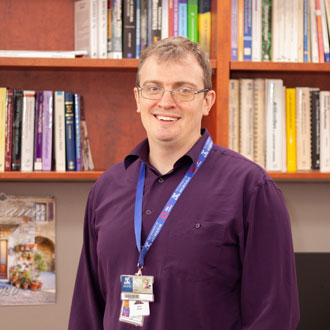
David Ascher is Head of the Computational Biology and Clinical Informatics laboratory at the Baker Institute, Deputy Director of Biotechnology at The University of Queensland, and Head of Systems and Computational Biology at Bio21 Institute. He holds honorary positions at Cambridge University, FIOCRUZ, and the Tuscany University Network. His educational background includes: Bachelor of Biotechnology Bachelor of Science (Honors) Bachelor of Laws Doctor of Philosophy David's research focuses on computational biology and bioinformatics, particularly in modeling biological data to understand fundamental processes. His work centers on developing tools to unravel the genotype-phenotype link, using computational and experimental approaches to assess the effects of mutations on protein structure and function. His group has created a platform of 40 widely used programs for variant effect prediction, which are applied in clinical settings for hereditary diseases, rare cancers, and drug-resistant infections. His recent publications span structural biology, genomics, and drug discovery, with a strong emphasis on protein dynamics, mutation impact prediction, and computational tools for biomedical research. The work often bridges basic science and clinical applications. Scientific awards and fellowships include: Anders Young Investigator Award (2017) Dr Álvaro Romanha Award (2017) Jack Brockhoff Early Career Researcher Award (2016) Dr Antoniana Ursine Krettli Award (2016) Dr Naftale Katz Award (2015) TJ Martin Award (2014) Bionomics Best Thesis Award (2014) NHMRC Investigator Fellowship (2020–2024) MDHS Research Fellowship (2019) NHMRC CJ Martin Fellowship (2014–2018) Victoria Fellowship (2013) Churchill Memorial Trust Fellowship (2013) David Ascher leads the Computational Biology and Clinical Informatics laboratory, which develops computational tools for clinical applications. His work is supported by major grants including the NHMRC Investigator Fellowship. He has not publicly listed his advisees, but his laboratory likely mentors students and researchers in computational biology.