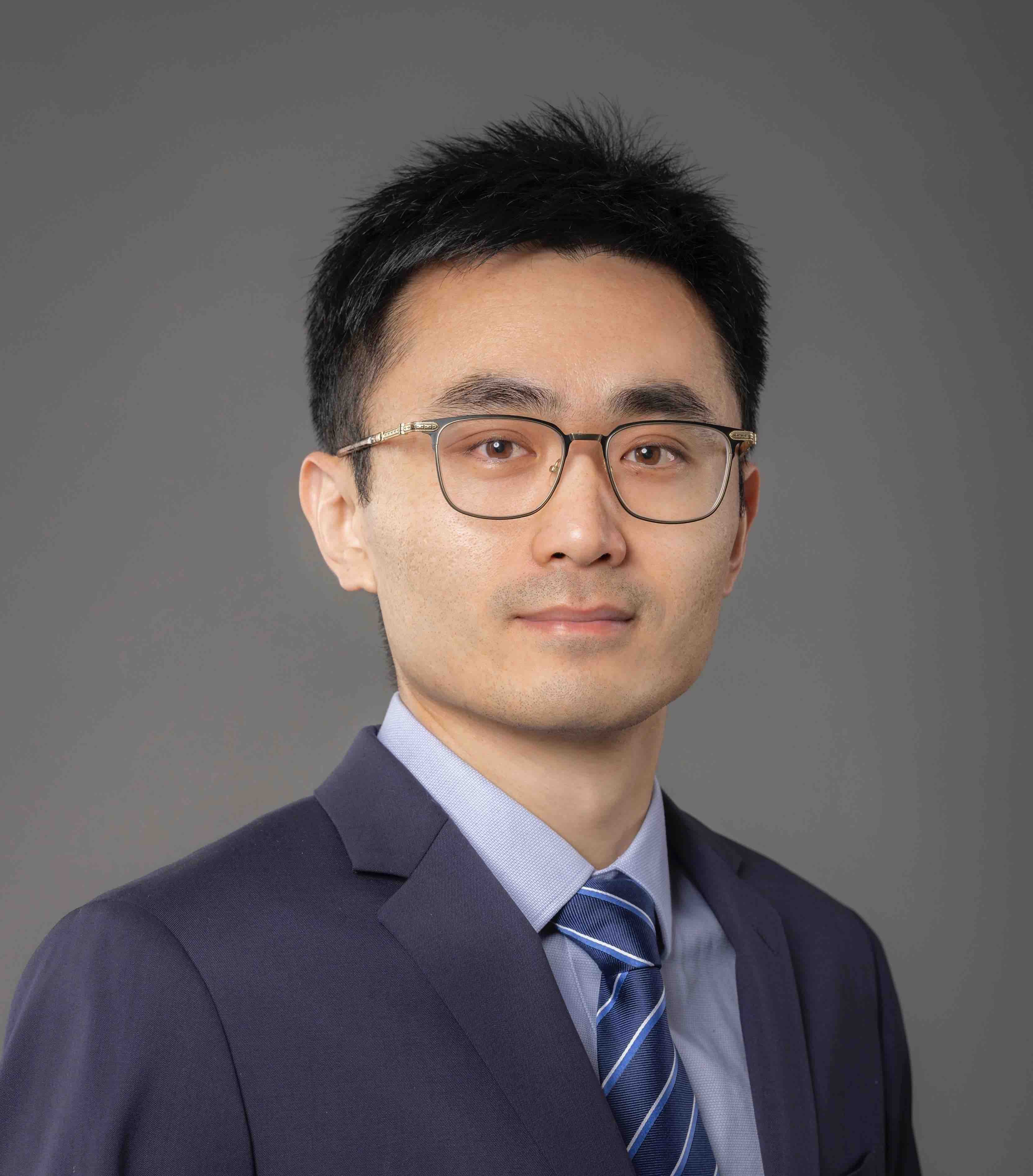
Dr. Wibowo Hardjawana is a Senior Lecturer in Telecommunications Engineering at the School of Electrical & Computer Engineering , University of Sydney. He holds a PhD from the University of Sydney and serves as an ARC DECRA Research Fellow. His research focuses on wireless network softwarisation, enabling programmable radio interfaces to address traffic elasticity in 5G/6G systems. Education : PhD (University of Sydney) Grants : ARC DP210100744 (2021), ARC DECRA DE140101114 (2014) His work spans 5G/6G network architectures , machine learning for wireless systems , and open radio interfaces . Key contributions include graph representation learning for interference management, Bayesian neural network detectors for OTFS modulation, and NOMA decoding techniques . Recent publications analyze ultra-reliable low-latency communications , UAV-enabled networks , and stochastic geometry in wireless systems . He has collaborated with institutions in China, Indonesia, and UAE, and engaged with industry partners like Telstra and Ausgrid.
Professor Jinman Kim is a Professor in the School of Computer Science at the University of Sydney and Director of the Biomedical Data Analysis and Visualisation (BDAV) Lab. He also serves as Research Director of the Telehealth and Technology Centre at Nepean Hospital. His research focuses on machine learning applications in biomedical image analysis, visualization, and multi-modal data processing. Kim holds a PhD in Computer Science from the University of Sydney (2006) and has held roles including Senior Lecturer (2013), Associate Professor (2016), and Professor (2022). He is an Area Editor for Computer Methods and Programs in Biomedicine and actively contributes to AI-driven healthcare initiatives. His academic journey includes a Marie Curie Fellowship at the University of Geneva (2010) and leadership roles in projects like the ARC Training Centre in Innovative Biomedical Engineering. He co-leads the Digital Health Imaging initiative under the Faculty of Engineering’s Digital Science Initiative. Kim has developed teaching programs such as the Master of Digital Health and Data Science, co-taught with the Faculty of Medicine and Health. Research interests span AI in medical imaging, telehealth systems, and interdisciplinary biomedical engineering. His work includes advancements in PET/CT fusion, tumor segmentation, and medical visual analytics. Kim’s lab explores applications like AI in dental education, cutaneous lymphoma detection, and fair AI models for healthcare. Notable collaborations include the Telehealth Remote Monitoring System for chronic patients and contributions to datasets like the HRDC Challenge for hypertension classification. His labs prioritize translating AI innovations into clinical tools for improved healthcare accessibility and precision.
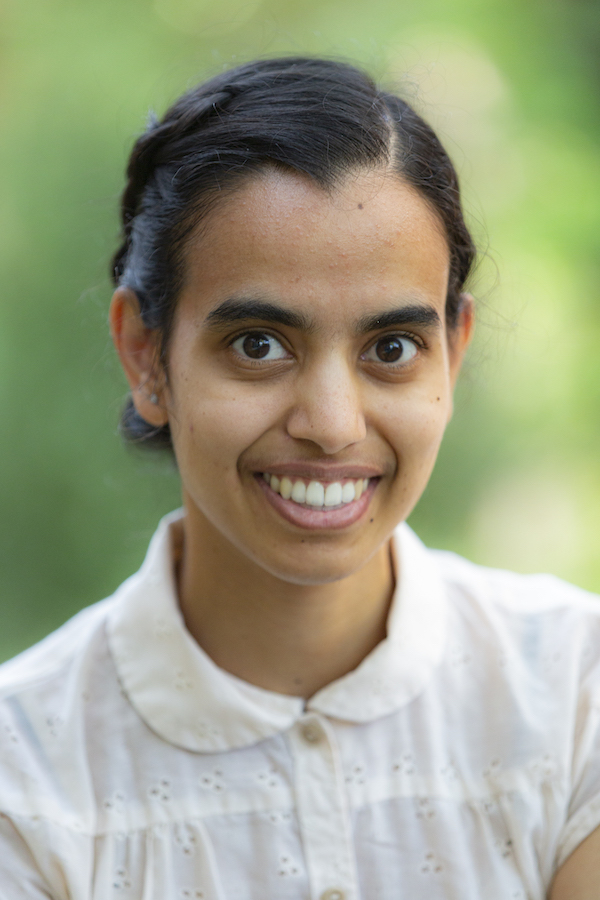
Chandrika Sadanand is an Assistant Professor in the Department of Mathematics at Bowdoin College. She holds a PhD from Stony Brook University and a BS from the University of Toronto. Her research focuses on low-dimensional topology and geometry, specifically exploring curves on surfaces, hyperbolic geometry, billiards, translation surfaces, and 3-manifolds. She has held postdoctoral positions at the University of Illinois Urbana Champaign, Technion, and Hebrew University of Jerusalem. Dr. Sadanand teaches courses in mathematical reasoning, geometry, and topology. Her recent courses include MATH 2020 (Introduction to Mathematical Reasoning), MATH 2404 (Geometry), and MATH 3402 (Topology). She has also mentored undergraduate research projects on flat surfaces and participated in outreach activities through programs like the Stony Brook Math Summer Camp and WISE. Her research contributions include studies on translation surfaces of infinite type, billiards dynamics, and geometric structures. She has contributed to innovative conferences like the Nearly Carbon Neutral Geometry and Topology Conferences through video presentations. Her work bridges pure mathematics with computational methods, addressing questions in geometric topology and dynamical systems.
Agostino Capponi is a Professor of Industrial Engineering and Operations Research at Columbia University, affiliated with Columbia Engineering and the Data Science Institute (DSI). He holds academic fellowships at the Luohan Academy (Alibaba Group) and the Fintech@Cornell Center. His research focuses on systemic risk, financial technology, blockchain economics, and machine learning applications in finance. He has authored a best-selling book on machine learning in financial markets and received prestigious awards including the NSF CAREER Award and the JP Morgan AI Faculty Research Award. Education: Master's and PhD in Computer Science and Applied & Computational Mathematics from Caltech (2006-2009). Professional roles include Editor of Management Science , co-editor of Mathematics and Financial Economics , and leadership positions in the Bachelier Finance Society and INFORMS Finance Section. His research has been funded by NSF, DARPA, J.P. Morgan, Ethereum Foundation, and others. Research interests span blockchain governance, decentralized finance protocols, and systemic risk mitigation in financial networks. Notable contributions include work on liquidity risk, crypto-economic systems, and causal inference in financial modeling. Media coverage includes American Banker, Vox, and Chicago Booth Review. He holds a patent in military network tracking and served as a visiting scholar at the Federal Reserve Bank of New York.
Dr. Vagelis Papalexakis is an Associate Professor and Ross Family Chair in the Computer Science & Engineering Department at the University of California, Riverside. His research focuses on data science, machine learning, and tensor methods, with applications in multi-aspect/multi-modal data analysis. He holds a Ph.D. from Carnegie Mellon University and a Diploma/M.Sc. from the Technical University of Crete. Affiliations: Ross Family Chair, Bourns College of Engineering, UCR Education: Ph.D. in Computer Science, Carnegie Mellon University M.Sc./Diploma in Electronic & Computer Engineering, Technical University of Crete His work emphasizes interpretable insights from complex datasets, including tensor-based defenses against adversarial attacks, graph representation learning, and scalable algorithms for high-dimensional data. Notable awards include the NSF CAREER Award (2021), IEEE DSAA Next Generation Award (2021), and ICDM Tao Li Award (2022). Grants include NSF funding for railway safety (CISE MSI: RPEP CPS), USDOT transportation research, and NVIDIA GPU grants. He leads projects in AI ethics, misinformation detection, and gravitational wave analysis. His lab collaborates with industry (e.g., Cisco, Instacart) and national labs (e.g., Lawrence Livermore).
Ling Zhao is a distinguished Professor at the School of Management, Huazhong University of Science and Technology, China, with extensive research contributions spanning artificial intelligence, machine learning, information systems, and biomedical applications. With over 150 publications since 2008, Dr. Zhao has established herself as a leading researcher in multiple interdisciplinary domains, particularly in applying computational methods to solve complex real-world problems. Dr. Zhao's research interests encompass a broad spectrum of cutting-edge topics including artificial intelligence, machine learning, data mining, control systems, and information systems. Her work demonstrates exceptional versatility, bridging theoretical computer science with practical applications in healthcare, transportation, cybersecurity, and business management. Notably, she has made significant contributions to sentiment analysis, medical image processing, algorithmic management, and privacy-preserving data analysis. Her research methodology often combines deep learning approaches with domain-specific knowledge to develop innovative solutions. Analysis of Dr. Zhao's recent publications (2023-2025) reveals a strong focus on interdisciplinary applications of AI, with particular emphasis on healthcare informatics (medical image analysis, disease diagnosis), human-computer interaction (algorithmic management effects), and advanced machine learning techniques (graph neural networks, multimodal learning). Her work shows a consistent trend toward increasingly complex and integrated systems that address real-world challenges across multiple domains. Dr. Zhao has made substantial contributions to academic advising and research mentorship, though specific student names aren't detailed in the available publications. Her research has been supported by various grants enabling work in AI applications, biomedical engineering, and information systems. Dr. Zhao maintains active collaborations with researchers across China and internationally, as evidenced by her co-authorship patterns. While specific laboratory information isn't explicitly mentioned in the publication records, Dr. Zhao appears to lead or be significantly involved in research groups focusing on AI applications in management and healthcare. Her work on medical imaging, sentiment analysis, and control systems suggests involvement in multiple specialized research teams addressing different application domains through computational approaches.
Bohan Chen is a Postdoctoral Scholar Research Associate in the Department of Computing and Mathematical Sciences. Their work focuses on advancing graph-based machine learning techniques and their applications in environmental science, remote sensing, and AI-driven analysis. Research interests include graph neural networks, active learning strategies, hyperspectral image analysis, and knowledge graph integration. Notable contributions include the development of the GLL layer for neural networks, the CUSP permafrost dataset, and hybrid models for multispectral image processing. Key research trends span theoretical advancements in graph-based learning and practical applications such as environmental monitoring, SAR data analysis, and pandemic modeling. Their work bridges computational methodologies with real-world environmental and societal challenges. Advising and grants: No student advisees listed. Contributions include foundational research without explicit grant mentions in provided text. Labs/teams: No specific lab or team affiliations mentioned in the text.
Diego Garlaschelli is a Professor of Theoretical Physics at Leiden University, affiliated with the Leiden Institute of Physics (LION) and the Biological, Soft and Complex Systems department within the Faculty of Science. His research focuses on the structure, dynamics, and physics of complex networks in financial, economic, social, neural, and biological systems. Combining statistical physics, information theory, and data science, his group explores interdisciplinary topics such as systemic risk in financial networks, mesoscopic organization in neural systems, and mathematical modeling of networks using maximum-entropy ensembles. Garlaschelli’s work emphasizes collaboration across fields like mathematics, computer science, economics, and neuroscience. Recent grants include NWO Open Competition funding for projects on network theory and systemic risk. He advises several PhD candidates, including Alessio Catanzaro, Francesca Giuffrida, and Jingjing Wang. His publications span high-impact journals like Nature Physics , Nature Reviews Physics , and Science , addressing topics from ensemble equivalence in networks to cultural diversity models. Key research themes include: (1) statistical physics of constrained systems, (2) financial network reconstruction from limited data, (3) early-warning signals for economic instabilities, and (4) information-theoretic bounds for large data structures. Garlaschelli co-leads the Leiden Complex Network Network (LCN2), fostering Dutch network science collaboration.
Roles & Affiliations: Duen Horng (Polo) Chau is a Professor in the School of Computational Science and Engineering at Georgia Tech. He co-directs the MS Analytics program and leads industry relations for The Institute for Data Engineering and Science (IDEaS) and corporate relations for The Center for Machine Learning. He teaches Data & Visual Analytics (CSE6242/CX4242) to over 1,000 students annually. His affiliations include the GVU Center, Institute for People and Technology (IPaT), and ML@GT. Education: PhD in Machine Learning (Carnegie Mellon University, 2012), MS in Machine Learning (CMU), MA in Human-Computer Interaction (CMU), B.Eng. in Information Engineering (The Chinese University of Hong Kong). Research: Focuses on human-centered AI, interpretable machine learning, adversarial robustness, graph visualization/mining, and social good applications (e.g., healthcare, anti-human trafficking). His lab develops tools like ActiVis (for neural network exploration), Diffusion Explainer (for text-to-image models), and TrafficVis (to combat trafficking). Research is funded by NSF, NIH, DARPA, NASA, and industry partners (Google, Intel, Meta). Awards: 17+ best paper awards, Google/Intel/Meta Faculty Awards, Outstanding Undergraduate Research Mentor (2023), Outstanding Mid-Career Faculty (2022), and the Carnegie Mellon Dissertation Award (2012). Grants & Labs: Leads projects on AI safety, robust speech recognition, and graph vulnerability. Collaborates with Children’s Healthcare of Atlanta on surgical planning via AR. His work influences industry platforms (e.g., Meta’s ML tools used by 25% engineers).
Prof. Sarthak Misra is a Full Professor in Medical Robotics at the University of Groningen’s Faculty of Medical Sciences, affiliated with the University Medical Center Groningen (UMCG). He leads research in the Robotics and image-guided minimally-invasive surgery (ROBOTICS) group and the Basic and Translational Research and Imaging Methodology Development in Groningen (BRIDGE) team. His work focuses on advancing medical robotics, microrobotics, and magnetic actuation technologies for surgical and biomedical applications. He holds an ORCID identifier and has published over 127 research outputs, including high-impact articles in journals like Advanced Materials Technologies and European Heart Journal . His research addresses challenges in minimally invasive surgery, soft robotics, and smart materials. Media engagements highlight his contributions to robotic surgery and addressing healthcare workforce shortages through automation. Research interests include: Microrobotics and fluidic systems Magnetic and acoustic actuation for medical devices Soft robotic systems for surgical applications Image-guided interventions 3D printing for biomedical robotics His recent articles emphasize innovations like MagNoFE3D printing and magnetic probes for endovascular interventions. Collaborations span global institutions, reflecting his interdisciplinary approach. No explicit awards are listed, but his extensive media coverage and 127+ publications underscore his impact. He is involved in grants, including OTP-funded projects, and mentors students in advanced robotics and medical engineering.
Patrick T. Brandt is a Professor of Political Science, Public Policy, and Political Economy at the University of Texas at Dallas , affiliated with the School of Economic, Political and Policy Sciences . His work integrates advanced statistical methods with political science, focusing on time series analysis, machine learning, and Bayesian modeling to study political dynamics. His research spans international relations , political economy , terrorist targeting , and conflict forecasting . He specializes in developing novel models for event count time series, including the Bayesian Poisson Vector Autoregression and MS-BVAR packages for R. His NSF-funded projects focus on event data generation and real-time conflict forecasting. Recent publications emphasize domain-specific language models (ConfliBERT variants), graph neural networks for conflict prediction, and machine translation challenges in political text analysis. He maintains the OpenEvent Data Repository and develops software like MSBVAR and PESTS for academic use. Scientific Awards : Robert H. Durr Award for Best Methodology Paper, Midwest Political Science Association (2006)
Yan Huang is an Associate Professor in the Department of Software Engineering and Game Development at Kennesaw State University (KSU). His work bridges Federated Learning (FL) and Cybersecurity Education , with a focus on personalization and privacy in distributed systems. Research spans Machine Learning , Extended Reality (XR) , and Data Privacy . He has served as Editor of WCMC and Program Co-Chair for CyberSciTech 2020-2024. Research Trends: Recent publications emphasize Federated Learning for non-IID data, VR-based Cybersecurity Education , and Privacy-Preserving Algorithms in IoT and social media analytics. Key subfields include personalized learning architectures, graph learning, and game-theoretic privacy frameworks. Scientific Awards: Excellent Paper Award (Tsinghua Science and Technology, 2021) Best Paper Award (Future Generation Computer Systems, 2019) Best Paper Awards at IEEE SmartWorld 2021, COCOA 2019, and WASA 2019 Grants: Led over $600,000 in NSF and NSA-funded projects, including VR cybersecurity education for K-12 and XR engineering curricula. His lab recruits VR/AR Research Assistants via industry partnerships.
Fernando Manuel Marques Batista is an Associate Professor at ISCTE – University Institute of Lisbon, Department of Information Science and Technology, and an integrated researcher at INESC-ID Lisbon. He serves as the Executive Coordinator of the Human Language Technologies (HLT) Scientific Area at INESC-ID and is a member of its Scientific Council. He previously held leadership roles including President of the Pedagogical Council of ISCTE-IUL (2017–2019) and member of its Standing Committee (2015–2017). Research Interests: Natural Language Processing Machine Learning Text and Speech Processing Sentiment and Emotion Analysis Hate Speech Detection Social Media Analytics Automatic Speech Recognition and Transcription His recent publications reflect a strong focus on applying NLP and machine learning to social media, with particular emphasis on hate speech detection, sentiment analysis, and user behavior modeling. He has also contributed significantly to speech processing, including punctuation restoration and prosody modeling, and to digital humanities through medieval text analysis. His work spans both technical innovation and real-world applications in tourism, finance, and public discourse. Scientific Recognition: Senior Member of IEEE (since 2016) Member of ISCA (International Speech Communication Association) Fernando Batista actively advises numerous PhD and Master’s students, supervising research in areas such as generative AI, hate speech detection, sentiment analysis, and economic forecasting. He has coordinated research projects like SPEDIAL and AppRecommender and is involved in organizing major conferences including PROPOR, EAMT, IPMU, and the Lisbon Machine Learning Summer School (LxMLS), where he has served in editorial and technical roles. Research Labs and Teams: He is a key member of the HLT@INESC-ID research group, contributing to its leadership and scientific direction. This group focuses on human language technologies, including speech processing, natural language understanding, and multilingual systems.
Emily J. King is a tenured Associate Professor in the Department of Mathematics at Colorado State University (CSU), College of Natural Sciences. She previously held a faculty position at the University of Bremen and has been actively contributing to the mathematical community through research, mentorship, and academic leadership. Her primary research interests include Frame Theory , Harmonic Analysis , Algebraic and Geometric Combinatorics , and Data Science , with applications in signal and image processing, Earth science, and artificial intelligence. She integrates deep mathematical theory with practical data analysis challenges. Her recent scholarly output reflects a strong focus on equiangular tight frames, combinatorial structures in frames, mathematical models for attention mechanisms, and applications to satellite imagery and cloud processes. Her work often bridges pure and applied mathematics, with a growing emphasis on interpretable AI and data science foundations. Dr. King has supervised several doctoral and master’s students, including Lander ver Hoef, Sören Schulze, Harley Meade, and Kristina Moen. She is a co-PI on an NSF grant focused on cloud processes and has been recognized for mentoring excellence, as evidenced by her student Emma Slack receiving the inaugural Outstanding Undergraduate in Mathematics award. NSF Grant Co-PI (2024) Outstanding Undergraduate in Mathematics award (mentored student, 2023) She is a founding co-organizer of the international Codes and Expansions (CodEx) Seminar and has organized sessions at major conferences such as SIAM AG and the Joint Mathematics Meetings. She frequently delivers invited talks at universities and research institutes worldwide, including upcoming presentations at the Air Force Institute of Technology, SIAM AG25, and TU Clausthal. Dr. King’s academic lineage includes John Benedetto as her mathematical advisor and Chandler Davis as her mathematical grandfather. She is actively involved in interdisciplinary research, particularly in marine data science, having co-spoken for the Helmholtz School for Marine Data Science (MarDATA).
Tommy Löfstedt is an Associate Professor at Umeå University , affiliated with the Department of Computing Science and the Department of Mathematics and Mathematical Statistics. His research focuses on machine learning , computer vision , and medical image analysis , with applications in life sciences, radiation therapy, and biomedical imaging. He leads multiple research projects, including AI-driven delineation in radiation therapy, quantitative MRI for radiotherapy, and machine learning for plant nutrient uptake. Current research emphasizes structured regularization methods to improve model interpretability and robustness. Key applications include medical image segmentation , Alzheimer's classification , and uncertainty estimation in MRI . Recent publications highlight his work on morphological regularization , adversarial attack mitigation , and multi-task learning in medical imaging contexts. His projects span 2022–2026 with funding for pediatric oncology automation and gynecological cancer staging. Affiliated with both computing and mathematical departments, he bridges algorithm development with applied mathematical frameworks in medical and life science domains.