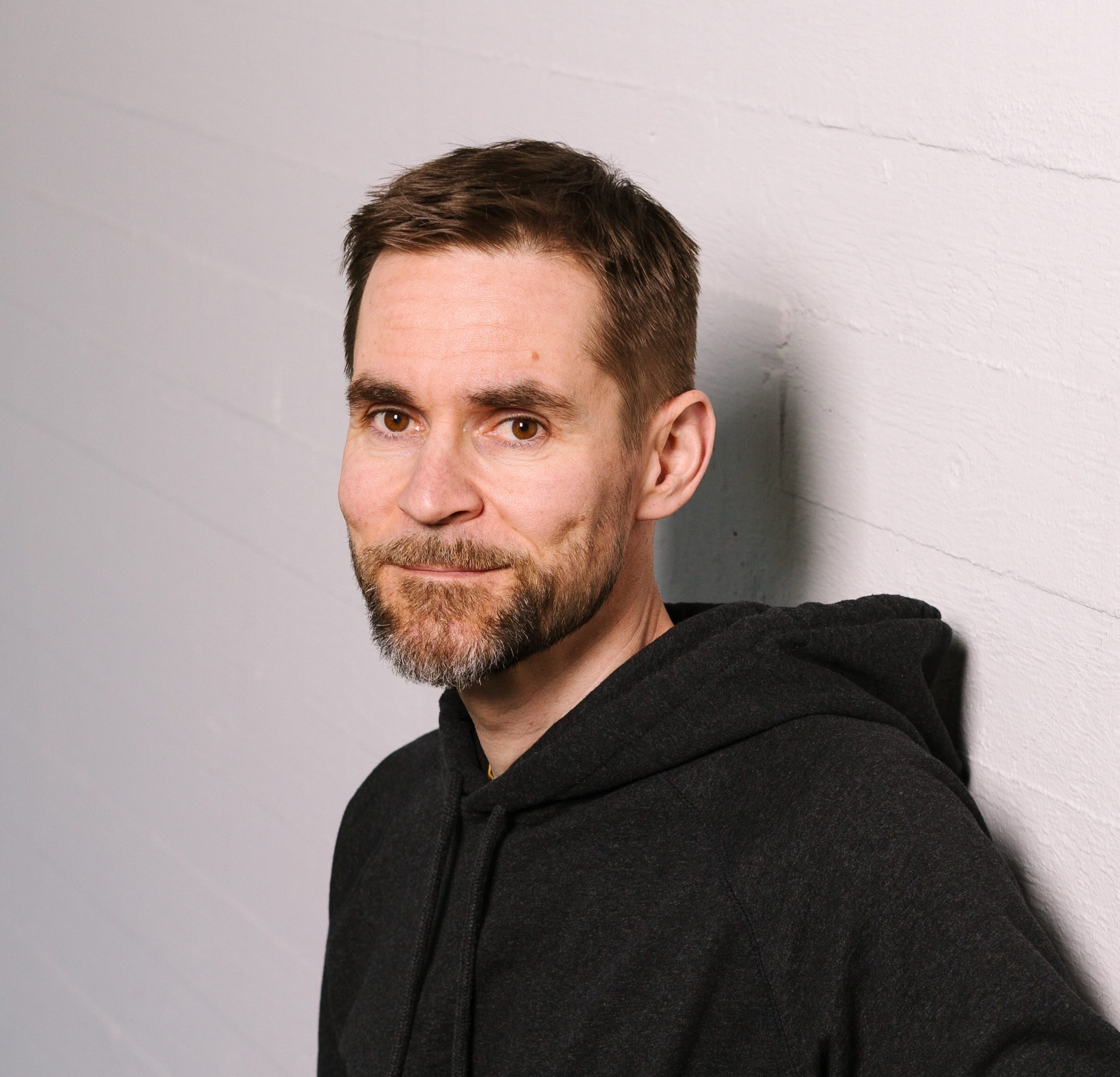
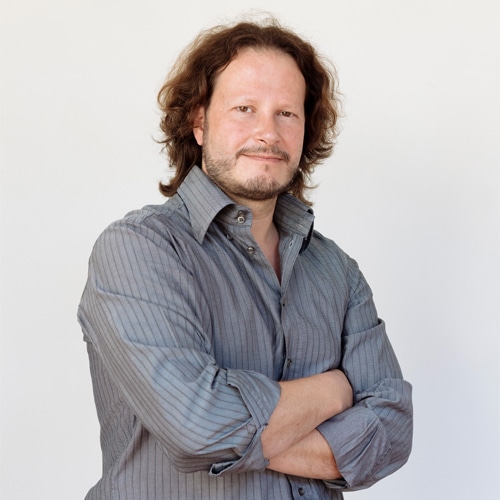
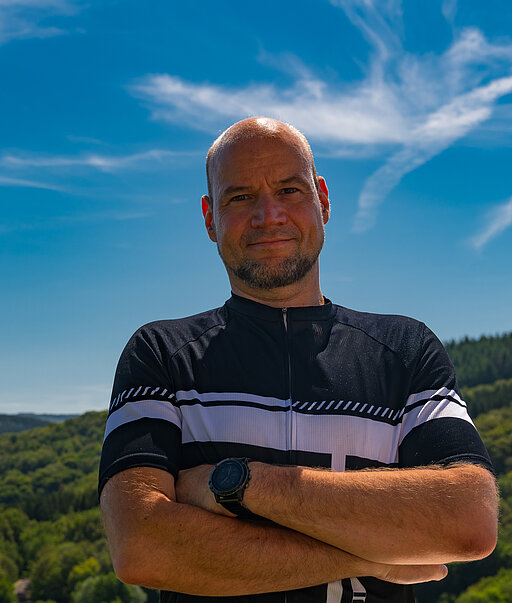
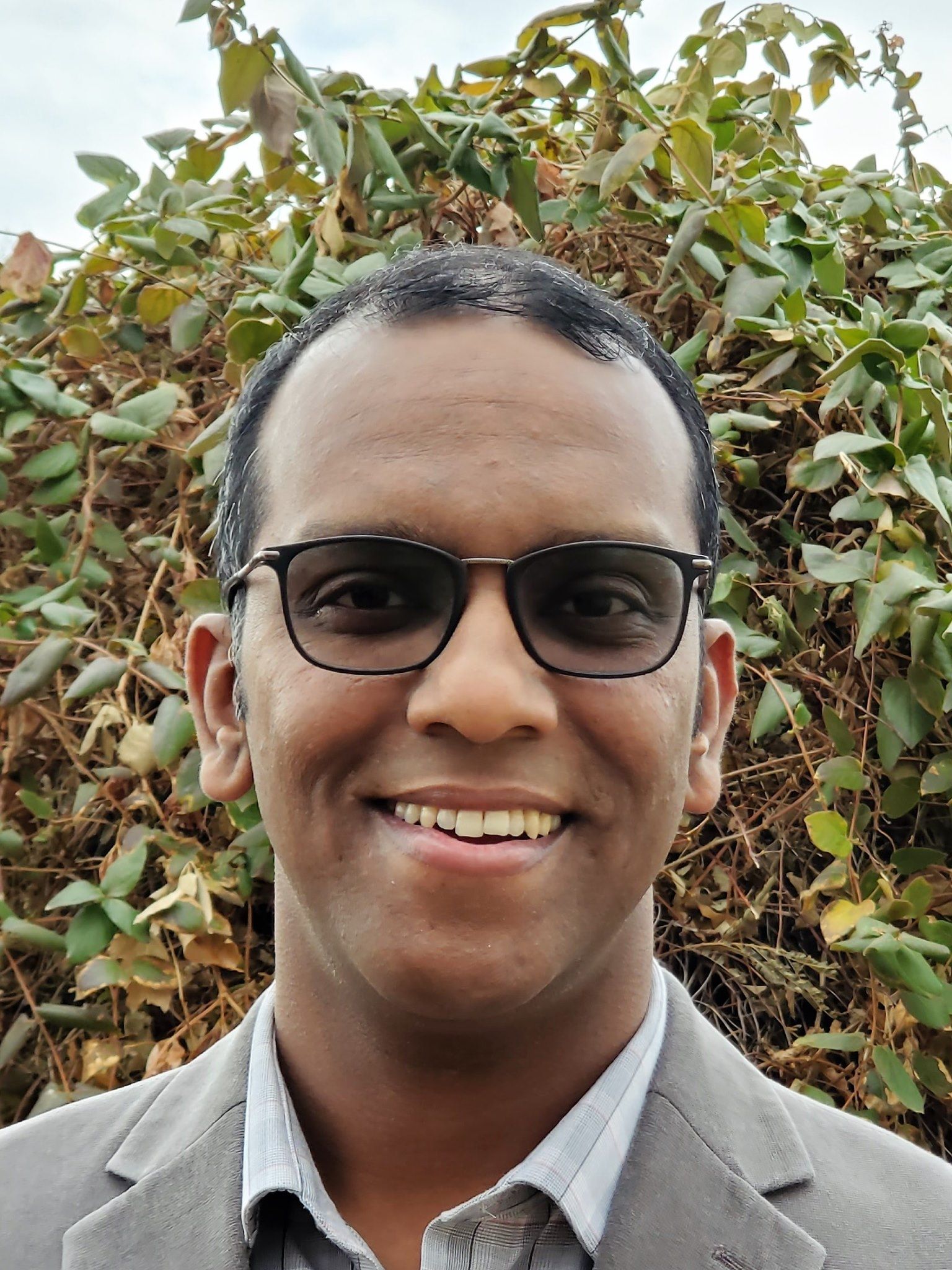
Harri Lähdesmäki is an Associate Professor (tenured) at the Department of Computer Science, Aalto University, where he leads the Computational Systems Biology research group. His work focuses on probabilistic machine learning and deep generative models with applications in biomedicine and molecular biology. Key Research Interests: Probabilistic machine learning, deep generative models, computational biology, bioinformatics, longitudinal data modeling Contact: harri.lahdesmaki@aalto.fi | Konemiehentie 2, 02150 Espoo, Finland His recent publications highlight advancements in: Gaussian process priors for scalable deep generative models Single-cell analysis of immune repertoires in leukemia and diabetes Probabilistic deconvolution methods for RNA-seq data Epigenetic analysis using hidden Markov and mixed models Transformer-based survival prediction and missing data handling Harri’s work integrates mechanistic modeling with Bayesian inference, particularly applied to immunology, cancer biology, and early disease prediction.
Scott Hopkins is a Professor in the Department of Chemistry at the University of Waterloo, specializing in Physical Chemistry. His research integrates machine learning with experimental techniques to study ion mobility, mass spectrometry, and spectroscopic analysis. He directs the Hopkins Laboratory, focusing on computational predictions of chemical behaviors and molecular interactions. His work addresses fundamental questions in gas-phase chemistry, cluster formation, and analytical method development. Research interests span physical chemistry, computational modeling, and analytical instrumentation, with a strong emphasis on developing predictive tools for complex chemical systems. Recent investigations explore ion-solvent dynamics, fragmentation mechanisms, and machine-learning applications for spectral interpretation.
Diego Garlaschelli is Professor of Theoretical Physics at the IMT School for Advanced Studies in Lucca, Italy, and at the Lorentz Institute for Theoretical Physics, University of Leiden, the Netherlands. He leads the NETWORKS research unit at IMT and the Econophysics and Network Theory group at Leiden. He is also an external faculty member at the Complexity Science Hub in Vienna and an associate member of the Enrico Fermi Research Center in Rome. His affiliations reflect a strong international and interdisciplinary research profile in network science and statistical physics. He holds a master's degree in theoretical physics from the University of Rome III (2001) and a PhD in Physics from the University of Siena (2005). His postdoctoral experience includes positions at the Australian National University, the University of Siena, the University of Oxford, and the Sant’Anna School of Advanced Studies in Pisa. Garlaschelli’s research spans network theory, statistical physics, econophysics, financial complexity, ecological networks, and social dynamics. He applies maximum entropy models, information theory, and random graph frameworks to understand complex real-world systems. His teaching includes courses in Network Theory, Econophysics, and Complex Systems at both PhD and MSc levels. The 15 most recent publications highlight a consistent focus on network reconstruction, ensemble inequivalence, renormalization, and applications to financial and socio-economic systems. Key themes include statistical inference in networks, resilience, and multi-scale modeling, with publications in top journals such as Nature Reviews Physics , Physics Reports , Science , and Physical Review Letters . His scientific awards include the Best Paper Award at the 6th International Workshop on Self-Organizing Systems (2012) and the Jan Kijne Prize (2013) as supervisor. He has secured multiple grants from NWO, the European Union, and the Royal Society, and has supervised over 40 students at PhD, master’s, and bachelor’s levels. He also mentors postdocs and visiting scientists. Garlaschelli leads and organizes major international workshops and schools in network science and complex systems. He serves on scientific committees and is an active referee for journals like Nature and Physical Review Letters , as well as funding agencies including the ERC and NWO.
Prof. Dr. Ingo Scholtes is Chair of Machine Learning for Complex Networks at Julius-Maximilians-Universität Würzburg's Center for Artificial Intelligence and Data Science (CAIDAS). His research spans network science, graph machine learning, and computational social science, with applications in software engineering, ecology, biology, and physics. He received a Juniorfellowship from the German Informatics Society (2014) and an SNSF Professorship (CHF 1.5Mio, 2018). Current affiliations: JMU Würzburg (since 2021), University of Zurich (2018-2024), Bergische Universität Wuppertal (2019-2021) Research focus: Higher-order network modeling, temporal graph analysis, AI for collaborative systems, causality-aware machine learning His recent publications demonstrate strong trends in temporal network analysis , graph neural networks for time-series, and higher-order models across software engineering and social science domains. He co-chairs multiple international workshops on complex networks and serves as associate editor for EPJ Data Science and Advances in Complex Systems. Key scientific contributions: Foundational work on higher-order network models published in Nature Physics Methodological innovations in temporal network visualization (HOTVis) and path-based analysis (pathpy) As both educator and organizer, he leads the Computational Social Science Section at GI e.V., mentors across disciplines, and develops tools like git2net for collaboration analysis. His work bridges theoretical foundations with practical applications in network science.
Ji Hwan Park is an Assistant Professor in the School of Interactive Games and Media at RIT's Golisano College of Computing and Information Sciences (GCCIS). He holds a PhD from Stony Brook University under Prof. Arie Kaufman. His research focuses on accessible data visualization, digital twins, human-AI collaboration, and VR/AR applications. Notable contributions include developing tools for ADHD-friendly visualizations and interactive protein motif identification. He has received funding from the Department of Defense for biomedical research and earned an Honorable Mention at CHI 2024. Current teaching includes courses on game design and advanced algorithms. Research activities span medical imaging analytics (e.g., CMed framework for crowd-sourced diagnostics), climate modeling through Bayesian deep learning, and creative visualization techniques like Graphoto. His work bridges technical innovation with human-centered design principles, particularly in healthcare and neurodivergent accessibility contexts.
Claudia Plant is a Professor in the Faculty of Computer Science , leading the Research Group Data Mining and Machine Learning . Her research focuses on clustering algorithms, data mining, and machine learning applications in areas like biomedical data, wind energy, and causality inference. She has contributed to projects such as Knowledge-infused Deep Learning for Natural Language Processing (2020–2028) and Hybrid Computational Sciences (2021–2021). Plant has authored over 160 publications, with recent work emphasizing deep learning, anomaly detection, and GPU-optimized algorithms. She actively engages in academic activities, including talks on clustering methods and interdisciplinary projects like Governing Algorithms: The Politics of Data and Decision-Making . Her research interests span clustering algorithms , graph neural networks , causality discovery , and ethical digital transformation . Notable projects include causal analysis of wind farm dynamics and AI-enhanced education tools. Plant’s work bridges computational methods with societal challenges, such as empowering marginalized communities through ethical technology adoption.
Kevin Chenchuan Chang is a Professor in the Department of Computer Science at the University of Illinois at Urbana-Champaign (UIUC), affiliated with the FORWARD Data Lab and the Data and Information Systems Laboratories. His research focuses on bridging structured and unstructured data through natural language processing, data mining, machine learning, and information retrieval, with applications in web search, social media analytics, and knowledge acquisition. He co-founded Cazoodle and developed GrantForward.com, a funding discovery platform used by leading institutions globally. Education: Ph.D. in Electrical Engineering from Stanford University (2001), B.S. from National Taiwan University. Professional roles include service on program committees for SIGMOD, VLDB, KDD, and NeurIPS, as well as editorial roles for PVLDB, TKDE, and the Encyclopedia of Database Systems. His awards include the ICDE 10-Year Test of Time Award (2022), NSF CAREER Award (2002), and multiple UIUC teaching excellence recognitions. He teaches courses such as CS 411 (Database Systems), CS 598 KCC (Understanding LLMs), and CS 511 (Advanced Data Management). Research contributions span graph algorithms (e.g., Geom-GCN, SimRank), social network analysis (ROSE), and NLP (DEER, Open Relation Modeling). The FORWARD Lab emphasizes real-world impact through systems like GrantForward and tools for analyzing large-scale data.
Gerd Stumme is a Full Professor of Computer Science at University of Kassel , leading the Chair on Knowledge and Data Engineering . He serves as Executive Director of the Research Center for Information Systems Design (ITeG) , director of the International Centre for Higher Education Research (INCHER) , and founding member of the Hessian Institute for Artificial Intelligence (hessian.AI) . His research spans the intersection of Data Science, AI, and Mathematics , focusing on semantic/structural analysis of social networks, concept hierarchies, and mathematical structures (graphs, ordered sets) for knowledge acquisition. He pioneered work on Semantic Web, Web Mining, Social Bookmarking , and Recommender Systems , and has recently revisited mathematical foundations for knowledge representation. Recent publications analyze ordinal motifs in lattices , controversy mapping , and social network structures , with applications to business models, journalism, and AI. His work often integrates graph theory and formal concept analysis . He is a core developer of BibSonomy , a social bookmarking and publication-sharing system, and has contributed to FolkRank and TriAS algorithms for collaborative knowledge management.
Professor Rodrigo Freitas holds the TDK Professorship in Materials Science and Engineering at MIT. His research focuses on computational materials design, bridging atomistic simulations with mesoscale microstructural analysis. He leads the Freitas Research Group, specializing in machine learning-driven modeling of materials kinetics and solidification processes. Education: B.S. and M.S. in Physics, University of Campinas, Brazil M.S. and Ph.D. in Materials Science & Engineering, UC Berkeley Research Interests: Professor Freitas investigates microstructural evolution in metals and alloys using advanced computational methods. Key areas include solidification mechanisms, interstitial atom behavior in superalloys, and machine learning applications for materials discovery. His work emphasizes bridging atomistic and mesoscale phenomena to guide industrial applications like semiconductor manufacturing and battery design. Publications Trend: Recent work emphasizes machine learning potentials for alloy modeling, short-range order analysis in high-entropy alloys, and kinetic modeling of complex chemical systems. Themes include alloy phase stability, defect dynamics, and data-driven materials discovery. Labs/Teams: Leads the Freitas Research Group at MIT, which develops novel computational tools for materials engineering.
Abdullah Mueen is a Professor and Associate Chair in the Department of Computer Science at the University of New Mexico (UNM), where he has been since 2013. Previously, he worked as a Scientist in the Cloud and Information Sciences Lab at Microsoft Corporation. Research Interests : His work focuses on Temporal Data Mining , with emphasis on efficiency , interactivity , and interpretability . Key areas include Blockchain Data Mining (e.g., BitLink for Bitcoin cluster analysis), Seismic Data Mining (e.g., PAW for aftershock detection), and Social Media Mining (e.g., DeBot for Twitter bot detection). Article Trends : His recent publications span four domains: Seismology : Algorithms for earthquake data analysis (e.g., focal depth inference, aftershock classification). Blockchain : Temporal linkage of Bitcoin addresses (BitLink) and cryptocurrency fraud detection. Traffic Safety : Multi-LiDAR data fusion for real-time road safety monitoring. Time Series Methods : Innovations like MASS similarity search and DAMP anomaly detection for massive datasets. Scientific Awards : ACM SIGKDD Test-of-Time Award (2022) UNM Provost Research Leader Award UNM School of Engineering Junior Faculty Research Excellence Award KDD 2012 Doctoral Dissertation Contest Runner-Up KDD 2012 Best Paper Award Advising and Grants : He has mentored 11 PhD students now employed at institutions like Microsoft, Meta, and Lawrence Livermore National Lab. His research is funded by NSF , NIH , DARPA , AFRL , NEC , Exxon , Microsoft , and LANL .
Prof. Dr. Matthias Weidlich is a faculty member at Humboldt University of Berlin within the Institute of Computer Science under the Faculty of Mathematics and Natural Sciences . His research focuses on Process Mining , Complex Event Processing , and Data Privacy with applications in Business Process Management and Scientific Workflows . Research Interests: Business Process Management and Process Mining Complex Event Processing and Stream Data Analysis Data Privacy and Security in Process Systems Scientific Workflow Systems and User Behavior Heterogeneous Network Embeddings Algorithm Design and Optimization Recent Publications (2023-2025) demonstrate expertise in: Efficient stream processing techniques Privacy-preserving process mining frameworks Scientific workflow analysis tools Graph neural network applications Multi-modal data integration Adaptive querying systems Contact: Office: Unter den Linden 6, 10099 Berlin Phone: 030 2093-41277 Email: matthias.weidlich@hu-berlin.de Web: hu.berlin/data
Nicole Ludwig serves as a Junior Professor and Principal Investigator of the independent research group "Machine Learning in Sustainable Energy Systems" within the Cluster of Excellence – Machine Learning for Science at the University of Tübingen. Education: PhD in Computer Science, 2020, Karlsruhe Institute of Technology MSc in Information Systems and Network Economics, 2016, University of Freiburg BSc in Economics, 2014, University of Freiburg Ludwig's research focuses on applying machine learning techniques to sustainable energy systems, with particular emphasis on uncertainty quantification and the complex relationships between weather, climate, and energy systems. Her work integrates probabilistic approaches with time series analysis to address challenges in energy forecasting and management under uncertain conditions. She actively contributes to the development of methods for probabilistic forecasting and reinforcement learning applications in energy contexts. Ludwig maintains an active presence in the machine learning research community, with contributions to open-source projects related to energy time series analysis. Her GitHub profile shows engagement with repositories focused on graph convolutional networks and energy time series motif discovery.
Dr. Tim Oates is a Professor in the Department of Computer Science and Electrical Engineering at the University of Maryland, Baltimore County . His research spans machine learning, artificial intelligence, and brain-machine interfaces, with a focus on weakly supervised methods, human-in-the-loop reinforcement learning, and grounded policy development for robotics. Ph.D., Computer Science, University of Massachusetts, Amherst, 2000 M.S., Computer Science, University of Massachusetts, Amherst, 1997 B.S., Computer Science and Electrical Engineering, 1989 Current research threads include: Developing non-invasive brain injury severity assessment via medical time series Modeling human brain development through computational frameworks Designing algorithms for autonomous robotic learning Recent publications highlight AI security mechanisms (backdoor detection via tensor decomposition, matrix factorization) Medical applications (3D artery reconstruction, skin lesion diagnosis, EEG denoising) Neuro-symbolic integration (holographic representations, language-guided reinforcement learning) Mathematical reasoning (schema-based problem solving, subitizing algorithms) Contact: oates@cs.umbc.edu | Office: 336 Information Technology and Engineering (ITE) Building
Yulia Gel is a Professor in the Department of Statistics at Virginia Tech and serves as a Part-Time Program Director-Expert at the National Science Foundation (NSF). She holds a MSc (summa cum laude) and PhD in Mathematics from Saint Petersburg State University (Russia) and completed a postdoc in Statistics at the University of Washington. Her research focuses on uncertainty quantification in AI, statistical foundations of data science, spatio-temporal processes, and applications in climate science, healthcare, and blockchain analytics. She has received prestigious awards including the NSF Director’s Award (2023), ASA Distinguished Achievement Medal (2018), and TIES Abdel El-Shaarawi Award (2014). Gel has led grants on wildfire prediction, climate informatics, and blockchain data science. She serves on editorial boards of Statistica Sinica, Electronic Journal of Statistics, and Technometrics, and organizes workshops on AI for climate sustainability and fragile Earth systems. Her research group develops topological and geometric methods for graph neural networks, with applications to digital twins, environmental justice, and public health. Education: MSc (1997), PhD (2000) in Mathematics from Saint Petersburg State University; Postdoc in Statistics at University of Washington (2001–2003). Past roles include Professor at University of Texas at Dallas (2015–2024) and Associate Professor at University of Waterloo (2004–2014). Selected visiting positions include NASA Jet Propulsion Lab (2016–2017) and Isaac Newton Institute (2016–2017). She has pioneered statistical software packages like snowboot and funtimes for network inference and time-series analysis. Awards highlight her contributions to environmetrics and statistical methodologies. Current projects include NSF-funded research on AI-driven wildfire prediction and blockchain analytics for climate resilience. Her lab’s recent work emphasizes topological methods (e.g., zigzag persistence) for graph-based forecasting and adversarial robustness.
Yuan-Fang Li is an Associate Professor in the Department of Data Science & AI at Monash University's Faculty of Information Technology. He also serves as Associate Dean International. His research focuses on knowledge graphs, natural language processing, multimodality, and graph representation learning. He holds a PhD from National University of Singapore (2006) and a Bachelor of Computing (Honours) from the same institution (2002). Affiliations: Monash University (since 201?), National University of Singapore (PhD 2002-2006) Key Projects: Leading research on neuro-symbolic systems (HARNESS project), large-scale multimodal knowledge management, and maritime knowledge graphs Teaching: Taught courses including FIT4002, FIT4004, and supervised over 20 PhD students Research interests include complex question answering over knowledge graphs, knowledge extraction from text/images, and structural/temporal graph learning. He has published 152+ works with notable contributions to scene graph generation, event extraction, and LLM-based reasoning. Key awards include the 2020 Best Student Paper Award and 2017 Kurzweil Prize. Grants: ARC Discovery Projects, industry collaborations (e.g., Outotec Oy) Labs/Teams: Active in Monash's Data Science & AI research groups, leading neuro-symbolic AI initiatives