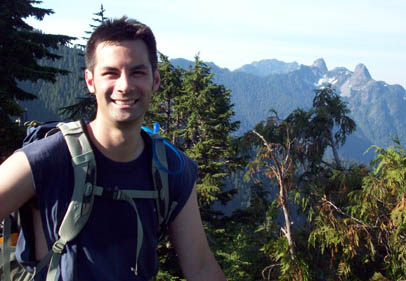
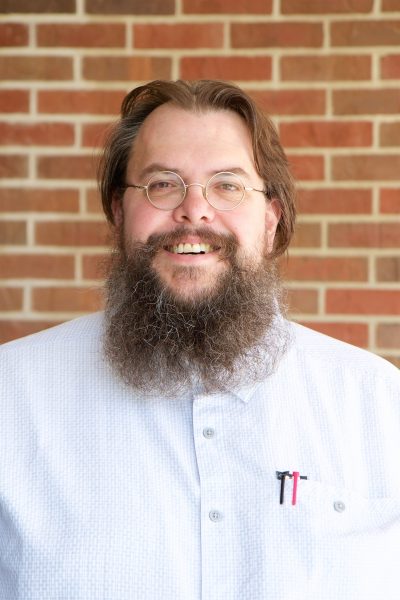
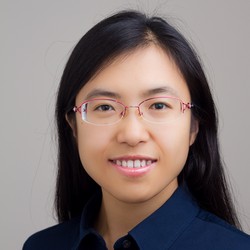
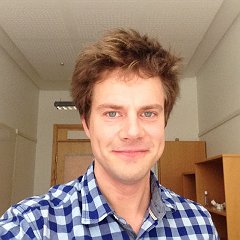
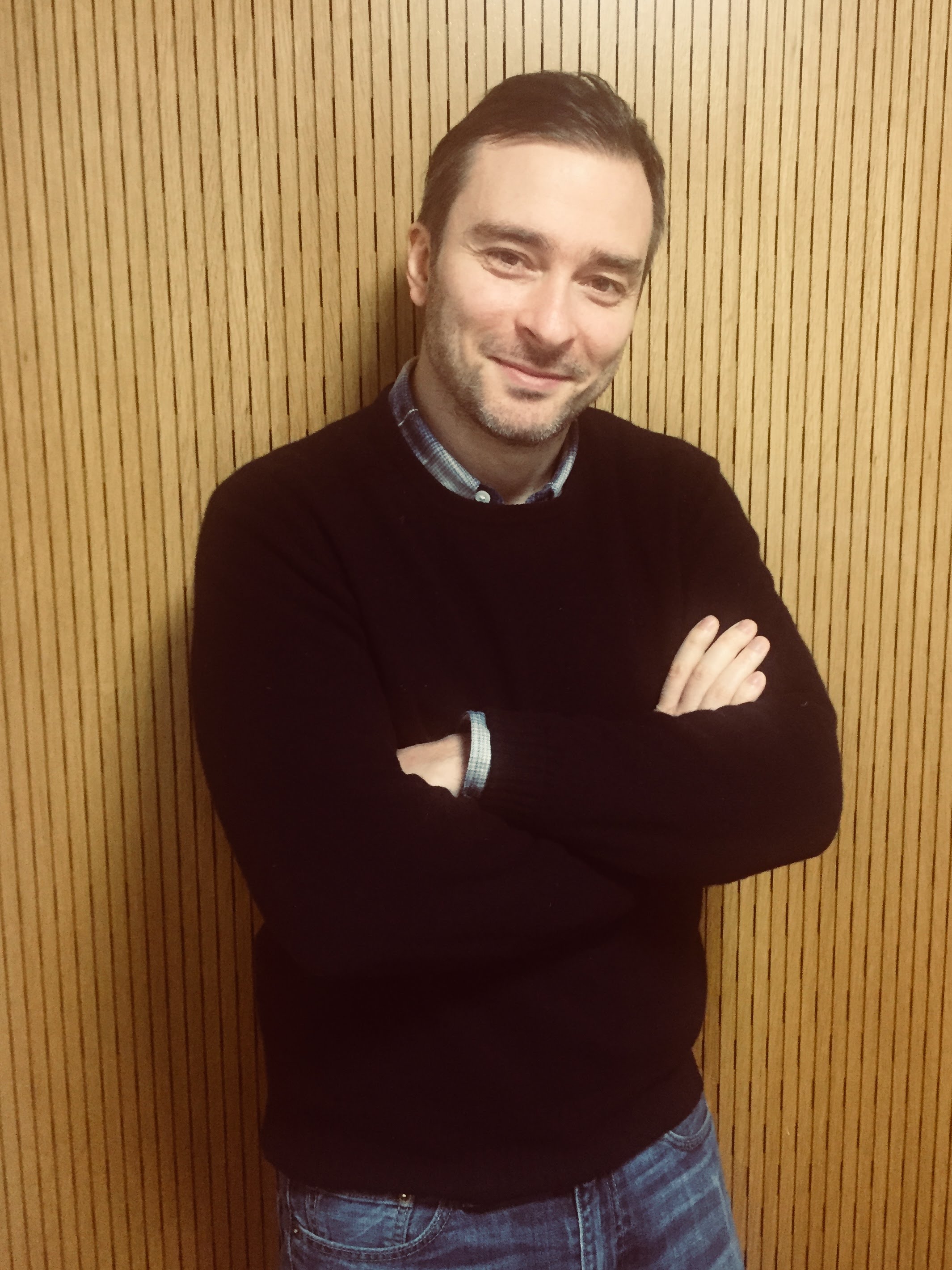
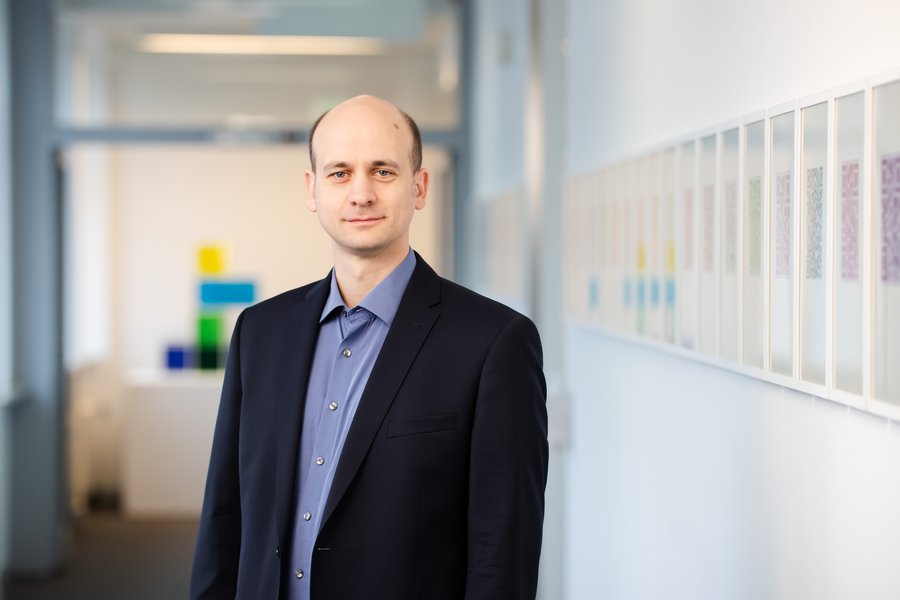
Valentijn Karemaker is an Assistant Professor at the Faculty of Science, Utrecht University , specializing in the Mathematical Institute under the Fundamental Mathematics sub-unit. He focuses on the Foundations of Complex Systems , with particular expertise in Abelian Varieties , Finite Fields , Galois Representations , and Isogeny Classes . His research bridges theoretical mathematics and computational methods, notably contributing to problems like Hilbert's Tenth Problem and the Gauss problem for central leaves . He has published extensively in top-tier journals and co-authored significant surveys on local-global principles. Scientific Awards : NWO-Veni Award (2019) Westerdijk Award (2021-2022) Utrecht Young Academy (2021) NWO-XL Award (2022) NWO-Vidi Award (2023) Grants and Collaborations : He has received competitive NWO awards, hosted international researchers like Chia Fu Yu and Mihran Papikian, and contributed to editorial work for the American Mathematical Society.
Edward Richmond is an Associate Professor and Director of Graduate Studies in the Department of Mathematics at Oklahoma State University. He previously held postdoctoral positions at the University of British Columbia (2010-2014) and the University of Oregon (2008-2010), and earned his Ph.D. in Mathematics from the University of North Carolina at Chapel Hill in 2008 under Prakash Belkale. His academic career includes roles such as Teaching Fellow (2002-2008) and Math Help Center Director (2006-2007) at UNC. Research Interests: His work focuses on algebraic combinatorics, algebraic geometry, Lie theory, and representation theory. Key research themes include Coxeter groups, Schubert varieties, billey-postnikov decompositions, and applications to geometric and combinatorial problems. He has contributed to understanding isomorphism problems in Schubert varieties, noncommutative coefficients, and smoothness criteria for algebraic structures. Recent Publications: Recent studies explore permutation pattern avoidance, cominuscule Schubert varieties, and nil-Hecke rings. These papers highlight collaborations with researchers like S. Oh, T. Grigsby, and K. Zainoulline, with applications to Young's lattice, Springer fibers, and affine flag varieties. Academic Service: Richmond has co-organized numerous special sessions at conferences, including topics in combinatorics, Lie theory, and Schubert calculus. He has also contributed to course design, such as Math 3933: Introduction to Research Methods at OSU, and participated in outreach activities like Math Mania and ELMACON.
Steve Butler is a Professor and the Barbara J. Janson Professor in the Department of Mathematics at Iowa State University. His research focuses on spectral graph theory, combinatorics, and the mathematics of juggling. He earned his Ph.D. from UC San Diego (2008) under Fan Chung and completed an NSF Postdoc at UCLA with Benny Sudakov. Research Interests: Spectral Graph Theory: Studies eigenvalues of graph matrices, equitable partitions, and Laplacian properties. Recreational Mathematics: Explores mathematical patterns in juggling, card shuffling, and performance. Combinatorics: Investigates Eulerian numbers, distance matrices, and graph automorphisms. Scientific Awards: Barbara J. Janson Professorship (2017) LAS Early Achievement in Teaching Award (2014) Cassling Family Faculty Award (2014) MAA Iowa Section Award for Distinguished Teaching (2015) NSF Postdoctoral Fellowship (2008-2011) Advising and Outreach: Butler actively collaborates with students, producing educational videos and organizing undergraduate research initiatives. He served as Iowa State's calculus coordinator (2018-2020) and contributes to outreach programs for young STEM enthusiasts.
Daniel Cullina is an Assistant Professor in Electrical Engineering, specializing in theoretical computer science and machine learning. His research explores fundamental aspects of adversarial robustness, graph alignment, and information theory, with applications spanning cybersecurity and data science. Research Focus: Adversarial machine learning: Robustness guarantees, attack/defense strategies for classifiers Graph algorithms: Alignment and recovery in random graph models like Erdős-Rényi Information theory: Fundamental limits of database matching and Gaussian alignment Coding theory: Deletion error correction and converse bounds His publications (28+ with 575+ Scopus citations) demonstrate consistent contributions to understanding adversarial vulnerabilities in ML systems and combinatorial algorithms for graph/data matching. Recent work (2020-2023) focuses on theoretical characterization of optimal losses under attacks and database alignment frameworks. With an h-index of 12, his research output shows sustained productivity since 2012, peaking in 2016 (8 publications) and maintaining 3-5 annual publications in recent years.
Yi Liu is an Assistant Professor of Data Science jointly appointed in the Department of Applied Mathematics & Statistics and the Department of Computer Science at Stony Brook University. Previously, he served as an Assistant Professor in the Department of Computer Science at Florida State University. His academic background includes a Ph.D. in Computer Science from Texas A&M University (2022), an M.E. in Biomedical Engineering (2015), and a B.E. in Electronic Engineering (2012), both from the University of Science and Technology of China. Dr. Liu's research focuses on cutting-edge developments in artificial intelligence and computational science, with particular emphasis on: Geometric deep learning architectures for molecular and material systems AI-driven scientific discovery (AI4Science) Large language models for scientific applications 3D graph neural networks for molecular modeling Neural operators for physical system simulations His recent publications demonstrate a strong focus on developing novel AI methodologies for scientific applications, particularly in computational chemistry and materials science. Research trends include geometric deep learning for 3D molecular graphs, neural operators for physical modeling, explainable AI for chemical systems, and transformer-based approaches for material property prediction. The work consistently bridges fundamental AI research with applications in drug discovery, materials design, and scientific computing.
Weina Wang is an Assistant Professor in the Computer Science Department at Carnegie Mellon University, joining in Fall 2018. Her research lies at the intersection of applied probability , stochastic systems , and reinforcement learning , focusing on decision-making in large-scale systems with applications to computing resource orchestration, data privacy, and graph statistics. She has received prestigious awards including the NSF CAREER Award (2022) , ACM MobiHoc Best Paper (2022) , and ACM SIGMETRICS Rising Star Research Award (2023) . PhD in Electrical Engineering, Arizona State University (2016) Bachelor’s in Electronic Engineering, Tsinghua University (2009) Her recent publications span restless bandits , queueing theory , and attributed graph alignment , reflecting her dual focus on fundamental limits and algorithmic solutions. Notable collaborations include work on privacy-preserving data routing , phase-aware scheduling , and erasure-coded servers for heterogeneous traffic. She has advised PhD students Jalani Williams , Tuhinangshu Choudhury , and Yige Hong . Her research has been recognized with best paper awards and grants like the NSF CAREER . She also contributes to professional societies, recently joining the INFORMS Applied Probability Society council . Her teaching includes courses like Probability and Computing and Fundamentals of MDPs and Reinforcement Learning .
Magnus O. Myreen is a Professor in the Department of Computer Science and Engineering at Chalmers University of Technology, Sweden. He has been with Chalmers since 2014, becoming a tenured Associate Professor in 2015 and being promoted to full Professor in June 2023. Myreen has an extensive record of service to the programming languages and formal methods communities, including serving on program committees for major conferences like PLDI, POPL, ICFP, and CPP, and chairing the steering committee for the ITP conference series since November 2023. Myreen received his academic training at prestigious institutions: B.A. in Computer Science at the University of Oxford, tutored by Dr. Jeff Sanders Ph.D. on program verification in 2009 at the University of Cambridge, supervised by Prof. Mike Gordon Myreen's research focuses on program verification, interactive theorem proving, and compiler verification. He is best known for his work on the CakeML project, which is an ML-style language with a formal semantics and a growing ecosystem of proofs and tools that support construction of verified applications. As he states on his website, "My most recent work has focused on CakeML, which is an ML-style language with a formal semantics and a growing ecosystem of proofs and tools that support construction of verified applications. As far as I know, the CakeML compiler is the first verified compiler to have been bootstrapped." His research spans several key areas: Decompilation into logic — verification of machine code Proof-producing synthesis from logic Verified Lisp and ML runtimes Connecting things up: verified stacks Myreen's publication record shows a strong focus on verified compilation and theorem proving, particularly through the CakeML ecosystem. His work consistently bridges the gap between theoretical foundations and practical implementation, with numerous papers on verified compilers, program verification, and theorem proving. A significant trend in his recent work (2021-2024) has been extending CakeML's capabilities to handle more complex language features, improve performance, and verify increasingly sophisticated compilation techniques including bootstrapping and dynamic computation. Myreen has received several prestigious awards and recognitions: Winner of the BCS Distinguished Dissertation Competition 2010 for his PhD work Royal Society Research Fellow (UK) since 2012 ACM SIGPLAN Most Influential POPL Paper Award for the 2014 CakeML paper Amazon Research Award for his proposal "Compiling Dafny to CakeML" Myreen has advised several PhD students to completion, including Alejandro Gomez (Sep 2017 – Jun 2023), Oskar Abrahamsson (Aug 2017 – Dec 2022), and Andreas Loow (Sept 2016 – Sep 2021). He also collaborated with postdocs including Hira Syeda, Thomas Sewell, and Johannes Aman Pohjola. His research has been supported by various funding sources, though specific grants aren't detailed in the provided text. Notably, he received an Amazon Research Award for his work on compiling Dafny to CakeML, and his CakeML project has clearly attracted significant attention in the programming languages and formal methods communities. Myreen leads research on the CakeML project, which has grown into a substantial ecosystem for verified compilation. The project involves a team of researchers working on various aspects including compiler verification, program synthesis, and theorem proving. Myreen also collaborates with researchers at other institutions, as evidenced by his visits to EPFL (meeting Viktor Kuncak, Martin Odersky, and James Larus) and NUS (visiting Ilya Sergey's group). In October 2023, he began a ten-month sabbatical at Cambridge UK, where he worked part-time for Arm Ltd., indicating ongoing industrial collaboration.
Simone Severini is a Professor of Physics of Information at the University College London , affiliated with the Department of Computer Science . He is a Royal Society University Research Fellow and contributes to multidisciplinary groups including Intelligent Systems , UCL CS Quantum , UCL Quantum Science and Technology Institute , and CoMPLEX . Research Interests: His work bridges Quantum computing Machine learning Graph theory Quantum information theory Computational biology with a focus on quantum algorithms, classical simulation of quantum systems, and mathematical frameworks for physical correlations. Scientific Contributions: Recent publications span quantum state learning, non-Markovian dynamics, adversarial quantum learning, and graph isomorphism. His projects include Quantum Computing, Information, and Algebras of Operators and the Distributed Information initiative . Awards: Royal Society University Research Fellowship Best Paper Award at FCT2017
Pascal Vasseur is a University Professor at the University of Picardie Jules Verne (UPJV) in the Faculty of Sciences, Computer Science Department. He leads the Robotics Perception group within the MIS Laboratory (Modeling, Information and Systems) and serves as a member of the National University Council (Section 61) since 2016. Additionally, he has been an Associate Editor for IEEE Robotics and Automation Letters since 2016, demonstrating his significant standing in the robotics research community. Professor Vasseur's research focuses on robotics perception systems, with particular expertise in vision (including omnidirectional and event-based cameras), Lidar, and Radar technologies. His work addresses fundamental challenges in pose estimation, mapping, and localization for robotics and automotive applications. His recent publications show a strong emphasis on advanced sensor technologies, multi-sensor calibration techniques, and practical implementations for autonomous systems. His publication record demonstrates consistent high-impact research output, with numerous articles in top robotics and computer vision venues including IEEE Robotics and Automation Letters, IEEE Transactions on Intelligent Vehicles, and CVPR. He has also authored two comprehensive books on Omnidirectional Vision (2023-2024), establishing himself as a leading expert in this specialized area of computer vision. Professor Vasseur has coordinated multiple significant research projects including ANR projects CaViAR and pLaTINUM, the international DrAACaR project, and PHC STAR and AMADEUS projects. He currently serves as scientific officer for the ANR CLARA Project, continuing his leadership in advancing robotics perception research. His research group actively contributes to solving practical challenges in automotive vision systems, drone navigation, and forest environment mapping, with applications spanning autonomous vehicles, robotics navigation, and environmental monitoring systems. The group's work bridges theoretical advances in computer vision with real-world robotics implementations.
Carl Zhang serves as Assistant Professor of Computer Information Systems and Paul Engler Professor of Business Innovation at West Texas A&M University's Department of Computer Information and Decision Management within the Paul and Virginia Engler College of Business. Joining in 2020, he teaches programming, social network analysis, and data visualization courses while leading research in privacy and machine learning applications. His academic credentials include: Ph.D. in Computer Science, George Washington University (2020) M.S. in Computer Science, George Washington University (2017) B.S. in Information Management, Shandong Normal University (2015) Dr. Zhang's research centers on social network privacy vulnerabilities, data science methodologies, and machine learning implementations. His work bridges theoretical security frameworks with business applications, particularly in deanonymization resistance, malware detection systems, and consumer trust modeling in digital marketplaces. Current investigations focus on federated learning optimization and psychological factors in AI-driven e-commerce. Publication trends reveal increasing emphasis on practical security solutions, with recent work (2024-2025) addressing real-world challenges in data heterogeneity and malware classification. His output spans high-impact journals including IEEE Transactions and Journal of Computer Information Systems, demonstrating consistent contributions to both theoretical foundations and business applications. Key recognitions include: Paul Engler Professor of Business Innovation (2024) College of Business Teaching Excellence Award (2023) Dr. Zhang actively mentors 9-18 undergraduate students per term through structured projects like the ABET accreditation system and community initiatives. His $2,950 WTAMU Foundation grant (2022) supports IT knowledge dissemination via guest lectures and learning platforms. He leads student engagement through BuffTeks and Buff Analytics communities, fostering hands-on technical development. Though without a formal lab, he cultivates research opportunities through course projects, competition mentorship (e.g., USITCC winners), and software development initiatives like the Program Assessment Reporting System deployed on WT's network infrastructure.
Professor Stephan Doerfel holds a professorship for Data Science at Kiel University of Applied Sciences since 2021, where he is assigned to the Department of Media and serves as head of the Institute for Data Science (IfDS). He teaches Mathematics and Multivariate Statistics, Machine and Deep Learning modules in the Master's Program Data Science (MADS). His primary research interests span Data Science, Machine Learning, and Deep Learning, with significant contributions to recommender systems, social bookmarking systems (particularly BibSonomy), formal concept analysis, and publication analysis. His recent work shows a shift toward applied industrial problems, especially in injection molding quality prediction and agricultural technology. Analysis of his publication trends reveals an evolution from foundational work in formal concept analysis and social tagging systems (2010-2016) to more applied machine learning research in manufacturing and agriculture (2020-2024). His work consistently bridges theoretical computer science with practical applications across diverse domains. Professor Doerfel has been actively involved in numerous academic service roles including peer reviewing for major journals and serving on program committees for prestigious conferences including ECML/PKDD, WebSci, and ICFCA. His extensive conference participation spans over a decade with consistent contributions to the machine learning and data science community. He has supervised various research projects including AVAPS (focusing on injection molding data), PUMA (Academic Publication Management), and Info 2.0 (Informational self-determination in Web 2.0). As a core contributor to the BibSonomy open-source project, he has helped create a scholarly social bookmarking system that serves as a testbed for recommendation algorithms and user behavior studies.