Ioannis Brilakis is the Laing O’Rourke Professor of Construction Engineering and Director of the Construction Information Technology Laboratory at the University of Cambridge’s Department of Engineering. He holds a PhD from the University of Illinois, Urbana-Champaign and has held academic roles at the University of Michigan, Georgia Tech, and visiting appointments at Stanford and Technical University of Munich (TUM) as a Visiting Professor and Hans Fischer Senior Fellow (2019–2021). His work focuses on construction automation, digital twins, and infrastructure sensing technologies. Research interests include generating/updating digital twins for infrastructure, computer vision for construction site analysis, automated design/construction tasks, and project management technologies. Awards include the NSF CAREER Award, ASCE J. James R. Croes Medal, and ASCE John O. Bickel Award. Collaborations include projects funded by EPSRC, H2020, InnovateUK, and industry partners like BP and Trimble. His lab develops AI-driven solutions for infrastructure monitoring and BIM integration. Recent work emphasizes climate resilience of critical infrastructure and graph-based construction scheduling analysis.
Gerhard Weiss is a Professor at the Department of Data Science and Knowledge Engineering (DKE) at Maastricht University in the Netherlands. With a research career spanning over three decades, he has made significant contributions to the fields of multiagent systems, artificial intelligence, and machine learning. His work bridges theoretical foundations with practical applications across diverse domains including healthcare, social networks, and negotiation systems. Professor Weiss's research interests center around autonomous systems, particularly those inspired by biological principles. He has extensively explored multiagent coordination, negotiation frameworks, and transfer learning techniques. His work often combines theoretical rigor with practical implementations, as evidenced by his involvement in projects like Swarmlab@Work for RoboCup competitions. More recently, his research has expanded into medical informatics, focusing on drug-drug interactions, adverse reaction prediction, and semantic enhancement of biomedical datasets. An analysis of his recent publications reveals a clear trajectory from fundamental multiagent systems research toward applied data science with significant impact in healthcare domains. While maintaining strong theoretical foundations in areas like reinforcement learning and entity resolution, Weiss has increasingly focused on solving real-world problems through interdisciplinary collaboration with medical researchers and data scientists. Throughout his career, Professor Weiss has maintained an active research program with numerous collaborators, most notably Karl Tuyls with whom he has co-authored over 30 publications. His work demonstrates a consistent pattern of bridging theoretical computer science with practical applications across various domains. Professor Weiss leads research in the Swarmlab at Maastricht University, focusing on swarm intelligence and multi-robot systems. His team develops innovative approaches to complex coordination problems, often drawing inspiration from biological systems and social dynamics.
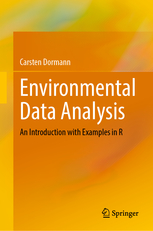
Carsten Dormann is a Full Professor at the University of Freiburg since 2011, working in the Department of Biometry and Environmental System Analysis within the Faculty of Biology. His work bridges statistical methodology with ecological applications, focusing on improving analytical approaches in environmental science. He leads research on statistical ecology, species distribution modeling, and plant-pollinator interactions, with a strong emphasis on methodological rigor and evidence-based environmental science. Professor Dormann completed his Diploma (equivalent to an MSc) in Biology at the University of Kiel (1996), followed by a PhD in Plant Ecology from the University of Aberdeen (2001) under Dr. Sarah Woodin and Prof. Steve Albon. He earned his Habilitation at the University of Göttingen (2008), and worked as a PostDoc and Senior Research Scientist at the Helmholtz Center for Environmental Research-UFZ (2002-2011) before joining Freiburg. Dr. Dormann's research focuses on comparing, challenging and improving the toolbox of statistical ecology . He investigates how ecological datasets, often small but complex, can be properly analyzed when common statistical approaches may fail. His work emphasizes formal statistical integration of ecological models and data , advocating for rigorous representation of ecological understanding through quantitative predictions. He champions an evidence focus in environmental science , drawing parallels with evidence-based medicine to promote transparent evaluation of causal mechanisms. Specific areas include spatial autocorrelation, null models, collinearity, species distribution modeling, and plant-pollinator interactions. His recent publications reveal a strong focus on ecological network analysis, species distribution modeling under climate change, and methodological improvements in ecological statistics. The research spans theoretical developments in network topology and practical applications in conservation, with increasing integration of machine learning approaches while maintaining ecological interpretability. A notable trend is the emphasis on temporal dynamics in ecological systems and developing more robust methods for predicting ecological responses to environmental change. Professor Dormann currently supervises twelve PhD students across various ecological and statistical topics, with an extensive record of past supervision spanning over thirty doctoral candidates. His teaching contributions include authoring the textbook Environmental Data Analysis: An Introduction with Examples in R (2017) and developing statistics courses for environmental sciences. He maintains an active scholarly blog discussing methodological challenges in ecology, with recent posts addressing species richness metrics, bias-variance trade-offs, and the relationship between ecological science and policy. His work bridges theoretical statistical development with practical ecological applications, emphasizing scientific credibility and methodological rigor throughout.
Professor Dr. Tom Hanika is affiliated with the University of Hildesheim , working in the Intelligent Information Systems (IIS) division within the Institute of Computer Science. His research bridges formal concept analysis , machine learning , and knowledge representation , focusing on geometric interpretations of data and explainable AI systems. Research Themes: Intrinsic dimensionality, lattice structures, and hybrid human-AI collaboration Teaching: Offers courses in databases, C++ programming, and semantic technologies Contact: Office (SC.C. 2.03), Phone +49 5121 883-40312, Email via contact form Recent publications highlight his work on geometric data analysis and formal context manipulation , including applications in graph neural networks, ordinal pattern recognition, and conceptual lattice visualization. His Collaborative Hybrid Human AI Learning framework demonstrates practical implementations of these theories. Current projects explore dimensionality resilience in machine learning models and topic flow visualization in academic networks, reflecting his dual focus on theoretical foundations and applied knowledge systems.
Alexander Wolff is a Professor at the Chair of Algorithms and Complexity within the Institute of Computer Science at the University of Würzburg. His work focuses on graph drawing, computational geometry, and algorithmic complexity, with applications in geographic information systems and network visualization. Chair of Algorithms and Complexity, Institute of Computer Science, University of Würzburg (since 2009) Managing Director, Institute of Computer Science (2011–2013, 2015–2017) Editorial roles in journals like JoCG and JGAA Conference leadership in Graph Drawing (GD) and SOFSEM His research explores geometric graph representations, obstacle numbers, and parameterized complexity. Recent publications address level planarity, polyhedral surface adjacency, and metro map visualization. Collaborative projects include algorithmic quality assurance and interactive industrial network visualization. Wolff’s work bridges theoretical graph algorithms with practical applications, such as optimizing public transport schematics and enhancing data accessibility. He has supervised numerous PhD students and co-authored over 100 publications, with editorial and organizational roles in major computational geometry and graph drawing conferences.
Dr. Stavros Nousias is a researcher at the Chair of Computing in Civil and Building Engineering at the Technical University of Munich , focusing on applications of Artificial Intelligence in the Built Environment . His work bridges Knowledge Representation and Reasoning , Geometry Processing , and Machine Learning to advance construction informatics and digital twinning. Research Interests: AI for building evacuation prediction, technical drawing segmentation, BIM optimization, and respiratory disease modeling. Publications: 15+ peer-reviewed articles on topics including graph neural networks for construction simulations, pulmonary airflow analysis, and heritage site monitoring. Supervised Theses: Guided projects on AI-based BIM command prediction and robotized construction simulation . Labs: Active in the BIM-Lab and Robotic Fabrication Lab . Teaching: Co-instructor for courses like Artificial Intelligence in Engineering and Computation in Engineering 1 .
Palash Bera is a researcher at TU Darmstadt, working in the AG Liebchen group. His research interests include theoretical computer science, discrete mathematics, combinatorics, graph theory, graph drawing, computational geometry, network visualization, and information visualization.