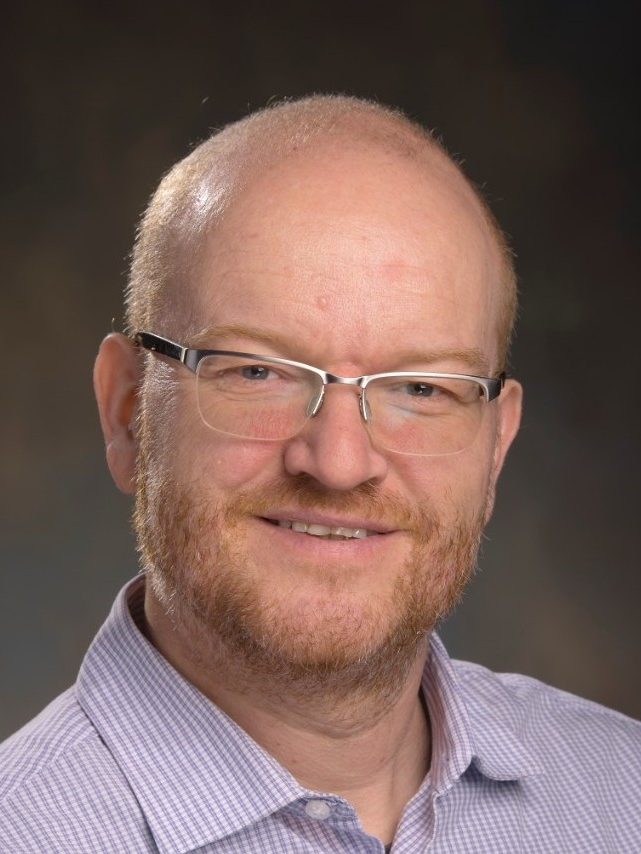
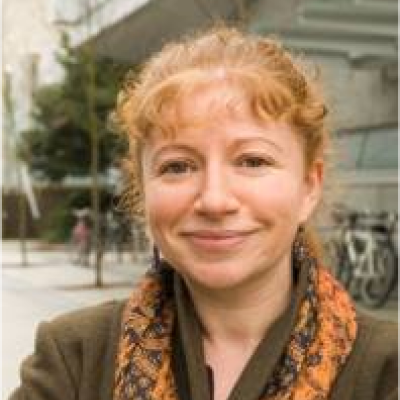
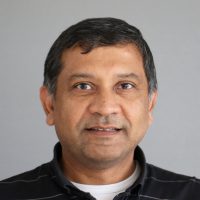
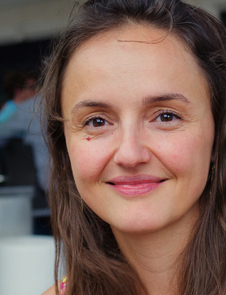
Tamara Munzner is a Professor of Computer Science at the University of British Columbia, with a confirmed email at tamara@cs.ubc.ca . Her research focuses on information visualization , visual analytics , and graph drawing , emphasizing practical design frameworks and theoretical foundations. Recent work explores visitor engagement with science museum exhibits large-scale data visualization challenges health informatics applications for chronic pain management advanced graph neural network visualization His publications in IEEE Transactions on Visualization and Computer Graphics and Eurographics conferences demonstrate her expertise in visual analytics. Scientific awards include the Best Panel Award at Euro Vis 2009 for her work on visualization education. Her research spans visualization design principles, dimensionality reduction techniques, and applications in genomic epidemiology and environmental sustainability.
Kay C. Wiese is a Professor and Software Systems Chair at the School of Computing Science, Simon Fraser University. His research focuses on computational intelligence and bioinformatics, particularly RNA secondary structure prediction and visualization. He leads the Bioinformatics Research Lab and has contributed to RNA design and gene finding. Wiese holds a PhD in Computer Science from the University of Regina (1999) and degrees in Computer Science and Mathematics from the Universität des Saarlandes (Germany). He has extensive editorial roles, including Associate Editor for the IEEE/ACM Transactions on Computational Biology and Bioinformatics, and has organized major conferences like the IEEE Symposium on Computational Intelligence in Bioinformatics. His teaching interests include Bioinformatics, Computational Biology, and Discrete Mathematics. Wiese has supervised numerous graduate students, including Boris Shabash, Wenbo Jiang, and Andrew Hendriks. His research group developed tools like jViz.RNA for RNA visualization and SARNA-Predict for structure prediction. His work bridges computational methods with biological applications, emphasizing algorithmic innovation and practical software solutions.
Alla Sheffer is a Professor and Associate Head of Faculty Affairs in the Department of Computer Science at the University of British Columbia, Faculty of Science. She is affiliated with multiple research centers including CAIDA (Centre for Artificial Intelligence Decision-making and Action), the Institute of Applied Mathematics, and ICICS (Institute for Computing, Information and Cognitive Systems). B.Sc., Hebrew University, Jerusalem (1991) M.Sc., Hebrew University, Jerusalem (1995) Ph.D., Hebrew University, Jerusalem (1999) Postdoctoral Research Associate, University of Illinois, Urbana-Champaign (1999-2001) Assistant Professor, Technion, Israel (2001-2003) Assistant Professor, University of British Columbia (2003-2008) Associate Professor, University of British Columbia (2008-present) Professor Sheffer's research focuses on geometry processing, addressing algorithmic challenges in digital shape modeling and manipulation. Her work primarily deals with discrete geometry representations, specifically meshes (polygonal model representations), with applications in computer graphics and computer-aided engineering. She utilizes tools from computational and differential geometry, discrete mathematics, and graph theory to generate, manipulate, and edit discrete geometric models. Her research spans virtual and augmented reality, visual computing, and 3D modeling, with significant contributions to sketch-based modeling, mesh processing, and cloth simulation. The 15 most recent publications reveal a consistent research trajectory in geometry processing, with recent work focusing on vector sketch processing, VR drawing tools, and advanced mesh manipulation techniques. Her work demonstrates a strong connection between human perception and computational methods, particularly in the interpretation of freehand sketches and the generation of perceptually-accurate geometric representations. The recurring themes across her publications include flowlines, curve networks, mesh parameterization, and the application of perceptual studies to improve algorithmic outputs. Eurographics Fellow ACM Fellow IEEE Fellow Royal Society of Canada Fellow SIGGRAPH Academy Member UBC Killam Research Prize NSERC Discovery Accelerator Supplement IBM Faculty Award Professor Sheffer has supervised numerous doctoral and master's students, with recent theses focusing on geometric mesh processing, vector sketch interpretation, VR drawing tools, and garment modeling. Her research group maintains strong connections with industry through various partnerships and has received substantial grant funding to support their innovative work in geometry processing and computer graphics. She teaches courses in computer graphics, geometric modeling, and video game programming, contributing significantly to both undergraduate and graduate education in computer science.
Meng He is a Professor in the Faculty of Computer Science at Dalhousie University. He obtained his PhD from the Cheriton School of Computer Science at the University of Waterloo in 2008 and held postdoctoral and research positions at Carleton University and the University of Waterloo before joining Dalhousie. He is affiliated with the Algorithms & Bioinformatics research cluster and is actively recruiting graduate students for master's and PhD studies, as well as supervising honors theses and USRA internships. His research focuses on the design and analysis of efficient algorithms and data structures, particularly in the areas of computational geometry, databases, text retrieval, and bioinformatics. His work often involves developing succinct and dynamic data structures for fundamental problems in graph theory, trees, and geometric data. His recent publications show a strong focus on path and distance queries in various graph types (especially interval graphs and trees), range counting, mode queries, and succinct representations. The research trend emphasizes theoretical foundations combined with practical efficiency, often addressing dynamic and space-constrained scenarios. Alberto Apostolico Best Paper Award of CPM 2017 Dr. He has supervised numerous PhD and master's students and collaborators, frequently co-authoring with researchers such as J. Ian Munro, Travis Gagie, Gonzalo Navarro, and Norbert Zeh. His research has been supported by grants from NSERC and other funding agencies, though specific grant details are not listed in the provided text. He has also contributed significantly to the academic community through editorial work for journals like Computational Geometry - Theory and Applications and Algorithmica , and by organizing major conferences such as CCCG and WADS. He leads a research group focused on algorithms and data structures, fostering collaborations both within Dalhousie and internationally. Future work is likely to continue exploring the theoretical and practical aspects of dynamic and succinct data structures, with applications in large-scale data processing and information retrieval systems.
Dr. Debajyoti Mondal is an Associate Professor in the Department of Computer Science at the University of Saskatchewan. His research focuses on algorithms, network visualization, computational geometry, and visual analytics. He holds a PhD from the University of Manitoba and has held postdoctoral positions at the University of Waterloo and Microsoft Research. Mondal's work spans interdisciplinary applications, including collaborations with Saskatoon Transit and academic medicine. He has authored over 100 peer-reviewed publications and secured grants such as NSERC Discovery, CFI, and Canada First Research Excellence grants. His awards include the 2023 New Scholar RSAW Award. Education: Ph.D. in Computer Science, University of Manitoba, 2016 MSc in Computer Science, University of Manitoba, 2012 BSc. Engg. in Computer Science, Bangladesh University of Engineering and Technology, 2009 Research Interests : Algorithms, graph drawing, computational geometry, visual analytics, and interdisciplinary applications in software engineering, transportation, and bioinformatics. His lab (VGA Lab) develops visualization systems for big data analysis. Key Contributions : Advanced theoretical foundations in computational geometry and graph drawing, developed practical visualization tools, and contributed to climate-related projects like Global Water Futures. Grants & Awards : NSERC Discovery Grant (2018-2024) CFI Grant (2021-2025) Microsoft Research Internship (2015-2016) New Scholar RSAW Award (2023) Labs/Teams : Leads the VGA Lab, collaborating with interdisciplinary teams on projects like Clone-World (software clone visualization) and SET-STAT-MAP (mixed data visualization).
Bojan Mohar is a Professor in the Department of Mathematics at Simon Fraser University (SFU), within the Faculty of Science. He holds a Ph.D. in Mathematics from the University of Ljubljana, Slovenia (1986). His research focuses on advanced topics in graph theory, including topological graph theory (graphs on surfaces, planar graphs), graph minors, graph coloring (list coloring, edge-coloring, nowhere-zero flows), algebraic graph theory (Laplace eigenvalues, spectral analysis), and graph algorithms. Mohar's work bridges theoretical foundations with computational methods, emphasizing interdisciplinary applications. His research interests span diverse areas such as the spectral properties of infinite graphs, graph embeddings, and combinatorial optimization. He is affiliated with the Centre for Operations Research and Decision Sciences (CORDS) at SFU. Mohar has made significant contributions to understanding graph structures, eigenvalues, and algorithm design, with a particular emphasis on topological and algebraic aspects. His recent work includes proofs of long-standing conjectures in graph theory and the development of efficient approximation algorithms for graph genus calculations. Mohar’s academic contributions are reflected in his extensive publication record, focusing on graph minors, eigenvalue analysis, and topological embeddings. He teaches courses such as MATH 345 D100: Introduction to Graph Theory (Fall 2025). No formal advising relationships or awards are explicitly listed in the provided materials, though his research impact is evident through collaborations and symposium participations like the International Symposium on Computational Geometry (SoCG).
Pat Morin is a Professor in the School of Computer Science at Carleton University, Ottawa, Canada, with a long-standing affiliation since 1996. He holds a Ph.D. (2001) and M.C.S. (1998) from Carleton University. His research focuses on algorithms, data structures, computational geometry, and graph theory, particularly planar graphs and their structural properties. Education: Ph.D. in Computer Science, Carleton University (2001) M.C.S., Carleton University (1998) B.C.S. (Highest Honours), Carleton University (1996) Awards: Faculty of Science Research Excellence Award (2021) NSERC Postdoctoral Fellowship (2001–2001) Best Paper Award at SIROCCO 2001 His research group, the Computational Geometry Lab, explores advanced topics like graph product structure theory and geometric algorithms. He has authored influential works, including the open-access textbook *Open Data Structures*. His contributions span over 150 peer-reviewed articles and grants totaling millions in funding. Grants: NSERC Discovery Grants (2003–present), NSERC Alliance International (2024–2027), eCampusOntario Open Content Funding (2017–2018). Labs/Teams: Computational Geometry Lab, leading collaborations on geometric and algorithmic research.
Therese Biedl is a Professor at the University of Waterloo's Department of Computer Science. Her research focuses on graph drawing, algorithms for planar and near-planar graphs, computational geometry, and theoretical computer science. She holds a Ph.D. from Rutgers University (1997) and a Dipl.-Math from the Technical University of Berlin (1996). Her work emphasizes geometric representations of graphs, algorithm optimization for special graph classes, and visibility representations. Key research interests include rectangular duals, graph embeddings on surfaces (cylinder/torus), and efficient algorithms for 1-planar graphs. She explores topics such as matching problems in planar graphs, geometric curve separation, and polygon decomposition. Her recent publications (2023–2025) address graph connectivity, visibility layouts, and parameterized complexity in embedded graphs. Notably, her articles analyze structural properties of graphs (e.g., basis numbers, independence numbers) and geometric constraints (e.g., outer-string representations). While no scientific awards are listed, her contributions to graph theory and algorithm design are substantial. No advising/grant details are provided in the text, but her involvement in conferences like GD 2018 highlights academic engagement.
Rongbing Huang is an Associate Professor in the School of Administrative Studies at York University's Faculty of Liberal Arts & Professional Studies. His research focuses on operations management, including location theory, combinatorial optimization, and service systems. Education: PhD in Operations Management from Rotman School of Management, University of Toronto M.Sc. in Management Information Systems from Fudan University B.Sc. from East China Normal University Dr. Huang's research examines optimization problems in logistics, transportation, and environmental policy design. Recent publications address green energy subsidies, environmental taxation schemes, and port-based supply chain decisions. He teaches Quantitative Methods, Decision Analysis, eCommerce, Physical Distribution, and Operations Management, drawing on his professional experience as a software engineer in China.
Rahnuma Islam Nishat is an Assistant Professor in the Department of Computer Science at Brock University, located in St. Catharines, Ontario, Canada. She holds a BSc Engg from Bangladesh University of Engineering and Technology (BUET), and both MSc and PhD in Computer Science from the University of Victoria, BC, Canada. Her research focuses on theoretical and applied computer science, including graph theory, computational geometry, additive manufacturing (3D printing), data mining, and reconfiguration problems. She is supported by an NSERC Discovery Grant and has organized major conferences such as the 36th Canadian Conference on Computational Geometry (CCCG 2024) at Brock University. Her academic journey includes postdoctoral fellowships at the University of British Columbia Okanagan, Toronto Metropolitan University, and the University of Victoria. She has served on program committees for WALCOM 2023/2025, EuroCG 2025, and CCCG 2025. Her interdisciplinary work bridges mathematical puzzles and practical applications, particularly in additive manufacturing tool-paths and graph drawing visualization. Research highlights include contributions to Hamiltonian path reconfiguration in grid graphs, efficient spanning tree enumeration, and collision-free tool-paths for 3D printing. She actively engages with the computational geometry community through conference leadership and algorithmic problem-solving.
Anil Maheshwari is a Professor and Director of the Data Science, Analytics, and Artificial Intelligence (DSAAI) Program at the School of Computer Science, Carleton University. He holds a Ph.D. from the Tata Institute of Fundamental Research (TIFR), India, and has been at Carleton since 1996, advancing to full professor in 2007. His expertise lies in algorithms, computational geometry, graph theory, and discrete mathematics. He leads research on algorithm design, geometric graphs, and data science applications. Education: Ph.D. (Computer Science, TIFR, 1993), M.Math & B.E.E.Eng. (BITS Pilani, 1987). Research Interests: Design and analysis of sequential/parallel algorithms for geometric and graph problems, including shortest paths, geometric spanners, and facility location analysis. Dr. Maheshwari has supervised numerous graduate students and holds administrative roles such as Graduate Director of the School of Computer Science. He has authored over 150 publications and secured grants totaling CAD 1.3 million. His contributions include editorial work for journals like Discrete Applied Mathematics and organizing conferences like the Canadian Conference on Computational Geometry.
Michiel Smid is a Professor in the School of Computer Science at Carleton University. He earned his Ph.D. from the University of Amsterdam and M.Sc. from Eindhoven University of Technology. His research focuses on Computational Geometry, Geometric Networks, Graph Algorithms, and Data Structures, with applications in manufacturing. He joined Carleton in 2001 as an Associate Professor and was promoted to Professor in 2004. Education: Ph.D. in Computer Science, University of Amsterdam (1989) M.Sc. in Mathematics and Computer Science, Eindhoven University of Technology (1986) Research Interests: Design and analysis of algorithms Spanner networks and geometric routing Graph theory and combinatorial optimization Applications of computational geometry in manufacturing Affiliations: Computational Geometry Lab at Carleton University Former positions include the Max-Planck-Institute for Computer Science (1990–1996) and the University of Magdeburg (1996–2001) Teaching: Winter 2025: COMP/MATH 3804 (Design and Analysis of Algorithms I) Focus on algorithmic theory and practical implementations Labs/Teams: Active in the Computational Geometry Lab, collaborating on geometric algorithms and spanner networks.
Hugo Alves Akitaya is an Assistant Professor at the University of Massachusetts Lowell's Computer Science Department, part of the Miner School of Computer and Information Sciences. He holds a Ph.D. in Computer Science from Tufts University (2018), an M.Eng. from the University of Tsukuba (2014), and a B.Eng. from the University of Brasília (2011). His research focuses on computational geometry, algorithms, reconfiguration, folding, and origami mathematics. He has taught courses like Algorithms (COMP 5030) and Computational Geometry (COMP 5800) at UMass Lowell. Key research interests include reconfiguration algorithms, discrete and computational geometry, graph drawing, and applications in origami mathematics. His work often explores geometric optimization, motion planning, and topological algorithms. Notable collaborations include projects with Erik Demaine, Csaba Tóth, and Diane Souvaine. Awarded the Loevner Fellowship (2016-2017) and LASPAU scholarship, Akitaya has contributed over 15 peer-reviewed articles, with recent focus on graph embeddings, polygon reconstruction, and folding complexity. His research bridges theoretical foundations with practical applications in robotics and geometric mechanisms. Akitaya's academic journey includes postdoctoral work at Carleton University (advised by Prosenjit Bose) and Tufts University (advised by Diane Souvaine). He actively participates in conferences like SODA, GD, and SoCG. Beyond academia, he is an enthusiast of origami, showcasing works in exhibitions and contributing original designs.
Vida Dujmovic serves as a Professor and University Research Chair in Structural and Algorithmic Graph Theory at the University of Ottawa's School of Electrical Engineering and Computer Science. Her work centers on foundational theoretical problems with implications for algorithm design and computational geometry. She holds a Ph.D. and M.Sc. from McGill University and a B.Eng. from the University of Zagreb. Her academic journey reflects deep specialization in discrete mathematics and theoretical computer science. Professor Dujmovic's research spans structural graph theory, geometric graph theory, and computational geometry, with emphasis on planar graphs, graph coloring, graph minors, and product structures. She investigates fundamental properties like the Erdős–Pósa property, grid minors, and beyond-planar representations, bridging combinatorial theory with algorithmic applications. Her approach combines rigorous mathematical analysis with computational insights to solve complex graph-theoretic problems. Analysis of her 2023-2025 publications reveals consistent focus on structural graph theory, particularly planar/non-planar graph properties, coloring constraints, and minor-related theorems. Key trends include advancing the Erdős–Pósa framework, exploring grid minor embeddings, and developing product structure theorems for non-minor-closed classes, demonstrating sustained theoretical innovation with practical algorithmic implications. Her significant recognition includes the University Research Chair in Structural and Algorithmic Graph Theory at the University of Ottawa, highlighting her leadership in advancing graph theory fundamentals. University Research Chair in Structural and Algorithmic Graph Theory While her advising activities and specific grant funding aren't detailed in available sources, her prolific publication record and research chair position indicate active mentorship and substantial research support. The absence of lab/team descriptions suggests independent or collaboratively distributed research operations rather than centralized facilities.
Sue Whitesides is a Professor and Chair of the Department of Computer Science at the University of Victoria, British Columbia. Previously, she held roles at McGill University's School of Computer Science, including directing its discrete mathematics and computational geometry research groups. Her research focuses on algorithms, discrete mathematics, computational geometry, motion planning, and graph layout, with applications in brain imaging and nanofabrication. She co-authored a textbook on discrete mathematics for computer science and organizes annual workshops at the Bellairs Research Institute, collaborating with institutions like INRIA-Lorraine. Her work bridges theoretical computer science with interdisciplinary applications in robotics, materials science, and biomedical imaging. Education: No formal education details provided. Research Interests: Algorithms, computational geometry, motion planning, graph drawing, discrete mathematics. She explores geometric coverage problems, self-assembly mechanisms, and algorithmic solutions for robotics and nanofabrication. Her recent work includes 3D surface assembly and minimum-distance robot localization. Publications: Over 15 key papers in computational geometry and algorithms, including studies on geometric separation in polygonal environments and randomized localization algorithms. Her work appears in venues like the ACM Symposium on Computational Geometry and the Journal of the American Chemical Society. Collaborations: Leads workshops at Bellairs with international partners like INRIA, focusing on collaborative problem-solving in geometry and computer graphics. Co-organizes events with researchers like Sylvain Lazard and Hazel Everett. Labs/Teams: Computational geometry lab at McGill collaborating with INRIA-Lorraine. Active in McGill's discrete mathematics and algorithms seminars.