Prof. Dr. Siegfried Handschuh is a Full Professor for Data Science and Natural Language Processing at the Institut für Informatik (ICS-HSG), University of St. Gallen. His research focuses on advanced NLP techniques, financial text analysis, and AI-driven solutions in cybersecurity and education. He leads projects like CS-AWARE-NEXT, enhancing cybersecurity awareness in public institutions. Prof. Handschuh has authored over 100 publications, with recent work emphasizing transformer optimization, generative AI applications, and educational tools for argumentative writing. His team collaborates with companies like Rheasoft and Peracton on AI-powered financial analytics and cybersecurity systems. Education: Doctorate in Computer Science, specialized in knowledge representation and semantic web technologies. Research Interests: Data science, machine learning, financial NLP, cybersecurity, and AI in education. His work bridges academia and industry, addressing real-world challenges in finance, cybersecurity, and educational technology through innovative AI frameworks.
Dr. Alessia PANNESE is an Associate Professor at the University of Milan , affiliated with the College of Science and the Department of Computer Science . Her expertise spans Artificial Intelligence, Machine Learning, and Data Science. Fields of Interest: Artificial Intelligence, Machine Learning, Data Science Key Research: Multi-modal data integration, graph-based knowledge discovery Her recent publications focus on deep learning architectures , big data algorithms , and graph analytics , reflecting interdisciplinary applications in AI and database systems. Notable accolades include the ACM Best Paper Award (2020) and IEEE Rising Star Award (2021) . She advises PhD candidates in data-driven research and leads the Data Intelligence Lab , specializing in real-time analytics and scalable solutions.
Anders Karlsson is an Associate Professor at the University of Geneva since 2010 and holds a concurrent professorship at Uppsala University since 2013. His academic journey began with engineering physics studies at KTH, followed by a mathematics PhD from Yale University in 2000, with subsequent positions at ETH Zurich, Neuchâtel, Bielefeld, Yale, and KTH. His research spans multiple mathematical domains with significant interdisciplinary applications: Ergodic theory and random walks Metric geometry and group actions Spectral invariants Deep learning and neural networks Karlsson's theoretical work focuses on noncommuting random products and metric functional analysis, applied to random walks on groups, operator theory, complex variables, stochastic game theory, and machine learning. He also investigates connections between zeta functions of graphs, spaces, and numbers using heat kernel analysis. He leads the Algebra and Geometry research group, mentoring PhD students Kamila Kashaeva and Dylan Mueller, and supervising postdoctoral researcher Tsviqa Lakrec. His teaching portfolio includes various mathematics courses documented in the university database, reflecting his expertise across theoretical and applied mathematics domains.
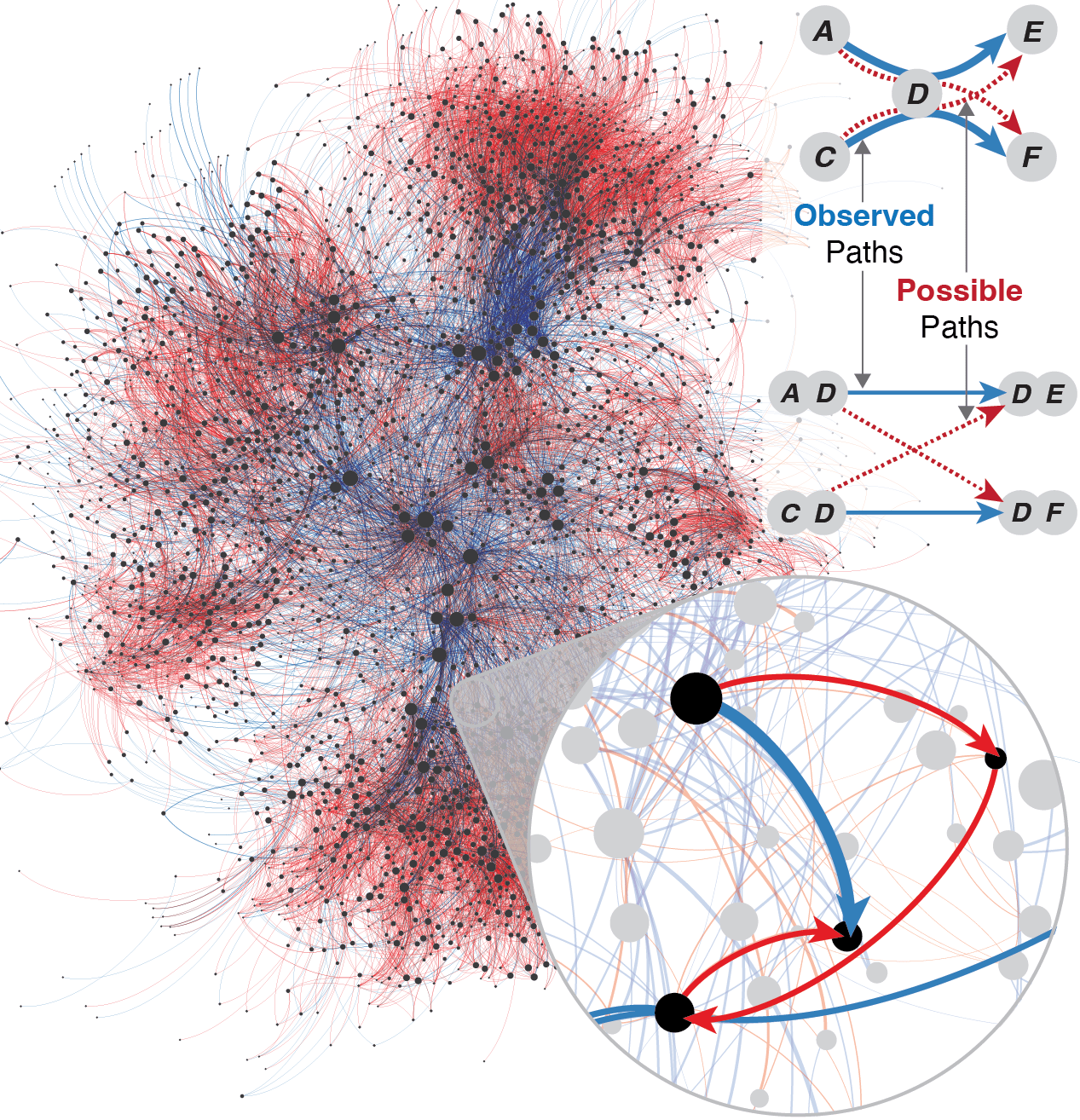
Luca Verginer is a Lecturer at the Department of Management, Technology, and Economics within ETH Zurich. His work bridges empirical economics and network science, focusing on pharmaceutical supply chains, patent dynamics, and social network impacts. Current affiliation: ETH Zurich (School of Management and Social Sciences) Academic rank: Lecturer His research integrates causal inference, advanced econometrics, and deep learning methods like Graph Neural Networks (GNN) and Natural Language Processing (NLP) to address policy and strategic challenges in healthcare and innovation. Key trends in his publications include: Quantifying supply chain resilience through reroute flexibility Analyzing scientist mobility networks and global cities' dominance Studying social dynamics in online radicalization and migration Methodologically, he employs agent-based modeling, big data analytics, and empirical validation across diverse domains from opioid distribution to academic collaboration. His work demonstrates strong interdisciplinary focus, combining economics, computational methods, and policy analysis to tackle real-world challenges in healthcare systems and knowledge production networks.
Dr. Srikanth Madikeri is a Lecturer and Senior Researcher at the University of Zurich's Department of Computational Linguistics. He holds a Ph.D. in Computer Science from IIT Madras (2013) and a Bachelor of Engineering from Anna University (2008). Before joining UZH, he spent 11 years at Idiap Research Institute as a Postdoctoral Researcher and Research Associate. His research focuses on low-resource speech technologies, including Automatic Speech Recognition (ASR), Speaker Diarization, Language Recognition, and Spoken Dialog Systems. He specializes in adapting models for challenging domains like air traffic control and criminal investigations. Recent publications demonstrate strong trends in multimodal systems, domain adaptation for ASR, and efficient data selection techniques. His work frequently integrates speech processing with NLP tasks and criminal network analysis. Awards: Best Paper Award in Signal Processing Track (NCC 2011) International Create Challenge 2017 Winner He teaches Speech Technology and Machine Learning for Computational Linguistics at UZH. Professional activities include serving as Area Chair for Interspeech (2021-2022) and developing open-source toolkits like pkwrap for LF-MMI training.
Rui Yao is a Lecturer at École Polytechnique Fédérale de Lausanne (EPFL), affiliated with the College of Engineering (ENAC) and the Department of Civil Engineering. Additionally, he works as a Scientist in the Laboratory for Human-Oriented Mobility Eco-system (HOMES) within EPFL. His research focuses on large-scale equilibrium modeling in multi-modal transport systems, individual mobility choice modeling, and demand management strategies. Education: B.Sc. in Civil Engineering, Technion – Israel Institute of Technology Direct-track Ph.D. in Transportation Engineering, Technion – Israel Institute of Technology His research spans both theoretical and applied domains, including stochastic traffic equilibrium , multi-passenger ridesharing systems , perturbed utility models , and deep learning for choice analysis . He has contributed to advancements in data-driven route choice modeling , integrated equilibrium models for electrified logistics , and stable matching frameworks for mobility platforms . Rui Yao is affiliated with the Human-Oriented Mobility Eco-system (HOMES) lab at EPFL, which focuses on innovative transportation solutions. His work bridges theoretical modeling with real-world applications in smart mobility and transportation policy.
Prof. Dr. Kurt Stockinger is a Professor of Computer Science at ZHAW School of Engineering and holds a doctorate at the University of Zurich . He serves as Head of the MAS Data Science program and co-leads the ZHAW Datalab . His research focuses on Intelligent Information Systems , bridging information systems, natural language processing, and machine learning. Affiliated with the University of Zurich, he contributes to Quantum Machine Learning and Open Data Exploration initiatives. Stockinger's educational background includes a PhD in Computer Science (University of Vienna & CERN), a Master in Business Informatics (University of Vienna), and a CAS in Didactics & Methodology (ZHAW). He has taught courses in Quantum Computing , Big Data for Natural Sciences , and Data Science programs at ZHAW and University of Zurich. His research spans Data Science , Big Data , Natural Language Query Processing , Knowledge Graphs , and Quantum Machine Learning . Recent publications focus on quantum autoencoders , hybrid quantum neural networks , and prompt engineering for knowledge graph question answering. He has developed frameworks like ScienceBenchmark for real-world NL-to-SQL evaluation and NQuest for natural language query exploration. Scientific awards include the Best Paper Award at 7th Swiss Conference on Data Science (2020) He leads major projects such as DataGEMS (Data Discovery Platform, Horizon Europe) Digital Health Zurich (Clinical Innovation Lab) INODE4StatBot.swiss (NL-to-SQL Translation) GraphQueryML (Graph Database Optimization) ScienceBenchmark (NL-to-SQL Evaluation) Stockinger's work intersects with computer vision , biomedical data , and industrial applications , demonstrated through collaborations with institutions like Lawrence Berkeley National Laboratory, CERN, and University of Washington. He has contributed to establishing QuantumBasel and ZHAW Datalab as research hubs.
Dr. Anastasios Kouvelas is a Lecturer at ETH Zurich, where he serves as head of the Road Traffic Engineering research group at the Institute of Transport Planning and Systems (IVT), Department of Civil, Environmental and Geomatic Engineering. He has held this position since August 2018, succeeding Dr. Monica Menendez who moved to New York University in Abu Dhabi. Prior to joining ETH Zurich, he was a research associate at the Urban Transport Systems Laboratory (LUTS) at EPFL (2014-2018) and a postdoctoral fellow at Partners for Advanced Transportation Technology (PATH) at the University of California, Berkeley (2012-2014). Dr. Kouvelas' research focuses on modeling, simulation, optimization and traffic flow control. His work aims to develop real-time solutions based on control theory and operations research methods. The Road Traffic Engineering group develops algorithmic solutions that are components of intelligent transportation systems used in traffic control centers. Recent technological advances in autonomous vehicles have expanded their research topics as the industry seeks efficient operational solutions for autonomous mobility. They are particularly interested in extending their work to the design of advanced management strategies for urban networks that utilize connected vehicles to improve traffic operations and develop network-wide control strategies that minimize environmental impacts. His recent publications (2023-2025) demonstrate strong focus on traffic prediction using deep learning techniques, bike lane allocation impacts on urban networks, transit network resilience against disruptions, vehicle trajectory extraction from aerial recordings, and traffic control for mixed traffic systems with connected and autonomous vehicles. His work bridges theoretical developments in control theory with practical traffic engineering challenges. Scientific Awards No specific scientific awards were mentioned in the provided information. Advising and Grants Dr. Kouvelas supervises PhD and Master's students in traffic engineering and intelligent transportation systems. His research is supported by various grants including a grant from the Hong Kong Research Grant Council (Grant No. GRF 11216323) for research on traffic speed prediction. Laboratories and Teams Dr. Kouvelas leads the multidisciplinary Road Traffic Engineering research group at IVT, which consists of researchers with backgrounds in civil engineering, electrical engineering, mechanical engineering, computer science, control, and operations research. The group's work spans multiple areas including traffic flow theory, traffic operations, connected and automated vehicles, and intelligent transportation systems.
Marcel Blattner serves as Senior Lecturer and Co-Head of the Applied AI Research Lab at Lucerne University of Applied Sciences and Arts (HSLU), concurrently holding CTO and Board Member roles at AlpineAI AG since 2023. His career bridges academia and industry, with prior leadership positions including Principal Data Scientist at ETH Swiss Data Science Center and Chief Data Scientist at TX Group. PhD in Physics Diploma in Theoretical Physics Blattner specializes in applied artificial intelligence with emphasis on real-world implementation. His core competencies include Machine Learning, Deep Learning, and AI Strategy, leveraging expertise in Nonlinear Dynamics and Graph Theory to solve complex industrial problems—exemplified by his Prognostic Seismograph AI project which applies dynamical systems theory to predictive modeling. As Co-Head of HSLU's Applied AI Research Lab, he directs initiatives focused on translating academic research into commercial solutions, particularly in AI-driven predictive analytics. The lab collaborates closely with industry partners to develop deployable AI systems while training next-generation data scientists through hands-on projects.