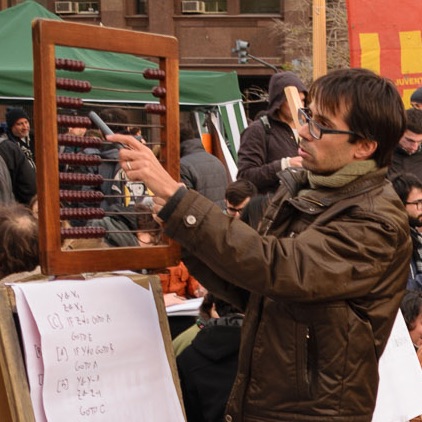
Anita Maria Tabacco is a Full Professor at the Department of Mathematical Sciences (DISMA) of Politecnico di Torino, with a focus on Engineering Education and Harmonic Analysis. She holds multiple administrative roles, including Rector's Delegate for Transparency and Internal Communication, Director of the University Observatory for academic dynamics, and Head of the INDAM local unit. Education: PhD in Mathematics, Washington University in St. Louis (1986) Research: Harmonic and Functional Analysis, Applications to PDEs, Gender Equality in STEM Her recent publications highlight intersections of mathematical analysis, educational technology, and gender diversity initiatives. She has led Erasmus+ projects like HerTechVenture and W-STEM to empower women in tech. Tabacco supervises PhD students including Maria Giulia Ballatore and contributes to textbooks such as Palestra di Analisi Matematica I . She co-leads the TEACH research group at DISMA, integrating pedagogical innovation with advanced mathematics.
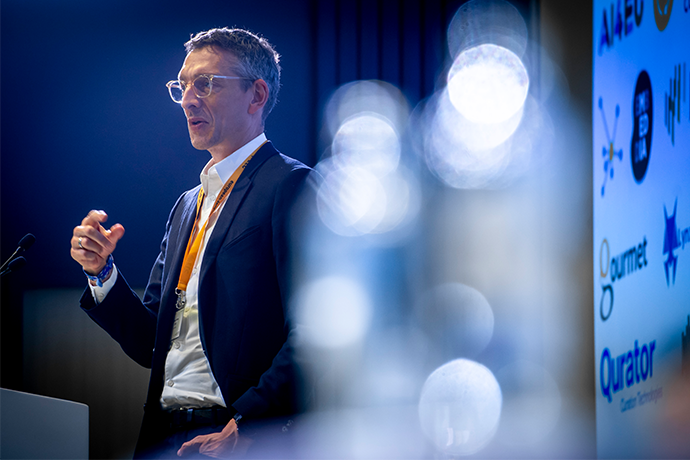
Georg Rehm is an Honorary Professor for Computational Linguistics and Language Technology at Humboldt University Berlin and a Principal Researcher at the German Research Center for Artificial Intelligence (DFKI) in Berlin, where he serves as Deputy Director of the DFKI Lab Berlin. He is also the Head of the German-Austrian Chapter of the World Wide Web Consortium (W3C) based at DFKI Berlin. Rehm has over 300 scientific publications and extensive experience in leading major research projects in computational linguistics and language technology. His research focuses on Natural Language Processing, Computational Linguistics, and Artificial Intelligence, with specific interests in multilingual language technologies, semantic web, digital humanities, and language data spaces. He has led numerous significant projects including European Language Grid, OpenGPT-X, and NFDI4DataScience. Rehm is particularly active in initiatives promoting digital language equality in Europe by 2030. Rehm's recent work demonstrates a strong focus on large language models, scholarly document processing, scientific knowledge representation, and climate-related fact-checking systems. His publications span across multiple high-impact venues including ACL, ESWC, and LREC, with a notable emphasis on practical applications of language technology in real-world scenarios. DFKI Research Fellow (2018) As an active member of the academic community, Rehm regularly serves as an expert for the European Parliament, reviews EU projects, and organizes numerous scientific conferences and workshops. His leadership extends to multiple European initiatives aimed at advancing language technology infrastructure and promoting digital language equality across Europe.
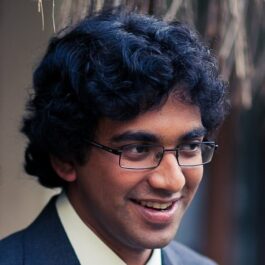
Aravindan Vijayaraghavan is an Associate Professor in the Department of Computer Science at Northwestern University (affiliated with McCormick School of Engineering). He also holds courtesy appointments in the Industrial Engineering and Management Sciences (IEMS) department. Research interests include theoretical computer science , machine learning algorithms , quantum information , and combinatorial optimization under non-worst-case paradigms. He leads IDEAL (Institute for Data, Economics, Algorithms and Learning) as Site Director at Northwestern and former Institute Director (2023-24). Academic Background : PhD in Computer Science from Princeton University (advisor: Moses Charikar ) Bachelor's Degree in Computer Science from Indian Institute of Technology Madras Postdoctoral work at Courant Institute (NYU) and Carnegie Mellon University via Simons Collaboration grants Research Contributions : Developed smoothed analysis frameworks for random matrices with dependent entries Created sum-of-squares certificates for anti-concentration beyond Gaussian distributions Advanced quantum entanglement certification algorithms for subspaces Improved weak-to-strong generalization theory with data distribution expansion properties Designed error-tolerant e-discovery protocols for legal document classification Scientific Recognition : NSF CAREER Award NSF AITF Award (CCF-1637585, CCF-2154100) Google Research Scholar Program grant Amazon Research Awards program support Simons Postdoctoral Fellowship Academic Leadership : General Chair for FOCS 2024 Co-organizer of Junior Theory Workshop and Northwestern QTW series Active in program committees for COLT , ICML , NeurIPS , and STOC conferences Teaching Portfolio : CS262: Mathematical Foundations of CS (Continuous Mathematics for Computer Science) CS212: Mathematical Foundations of Computer Science (multiple offerings since 2015) CS496: Graduate Algorithms (since 2016) CS396/496: Quantum Computation & Information (co-taught with S. Rao) CS497: Machine Learning Theory (Spring 2025 offering)
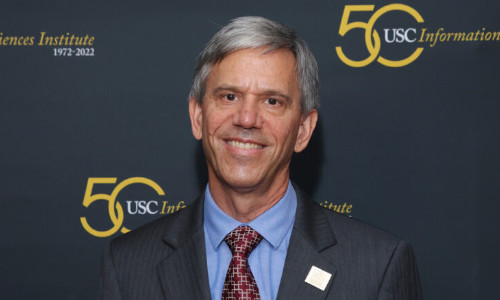
Craig Knoblock serves as the Keston Executive Director of the Information Sciences Institute (ISI) at the University of Southern California, Vice Dean of Engineering for the Viterbi School of Engineering, and Research Professor of both Computer Science and Spatial Sciences. He also directs USC's Data Science Program and leads the Center on Knowledge Graphs as Research Director. Dr. Knoblock's research focuses on techniques for describing, acquiring, and exploiting the semantics of data. His extensive work spans source modeling, schema and ontology alignment, entity and record linkage, data cleaning and normalization, extracting data from the Web, and building comprehensive knowledge graphs. With over 300 published works in these areas, his research has significantly advanced the field of semantic data integration. His work demonstrates strong trends toward practical applications of knowledge graphs across diverse domains including cultural heritage, geospatial information systems, human trafficking detection, and sensor networks. The evolution of his publications shows a progression from foundational ontology alignment techniques to sophisticated knowledge graph applications addressing real-world challenges. Fellow of the Association for the Advancement of Artificial Intelligence (AAAI) Fellow of the Association of Computing Machinery (ACM) Past President and Trustee of the International Joint Conference on Artificial Intelligence (IJCAI) Recipient of the 2014 Robert S. Engelmore Award Seven best paper awards for his research contributions As Executive Director of USC's Information Sciences Institute, Dr. Knoblock leads one of the world's premier research centers in computer science and information technology. His leadership extends to directing the Center on Knowledge Graphs and serving as Associate Director of the Informatics Program at USC. His educational background includes a Bachelor of Science from Syracuse University and Master's and Ph.D. degrees in Computer Science from Carnegie Mellon University.
Dr. Yacine Sam is a Lecturer in Computer Science at the Polytechnic School of the University of Tours (EPU), affiliated with the Fundamental and Applied Computer Science Laboratory of Tours (LIFAT). His research focuses on databases, knowledge representation & reasoning, web services, and semantic web technologies. Doctorate in Computer Science, Paul Cézanne University Aix-Marseille 3 (2008) Master 2 Research in Computer Science, Claude Bernard University Lyon 1 (2005) Dr. Sam's research spans multiple subfields including: Trustworthy execution of adaptive business processes Privacy ontologies for Web of Things Deep learning applications in personalized service recommendations Linked open data frameworks for semantic integration Blockchain implementations in distributed systems Health analytics using collaborative IoT data Contact: yacine.sam@univ-tours.fr
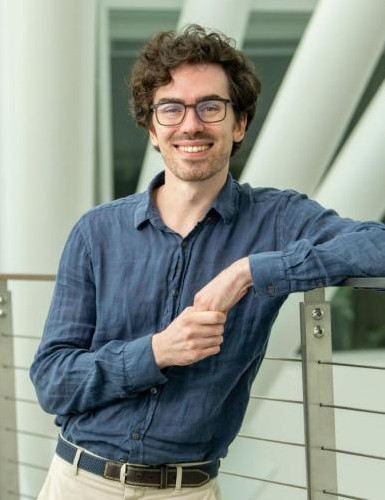
Erik Henning Thiede is an Assistant Professor of Chemistry at Cornell University, affiliated with the Department of Chemistry and Chemical Biology. He joined the faculty in Summer 2023 and leads the Thiede Lab, which focuses on understanding protein motion and function through computational tools that integrate machine learning, molecular simulation, and chemical physics. PhD in Chemistry from the University of Chicago (advised by Profs. Aaron Dinner and Jonathan Weare) Postdoctoral Research at Flatiron Institute CCM (collaborating with Prof. Risi Kondor, Dr. Pilar Cossio, and Dr. Sonya Hanson) The lab's research spans several key areas: Developing algorithms to extract free energies from cryo-EM data Creating permutation-equivariant machine learning models for chemical systems Improving error estimation in molecular simulation frameworks like MBAR Applying Wasserstein flows and probabilistic methods to cryo-EM analysis Expanding cryo-EM capabilities for disordered protein regions Integration of experimental data with computational simulations His lab's publications highlight trends in computational chemistry, including the application of graph neural networks, Bayesian inference, and advanced statistical methods to molecular dynamics. These works bridge chemical physics, machine learning, and structural biology. As an academic advisor, Thiede mentors a diverse group of graduate students and postdoctoral researchers. His lab actively collaborates with interdisciplinary teams across Cornell and other institutions, with current projects involving chemical engineering, applied mathematics, and biophysics. The Thiede Lab at Cornell is committed to open and inclusive science. Values include curiosity, openness to new ideas, mutual support in research, and active inclusion of diverse backgrounds. The lab occupies space at 214 Baker Lab and maintains a research website at thiedelab.github.io .
Nick Bassiliades is a Professor at the School of Informatics , Aristotle University of Thessaloniki , Greece. His academic roles include serving as President of the Digital Governance Committee and the Digital Transformation of Greek Universities Committee, as well as Director of the Web, Data, and Knowledge Engineering Sector. Education: B.Sc. in Physics, Aristotle University of Thessaloniki (1991) M.Sc. in Applied Artificial Intelligence, University of Aberdeen (1992) Ph.D. in Parallel Knowledge Base Systems, Aristotle University of Thessaloniki (1998) His research focuses on Semantic Web , Ontologies , Knowledge Graphs , and applications in Artificial Intelligence , eGovernment , and Intelligent Agents . Recent publications emphasize ontological frameworks for requirements engineering, explainable AI, and electric vehicle knowledge graphs. He actively contributes to scientific communities as a Senior Member of IEEE and ACM , and serves as Co-Editor-in-Chief for the International Journal of Artificial Intelligence in Business and Management . His work involves collaborations with the Intelligent Systems laboratory and projects like XR4DRAMA for disaster management.
Sotiris Christodoulou is an Associate Professor at the Department of Electrical and Computer Engineering within the College of Engineering at the University of Peloponnese. He also serves as a research associate at the 'Diofantos' Institute of Computer Technology and Publishing. His academic career spans multiple institutions where he has taught graduate and undergraduate courses across seven different universities since 2004. Dr. Christodoulou earned his B.A. in Computer Engineering and Informatics from the University of Patras in 1994 and completed his PhD in Web Engineering from the same institution in 2004. His educational background established the foundation for his extensive research career focused on web technologies and applications. His primary research interests include Web Engineering, Web Application Performance Optimization, Web Code Quality, Semantic Web technologies, Hypermedia Systems, and emerging Web 2.0 and Web 3.0 technologies. His work extends to Virtual Interactive Environments, 3D and Augmented Reality applications, and Spatial Hypertext systems. Christodoulou's research bridges theoretical web engineering principles with practical applications in cultural heritage, education, and urban infrastructure systems. His research output comprises over 45 publications in international journals, book chapters, and conferences, accumulating more than 450 citations. He has participated in over 23 European and National Research and Development Projects focused on web software technology, hypermedia applications, and 3D educational and cultural applications. Professional member of ACM Professional member of IEEE Member of organizing committees for over 15 international scientific conferences Reviewer for recognized international journals (ACM, IEEE, etc.) Christodoulou has extensive teaching experience across seven universities, specializing in programming languages, web software engineering, software quality, and data management. His research projects typically combine applied research with cutting-edge technology implementation for real-world problems in large organizational information systems. He maintains regular office hours at Building K, Office K2.02 at the University of Peloponnese, with appointments available on Mondays and Thursdays.
Santiago Figueira is a Professor at the Department of Computer Science, Faculty of Exact and Natural Sciences, University of Buenos Aires, and a Researcher at the Institute of Computer Science (ICC), CONICET (Argentine National Council for Scientific and Technical Research) in Buenos Aires, Argentina. He leads the Logic, Language and Computability Research Group (GLyC) and co-directs the Argentinian-French Laboratory SINFIN, a collaborative initiative between Université Paris-CNRS and Universidad de Buenos Aires-CONICET. Additionally, he is a researcher in the Quantum Information, Computation, and Communication team (QuICC). Dr. Figueira's research spans theoretical computer science with a strong emphasis on computability theory, algorithmic randomness, Kolmogorov complexity, and mathematical logic. His work extends to applications in database theory, quantum information, and cognitive modeling. He has made significant contributions to modal logics, model theory, and the theory of databases, particularly in the context of data trees and XPath query languages. His interdisciplinary approach bridges formal methods with practical applications in quantum computing and human cognition. His publication record demonstrates a consistent trajectory of high-impact research, with recent work focusing on modal logic extensions, quantum information theory, cognitive modeling of concept learning, and database query languages. His collaborations span international institutions, particularly with French researchers through the SINFIN laboratory, and with cognitive scientists studying human memory and concept formation. Dr. Figueira has supervised numerous PhD students and postdoctoral researchers, including Gabriel Goren-Roig, Santiago Cifuentes, Edwin Pin Baque, Sergio Romano, Gabriel Senno, and Sergio Abriola. His former postdocs and CONICET researchers include Guido Bellomo, María Emilia Descotte, and Ariel Bendersky, indicating an active and productive research group. He has developed lecture notes in Spanish on Logic and Computability (2020) and Computability Theory (2021), contributing to academic education in his field. His research group GLyC serves as a hub for theoretical computer science research in Argentina, fostering collaborations between Argentine and international researchers.
Ayşenur Akyüz Birtürk serves as a Lecturer in the Department of Computer Engineering at Middle East Technical University (METU), Ankara, where she has taught since February 1994. Her academic career spans foundational programming courses to advanced graduate seminars in AI and Computational Linguistics, reflecting 30+ years of institutional commitment. She earned all her degrees from METU, culminating in a 1998 Ph.D. focused on Turkish language computational analysis. Her educational journey includes: B.S. in Computer Engineering (1985) M.S. in Computer Engineering (1988) with thesis on “A Model for Representing Concepts: Conceptual Dependency Theory” Ph.D. in Computer Engineering (1998) with thesis on “A Computational Analysis of Turkish using the Government-Binding Approach” Dr. Birtürk’s research centers on Artificial Intelligence and Natural Language Processing , with pioneering work in Turkish language parsing evolving into modern Recommender Systems . She integrates semantic relations and multi-domain data to build hybrid engines for movies, books, and music, emphasizing user modeling through knowledge representation and data mining techniques. Analysis of her 2010-2015 publications reveals two dominant threads: adaptive recommender systems (80% of output) using semantic similarity and dynamic clustering, and renewable energy analytics (20%) applying machine learning to wind/hydrological data. This pivot from NLP to energy forecasting demonstrates methodological versatility while maintaining core AI expertise. Her scientific recognition includes: TUBITAK scholarships throughout education (1977-1988) Multiple national contest awards in high school (1979-1980) Leadership in TUBITAK-funded energy and healthcare projects Dr. Birtürk has supervised 17 Master’s theses in NLP and recommender systems while securing competitive grants including METU-ISTEC #17435 (2006-2008; 504,000 YTL) and HASAT (2010-2013; 601,637 YTL). Her industry consultancy spans medical form design (FormAnalitik), question-answering systems, and retail intelligence platforms, translating academic research into real-world tools.
Morteza Zihayat is an Associate Professor and Canada Research Chair (Tier 2) in Human-Centered Artificial Intelligence at Toronto Metropolitan University. He holds dual appointments in the Faculty of Engineering and Architectural Science (Department of Electrical, Computer, and Biomedical Engineering) and the Ted Rogers School of Management. Additionally, he serves as an Adjunct Professor at the University of Waterloo in Management Sciences and is a Faculty Fellow at IBM's Centre for Advanced Studies. Dr. Zihayat's educational background includes: PhD in Computer Science from York University (2016) MSc in Computer Engineering from University of Tehran (2011) Postdoctoral Research Fellowship at University of Toronto's Faculty of Information (2017) His research lies at the intersection of AI, security, and society with a focus on building fair and transparent AI systems. Dr. Zihayat's expertise spans human-centered AI, fair information retrieval systems, and blockchain-enabled AI infrastructures. His work emphasizes creating AI systems that are accountable and designed to serve the public good, with applications in healthcare, digital media, and social networks. Dr. Zihayat has received numerous accolades including the Canada Research Chair (Tier 2) in Human-Centered AI (2024), Dean's Outstanding Scholarly, Research, and Creative Activity Award (2023), Best Short Paper Award at ECIR (2023), and IBM CAS Faculty Fellowship (2021). His research has attracted over $1.7 million in external funding from agencies such as NSERC, Mitacs, and multiple industry partners including Toronto Transit Commission, The Globe and Mail, AT&T, and IBM. Dr. Zihayat serves as Associate Editor of the Computational Intelligence Journal and is an active reviewer for top-tier venues. He is also Co-director and Co-founder of the Digital Enterprise Analytics and Leadership (DEAL) Research Center.
Dr. Johan Pauwels is a Lecturer in Audio Signal Processing at Queen Mary University of London's School of Electronic Engineering and Computer Science, where he is affiliated with the Centre for Digital Music and the Centre for Multimodal AI. His educational background includes: Master of Science in Electrical/Electronics Engineering from KU Leuven (2006) Master of Science in Artificial Intelligence from KU Leuven (2007) PhD from Ghent University (2016) on automatic harmony recognition from audio Johan's research focuses on making machines understand audio to the level of a trained professional. His work combines machine learning, signal processing, data science, and music theory to develop tools for musicians, listeners, and music learners. He has been working on narrowing the gap between academic research and user-centric applications, web-based music services, and the personalization of spatial and immersive audio. His specific interests include machine learning for audio, audio signal processing, music information retrieval, and binaural audio. His recent publications show a strong focus on music representation learning, with particular attention to limited data scenarios, multimodal approaches, and spatial audio processing. His work bridges theoretical music concepts with practical machine learning applications, especially in chord recognition, beat detection, and instrument recognition. He has made significant contributions to HRTF (Head-Related Transfer Function) research and development of tools for spatial audio processing. Dr. Pauwels is actively involved in research funding, with current grants including the AIM CDT Internship with Sofilab (2025), AIM CDT Studentship - Stem (2024), and AIM CDT Internship with stem.tech (2024). He currently supervises multiple PhD students, primarily through the UKRI Doctoral School in AI and Music, with research topics spanning intelligent audio editing, neural drum synthesis, source separation, graph neural networks for music recommendation, and more. In addition to PhD supervision, he typically guides 8-10 undergraduate and 8-10 master's students through their final year projects. His teaching responsibilities include ECS7013P Deep Learning for Audio and Music (MSc/PhD level) and ECS411U Signals and Information (first-year undergraduate).
Professor Jared Tanner is Professor of the Mathematics of Information at the University of Oxford's Mathematics Institute and a Fellow of Exeter College. Previously, he held positions at the University of Edinburgh (2007-2012) as Professor, Reader, and Lecturer in Mathematics, University of Utah (2006-2007) as Assistant Professor, and Stanford University (2004-2006) as an NSF Postdoctoral Fellow. His research focuses on extracting models from high-dimensional data to reveal essential information, with specific contributions including sampling theorems in compressed sensing using stochastic geometry, efficient algorithms for matrix completion, and theoretical understanding of deep neural networks. Recent interests include neural network initialization techniques to preserve geometric and information-theoretic properties, as well as network pruning methods. Professor Tanner has supervised numerous doctoral students at Oxford and Edinburgh, including Alireza Naderi, Thiziri Nait Saada, Ilan Price, Giuseppe Ughi, Charles Millard, Michael Murray, Simon Vary, Bernadette Stolz, Bogdan Toader, Rodrigo Mendoza-Smith, Ke Wei, Bubacarr Bah, and Andrew Thompson, many of whom have gone on to prestigious positions in academia and industry. His publication record spans over two decades with significant contributions to compressed sensing, matrix completion, and more recently deep learning theory. His work demonstrates a consistent progression from foundational theoretical work to practical applications in signal processing and machine learning. As an academic leader, Professor Tanner serves as Founding Editor-in-Chief of Information and Inference: A Journal of the IMA and has held editorial positions at several prestigious journals including Applied and Computational Harmonic Analysis and IEEE Signal Processing Letters . He has organized numerous conferences and workshops including Prospects in Mathematics and the FoCM Computational Harmonic Analysis workshop.
Xiang Yin is a Researcher at the Department of Computing, Faculty of Engineering, Imperial College London, specializing in Explainable AI (XAI) and Computational Argumentation (CA). His work focuses on Quantitative Bipolar Argumentation Frameworks (QBAFs) and their explainability. PhD in Computing, Imperial College London (2021-2025) MSc in Computer Technology, Beihang University (2017-2020) BSc in Computer Science and Technology, Hebei University of Technology (2013-2017) His research explores the integration of computational argumentation with AI systems to enhance transparency and interpretability. Key contributions include formal analysis of argumentation frameworks, counterfactual explanations, and attribution-based interpretability methods. Recent publications highlight his work on applying argumentation theory to large language models, truth-discovery mechanisms, and theoretical advancements in bipolar argumentation systems. These works span knowledge representation, machine learning, and human-AI collaboration frameworks. Xiang is affiliated with the Computational Logic and Argumentation group (CLArg) and the Argumentation-based Deep Interactive eXplanations (ADIX) project at Imperial College London. Contact: x.yin20@imperial.ac.uk .
Prof. Dr. Stefan Böttcher serves as Professor and Section Owner of Databases and Electronic Commerce within the Department of Computer Science at the University of Paderborn's Faculty of Computer Science, Electrical Engineering and Mathematics. His office (F2.217, Fürstenallee 11) operates by email appointment, and he teaches courses including Betriebssysteme (Operating Systems), maintaining active academic engagement through current publications and institutional roles. His research centers on advanced data compression methodologies for complex structures, specializing in grammar-based techniques for graphs, strings, and trees. Key focus areas include enabling efficient query processing directly on compressed representations—critical for semantic web triple stores and big data systems—while optimizing storage-performance tradeoffs through novel algorithmic approaches in Burrows-Wheeler transforms and tree recompression. Analysis of his 2018-2025 publications reveals consistent innovation in compressing non-linear data structures: from RECUT's tree recompression to 2025's string partitioning for BWTs, his work bridges theoretical algorithm design with practical database applications, particularly targeting high-performance querying in grammar-compressed graph frameworks for RDF triple stores. Scientific Awards No awards documented in source materials Prof. Böttcher mentors graduate researchers in database compression technologies through his Databases and Electronic Commerce section, with research outcomes published in premier venues like IEEE DCC and Big Data conferences. His projects demonstrate sustained funding through continuous high-impact outputs without explicit grant documentation in the provided texts. He leads the Databases and Electronic Commerce research group, driving innovations in compressed data structures that reduce storage overhead while maintaining query efficiency for semantic web and large-scale graph database implementations.