
Leo Wanner is a prominent Professor at Universitat Pompeu Fabra's Department of Information and Communication Technologies, specializing in Natural Language Processing. With a research career spanning over three decades, he has made significant contributions to computational linguistics, particularly in natural language generation, collocations, and hate speech detection. He has served as editor for multiple editions of the International Conference on Computational Linguistics (COLING) including the 2025 edition. Wanner's research interests encompass a wide range of topics in computational linguistics, with recent work focusing on hate speech detection, multilingual processing, and the capabilities of large language models. His work bridges theoretical linguistics with practical applications, addressing challenges in lexical semantics, syntax, and discourse analysis. Notably, he has pioneered research in collocation processing and has contributed to the development of frameworks for analyzing thematic progression in texts. His publication record demonstrates consistent productivity with significant contributions across multiple subfields. Recent work shows a strong focus on contemporary challenges in NLP, particularly hate speech detection and the capabilities of large language models. His research often takes a multilingual perspective, addressing challenges across different language families including Romance and Slavic languages. Wanner has led significant research projects including the development of FORGe, a multilingual deep sentence generator based on the Meaning-Text Theory, which achieved top performance in the WebNLG challenge. His work on multilingual surface realization has established important benchmarks in the field through shared tasks that have engaged researchers worldwide. As an academic leader, Wanner has mentored numerous researchers and contributed to building research infrastructure through corpus development and annotation schema design. His work on collocation resources, thematic progression analysis, and hate speech detection frameworks has provided valuable resources for the broader NLP community.
جستجوی استاد راهنمای دانشگاهی
برای مسیر پژوهشیتان، استاد راهنما، استاد دانشگاه و پژوهشگر مناسب را پیدا کنید و با آنها ارتباط بگیرید.
نمایش ۷۲۱-۷۳۵ از ۴٬۲۴۹ استاد راهنما
اطلاعات پروفایلها از صفحات عمومی دانشگاهها گرفته شده و ممکن است بهروز نباشد.

Sandaru Seneviratneمشاهده پروفایل
پژوهشگر ارشد
Sandaru Seneviratne is a Research Fellow at the School of Computing , The Australian National University , focusing on Natural Language Processing (NLP), Machine Learning, Text Simplification, and Health Informatics. His work bridges advanced language technologies with healthcare applications. PhD in Computer Science, The Australian National University Bachelor of Computer Science and Engineering, University of Moratuwa Research Interests His NLP research emphasizes text simplification frameworks like TextSimplifier and Prompt-based methods for multilingual contexts (e.g., English-Sinhala translation). He investigates factuality error detection in simplified text and lexical substitution techniques for accessibility. In Health Informatics, he contributes to medical term identification using neural networks (CNNs/Transformers), CLEF eHealth evaluations, and diabetes management technologies for teens. Earlier work includes clustering word embeddings for knowledge graphs and restaurant domain information extraction. Publication Trends His publications span 2018–2024, with recent focus on multilingual text simplification, factuality in AI-generated text, and healthcare information retrieval. Technical methods include transformers, triplet networks, and hierarchical clustering, often applied to medical/health domains.
Reza Zadehمشاهده پروفایل
استاد مدعو
Reza Zadeh is a Computational Mathematics professor at Stanford University's School of Engineering and Founder & CEO of Matroid . He previously served as a Technical Advisory Board member for Databricks and leads the Spark Tutorial at Stanford. Research Interests: Specializing in Machine Learning and Distributed Computing , his work bridges theoretical mathematics with practical implementations in big data systems. Key focus areas include Optimization of Apache Spark 3D Convolutional Neural Networks Discrete Mathematics and Graph Theory Medical Imaging Applications Academic Contributions: His publications reveal trends across multiple disciplines: Adapting machine learning for medical diagnostics (2019-2022) Advancing distributed computing frameworks (2014-2016) Developing mathematical foundations for social networks (2009-2013) Creating scalable optimization algorithms (2014-2016) Scientific Awards: Best Paper Award runner-up at KDD 2016 Academic Leadership: He has taught SMACC Consulting and designed courses including CME 323: Distributed Algorithms and Optimization (2015-2024) and CME 305: Discrete Mathematics and Algorithms (2010-2017). His lectures cover graph theory, approximation algorithms, and spectral sparsification. Labs & Teams: Organized Spark Summit workshops and leads Scaled Machine Learning Conference . Collaborates with Stanford's ICME computational consulting services.
- Knowledge Graphs
- Semantic Web
- Databases
- +۴ مورد دیگر
Juan F. Sequeda is the Principal Scientist and Head of the AI Lab at data.world, with a PhD in Computer Science from the University of Texas at Austin. He co-founded Capsenta, a spin-off from his research on semantic data virtualization. His work bridges academia and industry through roles in the Property Graph Schema Working Group, LDBC Graph Query Languages task force, and W3C standards editing. Education : PhD in Computer Science (2015) from University of Texas at Austin His research focuses on Knowledge Graphs, Semantic Web, and Ontology-Based Data Integration. He develops technologies for graph data management and semantic query processing, with applications in constitutional data analysis (Constitute.org) and enterprise data virtualization (Ultrawrap, Gra.fo, G-CORE). Recent publications analyze composable graph query languages (G-CORE, 2018) and optimize SPARQL execution on relational data (Ultrawrap, 2013). Awards include NSF Graduate Fellowship (2010-2013), ISWC2014 Best Student Paper, and 2015 Institute for Applied Informatics Best Transfer Project. Scientific Awards : NSF Graduate Research Fellowship (2010-2013) 2nd Place, 2013 Semantic Web Challenge Best Student Research Paper, ISWC2014 2015 Best Transfer and Innovation Project (Institute for Applied Informatics) UT Graduate Diversity Fellowship (2008-2009) National Instruments Scholarship (2007-2008) Intel Foundation Fellowship (2007) He actively contributes to program committees (ISWC, ESWC, WWW) and workshop organization (COLD, AMW2018 General Chair). Contact: juan@data.world (work), juanfederico@gmail.com (personal).
Professor Kewen Wang is a faculty member in the School of Information and Communication Technology at Griffith University , where he has been actively working in computational logic, knowledge representation, and their applications in artificial intelligence for over 30 years. His research has led to the development of novel logics, computer languages, and systems for knowledge representation and reasoning. Broad research areas: Computational Logic, Knowledge Representation, Artificial Intelligence, Programming, Knowledge Graphs, Explainable AI, Ontology Reasoning, Rule Learning Key contributions: RLvLR (scalable rule learner for KGs), TyRuLe (typed rule learning), Drewer (Datalog+- query engine), ALBERT+CCR (CommonsenseQA model), auction design algorithms His research has been widely cited in top venues like Artificial Intelligence , JAIR , ACM Transactions on Computational Logic , and conferences AAAI (Area Chair 2022-2025), IJCAI , KR . He has secured six ARC Grants (five Discovery, one Linkage) and smaller grants from NICTA, CSIRO, and Griffith University. Editorial roles: Area Chair for AAAI (2022-2025), Associate Editor for Journal of Web Semantics , TGDK Supervision: Has supervised over 15 PhD students including Hong Wu, Peng Xiao, and Pouya Omran Teaching: Courses in Intelligent Systems, Data Structures, Discrete Mathematics, and Robotics
Dr. Evert van Nieuwenburg is an Assistant Professor at Leiden University, affiliated with both the Leiden Institute of Advanced Computer Science (LIACS) and the Leiden Institute of Physics (LION). His research bridges the fields of Quantum Physics , Machine Learning , and Condensed Matter Physics , with a focus on quantum algorithms, reinforcement learning, and quantum game development (e.g., Quantum TiqTaqToe ). He actively contributes to the Applied Quantum Algorithms (aQa) initiative and leads the QuantumPlayed subgroup for quantum games and education. Research Interests: AI-driven quantum experiment control, quantum machine learning, variational quantum circuits, and quantum games for education and intuition-building. Publications: 15+ peer-reviewed works spanning quantum error correction, phase transitions, reinforcement learning in quantum systems, and quantum dot array simulations. Community Engagement: Developer of educational quantum games, open science advocate, and active participant in interdisciplinary initiatives. Selected Trends: His work demonstrates AI's transformative role in quantum physics, from decoding error-correcting codes with graph neural networks to merging reinforcement learning with quantum control systems. Labs & Initiatives: Affiliated with the Applied Quantum Algorithms (aQa) initiative and co-founder of QuantumPlayed , where quantum mechanics meets game theory to engage diverse audiences.

Marianna Nicolosi Asmundo is an Associate Professor of Mathematical Logic (MAT/01) at the Department of Mathematics and Computer Science (DMI) of the University of Catania. She earned her PhD from the same university in 2003 and serves as a proposing member of CINUM - Interdepartmental Center for Humanistic Computing. Teaches undergraduate and graduate programs in Mathematics Master's Degree Programs in Computer Science Textual Sciences for Digital Professions (Department of Humanities) Her research spans automatic deduction, tableaux-based deductive systems, decision procedures in elementary set theory and non-classical logic, interactive theorem proving, knowledge bases, ontologies, and reasoning services for the semantic web. Recent publications emphasize ontology interoperability, blockchain-based knowledge representation, and set-theoretic reasoning frameworks. She contributes to ontologies for cultural heritage (Saint Gall monastery modeling, archaeological Sicilian landscapes) and blockchain applications. Collaborates extensively with researchers like D. Cantone and D.F. Santamaria on description logic systems. Active member of CINUM - Interdepartmental Center for Humanistic Computing Supervises thesis projects on semantic web and blockchain ontologies

- Query Processing
- Semantic Web
- Linked Data
- +۷ مورد دیگر
Katja Hose is a Professor in the Department of Computer Science at Aalborg University's Technical Faculty of IT and Design. Her research focuses on Data, Knowledge and Web Engineering with specializations in AI for the People and Artificial Intelligence and Machine Learning. She maintains an active research profile with numerous publications and projects. Department of Computer Science Technical Faculty of IT and Design Aalborg University Research areas: Query Processing, Semantic Web, Linked Data, Knowledge Graphs Professor Hose's research interests center on knowledge representation, semantic web technologies, and AI applications. Her work spans from theoretical database systems to practical applications in healthcare, environmental assessment, and microbial data analysis. She has made significant contributions to knowledge graphs, large language models, and semantic search technologies, with particular emphasis on addressing hallucinations in AI systems and improving table search in semantic data lakes. Her recent publications demonstrate a strong trend toward integrating knowledge graphs with large language models, developing evaluation frameworks for AI hallucinations, and applying data science to diverse domains including healthcare and environmental sustainability. Her research bridges theoretical computer science with practical applications that address real-world challenges. NLP4KGC Best Paper Award (2023) ESWC 2023 Best Demo Award (2023) 2020 AMiner AI 2000 Most Influential Scholars AIME 2020 Best Paper Nomination (2020) ESWC 2019 Best Demo Award Nomination (2019) Professor Hose leads multiple significant research projects including ARISTOTLE (AI for clinical risk assessment), DarkScience (microbial data analysis), and the Poul Due Jensen Professorate in Big Data and AI. She has supervised numerous PhD students and collaborates extensively across disciplines, particularly in healthcare applications of AI and environmental assessment technologies. Her research has attracted substantial funding from sources like Villum Fonden and Danish E-infrastructure Cooperation. She is actively involved in several interdisciplinary research teams, including collaborations with microbiologists on microbial dark matter projects and with environmental scientists on digital environmental assessment systems. Her work on the ARISTOTLE project demonstrates strong connections between AI research and clinical applications, while her DarkScience project bridges computer science with microbiology.

László Lengyel is a Professor at the Budapest University of Technology and Economics (BME), affiliated with the Department of Automation and Applied Informatics . His work bridges theoretical and applied computer science, focusing on industrial automation, IoT systems, and model-driven engineering. Research interests include Model transformations and domain-specific languages IoT device management and multi-domain integration Software obfuscation and cybersecurity Graph algorithms and distributed computing (MapReduce) Real-time data analysis in manufacturing Automotive sensor networks His recent publications reflect expertise in model-driven IoT architectures , granule manufacturing automation , and MapReduce-based graph analysis , with a focus on industrial and automotive applications. He contributes to open-source frameworks like SensorHUB and explores gamification in driver behavior systems.

Ross Horneمشاهده پروفایل
مدرس ارشد
Ross Horne is a Senior Lecturer in the Department of Computer & Information Sciences at the University of Strathclyde, Glasgow, United Kingdom. He is a member of the StrathCyber and Mathematically Structured Programming research groups. Education: PhD (University of Southampton, 2012), BA (Oxford University, 2005) Prior Appointments: Research Fellow at University of Luxembourg (2018-2023), Senior Research Fellow at Nanyang Technological University (2015-2018), Associate Professor at Kazakh-British Technical University (2012-2015) Research Interests: Dr. Horne's work focuses on security and privacy protocols for digital systems, particularly addressing threats in payment technologies, ePassports, and decentralized identity management (e.g., Solid protocol). His theoretical contributions bridge concurrency theory, proof theory, and logic through applications to security verification and process calculi. Developed formal models for unlinkability in EMV payment protocols Created intuitionistic logical frameworks for process equivalence Explored graphical proof systems beyond formulaic representations Investigated legal-compliant AI for space systems (CubeSat anomaly detection) Scientific Contributions: He has published extensively in top venues including ACM CCS, IEEE CSF, LICS, and CONCUR. His 2017 CONCUR best paper introduced intuitionistic characterizations of bisimilarity. Principal Investigator for EU COST Action on Distributed Knowledge Graphs Co-developed privacy models adopted in Luxembourg parliamentary responses Advising: Currently accepting PhD students with strong mathematical and computer science skills for research in security/privacy of emerging systems. Former student Semen Yurkov completed a thesis on privacy-preserving smart card payments. Interdisciplinary Work: Collaborates with space lawyers through the Interdisciplinary Master Program in Space Resources. Projects include AI for CubeSat reliability and legal-compliant software certification frameworks.

- Spatial Decision-Making
- Mobile Geographic Information Systems (GIS)
- Location-Based Services (LBS)
- +۷ مورد دیگر
Prof. Dr. Martin Raubal is a Full Professor at the Institute for Cartography and Geoinformation, Department of Civil, Environmental and Geomatic Engineering, ETH Zurich. He leads research on spatial decision-making, mobile GIS, and location-based services, with applications in transportation, energy, and aviation. His work integrates cognitive engineering and eye-tracking to analyze human mobility and interaction with geospatial systems. Doctorate in Geoinformation (with distinction), Vienna University of Technology (2001) MS in Spatial Information Science and Engineering, University of Maine (1997) Dipl.-Ing. in Surveying Engineering and Geoinformation, Vienna University of Technology (1998) His research focuses on spatiotemporal human mobility, cognitive models for GIS, and sustainable urban systems. Key projects include the Digital Underground initiative at the Singapore-ETH Centre and the Empirical Use and Impact Analysis of Mobility-as-a-Service (EIM). Awards include the UV-Helava Prize and multiple best paper recognitions. Recent publications emphasize 3D spatial analysis, AI-driven geospatial tools, and causal inference in mobility modeling. Collaborations span institutions like Lufthansa Systems, SBB, and ETH-IVT. His lab investigates applications such as electric vehicle charging networks, bikeability indexes, and augmented reality in transportation planning.
Emmanuel Morin is a Full Professor in Computer Science at the University of Nantes, France. He is affiliated with the Computer Science Department of Nantes Institute of Technology (IUT) and leads the Natural Language Processing (TALN) team at the Digital Sciences Laboratory of Nantes (LS2N UMR CNRS 6004). His research focuses on computational linguistics with particular emphasis on multilingualism and multimodality. His academic leadership includes serving as Head of the NLP team (2017-present), Co-responsible for the ATAL (Machine Learning and Natural Language Processing) option of the Computer Science Master (2017-present), and Director of the Nantes computer science training department (2014-present). He also co-edits the Traitement Automatique des Langues (TAL) journal and serves on the steering committee of ATALA since 2004. Current projects: Atlantic 2020, ALALA Project (2019-present), ANR ADDICTE (2017-present), and Atlanstic 2020 RAPACE Project (2016-present) Past projects: Labex CominLabs LIMAH (2014-2019), ANR CRISTAL (2012-2016), and European FP7-ICT TTC project (2010-2012) Professor Morin's research spans natural language processing with a focus on bilingual terminology extraction and comparable corpora analysis. His recent work (2020-2022) shows strategic expansion into medical informatics applications like FrenchMedMCQA, while maintaining his foundational work on domain adaptation of language models using graph-based networks. His publications demonstrate a consistent trajectory from early terminology extraction methods to contemporary applications in specialized language processing. He has supervised numerous PhD students, with current advisees including Kévin Espasa, Martin Laville, Merieme Bouhandi, and Antoine Caubrière. His past students have made significant contributions to the field of natural language processing, continuing his research legacy in academia and industry.
Anita Maria Tabacco is a Full Professor at the Department of Mathematical Sciences (DISMA) of Politecnico di Torino, with a focus on Engineering Education and Harmonic Analysis. She holds multiple administrative roles, including Rector's Delegate for Transparency and Internal Communication, Director of the University Observatory for academic dynamics, and Head of the INDAM local unit. Education: PhD in Mathematics, Washington University in St. Louis (1986) Research: Harmonic and Functional Analysis, Applications to PDEs, Gender Equality in STEM Her recent publications highlight intersections of mathematical analysis, educational technology, and gender diversity initiatives. She has led Erasmus+ projects like HerTechVenture and W-STEM to empower women in tech. Tabacco supervises PhD students including Maria Giulia Ballatore and contributes to textbooks such as Palestra di Analisi Matematica I . She co-leads the TEACH research group at DISMA, integrating pedagogical innovation with advanced mathematics.
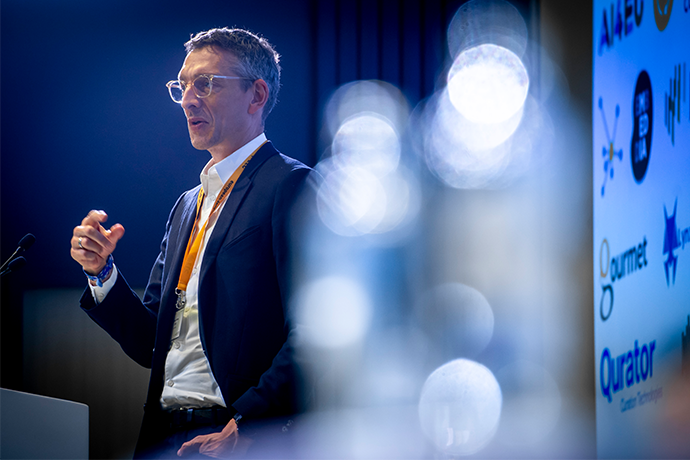
Georg Rehm is an Honorary Professor for Computational Linguistics and Language Technology at Humboldt University Berlin and a Principal Researcher at the German Research Center for Artificial Intelligence (DFKI) in Berlin, where he serves as Deputy Director of the DFKI Lab Berlin. He is also the Head of the German-Austrian Chapter of the World Wide Web Consortium (W3C) based at DFKI Berlin. Rehm has over 300 scientific publications and extensive experience in leading major research projects in computational linguistics and language technology. His research focuses on Natural Language Processing, Computational Linguistics, and Artificial Intelligence, with specific interests in multilingual language technologies, semantic web, digital humanities, and language data spaces. He has led numerous significant projects including European Language Grid, OpenGPT-X, and NFDI4DataScience. Rehm is particularly active in initiatives promoting digital language equality in Europe by 2030. Rehm's recent work demonstrates a strong focus on large language models, scholarly document processing, scientific knowledge representation, and climate-related fact-checking systems. His publications span across multiple high-impact venues including ACL, ESWC, and LREC, with a notable emphasis on practical applications of language technology in real-world scenarios. DFKI Research Fellow (2018) As an active member of the academic community, Rehm regularly serves as an expert for the European Parliament, reviews EU projects, and organizes numerous scientific conferences and workshops. His leadership extends to multiple European initiatives aimed at advancing language technology infrastructure and promoting digital language equality across Europe.
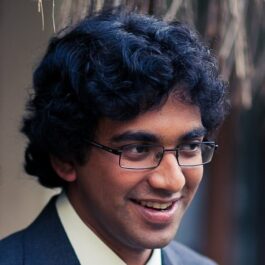
Aravindan Vijayaraghavan is an Associate Professor in the Department of Computer Science at Northwestern University (affiliated with McCormick School of Engineering). He also holds courtesy appointments in the Industrial Engineering and Management Sciences (IEMS) department. Research interests include theoretical computer science , machine learning algorithms , quantum information , and combinatorial optimization under non-worst-case paradigms. He leads IDEAL (Institute for Data, Economics, Algorithms and Learning) as Site Director at Northwestern and former Institute Director (2023-24). Academic Background : PhD in Computer Science from Princeton University (advisor: Moses Charikar ) Bachelor's Degree in Computer Science from Indian Institute of Technology Madras Postdoctoral work at Courant Institute (NYU) and Carnegie Mellon University via Simons Collaboration grants Research Contributions : Developed smoothed analysis frameworks for random matrices with dependent entries Created sum-of-squares certificates for anti-concentration beyond Gaussian distributions Advanced quantum entanglement certification algorithms for subspaces Improved weak-to-strong generalization theory with data distribution expansion properties Designed error-tolerant e-discovery protocols for legal document classification Scientific Recognition : NSF CAREER Award NSF AITF Award (CCF-1637585, CCF-2154100) Google Research Scholar Program grant Amazon Research Awards program support Simons Postdoctoral Fellowship Academic Leadership : General Chair for FOCS 2024 Co-organizer of Junior Theory Workshop and Northwestern QTW series Active in program committees for COLT , ICML , NeurIPS , and STOC conferences Teaching Portfolio : CS262: Mathematical Foundations of CS (Continuous Mathematics for Computer Science) CS212: Mathematical Foundations of Computer Science (multiple offerings since 2015) CS496: Graduate Algorithms (since 2016) CS396/496: Quantum Computation & Information (co-taught with S. Rao) CS497: Machine Learning Theory (Spring 2025 offering)