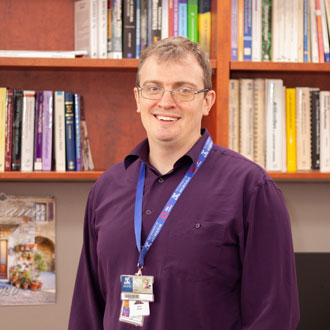
Guodong Long is an Associate Professor at the University of Technology Sydney (UTS) in the Faculty of Engineering and Information Technology. He joined UTS in 2010 and earned his PhD there in 2014. His research focuses on federated learning, trustworthy AI, and pre-trained foundation models with applications in healthcare, IoT, and social media. PhD in Artificial Intelligence, University of Technology Sydney (2014) Leading the Foundation Model and Federated Learning research group (https://www.fmfl.group/) His work addresses challenges in frequency transformation for time series, privacy-preserving healthcare analytics, and spatio-temporal traffic forecasting. He has published extensively at top AI conferences like AAAI, ICLR, and NeurIPS, with significant citation impact (4,682 citations in 2022). Collaborations with industry partners have secured over $4M in external funding. Recent publications emphasize federated foundation models (ICLR'25), privacy-preserving recommendation systems (WWW'25), and adaptive time series analysis. His research integrates domain knowledge and graph learning for multivariate time series imputation and traffic prediction. Dr. Long actively contributes to academic leadership as General Co-Chair for WebConf 2025, Program Co-Chair for AI conferences, and reviewer for top venues. He supervises PhD and master's students and welcomes research visitors for extended collaborations.
Dr. Andrew Peng is a Lecturer (Research) at the Australian Artificial Intelligence Institute (AAII) within the Faculty of Engineering and Information Technology at University of Technology Sydney (UTS), Australia. With dual PhDs from UTS (2015) and Beijing Institute of Technology (2013), he has published 45 peer-reviewed papers across top venues like IEEE ICDM, COLING, and Frontiers in Molecular Biosciences. Education: Dual PhD (2013-2015) from Beijing Institute of Technology and University of Technology Sydney His research focuses on Data Science , Artificial Intelligence , and Healthcare Analytics , addressing challenges in medical data analysis, unstructured clinical text processing, and federated learning frameworks. Recent publications explore: Deep graph clustering for community detection Privacy-preserving medicine shortage detection via social media Time-aware medication recommendation using dynamic treatment regimes Knowledge tracing enhancements for online education Contrastive learning approaches for ICD coding Hypergraph-based sequential diagnosis prediction Dr. Peng has secured over AUD $1M in external research grants and serves as Subject Coordinator for undergraduate/postgraduate courses. He contributes to professional leadership through roles as Web Chair at AJCAI 2021 and ADMA 2021, PC member for major conferences, and reviewer for journals like NeurIPS and AAAI. His work spans collaborations with universities, industry, and government agencies.
Professor Robert Fitch is a distinguished academic leader and one of Australia's foremost authorities in robotics at the University of Technology Sydney (UTS), where he serves as Professor in the School of Mechanical and Mechatronic Engineering. He holds significant leadership roles as Director of the NSW Defence Innovation Network and was previously Director of UTS Tech Lab and Head of School of Mechanical and Mechatronic Engineering from 2019-2023. His career bridges academia, research, and industry collaboration to develop engineering solutions for tomorrow's societal challenges. PhD from Dartmouth College (1998-2004) Former Senior Research Fellow at Australian Centre for Field Robotics, University of Sydney Current Director of NSW Defence Innovation Network (since 2023) Founding Co-Director of NSW Space Research Network (2021-2023) Professor Fitch specializes in autonomous field robotics, developing outdoor robotic systems for diverse industry applications from agriculture to aeronautics, environmental science to space exploration. His research spans multiple domains including multi-robot coordination, hydrogen storage systems, maritime robotics, and AI-driven automation. He operates at the critical nexus of academia, research, and industry, collaborating with businesses and government organizations to deliver innovative solutions to complex real-world challenges. His work demonstrates exceptional translational impact, turning academic research into commercial ventures and practical applications. His recent publications reveal a strong focus on advancing robotics through novel planning algorithms for multi-robot systems operating in complex environments. There's a clear trend toward practical applications in maritime operations, hydrogen energy storage, and warehouse automation, reflecting his commitment to solving real-world engineering challenges. His research integrates theoretical advances with industry needs, particularly in marine robotics, autonomous systems for agriculture, and energy storage technologies. Professor Fitch's work has received significant recognition with numerous accolades and extensive media coverage including appearances on ABC's flagship 7.30 program, Weekend Australian, BBC, and The Hindu. His research has been featured in over 15 news outlets and blogged about extensively, demonstrating its broad societal impact. He has graduated 20 PhD students who are now leading work in field robotics, mechanical and mechatronic engineering, and autonomous systems. Since 2011, he has secured nearly $30 million in grants funding over 50 projects, including major collaborations with industry partners like Space Machines Company, Advanced Navigation, and Australian Wool Innovation. His leadership has been instrumental in growing startups from small beginnings to significant operations, such as Space Machines Company which launched the largest Australian-made satellite into orbit aboard a SpaceX transporter in March 2024. Professor Fitch leads the UTS Robotics Institute and has been instrumental in establishing collaborative spaces like UTS Tech Lab, which has fostered successful partnerships with multiple companies. His work with Wildlife Drones demonstrates how academic research can translate into successful commercial ventures, having grown from research projects into an established business. His leadership extends to numerous industry and academic organizations, boards, and committees, where he serves as director, chair, and co-chair.
Professor J. Joshua Thomas is a distinguished academic at University of Wollongong Malaysia, specializing in intelligent systems and advanced computational techniques. He holds a PhD in Intelligent Systems Techniques from Universiti Sains Malaysia (2015) and a Master's degree in Computer Science from Madurai Kamaraj University, India (1999). Professor Thomas has demonstrated strong leadership in academic administration, having served as Head and Deputy Head of the Department of Computing between 2012 and 2017. His research focuses on intelligent systems and interdisciplinary computational algorithms, with recent work emphasizing Deep Learning, Graph Convolutional Neural Networks (GCNN), Graph Recurrent Neural Networks (GRNN), Hyper-Graph Attention Networks, and Quantum Machine Learning. Professor Thomas's projects span diverse applications including end-to-end steering learning systems, algorithm design in drug discovery, and advanced data analytics for electricity consumption and carbon price forecasting. Professor Thomas maintains an impressive publication record with over 50 peer-reviewed publications and 12 books with publishers including Wiley, Elsevier, and IGI Global. His research is supported by multiple active grants at institutional, national, and international levels, including projects on cancer survivor well-being and AI bias in smart cities. Best Paper Award at SCI 2025 Oracle Cloud Infrastructure 2024 Generative AI Certified Professional 2022 Global Staff Awards (UOWGE) - Excellence In Research Winner V-MIIEX2021: COVIDNet - GOLD AWARD Fundamental Research Grant Scheme (FRGS) recipient (2019) As an active researcher and educator, Professor Thomas serves as Principal Investigator on multiple grants, supervises PhD and Master's students, and regularly delivers keynote addresses at international conferences. His collaborative spirit is evident through partnerships with institutions in India, USA, China, and Germany, fostering knowledge exchange and innovation across disciplines.
Dr. Bin Liang is a Senior Lecturer at the University of Technology Sydney (UTS), working within the Faculty of Engineering and Information Technology and the Data Science Institute. He joined UTS in December 2018 as a Lecturer and was promoted to Senior Lecturer in July 2022, following his postdoctoral fellowship at Data61 (CSIRO). PhD in Computer Vision, Pattern Recognition, and Machine Learning from Charles Sturt University, Australia (2012-2015) Masters in Computer Science from Taiyuan University of Technology, China (2009-2012) BEng in Computer Science from Taiyuan University of Technology, China (2005-2009) Dr. Liang's research spans data mining, machine learning, computer vision, pattern recognition, and survival analysis, with a strong focus on practical applications in critical infrastructure. His work develops sophisticated machine learning frameworks for anomaly detection, failure prediction, and optimization in water infrastructure, flood mapping, and real estate appraisal. He has pioneered approaches that integrate graph neural networks with temporal analysis for pipe failure prediction and has made significant contributions to water quality optimization through data-driven methods. His research consistently bridges theoretical advancements with practical implementation in industry settings. His recent publications demonstrate a clear trajectory toward increasingly sophisticated models that capture complex temporal and spatial relationships in infrastructure data. There's a notable emphasis on multimodal learning approaches and domain generalization techniques that enhance model robustness across diverse application scenarios. His work on anomaly detection frameworks like MLAD shows innovation in grouping sensors by temporal characteristics for more accurate monitoring. 2022 – AWA R&D Excellence Award (NSW) 2022 – UTS Medal for Research Impact 2022 – Finalist for 2021-22 AWA Young Water Professional of the Year Award (NSW) 2020 – Finalist for the Best Paper Award of the ICARCV 2020 2019 – Industrial & Primary Industries Merit at the Victorian iAwards 2018 – Australian Museum Eureka Prize for Excellence in Data Science Dr. Liang actively supervises Masters Research and PhD students, focusing on data science applications for infrastructure management. His research has been supported through industry partnerships with water utilities and other infrastructure organizations, translating academic research into practical solutions that reduce water loss, improve infrastructure reliability, and enhance environmental sustainability. His work on pipe failure prediction and leak detection has directly contributed to operational improvements in water distribution networks. As a core member of the Data Science Institute at UTS, Dr. Liang collaborates with interdisciplinary teams working on data-driven solutions for urban infrastructure challenges. His research group focuses on developing scalable machine learning models that can be deployed in real-world settings, often working directly with industry partners to validate and implement their approaches. This industry-academia collaboration ensures that his research remains grounded in practical challenges while pushing the boundaries of data science methodology.
David Ascher is Head of the Computational Biology and Clinical Informatics laboratory at the Baker Institute, Deputy Director of Biotechnology at The University of Queensland, and Head of Systems and Computational Biology at Bio21 Institute. He holds honorary positions at Cambridge University, FIOCRUZ, and the Tuscany University Network. His educational background includes: Bachelor of Biotechnology Bachelor of Science (Honors) Bachelor of Laws Doctor of Philosophy David's research focuses on computational biology and bioinformatics, particularly in modeling biological data to understand fundamental processes. His work centers on developing tools to unravel the genotype-phenotype link, using computational and experimental approaches to assess the effects of mutations on protein structure and function. His group has created a platform of 40 widely used programs for variant effect prediction, which are applied in clinical settings for hereditary diseases, rare cancers, and drug-resistant infections. His recent publications span structural biology, genomics, and drug discovery, with a strong emphasis on protein dynamics, mutation impact prediction, and computational tools for biomedical research. The work often bridges basic science and clinical applications. Scientific awards and fellowships include: Anders Young Investigator Award (2017) Dr Álvaro Romanha Award (2017) Jack Brockhoff Early Career Researcher Award (2016) Dr Antoniana Ursine Krettli Award (2016) Dr Naftale Katz Award (2015) TJ Martin Award (2014) Bionomics Best Thesis Award (2014) NHMRC Investigator Fellowship (2020–2024) MDHS Research Fellowship (2019) NHMRC CJ Martin Fellowship (2014–2018) Victoria Fellowship (2013) Churchill Memorial Trust Fellowship (2013) David Ascher leads the Computational Biology and Clinical Informatics laboratory, which develops computational tools for clinical applications. His work is supported by major grants including the NHMRC Investigator Fellowship. He has not publicly listed his advisees, but his laboratory likely mentors students and researchers in computational biology.
Dr. Keshav Sood is a Senior Lecturer at Deakin University's School of Information Technology, where he leads research in cybersecurity, AI, and next-generation networks. His affiliations include roles as Graduate Research Coordinator and South Asia Country Coordinator. He completed his PhD at Deakin University and a post-doctoral fellowship at the University of Newcastle. Research Interests: Dr. Sood focuses on securing distributed systems, with emphasis on: Federated learning for intrusion detection in IoT/5G networks Biometric privacy in immersive technologies (VR/AR) RF fingerprinting for IoT device authentication Quantum-resistant software-defined networks Adversarial robustness in voice authentication systems His publications consistently explore AI-driven security frameworks, with recent work addressing data sparsity in IoT sensors, cross-domain IIoT authentication, and phishing mitigation using large language models. Awards: Professor of IT Award (2016) IEEE TNSE Excellent Reviewer (2023) Deakin HDR Supervision Award (2023) Course Team Award for Industry Certification Alignment (2021) Supervision & Grants: Dr. Sood currently advises 8 graduate researchers and has secured $655,313 in competitive funding. Key projects include: Smart Farming Cyber Resilience (DFAT Maitri Grant) Secure Access for Critical Infrastructure (Cyber CRC) IoT Data Integrity for Defense Systems (Australian Defence) He leads the Deakin Cyber Research and Innovation Centre, focusing on scalable security solutions for industry partners.