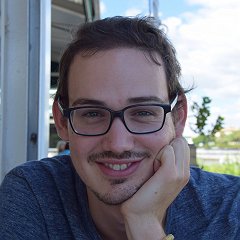
Quentin Stiévenart is a researcher at Université du Québec à Montréal, focusing on abstract interpretation, concurrency, and static analysis. His work spans programming language design, software verification, and tool development for WebAssembly and functional languages like Racket and Scheme. Active in organizing and reviewing for conferences including SPLASH, ICFP, ECOOP, and SAS Developed tools such as Wassail for WebAssembly static analysis and RacketLogger for educational purposes Contributions include theoretical work on effect-driven flow analysis and practical advancements in concolic execution abstraction His research addresses challenges in concurrency verification, cyclic reinforcement in incremental analysis, and security-focused taint tracking across multiple language paradigms.
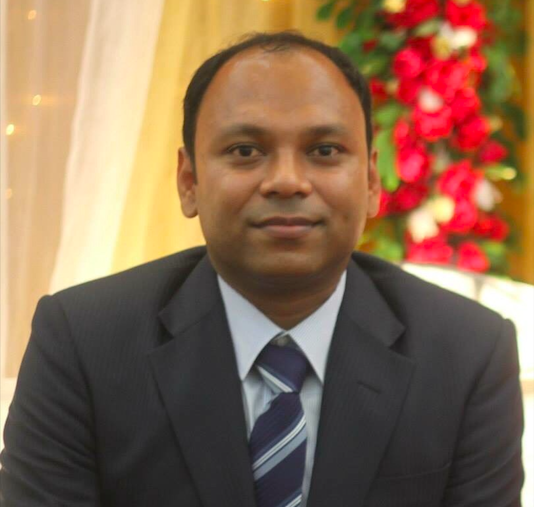
Ruhul Amin is an Assistant Professor at Fordham University's Department of Computer and Information Science, where he explores the intersection of Artificial Intelligence , Data Science , and Public Health . His work spans multiple domains including Bioinformatics , Natural Language Processing , and Computational Social Science . PhD in Computer Science (Stony Brook University, 2019) MS in Computer Science (Stony Brook University, 2015) BSc in Computer Science (Shahjalal University, 2007) His research focuses on developing deep learning algorithms for genome annotation, anomaly detection in high-cardinality spaces, and assistive technologies for visually impaired users. Notably, he designed the Mongol Dip bilingual screen reading software and the Pipilika Bengali text search engine. Recent publications (2025-2024) demonstrate his expanding interests in large language model alignment , sentiment analysis across languages, and distributed reinforcement learning for cybersecurity applications. His work frequently appears at IEEE conferences and in journals like PLOS One. Scientific Recognition BASIS National ICT Award (Bangladesh) Best Poster Awards at IEEE R10 HTC and CEWIT conferences Bangladesh Prime Minister’s Award (2012) mBillionth South Asia Award (2010) He maintains active collaborations with research teams at University of Toronto , University of British Columbia , and Stony Brook University . Contact: moamin@cs.stonybrook.edu
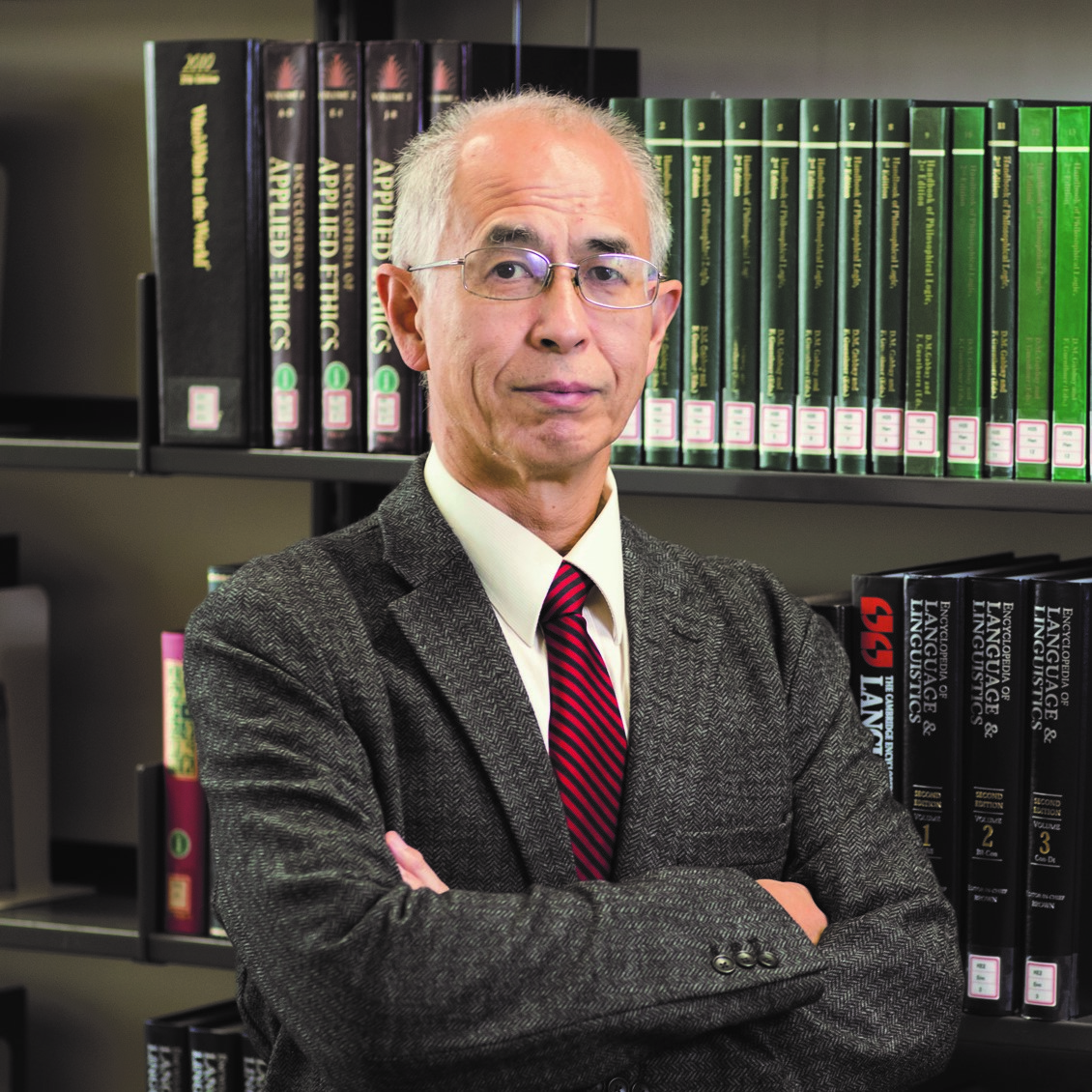
Ken Satoh is a full Professor at the National Institute of Informatics (NII) and Sokendai (The Graduate University of Advanced Studies), Japan. He leads the Center for Juris-Informatics within the Joint Support-Center for Data Science Research (ROIS-DS). Previously, he worked at Fujitsu (1981-1995) and was an Associate Professor at Hokkaido University until 2001. He holds a law degree from the University of Tokyo (2006-2009) and passed the Japanese bar exam in 2017. Roles: Director of Center for Juris-Informatics, Principal Investigator in multiple AI/Law projects Research Focus: Juris-informatics (merging informatics and law), logical foundations of AI, legal debugging, and compliance mechanisms for AI systems His work bridges AI and legal systems, including developing the PROLEG framework for legal reasoning and organizing international workshops like JURISIN. Key contributions include applying logical inference to detect legal conflicts in algorithmic governance systems and advancing AI ethics through compliance checks with regulations like GDPR. He has authored over 130 publications, including works on legal norm reasoning, multi-agent systems, and formal methods in law. His research group collaborates globally, hosting competitions like COLIEE to advance legal AI technologies.
Silvia Miksch is a Full University Professor of Visual Analytics at TU Wien's Faculty of Informatics, leading the CVAST Center. She holds a PhD from the University of Vienna and has held roles including Head of the Department of Information and Knowledge Engineering at Danube University Krems. Her research focuses on Visual Analytics, Information Visualization, Temporal Data Analysis, and Medical Informatics. She has supervised numerous PhD and Master’s students, with notable advisees including Ignacio Baltazar Pérez Messina and Davide Ceneda. Her work bridges theory and practice, addressing challenges in Visual Analytics for healthcare, business intelligence, and digital humanities. Awards include the IEEE VGTC Technical Achievement Award (2023) and induction into the IEEE Visualization Academy (2020). She actively contributes to conferences like IEEE VIS and EuroVis as program chair and steering committee member. Her projects, such as 'VisuExplore' and 'DisCo', have received recognition for advancing visualization in medical and cultural domains. Key research areas include guidance-enriched systems, network visualization, and temporal reasoning. She explores applications in fraud detection, cultural heritage analysis, and pandemic data visualization. Her lab's tools, like 'Hermes' and 'COVIs', exemplify task-driven design for real-world data challenges.
Gabriel Gomes is an Assistant Professor in the Departments of Chemistry and Chemical Engineering at Carnegie Mellon University, where he leads the Gomes Group research program focused on the intersection of machine learning and chemistry. His work centers on developing new chemical reactions, catalysts, and materials using state-of-the-art machine learning and automated synthesis techniques. Dr. Gomes received his Ph.D. in Chemistry from Florida State University in 2018 under Professor Igor V. Alabugin, where he researched stereoelectronic effects. Prior to joining CMU in 2022, he was a Banting Postdoctoral Fellow at the University of Toronto in the Matter Lab led by Professor Alán Aspuru-Guzik. He earned his B.S. in Chemistry from Federal University of Rio de Janeiro, Brazil in 2013. His research program focuses on developing autonomous platforms for reaction discovery, with emphasis on catalysis. Gomes aims to create inverse design frameworks where algorithms can propose new functional catalysts from scratch based on desired properties. His work integrates quantum mechanics with machine learning to teach computers chemical intuition, enabling novel approaches to catalyst design and chemical synthesis. He strongly advocates for the integration of AI with human creativity to transform chemical research. Gomes' recent publications demonstrate a clear trend toward integrating large language models with chemical discovery, developing transferable machine learning potentials for catalysis, and advancing molecular representations with quantum chemical insights. His work spans from fundamental quantum chemistry to practical applications in biocatalysis and materials design. Scialog Fellow (2023) C&EN Talented Twelve (2022) NSERC Banting Postdoctoral Fellowship (2020-2021) CAS SciFinder Future Leaders Program (2018) ACS COMP Chemical Computing Group Excellence Award (2018) FSU's Graduate Student Research and Creativity Award (2018) IBM Ph.D. Scholarship (2017) Dr. Gomes mentors several graduate students including Robert MacKnight and Daniil Boiko, who have contributed to projects like the Catnip web application for biocatalyst prediction. His research has received funding through prestigious programs like the Scialog Automating Chemical Laboratories awards. Gomes actively promotes open science initiatives and has contributed to the Open Reaction Database to improve data accessibility for machine learning in chemistry. The Gomes Group operates at the cutting edge of AI-driven chemistry research, developing tools like Coscientist that bridge the gap between natural language prompts and actual chemical reactions. Their work on autonomous reaction discovery systems represents a significant step toward fully automated chemical laboratories where machines can 'dream of molecules' with specific desired properties.
Padmini Srinivasan is a Professor in the Department of Computer Science at the University of Iowa, affiliated with the College of Engineering. Her work bridges computer science, informatics, and social applications through advanced research in information retrieval, natural language processing, and data mining. Research Interests: Her research focuses on Information Retrieval & NLP , Text and Web Mining , Biomedical Text Mining , Privacy/Security & Censorship , Social Media Analytics (particularly in political and health belief contexts), and Crowdsourcing & Games . She leads the Text Retrieval & Text Mining Group , fostering interdisciplinary research involving machine learning, human computation, and real-world data challenges. Publication Trends: Her recent work appears in top-tier venues such as SIG-IR, KDD, WSDM, ICWSM, EMNLP, JASIST, and PLOS One, reflecting sustained contributions to both foundational and applied aspects of data science. These publications span topics from ranking optimization and query modeling to social dynamics, health informatics, and ethical AI. Scientific Awards: No specific awards were mentioned in the provided text. Advising and Grants: She has advised numerous graduate students including Osama Khalid, Ingroj Shrestha, Asad Mahmood, Jonathan Rusert, and others. While grant details are not listed, her publication record in premier venues suggests consistent external funding and collaborative research activity. Labs and Teams: She leads the Text Retrieval & Text Mining Group , which conducts cutting-edge research in search technologies, text analysis, and social media understanding, often integrating crowdsourcing and game-based methods for data collection and evaluation.
Dr. Sina Rafati Niya serves as a Senior Researcher at the Blockchain and Distributed Ledger Technologies (BDLT) group, University of Zurich (UZH), where he specializes in blockchain data governance and analytics for PoS-based systems including Cardano, Tezos, Casper, and Polkadot since 2022. His research spans decentralized applications in DeFi, supply chain tracking, identity management, and IoT domains, building on continuous work since 2017. He completed his Ph.D. at UZH in 2021 with the dissertation "Efficient Designs for Practical Blockchain-IoT Integration," establishing foundational work for his current research trajectory. Rafati Niya's research centers on Blockchain Data Engineering and Analysis, with specific expertise in transaction untangling (Cardano shared send transactions), address clustering heuristics, privacy-preserving micro-payment systems for resource-constrained IoT devices, and GDPR-compliant blockchain adaptations. His methodology emphasizes practical implementation challenges in scalability and real-world deployment across financial, supply chain, and industrial IoT contexts. Publication analysis reveals concentrated advancements in Cardano analytics (60% of recent work), including novel transaction analysis frameworks and network structure investigations in Polkadot, alongside persistent exploration of blockchain-IoT integration patterns. This body of work demonstrates evolving sophistication from protocol design (2017-2020) toward advanced analytics and privacy solutions (2021-2025). No scientific awards were documented in the source material. While specific advisees and grants remain unlisted, his extensive co-authorship pattern (27+ publications 2017-2025) indicates active mentorship within the BDLT group and collaboration with researchers including C. J. Tessone, Burkhard Stiller, and M. Chegenizadeh. Current projects focus on offline micro-payment verification and Cardano transaction analytics. As a core contributor to UZH's BDLT research group, he drives initiatives in blockchain analytics infrastructure and practical protocol development, maintaining strong industry-academia connections through publications in IEEE ICBC, Springer, and Elsevier venues.
Majeed Simaan is an Assistant Professor of Finance and Financial Engineering at the School of Business, Stevens Institute of Technology. He holds a Ph.D. in Finance from Rensselaer Polytechnic Institute (RPI), completed in 2018, and joined Stevens as a tenure-track faculty member thereafter. His academic work focuses on risk management, asset allocation, and pricing, with applications in quantitative and computational finance. Research Interests: His primary research revolves around Financial Risk Management (FRM), with emphasis on asset allocation, portfolio optimization, and financial networks. He integrates machine learning, textual analysis, and network modeling to enhance traditional financial models. His work addresses estimation risk, model interpretability, and the application of reinforcement learning in portfolio construction. He is also a strong advocate for reproducible research and open-source software, particularly using R for empirical finance. The recent publications highlight a strong trend toward integrating machine learning and data science into financial decision-making. Topics include volatility modeling, portfolio efficiency, index tracking, and behavioral aspects of investing such as the 'buy the dip' strategy. The research spans theoretical modeling, empirical validation, and practical implementation, often leveraging public datasets and open tools. Scientific Awards and Recognition: Certified Financial Risk Manager (FRM) from GARP (August 2023) Research funded by the National Science Foundation (NSF) via CRAFT Featured in Bloomberg Markets and other media outlets for research on investor behavior Advising and Grants: Dr. Simaan mentors Ph.D. students through research courses such as FE 960 and MGT 960. His research has been supported by competitive grants, including funding from the NSF. He has served on key institutional committees including the Finance PhD Committee, Research Committee, and Teaching Effectiveness Evaluations Committee, reflecting his active role in academic governance. Labs and Research Teams: While no formal lab is named, his work is associated with computational and data-driven finance research, often involving collaboration on machine learning applications in finance. He maintains an active presence on RPubs and GitHub, sharing reproducible research vignettes on topics like financial networks, volatility modeling, and tactical asset allocation.
Gyunam Park is a Research Group Lead and Process and Data Scientist at Fraunhofer FIT and a Scientific Assistant at the Chair of Process and Data Science at RWTH Aachen University, a leading institution in computer science and engineering. He is actively involved in both research and teaching, contributing to the advancement of process mining, data science, and artificial intelligence. His work bridges academic research and industrial applications, particularly in SAP ERP systems and digital twins of organizations. Research Interests: Gyunam Park’s research focuses on Action-Oriented Process Mining (AOPM) , Object-Centric Process Analysis , and Responsible Machine Learning . He aims to transform process mining insights into actionable management decisions, ensuring transparency, fairness, and compliance. His work enables organizations to monitor operational constraints, generate corrective actions, and assess their impact using data-driven methods. Publication Trends: His recent publications emphasize object-centric approaches to process mining, predictive monitoring, constraint checking, and integration with AI planning. There is a strong trend toward preserving structural information in event logs, improving machine learning performance, and applying these techniques to real-world systems like SAP ERP and after-sales service processes. Scientific Awards: No awards are explicitly mentioned in the provided text. Advising and Grants: While no formal students are listed, Gyunam Park leads research projects and collaborates with industry partners such as Samsung Electronics and SAP. His projects involve root cause analysis, resource optimization, and educational data mining. He has developed open-source tools like ProAct and OCPA , indicating active grant or institutional support for software development and research dissemination. Labs and Teams: He is a core member of the Process and Data Science (PADS) group led by Prof. Wil van der Aalst at RWTH Aachen University and leads a research group at Fraunhofer FIT. These teams focus on cutting-edge research in process mining, data science, and AI, with strong industry collaborations and regular contributions to top conferences and journals.
Dr. Bevan Smith is a Senior Lecturer at the School of Mechanical, Industrial & Aeronautical Engineering at the University of the Witwatersrand (Wits), where he also completed his BIng(Mech), MSc(Eng), and PhD. His research bridges machine learning and engineering systems, with a focus on optimization through simulation and AI. His research interests include: Machine Learning and Reinforcement Learning Causal Machine Learning and Causal Discovery Graph Neural Networks Explainable AI (XAI) Digital Twins Application of AI in Education and Industrial Systems His recent publications demonstrate a strong trajectory in applying causal inference and machine learning to both industrial optimization (e.g., inventory management, air quality monitoring) and educational challenges (e.g., at-risk student prediction, online video interventions). He utilizes simulation-based methods and counterfactual reasoning to evaluate treatment effects and improve decision-making. His work spans journals in industrial engineering, artificial intelligence in education, and computational applications. Notable scientific contributions include: Developing AI-driven solutions for low-cost air quality monitoring (AI_r) Evaluating X-Learner performance under confounding and non-linearity Applying Pearl’s counterfactual framework to assess explanation validity Designing personalized interventions for engineering students using model-agnostic explanations Dr. Smith has contributed to curriculum development through the creation of online educational videos and has explored structural design in mechanical engineering, notably in carbon fibre swingarm development. While no formal advising or grant information is available, his work reflects an interdisciplinary approach combining mechanical engineering principles with cutting-edge AI methodologies. He is actively publishing and remains engaged in both technical and educational research domains.
Oscar Romero Moral is a Professor at the Polytechnic University of Catalonia (UPC), affiliated with the Department of Services and Information Systems Engineering at the Barcelona School of Informatics (FIB). He leads research in the inSSIDE, inLab FIB, and DTIM groups, focusing on data management, data science, and big data technologies. His work emphasizes knowledge graphs, data governance, and machine learning integration with data systems. Affiliations: UPC, inSSIDE, inLab FIB, DTIM Group Research Interests: Data Management, Data Engineering, Big Data, Knowledge Graphs, Data Governance, Machine Learning Integration He has authored over 276 academic contributions, including peer-reviewed articles on federated healthcare data systems, GPU-accelerated workflows, and graph-driven data integration. His recent work addresses challenges in heterogeneous computing, automated data governance, and scalable data architectures. Romero has served on the program committees of major conferences like VLDB, ICDE, and EDBT, and led competitive research projects in data systems and analytics. He collaborates extensively with industry partners and academic institutions, driving innovations in distributed data management and edge computing.
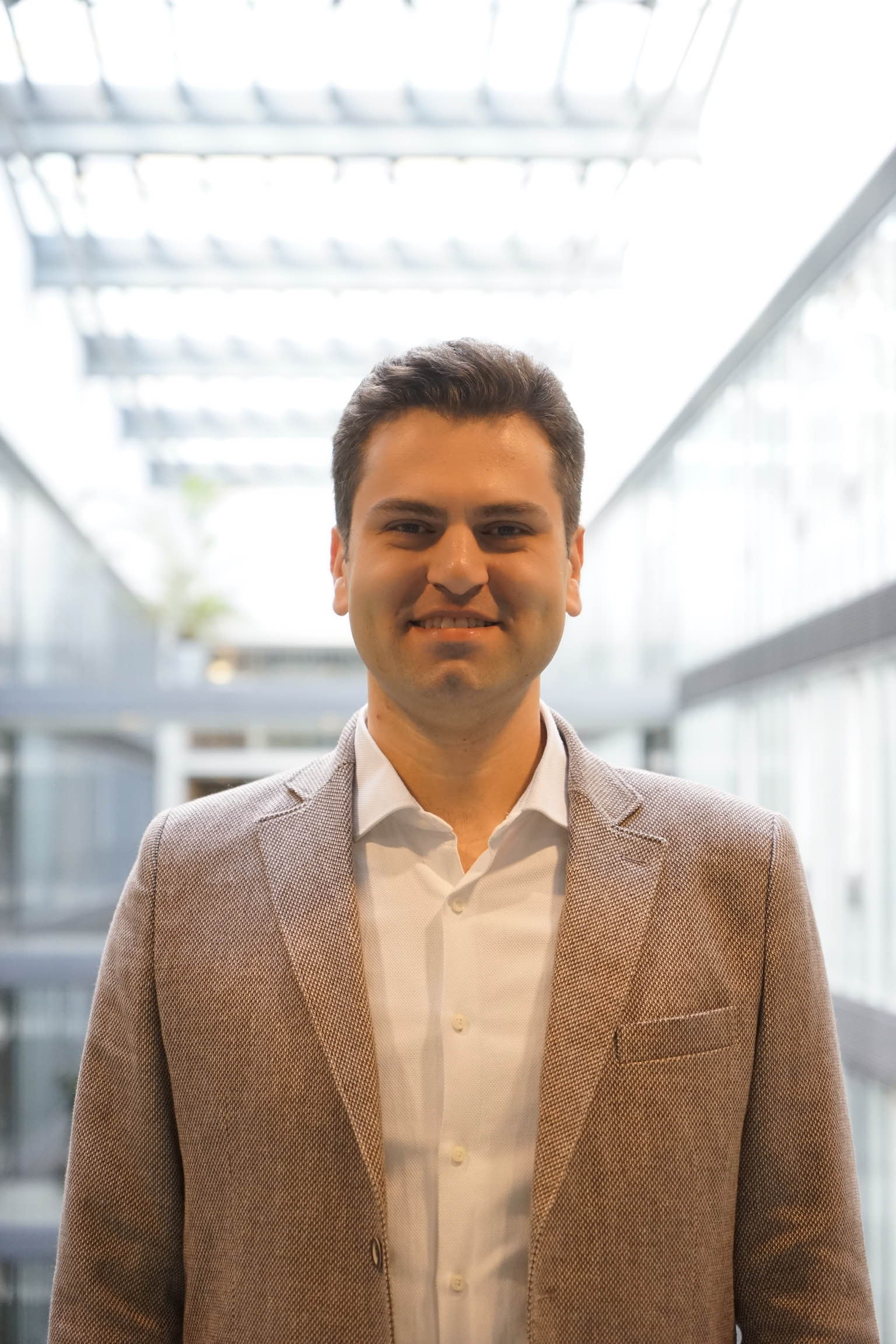
Mu Zhang is an Assistant Professor at the Kahlert School of Computing, University of Utah. His research focuses on computer security, particularly developing tools using program analysis, machine learning, and data mining to address security issues in Web3, cyber-physical systems, and mobile systems. Previously, he was a Postdoc at Cornell University and a Research Staff Member at NEC Labs America. Education and Background: Postdoc, Cornell University Research Staff Member, NEC Labs America Research Interests: His work emphasizes automated detection and mitigation of security vulnerabilities, including smart contract flaws, industrial control system threats, and malware analysis. He explores innovative solutions like ICSTracker for intrusion backtracking and DEEPVMUNPROTECT for VM-protected Android malware recovery. Recent efforts span blockchain formal verification, Wasm runtime testing, and cross-domain threat inference. Recent Contributions: Notable publications include papers on provenance analysis for industrial control systems (DSN'25), storage collision mitigation in smart contracts (USENIX Sec'25), and automated generation of security-centric smart contract descriptions (ISSTA'23, distinguished paper). Funded projects include NSF grants for AI security education and Cisco Research for smart contract semantics recovery. Awards: His team received the ACM SIGSOFT Distinguished Paper Award (2023) and CCS 2022 Best Paper Honorable Mention. Advising and Grants: Supervises PhD/MSc students like Yu, Wanjing, and Taiji. Active in proposal funding (e.g., Idaho National Lab for industrial control systems, Stellar Foundation for smart contract analysis). Served on TPCs for NDSS, CCS, and ISSTA. Labs/Teams: Leads a research group at University of Utah focusing on secure software systems and automated security tool development.
Philipp Mayr-Schlegel is a Professor at the University of Göttingen’s Institute of Computer Science, leading the team 'Information & Data Retrieval' at GESIS - Leibniz-Institute for the Social Sciences. His research focuses on interactive information retrieval systems, scholarly recommendation mechanisms, and the integration of bibliometric methods with digital library technologies. University of Göttingen - Institute of Computer Science GESIS - Leibniz-Institute for the Social Sciences His work spans information retrieval , digital libraries , and applied informetrics , with particular emphasis on: Interactive search systems Non-textual ranking algorithms Scholarly document processing Knowledge representation Semantic search technologies User behavior analysis Recent research outputs (2025) include studies on LLMs for scholarly search, bibliometric reproducibility tools, scientific uncertainty annotation, and preprint adoption disparities. He has published extensively in Scientometrics , International Journal on Digital Libraries , and top conference proceedings like ACL and ECIR . As organizer of the International Workshop on Bibliometric-enhanced Information Retrieval (BIR) and Scholarly Document Processing (SDP) series, he has shaped academic discourse through editorial roles at ISSI , JCDL , and SocInfo conferences. His projects have attracted significant national and European funding.
Eric Leclercq is a researcher at the University of Burgundy, affiliated with the LE2I Lab in Dijon, France. His work spans database systems, social network analysis, and biomedical data integration. He has contributed extensively to polystore systems, tensor decompositions, and category theory applications in data modeling. Fields of Interest : Database Systems, Data Mining, Social Network Analysis, Big Data Analytics, Semantic Web Leclercq's recent research focuses on formal frameworks for data lakes using category theory, multi-level tensor decomposition for social network stratification, and schema migration in multi-model systems. He has published in venues like CAiSE, IDEAS, and RCIS. His collaborations include Annabelle Gillet, Marinette Savonnet, and Nadine Cullot. Notable works include Lambda+ architecture for data processing, polarization analysis in social networks, and tools for tweet collection and biomedical data integration.
Yubao Liu is a Professor at Sun Yat-sen University's School of Data and Computer Science, Department of Computer Science, with a prolific research career spanning over two decades in computer science. His work demonstrates significant contributions to database systems, data mining, and spatio-temporal analysis. Professor Liu's research interests focus on Data Mining , Database Systems , Traffic Flow Prediction , and Graph Neural Networks . His recent work has concentrated on developing advanced techniques for large-scale traffic flow prediction, crowd flow analysis, and spatio-temporal modeling using deep learning approaches. His research bridges theoretical computer science with practical applications in transportation systems and urban computing. Liu's publication record shows consistent high-impact contributions, with recent work emphasizing graph-based neural network architectures for traffic forecasting problems. His research demonstrates a clear evolution from foundational database work to cutting-edge applications of deep learning in transportation and social network analysis. Professor Liu has collaborated extensively with researchers including Weiyang Kong, Kaiqi Wu, Sen Zhang, Genan Dai, and Youming Ge, indicating a strong research group focused on spatio-temporal data analysis and deep learning applications. His academic advising is evident through publications where his students appear as first authors, suggesting an active mentorship role in training the next generation of computer scientists specializing in data-intensive applications.