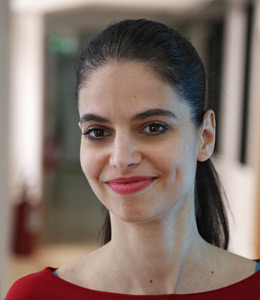
Giuseppe Agapito is a Professor at the Department of Law, Economics and Sociology (DiGES) at the University of Camerino, where he teaches courses such as Elements of Computer Science and Data Analysis. He specializes in computational biology, bioinformatics, and health informatics, focusing on genomic data analysis, machine learning applications in healthcare, and parallel computing methodologies. His research integrates multi-omics approaches, pathway enrichment analysis, and predictive modeling for drug response and disease mechanisms. Notable contributions include tools like BioPAX-Parser and cPEA, which enhance genomic data interpretation. He actively collaborates in international studies, such as the 4CE consortium analyzing SARS-CoV-2 impacts. His work addresses challenges in privacy-aware bioinformatics, high-performance computing for genomics, and AI-driven medical diagnostics. Education details are not explicitly provided in the texts, but his academic profile reflects extensive expertise in interdisciplinary fields bridging computer science and biomedical research. He maintains an active research agenda with over 50 publications since 2018, emphasizing scalable data analysis, drug biomarker discovery, and computational methods for clinical outcomes prediction. His teaching responsibilities include IT management and data analysis modules within social science curricula, reflecting a commitment to digital literacy across disciplines. Research interests span bioinformatics tool development, genomic data preprocessing, and AI applications in healthcare, with a focus on translational research. Recent articles highlight advancements in fMRI classification using graph neural networks, privacy-preserving genomic pipelines, and edge-based deep learning for medical signal analysis. Awards and grants are not explicitly listed, but his sustained contribution to international research consortia underscores his field influence. He advises students and researchers on computational methodologies and hosts weekly office hours for academic consultations.