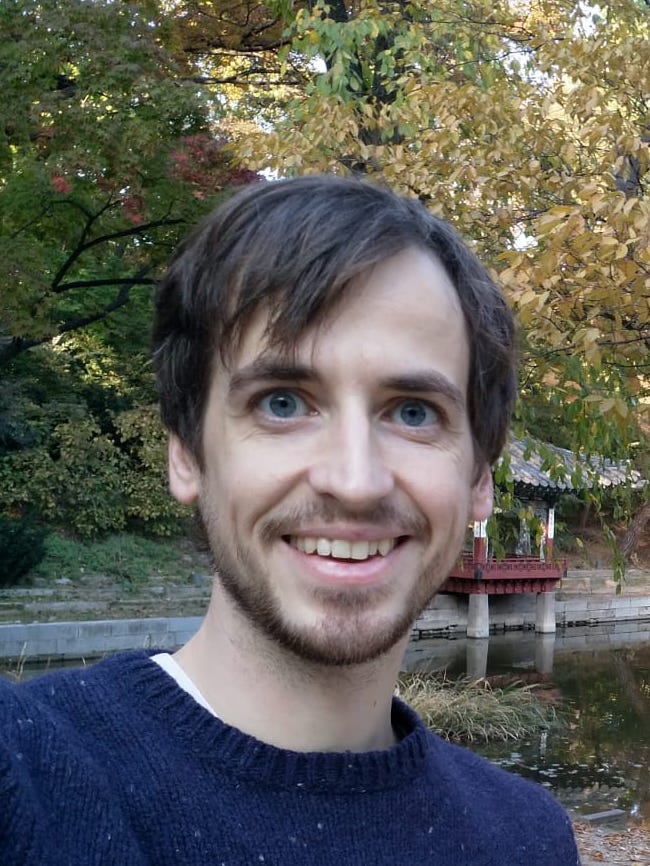
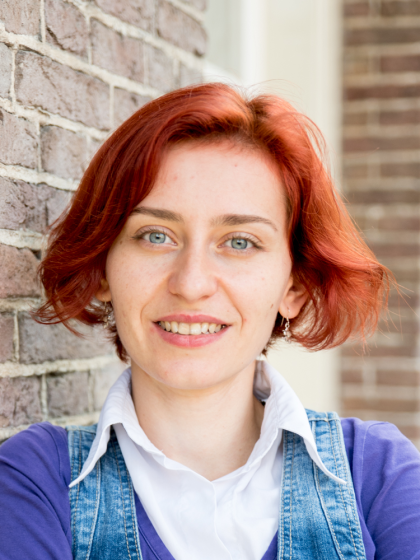
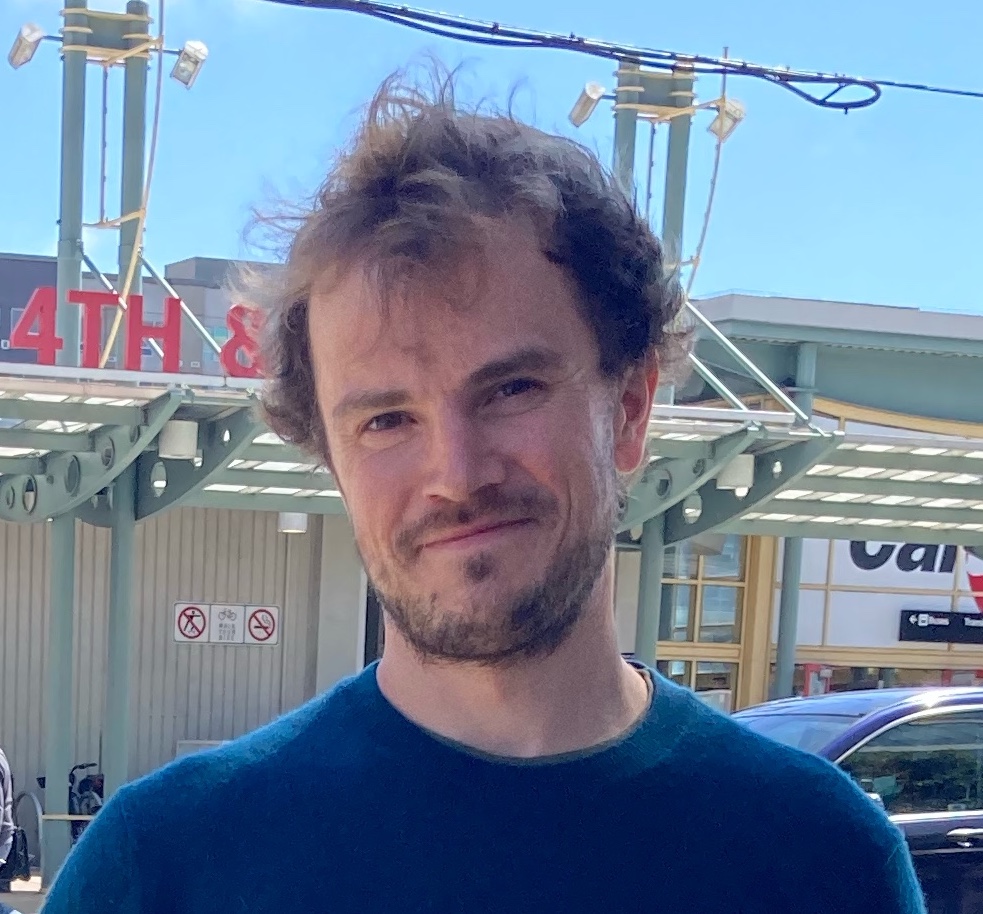
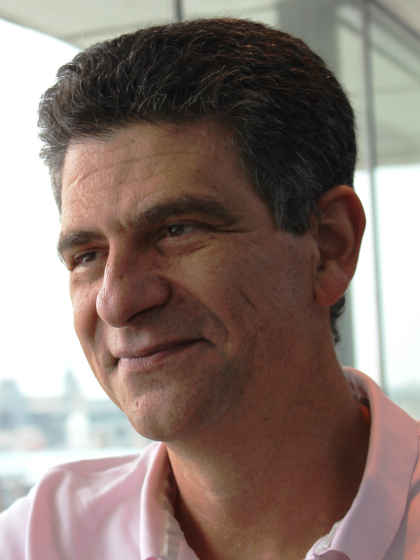
Dr. Johan van Rooij is an Assistant Professor in the Algorithms and Complexity group at Utrecht University , Faculty of Science. His work focuses on algorithm design, computational complexity, and data science applications. Specializes in exact algorithms for NP-hard graph problems Active in parameterized complexity and treewidth-based techniques Contributes to applied data science through transportation optimization and railway inspection projects Research trends show consistent contributions to: Exponential time algorithms for graph problems Treewidth and branch decomposition optimization Data science applications in public mobility Scientific Recognition: 2018: Hendrik Lorentz Prize (Dutch Data Science Prizes) 2022: Finalist for Prize for OR for the Common Good
Hans Vernooij is a Lecturer in Farm Animal Health at the Faculty of Veterinary Medicine, Utrecht University. He specializes in statistical methods and data science applications in veterinary epidemiology and animal health. His areas of expertise include: Statistical methods for veterinary research Applied Data Science in Life Sciences Epidemiological modeling Machine learning applications in animal health Vernooij has extensive experience in developing statistical models for animal health applications. His research focuses on applying advanced statistical techniques and data science methods to solve problems in veterinary epidemiology and farm animal health. He has particular expertise in Random Forest models, as demonstrated during his sabbatical at the Human Sciences Research Council in Pretoria where he developed a model for HIV status prediction based on demographic information and knowledge of HIV prevention from large-scale survey data. His publication record shows consistent contributions across veterinary epidemiology, with recent work emphasizing machine learning applications and big data analytics in animal health surveillance. The research demonstrates a clear trajectory from traditional statistical methods toward more advanced data science approaches. Vernooij is actively involved in teaching and mentoring: Teaches statistics to Bachelor students at the veterinary faculty Supports PhD candidates and Master students during data analysis phases of their research Provides statistics education for the Master of Epidemiology program at the Julius Centre of University Medical Centre
Melvin Wong is an Assistant Professor in the Department of Urban Planning and Transportation within the Built Environment school at Eindhoven University of Technology. His research focuses on transportation engineering, machine learning applications in urban mobility, reinforcement learning for traffic systems, and sustainable transportation solutions. He utilizes advanced computational methods including graph neural networks, generative AI, and physics-informed models to address challenges in traffic prediction, electric vehicle infrastructure, and urban design. His research interests encompass transportation optimization, spatiotemporal modeling, generative design methods, and behavioral analysis in urban systems. Recent publications demonstrate a strong focus on AI-driven solutions for traffic management, battery-swapping systems, and multimodal design optimization. Dr. Wong has received recognition including the Best Research Paper Award (2024) and Swiss Government Excellence Scholarship (2020). He contributes to academic activities through conference presentations, peer reviews, and course development in urban mobility and big data analytics.
Erik Bekkers is an Associate Professor at the University of Amsterdam's Informatics Institute, leading research in the Machine Learning Lab (AMLab). His work bridges geometric mathematics and machine learning, focusing on developing robust and efficient deep learning architectures grounded in symmetry, equivariance, and physical principles. Education: PhD in Biomedical Engineering (cum laude) from Eindhoven University of Technology Previous Roles: Postdoctoral researcher in applied differential geometry at TU/e Department of Applied Mathematics His research spans: Group convolutional neural networks Symmetry-preserving representation learning Generative modeling on manifolds Physics-informed neural networks Medical imaging applications Recent publications emphasize geometric latent variable models, equivariant diffusion methods, and applications to molecular generation, medical imaging, and physics-driven AI. His team actively explores structure-preserving and self-supervised learning techniques. Scientific Awards MICCAI Young Scientist Award (2018) Philips Impact Award (MIDL 2018) NWO VENI grant: Context-Aware AI in Medical Imaging (2023) NWO VIDI grant: Neural Ideograms - Geometry-Grounded AI (2024) As co-founder of the ICML'24 GRaM workshop , he promotes geometry-grounded approaches in AI. His lab actively investigates geometric regularization, manifold-based PDE forecasting, and symmetry-aware generative methods.
T. Huysmans is a researcher in the Faculty of Industrial Design Engineering at TU Delft, specializing in Human Factors. Their work integrates computer science and engineering to advance 3D anthropometry, ergonomics, and human-centered design. Research interests focus on image processing, machine learning, and 3D/4D scanning for applications in safety equipment, product design, and human physiology. Key areas include facial and foot anthropometry, pressure discomfort mapping, and aerodynamic modeling. The recent research articles demonstrate a strong trend in applied computer vision and data-driven ergonomics , particularly in cross-national comparisons of facial dimensions for PPE design and dynamic foot shape modeling during walking. These works combine advanced deep learning with practical industrial applications. No scientific awards were mentioned in the provided text. Huysmans has supervised at least one research project, as indicated by the 'Supervised Work' section. While specific grants are not listed, the scale of data collection (e.g., scanning Chilean workers and Dutch children) suggests involvement in funded research initiatives. The research is supported by datasets such as the 'Dense 3D pressure discomfort threshold map' and the 'Generic Cyclist Model', indicating active lab-based work involving 3D scanning, data modeling, and simulation.
Victoria Degeler is an Assistant Professor at the University of Groningen’s Faculty of Science and Engineering, affiliated with the Bernoulli Institute. Her research focuses on AI-driven solutions for complex systems, combining expertise in artificial intelligence, software engineering, and service-oriented computing. She actively contributes to EU Horizon initiatives through her role in evaluating projects for the EC REA and EASME. Her work emphasizes real-world applications such as digital twins for infrastructure optimization, machine learning for IoT systems, and adaptive service architectures. Her research interests span digital twins in water distribution networks, quality-aware IoT processing, and machine learning methodologies. Notable projects include developing self-adaptive service selection frameworks and analyzing human activity recognition biases. She collaborates widely, evidenced by co-authored publications in top-tier conferences and journals.
Johannes Schmidt-Hieber is a Professor of Statistics at the University of Twente, Department of Applied Mathematics. He has held positions at Leiden University (2014-2018) and conducted postdoctoral research at Vrije Universiteit Amsterdam and ENSAE Paris. His work bridges deep learning theory with nonparametric statistics, focusing on convergence rates, regularization techniques, and Bayesian inference. Education: PhD from Universität Göttingen and Bern (2010), studies at Freiburg and Göttingen Research: Specializes in statistical learning theory, neural network analysis, and high-dimensional inference His 15 most recent publications address topics like GCN convolutions in regression, implicit regularization in deep networks, and posterior contraction in Gaussian processes. Key contributions include theoretical guarantees for optimization algorithms and bias-variance trade-off analysis. Scientific recognition includes: ERC Consolidator Grant (2024-2029) IMS Fellow (2024) Van Dantzig Award (2025) Frontiers of Science Award (2025) NWO Vidi grant (2019-2024) He served as associate editor for leading journals and organized multiple international workshops. Current projects include mathematical foundations of machine learning and statistical uncertainty quantification.
Anna Schenfisch is a Research Fellow in the Faculty of Mathematics and Computer Science at Eindhoven University of Technology (TU/e), working within the Applied Geometric Algorithms research group. Her primary affiliation is with the university's mathematics department, and she can be contacted at a.k.schenfisch@tue.nl. Her research focuses on the intersection of algebraic topology and computational geometry, with significant contributions to topological data analysis. Her core research interests center on K-theory applications to persistence modules, simplicial complex reconstruction, and topological descriptors. She investigates how algebraic structures like monoids and parameter spaces interact with geometric representations, particularly through zig-zag persistence frameworks. Her work on faithful sets of verbose persistence diagrams addresses fundamental questions about minimality and optimality in topological data representations. Current projects involve developing theoretical frameworks for multiparameter persistence modules and their computational implementations. Analysis of her 15 most recent publications (2022-2025) reveals a strong trajectory in applying algebraic topology to computational problems. Her research demonstrates increasing sophistication in bridging abstract K-theory with practical geometric algorithms, particularly in simplicial complex reconstruction and descriptor optimization. The work consistently targets foundational questions in topological data analysis while developing novel computational approaches. Scientific Awards: No specific awards, fellowships, or medals are mentioned in the provided sources. Advising and Grants: Anna has supervised at least one academic work as indicated by "Supervised Work (1)" in her institutional profile. The nature of this supervision (e.g., thesis advising) isn't specified. No grant funding sources are explicitly referenced in the available materials. Labs and Teams: She is an active member of the Applied Geometric Algorithms research group at TU/e, which focuses on computational topology and geometric data analysis. This group serves as her primary research environment for developing algorithms related to persistence modules and topological descriptors.
James Townsend, also known as Jamie, is a machine learning researcher at the Amsterdam Machine Learning Lab (AMLab) within the Informatics Institute at the University of Amsterdam. He completed his PhD in 2020 at the UCL AI Centre in London under the supervision of Professor David Barber. His educational background includes a PhD in lossless compression with latent variable models from University College London, with prior research contributions to the Autograd library and early development of JAX during a Google Brain internship in 2018. Townsend's research centers on deep generative models and lossless compression, extending to unsupervised learning, approximate inference, Monte Carlo methods, optimization, and machine learning software systems. His work bridges theoretical information theory with practical implementation, particularly in neural compression techniques. He has significantly contributed to open-source tools including Autograd and JAX, demonstrating expertise in automatic differentiation systems. His publication record spans high-impact venues like NeurIPS, ICLR, and ICML, with recent work focusing on innovative compression paradigms for complex data structures including graphs and multisets. Key contributions include shuffle coding, reversible programming for compression verification, and multiset compression techniques that challenge conventional approaches. Scientific recognition includes: Best Paper Award at Deep Generative Models and Downstream Applications Workshop (2021) Townsend actively participates in the research community through invited talks at Stanford's Information Theory Forum and the Languages for Inference workshop. His collaborations span academic institutions and industry partners like Google Brain, with current work centered on advancing lossless compression through deep learning at the AMLab. He maintains an active open-source presence via GitHub (@j-towns) and technical discourse on Twitter (@_j_towns), while publishing through Google Scholar under his formal name James Townsend.
Dragan Bosnacki is an Assistant Professor at Eindhoven University of Technology (TU/e), holding joint appointments in the departments of Biomedical Engineering and Mathematics and Computer Science. He specializes in interdisciplinary research at the intersection of computer science and biomedicine, with a focus on machine learning, bioinformatics, and computational modeling of medical therapies. His work combines formal verification techniques, GPU-accelerated algorithms, and biomedical applications such as High Intensity Focused Ultrasound (HIFU) therapy modeling. Dr. Bosnacki earned his BSc in Electrical Engineering and MSc in Computer Science from Sts. Cyril and Methodius University (Macedonia), followed by a PhD in Mathematics and Computer Science at TU/e under Professors Jos Baeten and Dennis Dams. He has pioneered advancements in parallel model checking and contributed significantly to the SPIN model checking tool. His research also spans separation logic, biomedical data analytics, and the application of mathematical methods to biological systems. Education: BSc in Electrical Engineering, Sts. Cyril and Methodius University (Macedonia) MSc in Computer Science, Sts. Cyril and Methodius University (Macedonia) PhD in Mathematics and Computer Science, TU/e (2001) Research Interests: Mechanisms of machine learning for biomedical data Formal verification of hardware/software systems GPU-optimized algorithms for computational biology Mathematical modeling of HIFU cancer therapies Reconstruction of biological networks and drug response modeling Teaching: Advanced programming and biomedical data analysis Simulation of biochemical systems Programming for data analytics Capita selecta in bioinformatics Thermodynamics & chemical kinetics Key Contributions: Co-developed GPU-based model checking tools (e.g., GPUexplore) Improved partial-order and symmetry reduction techniques Contributions to the SPIN model checker and VeriFast tool Advising: Supervised 37 academic works, focusing on interdisciplinary projects in computational biology and formal methods.
Dr. Michael Cochez is an Assistant Professor in the Department of Computer Science at Vrije Universiteit Amsterdam, with a secondary appointment in Artificial Intelligence. His research focuses on knowledge graph embeddings, graph neural networks, and neuro-symbolic systems. He has published over 70 works and contributed to datasets like KGloVe and Inductive WN18RR. Research Interests: Machine Learning, Knowledge Representation, Graph Theory Applications, Explainable AI, and Bioinformatics Integration. His work bridges theoretical advancements with practical applications in industry and healthcare. Recent Trends in Publications: Emphasis on scalable knowledge graph systems, causal reasoning in economic forecasting, and neuro-symbolic frameworks for complex queries. Active in organizing workshops on DL4KG and industry knowledge graph scaling. Awards: None listed. Grants: Not specified. Advising: No students listed but contributes to courses like Deep Learning and Machine Learning for Graphs. Labs/Teams: Involved in projects like Graph-Massivizer (sustainable data center modeling) and Graph-Scrutinizer (massive analytics tools). Ancillary Activity: Consultancy in Abcoude since 2022.
Natasha Maurits is Professor of Clinical Neuroengineering and Chief Scientific Information Officer (CSIO) at the University Medical Center Groningen (UMCG), Faculty of Medical Sciences. Her research focuses on clinical neuroengineering, particularly biomedical signal analysis, multimodal neuroimaging, high-density EEG recording, and visualization of high-dimensional data for home-based diagnosis and monitoring. Her work applies to neurology (movement disorders, neuromuscular disorders, dementia, stroke) and cognition (healthy ageing, dyslexia). As CSIO, she contributes to data sharing initiatives (GO FAIR), personal health environments, and ethical data coupling. Maurits' publications demonstrate strong interdisciplinary collaboration, with recent studies examining cognitive reserve in brain injury, AI-driven movement disorder classification, and pediatric cardiology. Her 254 publications show consistent innovation in merging engineering solutions with clinical neurology. Visiting Professor at University of Lincoln (UK) Member of Scientific Advisory Boards for mathematics and physics Chair of Clinical Neurophysiology Technology committees She leads research groups focused on neuroengineering and data science, collaborating internationally to develop diagnostic tools and therapeutic monitoring systems.
Marcello Carioni is an Assistant Professor affiliated with the Digital Society Institute, TechMed Centre, and Mathematics of Imaging & AI. His research focuses on inverse problems, optimal transport, regularization techniques, and mathematical analysis with applications in machine learning and imaging. He has published extensively, including 35 research outputs since 2016, with a notable h-index of 23 and 228 citations. His work bridges theoretical mathematics and practical applications, addressing challenges in sparsity recovery, dynamic systems, and convex optimization. Recent contributions include advancements in optimal transport regularization, sparse optimization frameworks, and neural network representations in infinitely wide regimes. Collaborations span international teams, reflecting his interdisciplinary approach to mathematical challenges. Carioni has delivered invited talks on topics like dynamic inverse problems and optimal transport methods, showcasing his engagement with both academic and applied communities. His research emphasizes methodological innovation, with a focus on solving complex problems in imaging and data science through rigorous mathematical foundations.
Georgi Gaydadjiev is a Professor in Innovative Computer Architecture at the University of Groningen's Faculty of Science and Engineering. Previously, he held roles including Chair Professor at TU Delft and Chalmers University of Technology, and served as VP of Dataflow Software Engineering at Maxeler Technologies. He holds a PhD from TU Delft and has over 35 years of industry and academic experience, focusing on reconfigurable computing, high-performance systems, and energy-efficient architectures. His research spans embedded systems, fault tolerance, and scalable architectures. Education: MSc Electrical Engineering (TU Delft), PhD (TU Delft), studies at Voenmeh (Baltic State Technical University). Research interests include reconfigurable computing, advanced architectures, parallel systems, and HPC. He leads projects funded by EU, Google, and Swedish Research Councils, addressing exascale computing and customized hardware. His work has been recognized with awards like the CES Design Showcase (1999) and best paper awards at ICS'10 and WiSTP'07. He advises PhD students and oversees labs like Maxeler IoT-Labs BV, focusing on deploying dataflow technology beyond data centers.
Huiqing Wang is a researcher at Eindhoven University of Technology, specializing in room acoustics and computational methods. She holds a Ph.D. in Aerospace Engineering from TU/e (2021), a Master's from Delft University of Technology, and a Bachelor's in Aircraft Design from Nanjing University of Aeronautics and Astronautics. Education: Bachelor of Engineering (2012), Nanjing University of Aeronautics and Astronautics Master of Science (2015), Delft University of Technology Ph.D. (2021), Eindhoven University of Technology Her research focuses on room acoustics simulation, time-domain discontinuous Galerkin methods, and open-source software development. She has contributed to Python-based wave propagation models and hybrid acoustic modeling approaches integrating image source, diffusion equation, and Galerkin methods. Recent publications highlight trends in open-source acoustic software, reproducibility challenges, and collaborative platforms for room acoustics. She actively promotes open research practices in computational acoustics. Key Research Areas: Room Acoustics Simulation Discontinuous Galerkin Methods Acoustic Diffusion Equations Open-Source Software Development Wave-Based Modeling Reproducibility in Acoustic Research