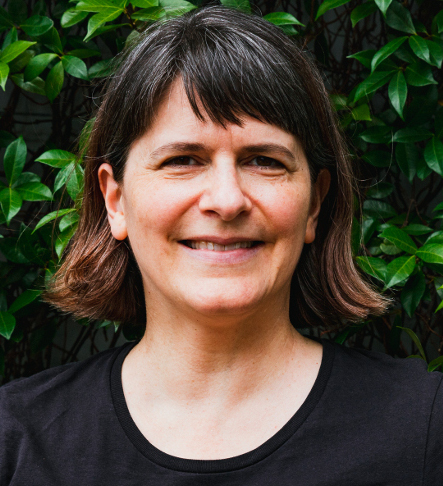
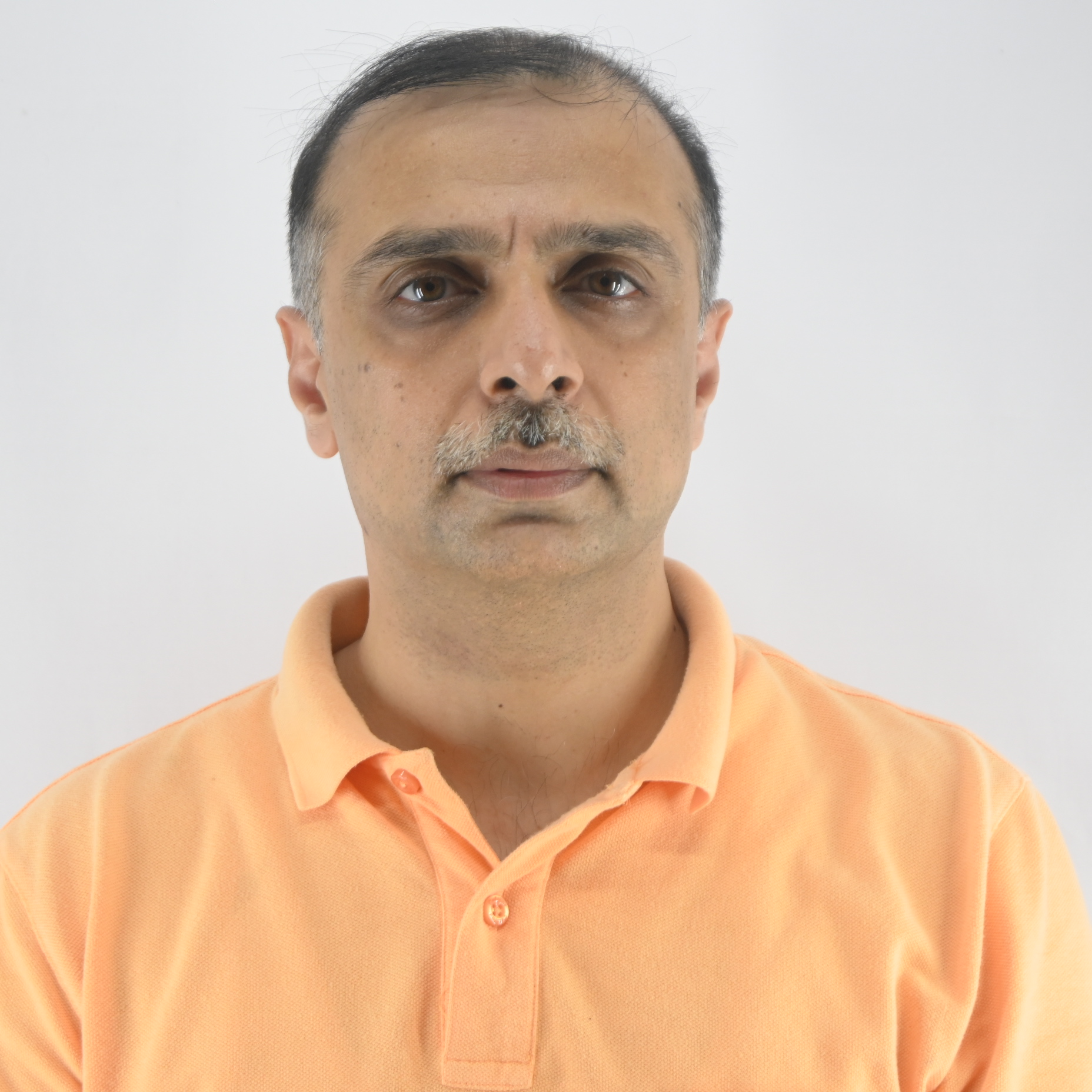
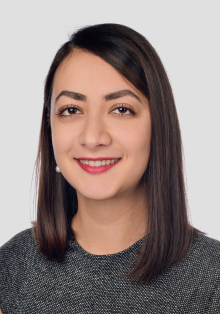
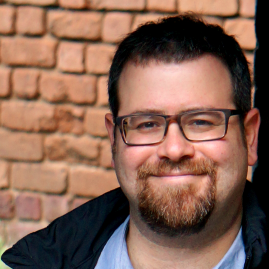
Professor Catherine Greenhill is a faculty member at the School of Mathematics and Statistics, UNSW Sydney , where she serves as Professor and head of the Combinatorics group. Her academic career spans institutions including the University of Queensland, University of Oxford, University of Leeds, University of Melbourne, and Australian National University. D.Phil., University of Oxford (1996) M.Sc. (Research) in Combinatorics (1992) B.Sc. (Hons) in Pure Mathematics (1991) Her research focuses on the intersection of discrete mathematics , theoretical computer science , and probability , particularly in asymptotic combinatorics , probabilistic methods , and analysis of algorithms . Her work includes asymptotic enumeration of combinatorial structures and design of randomized algorithms for graph sampling and counting. Her recent publications (2025–2021) center on random graphs and hypergraphs , with key contributions to switch Markov chains , degree sequence analysis , and chromatic number bounds . These works reflect her expertise in probabilistic combinatorics and algorithmic complexity . Scientific Awards: Fellow of the Australian Academy of Science (2022) Christopher Heyde Medal in Pure Mathematics (2015) June Griffith Fellowship (2013) Hall Medal (2010) Advising and Grants: She has supervised numerous PhD/Masters students and secured multiple ARC Discovery Grants (2019–2021, 2014–2016, 2012–2014). Her grants address topics like hypergraph modeling, random discrete structures, and network analysis in illicit drug trafficking.
Olga Sorkine-Hornung is a Professor of Computer Science at ETH Zurich and head of the Institute of Visual Computing. She leads the Interactive Geometry Lab, focusing on theoretical and practical advancements in digital content creation, geometry processing, and shape modeling. Current position: ETH Zurich, Department of Computer Science Previous roles: Courant Institute (NYU), Technical University of Berlin Education: BSc and PhD from Tel Aviv University, postdoc at TU Berlin Her research spans shape representation, digital fabrication, computer animation, and fundamental geometry processing. Key contributions include Laplacian surface editing, as-rigid-as-possible deformation, and generalized winding numbers. She works on applications in VR, AR, and autonomous systems. Awards include Test of Time Awards (2024), ACM Fellow (2020), ERC Consolidator Grant (2020), and EUROGRAPHICS Young Researcher Award (2008). She has supervised numerous students and co-developed software libraries like libigl and Instant Meshes . Co-chair roles for SIGGRAPH, Eurographics, and Pacific Graphics Editorial board member for ACM Transactions on Graphics and other journals Keynote speaker at VMV, CVPR, and SIAM conferences Her work bridges mathematical rigor with practical implementation, advancing computer graphics and geometry processing through intuitive algorithms that maintain surface detail while enabling efficient computation.
Ajit Rajwade is a Professor at the Department of Computer Science and Engineering , Indian Institute of Technology Bombay. His research spans Artificial Intelligence , Compressed Sensing , and Medical Imaging , with affiliations to the Centre for Machine Intelligence and Data Science and the Koita Centre for Digital Health . Education : PhD in Computer and Information Science and Engineering, University of Florida (2010) MSc in Computer Science, McGill University (2004) BTech in Computer Engineering, University of Pune (2002) His research interests focus on intelligent data acquisition, particularly in neural network analysis , graph signal processing , and medical imaging . He develops compressed sensing algorithms for inverse problems like tomography and MRI reconstruction , alongside applying group testing to pandemic response. Scientific awards include the Prof. S. P. Sukhatme Award (2024) and Departmental Teaching Excellence (2019). His publications demonstrate expertise in image restoration , noise modeling , and epidemiological algorithms . He has advised PhD students like Sabyasachi Ghosh and Jerin Geo James , with a focus on computationally efficient methods in medical imaging and machine learning .
Bahar Asgari is an Assistant Professor in the Department of Computer Science at the University of Maryland, College Park. She holds appointments in CS, UMIACS, and ECE, and directs the Computer Architecture and Systems Lab (CASL). Her research focuses on domain-specific architecture design, near memory processing, and reconfigurable computing. Before joining UMD, she worked at Google, contributing to system optimization and memory utilization strategies. Education: Ph.D., Georgia Institute of Technology, 2021. Research Interests: Developing energy-efficient architectures for sparse problems, scientific computing acceleration, FPGA optimizations, and reconfigurable hardware systems. Her work addresses challenges in memory efficiency, parallelization, and hardware-software co-design across domains like machine learning and IoT. Key Awards: 2024 UMD Excellence in Teaching Award 2023 DOE Early Career Award Advising & Grants: Supervises 9 graduate students and leads projects sponsored by NSF, DOE, and industry partnerships. Her lab explores systolic arrays, near-data processing, and fault-tolerant computing. Labs/Teams: Directs CASL, which builds next-generation computing systems through hardware innovation and algorithm-architecture co-design.
Eytan Adar is a Professor of Information and Computer Science at the University of Michigan, holding dual appointments in the School of Information and the College of Engineering's Electrical Engineering and Computer Science department. His work sits at the intersection of human-computer interaction and artificial intelligence, focusing on large-scale systems analysis and novel interface design. Adar's research spans multiple domains including social media analysis (Twitter, Reddit), academic citation networks, meme propagation, information extraction, and political networks. His methodological expertise includes data mining, data visualization, and graph-based network analysis. His work often operates at internet scale, examining language, creativity, social network dynamics, and text production. His recent publications reveal a strong focus on AI-human collaboration, with particular attention to generative AI interfaces, visualization techniques for complex data, and ethical considerations in AI systems. His work shows a consistent pattern of bridging theoretical insights with practical system implementations. Best Paper Award at ProtoAI: Model-Informed Prototyping for AI-Powered Interfaces, IUI'21 Honorable Mention Award at CHI'24 for feminist interaction techniques research Best Paper Award at ICWSM'18 for Wikipedia language edition analysis Best Paper Award at ICML 2016 Workshop for neural language model visualization Best Student Paper at WSDM'09 for web dynamics research Best of CHI at CHI 2008 for web revisitation patterns analysis Adar has advised numerous PhD students who have gone on to prominent positions at organizations including Google, Apple, RAND, Northwestern University, and Stanford. His research is generously supported by the NSF, IARPA, NIH, the Education Department, and major technology companies including Adobe, Microsoft, Facebook, Google, and Yahoo. He is also a founder of the International Conference on Web and Social Media (ICWSM) and has served as Co-General Chair for WSDM and Co-Program Chair for UIST.
Jacob Fox is a Professor at Stanford University, specializing in Combinatorics and Probability. His research focuses on extremal combinatorics, Ramsey theory, graph theory, and additive combinatorics. He advises students like Maya Sankar. His work explores structural and enumerative aspects of graphs, hypergraphs, and combinatorial configurations. Recent studies include advancements in Ramsey numbers, sumset theory, and probabilistic methods in discrete mathematics. Key research areas include Ramsey numbers for sparse structures, hypergraph properties, and applications of combinatorial geometry. His publications often bridge theoretical insights with algorithmic applications. No scientific awards are listed in the provided text. His advising includes Maya Sankar, with research aligned to combinatorial problems. Collaborative projects involve extremal graph theory and probabilistic combinatorics. No labs or dedicated research groups are explicitly mentioned.
Robert Jenssen is a Professor in the Machine Learning Research Group at UiT The Arctic University of Norway and serves as the Director of Visual Intelligence , an 8-year Research Council of Norway-funded SFI center. His research focuses on solving societal challenges in healthcare, marine mapping, energy, and Earth observation through collaborations with industry and public stakeholders. Director, Visual Intelligence (SFI) Center Professor, UiT Adjunct Professor, Pioneer Centre for AI (University of Copenhagen) and Norwegian Computing Center His methodological expertise spans neural networks, information-theoretic learning, self-learning, and explainable AI (XAI). Recent work emphasizes multimodal learning, uncertainty estimation, and medical image analysis. Scientific awards include: Best Paper, Pattern Recognition Letters (2024) Dissertation Award, Norwegian AI Society (2023) Best Paper, Color and Visual Computing Symposium (2022) IEEE GRS Society Letters Prize (2013) Prize for Young Researchers, University of Tromsø (2007) He contributes to international leadership as a member of the Scientific Advisory Board (SAB) for the Max Planck Institute for Intelligent Systems, France's SequoIA AI Excellence Cluster, and Denmark's DIREC center.
Mohsen Ghaffari is an Associate Professor at MIT's Department of Electrical Engineering and Computer Science (EECS), holding the Steven and Renee Finn Chair. His research focuses on theoretical computer science, particularly distributed and parallel algorithms, graph theory, and network optimization. Formerly, he was a tenured CS faculty member at ETH Zurich until 2022. PhD in Computer Science from MIT (2016) His research interests include distributed algorithms, parallel computing, graph decomposition, and network congestion management. His recent work addresses coreness decomposition, spanner construction, and Euclidean k-center optimization in massive parallel computation frameworks. Notable scientific awards include the ACM Doctoral Dissertation Award (Honorable Mention), ACM-EATCS Doctoral Dissertation Award, and multiple best paper awards at FOCS, PODC, and SODA. He has advised numerous PhD and Master's students, many of whom have transitioned to academic and industry roles. He has taught courses at MIT and ETH Zurich on distributed algorithms, advanced algorithms, and massively parallel computation. His professional activities include serving on program committees for SODA, FOCS, STOC, and organizing workshops like Highlights of Algorithms (HALG) and Workshop on Local Algorithms (WOLA).
Jan Dreier is a Research Fellow at the Institute of Logic and Computation at Vienna University of Technology. His research centers on structural graph theory and algorithmic meta-theorems, particularly exploring the boundaries of tractability for model checking problems. Dreier's work bridges theoretical computer science and discrete mathematics, focusing on graph decompositions, parameterized complexity, and logical expressiveness. Key research themes include monadic stability in graph classes, applications of model theory to computer science, and efficient algorithms for logical queries on structured graphs. His publication record shows consistent focus on graph sparsity concepts and algorithmic applications of logic, with recent work expanding into approximation methods for counting queries. Research demonstrates sophisticated applications of combinatorial methods to fundamental problems in computational complexity.
Peter Selinger is a Professor in the Department of Mathematics and Statistics at Dalhousie University , with a cross-appointment in Computer Science. He specializes in mathematical methods in computer science, particularly quantum computing and combinatorial game theory . His work on quantum programming languages like Quipper and foundational research in category theory has garnered international recognition. Education : Ph.D. in Mathematics (University of Pennsylvania, 1997), undergraduate studies in Mathematics (Technische Universität Darmstadt). Research Interests span quantum computing, category theory, and combinatorial game theory. He has pioneered formalisms for quantum programming languages, developed categorical models for quantum mechanics, and analyzed game-theoretic structures in games like Hex. His recent work includes linear dependent type theory , quantum circuit synthesis , and combinatorial game classification . Publications demonstrate expertise in quantum programming languages, categorical semantics, and game theory. Key trends include Hamiltonian simulation , Clifford+T circuits , and monotone game realization . Scientific Honors include the Killam Professorship (2017–2022), Faculty of Science Award for Excellence in Teaching (2023), and fellowships from the Alfred P. Sloan Foundation and German National Scholarship Foundation . Students he has supervised include PhD graduates Xiaoning Bian , Francisco Rios , and Neil J. Ross , along with MSc students like Fahimeh Bayeh and Seth Greylyn . He has advised 16 postdoctoral researchers.
Maria Chudnovsky is a Professor of Mathematics at Princeton University and a former Professor of IEOR and Mathematics at Columbia University (2006-2014). Her research focuses on graph theory and combinatorics, with significant contributions to structural graph theory, perfect graphs, and algorithmic applications. Education: B.A. Summa Cum Laude (1996) and M.Sc. (1999) from Technion, Ph.D. (2003) from Princeton University Her work addresses fundamental problems in graph coloring, forbidden induced subgraphs, and combinatorial optimization, including the proof of the Strong Perfect Graph Theorem and development of algorithms for detecting graph structures. Notable awards include the MacArthur Foundation Fellowship (2013-2017), D.R. Fulkerson Prize (2009), and Henry Burchard Fine Professor of Mathematics (2022). She has held prestigious fellowships such as the Clay Mathematics Institute Research Fellowship (2003-2008). Grants: NSF DMS-EPSRC Grant DMS-2120644 (2021-2024), US Army Research Office Grant W911NF-16-1-0404 (2016-2020), and multiple NSF grants She has advised numerous PhD/MSc students and postdocs, including Sophie Spirkl, Mingxian Zhong, and Tara Abrishami. Her outreach includes popular science communication on YouTube's Numberphile and participation in initiatives promoting women in STEM.
Sophie Spirkl is an Associate Professor (with tenure) in the Department of Combinatorics and Optimization at the University of Waterloo. Previously, she held postdoctoral positions at Princeton University (as an NSF postdoc and instructor, supervised by Maria Chudnovsky) and at Rutgers University (under Jeff Kahn). She earned her PhD from Princeton University under the guidance of Maria Chudnovsky and Paul Seymour. Her research focuses on graph theory and combinatorics, with notable contributions to induced subgraphs, tree decompositions, chromatic number properties, and structural graph theory. She is a recipient of the 2023 Sloan Research Fellowship and co-founded the diamond open-access journal Innovations in Graph Theory . Education: PhD in Mathematics, Princeton University (2016–2020) Postdoctoral Fellowships: Princeton (2020–2022), Rutgers (2018–2020) Research Interests: Dr. Spirkl’s work spans multiple areas of combinatorics, including structural graph theory, extremal graph theory, and algorithmic graph theory. She has published extensively on topics such as induced subgraph obstructions, χ-boundedness, tree decompositions, and the Erdős–Hajnal conjecture. Her research often intersects with theoretical computer science, particularly in parameterized complexity and graph colorings. Awards & Recognition: 2023 Sloan Research Fellowship Contributions to the Innovations in Graph Theory journal Academic Contributions: Her articles address foundational problems in graph theory, such as the Erdős–Hajnal conjecture for C₅, logarithmic treewidth in even-hole-free graphs, and induced saturation for cycles. She collaborates with leading researchers like Maria Chudnovsky and Paul Seymour, advancing the field through rigorous combinatorial analysis. Community Engagement: She coordinates the Women in Math Directed Reading Program at Waterloo, supporting underrepresented groups in mathematics. Her spouse, Logan Crew, is a Research Assistant Professor at the same institution.
Monika Henzinger is Professor at the Institute of Science and Technology Austria (ISTA), heading the research group of Theory and Applications of Algorithms. She also serves as Vice President for Technology Transfer at ISTA since 2024. Previously, she held professorships at the University of Vienna (2009-2023) and EPFL, Switzerland (2005-2009), was Director of Research at Google (1999-2005), and served as Assistant Professor at Cornell University. Professor Henzinger's research centers on efficient algorithms and data structures with three main thrusts. First, she investigates dynamic settings where program inputs are repeatedly updated, seeking solutions faster than restarting computations. Second, she develops privacy-preserving algorithms that add minimal noise to protect input data while maintaining efficiency. Third, she translates theoretically optimal algorithms into practical implementations for dynamically changing inputs. Her work consistently addresses resource conservation in data processing, particularly computing time and memory space, while exploring the theoretical limits of possible savings. Henzinger's recent publications (2024-2025) reveal strong trends in dynamic algorithms, differential privacy, and graph theory. Her research consistently bridges theoretical computer science with practical applications, focusing on algorithms that adapt to changing inputs while preserving computational efficiency and data privacy. She has made significant contributions to problems like dynamic matching, minimum cut computation, and privacy-preserving data analysis across various domains. Professor Henzinger has received numerous prestigious awards and honors: Wittgenstein Award (2021) Two ERC Advanced Grants (2014, 2021) Carus Medal of the German Academy of Sciences Leopoldina (2019) SIGIR Test of Time Award Fellow of the Association of Computing Machinery (2016) Member of the Austrian Academy of Sciences (2017) CAREER Development Award of the National Science Foundation Best paper Award at the Symposium on Discrete Algorithms (2024) Professor Henzinger currently advises PhD students Bardiya Aryanfard, Antoine El-Hayek, and Roodabeh Safavi Hemami, along with postdocs Anamay Chaturvedi and Niklas Hahn. Her research is supported by multiple significant grants including an ERC Advanced Grant for 'Design and Evaluation of Modern, Fully Dynamic Data Structures,' the FWF Wittgenstein Prize, and the WEAVE Project on 'Static and dynamic hierarchical graph decompositions.' She also serves as Principal Investigator for the FWF project 'Fast algorithms for a reactive network layer,' providing substantial funding for her innovative work in algorithms and data structures. Professor Henzinger leads the Theory and Applications of Algorithms research group at ISTA, which focuses on developing practical algorithms for dynamic environments. Her team investigates resource conservation in data processing, specializing in dynamic algorithms that efficiently handle changing inputs, privacy-preserving algorithms that minimize noise while protecting data, and translating theoretical algorithms into practical implementations. The group maintains a strong presence in theoretical computer science through regular publications in top conferences and journals, and collaborates extensively with institutions worldwide to advance algorithmic research.
Brandon Seward is an Associate Professor of Mathematics at the University of California San Diego (UC San Diego), where they conduct research and teach in the Department of Mathematics. They use the pronouns they/them or he/him . Education Ph.D. in Mathematics, University of Michigan , 2015 Research Interests Their work lies at the intersection of ergodic theory, topological dynamics, descriptive set theory, and group theory . They investigate geometric, combinatorial, and entropic properties of actions of countable groups, with special emphasis on the divide between amenable and non-amenable groups. Publications & Research Impact Across 27 refereed papers (2014-2024), Seward has advanced entropy theory for non-amenable groups, Borel combinatorics of group actions, and structure theorems for measure-preserving actions. Their work has appeared in top journals such as Inventiones Mathematicae , Journal of the American Mathematical Society , and Duke Mathematical Journal . Scientific Awards Michael Brin Dynamical Systems Prize for Young Mathematicians (2018) – awarded for outstanding contributions to dynamical systems. Teaching & Mentorship Seward regularly teaches core undergraduate courses (e.g., Math 142A Introduction to Analysis) and organizes the UC San Diego Group Actions Seminar , a weekly research forum featuring international speakers. They serve as a faculty mentor and are actively involved in graduate student supervision and seminar coordination. Contact & Office Email: bseward@ucsd.edu Office: AP&M 5739, 9500 Gilman Drive, La Jolla, CA 92093-0112
Dr. Md Manjurul Ahsan serves as a Research Assistant Professor in the Department of Industrial & Systems Engineering at the University of Oklahoma, where he develops AI-driven solutions for healthcare diagnostics and advanced manufacturing optimization. His work bridges theoretical AI advancements with practical industrial and medical applications. Education: Ph.D. in Industrial and Systems Engineering, University of Oklahoma M.S. in Industrial Engineering, Lamar University B.S. in Industrial and Production Engineering, Shahjalal University of Science and Technology Research Focus: Dr. Ahsan specializes in Artificial Intelligence with technical depth in Machine Learning , Deep Learning , and Computer Vision to solve critical challenges in healthcare diagnostics and additive manufacturing . His research emphasizes Explainable AI to enhance model trustworthiness and deployment efficiency across Cyber-Physical-Social Systems, with significant contributions to Aerospace and Defense applications. Publication Trends: Recent work (2023-2025) reveals a strategic expansion from core manufacturing applications into medical AI (diffusion models for diagnostics), cultural preservation (NLP for Dravidian languages), and geopolitical AI analysis. His publications consistently address data imbalance challenges while advancing digital twin integration in quality control systems. Scientific Recognition: GCOE Dissertation Excellence Award (2023) International Student Scholarship (2022) Outstanding Academic Achievement in Engineering (2022) IEEE IEMCON Best Paper Award (2020) Netti Vincent Boggs Engineering Excellence Award (2020) Research Leadership: As director of the Sooner Additive Manufacturing Laboratory , Dr. Ahsan leads cross-disciplinary teams developing real-time monitoring systems using FARO arms and CMM metrology. His postdoctoral work at Northwestern University (2023-2024) advanced AI deployment frameworks, resulting in 60+ peer-reviewed publications with multiple papers ranking in engineering's top 1% for citations.