
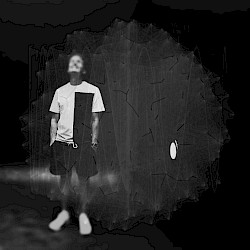
Bjarni Gunnarsson is a composer and computer scientist from Iceland currently serving as faculty at the Institute of Sonology, Royal Conservatoire The Hague. He teaches algorithmic composition and computer music courses including Programming and Music 1, Programming and Music 2, and Composing with Algorithms. His academic work bridges the technical field of computer science with artistic composition practices. His educational background includes computer science studies at the University of Reykjavík and composition training with Gerard Pape, Trevor Wishart, Agostino Di Scipio, and Curtis Roads at CCMIX in Paris. He completed his master's degree in Sonology under the guidance of Paul Berg, Kees Tazelaar, and Richard Barrett. Gunnarsson's research focuses on the intersection of sound and computational processes, with particular interest in process-based sound, digital synthesis, and algorithmic composition. His work explores how sound emerges from interacting behaviors and the relationship between algorithms and musical behavior. He creates compositions that foreground behaviors, actions, and fuzzy materials, often developing systems where sound materials form, shift, and dissolve through interaction, memory, and transformation. His recent research projects demonstrate a trajectory toward increasingly sophisticated integration of computational methods in musical creation, with significant emphasis on live coding, persistent synthetic environments, database systems, and machine listening applications for sound synthesis. These projects reveal his consistent exploration of how computational processes can generate and transform sound in novel ways. Presented work at major international conferences including ICMC, ICLC, SMC, and xCoAx Performed at notable festivals such as Tectonics, Rewire, Today's Art, Sonar, and Présences Électroniques Music released on respected experimental labels including SUPERPANG, SØVN, 3LEAVES, Flag Day Recordings, Tartaruga, and Shipwrec Gunnarsson actively contributes to the academic community through teaching, research projects with the Lectorate Music group, and participation in the Joint Research Day events. His work demonstrates a sustained commitment to exploring the generative potential of sound through computational processes, creating environments where sound materials evolve through interaction with complex systems.