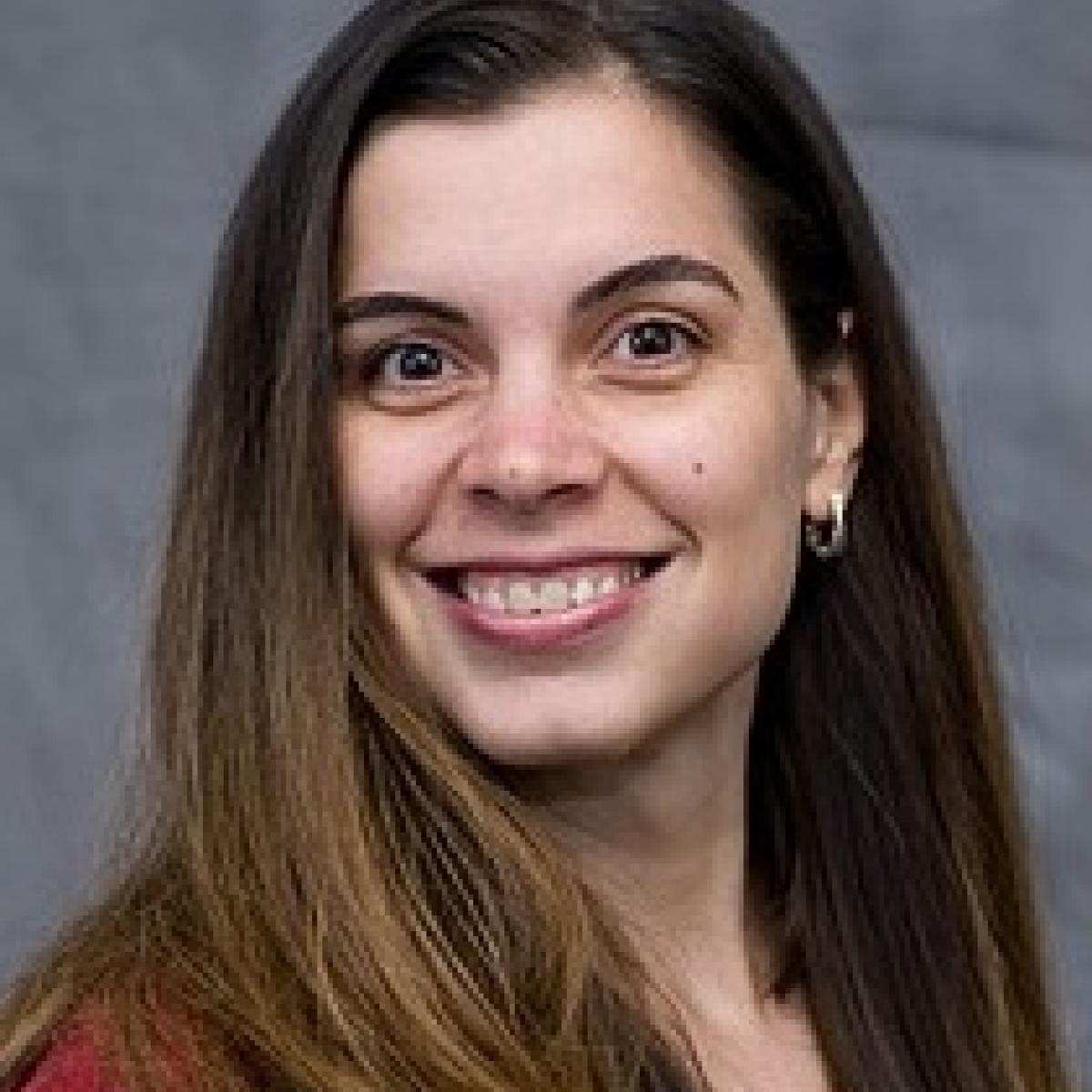
Nina Balcan is a Professor at Carnegie Mellon University and holds the Cadence Design Systems Professorship in Computer Science. She is affiliated with the School of Computer Science, specifically the Machine Learning Department (MLD) and Computer Science Department (CSD). Her research spans foundational aspects of machine learning, artificial intelligence, theoretical computer science, algorithmic game theory, and interdisciplinary connections in learning theory. Machine Learning Artificial Intelligence Theoretical Computer Science Algorithmic Game Theory Multi-Agent Systems Data-Driven Algorithm Design Her recent work focuses on advancing algorithm design through machine learning, robustness in adversarial environments, and economic modeling. Key contributions include Learning to Branch (JACM 2024), Regret Minimization in Stackelberg Games (NeurIPS 2024), and Learning Accurate Decision Trees (UAI 2024, Outstanding Student Paper Award). She has pioneered novel approaches to data-driven optimization, semi-supervised learning, and privacy-preserving clustering. Nina has received prestigious accolades including ACM Fellow AAAI Fellow Simons Investigator 2019 ACM Grace Murray Hopper Award Her teaching at CMU includes graduate courses on machine learning, advanced machine learning, and specialized topics like algorithmic game theory.
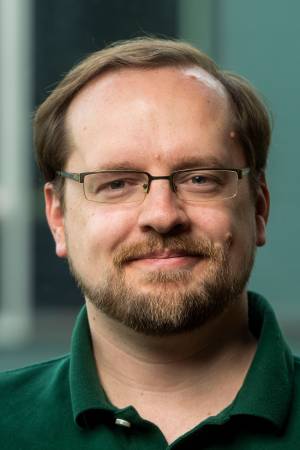
Oliver Kroemer is an Associate Professor at Carnegie Mellon University's Robotics Institute (RI), affiliated with the Intelligent Autonomous Manipulation (IAM) Lab. His research focuses on enabling robots to learn versatile manipulation skills through lifelong frameworks, with applications in elder care, environmental maintenance, and hazardous operations. Developed methods for robot learning via physical interaction and reinforcement learning Created representations for contact states and motor primitives to improve skill generalization Research Interests: Spanning robot learning, tactile sensing, force-velocity control, and lifelong skill acquisition. Projects include Agile and Dynamic Interactions for Mobile Manipulation and Integrated Planning and Learning (Pillar project). Scientific Awards: Finalist, Georges Giralt Ph.D. Award (2015) Education: Masters & Bachelors in Engineering, University of Cambridge (2008) Ph.D., Technische Universitaet Darmstadt (2014) Students & Affiliates: Current PhD: Mark Lee, Sarvesh Patil, Saumya Saxena, Yunus Seker, Zilin Si Past PhD: Alex LaGrassa, Tabitha Lee, Qiao Liang, Shivam Vats, Kevin Zhang
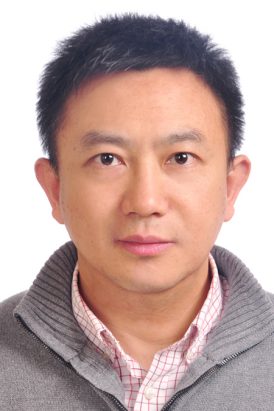
Yu-Ru Lin is an Associate Professor at the School of Computing and Information, University of Pittsburgh, and serves as Research & Academic Director at the Institute for Cyber Law, Policy and Security (Pitt Cyber). She leads the Pitt Computational Social Dynamics Lab (PICSO Lab) and holds secondary appointments in Political Science, Computer Science, and the Intelligent Systems Program. PhD in Computer Science from Arizona State University Postdoctoral research at Harvard University and Northeastern University Her research focuses on computational approaches for: Networked social dynamics High-dimensional social information summarization Trust and distrust propagation Misinformation detection Policy diffusion analysis Recent publications span 2014-2020, covering: Social media crisis response Graph visualization techniques Policy diffusion patterns Misinformation mitigation Temporal topic modeling Scientific support includes: National Science Foundation (NSF) awards Minerva/ONR funding AFOSR grant for distrust modeling DARPA Understanding Group Biases program As director of PICSO Lab, she leads interdisciplinary research teams on: Digital accountability Urban mobility patterns Health informatics via crowdsourcing Trust-influence dynamics
Giovanni De Micheli is a Full Professor at École Polytechnique Fédérale de Lausanne (EPFL), holding appointments in both the School of Computer and Communication Sciences (IC) and the School of Engineering (STI). He is affiliated with the Integrated Systems Laboratory (LSI) and serves as Scientific Director of EcoCloud. His primary office is located in INF 341 building at EPFL's Lausanne campus where he conducts research and teaching activities. Professor De Micheli's research spans multiple domains in electronic design automation and integrated circuit design. His primary interests include: Integrated Circuit Design and Hardware Synthesis Logic Optimization and Boolean Methods Nanoelectronics and 2D Electronics Quantum Computing and Emerging Technologies Low-Power Electronics and Energy-Efficient Systems Electronic Design Automation for Novel Computing Paradigms His recent publications demonstrate a strong focus on advancing logic synthesis techniques for both conventional and emerging technologies. Professor De Micheli's work bridges theoretical foundations with practical applications, particularly in adapting traditional EDA methods to novel computing paradigms like quantum computing and superconducting electronics. His research group has made significant contributions to the development of efficient algorithms for circuit optimization across multiple technology domains, with particular emphasis on area, power, and delay optimization while maintaining functional correctness. Professor De Micheli has supervised numerous doctoral students throughout his career at EPFL, mentoring over 40 PhD candidates whose research spans various aspects of electronic design automation, circuit design, and emerging technologies. His students have gone on to make significant contributions in both academia and industry. As Scientific Director of EcoCloud, Professor De Micheli leads research initiatives focused on energy-efficient computing systems and sustainable cloud infrastructure. His laboratory, the Integrated Systems Laboratory, serves as a hub for interdisciplinary research connecting computer science, electrical engineering, and materials science, with particular focus on next-generation computing technologies.
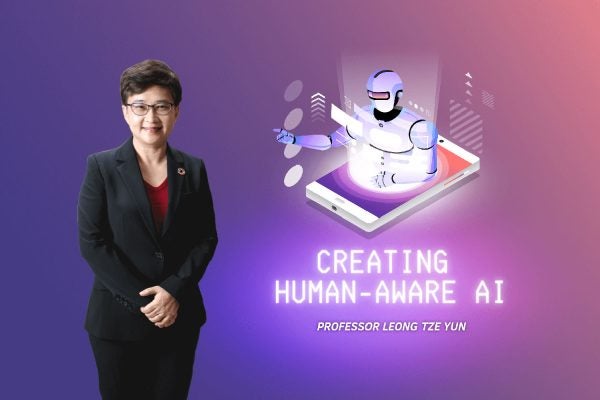
LEONG Tze Yun is a Professor in the Department of Computer Science at the School of Computing, National University of Singapore (NUS). She holds S.B., S.M., and Ph.D. degrees in Computer Science from the Massachusetts Institute of Technology (MIT). Her academic career spans both research and industry experience, with significant contributions to the fields of artificial intelligence and health informatics. Dr. Leong's educational background includes: Ph.D. in Electrical Engineering & Computer Science, Massachusetts Institute of Technology S.M. in Electrical Engineering & Computer Science, Massachusetts Institute of Technology S.B. in Computer Science & Engineering, Massachusetts Institute of Technology Her primary research interests focus on responsible AI, dynamic decision-making, neurocognitive modeling, reinforcement learning, artificial general intelligence, and biomedical and health informatics. Her work bridges the gap between theoretical AI development and practical healthcare applications, with an emphasis on ethical considerations and human-centered design. She directs the Medical Computing Laboratory at NUS, a multidisciplinary research program exploring human-aware decision modeling in complex environments. Analysis of her recent publications reveals a strong trend toward responsible AI development, with significant contributions to reinforcement learning techniques, causal inference methods, and applications of AI in healthcare. Her work increasingly integrates ethical considerations with technical AI development, particularly evident in her 2024 publications on medical AI and human values. Her scientific recognition includes: Fellow of the American College of Medical Informatics (ACMI) Founding Fellow of the International Academy of Health Sciences Informatics (IAHSI) Member of Eta Kappa Nu (Honor Society for Electrical Engineers) Dr. Leong has supervised numerous doctoral and master's students throughout her career, many of whom have gone on to prominent positions at institutions like Google, Netflix, Mayo Clinic, and academic institutions worldwide. Her advisory work extends to significant policy development, including contributions to WHO guidance on ethics and governance of AI for health. She currently serves on the World Health Organization (WHO) Expert Group on Ethics and Governance of AI for Health, the World Economic Forum (WEF) AI Governance Alliance, and the Advisory Council on AI in Uzbekistan. Her laboratory work focuses on developing adaptive systems that evolve with changing technical functionalities, system infrastructures, usage patterns, and operational contexts, with applications spanning prediction and decision analytics, human-aware robotics, game artificial intelligence, personalized education, and assistive care for elderly with neurocognitive disorders.
Pierre Vandergheynst is a Full Professor at the Swiss Federal Institute of Technology Lausanne (EPFL) in the Department of Electrical Engineering, with a courtesy appointment in Computer and Communication Sciences. He serves as EPFL’s Vice-Provost for Education since 2015 and leads the Signal Processing Laboratory 2 (LTS2). His research spans harmonic analysis, sparse approximations, mathematical data processing, and applications in signal/image processing, computer vision, machine learning, and graph-based data analysis. PhD in Mathematical Physics (1998), Université catholique de Louvain Postdoctoral Researcher at EPFL (1998-2001) Assistant Professor at EPFL (2002-2007) His research explores geometry/symmetry in high-dimensional data, redundant dictionaries for dimensionality reduction, and computational harmonic analysis on manifolds. Recent work focuses on protein structure modeling, geometric deep learning, and graph-based signal processing. Key article trends include graph neural networks for protein analysis, geometric deep learning in neuroscience, and structured knowledge priors in neural models. His 2023-2025 publications emphasize interpretable AI, long-range dependencies in graphs, and molecular representation learning. Scientific Awards: IEEE Signal Processing Magazine Best Paper Award (2023) Signal Processing Society Best Paper Award (2022) Apple ARTS Award (2007) De Boelpaepe Prize, Royal Academy of Sciences of Belgium (2009-2010) He has supervised over 30 PhD theses and contributed to foundational work in graph signal processing, compressive sensing, and geometric deep learning. His lab develops tools for data science on non-Euclidean structures, with applications in medicine, astronomy, and wireless systems.
Ji Zhu is the Susan A. Murphy Collegiate Professor of Statistics at the University of Michigan, Department of Statistics. He holds affiliations with the Michigan Institute for Data Science (MIDAS) and the Michigan Integrated Center for Health Analytics and Medical Prediction (MiCHAMP). His research focuses on statistical machine learning, network analysis, and health science applications. Education: B.Sc. in Physics (Peking University, 1996), M.Sc. and Ph.D. in Statistics (Stanford University, 2000 and 2003). Notable awards include the NSF CAREER Award (2008), Fellowships from the ASA (2013) and IMS (2015), and recognition as a Web of Science Highly Cited Researcher (2014–2020). Research interests span statistical methodologies for networks, survival analysis, and high-dimensional data. He co-authored influential papers on community detection, network cross-validation, and latent space models. Current editorial roles include Editor-in-Chief of the Annals of Applied Statistics and Action Editor for the Journal of Machine Learning Research. Advising: Supervised over 50 students and postdocs, many now in academia and industry. Notable former advisees include Tianxi Li (University of Minnesota), Yuan Zhang (Ohio State University), and Weijing Tang (Carnegie Mellon University). Labs/Teams: Active in interdisciplinary projects at MIDAS and MiCHAMP, focusing on healthcare analytics and predictive modeling for diseases like hepatitis and cardiovascular outcomes.
Arthur Gretton is a Professor at University College London (UCL), leading the Gatsby Computational Neuroscience Unit and serving as director of the Centre for Computational Statistics and Machine Learning. He also works as a Research Scientist at Google DeepMind. His research focuses on causal inference, representation learning, and nonparametric hypothesis testing with applications in machine learning and computational neuroscience. Academic Affiliations Gatsby Computational Neuroscience Unit, UCL Centre for Computational Statistics and Machine Learning, UCL Google DeepMind Arthur's research spans several key areas in modern machine learning, including: Kernel methods for causal effect estimation and two-sample testing Deep learning architectures for proxy causal learning with complex confounding Adaptive gradient flows for generative modeling Nonparametric statistical tests with theoretical guarantees Applications in distributional reinforcement learning and Bayesian inference His work addresses both methodological advancements and practical implementations, particularly for high-dimensional data settings. Recent publications demonstrate his focus on causal inference with hidden confounders (AISTATS 2025), deep learning adaptivity in instrumental variable regression (ICLR 2025), and novel approaches to two-sample testing with adaptive kernel selection (NeurIPS 2024). He has also contributed extensively to distributional reinforcement learning and hypothesis testing frameworks. As an advisor, he supervises multiple PhD students including Jakub Wornbard, Zikai (Steve) Shen, and Zonghao (Hudson) Chen, while co-supervising others. His methodological contributions are implemented in various software packages available at the Gatsby Unit, including tools for kernel-based covariate shift correction, independence testing, and maximum mean discrepancy calculations.
Haibin Ling is the SUNY Empire Innovation Professor in the Department of Computer Science at Stony Brook University, part of the College of Engineering and Applied Sciences. His research focuses on computer vision, medical image analysis, augmented reality, and AI applications in science. He holds a Ph.D. from the University of Maryland (2006) and prior degrees from Peking University. Previously, he worked at Temple University (2008–2019) and held roles at Siemens Corporate Research, UCLA, and Microsoft Research Asia. Professor Ling's work spans biomedical imaging, AI for science, and human-computer interaction. He leads the CV Lab and collaborates with the AI Institute at Stony Brook. Awards include the NSF CAREER Award (2014), Best Student Paper (ACM UIST 2003), and IEEE Fellow (2020). He serves on editorial boards for IEEE Trans. PAMI, Pattern Recognition, and CVIU, and chairs major conferences like CVPR. His research group includes over 50 students and alumni, with active projects in tracking benchmarks (LaSOT), Leafsnap, and medical imaging tools. Notable publications address OCTA flow estimation, backdoor attacks on vision models, and topology-guided medical learning. Collaborations involve institutions like Temple University and Stony Brook's Department of Applied Mathematics and Statistics.
Andrew Childs is a Professor at the University of Maryland, affiliated with the Department of Computer Science and the Institute for Advanced Computer Studies (UMIACS). He serves as Director of the NSF Quantum Leap Challenge Institute for Robust Quantum Simulation (RQS) and is a Fellow at the Joint Center for Quantum Information and Computer Science (QuICS). His research focuses on quantum algorithms for simulating physical systems, algebraic problems, and quantum walk protocols, with applications in quantum computing and computational complexity. University of Maryland Institute for Advanced Computer Studies (UMIACS) Joint Center for Quantum Information and Computer Science (QuICS) NSF Quantum Leap Challenge Institute for Robust Quantum Simulation Childs' research spans quantum simulation, quantum Fourier transform, phase estimation, and Hamiltonian dynamics. He has developed techniques to reduce quantum computational resources for simulating quantum systems and explored limitations of quantum computers through hidden subgroup problems and non-unitary dynamics. His publications cover diverse areas including quantum walk optimization, Hamiltonian simulation methods, and applications to cryptography and condensed matter physics. Recent works address spatial search algorithms, product formulas for commutators, and quantum routing protocols. As an educator, Childs has taught courses on quantum algorithms and information processing at both the University of Maryland and University of Waterloo, with lecture notes and materials spanning multiple years. Contact: amchilds@umd.edu | Office: ATL 3359 | Affiliated with University of Maryland's quantum research institutes.
Dr. Arno Solin is a tenured Associate Professor in Machine Learning at Aalto University's Department of Computer Science and an Academy of Finland Research Fellow . He leads the Aalto machine learning research group and serves as Director of the Finnish Doctoral Program Network in AI (AI-DOC) . His work bridges probabilistic modeling with practical applications in sensor fusion and real-time inference. ELLIS Scholar (European Laboratory for Learning and Intelligent Systems) Adjunct Professor at Tampere University Member of Young Academy Finland (2021–2025) Research Interests focus on data-efficient machine learning with probabilistic methods for real-time inference and sensor fusion. Key areas include Gaussian processes, diffusion models, stochastic differential equations, and uncertainty quantification in deep learning. His group develops methods that combine structural constraints with adaptive learning for deployment on resource-limited hardware. Publication Trends show consistent output in top venues (NeurIPS, ICML, ICLR, AISTATS) with emphasis on diffusion models , 3D scene reconstruction , and real-time probabilistic modeling . Recent works explore physics-informed learning, heterophily-aware graph models, and compressed representations for world models in reinforcement learning. Scientific Recognition : Awarded AI Researcher of the Year 2024 by AI Finland Teacher of the Year 2023 at Aalto CS ISIF Jean-Pierre Le Cadre Best Paper Award (2018) MLSP Schizophrenia Classification Challenge Winner (2014) NeurIPS/ICML Reviewer Awards Research Leadership includes coordinating Finland's AI Center of Excellence program and directing the Finnish Doctoral Program Network in AI (AI-DOC). He supervises 15+ doctoral/postdoctoral researchers and has spun off Spectacular AI , a company commercializing sensor fusion technology.
Erik B. Sudderth is a Professor of Computer Science and Statistics and Chancellor's Fellow at the University of California, Irvine (UCI). He leads the Learning, Inference, & Vision Group and directs multiple research centers, including the UCI Center for Machine Learning and Intelligent Systems and the HPI Research Center in Machine Learning and Data Science. He previously served as an Associate Professor at Brown University. Education: B.S. (summa cum laude) in Electrical Engineering from UC San Diego (1999), M.S. and Ph.D. in EECS from MIT (2002, 2006). His research focuses on statistical methods for scalable machine learning, Bayesian nonparametrics, probabilistic graphical models, and applications in computer vision, AI, and environmental science. Key areas include nonparametric clustering, deep generative models, and particle-based inference algorithms. Research interests span diverse topics: advancing Bayesian nonparametric models for medical time series, scalable variational inference, and AI ethics. Notable contributions include the NET-VISA seismic monitoring system (ISBA Mitchell Prize, 2014), the BNPy toolbox (NSF CAREER Award), and work on diverse particle max-product algorithms for continuous inference. Scientific awards include the NSF CAREER Award, ISBA Mitchell Prize, and recognition as one of "AI's 10 to Watch" (IEEE). He has served as editor for top journals (JMLR, IEEE PAMI) and conference chairs (NeurIPS, CVPR). His work bridges theory and practice, with applications in robotics, climate science, and healthcare. Labs/Teams: UCI Learning, Inference, & Vision Group; UCI Center for Machine Learning; CREATE Technology Center. Grants include NSF funding for visually impaired collaboration tools and soil biogeochemical modeling.
Sergio Bermudo Navarrete is a Professor at the Department of Economics, Quantitative Methods and Economic History, Universidad Pablo de Olavide. His research spans combinatorics, graph theory, and operator theory. Education: PhD in Mathematics (2003, University of Seville) with thesis on functional models of operators in Hilbert spaces. Research Interests: Focus on graph theory, domination problems, topological indices, and operator theory. Publication Trends: Recent work includes vertex-degree-based indices for oriented graphs, domination parameters in product graphs, and differential analysis of line graphs. Keywords span Computer Science , Mathematical Chemistry , and Operations Research . Collaborations: Frequent co-authors: José María Sigarreta Almira, José Manuel Rodríguez García, Juan Alberto Rodríguez-Velazquez. Contact: Email sbernav@upo.es .
Siva Balakrishnan is an Associate Professor at Carnegie Mellon University with a joint appointment in the Department of Statistics and Data Science and the Machine Learning Department . He holds an affiliation with the Dietrich College of Humanities and Social Sciences. Previously, he was a postdoctoral researcher at UC Berkeley's Department of Statistics, advised by Martin Wainwright and Bin Yu, and earned his Ph.D. in Computer Science from CMU's Language Technologies Institute under Jaime Carbonell. His research focuses on statistical machine learning, causal inference, and high-dimensional statistics, with notable contributions to domain adaptation, optimal transport, and robust statistics. Education: Ph.D. in Computer Science, Carnegie Mellon University (Language Technologies Institute) Postdoctoral Researcher, University of California, Berkeley (Department of Statistics) Research Interests: His work bridges theoretical foundations and algorithmic development, emphasizing robust statistical methods and their applications in causal inference, public policy, and machine learning. Key areas include nonparametric methods, optimization, and high-dimensional data analysis. He has pioneered techniques in domain adaptation, such as the RLSbench framework for relaxed label shift scenarios. Awards & Grants: Amazon Research Award (2021) Google Research Scholar Award (2021) NVIDIA Pioneer Award (2018) IMS Lawrence D. Brown Student Award (2020, 2022) National Science Foundation Grants (CCF-1763734, DMS-1713003, etc.) Professional Activities: He serves as an Associate Editor for JASA and on the editorial boards of Foundations and Trends in Statistics . His work has been featured in top venues like NeurIPS, ICML, and the Annals of Statistics. He currently holds a sabbatical at UC Berkeley's Department of Statistics (Spring 2025). Labs & Collaborations: He actively participates in the Statistics and Machine Learning Reading Group and the Causal Inference Working Group , fostering interdisciplinary research in CMU's vibrant academic community.
Dr. Mo Adda is a Principal Lecturer at the University of Portsmouth's School of Computing, part of the Faculty of Technology. He holds a PhD in Distributed Systems and Parallel Processing from the University of Surrey. His research focuses on network security, distributed systems, wireless networks, and cybercrime prevention. He leads projects in the Centre for Cybercrime and Economic Crime, exploring fault management in networks, blockchain applications, and IoT forensics. With 16 supervised theses, he advises on topics like energy-efficient cloud systems and machine learning for environmental modeling. His work bridges academia and industry, addressing challenges in software-defined networks, traffic control, and secure data sharing in social networks. Education: PhD in Distributed Systems (University of Surrey) Affiliations: Centre of Excellence in Defence, Risk & Resilience; Portsmouth Centre for Advanced Materials and Manufacturing Research Interests Dr. Adda's research spans: Network security and fault detection mechanisms Blockchain applications in IoT and forensics Energy-efficient cloud data center optimization Machine learning for climate modeling Self-organizing network protocols Grants & Collaborations His projects include collaborations with industry partners on secure data leakage detection in cloud systems and resilient wireless protocols for harsh environments. He has pioneered fault classification systems using clustering algorithms and fuzzy logic. Labs & Teams He contributes to the Centre for Cybercrime and Economic Crime, focusing on digital forensics and network intrusion analysis. His team develops frameworks for privacy management in social networks and proactive routing in software-defined networks.