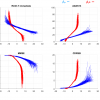
Prof. Dr.-Ing. Katharina Schmitz serves as Institute Director and Vice Dean at the Institute for Fluid Power Drives and Systems, RWTH Aachen University. Her leadership within the Production Technology Cluster and extensive contributions to fluid power engineering establish her as a leading authority in mechanical engineering research and education. Her research spans fluid power systems, hydraulic component design, tribology, and physics-informed machine learning applications. She pioneers sustainable propulsion solutions through bio-hybrid fuels research while addressing fundamental challenges in polymer material behavior under hydraulic stresses. Current work focuses on carbon-neutral heavy-duty transportation, physics-based neural networks for lubrication modeling, and advanced control systems for electro-hydraulic actuators. Analysis of her 15 most recent publications reveals a dominant trend toward integrating physics-based modeling with deep learning to solve complex engineering problems. Her team consistently develops novel frameworks for cavitation prediction, flow rate determination, and material compatibility assessment - significantly advancing fluid power system reliability, efficiency, and digitalization. Scientific recognition includes: GfT Förderpreis 2023 for experimental and simulative investigation of partially hydrostatic relieved contacts in variable speed axial piston machines As head of the Institute for Fluid Power Drives and Systems, she leads cutting-edge research in sustainable fluid power technologies. The institute maintains strong industry partnerships while driving innovation in hydraulic component design, digital twins for condition monitoring, and next-generation propulsion systems through its position within RWTH Aachen's Production Technology Cluster.
Anastasia Volovich is a Professor of Physics at Brown University, specializing in theoretical physics with a focus on quantum field theory, string theory, general relativity, and their mathematical foundations. Her research explores hidden mathematical structures in scattering amplitudes to advance understanding of gauge and gravity theories. B.A. and M.A. in Physics, Moscow State University (1999) Ph.D. in Theoretical Physics, Harvard University (2002) Her work on scattering amplitudes involves cluster algebras, polylogarithms, and celestial holography. Recent publications address symbol alphabets, Landau singularities, and Yangian invariants in high-energy physics. Notable honors include: APS Fellowship (2019) IBM Einstein Fellowship (2017) Blavatnik National Finalist (2016-2018) Simons Investigator Award (2015) DOE Early Career Award (2011) NSF CAREER Award (2007) White House PECASE (2008) She has held editorial roles at Letters in Mathematical Physics and Physics Letters B , and her research is funded by the Department of Energy and Simons Foundation.
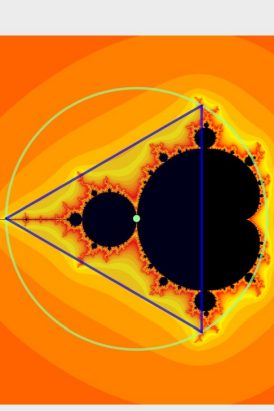
Sarah C. Koch is a Professor in the Department of Mathematics at the University of Michigan. She received her B.S. from Rensselaer Polytechnic Institute (2001), M.S. from Cornell University (2005), and dual Ph.D.s from Université de Provence (2007) and Cornell University (2008). Her research spans complex dynamics, Teichmüller theory, algebraic geometry, and topology, focusing on dynamical moduli spaces. Education: B.S., Rensselaer Polytechnic Institute (2001) M.S., Cornell University (2005) Ph.D., Université de Provence (2007) Ph.D., Cornell University (2008) Her work investigates complex dynamical systems in one and several variables, with a strong emphasis on analytic and algebraic approaches to moduli spaces. She has contributed significantly to understanding Thurston maps, rational map dynamics, and algebraic structures in moduli spaces. Her recent publications address boundary stable Thurston maps, Gleason polynomial factorization, and eigenvalues of the Thurston operator. She has received prestigious awards, including the Class of 1923 Memorial Teaching Award, Harold R. Johnson Diversity Service Award, and Haimo Award from the MAA. Scientific Awards: Class of 1923 Memorial Teaching Award Harold R. Johnson Diversity Service Award Haimo Award from the MAA As the Director of the Math Corps program at the University of Michigan, she fosters educational initiatives for middle and high school students from Ypsilanti and Detroit. She actively organizes seminars and outreach programs, including Bagel Sundays and Michigan Math Circle.
Ilie Sarpe is a postdoctoral researcher in the Division of Theoretical Computer Science at KTH Royal Institute of Technology, mentored by Prof. Aristides Gionis. He is an active member of both VandinLab and AIDA Lab, focusing on developing rigorous algorithms for temporal network analysis. His educational background includes: PhD in Computer Engineering from the University of Padova (2019-2023), with thesis on 'Efficient and Rigorous Techniques for the Analysis of Large Temporal Networks' Master's Degree in Computer Engineering (summa cum laude) from the University of Padova (2017-2019) Bachelor's Degree in Computer Engineering from the University of Padova (2014-2017) Sarpe's research centers on the design of scalable algorithms for data-mining problems, particularly in graph-mining and clustering. He specializes in probabilistic algorithms with rigorous theoretical guarantees, with a strong focus on temporal networks. His work integrates tools from sampling theory, probability, concentration inequalities, and statistical learning theory to develop efficient solutions for complex network analysis problems. His publications demonstrate a consistent focus on temporal network analysis, with recent work accepted at top venues including KDD 2024, WWW 2022, CIKM 2021, and SIAM SDM 2021. The research trajectory shows increasing sophistication in handling temporal motifs, dense subnetwork discovery, and centrality measures in evolving networks. His scientific recognition includes: SoBigData TNA Fellowship (2022) 3 years Ph.D. Fellowship (2019) Award for Scientific Degrees (2017) Two 'Mille e una lode' awards (2016, 2017) Sarpe actively supervises master's thesis projects in data mining at KTH and has secured research funding through the SoBigData TNA Fellowship. His research group affiliation with VandinLab and AIDA Lab provides collaborative opportunities across multiple institutions. He maintains active laboratory work focused on developing practical implementations of his theoretical algorithms, as evidenced by his GitHub repositories containing C++ implementations of his published methods.
Carlos Platero Dueñas is a Full Professor at the Department of Electrical, Electronic and Automatic Engineering and Applied Physics at the Universidad Politécnica de Madrid (UPM), where he has served for 31 years. He leads the research group Tecnologías para Ciencias de la Salud since 2015 and contributes to interdisciplinary research at the intersection of biomedical engineering, neuroscience, and artificial intelligence. Department: Electrical, Electronic and Automatic Engineering and Applied Physics Research Group: Tecnologías para Ciencias de la Salud (Health Science Technologies) Teaching: 34 years of academic experience, including 128 final projects supervised His research focuses on applying computational methods to neurodegenerative diseases , particularly Alzheimer's and Parkinson's, through neuroimaging analysis, predictive modeling, and hippocampal segmentation. Recent work includes AT(N) profiles for dementia prediction and machine learning techniques for clinical data modeling. The 15 most recent publications reveal a strong emphasis on Alzheimer's disease progression , hippocampal segmentation , and predictive analytics using neuroimaging and clinical markers. Key methodologies involve graph cuts algorithms, longitudinal modeling, and label fusion techniques applied to MRI and CT scans. Teaching contributions include: 128 final projects supervised (undergraduate and master's) 2 doctoral theses directed Active participation in university governance through the School Council and Researcher Staff Committee
Dr. Arie Levit is a Senior Lecturer (tenure track) in the Department of Theoretical Mathematics at Tel Aviv University's School of Mathematics, a position he has held since 2021. Previously, he served as a Gibbs Assistant Professor at Yale University from 2017. His academic career centers on pure mathematics with emphasis on structural properties of discrete groups and dynamical systems. His educational background includes: B.A in Mathematics from the Hebrew University of Jerusalem (2004) M.A in Mathematics from the Hebrew University of Jerusalem (2012) Ph.D. in Mathematics from the Weizmann Institute of Science (2017) under Prof. Tsachik Gelander Levit's research spans discrete groups, geometric and analytic group theory, and ergodic theory, with significant contributions to lattice theory, invariant random subgroups, character rigidity, and group stability. His work integrates algebraic, geometric, and probabilistic frameworks to solve fundamental problems in classification and rigidity of group actions, particularly in non-Archimedean and hyperbolic settings. Analysis of his 14 publications (2014-2024) reveals evolving focus from foundational lattice theory toward contemporary stability phenomena and character theory, with 60% of recent work (2022-2024) addressing permutation stability, Hilbert-Schmidt representations, and ergodic properties of group actions. Key methodological threads include the application of ergodic theory to group-theoretic classification and the development of analytical tools for stability problems. His scholarly recognition includes: Klein Prize (2017) ISF-BSF research grant (2020) As principal investigator of the ISF-BSF grant, Levit leads research on group stability and ergodic theory. His extensive collaborations with Gelander, Lubotzky, and Lazarovich demonstrate active mentorship within the global mathematics community. His work is conducted within Tel Aviv University's Theoretical Mathematics department, which maintains strong international partnerships in geometric group theory and dynamics.
Susana Araújo serves as Associate Researcher at CICPSI Research Unit within the University of Lisbon's Faculty of Psychology. She coordinates the Cognition in Context Group (CO2) since 2023 and holds Senior Investigator status in the Memory & Language team, specializing in neurocognitive mechanisms of reading acquisition and disorders using EEG-ERPs and eye-tracking methodologies. Education: PhD in Experimental and Cognitive Psychology (University of Algarve, Portugal; Donders Institute, Netherlands) Postdoctoral Fellowships (2012-2017) Her research critically examines literacy's impact on cognitive systems through investigations of visual word recognition , reading disorders , and rapid automatized naming . Current work explores how handwriting training influences graph recognition and identifies neurophysiological markers of dyslexia using multimodal assessment tools. Publication trends reveal sustained focus on cross-population comparisons (literate/illiterate adults) and meta-analytic approaches to naming-speed deficits. Her work bridges cognitive neuroscience with educational interventions, particularly in developmental dyslexia contexts. Scientific Recognition: FCT Postdoctoral Fellowship (2012-2017) FCT-Investigator Starting Grant (2017-2021) with highest Career Development score FCT CEEC-Ind Individual Contract She directs multiple FCT-funded projects including LEMON (2020-2024; €158,684) as Principal Investigator and VOrtEx (2018-2021; €183,590) as Co-PI. Her grant portfolio spans developmental dyslexia characterization, orthographic processing, and statistical learning deficits across eight funded projects since 2007. As CO2 Group Coordinator, she integrates multiple research teams under CICPSI while maintaining collaboration with the Max Planck Institute for Psycholinguistics where she served as Visiting Researcher in 2015.
Anastasios Zafeiropoulos serves as Assistant Professor at Harokopio University of Athens, specializing in Spatial Data Management and Analysis within the Postgraduate Studies Program for “Applied Geography and Spatial Management” (Direction C: Geoinformatics). His academic role encompasses teaching “Spatial Databases” and advancing research at the intersection of geospatial technologies and distributed computing systems. His research program focuses on Spatial Databases, Internet of Things (IoT), Cloud/Edge Computing, and 6G Network Orchestration, with significant extensions into Knowledge Graph applications for Sustainable Development Goals (SDGs) and socio-emotional learning in education. Key innovations include the EduCardia methodology for student competency assessment and frameworks for climate vulnerability analysis using knowledge graphs. Analysis of his 2024-2025 publications reveals three dominant thrusts: (1) AI-driven orchestration of 6G services across the computing continuum using reinforcement learning; (2) Knowledge Graph applications for SDG interlinkage analysis and materials science; (3) EU-funded IoT/Edge Computing project ecosystems. His work consistently bridges theoretical networking concepts with practical sustainability and educational applications. Dr. Zafeiropoulos actively contributes to EU-funded initiatives in IoT and Edge Computing standardization, particularly through AIOTI WG Standardisation. His project portfolio includes NEPHELE multi-cloud ecosystem development and O-RAN slice admission control research, demonstrating strong industry-academia collaboration in next-generation networking. He leads the development of innovative tools including Palindrome.js for distributed system visualization and the EmoSocio open-access emotional intelligence model, reflecting his commitment to translating research into practical educational and environmental solutions.
Faiz Hamid serves as an Associate Professor in the Department of Management Sciences at Indian Institute of Technology Kanpur. With a Ph.D. in Decision Sciences & Information Systems from IIM Lucknow (2012) and a B.Tech. in Computer Science and Engineering from Institute of Engineering & Management (2007), he brings strong technical and analytical expertise to his academic position. His research interests span Operations Research, Combinatorial Optimization, Network Optimization, and Data Science, with particular focus on transportation systems, pandemic response modeling, and revenue management applications. Dr. Hamid's scholarly work demonstrates consistent publication in high-impact journals including European Journal of Operational Research, Omega, Transportation Research, and IEEE Transactions on Signal Processing. His recent publications reveal a strong trend toward applying optimization techniques to real-world problems, particularly addressing pandemic-related challenges in transportation systems and developing sophisticated mathematical models for railway operations. His 2024 edited volume 'Optimization Essentials: Theory, Tools, and Applications' demonstrates his leadership in the field. Ph.D. Thesis recognized as runner-up for 2014 Best Dissertation Award by The INFORMS Technical Section in Telecommunications Best Paper Award at COSMAR 2010 Doctoral Conference, Indian Institute of Science, Bangalore Professor Dipak C Jain Best Paper Award at IMR Doctoral Conference 2010, IIM Bangalore Silver Medal, National Mathematics Olympiad 2002 Dr. Hamid has advised numerous students and collaborated extensively with researchers globally, particularly in transportation optimization problems. His professional journey includes industry experience as Associate Functional Architect at JDA Software and post-doctoral research at Telecom SudParis, France, before joining IIT Kanpur's faculty.
Giorgio Scorzelli is a researcher at the University of Utah, serving as Director of Software Development for the Center for Extreme Data Management, Analysis, and Visualization (CEDMAV) and the National Science Data Fabric (NSDF) . He specializes in extreme data management, scientific visualization, and computational topology, with a focus on scalable solutions for climate science, materials science, and neuroscience datasets. His work emphasizes democratizing data access through platforms like OpenVisus , enabling efficient analysis of petascale and exascale data. Key contributions include orchestrating cyberinfrastructure, optimizing parallel I/O, and developing real-time visualization systems for heterogeneous resources. Notable scientific contributions include the NSF Grant #2127548 for NSDF development . His projects integrate cloud computing, geo-distributed storage, and FAIR digital objects to lower barriers to data democratization. Giorgio's research spans multi-resolution algorithms , computational topology , and 3D geometric modeling , with applications in infrastructure security, archaeological reconstruction, and biomedical imaging. His work bridges abstract mathematical frameworks (e.g., Boolean algebras, chain complexes) with practical software solutions.
Teresa Cristina de Freitas Gonçalves is an Associate Professor at the Department of Informatics, School of Sciences and Technology, University of Évora, where she has been employed since 1999. She serves as an integrated researcher at the ALGORITMI research centre and is the Director of the VISTA Lab (Video, Image, Speech and text Analysis Lab), the unit of the ALGORITMI research centre at University of Évora. Her leadership roles include Director of the Master programme in Informatics Engineering and deputy Director of both the Master programme in Artificial Intelligence and Data Science and the Doctoral program in Computer Science. She earned her PhD in Computer Science from University of Évora and a MSc degree in Informatics Engineering from New University of Lisbon. Her academic journey at University of Évora has included significant leadership positions including Head of the Computer Science Department (2011-2015), Director of the Bachelor programme in Informatics Engineering (2016-2021), and Deputy Director roles for various undergraduate and graduate programs. Dr. Gonçalves' research focuses on intelligent systems, particularly Machine Learning approaches, with substantial contributions in evolutionary algorithms, information extraction and retrieval, and supervised learning across multiple data modalities including tabular data, text (in both Portuguese and English), and images (medical and satellite). Her work bridges theoretical advances with practical applications in healthcare, remote sensing, and natural language processing. She has successfully supervised 6 doctoral theses, 19 master theses, and 3 postdocs, and currently mentors 5 doctoral and 6 master students from diverse international backgrounds including Bangladesh, Cabo Verde, Nepal, Philippines, India, Sri Lanka, China, Mongolia, and Portugal. Her publication record includes over 100 scientific articles indexed by Scopus with 640 citations and an h-index of 12, demonstrating significant international impact with 56% of her work involving international collaboration. Her recent research shows a strong trend toward applying advanced machine learning techniques to healthcare applications, information retrieval systems, and remote sensing analysis, with particular emphasis on transformer networks, learning-to-rank methodologies, and multimodal data analysis. Dr. Gonçalves has made substantial contributions to the academic community through her service as a reviewer for over 50 articles in prestigious international journals and conferences, and as chair for major international conferences including IDEAL 2023, PROPOR 2020, SKIMA 2017 and 2018, and CLEF 2016. She serves on the board of APRP (Associação Portuguesa de reconhecimento de Padrões) and as a jury member for APRP prizes for best MSc and PhD theses. Her current research portfolio includes coordination of the Horizon Europe MSCA Staff Exchange HarmonicAI project and local coordination of WP6 in the NewSpace Portugal mobilising agenda. She is also actively involved in numerous other international research initiatives including Interreg VI-B Sudoe SenforFire, PRR CANTE, La Caixa INCOME, Erasmus+ KA220-HED REDINEST, Interreg POCTEP TID4AGRO, and ATTRACT DIH projects. Previously, she led the FCT AI in the Public Administration SNS24.Scout.IA project and coordinated the FEDER R&D NIIAA project. As Director of the VISTA Lab, Dr. Gonçalves leads a dynamic research team focused on video, image, speech, and text analysis. The lab serves as the Évora hub of the ALGORITMI research centre and has established strong international collaborations. Under her leadership, the VISTA Lab has developed innovative approaches in medical image analysis, natural language processing for Portuguese, and satellite image classification, with applications spanning healthcare, environmental monitoring, and public administration.
Professor Saman Amarasinghe is a faculty member in the Department of Electrical Engineering and Computer Science at the Massachusetts Institute of Technology (MIT), where he leads the Commit compiler research group at MIT's Computer Science and Artificial Intelligence Laboratory (CSAIL). His research focuses on programming languages and compilers that maximize application performance on modern computing platforms, with a particular emphasis on high-performance domain-specific languages. Professor Amarasinghe received his bachelor's degree in electrical engineering and computer science from Cornell University in 1988, followed by master's and PhD degrees in electrical engineering from Stanford University in 1990 and 1997, respectively. He joined the MIT faculty as an assistant professor in 1997 and has since become a world leader in his field. Professor Amarasinghe's research interests span programming languages, compiler design, and high-performance computing, with a particular focus on domain-specific languages. His group has developed numerous influential languages and compilers including Halide, TACO, Simit, StreamIt, StreamJIT, PetaBricks, MILK, Cimple, and GraphIt, which deliver unprecedented performance for application domains such as image processing, stream computations, and graph analytics. He has also pioneered the application of machine learning for compiler optimizations, from Meta optimization in 2003 to the OpenTuner autotuner framework. Professor Amarasinghe's publication history reveals a consistent research trajectory toward creating specialized language and compiler solutions that address performance challenges in specific domains while hiding complexity from application developers. His recent work focuses heavily on sparse computing, tensor algebra, graph processing, and the integration of machine learning techniques into compiler technology, demonstrating his ability to identify and address emerging computational challenges. ACM Fellow (2019) As an educator, Professor Amarasinghe has developed the popular Performance Engineering of Software Systems (6.172) class with Professor Charles Leiserson and created innovative project-based courses including the Open Source Software Project Lab, the Open Source Entrepreneurship Lab, and the Bring Your Own Software Project Lab. He also serves as the faculty director of MIT Global Startup Labs, which has helped create more than 20 startups across 17 countries. His research has translated into practical applications through startups like Determina, Inc. (acquired by VMware), demonstrating the real-world impact of his academic work. Professor Amarasinghe co-led the Raw architecture project with Professor Anant Agarwal, which did pioneering work on scalable multicores. His entrepreneurial activities include founding Determina, Inc. based on computer security research from his MIT lab and co-founding Lanka Internet Services, Ltd., the first Internet Service Provider in Sri Lanka, showcasing his ability to bridge academic research with commercial applications.
Mehtaab Sawhney is a Clay Research Fellow and a tenure-track assistant professor at Columbia University specializing in combinatorics, probability, analytic number theory, and theoretical computer science. His academic journey began at the University of Pennsylvania where he enrolled in a Bachelor of Engineering in Computer Science (2016-2017), then continued at MIT where he earned a Bachelor of Science in Mathematics with Minor in Computer Science (2017-2020), followed by a Doctor of Philosophy in Mathematics (2020-2024) under the advisorship of Yufei Zhao. His research spans probabilistic combinatorics, random matrix theory, additive number theory, and theoretical computer science. Sawhney's work bridges theoretical mathematics with computational applications, focusing on random structures, additive combinatorics, and spectral properties of discrete objects. His publications demonstrate a strong interdisciplinary approach that connects number theory with probabilistic methods to solve complex combinatorial problems. The analysis of his publication record reveals a consistent focus on foundational mathematical structures with applications across multiple domains. His work on random graphs, additive bases, and arithmetic progressions has established him as a leading researcher in modern combinatorics, often collaborating with prominent mathematicians including Ashwin Sah, Yufei Zhao, and Vishesh Jain. His research output shows remarkable depth and breadth, with contributions to both pure mathematics and theoretical computer science. 2024 Clay Research Fellow 2021 Frank and Brennie Morgan Prize for Outstanding Research in Mathematics by an Undergraduate Student (joint with Ashwin Sah) Churchill Scholar 2020 Best Student Paper STOC 2021 (Joint with Ryan Alweiss, Yang Liu) Best Student Paper ITCS 2022 (Joint with Yang Liu, Ashwin Sah) 2023 Hartley Rogers Jr. Prize 2022 Charles W. and Jennifer C. Johnson Prize (joint with Ashwin Sah) NSF Graduate Fellowship Sawhney has established a robust research program with significant contributions across multiple mathematical disciplines. His frequent collaborations with top researchers worldwide indicate an active and influential research network. While specific advisees aren't listed in available information, his extensive publication record with numerous co-authors suggests active mentorship of junior researchers through collaborative projects.
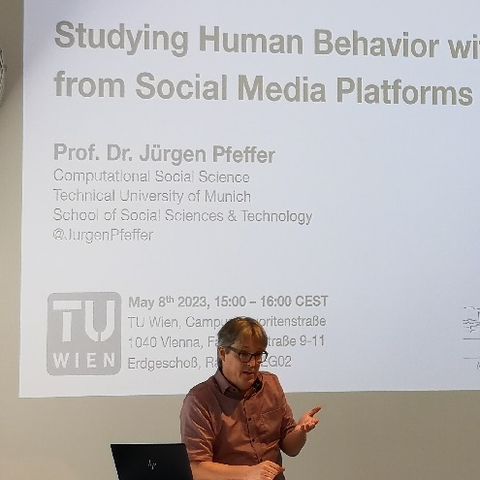
Jürgen Pfeffer is a Professor of Computational Social Science & Big Data at the Technical University of Munich's School of Social Sciences and Technology, with an additional appointment as Adjunct Professor at Carnegie Mellon University's Institute for Software Research. His interdisciplinary work bridges computer science and social science with a focus on analyzing large-scale socio-technical systems. His research expertise spans computational social science, network analysis, and big data methodologies. Pfeffer's work examines methodological, algorithmic, and theoretical challenges in analyzing dynamic social systems, with current projects focusing on modeling and detecting negative dynamics from social media, particularly online firestorms and hate speech against politically active women. His research combines network science approaches with computational methods to understand complex social phenomena. Pfeffer's publication record demonstrates significant contributions to the field since his 2010 doctorate, with high-impact papers in journals like Science and EPJ Data Science. His work on social media analysis, particularly the influential 2014 Science paper 'Social Media for Large Studies of Behavior' co-authored with Derek Ruths, has shaped methodological approaches in the field. His research shows consistent evolution from foundational network analysis to contemporary applications in political discourse, hate speech detection, and multi-layer network analysis. Hennig, M., Brandes, U., Pfeffer, J., & Mergel, I. (2012). Studying Social Networks. A Guide to Empirical Research Ruths, D., & Pfeffer, J. (2014). Social Media for Large Studies of Behavior Pfeffer, J., Morstatter, F., & Mayer, K. (2018). Tampering with Twitter's Sample API As an advisor and collaborator, Pfeffer has worked extensively with researchers including Raji Ghawi, Mirco Schönfeld, Momin Malik, and Kathleen Carley. His work demonstrates strong connections between theoretical network science and practical applications in social media analysis. His current research continues to address pressing issues in online discourse, with recent work focusing on hate speech classification, lexical change in negative word-of-mouth, and polarization dynamics in social media environments. Pfeffer leads the Pfeffer Lab, which focuses on developing methodological approaches for analyzing complex social systems through computational methods. His work has implications for understanding political legitimacy, social influence, and community dynamics in both online and offline contexts.
Felix Seifert is a Researcher at the Chair of Analysis within the Department of Mathematics, Faculty of Mathematics and Geography at the Catholic University of Eichstätt-Ingolstadt (KU). Based in room KGB-102 of KG Building B, he can be contacted via telephone +49 8421-93-21501 or email felix.seifert@ku.de. His research focuses on calculus of variations with nonlocal gradients, abstract harmonic analysis, and graph theory. This interdisciplinary work bridges discrete and continuous mathematical structures, particularly examining geometric properties of graphs through nonlocal analytical frameworks. His investigations into intrinsic metrics on graphs demonstrate innovative approaches to metric space theory in discrete settings. Seifert's publication record centers on graph-theoretic geometry, with his 2024 Mathematische Nachrichten paper establishing foundational connections between intrinsic metrics and nonlocal operators. This work reflects broader trends in applying variational methods to discrete structures, contributing to emerging fields at the intersection of combinatorics and analysis. He actively collaborates within the Chair of Analysis research team at KU, notably with D. Lenz and M. Schmidt on graph theory projects. His current work extends to developing analytical tools for nonlocal phenomena on discrete spaces, with potential applications in network theory and geometric modeling.