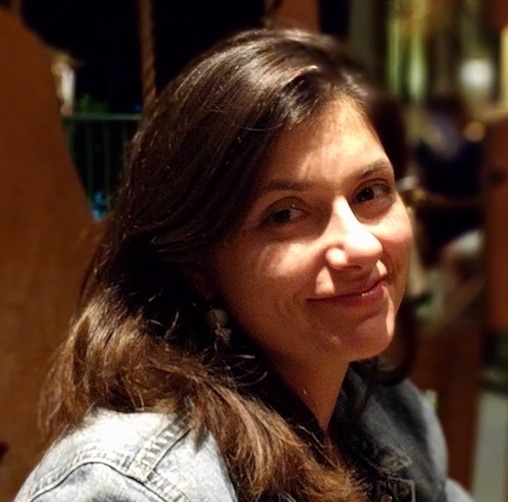
Flora Salim is a Professor in the School of Computing Technologies at RMIT University. She serves as co-Deputy Director of the RMIT Centre for Information Discovery and Data Analytics (CIDDA) and an Associate Investigator of the ARC Centre of Excellence in Automated Decision Making and Society. Her research focuses on human behavior modeling, machine learning with time-series and spatio-temporal data, and edge AI applications in IoT and wearables. Flora has secured over $10M in research funding from ARC, industry partners, and government bodies. Notable awards include the 2021 PACM IMWUT Distinguished Paper Award, 2019 Humboldt-Bayer Fellowship, and RMIT's 2018 Research Impact Award. She leads the CRUISE research group and has held visiting professorships at the University of Kassel and University of Cambridge. Editorial roles: Associate Editor of PACM on IMWUT, Area Editor of Pervasive and Mobile Computing Steering Committee member of ACM UbiComp Her work bridges ubiquitous computing and machine learning, with applications in urban analytics, mobility, and health monitoring. Recent projects include self-supervised learning for multimodal data and forecasting with heterogeneous time-series. Supervision areas: Deep learning for sensor data, explainable AI, and wearable-based emotion sensing Teaching programs: Master of Artificial Intelligence and Master of Data Science
Professor Zhifeng Bao is a faculty member at RMIT University's School of Computing Technologies. His research focuses on enhancing data usability across heterogeneous domains, including structured, unstructured, and spatial-temporal data. His work spans database management, keyword search optimization, social network analysis, and spatio-textual data processing. He coordinates the course COSC1169: Intranet and Internet Data Engineering and supervises PhD/Masters students in projects such as trajectory data processing, data asset valuation, and edge computing optimization. Research interests emphasize improving data accessibility and efficiency through methodologies like query relaxation, visual analytics, and provenance tracking. His recent projects include cost-effective edge node placement, traffic accident risk prediction, and differentially private federated learning. Teaching and supervision activities highlight a commitment to bridging theory and practical data engineering challenges.
Prof. Keng Hock, Mark Goh is a Professor at the National University of Singapore (NUS) Business School, holding a joint appointment as Director (Industry Research) at The Logistics Institute-Asia Pacific (TLI-AP). He specializes in logistics, supply chain strategy, and operations research. He earned his PhD from the University of Adelaide on a fully funded scholarship and has held adjunct and visiting roles globally. His research focuses on supply chain risk management, healthcare logistics, and strategic decision-making, with over 400 publications in top journals. Notable contributions include work on multi-criteria supplier selection, supply chain resilience, and AI ethics in e-commerce. He has received the Supply Chain Educator Award and is recognized in global directories like *Who’s Who in Asia and the Pacific Nations*. Prof. Goh advises public and private sector organizations on logistics strategy and sits on industry committees such as the World Economic Forum’s Global Advisory Council on Logistics. His current projects emphasize syncretic value-driven logistics models and sustainable recycling frameworks. He leads collaborative research teams addressing global supply chain challenges through interdisciplinary approaches. His articles reflect cutting-edge advancements in AI-driven decision models, risk networks in construction, and data ownership strategies in digital platforms. These contributions underscore his role as a thought leader in logistics and operations research, blending academic rigor with real-world industry applications.
Camelia D. Brumar is a PhD Candidate in Computer Science at Tufts University and a Visiting PhD Student at Harvard University's Visual Computing Group. She co-founded Boston Vis , a collaborative network for visualization researchers in the Greater Boston Area. Education: B.S. in Theoretical Mathematics from University of Maryland, College Park Research Focus: Systematic visualization design for decision-making processes, bridging gaps between problem spaces and design spaces through qualitative methods Her work intersects Visual Analytics , Human-Computer Interaction , and Machine Learning , with recent publications on decision-making taxonomies, dimensionality reduction explanations, and knowledge graph visualization. Key trends include: Interactive predicate logic for pattern explanation Domain expert challenges in automated data science Anomaly reasoning frameworks Medical AI applications for embryo grading Scientific Achievements: Organizer of Boston Vis (2024) Tutorial presenter on LLMs for research paper interaction (2024) IEEE Visualization 2024 Doctoral Colloquium participant Contributor to Dagstuhl Seminar on provenance in automated data science (2023) Industry experience includes roles at Tableau Research , Alife Health , and Bose Corporation , with collaborations spanning MIT Lincoln Laboratory, National Renewable Energy Laboratory, and Worcester Polytechnic Institute.
Willy Zwaenepoel is a Professor and Dean of the Faculty of Engineering at the University of Sydney. He holds a B.S. from the University of Gent and M.S./Ph.D. from Stanford University. Previously, he served as Dean of the School of Computer and Communication Sciences at EPFL and was a faculty member at Rice University. His expertise spans operating systems, distributed systems, and high-performance computing. Education: B.S., University of Ghent, Belgium (1979) M.S., Stanford University (1980) Ph.D., Stanford University (1984) Research Interests: Dr. Zwaenepoel focuses on distributed systems, operating systems, and their applications in database replication, virtual machine performance, and software update mechanisms. His work includes foundational contributions to distributed shared memory (e.g., Treadmarks) and startups like iMimic Networking. Awards: ACM Fellow (2000) IEEE Fellow (1998) Fellow of the Australian Academy of Technical Sciences and Engineering (2020) Recipient of the IEEE Tsutomu Kanai Award (2007) Key Contributions: His research addresses challenges in distributed systems performance, such as latency reduction in key-value stores and efficient graph processing. Current projects explore I/O optimization in virtualized environments and causal consistency for geo-replicated systems. Students/Advising: Advises Ph.D. students and postdocs, including William in database replication. His mentorship led to the Rice University Teaching Award (2000).
Jennifer J. Blackhurst is an Adjunct Professor in the Department of Business Analytics at the Tippie College of Business, University of Iowa. She has held several key academic and administrative roles, including Professor in Business Analytics (2021–2025), Associate Dean for Graduate Professional Programs (2020–2025), and the Leonard A. Hadley Chair/Professor in Business Analytics (2019–2024). Her career reflects deep engagement in supply chain research, academic leadership, and editorial contributions to top journals. Her research focuses on supply chain risk and disruption management, supplier assessment and selection, supply chain coordination, and innovation. She explores how organizations can build resilience through strategic adaptation, network design, and behavioral competencies. Her work integrates complex systems theory, empirical analysis, and data-driven modeling to address real-world supply chain challenges. The recent publications highlight a strong trend in understanding supply chain resilience through network science, agent-based modeling, and systemic risk frameworks. Her research spans both technical and human dimensions, examining not only structural vulnerabilities but also organizational behaviors and knowledge-based competencies that influence risk mitigation. Key themes include disruption propagation, robustness measurement, and the dual role of innovation in both enhancing performance and potentially increasing vulnerability. Scientific Awards and Honors: Best Paper Award - Transportation Journal and APICS, 2018 Outstanding Associate Editor - Decision Sciences Journal, 2017 MBA Business Analytics Professor of the Year - Tippie College of Business, 2017 Outstanding Associate Editor - Decision Sciences Journal, 2013 Emerging Leaders Academy - Iowa State University, 2013 - 2014 Citations of Excellence Award - Emerald Management Reviews, 2011 Jennifer Blackhurst has played a significant role in academic service through editorial and review activities, serving as Senior Editor for the Journal of Business Logistics and on the editorial boards of several leading journals including IEEE Transactions on Engineering Management , Decision Sciences Journal , and Journal of Operations Management . While no formal advising or grant information is listed, her leadership roles and extensive publication record suggest active mentorship and research supervision. She is a member of the Council for Supply Chain Management Professionals and the Decision Sciences Institute, further demonstrating her national engagement in the field.
Schahram Dustdar is a Full Professor of Computer Science and head of the Distributed Systems Group at TU Wien (Vienna University of Technology), Austria. He has held significant international academic positions, including Honorary Professor at the University of Groningen (2004–2010) and Visiting Professor at the University of Seville (Dec 2016–Jan 2017) and UC Berkeley (Jan–Jun 2017). His research interests lie at the intersection of distributed computing, cloud services, and intelligent data systems. He actively contributes to advancing the fields of services computing, cloud infrastructure, web technologies, and data-driven financial modeling. His work emphasizes scalable, robust, and knowledge-aware systems, particularly in financial data visualization and transaction network analysis. The most recent publications highlight his focus on modeling financial transaction networks using constraint satisfaction and developing visualization frameworks that incorporate incremental domain knowledge. These works reflect a strong trend toward integrating formal methods with interactive data systems for enterprise and financial applications. ACM Distinguished Scientist (2009) IBM Faculty Award (2012) IEEE Fellow (2016) Elected Member of Academia Europaea Schahram Dustdar has supervised multiple research projects and leads a vibrant research group at TU Wien. He has been involved in editorial leadership as Editor-in-Chief of Computing (Springer) and Associate Editor for top-tier journals such as IEEE Transactions on Cloud Computing, IEEE Transactions on Services Computing, ACM Transactions on the Web, and ACM Transactions on Internet Technology. His editorial roles and international visiting positions indicate extensive collaboration and grant-related activities, though specific grants are not detailed in the text. He leads the Distributed Systems Group at TU Wien, a research team focused on building next-generation distributed computing platforms, cloud services, and intelligent data processing systems with real-world applications in finance, enterprise systems, and large-scale data analytics.
Christian Kühn is a Professor of Multiscale and Stochastic Dynamics at the Technical University of Munich (TUM), affiliated with the TUM School of Computation, Information and Technology. He has been an External Faculty member at the Complexity Science Hub Vienna since 2017, reflecting his interdisciplinary engagement in complex systems research. His academic background includes a BSc in Mathematics from Jacobs University Bremen (2005), an M.A.St. from the University of Cambridge (2006), and a PhD in Applied Mathematics from Cornell University (2010). He held postdoctoral positions at the Max Planck Institute for the Physics of Complex Systems in Dresden and the Vienna University of Technology, where he also served as an APART-Fellow and Leibniz Fellow. Christian Kühn's research lies at the intersection of differential equations, dynamical systems, and mathematical modeling. He focuses on multiscale problems, the impact of noise and uncertainty in deterministic and stochastic systems, and adaptive networks. Central phenomena of interest include bifurcations, pattern formation, and scaling laws. His work bridges theoretical developments with applications in epidemiology, neuroscience, and complex network dynamics. His recent publications (2021–2024) reflect a strong trend in analyzing nonlinear and stochastic dynamics on networks, with applications ranging from epidemic modeling to synchronization and critical transitions. Key themes include explosive phenomena, adaptive network behavior, moment closure methods, and non-Markovian systems, demonstrating a consistent focus on foundational aspects of dynamical systems with practical relevance. Notable scientific awards include: Richard-von-Mises Prize, GAMM (2017) Lichtenberg Professorship, VolkswagenStiftung (2016) Best Paper Award, TU Vienna (2014) Leibniz Fellow, Oberwolfach (2013) APART-Fellow, Austrian Academy of Sciences (2012) While specific details about advised students are not provided, his role as a full professor and active researcher suggests involvement in mentoring graduate students and postdoctoral researchers. His work has been supported by prestigious grants such as the Lichtenberg Professorship. He leads research in multiscale and stochastic dynamics, contributing to both theoretical advances and interdisciplinary applications. Kühn is part of vibrant research environments at TUM and the Complexity Science Hub Vienna, collaborating with leading scientists in network science, applied mathematics, and complex systems. His work continues to advance the understanding of critical transitions and nonlinear behavior in high-dimensional and stochastic systems.
James Freitag is a Professor in the Department of Mathematics, Statistics, and Computer Science at the University of Illinois at Chicago (UIC). He earned his PhD from UIC in 2012, specializing in Model Theory and Differential Algebraic Geometry . Prior to his current role, he held postdoctoral positions at UC Berkeley and UCLA and served as a research member at the Mathematical Sciences Research Institute (MSRI) and Fields Institute. His research integrates model theory , differential algebra , and number theory , with recent emphasis on functional transcendence, geometric stability theory, and applications to machine learning. Key themes include: Strong minimality in differential equations and stability theory Ax-Lindemann-Weierstrass theorems for Fuchsian groups Combinatorial and algorithmic aspects of query learning His publications (2017–2025) predominantly explore differential-algebraic geometry, model-theoretic classification, and computational learning. Recurring topics include Painlevé equations, Littlestone dimension, nonminimality bounds, and geometric invariants in differential systems. He advises doctoral students in differential algebra and machine learning and directs the Young Scholar Program —a summer camp for Chicago high school students. His research is funded by NSF grants, including CAREER #1945251 and #2452197.
Dr. Liang (Leon) Dong is an Associate Professor in the Department of Electrical and Computer Engineering at Baylor University, where he conducts research and teaches in the areas of signal processing, wireless communications, and artificial intelligence. He leads the Laboratory of Signal Processing, Communications, and Artificial Intelligence, fostering innovation in next-generation communication systems, IoT, and AI-driven applications. PhD, Electrical & Computer Engineering, The University of Texas at Austin (2002) MS, Electrical & Computer Engineering, The University of Texas at Austin (1998) BS, Applied Physics with Minor in Computer Engineering, Shanghai Jiao Tong University (1996) Dr. Dong's research focuses on advancing digital signal processing and wireless communications, with strong emphasis on artificial intelligence applications. His work spans NextG wireless systems , IoT and smart cities , cyber-physical system security , and AI in healthcare and industrial automation . He applies deep learning to domains such as autonomous driving and drug discovery, and investigates energy-efficient, secure, and reliable communication protocols. The recent publications highlight a strong trend toward integrating AI into traditional signal processing and communications. Topics include mRNA vaccine stability prediction , smart city infrastructures , secure cyber-physical systems , and deep learning for biomedical and industrial applications . His work bridges theoretical innovation with real-world impact in defense, transportation, and public health. Dr. Dong has earned recognition as a Senior Member of IEEE and a Member of the American Physical Society. He has also served as Faculty Advisor for Baylor University's InterVarsity chapter. Senior Member, Institute of Electrical and Electronics Engineers (IEEE) Member, American Physical Society (APS) He has successfully advised numerous graduate and undergraduate students, many of whom now hold academic and industry positions at institutions like Stanford, Intel, NASA, L3Harris, and Cummins. His research is generously supported by Baylor's VP for Research, the National Science Foundation, NASA, the Department of Defense (TARDEC), the Michigan Department of Transportation, and industry leaders including Intel, L3Harris, ExxonMobil, and Denso. He actively mentors students through research assistantships and senior design projects. Dr. Dong leads the Laboratory of Signal Processing, Communications, and Artificial Intelligence, which provides a collaborative environment for advancing research in signal processing, communications, and AI. The lab supports graduate and post-doctoral researchers and offers opportunities for undergraduate involvement in AI programming, circuit design, and embedded systems.
Gloria Milena Fernandez Nieto is a Research Fellow in the Faculty of Information Technology at Monash University. She holds a master's in Systems and Computer Engineering from Universidad de Los Andes (Colombia) and a PhD in Learning Analytics from the University of Technology Sydney. Her research focuses on Teamwork Analytics, learning feedback mechanisms, and educational technology, particularly in designing tools to support teacher and student reflection. She contributed to the UN Sustainable Development Goals through her work in education technology. Her collaborations span institutions globally, including the Connected Intelligence Centre. Notable outputs include co-designing knowledge management tools for educators and developing learning analytics dashboards. She received the Best Paper Award (2020) for collaborative research. Her articles emphasize multimodal learning analytics, dashboard design, and data storytelling. Projects like the 'Data Storytelling Editor' and 'Evidence-based Multimodal Learning Analytics' highlight her focus on bridging educational theory and practical tool development.
Manuel Penschuck is a Research Fellow at the Institute of Computer Science , Goethe University Frankfurt, Germany. His research focuses on algorithm engineering, graph theory, and scalable network generation, with emphasis on parallel computing, I/O-efficient algorithms, and random graph models. He actively contributes to conferences like ESA, SEA, and IPDPS, and has co-authored publications in top venues including LIPIcs , IEEE Transactions , and SIAM . His work includes engineering algorithms for non-linear preferential attachment , parallel shuffling , and hyperbolic graph generation . He has co-organized program committees for ESA, EuroPar, and SEA, and his collaborations span institutions such as MPI-INF, TU Darmstadt, and Australian National University. Recent publications highlight advances in uniform graph sampling, geometric network models, and distributed systems. His research integrates theoretical rigor with practical implementation, addressing challenges in big data and high-performance computing. He is a key contributor to the Networkit toolkit for large-scale network analysis.
Magdalini Eirinaki is a Professor and Academic Program Coordinator for the MS in Artificial Intelligence at San José State University's Charles W. Davidson College of Engineering. With a career spanning two decades, her work bridges recommender systems , machine learning , and smart city applications . PhD in Computer Science (2006), Athens University of Economics and Business MSc in Advanced Computing (2000), Imperial College London BSc in Computer Science (1998), University of Piraeus Her research focuses on machine learning and recommender systems with extensions to generative AI , privacy-sensitive algorithms , and social network analysis . Recent publications explore federated learning , multi-resolution diffusion models , and autonomous network defense using reinforcement learning. Current projects include NSF-funded CollaborAIte (2024) EU Horizon/Marie Sklodowska-Curie's MUSIT (2024) IBM SkillsBuild Cloud Credits for Sustainability (2024) She has received multiple teaching and mentorship awards including: Newnan Brothers Award (2019) Applied Materials Award (2017) 5-time SJSU Distinguished Faculty Mentor Award Dr. Eirinaki advises students in AI , ML , and smart city projects, with recent graduates presenting at IEEE CAI (2025) and CSU Conference (2025).
Professor Jacek Banasiak holds a prestigious DST/NRF SARChI Chair in Mathematical Models and Methods in Biosciences and Bioengineering at the University of Pretoria, Department of Mathematics and Applied Mathematics. He also maintains strong academic ties with Lodz University of Technology in Poland where he serves as a research professor in the Department of Mathematical Modeling. His career spans several decades with extensive contributions to mathematical modeling, particularly in population dynamics, fragmentation-coagulation processes, and epidemiological modeling. Professor Banasiak's research interests center on mathematical modeling of biological and physical processes, with particular expertise in singular perturbation theory, semigroup theory, and transport equations on networks. His work bridges theoretical mathematics with practical applications in epidemiology, ecology, and population biology. He has developed sophisticated mathematical frameworks for understanding fragmentation-coagulation phenomena, malaria transmission dynamics, and savanna ecosystem modeling. His publication record shows a consistent trajectory of high-impact research, with recent work focusing on climate-based malaria models, multiscale epidemiological systems, and mathematical analysis of growth-fragmentation equations. His publications appear in top-tier journals across mathematical analysis, epidemiology, and mathematical biology fields, demonstrating the interdisciplinary nature of his work. DST/NRF SARChI Chair in Mathematical Models and Methods in Biosciences and Bioengineering Author of numerous influential publications spanning from 1984 to 2025 Editor of special issues and author of several books including 'Introduction to Mathematical Methods in Population Theory' (2025) Professor Banasiak has supervised over 15 PhD students, many of whom have gone on to successful academic careers. His mentoring spans topics including fragmentation-coagulation with transport effects, telegraph systems on networks, and mathematical modeling of malaria transmission. His research has attracted significant funding, particularly through his SARChI Chair position which supports advanced mathematical research in biosciences and bioengineering.
Hannah Spitzer is a Research Group Leader at the Institute for Stroke and Dementia Research (ISD) at Ludwig Maximilian University of Munich and an associated Research Group Leader at Helmholtz Munich's Computational Health Center. She leads the Spitzer Lab, focusing on computational analysis of multimodal brain datasets to advance understanding of neurovascular and neurodegenerative diseases. Her educational background includes: PhD in Computer Science from Heinrich-Heine University Düsseldorf and Research Center Jülich (2015-2020) Master's in Computer Science from RWTH Aachen (2013-2015) Bachelor's in Computer Science from RWTH Aachen (2009-2013) Dr. Spitzer's research integrates computational biology and machine learning to decode brain complexity, with emphasis on spatial omics analysis , interpretable image representation learning , and cross-modal data integration . Her group develops tools like squidpy and campa for spatial omics while applying graph neural networks to epilepsy lesion detection through the international MELD project, prioritizing biological interpretability in AI models. Recent publications reveal strong trends in leveraging graph neural networks for subtle brain lesion detection and creating computational frameworks for spatial omics integration. Her work consistently bridges advanced machine learning with clinical neuroscience to uncover disease mechanisms in neurodegeneration and vascular disorders. Dr. Spitzer actively mentors students including current PhD candidate Beatrice Guastella and alumni Deniz Fettahoglu (MSc) and Katia Berr (PhD). Her lab operates through major collaborations including the MELD epilepsy consortium and Helmholtz Imaging Project, with funding supporting computational pipeline development for small-vessel disease prediction and multimodal brain atlasing. The Spitzer Lab comprises postdoc Wasim Aftab and PhD student Beatrice Guastella, working on computational pipelines that integrate histology, spatial omics, and neuroimaging data to decode brain disease mechanisms through interpretable AI approaches.