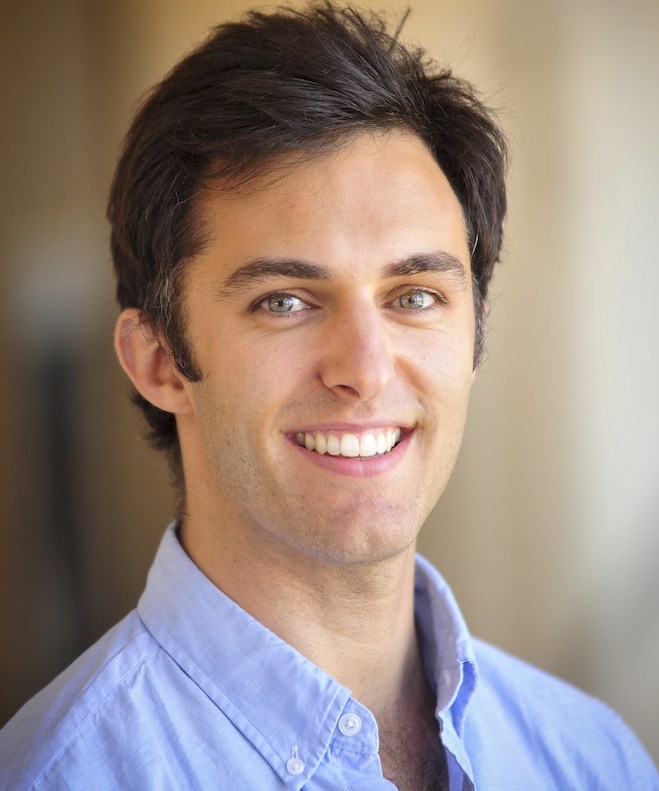
Daniel M. Roy is a Full Professor at the University of Toronto, with cross-appointments in the Department of Computer Science, Department of Statistical Sciences, and Department of Electrical and Computer Engineering. He serves as Research Director at the Vector Institute and holds the CIFAR Canada AI Chair. Research Focus: Foundational principles of prediction, inference, and decision-making under uncertainty across machine learning, statistics, mathematical logic, applied probability, and computer science. Scientific Contributions: Key work in learning theory, statistical network analysis, probabilistic programming, and information-theoretic frameworks for generalization. Awards: ICML 2024 Best Paper Award for "Information Complexity of Stochastic Convex Optimization" and promotion to Full Professor in 2024. Student Advising: Actively mentors Ph.D. candidates and postdoctoral researchers with strong quantitative backgrounds, particularly at the intersection of machine learning, statistics, and computer science. Email: daniel.roy@utoronto.ca
Jon Atle Gulla is a Professor at NTNU and Director of the Norwegian Research Centre for AI Innovation (NorwAI). He holds academic leadership roles, including former Head of the Department of Computer Science and Informatics at NTNU. His expertise spans Semantics, Language Technology, Recommender Systems, and AI-driven innovation. He has nearly 150 international publications and advised over 100 students across MSc, PhD, and postdoctoral levels. Education: MSc in Computer Science (1988), PhD in Computer Science (1993) from Norwegian Institute of Technology (NTH) MSc in Linguistics (1995), University of Trondheim MSc in Management (Sloan fellowship, 2003), London Business School Research interests focus on Semantics and Language Technology applied to Recommender Systems, Information Retrieval, and Text Analysis. He explores AI-based innovations in digitalization and entrepreneurship, advising industry on AI adoption and commercialization. Notable projects include Big Data collaborations with DNB, RecTech for news recommendation, and Trondheim Analytica analyzing political texts/social media. Publications emphasize AI applications in news recommendation, political text analysis, and Scandinavian language models. His work addresses ethical AI, copyright implications, and cross-lingual NLP challenges. Awards: Member of the Royal Norwegian Society of Arts and Sciences. Advising/grants: Supervised 30 PhD students and 70 MSc students. Involved in startups like Fast Search & Transfer (acquired by Microsoft) and Mito.ai/Strise.ai. Active in reviewing for journals like Data & Knowledge Engineering and conferences like ACL. Labs/teams: Leads NorwAI, co-founder of INRA and NOBIDS workshops. Collaborates with industry and academia on AI-driven solutions.
Terese Løvås serves as Vice Dean of Research and Innovation at the Faculty of Engineering, Norwegian University of Science and Technology (NTNU), where she leads strategic development of research and innovation activities. She concurrently holds the position of Professor of Combustion and Thermodynamics within the Department of Energy and Process Engineering. Her leadership responsibilities include oversight of Centers of Excellence, Horizon Europe projects, and PhD researcher training. Her research focuses on combustion engineering and alternative fuel technologies , particularly investigating ammonia and hydrogen combustion for zero-emission engines, biomass gasification processes, and reactive multiphase flow modeling. She heads the Engine Lab at NTNU and teaches Thermodynamics, Heat, and Combustion courses. Her work bridges theoretical modeling with experimental validation in sustainable energy systems. Løvås actively contributes to major research initiatives including LowEmission (SFI center), ACTIVATE (ammonia-powered agricultural vehicles), AMAZE (ammonia zero-emission), and CAHEMA (marine ammonia/hydrogen engines). Her publications reveal strong trends in ammonia combustion chemistry , emissions reduction , and advanced computational modeling for sustainable fuel systems, with increasing focus on nitrogen oxide formation mechanisms and dual-fuel strategies. Member of the Board of Directors, Combustion Institute (2022–present) Joint Editor, Proceedings of the Combustion Institute (2019–present) Alumni Fellow in Engineering, Churchill College, Cambridge University As Vice Dean, she manages NTNU's Research and Innovation Committee and represents the faculty in NTNU's Research and Innovation Committee. She supervises multiple PhD candidates and leads international collaborations through projects funded by the Norwegian Research Council, Nordic Energy Research, and EU programs. Her laboratory work focuses on optical engine diagnostics and advanced combustion testing. Løvås maintains active industry engagement through her leadership in the ComKin Research Group and membership in the Institute of Physics and Scandinavian-Nordic Section of the Combustion Institute. Her current work emphasizes practical implementation of ammonia-fueled engine technologies for marine and agricultural applications.
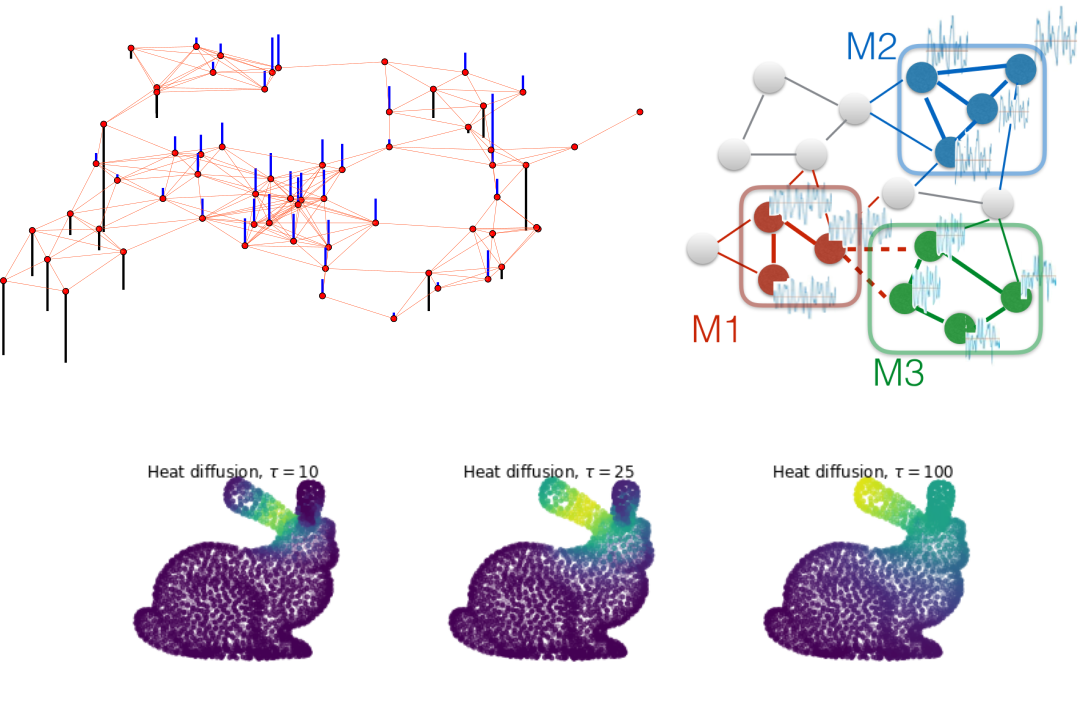
Benjamin Ricaud is an Associate Professor and Group Leader in Machine Learning at UiT The Arctic University of Norway's Department of Physics and Technology. His core affiliations include membership in the Machine Learning Group, Visual Intelligence center, and co-directorship of the Digital Technology Innovation Lab focused on Arctic-region tech startups. He also co-chairs the annual Northern Light Deep Learning conference. Ricaud's research spans: Fundamental ML : Graph signal processing, explainable AI, and generative models Applications : Microfossil classification, medical diagnostics (retinal aging), drug analysis, and climate data interpretation Emerging domains : Self-supervised learning and biological data analysis using Raman spectroscopy His recent publications (2020-2025) cluster in three domains: Graph ML methodologies (35%) Biomedical/biological applications (40%) Geoscience/climate informatics (25%) with consistent focus on interpretability and real-world data challenges. Teaching includes Image Processing (FYS-2010), Pattern Recognition (FYS-3012), and Machine Learning (FYS-2021). He leads outreach initiatives developing AI exhibits for Tromsø Science Centre.
Pierluigi Salvo Rossi is a Professor at the Department of Electronic Systems , Norwegian University of Science and Technology ( NTNU ), with additional roles as Deputy Head of Department (since 2021) and Deputy Manager at the Center for Green Shift in the Built Environment (since 2022). He also serves as a part-time Research Scientist at SINTEF Energy's Gas Technology department. Education: Ph.D. in Computer Engineering, University of Naples “Federico II”, Italy (2005) Dr.Eng. (cum laude) in Telecommunications Engineering, University of Naples “Federico II”, Italy (2002) Research Interests span Wireless Communications , Digital Twins , Machine Learning , and Statistical Signal Processing , focusing on applications like Industrial IoT , Fault Detection , and Energy Systems . His recent Publications highlight trends in Federated Learning , Graph Signal Processing , and Multi-Sensor Anomaly Detection across domains from Natural Gas Pipelines to Subsea Leakages . Scientific Awards include: Exemplary Senior Editor, IEEE Communications Letters (2018) Department Ambassador, NTNU (2016) IEEE Senior Member (since 2011) Professional Roles encompass editorial leadership (e.g., IEEE Sensors Journal) and conference organization (e.g., General Chair for IEEE Sensor Array and Multichannel Signal Processing Workshop, 2022). He leads major funded research projects like PREFERENCE (RCN, 2023-2027) and AUTOSHIP (RCN, 2020-2028).
Anis Yazidi is a Professor at Oslo Metropolitan University, affiliated with the Faculty of Technology, Art and Design and the Department of Information Technology. His research focuses on Artificial Intelligence, Machine Learning, Medical Technology, and IoT Security, with a particular emphasis on Applications of AI in Healthcare, EEG Signal Processing, and Digital Transformation. Active research projects include AI Mind (dementia diagnostics), Glycopathology in dry eyes, and Pain and mental distress analysis Completed projects: Digital hate speech analysis, AI in reproductive technology, Nano-antibiotics development His recent publications (2023-2025) demonstrate expertise in: Tsetlin Automaton algorithms for concept learning EEG classification using visibility graphs and vision transformers AI ethics frameworks for medical practice Deepfake detection methodologies Collaborative work spans institutions in Norway, Czech Republic, and international AI research communities.
Egor Kostylev serves as an Associate Professor in the Department of Informatics within the Faculty of Mathematics and Natural Sciences at the University of Oslo. His research focuses on the theoretical foundations connecting symbolic and sub-symbolic artificial intelligence, particularly examining relationships between formal logic systems and machine learning approaches. His educational background includes an MSc (Specialist, 2005) and PhD (Candidate, 2009) from Lomonosov Moscow State University under Prof. Vladimir A. Zakharov. He subsequently held research positions at the University of Edinburgh (2010-2013) and the University of Oxford (2013-2020) before joining the University of Oslo in 2020. Kostylev's research interests center on bridging symbolic AI formalisms with sub-symbolic approaches. He investigates connections between various logics (Description Logics, Temporal Logics, Datalog), query languages (SPARQL, Regular Path Queries, OTTR), and machine learning formalisms (Graph Neural Networks, Markov Logic Networks). His work addresses critical challenges in Explainable, Trustworthy, and Green AI through theoretical foundations that connect different AI paradigms. His publication record demonstrates consistent high-impact contributions in theoretical computer science and AI, with numerous publications in top venues including AAAI, LICS, Journal of the ACM, and ICLR. His recent work shows a clear trajectory toward unifying logical reasoning with neural network approaches, particularly through graph neural networks and their connections to logical formalisms. The research spans theoretical foundations of knowledge representation, temporal reasoning in knowledge bases, and the logical expressiveness of modern neural architectures. As a research leader, Kostylev supervises multiple PhD students including Shuwen (Aurora) Liu, Maximilian Pflüger, Roxana Pop, Dongzhuoran Zhou, and Erik Snilsberg. He serves as a Research Theme Leader for the Integreat SFF: Norwegian Centre for Knowledge-driven Machine Learning. His teaching responsibilities include IN3020/4020 Database Systems courses. He leads the Data and Knowledge Management (DKM) research group at the University of Oslo, which focuses on foundational aspects of knowledge representation, database theory, and the intersection with modern machine learning techniques. The group actively collaborates with international researchers and contributes to advancing theoretical understanding of how symbolic and neural approaches to AI can complement each other.
Fedor V. Fomin is a Professor in the Department of Informatics at the University of Bergen, Norway, where he leads the Algorithms Research Group. His work is central to theoretical computer science and combinatorics, with significant contributions to algorithm design and analysis. His primary research interests include: Parameterized Algorithms and Kernelization Exact (Exponential Time) Algorithms Graph Algorithms and Graph Minors Approximation Algorithms and Treewidth Matroid Algorithms and Metric Embedding Algorithmic Fairness and Pursuit-Evasion Problems The selected publications reflect a strong trend in foundational algorithmic techniques, particularly in parameterized complexity, kernelization, and exact algorithms. His work often bridges theoretical depth with practical applicability, especially in graph-theoretic problems and preprocessing methods. His scientific recognition includes: EATCS Nerode Prize 2015 EATCS Nerode Prize 2017 Fedor V. Fomin has made substantial contributions through major textbooks such as Parameterized Algorithms (2015) and Kernelization (2019), which have become essential resources in the field. He has collaborated with leading researchers including Daniel Lokshtanov, Saket Saurabh, and Dieter Kratsch. While specific advising roles are not listed, his publications and books suggest extensive mentorship and collaboration. He is actively involved in organizing academic events like FPT Fest and GRASTA, indicating leadership in the research community. He is affiliated with the Algorithms Research Group at the University of Bergen, contributing to a vibrant research environment focused on discrete algorithms and complexity.
Eirik Valseth is an Associate Professor of Scientific Computing at the Norwegian University of Life Sciences (NMBU), Department of Data Science. He holds concurrent roles as a research associate at the Oden Institute, University of Texas at Austin, and an affiliated researcher at Simula Research Laboratory (Department of Numerical Analysis and Scientific Computing). His expertise lies in advanced finite element methods for PDEs with applications in flood modeling and hydropower systems. Current Affiliation: NMBU (Norwegian University of Life Sciences) Secondary Affiliations: Oden Institute (UT Austin), Simula Research Laboratory Research interests span numerical methods for challenging PDE systems, including: Stabilized finite element formulations Hurricane storm surge and riverine flood modeling Hydropower infrastructure analysis Computational mechanics and applied mathematics His recent publications (2024–2025) emphasize flood risk assessment (compound flooding, dam breaks, dredging impacts), advanced numerical methods (isogeometric analysis, stochastic finite elements, graph-grammar algorithms), and environmental applications (pollution transport, pathogen distribution, mosquito population dynamics after hurricanes). Key trends include cross-disciplinary integration of physics-aware machine learning and robust hydrodynamic simulation tools. Valseth's work extends to software development (e.g., WAVEx for spectral wave models, SWEMniCS for coastal circulation) and large-scale modeling frameworks like the ADCIRC unstructured mesh model for US coasts. Collaborative projects involve institutions such as University of Texas at Austin, Simula, and NOAA.
Lars Moberg Salbu is a Postdoctoral Fellow at the Department of Informatics, University of Bergen. His research focuses on computational geometry, algebraic topology, and parameterized complexity, with contributions to graph theory, metric analysis, and algorithm design. He has collaborated with institutions such as the Department of Mathematics and Department of Computer Technology at Western Norway University of Applied Sciences. His work bridges theoretical mathematics and computer science, addressing challenges in topological data analysis and combinatorial optimization. Key publications include studies on transition graph dynamics, minimum bounded chains, and homology determination from data samples. Salbu’s research emphasizes interdisciplinary approaches, leveraging discrete mathematics and geometric principles to solve complex computational problems. No scientific awards are listed, but his active participation in international journals like IEEE Access and Mediterranean Journal of Mathematics highlights his academic contributions. Collaborations with co-authors such as Morten Brun and Belen Garcia Pascual underscore his collaborative approach to advancing theoretical frameworks in his field.
Adín Ramírez Rivera is a Professor in the Digital Signal Processing and Image Analysis (DSB) group at the Department of Informatics, University of Oslo. His research focuses on representation learning and computer vision, particularly exploring machine learning methods to describe and understand visual data. He is a Senior Member of the IEEE and a member of the ELLIS Society. Education : PhD from Kyung Hee University's Image Processing Lab, South Korea; Bachelor's degree in Engineering from Universidad de San Carlos de Guatemala, majoring in Computer Science and Systems Engineering. Ramírez Rivera's research spans diverse computer vision tasks including facial analysis, object detection, image enhancement, and vision transformers. His work emphasizes self-supervised learning, fair representation learning, and novel neural network architectures for image segmentation and classification. Recent publications highlight trends in vision transformers, crowd counting, facial expression recognition, and fair representation learning. His articles frequently address statistical modeling, feature extraction, and deep learning techniques for visual tasks. Scientific Awards : Senior Member of the IEEE, Member of the ELLIS Society. He collaborates with researchers across institutions, contributing to projects involving anomaly detection, multilingual translation, and astrophysical modeling. His lab affiliations include the Digital Signal Processing and Image Analysis group and the Section for Machine Learning at the University of Oslo.
Ida Scheel is an Associate Professor in Statistics and Data Science at the University of Oslo , Department of Mathematics. She specializes in Bayesian hierarchical modeling, recommendation systems, and stochastic processes on networks. Her research interests include: Bayesian statistics and model diagnostics Data science applications in environmental and health domains Network-based machine learning Uncertainty quantification in predictive modeling Recent publication trends show a focus on Bayesian model validation, machine learning for product adoption prediction, and real-estate analytics. She contributes to interdisciplinary projects like BigInsight and CELS . Scientific awards : Sverdrup Prize for Young Researchers (2011) Advising : Supervised 8 PhD students (main/co-supervisor) in areas spanning Bayesian causal effects, neural network survival analysis, and model conflict detection. Key grants include participation in the Data Science@UiO and Integreat projects. Labs/teams : Active member of the Center for Computational Inference in Evolutionary Life Science (CELS) and the BigInsight center.
Raghavendra Ramachandra is a Professor at the Department of Information Security and Communication Technology (IIK) , within the Faculty of Information Technology and Electrical Engineering at the Norwegian University of Science and Technology (NTNU) in Gjøvik. His research focuses on biometric systems, particularly in face, fingerprint, and finger vein recognition, with emphasis on presentation attack detection, morphing attack detection, and deep learning applications. Current research projects include: SALT (2022-2026) : Developing privacy-preserving facial biometric authentication systems. OffPAD (2022-2025) : Creating cryptographic tools and presentation attack detection for fingerprint biometrics. SWAN (2015-2020) : Developing biometric countermeasures against presentation attacks. His recent publications demonstrate technical expertise in: Face morphing attack detection using vision transformers and point cloud networks Image fusion techniques for multispectral biometrics GAN-based synthetic data generation for security evaluation Explainable AI approaches for biometric verification Professor Ramachandra also supervises PhD and Master’s students, and has extensive experience in leading national and EU research initiatives.
**Daniel Romero** is a **Professor** in the **Department of Information and Communication Technology** at the **University of Agder**, Norway. His research focuses on UAV communications, time-series analysis using machine learning and network science, and decentralized processing for sensor networks. He holds a Ph.D. in Signal Theory and Communications from the University of Vigo (2015), an M.Sc. in Signal Theory (2011), and a Telecommunication Engineering degree (2009). **Education**: Ph.D. in Signal Theory and Communications, University of Vigo (2015) M.Sc. in Signal Theory and Communications, University of Vigo (2011) Telecommunication Engineering, University of Vigo (2009) **Research Interests**: His work spans UAV communication systems (focusing on low-latency, high-reliability networks), time-series analysis for complex systems (using ML and network science), and decentralized computation in sensor networks to improve robustness and hardware efficiency. Recent projects include radio map estimation for mmWave beam alignment, spoofing detection via graph neural networks, and aerial base station placement optimization. **Publications**: Over 30+ peer-reviewed articles in top venues like IEEE Transactions on Wireless Communications and ICC. Recent trends emphasize radio map estimation (2023–2024), UAV-enabled spectrum surveying (2022), and robust D2D communications (2022). **Advising & Grants**: Teaches PhD courses (Statistical Signal Processing, Advanced Optimization) and leads the **Advanced Signal Processing Lab (ASL)**. Collaborates with the **CIEM (Center for Integrated Emergency Management)** on crisis-related communication systems. **Labs/Teams**: Directs the Advanced Signal Processing Lab (ASL.uia.no) and contributes to CIEM, applying ML and signal processing to emergency management challenges.
Fedor Fomin is a Professor in the Department of Informatics at the University of Bergen. His research focuses on Theoretical Computer Science, including Graph Algorithms, Parameterized Complexity, Combinatorics, and Combinatorial Games. He is affiliated with the Norwegian Academy of Science and Letters, the Norwegian Academy of Technological Sciences, and the Academia Europaea, and holds fellowships from ACM and EATCS. His work has been recognized with the EATCS Nerode Prize in 2015 and 2017. Dr. Fomin has authored influential books such as Kernelization: Theory of Parameterized Preprocessing and Parameterized Algorithms , which are foundational in the field of algorithm design. His recent publications explore cutting-edge topics in parameterized complexity, graph theory, and distributed computing, with contributions to approximation algorithms, kernelization, and combinatorial optimization. His awards and honors reflect his significant impact on theoretical computer science. Fomin has been awarded an ERC Advanced Grant and has mentored numerous researchers, contributing to the advancement of algorithmic techniques and their applications.