Manuel Caceres is a Postdoctoral Researcher at the Department of Computer Science, Aalto University. His work focuses on graph algorithms, string algorithms, and data structures, with applications in computational biology and algorithm design. Research Interests: Graph Algorithms String Algorithms Data Structures Computational Complexity Collaborations: He collaborates with researchers like Massimo Cairo, Shahbaz Khan, and Alexandru I. Tomescu, contributing to journals and symposia such as ACM Transactions on Algorithms and SEA 2024 .
Jarno Alanko is a Postdoctoral Researcher at the University of Helsinki within the Department of Computer Science . Specializing in algorithmic bioinformatics and computational genomics, he is affiliated with the Genome-scale Algorithmics research group led by Professor Veli Mäkinen. Research Interests: Bioinformatics algorithms String processing Genomic data structures Graph-based sequence representation Metagenomic analysis Space-efficient computing Notable Research Contributions: His work focuses on optimizing k-mer-based analyses through novel data structures like Finimizers and Eulertigs, improving sequence alignment efficiency, and developing graph indexing methods beyond Wheeler graphs. Recent publications in IEEE/ACM Transactions on Computational Biology and Bioinformatics and Algorithmica highlight his contributions. External Collaborations: Alanko has collaborated with institutions such as the Max Planck Institute for Molecular Cell Biology and Genetics during his 2017 academic visit. Contact: jarno.alanko@helsinki.fi | ORCID: 0000-0002-8003-9225
Nada Sanad is a postdoctoral researcher at the Empirical Software Engineering in Software, Systems, and Services (M3S) research unit at the University of Oulu's Faculty of Information Technology and Electrical Engineering. She earned her Ph.D. (2024) in Information Processing Science from the University of Oulu, focusing on data-driven decisions and human-machine collaboration. She holds a B.Sc. (2011) and M.Sc. (2013) in Business Informatics from the German University in Cairo, Egypt, with a focus on data mining and big data analytics. Her research interests span data-driven decision-making, hybrid intelligence, human-machine collaboration, AI/ML for decision support, big data analytics, and business intelligence. Her work emphasizes ethical and practical applications of AI in decision-making processes, particularly in autonomous systems and manufacturing contexts. Recent publications (2023–2025) highlight trends in evaluating AI-driven decisions, hybrid intelligence frameworks, and data governance in industry. She contributes to projects like OXILATE, integrating AI insights into actionable expertise. Nada Sanad has not been listed as having formal advisees but collaborates actively in interdisciplinary teams at the M3S unit. She maintains profiles on ORCID, SCOPUS, Google Scholar, and ResearchGate.
Pasi Fränti is a Professor of Computer Science at the University of Eastern Finland (UEF) since 2000, affiliated with the School of Computing within the Faculty of Science, Forestry and Technology. He holds MSc and PhD degrees from the University of Turku (1991 and 1994). His research focuses on machine learning, data mining, pattern recognition, and location-based systems, with notable contributions to clustering algorithms, image compression, and speech technology. Fränti leads the Machine Learning research group at UEF and has supervised 25 PhD students, covering topics like clustering, image/audio compression, and location-aware systems. His work bridges theoretical advances with practical applications in healthcare optimization, mobile services, and intelligent systems. He has published extensively, with over 79 journal articles and 167 conference papers, including 14 IEEE Transactions papers. Recent research highlights include optimizing health station locations via clustering algorithms, outlier detection improvements, and gamified location-based services (e.g., Mopsi). His interdisciplinary projects address challenges in urban planning, energy systems, and biomedical signal processing. Fränti actively critiques academic publishing practices, advocating for open science and peer review reforms. Key projects include the IMPRO initiative (2018–2023) supporting health/social services reform, and contributions to journals like Applied Computing and Intelligence . His lab develops tools for real-time data clustering and spatial analysis, with applications in mobile user behavior prediction and smart city infrastructure planning.
Jyrki Nummenmaa is a Professor at the Faculty of Information Technology and Communication Sciences, Department of Computing Sciences at Tampere University. He holds an ORCID ID (0000-0002-7476-7840) and can be contacted via jyrki.nummenmaa@tuni.fi. His research focuses on data mining, machine learning, natural language processing, and database systems. Key research interests include computational methods for analyzing political language, RDF graph processing, ethical AI security systems, and sequential pattern mining. He has collaborated extensively with researchers such as Peltonen J., Zimina E., and Duan L. Recent publications (2022–2024) emphasize interdisciplinary applications like parliamentary discourse analysis and transparent question-answering systems. He has edited conference proceedings and contributed to over 100 peer-reviewed works since 1992. His work spans theoretical advancements (e.g., fair neighbor embeddings, nonparametric graph embeddings) and applied solutions (e.g., bus delay analysis, health-e-living simulations). Notable projects include TraQuLA for RDF querying and PiHVI for forum posting analysis.
Riikka Kangaslampi is a University Lecturer in the Computing Sciences department at Tampere University, affiliated with the Faculty of Information Technology and Communication Sciences. She holds a Doctor of Science degree and the title of docent in mathematics. Her research focuses on discrete geometry, mathematics education, and graph theory, with particular emphasis on interdisciplinary approaches combining mathematics with arts, architecture, and engineering education. Her research interests include discrete curvatures in graphs, student approaches to learning in engineering mathematics, and innovative pedagogical methods. She leads studies on instructional models, student-centered learning environments, and the psychological aspects of mathematics education. Collaborations involve multidisciplinary teams exploring connections between mathematics and creative fields. Recent work examines changes in student learning approaches during the pandemic, interdisciplinary group work dynamics, and the impact of different teaching methodologies. She contributes to both theoretical mathematics through graph curvature studies and applied educational research addressing practical teaching challenges in higher education. Her research groups include the Technology Supported Mathematics Education Research Group and the Algebra, Geometry and Topology Research Group. She actively publishes in education-focused journals like International Journal of Education in Mathematics, Science and Technology, and mathematics theory journals such as Communications in Analysis and Geometry.
Ari Korhonen is a Senior University Lecturer in the Department of Computer Science at Aalto University's School of Science. His academic career spans over two decades with a focus on computing education research and educational technology. Korhonen leads research in algorithm visualization, automatic assessment systems, and learning analytics within computer science education. Education: Doctoral degree in Engineering and Technology, Helsinki University of Technology (2003) Licentiate degree in Engineering and Technology, Helsinki University of Technology (2000) Master's degree in Engineering and Technology, Helsinki University of Technology (1997) Research Interests: Korhonen specializes in computing education research with particular expertise in algorithm visualization and automatic assessment systems . His work explores how visual representations of algorithms impact student learning, with significant contributions to tools like TRAKLA2 for data structures education. He investigates learning analytics approaches to understand programming misconceptions and develop targeted interventions. His recent research focuses on prerequisite skill assessment and differentiated learning pathways in computer science education, examining how fragile knowledge in foundational concepts affects advanced topic mastery. Publication Trends: Analysis of Korhonen's recent publications (2017-2025) reveals a strong focus on algorithm education, particularly Dijkstra's algorithm and data structures. His work increasingly incorporates learning analytics to identify student misconceptions, with growing emphasis on automated assessment systems that provide personalized feedback. The research demonstrates a progression from tool development (TRAKLA2) to sophisticated analysis of student learning patterns and prerequisite knowledge gaps, with recent work exploring JSON-based algorithm animation languages and the cognitive aspects of visualization. Awards and Recognition: Docentship at University of Turku (2012-present) Academic Service and Mentorship: Korhonen has supervised 8 theses and collaborates extensively with researchers across Finland and internationally. He serves on editorial boards for key journals including Computer Science Education and ACM Transactions on Computing Education. His service includes program committee memberships for major conferences like ICER (International Computing Education Research). Korhonen actively contributes to building educator networks, particularly through the Finland-US Network for the Study of Engagement and Learning in Games (FUN) and software engineering teacher networks in Finland. Research Groups: Korhonen leads the LeTech Learning Technology Group at Aalto University, focusing on educational technology development and evaluation. His fingerprint analysis shows strong activity in Data Structures (100%), Early Research in Computer Science (37%), Dijkstra Algorithms (37%), Learning Analytics (37%), and Case Studies (37%). He's deeply involved with the Computing Education Research community in Finland, contributing to national initiatives that strengthen computer science pedagogy across institutions.
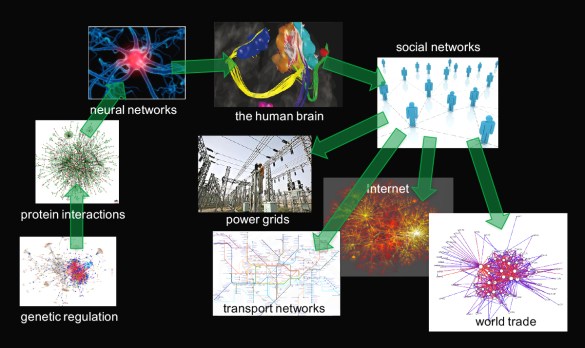
Jari Saramäki is a Professor at the Department of Computer Science, Aalto University, and a member of the Helsinki Institute for Information Technology (HIIT). His research focuses on complex systems, particularly complex networks, spanning social networks, computational science, and network neuroscience. He holds a Doctoral degree in Engineering and Technology from Helsinki University of Technology (1998) and a Master's degree in the same field (1995). His academic roles include leading projects such as NetResilience (focusing on social networks and population resilience in Finland) and Decoding Urban Public Transport Networks . He has authored over 160 publications and actively collaborates internationally, contributing to areas like temporal networks, functional brain connectivity, and mobility analysis. Research highlights include studies on child mortality risk in historical Finland, dynamics of social and communication networks, and the application of network theory to public transport optimization. His work bridges interdisciplinary fields, emphasizing the universal patterns and resilience of complex systems.
Di Wu is a Research Fellow at the Department of Automation Technology and Mechanical Engineering , part of the Faculty of Engineering and Natural Sciences at Tampere University. Their work focuses on advanced manufacturing technologies, optimization algorithms, and materials science, with significant contributions to thermal modeling in additive manufacturing and superconductivity research. Affiliations : Tampere University (since 2019) Research Interests : Specializes in multi-objective optimization using AI methods, additive manufacturing process modeling, thermal field prediction in metal AM, and superconductivity applications. Their work integrates knowledge-based systems and causal modeling to enhance engineering design processes. Key Research Trends : Recent publications emphasize real-time thermal management in thin-wall metal additive manufacturing, ANN-based optimization for HTS solenoids, and AI-driven approaches to superconductivity research. They also explore functional modeling and dimensional analysis in welding and micro-turbine systems. Collaborations : Active in international collaborations with institutions like American Society of Mechanical Engineers and Springer, focusing on advanced manufacturing and material science challenges.
Jukka Talvitie is a Lecturer in Electrical Engineering. His research focuses on millimeter wave engineering , 5G networks , simultaneous localization and mapping (SLAM) , and positioning accuracy . He contributes to advancements in wireless communications and robotics. Research Trends His recent work spans 2025-2024 with publications in IEEE Transactions on Signal Processing , IEEE Transactions on Wireless Communications , and IEEE Transactions on Robotics . Key areas include SLAM algorithms , mmWave positioning , and machine learning applications in telecommunications. Scientific Awards The Jean-Pierre Le Cadre Award (2021) for collaborative excellence in robotics and sensing Collaborations & Contributions Active in multi-institutional datasets (e.g., WiFi RSS, UWB CIR, industrial ray tracing) and peer-review activities for journals like IEEE Transactions on Vehicular Technology and EuCAP conferences . His work aligns with UN SDG 4 (Quality Education) through technological innovation.
Susanna Pirttikangas (D.Sc.(tech.), M.Sc.(math)) is a Research Director at the University of Oulu's Faculty of Information Technology and Electrical Engineering , affiliated with the Center for Ubiquitous Computing and the Interactive Edge research group. She actively collaborates across research units within her faculty. Research Interests : Edge Intelligence Machine Learning Artificial Intelligence Smart Environments 6G Wireless Networks Scientific Contributions : Her recent work focuses on 6G-enabled AI architectures , federated learning , privacy-preserving systems , and urban well-being analytics . Articles highlight applications in industrial metaverse integration, fault diagnosis, and mobility-as-a-service.
Parinya Chalermsook is a Professor of Algorithms at the University of Sheffield and holds a visiting position at Aalto University. He specializes in theoretical computer science with a focus on algorithms, optimization, and combinatorics. His research spans approximation algorithms, online algorithms, data structures, and computational geometry. He has received prestigious awards including the ERC Starting Grant and Simons-Berkeley Research Fellowship. Chalermsook has led projects funded by the European Research Council and Academy of Finland, exploring topics like graph packing and binary search trees. He has advised numerous students, including Sorrachai Yingchareonthawornchai and Ameet Gadekar. His work contributes to UN Sustainable Development Goals through efficient computational methods. Education: PhD in Computer Science from the University of Chicago (2012), advised by Julia Chuzhoy and Janos Simon. Earlier studies included work under Jittat Fakcharoenphol. Research Interests: Interplay between algorithms and optimization, with applications in data structures, algorithmic game theory, and computational geometry. Key themes include approximation algorithms, parameterized complexity, and combinatorial optimization. Recent Projects: Combinatorics of Graph Packing and Online Binary Search Trees (Academy of Finland, 2017–2022) Parameterized Approximation Algorithms & Hardness (Dagstuhl Seminar, 2023) Awards: ERC Starting Grant (2017) Simons-Berkeley Research Fellowship (2017) Academy Research Fellow (2017) Teaching: Courses include Automata, Computation, and Complexity (University of Sheffield), Principles of Algorithmic Techniques (Aalto University), and Computational Complexity. Professional Activities: PC member for SODA, STOC, ICALP, and conference organization roles including ALGO 2018 and Dagstuhl workshops.
Serio Agriesti is a Visiting Professor at the Spatial Planning and Transportation Engineering department within Aalto University's Department of Built Environment . His expertise spans transportation engineering, urban planning, and automated mobility systems. He holds a Doctor of Technology (2024) and a Master's degree in Engineering from Politecnico di Milano (2017). Research Focus: Dr. Agriesti investigates traffic simulation methodologies , automated mobility services , and sustainable urban transportation systems . Key areas include multimodal transportation integration, large-scale transport model calibration, and the application of AI techniques like graph neural networks for traffic flow analysis. Recent Work Trends: His 2025 articles emphasize seamless multimodal integration , automated mobility demand analysis , and city-scale simulation frameworks . Earlier work (2023–2024) focuses on Bayesian optimization for transport model calibration and sustainability assessment of automated vehicles . Collaborations: Active in international transport research networks, with presentations at conferences on topics like activity-based modelling integration and synthetic population assignment. Co-developed a Zenodo dataset supporting a traffic simulation review paper (2024). Teaching/Advising: No formal student advisees listed. Academic contributions include peer-reviewed articles (22+) and datasets shared via academic platforms.
Etna Lindy is a Researcher at Aalto University in the Department of Mathematics and Systems Analysis . Contact: etna.lindy@aalto.fi . Research interests include Numerical Analysis , Algorithms , and their applications in Machine Learning and Data Science . Lindy's recent work focuses on dynamic streaming algorithms and approximation techniques in correlation clustering, reflecting interdisciplinary contributions to theoretical computer science and computational mathematics. Selected publications highlight expertise in algorithm design for large-scale data processing, particularly in dynamic environments. A full profile is available at Aalto University's research portal .
Arshpreet Singh Maan is a Doctoral Researcher at the Department of Computer Science , Aalto University. He is affiliated with the research group led by Professor Alexandru Paler, focusing on quantum computing and machine learning applications in error correction. Quantum Computing Machine Learning Error Correction Research Interests : Arshpreet’s work centers on quantum error correction algorithms, graph neural networks for quantum systems, and resource estimation for superconducting qubit architectures. His publications highlight contributions to scalable decoding methods for quantum codes and performance optimization in fault-tolerant quantum computing. Recent Article Trends : His research spans quantum machine learning, surface code decoding, and modular quantum system design. Key topics include graph neural networks for QLDPC codes, parametric-resonance gate error analysis, and utility-scale superconducting qubit requirements. Contact : Email: arshpreet.maan@aalto.fi