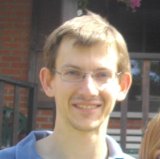
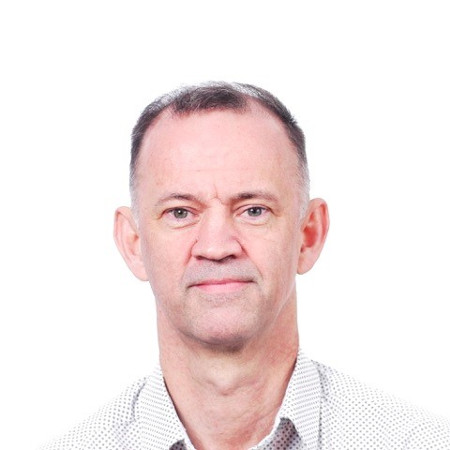
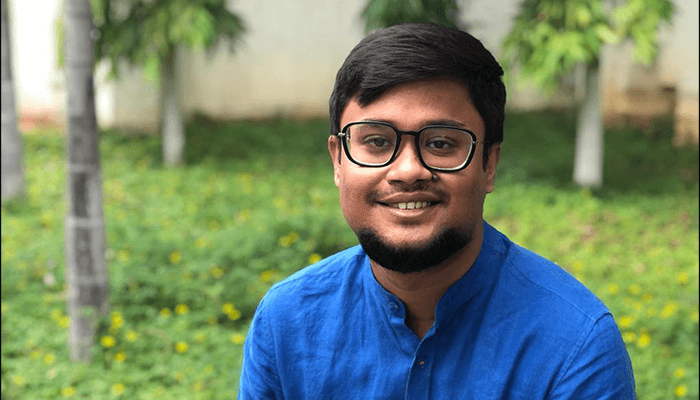
Julien Albert is a researcher within the Namur Digital Institute (NaDI) and the Research Center on Information Systems Engineering at the University of Namur . He completed his master’s degree in computer science with a data-science focus in 2020 and is active in explainable AI, recommender systems, and human–computer interaction. Education: M.S. in Computer Science (data-science focus), University of Namur, 2020 – thesis on scientific-literature recommendation systems. Research Interests: Albert investigates how machine-learning decisions can be made transparent and trustworthy, with a particular emphasis on explainability for computer-vision models and fairness-aware personalized ranking . His work combines rigorous algorithmic development with human-centered empirical studies, bridging machine-learning research and interactive-systems design. Recent publications reveal a clear strand on explainable AI (XAI): evaluating saliency-based explanations, designing human-in-the-loop studies, and accelerating interpretation of nonlinear embeddings. A parallel track focuses on recommender systems , exploring both explanation interfaces powered by large language models and bias-aware Bayesian ranking algorithms. A third emerging theme tackles civic technologies , studying requirements for idea-browsing tools on digital participation platforms. He has (co-)supervised at least three master’s students and regularly participates in international venues such as the Francophone Conference on Human–Computer Interaction and the European Symposium on Artificial Neural Networks, indicating a growing footprint in the XAI and HCI communities.
Ann Dooms is a researcher at the Mathematics & Data Science department of the Free University of Brussels . With a PhD in Mathematics (2004), she specializes in Digital Mathematics focusing on Information Forensics and Security, Cryptography, and Quantum Computing. Algebra & Group/Ring Theory Quantum Cryptography Document Layout Analysis Her fundamental research includes algebra, Fourier analysis, and wavelets, while strategic research involves digital forensics techniques like watermarking, steganography, and encrypted domain signal processing. Applied domains span AI, cultural heritage imaging, medical diagnostics, and secure cloud/edge computing. Recent publications highlight quantum algorithms for cryptanalysis, layout-aware document chat frameworks, and heterogeneous graph embedding for table representation. Her work bridges mathematical theory with practical security applications, particularly in post-quantum cryptography and digital forensics. Apple ARTS Laureate (2010) ICDAR2019 Competition Winner (2019) Faculty Prize of Sciences (2000) SuperMinds Award (2014) She supervises research projects like COMPASs 2.0 (AI systems) and Crypto Escape Room 4.0 , while contributing to PhD committees and international conferences. Grants include Flemish Tier-1 SuperComputing funding (2023-2024) and OZR Basic Funding for Large Research Groups (2024-2029).
Dr. Bikram Koirala is a Postdoctoral Researcher at the Vision Lab, University of Antwerp, Belgium. His work focuses on machine learning, deep learning, and hyperspectral image processing, supported by the Research Foundation – Flanders (FWO). Research areas include radiative transfer modeling, computer vision, and geomatics. Research Interests Machine learning and deep learning for spectral analysis Hyperspectral unmixing (linear and nonlinear models) Computer vision and remote sensing applications Radiative transfer modeling and Bayesian inference Geomatics and graph theory Publications & Data Dr. Koirala has published extensively on hyperspectral unmixing, including benchmarks for intimate mixtures, spectral-spatial attention networks, and nonlinear decomposition using Bézier surfaces. His work bridges algorithm design and environmental/material science applications. Labs & Teams Vision Lab, University of Antwerp
Hande Yaman Paternotte is a Professor at the Faculty of Economics and Business (FEB) at KU Leuven . Her academic work focuses on Operations Research , with particular emphasis on Mixed Integer Programming , Network Optimization , and Optimization under Uncertainty . She contributes to both theoretical advancements and practical applications in these fields. Unit: Operations Research and Statistics Research Group (ORSTAT) Member of LIM (KU Leuven Institute for Mobility) Senior academic staff in the Council of the Faculty of Economics and Business Senior academic staff in the Campus Council FEB Research Interests : Dr. Paternotte specializes in solving complex optimization problems in transportation and energy systems. Her work includes resilient infrastructure design , power system restoration , and multi-level/multi-stage optimization models. She integrates machine learning with optimization to enhance decision-making processes. Publication Trends : Her recent research spans integer programming for vehicle routing , graph partitioning , power system recovery , and dynamic resource allocation in evacuation scenarios. Applications extend to truck-drone synchronization and alternative fuel refueling networks . Teaching : She teaches courses in Applications of Operations Research and Optimization: Special Topics , fostering advanced problem-solving skills in students.
Luc Martens is a Full Professor at Ghent University, Belgium, and principal investigator at imec. Since 1991, he has led the WAVES (Wireless, Acoustics, Environment & Expert Systems) research group within the Department of Information Technology. His dual affiliation drives innovation at the intersection of academic research and industrial wireless technology development. Martens' research centers on wireless communication systems with emphasis on smart wireless channels, wireless body area networks, and human exposure to electromagnetic fields. He pioneers Industry 4.0 applications and personalized recommender systems, extending into energy consumption optimization and wireless localization. His work bridges electrical engineering, computer science, and biomedical applications through practical implementations in health monitoring and industrial IoT. Analysis of his 2021-2025 publications reveals three dominant trajectories: (1) advanced recommender systems for physical activity interventions using micro-randomized trials; (2) rigorous EMF exposure assessment for 5G/6G networks through hybrid simulation-measurement frameworks; and (3) animal monitoring applications leveraging accelerometers for equine gait analysis and colic detection. This interdisciplinary approach consistently integrates machine learning with domain-specific challenges. As head of the WAVES research group, Martens maintains strong international collaborations with UC Berkeley, ETH Zurich, and Télécom ParisTech. The group's work on wireless channel modeling, EMF safety, and personalized systems has produced over 400 peer-reviewed publications with tangible impact on wireless standardization and healthcare technology.
Gonzague Yernaux is a Research Professor at the University of Namur's Faculty of Computer Science, affiliated with the Namur Digital Institute. He holds a Doctorate and a Master's degree in Computer Science from the same institution. His research focuses on programming paradigms, logic programming, algorithm optimization, and educational technology. Yernaux has contributed to projects like Algorithmic equivalence and developed tools such as Manim-DFA and Scrimmo. He has presented at international conferences and received awards including the Jean Fichefet Prize (2017) and the Student Encouragement Award (2022). Education : Doctorate, University of Namur (Year unspecified) Master of Computing (Computer Science), Faculty of Computer Science, University of Namur (2015–2017) Research Interests : His work spans logic programming, software engineering, and algorithm design. Key areas include predicate anti-unification, bipartite matching optimization, and semantic clone detection. He also explores educational applications, such as using escape games to teach computer science concepts. His research often combines theoretical frameworks with practical software tools. Grants & Activities : He leads the project Algorithmic equivalence by generalization-driven transformations of logic programs . Active in academic events, he has participated in the International Conference on Advances in Computing Research (2025), the Belgium-Netherlands Software Evolution Workshop (2024), and organized presentations on topics like predicate anti-unification and bipartite matching. Labs & Teams : Associated with the Namur Digital Institute, his work integrates interdisciplinary collaborations in computer science and software development.
Shantanav Chakraborty is an Assistant Professor at the International Institute of Information Technology, Hyderabad (IIIT Hyderabad), where he is affiliated with the Centre for Quantum Science and Technology (CQST) and the Centre for Security, Theory and Algorithmic Research (CSTAR). Previously, he was an FNRS postdoctoral fellow at the Centre for Quantum Information and Communication (QuIC) at Université libre de Bruxelles, working with Jérémie Roland. He received his PhD from the University of Lisbon in December 2017, where he was affiliated with the Physics of Information and Quantum Technologies Group under the supervision of Yasser Omar, and also spent time as a visiting researcher at QuSoft, CWI Amsterdam. His educational background includes: B.Tech in Information Technology from West Bengal University of Technology (2007-2011) M.Tech in Computer Science and Engineering from IIT Jodhpur (2011-2013) PhD in Quantum Computing from the University of Lisbon (2017) Dr. Chakraborty's primary research focuses on quantum computation and quantum algorithms. He has made significant contributions to the field of quantum walks, developing new algorithms and improving existing ones. His work extends to quantum linear algebra concepts such as block-encoding and quantum singular value transformation, which have applications in quantum machine learning and solving linear systems. Currently, he is investigating the algorithmic utility of near-term quantum computers with limited logical qubits and short circuit depths. His research bridges theoretical computer science with practical implementations for emerging quantum hardware. An analysis of his recent publications reveals a strong focus on advancing quantum algorithm design for practical implementation. His work spans quantum walks, quantum linear algebra, and near-term quantum computing applications. A notable trend is his development of frameworks like block-encoding that unify different quantum input models. His research increasingly addresses the practical constraints of current quantum hardware while maintaining theoretical rigor, with recent papers focusing on intermediate-term quantum computers and their applications. His notable scientific achievements include: Fujitsu Ltd. unrestricted research grant for 2024 and 2025 SERB-DST Startup Research Grant (SRG) from the Government of India TCS award for "Best undergraduate thesis" for his work at ISI, Kolkata Publication in Physical Review Letters selected as an Editors' suggestion Dr. Chakraborty actively supervises PhD and MS students, with several current advisees including Soumyabrata Hazra and Arnab Ghorui. He collaborates extensively with researchers globally, including institutions in Brussels, Amsterdam, and various Indian research centers. His current grants from Fujitsu and SERB-DST support his work on quantum algorithms for near-term devices. He has successfully secured funding to support PhD students working on quantum computation, algorithms, and complexity. He is a core faculty member of the Centre for Quantum Science and Technology (CQST) at IIIT Hyderabad, which was recently launched to advance quantum research in India. His research group focuses on theoretical aspects of quantum computing with an emphasis on practical algorithm design for emerging quantum hardware. The team includes PhD students, MS students, and research associates working on various aspects of quantum algorithms and their applications.
Anne Wallemacq is a Researcher at the University of Namur, affiliated with the Namur Institute of Language, Text and Transmediality and the Namur Digital Institute. Her work focuses on semantics, text analysis, and crisis management, leveraging computational methods and interdisciplinary approaches. She leads projects such as the development of the EVOQ software tool for semantic landscape analysis. Education: Doctor of Economics (University of Louvain, 1989) Key Research Areas: Computational linguistics, poststructuralism, crisis perception, and text visualization tools. Her research integrates cognitive science and information visualization to address challenges in organizational decision-making and language analysis. Ongoing projects include exploring semantic fields and the dynamics of creative spaces. She has supervised 63 academic works, contributing to transdisciplinary methodologies in text analysis. Her publications highlight advancements in graph layout algorithms for text analysis and frameworks for evocative text analysis (EFFaTA-MeM). She actively participates in global conferences on organizational cognition and language studies. Future work includes expanding applications of semantic landscapes in crisis communication and advancing computational approaches to metaphor in social sciences.
Siegfried Nijssen is a Professor at the Department of Computer Science within the Faculty of Engineering Science at KU Leuven. He is a core member of the Declarative Languages and Artificial Intelligence (DTAI) research group at the Arenberg campus and affiliated with Leuven.AI, the university-wide Institute for Artificial Intelligence. His academic position is designated as 'professor BOF', reflecting a specialized research-focused appointment. Nijssen's research centers on the integration of declarative programming paradigms with machine learning, particularly through constraint programming frameworks. Key focus areas include interpretable rule learning, neural-symbolic integration, and constraint-based optimization for combinatorial problems. His work bridges theoretical computer science with practical applications in bioacoustics, pandemic response modeling, and network analysis, emphasizing transparency and reliability in AI systems. Analysis of his 2021-2024 publications reveals a strong trajectory toward interpretable AI, with significant contributions like RL-Net (combining neural networks with rule-based reasoning) and novel approaches to NP-hard optimization using structured perceptrons. His research consistently targets the intersection of symbolic reasoning and statistical learning, addressing critical challenges in constraint imposition, model explainability, and stochastic optimization. Nijssen currently leads two major research initiatives: 'Declarative Languages for Imposing Constraints on Machine Learning Models' (2025-2027) and the long-term 'Declarative Programming for Machine Learning (DeclaLearn)' project (2025-2035), demonstrating sustained leadership and funding in his specialized domain. These projects extend his foundational work on constraint-based machine learning frameworks. Based at the DTAI research group, Nijssen contributes to KU Leuven's AI ecosystem through collaborative research in logic programming, constraint solving, and data mining. His work with Leuven.AI positions him at the forefront of institutional efforts to advance trustworthy and constraint-aware artificial intelligence systems.
Tom Schrijvers is a Professor at the Department of Computer Science, Faculty of Engineering Science, KU Leuven. His research focuses on programming language theory, functional programming, logic programming, and computational effects. Advancing multi-stage programming with computational effects (2024–2028) Generating Educational Feedback with Program Analysis (2024–2028) Programino: An Educational Programming Platform (2023–2027) eTeacher: Interactive web-based programming education platform (2023–2025) AmPERSand: Programming Education Runtime System (2023–2026) His recent publications emphasize bidirectional transformations, effect handlers, and programming education tools. He collaborates extensively with British institutions like Imperial College London and works on the book Language Engineering in Haskell with Dr. Nicolas Wu.
Greet Vanden Berghe is a full professor at the Faculty of Engineering Technology of KU Leuven. She leads the Subdivision Combinatorial Optimisation and Decision Support at Ghent and Aalst Campuses, and contributes to research networks like Leuven.AI and LIM. Her work focuses on industrial combinatorial optimization problems through mathematical programming, heuristics, and decomposition approaches. Affiliations: Numerical Analysis and Applied Mathematics (NUMA), Leuven.AI, LIM Institute Research: Logistics optimization, personnel scheduling, vehicle routing, and algorithm development for industrial decision support Projects: MoVeRS (Modular Vehicle Routing Solver), Trustworthy Algorithms for Industrial Decisions, Fairness in Allocation Problems, and Electric Vehicle Charging Station Optimization Her research emphasizes bridging theoretical advancements with real-world industrial challenges, particularly in maritime logistics, healthcare scheduling, and production planning. She has developed scalable solvers and integrated legal constraints into routing algorithms.
Pieter Audenaert is an Associate Professor at Ghent University's Faculty of Engineering and Architecture, affiliated with the Department of Information Technology and the Internet Technology and Data Science Lab. He simultaneously holds a postdoctoral researcher position at IMEC. His interdisciplinary research bridges computer science, mathematics, and engineering. Primary research domains include: Algorithm design for network optimization (Steiner trees, fiber networks) Computational biology (de Bruijn graphs, genome assembly) Transportation logistics (container drayage, port operations) Telecommunication systems (VLC, network flows) Discrete mathematics applied to network science Recent publications (2019-2025) demonstrate strong focus on optimization algorithms for both biological networks and transportation systems, with increasing applications of probabilistic modeling and simulation techniques. Bioinformatics work frequently employs graph-theoretic approaches to genome analysis. Awards and honors: Knuth Reward Check (2003) Laureaat Vlaamse Wiskunde Olympiade (1996) Leads research at the Internet Technology and Data Science Lab, collaborating extensively with industry partners like Port of Antwerp and Belgian retailers for transportation optimization projects.
Kamil Yavuz Kapusuz serves as a Postdoctoral Researcher at Ghent University's Faculty of Engineering and Architecture within the Department of Information Technology (EA05) and as a Postdoctoral Assistant at IMEC. His research focuses on advanced antenna systems for next-generation wireless communication networks, with particular expertise in substrate-integrated waveguide technology and terahertz applications. Dr. Kapusuz's research interests center on antenna design for emerging communication technologies, specializing in substrate-integrated waveguide (SIW) systems, terahertz and millimeter-wave communications, and medical implantable antennas. His work bridges theoretical electromagnetic principles with practical implementation challenges in 5G/6G networks, satellite communications, and wireless medical devices. He has developed innovative approaches for camera-integrated antennas for wireless capsule endoscopy and metal-free continuous transverse stub arrays for sub-terahertz applications. Analysis of his recent publications reveals a strong focus on solving practical engineering challenges in high-frequency wireless systems. His work demonstrates consistent progression from foundational SIW research toward increasingly sophisticated applications in terahertz communications, medical devices, and smart surfaces. Key trends include miniaturization of antenna systems, integration with imaging technology, development of reconfigurable matching networks, and innovative array configurations for beyond-100 GHz communication systems. Kamil Yavuz Kapusuz is currently leading research as a Fellow on the project 'Design, Implementation and Validation of Metal-Free Continuous Transverse Stub (CTS) Arrays for Sub-Terahertz and Terahertz Wireless Communication Systems' (2024-2027), funded by Regional and community funding: Special Research Fund. He previously completed his doctoral research on 'Innovative Substrate-Integrated-Waveguide-Based Antenna Systems for the Fifth-Generation Wireless Communication Network' (2017-2021) at Ghent University.
Giles Miclotte is a postdoctoral researcher at Ghent University with dual appointments: Postdoctoral Assistant in the Faculty of Sciences (Department of Plant Biotechnology and Bioinformatics) and Postdoctoral Researcher in the Faculty of Engineering and Architecture (Department of Information Technology). He is affiliated with IMEC research institute. His research focuses on: Bioinformatics and computational genomics High-performance computing for biological data Algorithm development for error correction in sequencing technologies Genome assembly methods using de Bruijn graphs Network analysis in cancer genomics and plant systems biology Proteomics and protein sequencing methodologies His recent publications (2015-2022) demonstrate a consistent focus on improving sequencing technologies and genomic analysis methods. Key themes include: advanced error correction algorithms for Illumina and third-generation sequencing, genome assembly optimization, computational approaches for cancer driver gene identification, and novel applications of graph-based algorithms in bioinformatics. Awards: Outstanding Presentation Award at ISMB 2015 He has supervised PhD students including Razgar Seyed Rahmani (2022) and collaborates extensively with research teams across bioinformatics and computational biology domains.
Bram Steenwinckel is a postdoctoral researcher at Ghent University's Faculty of Engineering and Architecture, Department of Information Technology. He holds an FWO Junior Postdoctoral Fellowship and contributes to IMEC research projects. His work combines knowledge graphs with machine learning for explainable hybrid AI applications. FWO-funded projects on anomaly detection and knowledge graph embeddings Co-author on 15+ publications in semantic web, AI, and healthcare informatics Research focuses on integrating domain knowledge into machine learning pipelines Involvement in both academic research and applied engineering solutions His research explores knowledge graph creation for smart monitoring systems across healthcare and industrial domains. The INK methodology enables semantic rule mining while TALK provides context-aware activity recognition . Current work extends these approaches to zero-shot classification and automotive quality control . Scientific contributions include: Explainable knowledge graph embeddings Context-aware IoT data stream analysis Hybrid AI for ambulatory health monitoring Dynamic dashboarding architectures