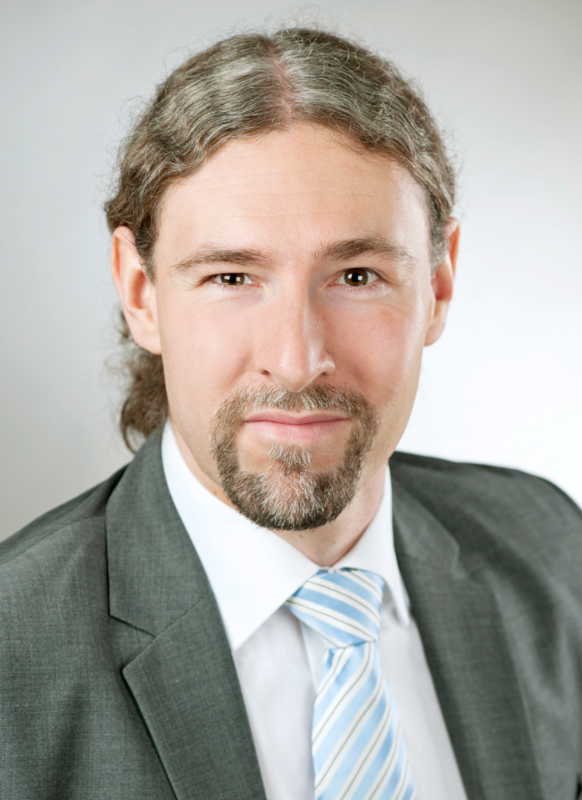
Frank Kammer is a researcher at the Technical University of Central Hesse , actively engaged in teaching and research projects. He co-leads the RegioTainment platform with Biebertal municipality and contributes to the SEA Project , an open C++ library for space-efficient algorithms. Teaching : Database Systems (CS1020), Software Engineering (CS1023), Efficient Algorithms (CS2353), Artificial Intelligence (CS2364/WK1613), etc. Research : Focuses on space-efficient graph algorithms, temporal graph exploration, and algorithm engineering. His work addresses computational challenges in huge datasets and memory-constrained devices , with applications in planar graph encoding, vertex separators, and student feedback systems. Advising : Supervised theses on topics including data-driven analytics platforms, low-code integration, cloud orchestration, and AI-optimized marketing campaigns. Collaboration : Works with students like Max Stephan, Timon Pellekoorne, and Johannes Meintrup on algorithm implementation and educational tools. Projects like RegioTainment emphasize digital community networking to preserve rural culture while embracing modernity.
Dr. André Ferreira Castro is a Researcher at the Cuntz Lab affiliated with the Technical University of Munich . His work focuses on modeling neuronal development, particularly dendritic arborization and synaptic organization, using advanced computational techniques and genetic manipulations in Drosophila melanogaster . He designs experiments to quantify structural changes in neurons during development and plasticity, aiming to mechanistically understand the brain's functional architecture. His recent research explores themes such as dendritic growth models synaptic density conservation invariant network principles emotion regulation via AI developmental circuit assembly , reflecting a blend of computational neuroscience, developmental biology, and structural modeling. The work spans from foundational studies in invertebrate models to broader implications for brain architecture across species. He can be contacted via email at acastro@mrc-lmb.cam.ac.uk for collaborations or inquiries at TUM.
Prof. Dr. Viorica Sofronie-Stokkermans is a leading academic at the Institute of Computer Science , University of Koblenz , where she heads the Formal Methods and Theoretical Computer Science group in Department 4 . Her research focuses on formal methods , automated reasoning , and verification of parametric systems . Research Trends : Recent work emphasizes symbol elimination , interpolation , and verification of hybrid automata , with applications in wireless networks and spatial families . Team Affiliations : Leads a team including Research Assistant Dennis Peuter , Secretariat Alexandra Felzen , and former members like Dr. Matthias Horbach and Dr. Mauricio Martel . Key Contributions : She developed the SEH-PILoT system for property-directed symbol elimination and advanced hierarchical reasoning in local theory extensions. Her work intersects logic , computer science , and hybrid systems .
Prof. Dr. Holger Giese is a full Professor at the System Analysis and Modeling Group of the Hasso Plattner Institute for Digital Engineering in Potsdam, Germany. He leads research initiatives in model-driven engineering , self-adaptive systems , and cyber-physical systems , with a focus on causal representations , neuro-symbolic AI , and multi-agent reinforcement learning . His research explores the intersection of formal modeling and machine learning , addressing challenges in: Runtime verification and validation of dynamic systems Model transformation and synchronization Code generation for self-optimizing architectures Probabilistic decision-making under uncertainty Transfer learning for autonomic computing Recent work (2024-2025) emphasizes neuro-symbolic approaches for robust multi-agent systems , spatio-temporal graph modeling for cloud systems, and incremental query evaluation in dynamic environments. Collaborations span institutions like IBM Japan, Krems University, and Humboldt University. He actively teaches courses such as Advanced Topics in Software Engineering , Graph Neural Networks , and AI Ethics Engineering , and leads labs including the Model-Driven Engineering Laboratory (MDELab.de) and Software Engineering for Self-Adaptive Systems (self-adaptive.org) .
Paderborn University faculty member Eckhard Steffen serves as Professor in the Faculty of Computer Science, Electrical Engineering and Mathematics , specifically within the Institute of Mathematics and Graduate Centre . His research focuses on Discrete Mathematics and Graph Theory , with notable projects including "Graphs, Association schemes and Geometries: structures, algorithms and computation". Research interests include signed networks, edge-connectivity, perfect matchings, and graph colorings. Recent publications (2024–2025) explore topics like token signed graphs, frustrated signed graphs, and r-graph colorings, emphasizing combinatorial structures and algorithmic applications. Contact: es@uni-paderborn.de , Office F2.224, Fürstenallee 11, Paderborn. Teaching courses: Oberseminar "Graphentheorie", MAP Mastermodul, and "Elemente der Mathematik: Graphentheorie".
Prof. Dr.-Ing. Jörg M. Haake is a full Professor of Cooperative Systems at the Faculty of Mathematics and Computer Science, FernUniversität in Hagen (since 2001). He serves on the Executive Board of the CATALPA Research Center, where he previously held the position of Deputy Scientific Director (2021-2024). His research develops adaptive collaborative learning environments for diverse learners. Education: Doktor-Ingenieur (PhD equivalent) with distinction, Computer Science, Technische Universität Darmstadt (1995) Diplom-Informatiker (MSc equivalent) with distinction, Computer Science, Universität Dortmund (1987) Research Focus: Haake specializes in adaptive educational technologies for collaborative learning and working environments. His work emphasizes: 1) Dynamic support for diverse learners through personalized assignments and group processes, 2) Interdisciplinary collaboration frameworks for complex problem-solving, and 3) Scalable solutions for distance education. His LA-DIVA project exemplifies this through adaptive group formation algorithms and feedback systems. Publication Trends: Recent work (2020-2025) demonstrates strong focus on educational technology innovations: 62% of publications address self-assessment systems and feedback mechanisms, while 38% explore collaborative learning dynamics. Key methodological themes include learning analytics, automated item generation, and interaction pattern analysis in digital environments. Awards & Honors: Diploma in Computer Science with distinction (Universität Dortmund) Doctor of Engineering with distinction (TU Darmstadt) Leadership & Projects: Leads the CATALPA-funded LA-DIVA project and previously directed APLE I/II initiatives. Manages research teams developing Moodle plugins for self-assessment and collaborative writing tools. Holds leadership roles in the German Computer Society's Educational Technology division.
Andreas C. Schneider is a researcher at the Max Planck Institute for Dynamics and Self-Organization in Göttingen, Germany. His work focuses on understanding the fundamental principles of intelligence through the lens of physics, neural networks, and information theory. Key research questions include how intelligence emerges from simple components, the interplay between memory and computation in neural systems, and the role of locality constraints in shaping neural structures. His research combines information-theoretic measures to analyze the development of structure and information flow in neural networks, aiming to uncover biases and improve the safety of AI applications. Recent work introduces locally learning neurons via information-theoretic rules. Deep Learning for Computer Vision (Winter 2022/23) Machine Learning (Summer 2022) Physics of Complex Systems (Winter 2019/20) Physics preparatory course for life sciences (Fall 2019) Scientific computing (Summer 2019) His recent publications emphasize interpretable neural learning, partial information decomposition, and complexity metrics. Despite no explicit awards listed, his work targets critical challenges in AI safety and neural computation.
Dr. Abdullah Makkeh is a Senior Scientist at the University of Göttingen's Department of Data-driven Analysis of Biological Networks, headed by Michael Wibral, and a Guest Scientist at the Max Planck Institute for Dynamics and Self-Organization in Göttingen under Viola Priesemann's Complex Systems Theory group. Previously, he served as a Postdoc at the University of Tartu in both Theoretical Computer Science (Dirk Oliver Theis) and Computational Neuroscience (Raul Vicente) groups. Education: PhD in Informatics (2018, University of Tartu, Supervisor: Dirk Oliver Theis) MSc in Mathematics (2013, Lebanese University, Supervisor: Bassam Mourad) BSc in Mathematics (2011, Lebanese University) His research focuses on extending information theory to study computation in intelligent systems like the brain and artificial neural networks (ANNs). He has developed interpretable information-theoretic learning rules for ANNs (Makkeh et al., 2025) and analyzed reinforcement learning agents to reveal emergent computation mechanisms (Engel et al., 2022; Ehrlich et al., 2023). Current work applies these methods to enhance large language model (LLM) interpretability. His publications span information-theoretic frameworks, predictive coding, and neural oscillation analysis, with a 2024 Royal Netherlands Academy of Arts and Sciences (KNAW) recognition. He co-teaches courses in Bayesian Inference, Information Theory, and Discrete Mathematics, and organizes annual workshops on information theory in computational neuroscience. Scientific Awards: Royal Netherlands Academy of Arts and Sciences (KNAW) (2024) Dr. Makkeh contributes to open-source research tools via GitHub and collaborates with interdisciplinary teams across neuroscience, computer science, and mathematics. His work bridges theoretical foundations with applied machine learning through rigorous mathematical frameworks.
Professor Norbert Fischer is affiliated with the University of Würzburg's Faculty of Mathematics and Computer Science, where he works at the Institute of Computer Science as part of the Chair of Computer Science VI - Artificial Intelligence and Knowledge Systems. He also contributes to the Center for Artificial Intelligence and Data Science (CAIDAS). Research Focus: Artificial Intelligence, Optical Character Recognition (OCR), and Knowledge Systems Projects: Involved in initiatives like LeLaR (Learning Attitude Control), BuDaNu (Business Data Utilization), KI-Nergy (Intelligent Heating Systems), and others focusing on AI applications in document analysis, medical imaging, and legal consulting. Recent Publications: His work includes AI-driven segmentation of historical prints (2020) and algorithmic visualization techniques (2017). Contact: norbert.fischer@uni-wuerzburg.de | Room 03.011 | Phone: +49 931 / 31-87622
Timo Kaiser is a doctoral researcher at the Institute of Information Processing (TNT) within the Faculty of Electrical Engineering and Computer Science at Leibniz University Hannover. He has been working towards his Dr.-Ing. degree since May 2020, conducting research in computer vision with a focus on object detection and tracking systems. His educational background includes a Master of Science in Mechatronics from Leibniz University Hannover, where he focused on digital image processing. His master's thesis addressed the multiple people tracking problem using Conditional Random Fields. His undergraduate studies emphasized robotics. Kaiser's research interests span object detection, multiple object tracking, and person re-identification, with recent work extending into uncertainty quantification, biomedical image analysis, and neural network optimization. His projects include Multiple People Tracking and GreenAutoML4FAS, demonstrating both theoretical and applied research directions. Analysis of his publication record reveals a strong focus on advancing multiple object tracking methodologies, with recent work (2023-2025) expanding into uncertainty quantification, cell tracking for biomedical applications, and novel neural network architectures. His research shows increasing sophistication, moving from traditional tracking algorithms to incorporating deep learning and uncertainty modeling. As a researcher actively contributing to the computer vision community, Kaiser has established collaborations with prominent researchers like Bodo Rosenhahn and has published in top-tier venues including ICML, ICLR, ICCV, and IEEE Transactions. His GitHub activity demonstrates commitment to reproducible research with code repositories supporting his publications.
Oliver Baumann is a doctoral student and research associate at the University of Bayreuth , affiliated with the Chair of Data Modeling and Interdisciplinary Knowledge Generation and the Excellence Cluster "Africa Multiple." He studied computer science at Ludwig Maximilian University of Munich and completed his master's thesis at the Technical University of Munich under the supervision of Prof. Dr. Jürgen Pfeffer and Prof. Dr. Mirco Schönfeld. Current research focuses on contextualized ontologies, natural language processing, and data mining Applies methods like metadata mining, social network analysis, and topic modeling Specializes in linking and visualizing latent structures in research datasets His recent publications highlight trends in knowledge graphs, data management systems, and recommendation algorithms. Key themes include complex network metrics (2024), interdisciplinary data integration (2022), and serendipity in recommendation systems (2022). Earlier work (2013) explored route optimization using external data sources. Oliver contributes to the Excellence Cluster "Africa Multiple" through research on metadata mining and knowledge generation. Contact: oliver.baumann@uni-bayreuth.de
Prof. Dr. Fatih Gedikli is a full-time Professor of Artificial Intelligence and Big Data at the Institute of Computer Science, Ruhr West University of Applied Sciences . His academic work spans software engineering, web engineering, and applied artificial intelligence, with a focus on recommendation systems . Key research areas: Recommender Systems , Big Data Analytics , Natural Language Processing , Deep Learning Contribution: Development of AI-based data pipelines for unstructured data analysis from news, social media, and scientific publications Entrepreneurial Activities : Co-founder and Co-CEO of graphworks.ai , a German AI startup offering student internships. Regular speaker at workshops and keynotes, including events on entrepreneurship and sustainable supply chains.
Dr. Christoph von Tycowicz serves as Head of the Research Group "Geometric Data Analysis and Processing" at the Zuse Institute Berlin (ZIB), within the "Visual and data-centric computing" department of the "Mathematics of Complex Systems" division. His research bridges advanced mathematical theory with practical applications in medical imaging, biomechanics, and cultural heritage analysis. He leads multiple interdisciplinary projects connecting mathematics, computer science, and biomedical engineering, with funding from major research initiatives. Dr. von Tycowicz earned his doctoral degree from Freie Universität Berlin in 2014 with a dissertation titled "Concepts and Algorithms for the Deformation, Analysis, and Compression of Digital Shapes" under the supervision of Konrad Polthier. His educational background established the foundation for his current work in geometric data analysis and computational shape modeling. His primary research interests center on Geometric Data Analysis , Shape Analysis , and Manifold-valued Data Processing . He develops mathematical frameworks for analyzing complex shapes in medical imaging, biomechanics, and cultural heritage applications. His work bridges differential geometry with machine learning to create robust methods for shape comparison, classification, and prediction. Dr. von Tycowicz has made significant contributions to Riemannian statistical shape modeling and geometric deep learning, with applications spanning knee osteoarthritis assessment, Alzheimer's disease progression analysis, and archaeological artifact analysis. Analysis of his publication trajectory reveals a sophisticated evolution from foundational geometric methods toward integrated approaches combining differential geometry with deep learning. His recent work increasingly focuses on manifold-valued graph neural networks, shape-based disease grading systems, and longitudinal analysis of anatomical changes. There's a clear trend toward clinical translation, with growing emphasis on applying these methods to specific medical problems like osteoarthritis assessment using data from the Osteoarthritis Initiative and Alzheimer's disease progression modeling. Dr. von Tycowicz has received significant recognition for his contributions: Best Paper Honorable Mention Award @ Eurographics (2016) Best Paper Award (2020) Student Travel Award (2020) Special Mention @ ICLR Computational Geometry & Topology Challenge (2022) As a mentor, Dr. von Tycowicz has supervised doctoral and master's students including Felix Ambellan (doctoral thesis on Efficient Riemannian Statistical Shape Analysis with Applications in Disease Assessment) and Martha Paskin (master's thesis on Estimating 3D Shape of the Head Skeleton of Basking Sharks). He currently leads multiple substantial research projects including WEAR (mathematical solutions for analyzing ancient tools), Model-Regularized Learning of Complex Dynamical Behavior, and Geometric Learning for Single-Cell RNA Velocity Modeling, demonstrating strong grant acquisition capabilities across interdisciplinary domains. The Geometric Data Analysis and Processing research group, which Dr. von Tycowicz heads, develops the open-source Morphomatics library (v4.0) for statistical shape analysis. This Python library implements intrinsic manifold-based methods that maintain geometric consistency while avoiding bias from arbitrary coordinate choices. The group participates in major research networks including MATH+ and BIFOLD, and collaborates extensively with medical researchers at Charité - Universitätsmedizin Berlin and other institutions. Their work spans medical imaging (particularly knee osteoarthritis analysis), biomechanics, archaeology, and machine learning, with a unifying focus on creating geometrically principled methods for analyzing complex shape data.
Prof. Dr. Bjoern Andres holds the position of Professor of Machine Learning for Computer Vision at Technische Universität Dresden . He is a Principal Investigator at the Center for Scalable Data Analytics and Artificial Intelligence and an Academic Fellow at the School of Embedded Composite Artificial Intelligence. His work bridges theoretical computer science, applied mathematics, and biomedical imaging through innovative graph algorithms. Education : PhD in Physics (Heidelberg University), Diploma in Physics (Heidelberg), Pre-Diploma in Physics and Computer Science (Technical University Dortmund) Research Interests : His research focuses on graph-based methods for computer vision and biomedical image analysis, including: Lifted multicut and correlation clustering algorithms Integer programming for anatomical network reconstruction 3D segmentation of neural tissue Optimal tracking of cellular lineages Partial ordering and quantum-inspired optimization Scientific Contributions : His recent publications emphasize: Advancing multicut polytope analysis (2023-2025) Quantum alternating operator ansatz for correlation clustering (2025) 4-approximation algorithms for Min Max correlation clustering Medical imaging applications for organoid segmentation Biomedical applications in vascular network reconstruction Development of scalable graph decomposition methods Awards & Recognitions : IEEE CVPR Outstanding Reviewer (2022) NIPS Best Reviewer (2017) MICCAI Best Paper (2015) DAGM Best Paper Runner-Up (2008) Heidelberg International Exchange Scholarship (2005) Studienstiftung Scholarship (2000-2007) Software Development : Maintains andres::graph , a C++ library for graph algorithms and multi-dimensional arrays, featuring: Efficient graph data structures with constant-time access Implementations of Prim's algorithm and max-flow methods Applications in medical imaging and computer vision
Prof. Nassir Navab is a full professor and director of the Chair for Computer Aided Medical Procedures & Augmented Reality at the Technical University of Munich (TUM) School of Computation, Information and Technology. He leads the Medical Augmented Reality summer school series and is a member of Academia Europaea. Education: Mathematics and Physics, Computer Engineering and Systems Control, PhD at INRIA/Paris XI Professional History: Postdoctoral research at MIT Media Lab; Distinguished Member of Technical Staff at Siemens Corporate Research (1993–2003); Full Professor at TUM since 2003 Leadership Roles: Board Member of MICCAI (2006–2012, 2014–2017); Editorial Board Member of IEEE TMI, MedIA, IJCV His research focuses on bridging medicine and computer science through Computer Vision , Medical Augmented Reality , and Robot-Guided Surgery . He pioneered digital surgical workflow modeling (2005) and robotic imaging (2012), with over 100 patents and 90,926 citations (h-index 129). Recent publications highlight AI-driven medical imaging trends, including ultrasound-CT registration , reinforcement learning for robotic sonography , and semantic scene graphs for operating room modeling . Collaborations span institutions like Johns Hopkins University and cover applications in ophthalmology , oncology , and orthopedic interventions . MICCAI Enduring Impact Award 2021 IEEE ISMAR Career Impact Award 2024 IEEE ISMAR 10 Years Lasting Impact Award 2015 Siemens Inventor of the Year 2001 16 Best Paper Awards at MICCAI He mentors teams advancing medical AI and surgical robotics , with labs like CAMP and NARVIS. His work also emphasizes medical education , including courses on Computer Science for Medical Students and Innovation in Healthcare .