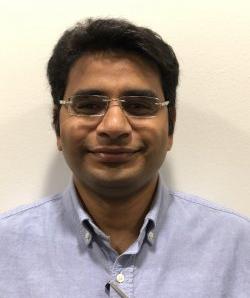
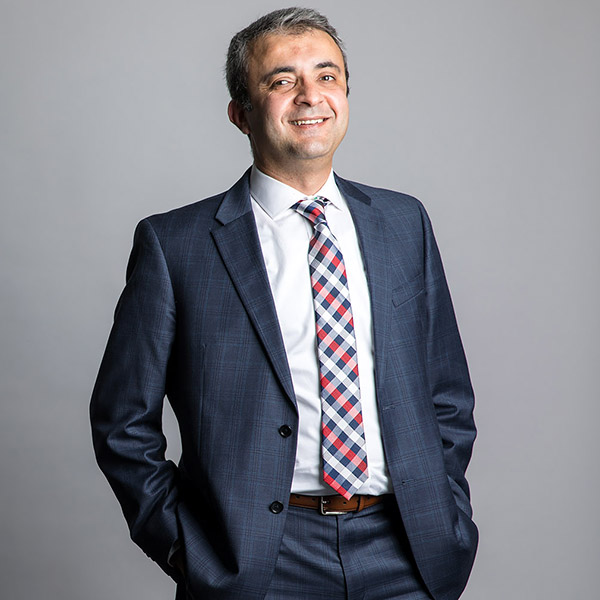
Soumarup Bhattacharyya is a Researcher in Fluid Mechanics at the University of Edinburgh's School of Engineering. His role focuses on experimental and computational fluid dynamics, particularly investigating flow dynamics around rotating and oscillating objects, bio-inspired designs, and granular/shock phenomena. He is affiliated with the Alrick Building, A124. Research interests include aerodynamics of rotating systems, drag reduction mechanisms, turbulence modulation, and multiphase flow interactions. Key themes span dandelion-inspired flyers, tapered cylinder dynamics, and flow control over delta wings. His work bridges fundamental fluid mechanics with engineering applications. Recent studies explore secondary bubble entrapment, wall effects on cylinder wakes, and 3D vortex shedding patterns. Experimental techniques and flow visualization are central to his methodologies. No scientific awards have been listed. Advising and grant details are not provided in the available text. His research contributes to advancing fluid mechanics understanding for aerospace and environmental engineering contexts.
Dr. Paolo Mengoni is a Lecturer I at Hong Kong Baptist University (HKBU), specializing in Artificial Intelligence and Complex Network Analysis. Originally from Italy, he brings over 20 years of experience as an IT consultant and researcher. His work focuses on AI applications in education, natural language processing, emotion recognition, and autonomous agents. He holds a Ph.D. in Computer Science from the University of Florence and MSc/BSc degrees from the University of Perugia (Italy). Teaching responsibilities include courses like AI and Digital Communication , Basic Programming for Data Science , and Recommender Systems for Digital Media . His research explores topics such as learning analytics, sentiment analysis in social networks, and community detection in collaborative environments. He actively contributes to academic activities, including organizing international workshops like the 2020 Global Virtual Hack and Design Challenge and the HKBU-University of Perugia exchange program. His publications span journals and conferences including IEEE/WIC/ACM Web Intelligence, Future Generation Computer Systems, and IEEE International Symposia. He serves as a reviewer for venues such as IEEE Congress on Evolutionary Computation and the International Conference on Computational Science and Its Applications.
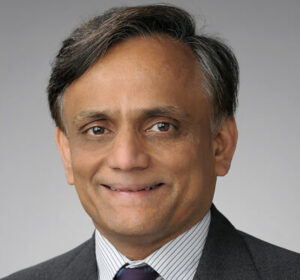
Ashok S. Sangani is a Professor at Syracuse University, affiliated with the L.C. Smith College of Engineering and Computer Science and the Department of Chemical and Biomolecular Engineering. His research focuses on particulate and multiphase flows, fluid mechanics, and transport processes in biological systems. He holds a PhD in Chemical Engineering from Stanford University (1983), an MS from Columbia University (1979), and a BS from the University of Bombay (1976). Education: PhD, Chemical Engineering, Stanford University, 1983 MS, Chemical Engineering, Columbia University, 1979 BS, Chemical Engineering, University of Bombay, 1976 His research integrates numerical simulations, multiscale modeling, and experimental validation to address complex multiphase systems. Recent work emphasizes capillary forces, particulate interactions, and anisotropic velocity fluctuations in fluid flows. Teaching interests include fluid mechanics, transport phenomena, and applied mathematics. No scientific awards are explicitly listed, though his publications suggest significant contributions to fluid dynamics and particulate systems research. Advising and grant details are not provided in the text. He is associated with computational methods in fluid dynamics and collaborates with experimentalists to validate models.
Skylar Tibbits is an Associate Professor of Design Research at MIT's Department of Architecture, where he leads undergraduate programs and co-directs the Self-Assembly Lab. His roles include teaching design studios and coordinating MIT's undergraduate Design programs. He is also an Assistant Director for Education at the Morningside Academy for Design. His work focuses on programmable materials and self-assembly technologies for manufacturing, construction, and product innovation. Education: Bachelor of Architecture (Professional Degree) from Philadelphia University with a minor in experimental computation Master of Science in Design Computation from MIT Master of Science in Computer Science from MIT, advised by Patrick Winston, Terry Knight, Erik Demaine, and Neil Gershenfeld Research Interests: Self-assembly systems and programmable material technologies 4D printing and shape-changing materials Robotics, smart manufacturing, and architectural applications Material agency and adaptive systems His lab explores innovations like reversible textile transformation, active haptic knits, and gel-supported 3D printing. Key Awards: R&D Magazine's 2015 Innovator of the Year National Geographic Emerging Explorer (2015) WIRED Fellow (2014) Fast Company Innovation by Design Award (2013) Advising & Labs: Director of MIT's undergraduate Design programs Founder and co-director of the Self-Assembly Lab Collaborates with industry leaders in architecture, robotics, and materials science Future Work: Expanding applications of programmable matter in construction, healthcare, and wearable technologies.
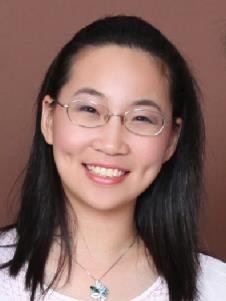
Danielle TAN S is a Senior Lecturer in the Department of Mechanical Engineering at the National University of Singapore (NUS), affiliated with the College of Design and Engineering. Her research focuses on fluid mechanics, granular materials, and computational modeling techniques. She holds a Ph.D. in Theoretical & Applied Mechanics from Cornell University (USA), a Master of Engineering (1st Class Honours) from Imperial College London (UK), and a Diploma from the City and Guilds of London Institute. Her research interests include the rheology of granular mixtures, discrete element method (DEM) modeling, and fluid dynamics. She has published extensively on topics such as moisture effects in granular materials, DEM simulation accuracy, and flow dynamics around cylinders. Her work bridges computational mechanics with experimental validation, contributing to geotechnical engineering and environmental fluid mechanics. Recent publications (2013-2014) highlight her focus on DEM applications in pavement engineering, granular segregation dynamics, and fluid-structure interactions. She maintains an active Google Scholar profile and is based at E1-05-30, NUS.
Christian Colot is a researcher at the Namur Institute for Complex Systems (University of Namur) with a focus on data mining, social network analysis, and decision support systems. His work bridges telecom data analytics, marketing, and credit risk, emphasizing data monetization and churn detection. Key Research Areas : Data Mining, Telecom Data Monetization, Churn Detection, Decision Support Systems. Notable Projects : Leveraging Mobile Data for Churn Detection (2015–2020), Network-Based Metrics for Decision Support (2022). Scientific Recognition : Nominated for the Dauby Award for his master's thesis. Conference Contributions : Presented at international events including ICDSST 2017 and SEKE 2022. His recent publications highlight innovative approaches to mobile data analysis, social influence disentanglement, and metaphor computational modeling. Collaborations with IBM and telecom stakeholders underscore his industry impact.
Britton L Plourde is a Professor in the Department of Physics at the University of Wisconsin-Madison. His research focuses on quantum computing and superconductivity, particularly in the development of superconducting qubits, metamaterial resonators, and understanding quasiparticle poisoning mechanisms. He leads studies on device optimization, error mitigation in quantum systems, and novel architectures for scalable quantum processors. Research interests include superconducting circuit design, quantum-classical interfaces, and the interplay between phonon dynamics and qubit coherence. His work integrates theoretical modeling with experimental validation, addressing challenges in qubit stability, crosstalk suppression, and cryogenic control systems. Key contributions involve left-handed metamaterials for enhanced qubit interactions, radiation-hardened qubit designs, and topological charge-parity qubits. His lab explores advanced fabrication techniques for low-loss resonators and investigates noise correlations in quantum devices. Address: 5122 Chamberlin Hall, Madison, WI
Abhinendra Singh is an Assistant Professor at the Department of Macromolecular Science and Engineering within the Case School of Engineering at Case Western Reserve University. His research focuses on the rheological behavior of dense suspensions, particularly exploring shear thickening, jamming, and frictional contact networks through computational models and theoretical frameworks. Research Themes : Soft Matter Physics, Granular Flow, Rheology, Polymer Science, Network Theory, Computational Materials Science Methodologies : Graph Neural Networks, Frictional Contact Network Analysis, Suspension Microstructure Modeling Key Trends : Recent publications emphasize the application of machine learning to predict mechanical networks in suspensions, topological insights into shear thickening, and the role of friction in non-Brownian systems. Collaborations : Interdisciplinary work bridging physics, materials science, and computational approaches, with applications in polymer engineering and colloidal hydrodynamics.
Dr. Georgios Fourtakas is a Lecturer in Civil Engineering at the University of Manchester’s School of Mechanical Aerospace and Civil Engineering. He specializes in meshless methods, computational fluid dynamics (CFD), and smoothed particle hydrodynamics (SPH). His research focuses on advancing SPH formulations for complex fluid-structure interactions, multiphase flows, and high-performance computing (HPC) applications, particularly through the DualSPHysics open-source framework. He holds a PhD from the University of Manchester (2014) and prior industry experience in aeronautical engineering and thermal fluid mechanics. Education: BEng in Aeronautical Engineering, University of Salford MSc in Aeronautical Engineering, Cranfield University MSc in Thermal Power and Fluid Mechanics (Academic Return) PhD in SPH Applications (University of Manchester) Key Research Areas: SPH formulations (Lagrangian, Eulerian-Lagrangian, ALE) GPU/CUDA acceleration for HPC Boundary condition development Non-Newtonian and sediment flows Fluid-structure interaction (e.g., heart valves) His work contributes to UN Sustainable Development Goals through applications in coastal engineering, cardiovascular systems, and nuclear decommissioning. He has reviewed for journals like Advances in Water Resources and Journal of Hydroinformatics . Recent articles highlight innovations in divergence cleaning for SPH, GPU-accelerated thrombus modeling, and poroelasticity simulations. His DualSPHysics project is widely adopted for real-world engineering problems.
Piotr Łuczak is a Researcher at the Institute of Applied Computer Science, Faculty of Electrical, Electronic, Computer and Control Engineering, Lodz University of Technology. His work bridges computer engineering, machine learning, and biomedical applications. Research spans VLSI systems for radar-based health monitoring, thermal imaging for industrial control, hyperdimensional computing frameworks, and neuromorphic approaches. Recent publications demonstrate strong interdisciplinary focus on hardware-efficient AI implementations. Article analysis shows consistent evolution in: (1) Radar-based biomedical sensing with novel signal processing; (2) Thermal imaging for industrial automation; (3) Hybrid AI models combining neural networks with symbolic methods; (4) Neuromorphic computing for edge devices; (5) Optimization techniques for efficient neural architectures; (6) Human-machine interaction systems.
Dr. Shadi Saadeh is a Professor in the Department of Civil Engineering and Construction Engineering Management at California State University, Long Beach, College of Engineering. He joined CSULB in 2007 after research positions at Texas Transportation Institute (2003-2005) and Louisiana Transportation Research Center (2006-2007). His research focuses on experimental characterization and modeling of highway materials, with emphasis on sustainable infrastructure development. Education includes: BSc Civil Engineering - University of Jordan (1997) MSc Civil Engineering - Washington State University (2002) PhD Civil Engineering - Texas A&M University (2005) Research spans granular material behavior, asphalt technology, and advanced characterization using X-ray CT and image analysis. Recent work emphasizes sustainable materials including recycled plastics, biochar additives, and permeable pavements to reduce environmental impact. Publications demonstrate strong focus on pavement performance testing (82% of recent articles), recycling technologies (43%), and advanced material characterization (37%). Trends show increasing emphasis on sustainability aspects since 2020.
Naftali Weinberger is a Postdoctoral Fellow at the Munich Center for Mathematical Philosophy within Ludwig Maximilian University of Munich's Faculty of Philosophy, Philosophy of Science and Religious Studies. His research focuses on causal modeling methods applied to foundational questions in causal inference and explanation across multiple scientific disciplines. Education PhD, University of Wisconsin, Madison (2015) Dr. Weinberger's research addresses the theoretical foundations and practical applications of causal modeling, with particular emphasis on dynamical systems and discrimination. His work spans population genetics, psychometrics, neuroscience, and economics, examining how causal concepts operate in diverse scientific contexts. Current projects investigate causation in dynamical systems and develop causal frameworks for modeling discrimination. His publication record (2011-2022) demonstrates consistent output in leading philosophy of science journals, with evolving focus from evolutionary biology and psychometrics toward dynamical systems and causal frameworks. Key themes include equilibrium models, time-scale relativity, non-factual scientific disagreement, and path-specific causal effects across disciplines. No scientific awards were mentioned in the source materials. No information regarding student advising or research grants was provided in the available documentation. Dr. Weinberger is currently affiliated with the Munich Center for Mathematical Philosophy. Previously, he contributed to the 'Causation, Continuity, and Complexity' project at the University of Pittsburgh's Center for Philosophy of Science and the 'Bridging Causal and Explanatory Reasoning' project at Tilburg University.
Mehdi Omidvar is an Associate Professor of Civil & Environmental Engineering at Manhattan College. His research focuses on infrastructure risk assessment, numerical and analytical modeling of soil-structure interaction, seismic analysis, and high-strain-rate soil behavior. He holds a Ph.D. from New York University and has conducted over $2M in externally funded projects, including studies on bridge scour monitoring, UXO burial depth prediction, and torpedo anchor dynamics. Education: Ph.D. (New York University), M.S. and B.S. (Mazandaran University, Iran). Courses taught include Advanced Topics in Earth Retaining Structures, Geotechnical Applications, and Soil Mechanics. Research interests span transparent soil modeling, dynamic soil-pile interactions, and probabilistic risk assessment. His work bridges geotechnical engineering with cutting-edge techniques like photonic Doppler velocimetry and finite element simulations. Key grants include a SERDP-funded project on UXO depth prediction ($1.8M) and a UTRC grant for bridge scour monitoring. Awards include the NYU Global Research Initiative Fellowship and ASCE travel grants. Professional roles include board member of ASCE's Geo-Institute and faculty advisor for Manhattan College's DFI Student Chapter. He has also served as a geotechnical consultant for major dam projects in Iran.
Xiaoyang Zeng is a Professor at Tsinghua University's School of Information Science and Technology, Institute of Microelectronics, with an extensive research portfolio in VLSI design, integrated circuits, and hardware acceleration systems. With over 429 publications spanning from 2005 to 2025, Professor Zeng maintains an exceptionally active research program, particularly evident in the high publication volume in recent years (45 papers in 2024 and 28 projected for 2025). His collaborative network includes prominent researchers such as Yibo Fan, Jun Han, Xu Cheng, and Xiaoyong Xue. Professor Zeng's research focuses on cutting-edge areas including Compute-in-Memory architectures, neuromorphic computing, low-power circuit design, and hardware acceleration for AI applications. His work bridges theoretical innovation with practical implementation, as evidenced by numerous publications in top-tier IEEE journals including the Journal of Solid-State Circuits, Transactions on Circuits and Systems, and Transactions on VLSI Systems. Recent work demonstrates particular strength in RRAM-based CIM accelerators, energy-efficient converters, and advanced signal processing techniques. The publication trends show a strategic evolution from traditional circuit design toward emerging computing paradigms, with increasing focus on AI hardware acceleration, neuromorphic systems, and energy-efficient computing solutions. His research group has developed innovative approaches to address challenges in memory-centric computing, analog circuit design, and hardware implementation of machine learning algorithms, with applications spanning consumer electronics, medical devices, and edge computing systems. Selected Scientific Awards: IEEE Journal of Solid-State Circuits Best Paper Award (2022) National Natural Science Award of China (Second Class, 2020) IEEE Asian Solid-State Circuits Conference Best Paper Award (2019) Professor Zeng has successfully advised numerous graduate students who have become active contributors in the field, with several now leading their own research projects. His research has been supported by multiple national-level grants from the National Natural Science Foundation of China and the Ministry of Science and Technology, focusing on next-generation computing architectures and advanced circuit design methodologies. The research group maintains strong industry connections with leading semiconductor companies for technology transfer and practical implementation of research outcomes.
Dr. Ado Farsi is a Research Fellow in Computational Mechanics at Imperial College London and University College London. He holds a PhD in Computational Mechanics from Imperial College and leads research on discrete element modeling of complex materials. His work develops FDEM (Finite-Discrete Element Method) simulations for industrial applications including catalyst pellet design, geothermal drilling, and fiber-reinforced concrete structures. He maintains collaborations with Johnson Matthey, Petronas, and Transport for London, translating computational models into engineering solutions for energy and infrastructure sectors. Dr. Farsi secured over £734k in research funding and contributes to open-source computational mechanics software development. He serves on the Royal Society's RAMP committee during the COVID-19 pandemic.