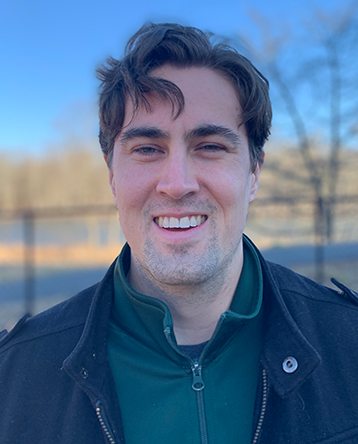
Jacques Rivière is an Assistant Professor at Pennsylvania State University , focusing on interdisciplinary research at the intersection of acoustics , geophysics , ultrasonics , and machine learning . His work combines experimental and computational approaches to address fundamental and applied problems in these areas. Research Interests Acoustics: nonlinear acoustics, acoustic emission, vibrations Geophysics: rock physics, earthquake physics, friction, granular physics Ultrasonics: nondestructive evaluation (NDE), structural health monitoring (SHM), material characterization and damage assessment, medical ultrasound Machine Learning: applications to ultrasonic/seismic data analysis, physics-informed models Advising and Collaboration Prof. Rivière is actively seeking a PhD student to join his research group and encourages motivated undergraduate/graduate students to apply by submitting CVs and expressions of interest.
Robert F. Shepherd is an Associate Professor and Director of Graduate Studies for Mechanical Engineering at Cornell University's College of Engineering. He holds appointments in Aerospace Engineering, Fiber Science, Materials Science, Mechanical Engineering, Systems Engineering, and Theoretical and Applied Mechanics. Educational background: B.S. Material Science & Engineering, University of Illinois (2002) M.B.A. General Management, University of Illinois (2009) Ph.D. Material Science & Engineering, University of Illinois (2010) His research focuses on disruptive manufacturing technologies (3D printing, microfluidics) and functional materials for novel devices. He develops soft actuators mimicking biological functions and enhances fabrication techniques for efficient biomimetic machines. His work bridges materials innovation with robotic applications. Publications primarily explore soft robotics, biomimetic systems, and advanced manufacturing, with consistent emphasis on material behavior and actuator design across diverse applications. Scientific awards: Senior Member, National Academy of Inventors (2022) ONR Young Investigator (2016) Cornell Engineering Teaching Award (2016) Extreme Mechanics Letters Award (2016) NAE FOE Fellow (2016) NAS KAVLI Fellow (2016) Leads the Shepherd Group Research Laboratory and Organic Robotics Lab, focusing on soft material systems and bio-inspired machines.
Professor Itai Einav is a renowned academic in civil engineering and geomechanics at The University of Sydney. He serves as Director of SciGEM (Science of Granular and Multiphase Energy Materials) and holds an honorary professorship at University College London. His research focuses on granular materials, particulate systems, and geomechanics, with particular emphasis on breakage mechanics and applications in mining, heat transfer, and fault dynamics. He advises PhD students on topics like robotic navigation inspired by earthworms and soil mechanics. Einav's work bridges fundamental physics and engineering applications, leveraging advanced imaging techniques (e.g., X-ray tomography) and computational models. He is affiliated with The Net Zero Institute and collaborates globally on projects like granular flow dynamics and porous media behavior. Notable contributions include the 2007 development of breakage mechanics theory and innovations in granular rheology and fault modeling.
Paulo E. Arratia is a Professor in the Department of Chemical and Biomolecular Engineering and Mechanical Engineering and Applied Mechanics. His research spans soft matter physics, complex fluids, and biomechanics, with a focus on non-Newtonian fluid dynamics, bacterial suspensions, and microfluidics. He serves as the Faculty Director of Undergraduate Research and leads a research group based in Towne M60, exploring phenomena such as viscoelastic flow instabilities and the physics of baseball mud. Departments: Chemical and Biomolecular Engineering, Mechanical Engineering and Applied Mechanics Honors: Eduardo D. Glandt Distinguished Scholar, Fellow of the Society of Rheology (2025), APS DFD Fellow (2022) His recent work highlights the interplay between biological systems and fluid mechanics, including studies on bacterial rheotaxis, sedimentation dynamics, and the rheology of human blood plasma. Collaborations with Dr. Jerolmack on mudslide physics and contributions to understanding elastic turbulence and chaotic transport further underscore his interdisciplinary approach. Scientific awards include: Fellow, Society of Rheology (2025) APS DFD Fellow (2022) for experimental discoveries in complex and biological fluid mechanics He has advised PhD students Bryan Torres Maldonado, Ranjiangshang Ran, and Larry Galloway, all of whom successfully defended their theses. His lab’s recent publications analyze soft matter mechanics, granular creep, and viscoelastic swimmers, reflecting ongoing trends in active matter and material failure.
João F. Mano is a Full Professor at the Department of Chemistry, University of Aveiro, and Director of the Doctoral Program on Biotechnology. He leads the COMPASS Research Group and serves as Vice-Director at CICECO - Aveiro Institute of Materials. His academic appointments include Invited Professor at University of Lorraine (France), Visiting Professor at KAIST (South Korea), and Adjunct Professor at Ajou University (South Korea). Education: PhD in Chemistry (1996, Technical University of Lisbon); D.Sc. in Tissue Engineering, Regenerative Medicine and Stem Cells (2012, University of Minho) Research Interests focus on Biomaterials for Regenerative Medicine , integrating Nanotechnology , Microtechnology , and Biofabrication . His group develops Bioinspired Materials using polymer chemistry, Decellularized Extracellular Matrix , and 3D Bioprinting to engineer Cell Microenvironments for therapeutic applications. Recent Publications highlight advancements in Human-Derived Hydrogels , Photopolymerizable Scaffolds , Magneto-Responsive Biomaterials , and Programmable Bioinks . Trends show emphasis on Organ-on-a-Chip integration, Smart Living Materials , and Green Bioprinting methodologies. Scientific Awards include: European Research Council Advanced Grants (2015, 2020) Fellow at IUPAC, European Academy of Sciences, and American Institute of Medical and Biological Engineering ERC Proof of Concept Grants Doctor Honoris Causa from University of Lorraine and Utrecht UNESCO Chair on Biomaterials George Winter Award (European Society for Biomaterials) Supervisions & Collaborations encompass 74+ MSc, 26+ PhD students, and 40+ postdocs. He co-founded METATISSUE and CELLULARIS Biomodels , and serves as Editor-in-Chief of Materials Today Bio .
Teng-Fong Wong is a Research Professor in the Department of Geosciences at Stony Brook University, where he has been a faculty member since 1982. His research focuses on the intersection of rock mechanics, earthquake processes, and environmental applications, making significant contributions to understanding deformation mechanisms in geological materials. Education: Sc.B., Brown University, 1973 M.S., Harvard University, 1976 Ph.D., Massachusetts Institute of Technology, 1981 Research Interests: Professor Wong's research centers on rock mechanics with emphasis on earthquake mechanics, energy resources, and environmental applications. He investigates both phenomenological and micromechanical aspects of rock deformation and fluid flow using an integrated approach combining high-pressure deformation experiments, quantitative microstructure characterization, and theoretical analysis. His work spans brittle-ductile transitions in porous rocks, permeability evolution, strength properties of fault zone materials from SAFOD and TCDP drilling projects, and submarine groundwater discharge systems. Publication Trends: Wong's recent publications (2006-2008) demonstrate a consistent focus on strain localization mechanisms in porous rocks, particularly examining compaction bands and deformation bands in sandstones. His work integrates advanced imaging techniques (X-ray radiography, CT scanning) with mechanical testing to understand the micromechanics of rock failure. A significant thread connects his research on fault zone properties from major drilling projects (SAFOD, TCDP) with fundamental rock deformation processes. Scientific Recognition: U.S. Patent 6,874,371 for Ultrasonic Seepage Meter (2005) U.S. Patent 7,107,859 for Ultrasonic Seepage Meter (2006) Co-author of "Experimental Rock Deformation - The Brittle Field" (2nd Edition, Springer-Verlag, 2005) Professional Activities: Professor Wong maintains an active international research profile with numerous visiting appointments including at Australian National University, MIT, ETH Zurich, and institutions in China and France. His work involves extensive collaboration with USGS and international research teams on major fault zone drilling projects. He has developed specialized equipment like the ultrasonic seepage meter for measuring submarine groundwater discharge. Research Infrastructure: Wong's laboratory utilizes advanced capabilities including high-pressure deformation equipment, 3D visualization through laser scanning confocal microscopy and synchrotron microCT, and integrates these with analytic modeling and numerical simulation techniques (finite element and discrete element methods) to investigate micromechanics of dilatant and compactant failure in geological materials.
Gedas Bertasius is an Assistant Professor in the Department of Computer Science at the University of North Carolina at Chapel Hill. Previously, he served as a postdoctoral researcher at Meta AI (Facebook AI) and earned his PhD in Computer Science from the University of Pennsylvania. His academic journey began with a bachelor’s degree in Computer Science from Dartmouth College. Dr. Bertasius specializes in computer vision and machine learning with specific interests in: Video understanding First-person vision (egocentric vision) Human behavior modeling Multimodal deep learning Transfer learning Computer vision for sports analytics Video+robotics integration His research produces practical frameworks like Video ReCap for hierarchical captioning of long videos, SiLVR for language-based video reasoning, and BASKET for fine-grained skill estimation. He focuses on developing models that can process videos across multiple temporal granularities while maintaining computational efficiency. Key research themes in his work include: Recursive video processing architectures Space-time attention mechanisms Generative video modeling LLM integration with vision systems 3D-aware representation learning Continual learning for video QA He has received notable recognition, including: CVPR 2024 Egocentric Vision (EgoVis) Distinguished Paper Award CVPR 2020 Best Paper Award Nomination First Place at CVPR 2025 Multi-Discipline Lecture Understanding Workshop Dr. Bertasius collaborates with prominent researchers like Mohit Bansal and Lorenzo Torresani . His recent publications demonstrate expertise in advancing video-language models, with applications in semantic alignment, temporal grounding, and cross-modal reasoning. For detailed information about his research, publications, and ongoing projects, please visit his official website .
Trevor J Jones is an Assistant Professor in the Department of Mechanical Engineering at Carnegie Mellon University's College of Engineering, where he leads the Mechanically Intelligent Engineered Structures (MInEnS) Lab. His research integrates soft matter mechanics, nonlinear dynamics, and indigenous knowledge to develop novel technologies in soft robotics, meta-materials, and manufacturing. Education: Ph.D., Chemical Engineering, Princeton University (2023) B.S., Chemical Engineering, Vanderbilt University (2017) His research focuses on harnessing mechanical instabilities, fluid-solid interactions, and granular matter to create intelligent, adaptive materials. Inspired by natural phenomena and Ojibwe beadwork traditions (reflected in the MInEnS Lab's name from the Ojibwemowin word manidoominens ), his work spans soft robotics, deployable structures, and beadwoven metamaterials. He employs an interdisciplinary approach combining crafting, experimentation, and theoretical modeling. His recent publications (2022–2024) demonstrate a strong trend in leveraging buckling, plasticity, and fluid dynamics to achieve emergent intelligence and multifunctionality in soft engineered systems, particularly through innovative fabrication techniques like bubble casting and beadwork-inspired design. Scientific Awards: AISES Lighting the Pathway Fellow Trailblazer in Engineering Rising Star in Soft and Biological Matter Jones actively mentors graduate and undergraduate researchers, including PhD students Eddie Beck and Angela Lee, and undergraduates Eleni Georgountzos and Adela Qiu. He is currently recruiting PhD students and postdocs for projects in bead-woven materials and soft matter mechanics. The MInEnS Lab fosters a highly interdisciplinary environment that values curiosity, craftsmanship, and the integration of diverse cultural perspectives in scientific inquiry.
Ming Li is a Professor at the University of Waterloo , holding the Canada Research Chair in Bioinformatics . Affiliated with the David R. Cheriton School of Computer Science , his research spans Bioinformatics , Kolmogorov Complexity , Deep Learning , Natural Language Processing , and Computational Biology . His contact details include office Davis Center 3355 and email mli@uwaterloo.ca . Research Interests include Bioinformatics (protein/antibody sequencing, structure analysis), Deep Learning , Natural Language Processing , Kolmogorov Complexity and Applications , and Algorithms & Complexity (average-case analysis, information distance). Editorial Roles : Co-Managing Editor of the Journal of Bioinformatics and Computational Biology , Associate Editor-in-Chief for Journal of Computer Science and Technology , Editorial board member of multiple journals including SIAM Journal on Computing and Information and Computation . Professional Activities : Served on scientific advisory committees for Genome Prairie and Tsinghua University, and numerous international conference program committees (e.g., KDD 2007, CPM 2007, FOCS'99). Awards & Honors : Killam Prize (2010) IEEE Granular Computing Outstanding Contribution Award (2010) Premier's Discovery Award (2009) Fellow of Royal Society of Canada, ACM, and IEEE (2006) Killam Fellowship (2001) E.W.R. Steacie Memorial Fellowship (1996) Multiple Best Paper Awards Students & Postdocs : Mentored over 30 graduate students and postdocs, including current advisees Guangyu Feng, Anqi Cui, and alumni like Babak Alipanahi, Xin Chen, and Brona Brejova.
Kaushik Nayak is an Associate Professor in the Department of Electrical Engineering at the Indian Institute of Technology Hyderabad . His research spans semiconductor device physics, mesoscopic electronics, and electro-thermal effects in nanoscale transistors, with recent work on diamond MOSFETs, 2D material contacts, and thermal resistance in nano-sheet FETs. Ph.D., Indian Institute of Technology Bombay M. Tech., Microelectronics, IIT Bombay B.E., Electronics & Telecommunication, Utkal University He teaches advanced courses on semiconductor device modeling, mesoscopic electronics, and electromagnetic wave propagation. His publications focus on nanoelectronics, device variability, and high-temperature operations. Contact: knayak@ee.iith.ac.in .
Jacob Fish is the Robert A.W. and Christine S. Carleton Professor and Chair of the Department of Civil Engineering and Engineering Mechanics at Columbia University. He directs the Multiscale Science and Engineering Center and leads Columbia's Computational Science and Engineering initiative (iCSE), coordinating 65+ faculty. With 35 years of pioneering research, he specializes in multiscale computational methods bridging aerospace, automotive, and healthcare industries. His research integrates multiscale computational science with applications in: Homogenization and reduced-order methods for complex materials Stochastic modeling of heterogeneous systems Coupled thermo-chemo-electro-mechanical processes Data-physics driven frameworks for industrial processes Recent work emphasizes AI-enhanced modeling for composites, porous media, and environmental systems. His 15 most recent publications (2023-2025) demonstrate strong trends toward: Data-physics integration in manufacturing (e.g., resin transfer molding) Multiscale environmental applications (canopy flows, CO2 mineralization) Advanced numerical methods (discontinuous Galerkin, solver-free homogenization) Digital twin development for composite lifecycle management Scientific Awards & Honors: 2018 JSCES Grand Prize 2010 IACM Computational Mechanics Award 2005 USACM Computational Structural Mechanics Award 2003 Rensselaer Research Award Fellowships: AAM, USACM, IACM Two Best Paper awards He founded the commercial Multiscale Designer software suite (250+ global clients) and secured major grants including an NSF-DFG collaboration on thermoplastic interfaces. His textbooks are used in 200+ universities worldwide. Leads the Multiscale Science and Engineering Center focusing on industrial-scale computational challenges and mentors researchers through Columbia's iCSE initiative. Former President of USACM and current IACM Vice-President for the Americas.
Silas Alben is a Professor in the Department of Mathematics at the University of Michigan, affiliated with the College of Literature, Science, and the Arts. His research focuses on applied mathematics and mathematical biology, particularly fluid-structure interactions in biological systems. He employs computational simulations and laboratory experiments to study fundamental physics of flexible bodies in fluids. Research interests include biomechanics of swimming organisms, vortex dynamics in fluid-structure interactions, and thermal transport optimization. His work bridges mathematical modeling with experimental validation to understand complex physical phenomena. Publications demonstrate strong focus on fluid dynamics applications, including vortex-enhanced heat transfer, membrane flutter dynamics, and bio-inspired locomotion. Recurring themes include optimization of fluid-structure systems, vortex wake interactions, and computational methods for aeroelastic problems.
Omar Rifki is an Associate Professor (Maître de Conférences) specializing in combinatorial optimization and artificial intelligence applications. His research bridges theoretical computer science with practical logistics challenges, focusing on routing problems, process mining, and machine learning integration for complex decision systems. His core research interests include phase transitions in NP-hard problems, vehicle routing optimization under time constraints, and healthcare process modeling. Rifki's work demonstrates a consistent pattern of integrating reinforcement learning with traditional optimization techniques to solve large-scale real-world problems in transportation and logistics, with particular emphasis on spatio-temporal data effects and collaborative systems. Analysis of his 15 publications (2019-2025) reveals three dominant research thrusts: (1) Fundamental studies of combinatorial problem hardness using phase transition frameworks, (2) Practical applications of deep reinforcement learning in vehicle routing and taxi assignment, and (3) Healthcare process optimization through advanced process mining techniques. His work consistently addresses scalability challenges in real-world implementations while maintaining theoretical rigor. No scientific awards were documented in the provided materials. His collaborative work with researchers like Christine Solnon and Thierry Garaix indicates active participation in European operations research communities, though specific grant details remain unreported. Rifki's research shows increasing integration of graph theory and machine learning in transportation applications, particularly evident in his Lyon City case studies on autonomous ride-sharing systems.
Jan Carmeliet is a Full Professor at the Department of Mechanical and Process Engineering at ETH Zürich , holding the Chair of Building Physics since 2008. He previously held academic positions at Katholieke Universiteit Leuven and Eindhoven University of Technology . His research focuses on multiscale modeling of porous and granular materials , urban heat-air-moisture flows , and energy-efficient urban systems . His work integrates advanced computational techniques (e.g., lattice Boltzmann methods , CFD , FEM ) with experimental approaches ( X-ray tomography , wind tunnel PIV ). He leads major projects such as the RePoDH and Urban Multiscale Energy Modelling initiatives, aiming to decarbonize urban energy systems and understand local heat islands. Current projects emphasize renewable-powered district heating networks and urban climate modeling . Key collaborations include institutions like Empa , University of Illinois , and Los Alamos National Laboratory . He has secured significant grants from the Swiss National Science Foundation (SNSF) and ETH Domain , focusing on urban energy resilience and material science. His leadership roles include directing the Energy Science Center ETH Zürich and coordinating the SCCER-efficiency program.
Alireza Yaseri serves as an Adjunct Assistant Professor in the Department of Civil Engineering within Smith Engineering at Queen's University. He maintains a dual affiliation with the GeoEngineering Centre, a leading research institute at Queen's specializing in geotechnical and geoenvironmental challenges, where he contributes to advanced computational modeling initiatives. Education: PhD in Geotechnical Engineering, Université Laval (2021) MSc in Geotechnical Engineering, Shiraz University (2012) Dr. Yaseri's research program centers on computational geomechanics with emphases on seismic soil-structure interaction, railway-induced vibrations, and constitutive modeling of granular materials. His work bridges theoretical mechanics and practical infrastructure challenges through advanced numerical techniques, particularly hybrid FEM-SBFEM implementations for dynamic analysis of earth dams, canyon systems, and transportation corridors. He investigates nonlinear soil behavior under monotonic/cyclic loading and develops predictive models for vibration propagation in complex geological settings. Analysis of his publication trajectory (2014-2024) reveals consistent innovation in computational geotechnics, with recent work focusing on 2.5D/3D modeling of train-induced vibrations and sophisticated sand constitutive frameworks. His 2024 publications demonstrate dual expertise in railway vibration prediction methodologies and critical-state soil mechanics, while his earth dam-canyon system analyses from 2020-2022 established foundational approaches for seismic amplification in flexible geological formations. As an active member of Queen's GeoEngineering Centre, Dr. Yaseri collaborates on interdisciplinary projects addressing infrastructure resilience, with particular relevance to dam safety and transportation geotechnics in seismic zones. His technical leadership in scaled boundary methods contributes to the center's reputation for computational innovation in geomechanics.