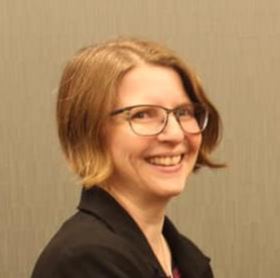
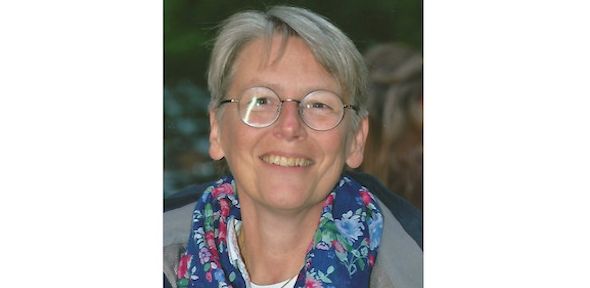
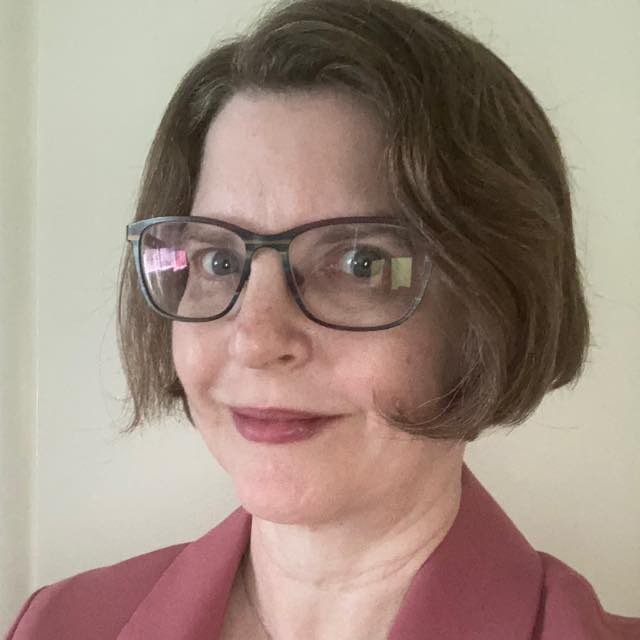
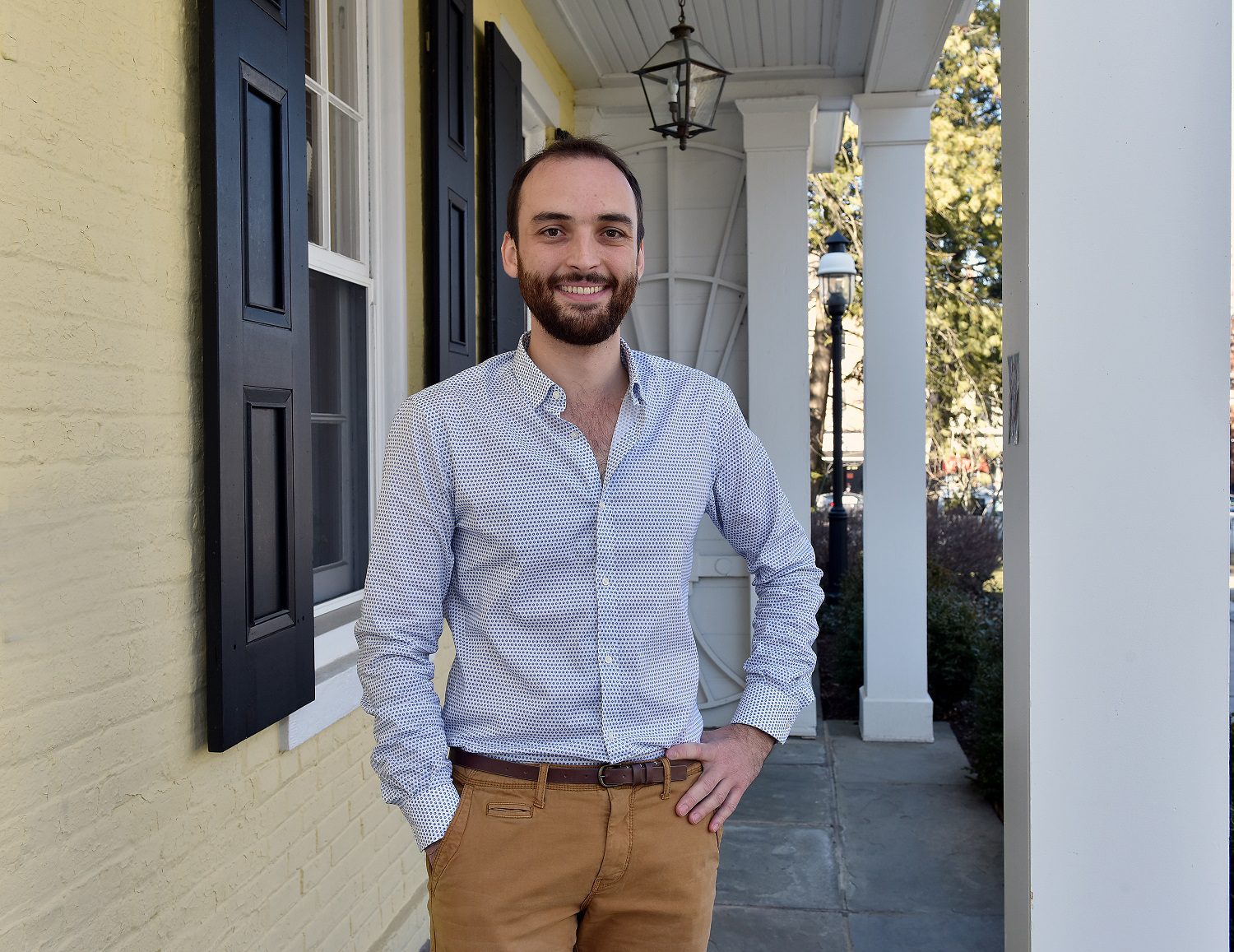
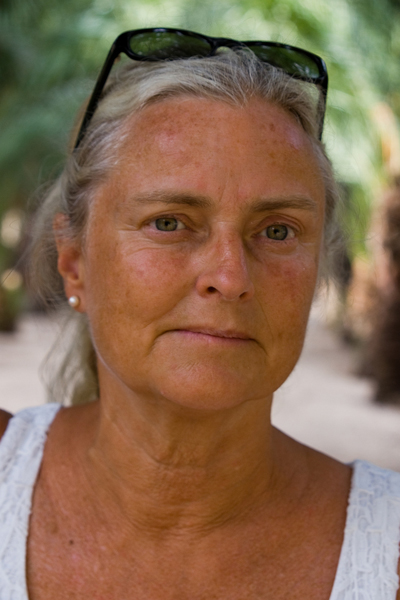
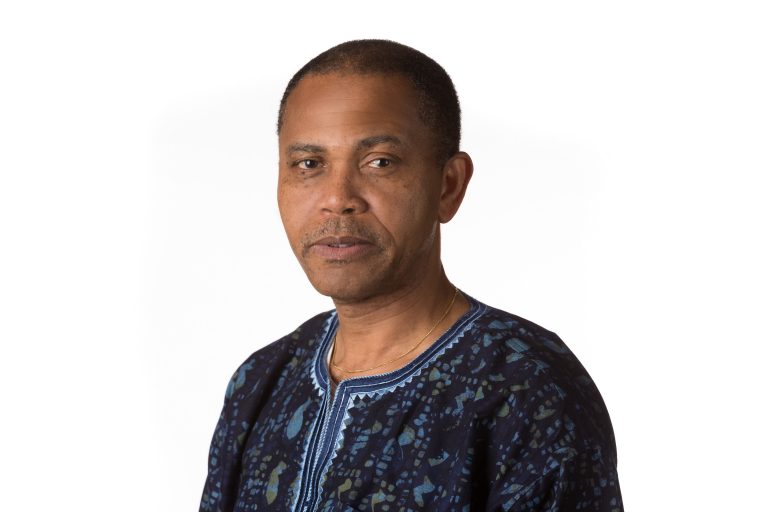
Claire Bowern is Professor of Linguistics at Yale University specializing in historical linguistics, language documentation, and Australian Indigenous languages. Her research employs computational phylogenetics to study language evolution and supports language revitalization through digital archives and fieldwork methodologies. Recent publications address: Phylogenetic signal in lexical evolution across language families Digital infrastructure for endangered language documentation (FLEx software analysis) Decolonizing linguistics pedagogy and research practices Her work consistently integrates linguistic, anthropological, and computational approaches to analyze language diversity and change. She contributes to global databases including Grambank and D-PLACE, examining links between linguistic, cultural, and environmental patterns.
Mark Post is a Senior Lecturer and Honours Coordinator in the Discipline of Linguistics at the Faculty of Arts and Social Sciences, The University of Sydney. He also serves as Deputy Head of School (Humanities) and is affiliated with the China Studies Centre, Sydney Southeast Asia Centre, and The Vere Gordon Childe Centre. His educational background includes a BA Hons from Wesleyan University, an MA from the University of Oregon, and a PhD from La Trobe University. Dr. Post's research focuses on describing and explaining the typologies and relationships among Greater Mainland Southeast Asian and Himalayan languages. His descriptive work relies exclusively on primary field data, with interests in improving fieldwork methodologies. He approaches linguistic explanation from a functional-diachronic perspective, viewing language as a dynamic process whose structures emerge from patterns of discourse and interaction. His extensive publication record reveals a strong focus on Eastern Himalayan languages, particularly Tani languages, with research spanning linguistic typology, historical linguistics, and language documentation. Key themes include classifiers, deixis, applicatives, and the ethnolinguistic prehistory of the Eastern Himalaya across more than 50 publications since 2004. His notable recognition includes: 2011 Recipient of the Association for Linguistic Typology's Pāṇini Award Dr. Post has supervised research students including Chintan SHETH on ethno-linguistic prehistory in the Eastern Himalaya. His grant history includes significant projects such as 'Pseudo grains and adaptiveness in the Eastern Himalayas' (ARC, 2023), 'Center for Cultural Linguistic Diversity - Eastern Himalayas' (Firebird Foundation, 2022), and 'A Documentation of the Upper Belt variety of Minyong (Adi)' (Endangered Languages Documentation Programme). He is a life member of the Galo Language Development Committee (Arunachal Pradesh, India) and actively participates in the Association for Linguistic Typology, Australian Linguistic Society, and North East Indian Linguistics Society.
Elaine Francis is a Professor of English and Linguistics at Purdue University's College of Liberal Arts, where she serves as Associate Head of the Department of English and directs the Experimental Linguistics Lab. She holds additional affiliations as an Affiliate Faculty Member in the Department of Linguistics and a Courtesy Faculty Member in the Department of Speech, Language, and Hearing Sciences. Ph.D. in Linguistics, University of Chicago (1999) B.A. in Linguistics, College of William and Mary (1993) MA in Linguistics, University of Chicago (1995) Former Assistant Professor at the University of Hong Kong (1999-2002) Professor Francis's research focuses on syntax and its interfaces with semantics, discourse information structure, and language processing in production and comprehension. She employs experimental methods to investigate syntactic, semantic, discourse-pragmatic, and cognitive factors underlying complex sentence structures. Her primary research areas include word order alternations, filler-gap dependencies, resumptive pronouns, and grammatical acceptability. She examines how various factors contribute to grammatical alternations in language use and explores how processing pressures in production and comprehension contribute to grammatical conventions. Her recent publication record shows consistent output across multiple linguistic subfields, with a strong emphasis on experimental syntax and psycholinguistics. Her 2022 book, Gradient Acceptability and Linguistic Theory , represents a significant contribution to understanding acceptability judgment tasks in relation to syntactic theory. Her work spans theoretical syntax, experimental linguistics, second language acquisition, and cross-linguistic comparison, often bridging the gap between theoretical frameworks and empirical evidence. Regularly teaches short courses at Linguistic Society of America Linguistic Institutes Member of Linguistic Society of America Ethics Committee Editorial board member of Glossa Psycholinguistics Co-editor of Polymorphous Linguistics: Jim McCawley's Legacy (2005) Co-editor of Mismatch: Form-Function Incongruity and the Architecture of Grammar (2003) Professor Francis actively supervises graduate students in linguistics, though she has indicated she will be unable to take on new graduate students for the 2025-2026 academic year. She has received research support for her experimental work, particularly for investigating syntactic phenomena through controlled experiments and corpus analysis. Her collaborative work extends across multiple institutions and disciplines, including collaborations with researchers in computational linguistics, cognitive science, and clinical linguistics. She directs the Experimental Linguistics Lab at Purdue University, which conducts research on syntactic processing using various experimental methodologies. The lab investigates how speakers produce and comprehend complex sentence structures, with particular attention to how grammatical knowledge interacts with processing constraints. Current projects include research on relative clauses, syntactic islands, and acceptability gradient phenomena across multiple languages.
Henriëtte Hendriks is a Professor in Language Acquisition and Cognition at the University of Cambridge, affiliated with the Faculty of Modern and Medieval Languages and Linguistics and the Theoretical and Applied Linguistics (TAL) department. She leads the Cambridge Processing and Acquisition of Language lab (CAMPAL) and serves as Deputy Director of the Centre for Lifelong Learning and Individualised Cognition (CLIC). Education: Sinology at Leiden University Early Career: Coordinator at Max-Planck Institute for Psycholinguistics (DFG/ESF projects) Her research explores how languages encode concepts (person, time, space, causality) and their impact on language acquisition. Key themes include: Cognitive Linguistics and Language-Cognition Interfaces First and Second Language Acquisition Mechanisms Multilingualism and Cognitive Flexibility Typological Variation in Semantic Structures Deictic Terms and Dynamic Space Representation Recent publications focus on motion event typology across English, German, French, and Uyghur, examining cross-linguistic influences in acquisition processes. Her work combines experimental methods with syntactic analysis to study semantic mapping and grammaticalization in multilingual contexts. Current projects include: Centre for Lifelong Learning and Individualised Cognition (CLIC) - Principal Investigator MEITS Project (Strand 5) - Co-Investigator Cambridge Language Sciences Incubator projects on cognitive pacing and parental linguistic contributions International DeicTeS project on deictic meaning processes Labs & Teams: Cambridge Processing and Acquisition of Language lab (CAMPAL) Collaborations with Zoe Kourtzi, Vicky Leong, and Clare Hughes
Elaine J. Francis is a Professor of English and Linguistics at Purdue University, where she also serves as the Associate Head of the Department of English. She holds affiliate appointments in the Department of Linguistics and the Department of Speech, Language, and Hearing Sciences. At Purdue, she directs the Experimental Linguistics Lab and teaches linguistics courses at both graduate and undergraduate levels. Francis completed her B.A. in Linguistics at the College of William and Mary in 1993, followed by her M.A. (1995) and Ph.D. (1999) in Linguistics at the University of Chicago under the direction of Salikoko Mufwene. Her dissertation examined variation among members of the same lexical category in English using Sadock's Autolexical Grammar framework. Prior to joining Purdue in 2003, she served as an Assistant Professor at the University of Hong Kong from 1999 to 2002, where she collaborated with Stephen Matthews on research concerning syntactic categories and relative clauses in Cantonese. Her research focuses on syntax and its interfaces with semantics, discourse information structure, and language processing in production and comprehension. Francis employs experimental methods to investigate syntactic, semantic, discourse-pragmatic, and cognitive factors underlying the grammar and usage of complex sentence structures. Her specific interests include word order alternations, filler-gap dependencies, resumptive pronouns, relative clauses, grammatical categories, and syntactic alternations. She has published extensively in top linguistics journals including Language and Cognition, Glossa Psycholinguistics, Linguistics, Lingua, Cognitive Linguistics, and the Journal of Psycholinguistic Research. Analyzing her recent publications reveals a consistent focus on experimental approaches to syntactic phenomena. Her work demonstrates a strong interest in gradient acceptability, syntactic priming, cross-linguistic comparison (particularly involving English and Cantonese), and the relationship between grammatical theory and language processing. Her 2022 book Gradient Acceptability and Linguistic Theory represents a major contribution that synthesizes experimental findings with theoretical linguistics frameworks. Francis plays an active role in the broader linguistics community. She regularly teaches short courses at the Linguistic Society of America Linguistic Institutes, serves on the LSA Ethics Committee, and is on the editorial board of Glossa Psycholinguistics. She has also edited several books and special journal issues, including Mismatch: Form-Function Incongruity and the Architecture of Grammar (2003) and Polymorphous Linguistics: Jim McCawley's Legacy (2005). As an educator and administrator, Francis has supervised numerous graduate students and currently serves as Associate Head of the Department of English at Purdue. Her Experimental Linguistics Lab provides research opportunities for students interested in the intersection of theoretical syntax and experimental methodology. While she recently announced she will not be accepting new graduate students for the 2025-2026 cycle, her established mentorship record demonstrates her commitment to training the next generation of linguists. The Experimental Linguistics Lab, which she directs, serves as a hub for research combining theoretical linguistics with experimental methods. Her collaborative work extends across disciplines, including collaborations with researchers in speech-language pathology, cognitive science, and computational linguistics, reflecting the interdisciplinary nature of modern linguistic research.
Florian Lionnet is an Associate Professor of Linguistics in Princeton University's Council of the Humanities and Director of Undergraduate Studies. He holds a Ph.D. from UC Berkeley (2016) and joined Princeton in 2017. His research focuses on phonetics/phonology, typology, areal and historical linguistics, and language documentation, with a focus on African and Oceanic languages. Current projects include endangered languages in Chad and New Caledonia, involving annual fieldwork collaborations with anthropologists, ethnomusicologists, and archaeologists. Research interests emphasize tonal systems, phonological representation, and language contact, particularly in Laal (an isolate language), Fanya (Bua), and Khoisan languages. His work bridges theory and practice, contributing to both linguistic theory and endangered language preservation. Articles explore tone phonology, areal patterns, and subphonemic effects, with recent emphasis on Kalahari Basin and Oceanic languages. Teaching responsibilities include directing undergraduate studies in Linguistics. No awards or grants are explicitly listed, though his fieldwork suggests active research funding. His office is located at 1-S-18 Green Hall, Princeton University.
Julie Anne Legate is Professor and Chair of Linguistics at the University of Pennsylvania's Department of Linguistics. She earned her PhD from the Massachusetts Institute of Technology in 2002. Legate co-directs the Penn Syntax Lab and served as Editor-in-Chief of Natural Language & Linguistic Theory for 10 years. Her research focuses on syntactic theory, morphosyntax, and syntax-semantics interfaces, with specialization in endangered/understudied languages. Key interests include passives, impersonals, causatives, null subjects, case theory, and locality domains. She maintains secondary research interests in language acquisition. Legate's publications demonstrate extensive work on voice systems (especially passives), ergativity, case theory, recursion, and cross-linguistic analysis of languages including Acehnese, Warlpiri, and Lithuanian. Her research frequently combines theoretical innovation with empirical fieldwork. Awards include the LSA’s Best Paper in Language Award (2020) for On Passives of Passives . She has advised multiple PhD students including Faruk Akkuş (2021), Milena Šereikaitė (2020), Ava Irani (2019), Helen Jeoung (2018), and Einar Freyr Sigurðsson (2017). Current projects include: syntactic islands (with Charles Yang), Mandarin bridge verbs (with Jiayi Lu and Charles Yang), null subjects in Brazilian Portuguese (with Gesoel Mendes), and passive agent binding.
John W. Du Bois is a Professor in the Department of Linguistics at the University of California, Santa Barbara (UCSB), within the College of Letters and Science. His work focuses on the interplay between discourse, grammar, and sociocultural contexts. Specializing in dialogic syntax, he explores how linguistic structures emerge from interactional dynamics, particularly in conversational coherence and stance-taking mechanisms. His research integrates corpus linguistics, computational methods, and ethnographic approaches to study languages like Mayan and Kazakh. Key research areas include: Discourse and grammar integration Dialogic resonance and affective alignment Corpus design and analysis Ritual language and cognitive models Mayan linguistic systems Recent studies emphasize computational tools like Rezonator for dialogue coherence visualization and remote corpus development methodologies. His work bridges theoretical linguistics with applied research in language documentation and education. Du Bois has contributed to foundational texts on discourse transcription standards and maintains active involvement in the Santa Barbara Corpus of Spoken American English project. His publications span over four decades, reflecting sustained engagement with linguistic complexity across multiple levels—from micro-level syntactic interactions to macro-level sociocultural frameworks. Current projects investigate dialogic syntax in autism and the evolutionary niche of language within social interaction.
Yoshiko Matsumoto is the Yamato Ichihashi Professor in Japanese History and Civilization and Professor of East Asian Languages and Cultures at Stanford University, with a courtesy appointment in Linguistics. She has been a faculty member at Stanford since 1992, progressing from Assistant Professor to her current distinguished position. Matsumoto also serves as coordinator of the Japanese Language Program and has held significant administrative roles including Chair of the Department of Asian Languages (2003-2005) and Interim Chair of the Department of East Asian Languages and Cultures (2016). Matsumoto earned her Ph.D. in Linguistics from the University of California, Berkeley (1989), following M.A. degrees in Linguistics from UC Berkeley and General and Applied Linguistics from the University of Tsukuba, an M.I.A. in American Studies from the University of Tsukuba, and a B.A. in English Language & Literature from Japan Women's University. Professor Matsumoto's research focuses on linguistic pragmatics from cross-linguistic perspectives, with particular expertise in Japanese language. Her work spans structural and sociocultural aspects of language in use, including noun-modifying clause constructions, honorifics, discourse markers, and the intersection of language with gender and aging. She has pioneered research on conversational narratives of older adults, examining how ordinary framing strategies help individuals navigate difficult experiences. Her current projects explore intergenerational communication through haiku, communicative abilities of people with dementia, and noun-modifying constructions across Eurasian languages. Matsumoto's scholarship consistently bridges theoretical linguistics with practical applications for understanding human communication in diverse social contexts. Matsumoto's recent publications reveal a growing focus on practical applications of linguistic research for social benefit, particularly in intergenerational communication and dementia care. Her work increasingly integrates arts-based approaches, especially haiku poetry, to bridge generational divides and enhance communication with elderly populations. The research shows a consistent trajectory from theoretical linguistic frameworks toward applied, human-centered language studies that address real-world challenges in aging societies, with particular attention to how ordinary language practices help individuals navigate life transitions and difficult experiences. Dean's Award for Distinguished Teaching, School of Humanities and Sciences, Stanford University (2000) Richard E. Guggenhime Faculty Scholar, Stanford University (2000-2003) Violet Andrews Whittier Fellow, Stanford Humanities Center (2019-2020) Faculty Research Fellow, Michelle R. Clayman Institute for Gender Research (2014-2015) Research Fellow, Japan Foundation (2002) Internal Fellow, Stanford Humanities Center (2005-2006) Presidential Fund for Innovation in the Humanities, Stanford University (2009-2011) Professor Matsumoto has mentored numerous students through her teaching in Japanese language and linguistics courses, including specialized offerings on language and aging, points in Japanese grammar, and haiku-based communication. Her research has been supported by prestigious grants from the National Endowment for the Humanities, the Japan Foundation, and Stanford's Presidential Fund for Innovation in the Humanities. She has served on multiple editorial boards including the Journal of Pragmatics since 1992, demonstrating long-standing leadership in her field. Matsumoto has also advised students through individual studies and thesis projects in East Asian Languages and Cultures. Matsumoto leads several collaborative research initiatives including the 'Sharing Conversations' project which examines intergenerational communication through haiku, and research on communicative abilities of people with dementia. Her work often involves interdisciplinary teams spanning linguistics, gerontology, and creative arts, with fieldwork conducted in both Japan and the United States. The 'Noun-Modifying Constructions in Languages of Eurasia' project represents a major international collaboration examining linguistic structures across cultural boundaries. She also directs the 'Language, Old Age and Gender in Japan' project supported by the Stanford University/Japan Foundation, and the 'Difficult Conversations Continue: Memories of the 3.11 Disaster and Bereavement Narratives' project focused on post-disaster communication.
Carita Paradis is a Professor Emerita at Lund University's Centre for Languages and Literature, specializing in English Linguistics. She holds a PhD from Lund University (1997) and has held leadership roles including Chair of the Swedish Research Council's Linguistics panel (2010–2015). She coordinates the Language, Cognition and Discourse@Lund (LCD@L) research group, focusing on discourse meaning, language acquisition, and sociocultural variation. Her research spans cognitive linguistics, discourse analysis, semantics, and sensory language. She has authored/co-authored over 100 refereed publications, 5 books, and edited 10 journal volumes. Awards include membership in Academia Europaea (2016) and leadership roles in Scandinavian linguistic associations. She has supervised 14 PhD students and 8 postdocs, taught at all academic levels, and participated in numerous national/international research projects. Her editorial roles include serving on Cognitive Semantics, Languages, and Human Cognitive Processing series.
James Essegbey is a Professor of African Languages and Linguistics in the Department of Languages, Literatures & Cultures at the University of Florida (Gainesville), affiliated with the Center for African Studies, Center for Latin American Studies, and African American Studies. His research focuses on language endangerment documentation, syntax-semantics interfaces, and West African languages like Ewe, Akan, and Nyangbo. He holds a PhD from Leiden University (1999) and has held postdoctoral fellowships in the Netherlands and Germany. Key research areas include: Documentation of endangered languages (e.g., Nyangbo, Tutrugbu) Syntax of Kwa languages and Atlantic creoles Cultural influences on linguistic structures (e.g., left-hand taboos in Ghana) Creole genesis and trans-Atlantic language contacts Award-winning scholar with over 20 years of grant-funded projects, including: NSF grants for CoLang and documentary linguistics training programs NSEP funding for African languages summer institutes Leadership in language revitalization initiatives Teaching includes courses on Akan language, African elements in the Americas, and methods of language documentation. Active in professional organizations like the African Studies Association and Society for Pidgin and Creole Languages.
María Sol Sansiñena Pascual serves as Assistant Professor (tenure track) at KU Leuven across Leuven, Kortrijk, and Brussels campuses while also holding a guest professorship at Ghent University. Her primary academic affiliation lies within the Faculty of Arts at KU Leuven where she actively contributes to the Functional and Cognitive Linguistics: Grammar and Typology (FunC) research group. Education PhD in Spanish Linguistics, KU Leuven (2015) Research Focus Her scholarly work centers on semantic-pragmatic interpretation mechanisms, with special emphasis on modality and TAM (Tense, Aspect, Mood) categories, discourse phenomena including insubordination, language variation/change dynamics, and translation pattern analysis. She employs interactional-constructional frameworks to examine Spanish grammatical structures across synchronic and diachronic dimensions, particularly investigating evolutionary pathways from Latin to contemporary Spanish varieties. Publication Trends Analysis of her recent scholarly output reveals concentrated research trajectories in diachronic syntax (especially insubordinate clause evolution), modal-evidential semantics in Spanish conditional/future forms, grammaticalization processes of verbal periphrases, and indexicality mechanisms. Her methodological approach consistently integrates functional, cognitive, and construction grammar perspectives to address complex language change phenomena. Research Leadership Current promotor of "Pathways to insubordination: diachronic evolution of non-subordinate structures" (2025-2026) Principal investigator for "Speech-act orientation and intersubjective alignment" project (2020-2025) Academic Contributions She actively participates in the FunC research collective while teaching specialized courses including Spanish Linguistics I/III, Discourse Analysis, and Master's thesis support seminars. Her scholarly service includes editorial contributions such as co-editing the 2024 volume "Indexicality: The Role of Indexing in Language Structure and Language Change".
Prof. Gerhard Jäger holds the Chair of General Linguistics at the Faculty of Humanities, University of Tübingen . He serves as a Principal Investigator (PI) in the Clusters of Excellence Human Origins and Machine Learning for Science , and leads projects like Phylomilia (funded by Volkswagen Foundation) and CrossLingference (ERC Advanced Grant). His career spans multiple institutions, including Bielefeld University (2004-2009) and Stanford University (visiting scholar, 2004). Habilitation (2002) at Humboldt University Berlin with thesis on Anaphora and Type Logical Grammar PhD (1996) at Humboldt University Berlin on Dynamic Semantics His research bridges computational linguistics , phylogenetic analysis , and game theory , focusing on Bayesian models , language evolution , and cross-linguistic typology . Recent work explores phylogenetic inference from acoustic speech data and geographic influences on language trees . Key contributions include 15+ recent publications on topics spanning phylogenetic typology , cognate detection , and Bayesian language modeling . These works employ machine learning , statistical inference , and evolutionary game theory to analyze language change , typological variation , and linguistic stability . Honors include ERC Advanced Grant , Volkswagen Foundation funding , and DFG-Humanities Centre for Advanced Studies participation. He has taught courses in Computational Historical Linguistics , Phylogenetic Methods , and Bayesian Data Analysis across institutions like Tübingen, Bielefeld, and Stanford. He actively contributes to academic communities through workshop organization (e.g., Quantitative Theoretical Linguistics , Game Theory in Pragmatics ) and serves on the faculty council at Tübingen. His team collaborates with institutions like Max Planck Institute for Evolutionary Anthropology , University of Pennsylvania , and LMU Munich .
Reynaldo Romero serves as Associate Professor in the Department of History, Humanities and Languages at the University of Houston-Downtown, where he has maintained active teaching and research since at least 2012. His academic foundation spans linguistics, public health, and translation studies across multiple institutions. His educational background includes: Ph.D. in Spanish Linguistics from Georgetown University (Dissertation: Structural Consequences of Language Shift: Judeo-Spanish in Istanbul) M.P.H. in Community Health Practice from UTHealth (Dissertation: Beliefs on COVID-19 vaccination among Hispanic day laborers) M.A. in Translation from Kent State University Multiple B.A. degrees in French, General Linguistics, and Spanish Language/Linguistics from Rice University Romero's research creates critical intersections between linguistic theory and real-world applications. His work on Spanish for the Professions establishes frameworks for medical and legal interpreting while addressing systemic language access barriers. The scholarship on endangered languages—particularly Judeo-Spanish and Afro-Hispanic varieties—combines rigorous documentation with urgent revitalization efforts. His healthcare access research directly engages Houston's linguistic minorities through community-based projects like the Medical Translation Project with HISD. Recent publications reveal three dominant trajectories: (1) advancing methodologies in Afro-Hispanic linguistics through collaborative edited volumes; (2) developing social justice frameworks for marginalized language communities; and (3) documenting endangered linguistic varieties with innovative digital approaches. These threads converge in his community-engaged scholarship that bridges academic research and practical language access solutions. Professional recognition includes: Certified Translator status from the American Translators Association Advanced Professional Analytic Linguist certification Specialized medical and legal interpreter credentials Online teaching certification with digital tools specialization Romero's grant activity demonstrates sustained commitment to practical applications of linguistic research. Current projects include 'Promoting the Critical and Responsible Use of Digital Tools and AI in Written Tasks' (2024-2025), while past work developed medical interpreter training during disaster relief and language access protocols for healthcare settings. His service learning initiatives—like the Medical Translation Project with Houston ISD—create tangible community impact while advancing pedagogical innovation. Through the Medical Translation Project and language access advocacy, Romero cultivates collaborative spaces where academic research directly serves Houston's linguistic minorities. His work with heritage speakers and endangered language communities establishes frameworks for linguistic empowerment beyond traditional academic boundaries.
Viktória Dabóczi is a lecturer in the Department of German Studies at the University of Siegen, Faculty I. She holds a doctorate from the University of Siegen (2016) and has been actively involved in teaching and research in German linguistics since 2012. Her current academic role as AOR aZ (Akademische Oberrätin auf Zeit) began in June 2025, indicating a senior academic position. She teaches courses such as Introduction to German Linguistics, Grammatical Variation, and Language Acquisition. Research Interests: Her work focuses on word classes, spoken language, grammar theory, language acquisition, and lexical change in German, often with comparative insights from Hungarian. She investigates how words are conceptualized in speech and writing, the evolution of discourse markers, and grammatical variation in contemporary usage. The analysis of her recent publications (2005–2025) reveals a consistent focus on theoretical and applied German linguistics, with increasing attention to sociolinguistic phenomena such as pandemic-related neologisms and ideological word formations. Her research bridges empirical analysis, cognitive linguistics, and language teaching, often in interdisciplinary or contrastive frameworks. Reviewed works on German morphology and grammar Contributed to international projects like EuroGr@mm and ProGr@mm Participated in interdisciplinary conferences on ellipsis and language processing Advising and Grants: While no formal students are listed, her editorial and collaborative roles suggest mentorship and academic leadership. She has been involved in long-term research projects, including EuroGr@mm (2004–2012), indicating sustained grant-supported activity. Her current role at Siegen reflects ongoing institutional support for her research and teaching. Labs and Teams: She has collaborated with researchers at Justus Liebig University of Giessen, University of Szeged, and IDS-Mannheim. Her work with the Diskursmonitor research group and participation in interdisciplinary conferences highlight her integration into active research networks in German linguistics.