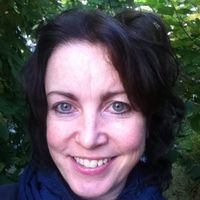
Muriel Norde is a full Professor of Scandinavian Linguistics at the Department of Northern European Studies , Humboldt-Universität zu Berlin, since 2013. Her research focuses on historical linguistics , construction grammar , and degrammaticalization in Germanic languages, particularly Scandinavian varieties. She has extensive experience in corpus linguistics and diachronic morphological analysis . Current Role: Professor at Humboldt-Universität Berlin Past Affiliations: University of Groningen (1997-2013), University of Amsterdam (1998-2003) Research Highlights : Spearheads the BiNoKo Corpus project for comparative historical register analysis. Leads international collaborations on exaptation in morphology and evaluative morphology . Key publications in Diachronic Construction Grammar and libfixes in European languages. Academic Contributions : Authored 83+ publications with over 21,182 reads. Notable works include studies on Swedish genitive evolution , Dutch diminutives , and modal constructions in Old Swedish . Her 2023 Frontiers in Psychology paper co-analyzes register pervasiveness across cultures. Supervision : Serves as promotor or committee member for 9+ PhD theses, including projects on Old Norwegian syntax , Dutch productivity shifts , and Norwegian demonstrative reinforcement . Collaborates with universities in Edinburgh, Ghent, Leuven, and Oslo.
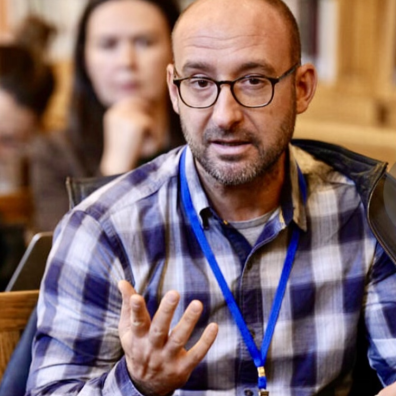
Mardale Alexandru is a University Professor at Inalco , affiliated with the Europe Department and the SeDyL research center. His work focuses on the syntax–semantics–discourse interface, particularly in heritage Romanian contexts, differential object marking, and the grammaticalization of prepositions in Romance languages. Research Interests: His expertise spans heritage language acquisition, linguistic expression of displacement, and modality in Romanian. He examines how language contact and reduced input affect syntactic structures, with a strong emphasis on grammaticalization processes and case-preposition interactions. 2024-2023 publications highlight his work on heritage Romanian in France, differential object marking, and clitic doubling. 2022-2003 contributions explore complex prepositions, animacy effects, and diachronic changes in Romanian syntax. Administrative Roles: He serves as Head of Romanian Studies and Educational Manager of the cross-disciplinary Linguistics course (LGE) at Inalco. He holds key positions in institutional governance, including membership in the Scientific Council and Research Commission.
Tina Malen Bergdølmo Lybekk is a Doctoral Research Fellow at the University of Oslo (UiO), affiliated with the Faculty of Humanities. She works on French language studies, focusing on Old French, clitics, grammaticalization, and language history. Current positions: Doctoral Research Fellow and PhD student Academic affiliations: Faculty of Humanities (UiO), Norwegian University of Science and Technology (NTNU) for Mathematics Education Master of Arts in French Language, University of Oslo Bachelor of Arts in Mathematics, NTNU Research Interests Her research centers on historical linguistics, specifically examining Old French grammar through the lens of clitics and grammaticalization processes. She contributes to language history studies by analyzing syntactic and morphological changes over time. Professional Contributions Lecturer in French and Mathematics at Nordpolen School Research assistant for Hans Petter Helland and Christine Meklenborg Nilsen Developed digital grammar task databases for language courses (FRA1110, FRA1101) Research Groups Active member of the Grammar and Meaning research group at UiO.
Dr. Jan Dvorak is a Lecturer in French Linguistics at the Université Toulouse - Jean Jaurès , affiliated with the Cognition, Languages, Ergonomics (CLLE) laboratory. He teaches Introduction to French Syntax and Phonetics/Phonology to undergraduate students, while preparing candidates for the 18th-century French language test in modern literature certification. PhD in Linguistics (2021) from ENS de Lyon - Université de Lyon Supervised by Céline Guillot-Barbance and Olga Nádvorníková Research Focus His research operates within Löbner’s Concept Types and Determination Theory , investigating: Grammaticalization of Czech ten into definite articles Deictic semantics in spoken French demonstratives Contrastive referential strategies between Czech and French Pragmatic effects in emotional demonstrative uses Emergent grammatical structures in informal registers Publication Trends Recent work spans 2019–2024 with a focus on: Comparative analysis of Czech-French demonstrative systems Grammaticalization processes in Slavic and Romance languages Corpus-driven studies of spoken language Definiteness markers in superlative constructions Deixis and reference chain dynamics Scientific Recognition Recipient of Prix Gallica for best dissertation in language sciences (2022) Published in Discours , Travaux de Linguistique , Scolia , and conference proceedings Technical Expertise TXM textometric software proficiency Corpus annotation and analysis Functional linguistic theory application Cross-linguistic typology
Matteo Motolese is a Full Professor of Italian Linguistics at the Department of Modern Literature and Culture, Sapienza University of Rome. He specializes in the history of the Italian language from the Trecento to the Novecento, focusing on literary language, grammatical codification, and the relationship between philology and historical linguistics. Key research projects: Autographs of Italian Men of Letters (director 2009-present), Linguistic Archive of Renaissance Italian Writers Teaches: Institutions of Italian Language History (12 CFU), Methods and Problems of Italian Linguistics (12 CFU) His recent research explores autograph manuscripts, grammaticalization processes, and error analysis in language history. Publications include edited volumes on Italian writing practices and historical dictionaries. Scientific distinctions include: Premio Pavese per la Saggistica (2021) for Storia dell'italiano scritto FIRB-Futuro in Ricerca grant (2010) National member of Accademia Nazionale dell'Arcadia (2021) He coordinates the national PhD program in Linguistics (2021-24) and participates in international editorial boards including Lingua e Stile and Bollettino d'Italianistica .
Marianna Chodorowska-Pilch serves as a Teaching Professor of Spanish at the University of Southern California within the Dornsife College of Letters, Arts and Sciences, where she contributes to Hispanic linguistics education and research. Her academic credentials include: Ph.D. in Hispanic Linguistics, University of Southern California (1998) M.A. in Hispanic Linguistics, University of Illinois at Chicago (1992) Chodorowska-Pilch specializes in pragmatic phenomena in Spanish, with particular focus on politeness strategies, discourse markers, and grammaticalization processes. Her research examines how linguistic structures encode social relationships through markers like 'verás', 'vamos', and conditional constructions, often employing contrastive analysis between Spanish and Polish. She investigates second language acquisition challenges in pragmatic competence, especially regarding apology expressions and mitigation strategies among Anglophone learners. Analysis of her 15 most recent publications reveals sustained investigation into politeness mechanisms across grammatical domains, with growing emphasis on cross-linguistic acquisition patterns. Recent works (2017-2022) extend her foundational research on discourse markers to examine pragmatic competence development and error patterns in learner Spanish. Her scholarly recognition includes: Multiple UCLA Research Enabling Grants for Barcelona research (2006-2007) University of Barcelona Visiting Scholar Fellowship (2006) Spanish Ministry of Foreign Affairs scholarship for Valencia research (2000) USC Del Amo Fellowships spanning 1992-1997 Copenhaver Award nomination for teaching innovation (2004-2005) Chodorowska-Pilch actively contributes to academic discourse as Advisory Board member for the Annual Review of Cognitive Linguistics and through longstanding membership in the International Pragmatics Association since 1996, demonstrating sustained engagement with linguistic theory and pedagogy.
Kirsten A. Jeppesen Kragh is an Associate Professor and Head of Studies at the Department of English, Germanic and Romance Studies, University of Copenhagen. She holds a PhD in French linguistics from 2006 and has been Deputy Head of Department since 2019. University of Aarhus (BA 1988, MA 1991) University of Copenhagen (MA 1993, PhD 2006, Dr.Phil. 2010) École Normale Supérieure (literature studies in Paris) Her research focuses on grammatical paradigms, perception verbs, deixis, and grammaticalization processes in Romance languages. Current projects examine: Temporal marking of subjunctive forms Modal variation after perception verbs Linguistic analysis of doctor-patient communication Functional grammar in French Language typology Linguistic theory Recent publications analyze: Deictic relative clauses in French Progressive periphrases in Romance languages Diasystematic variation in Romance languages Grammaticalization of perception constructions Language policy in antibiotic resistance discourse Notable scientific contributions include: 2010 Talent Development Program for Young Researchers 2010 Mentor Program for Young Female Researchers 2008-2011 Danish Research Council Scholarship for grammaticalization research She has served as: Editor for Studia Linguistica Romanica (2022→) Chairman of the Study Board for French Studies (2011-2012) Member of Expert Panels at Charles University (2019-2020)
Jan Juhl Lindschouw serves as Associate Professor in French Linguistics at the Department of English, Germanic and Romance Studies within the Faculty of Humanities, University of Copenhagen. His academic career spans over 15 years at the institution, including postdoctoral research supported by the Carlsberg Foundation and current leadership in linguistic research networks. Education: PhD in French Linguistics (2007), University of Copenhagen Master in Foreign Language Acquisition (2014), University of Copenhagen MA in French and Spanish (2003), University of Copenhagen BA in French with Spanish (1999), University of Copenhagen Research stay at École Normale Supérieure de Lyon (2005) His research centers on French grammar through synchronic and diachronic lenses, with emphasis on verb syntax including tense, mood, and aspect systems. He investigates why genetically related Romance languages evolve at different rates from Latin, examines grammaticalization processes, and studies language variation using large electronic corpora. Additional focus areas include second language acquisition of informal French, academic writing transitions between educational levels, and intercultural communicative competence. Recent publications (2022-2025) reveal strong thematic continuity in written/oral French development across educational stages, particularly the secondary-tertiary transition for Danish learners. His work integrates empirical corpus analysis with introspective methodologies, addressing grammatical competencies, academic literacy, and pragmatic development within French as a foreign language contexts. Awards: Educator of the Year 2008, Department of English, Germanic and Romance Studies Lindschouw supervises BA projects, theses, and assignments on French linguistics topics with preference for comparative Romance-Danish analyses. His research has been funded by the Carlsberg Foundation (2008-2013) for the project 'Language Change Scenarios in Romance Languages'. He serves on examination boards for French higher education and contributes to national educational policy discussions. He actively participates in international research networks including DIACHRO (diachronic French studies), the Danish Grammaticalization Network, and linguistic variation consortia, while maintaining collaborations with institutions like Uppsala University and Gammel Hellerup Gymnasium.
Balkız ÖZTÜRK BAŞARAN is a Professor and Department Head at Boğaziçi University's Department of Linguistics. She holds office JF 303 and can be reached at balkiz.ozturk@boun.edu.tr. Her academic career spans theoretical and descriptive linguistics with a focus on understudied languages of the Caucasus region. Her educational background includes a PhD in Linguistics from Harvard University (2004), an MA in Linguistics from Boğaziçi University (1999), and a BA in Translation and Interpretation from Boğaziçi University (1996). Her research interests center on Caucasian Languages, Altaic Languages, Turkish Languages, Theoretical Syntax, and Semantics. She has made significant contributions to the documentation and analysis of Laz language varieties, particularly Pazar Laz, Ardesheni Laz, and Muş Kurmanji. Her work bridges theoretical syntax with empirical fieldwork on lesser-documented languages, examining phenomena like case systems, applicatives, verb-framing, and possessive constructions. Her recent publications reveal a strong trend toward computational linguistics applications, particularly in Turkish language processing, while maintaining her core research on Caucasian languages. This dual focus demonstrates her ability to integrate theoretical linguistic insights with practical computational applications. She has served as principal investigator or researcher on multiple significant projects including the Deep Learning Based Turkish Dependency Parser (2018-present), Language Interaction in Turkey: Documentation and Analysis (2018-present), and Argument and Adjunct Distinction in Muş Kurmanji (2017-present), all funded by TÜBİTAK and Boğaziçi University Research Fund. Her teaching portfolio includes undergraduate courses in Morphology (Ling 202), Syntax (Ling 203), Typology (Ling 206), and Syntax and Semantics of Turkish (Ling 314), as well as graduate courses in Syntactic Theory (Ling 541), Readings in Linguistics (Ling 572), and Syntax of Voice (Ling 58H). She has presented her research at numerous international conferences and has given invited talks at institutions including Harvard University, University of Toronto, and Dokuz Eylül University.
Mathilde Eveline Keizer is a Professor of English Linguistics: Variation and Cognition at the Department of English and American Studies, Faculty of Philological and Cultural Studies, University of Vienna. She serves as both Vice-Director of Studies for English and American Studies and Deputy Head of the Department of English and American Studies, demonstrating significant leadership within the institution. Professor Keizer's educational background includes: MA in English language and literature, Vrije Universiteit Amsterdam (1987) PhD in English Linguistics, Vrije Universiteit Amsterdam (1992) Her primary research focuses on the theoretical framework of Functional Discourse Grammar, with particular emphasis on the Noun Phrase in English and Dutch, possessive constructions, reference and predication, definiteness, English pronouns, apposition, information structure, linguistic categorization, and semi-fixed constructions. Professor Keizer leads the FunCog research group, which investigates the intersection of functional and cognitive approaches to language structure. Her work demonstrates how linguistic structures emerge from the interaction of cognitive processes and communicative needs, providing insights into the dynamic nature of language organization. Analysis of Professor Keizer's recent publications reveals a consistent focus on English syntax within the framework of Functional Discourse Grammar. Her work spans noun phrase structure, partitive constructions, prepositional phrases, and adverbial modification, demonstrating the versatility of FDG in addressing diverse syntactic phenomena. A notable trend is her increasing attention to cross-linguistic comparisons, particularly between English and Dutch, which enriches our understanding of language universals and specifics. Professor Keizer has made significant contributions to the field through her extensive publication record, including authored and edited books that have shaped contemporary understanding of functional-cognitive approaches to grammar. Her work has appeared in leading linguistics journals and handbooks, establishing her as a prominent voice in theoretical linguistics. As an educator, Professor Keizer teaches courses on Functional Discourse Grammar, Cognitive Grammar, Linguistic Categorization, Fuzzy grammar, Linguistic models and approaches, The English Noun Phrase, English adjectives, English idioms, and English syntax. She has supervised numerous graduate students through thesis seminars and advanced courses in linguistics, contributing significantly to the development of the next generation of linguists. Professor Keizer leads the FunCog research group, which brings together scholars interested in the intersection of functional and cognitive approaches to language. The group focuses on empirical investigations of linguistic structures through the lens of Functional Discourse Grammar, fostering interdisciplinary collaboration and innovative research methodologies that bridge theoretical linguistics with practical applications in language teaching and computational linguistics.
Professor Koen Bostoen (born 1975) is a distinguished scholar of African Linguistics and Swahili at Ghent University, where he has held a professorship since 2011. He leads the BantUGent - UGent Centre for Bantu Studies and maintains affiliations with Modyco in Paris Nanterre. His research integrates linguistic, archaeological, and genetic evidence to reconstruct the history of Bantu speakers, particularly their expansion south of the Congo rainforest. Professor Bostoen's research interests focus on the historical-comparative study of Bantu languages and interdisciplinary approaches to the African past. His work examines language contact phenomena, lexical reconstruction, and the relationship between language spread and human migration. He investigates how linguistic evidence can inform our understanding of early farming practices, climate change impacts, and interactions between Bantu speakers and indigenous populations in Central Africa. His research spans multiple Bantu language groups including Kikongo, Kirundi, Kiswahili, Luganda, and numerous other Central and Southern African languages. His recent publications reveal a consistent pattern of interdisciplinary scholarship that bridges linguistic analysis with archaeological and genetic evidence. Professor Bostoen's work increasingly emphasizes the integration of multiple lines of evidence to reconstruct complex historical processes, particularly focusing on the Bantu expansion and its implications for understanding African prehistory. His research demonstrates sophisticated methodological approaches that combine traditional comparative linguistics with cutting-edge interdisciplinary techniques. ERC Starting Grant for KongoKing project (2012-2016) ERC Consolidator's Grant for BantuFirst project (2018-2022) Professor Bostoen maintains an active supervision portfolio, having recently promoted PhD students including Lorenzo Maselli (2024), Mandela Kaumba Mazanga (2022), Michel Onokoko Onyumbe (2022), and Heidi Goes (2022). His current research funding includes multiple major projects running through 2028, demonstrating sustained research excellence and productivity. His work continues to shape scholarly understanding of Bantu languages and African history through innovative interdisciplinary approaches. As director of the BantUGent Centre for Bantu Studies, Professor Bostoen oversees a vibrant research environment that brings together linguists, archaeologists, and geneticists to tackle complex questions about African history. The center facilitates fieldwork in Central Africa, language documentation projects, and collaborative research that advances our understanding of linguistic diversity and historical processes in Africa.
Paolo Milizia serves as Full Professor of Glottology and Linguistics at the Department of Asia, Africa and the Mediterranean of the University of Naples "L'Orientale" since July 15, 2024. Previously, he held positions as Associate Professor at the same institution (2020-2024), Assistant Professor at the University of Naples "Federico II" (2018-2020), and Assistant Professor at the University of Cassino (2008-2018). His educational background includes a PhD in "Glottology and Philology" from the University of Milan (2003), a degree in Literature with honors from the University of Rome "La Sapienza" (1998), and a postgraduate course at Albert-Ludwigs-Universität Freiburg (2004-2005). He obtained National Scientific Qualifications for both first and second bands in the competitive sector 10/G1 "Glottology and Linguistics" in 2017 and 2014 respectively. Milizia's research focuses on Indo-European linguistics with particular emphasis on Old and Middle Iranian, Old, Middle, and Modern Indo-Aryan, Greek, Coptic linguistics, and Italo-Romance dialectology. His scholarly work addresses complex issues in etymology, diachronic phonology and morphology, and the history of writing systems, as well as general morphological theory and the history of linguistic thought. His recent publications demonstrate a sustained interest in morphological complexity, language contact phenomena, and historical reconstruction across diverse linguistic traditions. His current research output shows strong continuity with his long-standing interests in Indo-European linguistics while expanding into computational approaches and cross-linguistic comparisons, particularly evident in his recent work on Coptic morphology, Sanskrit metrics, and Ancient Greek reduplication patterns. The publications reflect methodological diversity spanning historical-comparative, typological, and computational approaches. National Scientific Qualification for first band in sector 10/G1 "Glottology and Linguistics" (2017) National Scientific Qualification for second band in sector 10/G1 "Glottology and Linguistics" (2014) Milizia actively supervises undergraduate and master's theses at the University of Naples "L'Orientale" and has served as doctoral thesis supervisor since 2013. He participates in several major research projects including PRIN 2022 PNRR "The beginning of the Armenian, Syriac, and Arabic grammatical traditions and the classical Greek grammar," PRIN 2020 "Metalinguistic texts as a privileged data source for the knowledge of ancient languages," and PRIN 2017 "Ancient languages and writing systems in contact: a touchstone of linguistic change." He also serves as a reviewer for journals including the "Journal of Historical Linguistics" and the "Atti del Sodalizio Glottologico Milanese." He is a member of the scientific committee of the journal «Storia, antropologia e scienze del linguaggio» and participates in academic community building through conference organization, including the Language Documentation Summer School 2023. His teaching encompasses General Linguistics, Glottology, and Coptic language across multiple degree programs at the University of Naples "L'Orientale."
Anders Agebjörn is a Lecturer at Malmö University's Faculty of Learning and Society, specifically within the Department of Culture, Language and Media. He specializes in Swedish as a second language instruction and research. Agebjörn's research is primarily quantitative with a cognitive perspective focus on language systems including lexicon, grammar, and semantics. His work particularly examines language testing and assessment methodologies alongside language development and learning strategies among adult learners with limited formal education backgrounds. His research interests span second language acquisition, cognitive linguistics, and educational linguistics with specific attention to immigrant populations. His recent publications demonstrate a strong focus on second language writing development, particularly among adult immigrants with varying educational backgrounds. Agebjörn's work shows particular interest in how educational pathways affect language acquisition and the methodological challenges of studying understudied language learner populations. Agebjörn is affiliated with the Literacy and Inclusive Teaching (LIT) research center at Malmö University, which conducts interdisciplinary research on literacy and inclusive education practices. His work contributes to the center's mission of developing more effective language education approaches for diverse learner populations.
Sebastian Hoffmann is a distinguished academic affiliated with the University of Trier , where he served as Dean of the Faculty of Languages, Literatures and Media Studies from 2017 to 2023. He has held significant roles, including Visiting Professor at the University of Tampere (2014–2017) and Lecturer in English Linguistics at Lancaster University (2006–2009). His expertise lies in Corpus Linguistics , with a focus on World Englishes , Syntactic Change , and Corpus Methodology . He co-developed BNCweb , a widely used web interface for the British National Corpus. PhD from the University of Zurich His research explores usage-based approaches to language study, including syntactic evolution , phonological patterns (e.g., intrusive /r/), tag questions , and verb complementation . Recent work highlights the role of Internet-derived data in corpus linguistics and the fixedness of collocations . His publications span Corpus Methodology , Historical Linguistics , and Phraseology , with key works such as Corpora and Lexis (2018) and Grammaticalization and English Complex Prepositions (2005). He has contributed extensively to journals like the International Journal of Corpus Linguistics and Journal of English Linguistics . Hoffmann has been recognized for leadership in professional organizations, including Chair of ICAME (2017–2023) and Vice-President for the Profession of the International Society for the Linguistics of English (2018–2023). He teaches courses such as The History of the English Language and Transcribing and Analyzing Spoken Language .
Andres Karjus is a Senior Researcher at Estonian Business School and Lecturer in Digital Humanities and Artificial Intelligence at Tallinn University, where he is also a member of the CUDAN Cultural Data Analytics lab. His multidisciplinary work bridges linguistics, artificial intelligence, and cultural studies, employing methods ranging from machine learning to cognitive experiments. Estonian Business School: Senior Researcher Tallinn University: Lecturer in Digital Humanities and AI CUDAN Lab: Member of Cultural Data Analytics team University of Edinburgh: PhD from Centre for Language Evolution His research focuses on language and culture dynamics, particularly evolutionary processes driving change over time. Karjus specializes in applying computational methods to humanities and social science questions, with recent projects spanning art history, creative industries, and media analysis. He is particularly known for his work on linguistic evolution in polarized social media environments and quantitative analysis of global film festival circuits. His publications demonstrate a strong trend toward interdisciplinary research combining AI techniques with traditional humanities approaches. Recent work has focused on applying large language models to mixed methods research, analyzing film festival diversity through latent space modeling, and studying linguistic divergence in polarized online communities. These studies consistently employ innovative computational approaches to address complex cultural phenomena. Nationally Recognized Science Communicator (2024) - Estonian Science Foundation Karjus actively engages in knowledge transfer through consulting and workshops on R, statistics, data visualization, and generative AI. He has developed training materials for academic audiences across disciplines and frequently collaborates with public and private sector organizations on cross-sector initiatives. His educational background in both linguistics (University of Edinburgh, University of Tartu) and artificial intelligence (KU Leuven) uniquely positions him to bridge technical and humanities domains. He leads the CUDAN lab's research on cultural data analytics and has developed interactive dashboards for visualizing complex cultural datasets, including the film festival circuit analysis platform. His current projects focus on machine-assisted quantitizing designs for humanities research and exploring socioeconomic factors in cultural representation.