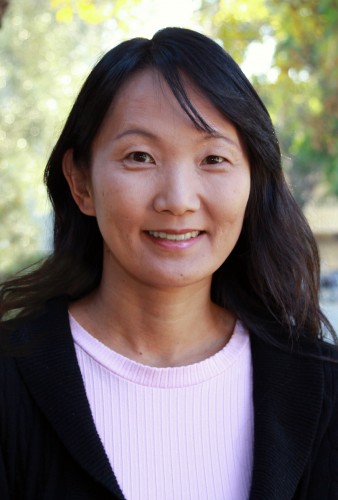
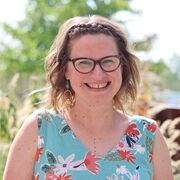
Marlyse Baptista is the President's Distinguished Professor of Linguistics at the University of Pennsylvania, Department of Linguistics. She is affiliated with the School of Arts & Sciences and MindCore initiative. Her research focuses on language contact, creolization processes, bilingualism, and experimental methods in creole studies. Baptista leads the Language Contact and Cognition Lab, previously known as the Cognition, Convergence and Language Emergence (CCLE) group at the University of Michigan. Education includes a PhD in Linguistics (Harvard, 1997), MA degrees from Harvard and the Université de Bordeaux III, and extensive training in multilingual education. Her work bridges generative syntax with experimental approaches, including artificial language learning to study language convergence. Key themes include the cognitive underpinnings of creole formation, bidirectional influences in Cape Verdean Creole, and the role of congruence in language acquisition. Research highlights include studies on Cape Verdean Creole's grammatical properties, genetic-linguistic admixture correlations, and pedagogical resources for creole language education. Recent projects explore experimental validation of creole genesis theories through multilingual acquisition studies. Scientific Awards: President's Distinguished Professorship (University of Pennsylvania) Labs/Teams: Language Contact and Cognition Lab, MindCore Grants/Projects: MULTI Project (creole language educational resources), NSF-funded studies on creole genesis mechanisms Baptista's work emphasizes interdisciplinary approaches, integrating syntax theory, psycholinguistics, and sociolinguistics to address foundational questions in contact linguistics and creolistics.
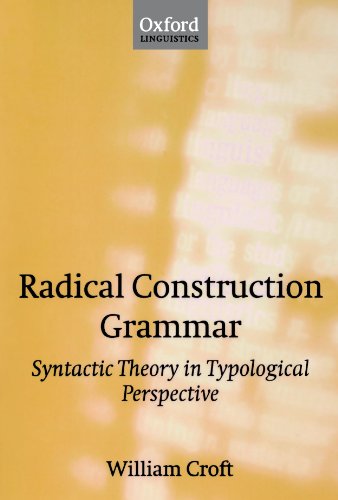
William Albert Croft is an American linguistics educator and Professor of Linguistics at the University of Manchester, United Kingdom. Born on November 13, 1956, in San Francisco, California, he holds a Doctor of Philosophy from Stanford University (1982–1986). His academic career includes roles as Research Fellow, Lecturer, and Reader at the University of Manchester (1994–2005), alongside an Assistant Professorship at the University of Michigan (1996–1998). He is renowned for developing Radical Construction Grammar, a syntactic theory using box-diagrams to analyze cross-linguistic grammar features. His research focuses on functional and cognitive linguistics, language typology, and syntactic universals. Educations: Doctor of Philosophy, Stanford University, California, 1982–1986 Research Interests: Dr. Croft’s work integrates cognitive and functional perspectives to explain language structure and change. His theories emphasize cross-linguistic comparison and the role of usage-based mechanisms in grammatical evolution. He has authored influential textbooks on linguistic typology and syntax, including Radical Construction Grammar and Typology and Universals . Awards: Listed in Marquis Who's Who as a Noteworthy Linguistics Educator Professional Activities: Member of the Philological Association, Linguistic Association of Great Britain, and Linguistic Society of America. Former Councillor of the Save-the-Redwoods League (San Francisco, 1987).
Elaine Francis is a Professor of English and Linguistics at Purdue University's College of Liberal Arts, where she serves as Associate Head of the Department of English and directs the Experimental Linguistics Lab. She holds additional affiliations as an Affiliate Faculty Member in the Department of Linguistics and a Courtesy Faculty Member in the Department of Speech, Language, and Hearing Sciences. Ph.D. in Linguistics, University of Chicago (1999) B.A. in Linguistics, College of William and Mary (1993) MA in Linguistics, University of Chicago (1995) Former Assistant Professor at the University of Hong Kong (1999-2002) Professor Francis's research focuses on syntax and its interfaces with semantics, discourse information structure, and language processing in production and comprehension. She employs experimental methods to investigate syntactic, semantic, discourse-pragmatic, and cognitive factors underlying complex sentence structures. Her primary research areas include word order alternations, filler-gap dependencies, resumptive pronouns, and grammatical acceptability. She examines how various factors contribute to grammatical alternations in language use and explores how processing pressures in production and comprehension contribute to grammatical conventions. Her recent publication record shows consistent output across multiple linguistic subfields, with a strong emphasis on experimental syntax and psycholinguistics. Her 2022 book, Gradient Acceptability and Linguistic Theory , represents a significant contribution to understanding acceptability judgment tasks in relation to syntactic theory. Her work spans theoretical syntax, experimental linguistics, second language acquisition, and cross-linguistic comparison, often bridging the gap between theoretical frameworks and empirical evidence. Regularly teaches short courses at Linguistic Society of America Linguistic Institutes Member of Linguistic Society of America Ethics Committee Editorial board member of Glossa Psycholinguistics Co-editor of Polymorphous Linguistics: Jim McCawley's Legacy (2005) Co-editor of Mismatch: Form-Function Incongruity and the Architecture of Grammar (2003) Professor Francis actively supervises graduate students in linguistics, though she has indicated she will be unable to take on new graduate students for the 2025-2026 academic year. She has received research support for her experimental work, particularly for investigating syntactic phenomena through controlled experiments and corpus analysis. Her collaborative work extends across multiple institutions and disciplines, including collaborations with researchers in computational linguistics, cognitive science, and clinical linguistics. She directs the Experimental Linguistics Lab at Purdue University, which conducts research on syntactic processing using various experimental methodologies. The lab investigates how speakers produce and comprehend complex sentence structures, with particular attention to how grammatical knowledge interacts with processing constraints. Current projects include research on relative clauses, syntactic islands, and acceptability gradient phenomena across multiple languages.
Maria Gouskova is a Professor of Linguistics at the Department of Linguistics, New York University (NYU). She is affiliated with the College of Arts and Science and holds editorial roles as an Associate Editor of Language and board member of NLLT and Phonology . Her research focuses on phonology, morphology, and lexicon, with a particular emphasis on morphophonological interactions, sublexicons, and phonotactic constraints. She earned her Ph.D. in Linguistics from the University of Massachusetts, Amherst (2003) and a B.A. in English Linguistics and German Language/Literature from Eastern Michigan University (1998). Her work bridges theoretical phonology and experimental methods, addressing questions such as how phonological patterns interact with morphology, the role of sublexical phonotactics in grammatical processes, and the learnability of complex segmental inventories. Recent research includes studies on Russian diminutive affixes, gradient phonological constraints, and the phonological properties of compounds. Her publications span topics like allomorphy, lexical phonology, and the typology of morpheme structure constraints. She frequently collaborates on projects investigating the interplay between syntax, phonology, and morphology, as seen in studies of Russian prepositions and compound stress patterns. Her contributions to phonological theory include advancing models of sublexicon theory and nonlocal constraint induction.
Prof. Stefan Müller is a Professor at the Institute for German Language and Linguistics , part of the Faculty of Languages and Literature at Humboldt University. His research focuses on syntax, formal grammar theories (especially Head-Driven Phrase Structure Grammar), and computational linguistics. He leads the CoreGram Project , developing cross-linguistic grammars using HPSG formalisms. His work includes analyses of German syntax, constituent order, anaphoric binding, and register phenomena. He is also involved in open-access publishing initiatives through Language Science Press . Contact: St.Mueller@hu-berlin.de . Education and academic background details are not explicitly stated in the provided text, but his professional trajectory indicates deep expertise in theoretical linguistics. His research spans multiple languages including German, Mandarin, and Persian, with a focus on grammar implementation and syntax-semantics interfaces. Key contributions include the Head-Driven Phrase Structure Grammar Handbook (2024), analyses of headless nominal structures in German (2022), and exploration of large language models' theoretical implications (2024). He actively engages in interdisciplinary projects bridging formal grammar and computational methods.
Pranav Anand is a Professor in the Department of Linguistics at the University of California, Santa Cruz (UCSC). He currently serves as the Faculty Director of the Humanities Institute at UCSC since July 2023. His research focuses on the interplay between context, interpretation, and grammatical perspective, particularly in areas like de re/de se contrasts, evaluative predication, and indexical shift. He has contributed to studies on narrative structures, evidential restrictions, and the syntax-semantics interface in sluicing. Dr. Anand has taught a variety of courses including Ling 119: Narratives , Ling 231: Semantics A , and special topics like Invented Languages: From Elvish to Esperanto . His work bridges theoretical linguistics with computational methods, evidenced by collaborations in projects such as the Santa Cruz sluicing dataset and analyses of political discourse in online commentary. His research has been published in journals like Linguistics and Philosophy , Language , and Discourse and Society , with a focus on semantics, pragmatics, and narrative linguistics. He has also contributed to computational linguistics initiatives, including the development of annotated corpora for sentiment analysis and argumentation studies. Dr. Anand's academic contributions span both theoretical exploration and applied computational linguistics, reflecting his interdisciplinary approach to understanding language structure and usage.
Elaine J. Francis is a Professor of English and Linguistics at Purdue University, where she also serves as the Associate Head of the Department of English. She holds affiliate appointments in the Department of Linguistics and the Department of Speech, Language, and Hearing Sciences. At Purdue, she directs the Experimental Linguistics Lab and teaches linguistics courses at both graduate and undergraduate levels. Francis completed her B.A. in Linguistics at the College of William and Mary in 1993, followed by her M.A. (1995) and Ph.D. (1999) in Linguistics at the University of Chicago under the direction of Salikoko Mufwene. Her dissertation examined variation among members of the same lexical category in English using Sadock's Autolexical Grammar framework. Prior to joining Purdue in 2003, she served as an Assistant Professor at the University of Hong Kong from 1999 to 2002, where she collaborated with Stephen Matthews on research concerning syntactic categories and relative clauses in Cantonese. Her research focuses on syntax and its interfaces with semantics, discourse information structure, and language processing in production and comprehension. Francis employs experimental methods to investigate syntactic, semantic, discourse-pragmatic, and cognitive factors underlying the grammar and usage of complex sentence structures. Her specific interests include word order alternations, filler-gap dependencies, resumptive pronouns, relative clauses, grammatical categories, and syntactic alternations. She has published extensively in top linguistics journals including Language and Cognition, Glossa Psycholinguistics, Linguistics, Lingua, Cognitive Linguistics, and the Journal of Psycholinguistic Research. Analyzing her recent publications reveals a consistent focus on experimental approaches to syntactic phenomena. Her work demonstrates a strong interest in gradient acceptability, syntactic priming, cross-linguistic comparison (particularly involving English and Cantonese), and the relationship between grammatical theory and language processing. Her 2022 book Gradient Acceptability and Linguistic Theory represents a major contribution that synthesizes experimental findings with theoretical linguistics frameworks. Francis plays an active role in the broader linguistics community. She regularly teaches short courses at the Linguistic Society of America Linguistic Institutes, serves on the LSA Ethics Committee, and is on the editorial board of Glossa Psycholinguistics. She has also edited several books and special journal issues, including Mismatch: Form-Function Incongruity and the Architecture of Grammar (2003) and Polymorphous Linguistics: Jim McCawley's Legacy (2005). As an educator and administrator, Francis has supervised numerous graduate students and currently serves as Associate Head of the Department of English at Purdue. Her Experimental Linguistics Lab provides research opportunities for students interested in the intersection of theoretical syntax and experimental methodology. While she recently announced she will not be accepting new graduate students for the 2025-2026 cycle, her established mentorship record demonstrates her commitment to training the next generation of linguists. The Experimental Linguistics Lab, which she directs, serves as a hub for research combining theoretical linguistics with experimental methods. Her collaborative work extends across disciplines, including collaborations with researchers in speech-language pathology, cognitive science, and computational linguistics, reflecting the interdisciplinary nature of modern linguistic research.
Aage Hill-Madsen is an Associate Professor at the Department of Culture and Learning, Aalborg University (Denmark), affiliated with the Communication, Language, and Discourse (CLD) research unit. His work focuses on translation studies, medical communication, and systemic-functional linguistics. He holds a Cand.mag. et ling.merc. and a PhD in English linguistics. Research Interests: Translation theories (especially intralingual translation) Medical terminology simplification and communication Systemic-functional grammar applications Legitimation Code Theory in educational contexts Genre analysis of specialized texts Semiotic approaches to knowledge transmission Recent Publications Trends: His 2024-2025 work emphasizes medical translation between technical and lay audiences, with studies on EPAR summaries, patient information leaflets, and historical East-West medical terminology exchanges. He combines functionalist translation theory with systemic-functional frameworks to analyze textual transformations. Grants & Projects: Participated in the 2024-ongoing project Udvikling af kommunikative kompetencer gennem frivilligt brobygningsarbejde i NGO’en Social Sundhed , exploring communication skills through NGO activities. Academic Engagement: Active peer reviewer for journals like Globe and Across Languages and Cultures , with conference presentations on intralingual translation strategies and medical text accessibility.
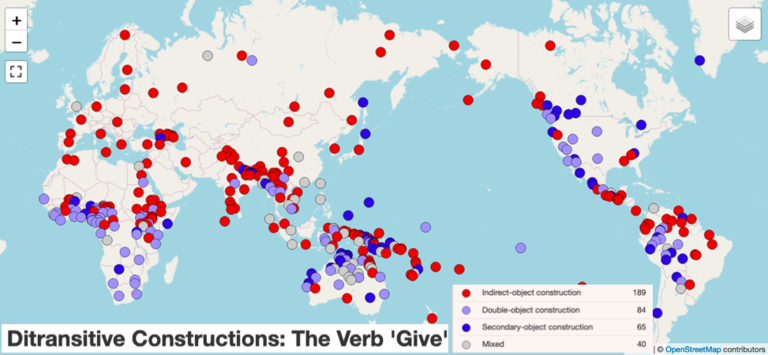
Martin Haspelmath is a Senior Research Scientist at the Department of Linguistic and Cultural Evolution at the Max Planck Institute for Evolutionary Anthropology (MPI-EVA), Leipzig, and an honorary (adjunct) professor at Leipzig University. His research focuses on comparative linguistics, language universals, and typology, particularly in syntactic and morphological systems. He co-edited the World Atlas of Language Structures (2005/2013) and co-founded Language Science Press . Education: PhD in Linguistics, Freie Universität Berlin (1990–1993) MA in Linguistics, University of Cologne and University at Buffalo (1985–1989) Undergraduate studies in Linguistics, University of Vienna (1983–1985) Research Interests: Haspelmath investigates global grammatical diversity, form-function correspondences, and universals in syntax, morphology, and lexical systems. His work emphasizes comparative concepts for cross-linguistic analysis and critiques traditional grammatical categories. Grants & Projects: ERC project leader at Leipzig University (2015–2020) Co-creator of Grambank , an open-access database of grammatical structures Leading initiatives for open-access publication and linguistic data sharing Labs/Teams: Active in the MPI's Department of Linguistic and Cultural Evolution, collaborating on projects like APICS (Atlas of Pidgin and Creole Language Structures) and ValPal (Valency Patterns Leipzig).
Conor Ryan is a Professor in the Department of Computer Science & Information Systems at the University of Limerick. He is a Science Foundation Ireland-funded Investigator since 2002 and a member of multiple research centres including Lero – the Irish Software Research Centre and the Limerick Digital Cancer Research Centre. His research focuses on Genetic Programming, Grammatical Evolution, and their applications in domains like healthcare analytics, digital circuit design, and financial modeling. He has authored over 250 publications, with recent work emphasizing automated feature selection in medical diagnostics, neural architecture search, and blockchain ecosystems. Teaching includes courses on Foundations of Computer Science and Computer Games Programming. Research interests span evolutionary computation, machine learning, and interdisciplinary applications. Collaborations involve global institutions, reflecting his work's impact across computer science, engineering, and healthcare. His research has addressed challenges in breast cancer diagnosis via genetic algorithms, cryptocurrency volatility prediction using random forests, and automated generation of digital circuits. Ongoing projects explore interpretability in AI, energy-efficient computing, and sustainable transport systems through predictive analytics. Professional memberships include roles in the Centre for Research Training in Foundations of Data Science and the Data-Driven Computer Engineering Research Centre, underscoring his commitment to interdisciplinary innovation.
Maj Schian Nielsen is a Senior Research Librarian at the University Library of the University of Agder. Her work focuses on multilingualism, crosslinguistic awareness, and German language pedagogy. She is affiliated with the research groups 'Media and Communication Studies' and 'Multilingualism in Society and Education (MUSE).' University of Agder Research Groups: Media and Communication Studies, MUSE Her research explores how multilingual awareness can enhance grammar instruction in German third-language (L3) teacher education programs across Denmark and Norway. Recent publications analyze curriculum structures, educational materials, and the integration of generative AI tools like ChatGPT in multilingual education contexts. Scientific output trends reveal a focus on: Cross-linguistic pedagogy L3 German acquisition Grammar teaching methodologies AI applications in language learning Teacher training for multilingual classrooms Systemic Functional Linguistics (SFL) frameworks She has not been publicly recognized with scientific awards listed in the available data.
Yuuko Uchikoshi Tonkovich is a Professor at the School of Education, University of California, Davis, where she has served since 2004, advancing from Assistant to Associate and then to full Professor. Her work centers on language and literacy development in young dual language learners, with a focus on bilingualism, early literacy, and the role of family and media in language acquisition. Her research interests include: Early Childhood Development Multilingual Learners and Bilingual Education Language Acquisition and Literacy Parent-Child Interaction and Home Language Environment Quantitative Analysis of Educational Outcomes Educational Television and Multimedia Her recent publications span topics such as cognitive distancing in parent-child reading, morphological awareness in bilingual readers, and the impact of teacher language use in multilingual classrooms. The research consistently emphasizes longitudinal, cross-cultural, and interdisciplinary approaches, particularly focusing on Chinese American and Mexican American immigrant families. Her scientific awards include: AERA Vocabulary SIG Notable Vocabulary Researcher Award (2025) Foundation for Child Development Young Scholars Program Grant International Reading Association Dissertation Fellowship and Finalist Award Harvard Graduate School of Education Fellowships She has advised numerous research projects and secured significant funding from NIH/NICHD, the Foundation for Child Development, and other organizations. She teaches courses such as Language Development, Early Literacy, and Research on Text Comprehension. She is actively involved in national initiatives, serving on the Technical Advisory Group for the First 5 California Dual Language Learner Study and as Associate Editor of Applied Psycholinguistics . She leads the Language & Literacy Development Lab at UC Davis, which investigates the cognitive, linguistic, and socio-emotional development of dual language learners.
Prof. Dr. Pia Knoeferle is a leading academic at Humboldt-Universität zu Berlin , where she serves as a Professor in the Department of German Language and Linguistics . She is a principal investigator in the Collaborative Research Center (CRC 1412) focused on register phenomena and leads the Reaction Time, Eye-tracking, and EEG Laboratories . Her research spans psycholinguistics , cognitive neuroscience , and computational modeling of language , with a central interest in how real-time language comprehension interacts with social context , formality-register congruence , and morphosyntactic processing . Appointments: Professor at Humboldt-Universität (2024), CRC 1412 member Methodologies: Eye-tracking, EEG, Visual World Paradigm, ERP Her work investigates lifespan language processing (children, adults, older adults) through contextual cue integration , including emotional , spatial , and social context such as gender cues , eye gaze , and facial expressions . Key questions include: How do pragmatic and contextual factors modulate lexical and grammatical processing ? What representations underlie register sensitivity in spoken and written comprehension ? Recent articles (2022-2024) focus on register congruence effects in German sentence processing, age-related differences in formality-register anticipation , and interactions between register and morphosyntactic knowledge . Using eye-tracking and visual world paradigms , her team examines incremental integration of socially-situated context with verb-argument relations and grammatical constraints . Findings suggest subtle late-stage register effects and interference between pragmatic and syntactic processing . Her lab collaborates with researchers like Katja Maquate , Valentina Nicole Pescuma , and Camilo Ronderos , contributing to the Frame text of the Second Phase Proposal for CRC 1412 (2020) and subsequent reviews in Frontiers in Psychology (2023). The work emphasizes complementary methods to model register variability across languages , modalities , and cultural contexts .
Brian Hie is an Assistant Professor of Chemical Engineering at Stanford University , a Dieter Schwarz Foundation Stanford Data Science Faculty Fellow , and an Innovation Investigator at Arc Institute . He leads the Laboratory of Evolutionary Design , focusing on the intersection of biology and machine learning . His prior roles include a Stanford Science Fellow in the Stanford University School of Medicine and a Visiting Researcher at Meta AI . Education: Ph.D. , Electrical Engineering and Computer Science , Massachusetts Institute of Technology (2021) Bachelor’s Degree , Stanford University Research Interests: Brian’s work bridges machine learning and computational biology , with a focus on protein engineering , single-cell RNA sequencing , and viral evolution . His Evolutionary velocity framework predicts protein evolutionary dynamics across timescales, while his Scanorama algorithm enables efficient integration of heterogeneous single-cell datasets. He also develops structure-informed language models for antibody optimization and uncertainty-aware ML for biological discovery. Publication Trends: His recent work (2023) emphasizes structure-based inverse folding for antibody evolution, evolutionary scale modeling , and unsupervised optimization . Earlier studies (2022-2021) cover evolutionary velocity , multi-modal single-cell analysis , and viral escape prediction using natural language analogies. Scientific Awards: Stanford Science Fellow (2021) National Defense Science and Engineering Graduate Fellowship (2019) Advising: He mentors doctoral students including Brandon Ameglio , Garyk Brixi , and Chang M. Yun , with a focus on biological design and computational methods . Labs & Collaborations: His lab collaborates with Bio-X and the Institute for Human-Centered Artificial Intelligence (HAI) , and he maintains affiliations with Sarafan ChEM-H and Stanford Data Science .
Professor Emma Moore is a leading sociolinguist at the School of English, University of Sheffield . Specializing in the social dimensions of language, her work integrates methodologies from anthropology and sociology to investigate how linguistic variation constructs identity and social affiliations. Research focus: Sociolinguistic style, dialect contact, youth language, identity negotiation, and community-based fieldwork Key projects: Adolescence and grammar (1999-), Isles of Scilly dialect (2008-), language and inequality (2014-), language perception software (2016-) Educational background : PhD in Sociolinguistics, University of Manchester Stanford University (USA) during PhD research Research trends across her 2021-2025 publications reveal interdisciplinary exploration of: Socio-syntactic variation Clinical linguistics (2025 MDS-UPDRS studies) Digital discourse post-pandemic Indexicality and cognitive representations Dialect contact in insular communities Educational policy implications Scientific recognition : British Academy Mid-Career Fellow (2019-2020) Elected Fellow, Royal Anthropological Institute (2014) AHRC/BA funded research projects (1999-2015) Research group leadership : Mentored 9 PhD students (2004-2024) and supervised 3 undergraduate SURE projects, including analyses of: Gender in rap performance Language style and workplace inequality Oral history digitization Professional contributions : Editorial Board: Language in Society (2015-), Gender and Language (2011-2017) External Examiner: Lancaster University MA in English Language (2013-2017) Collaborative software development for dialect perception testing