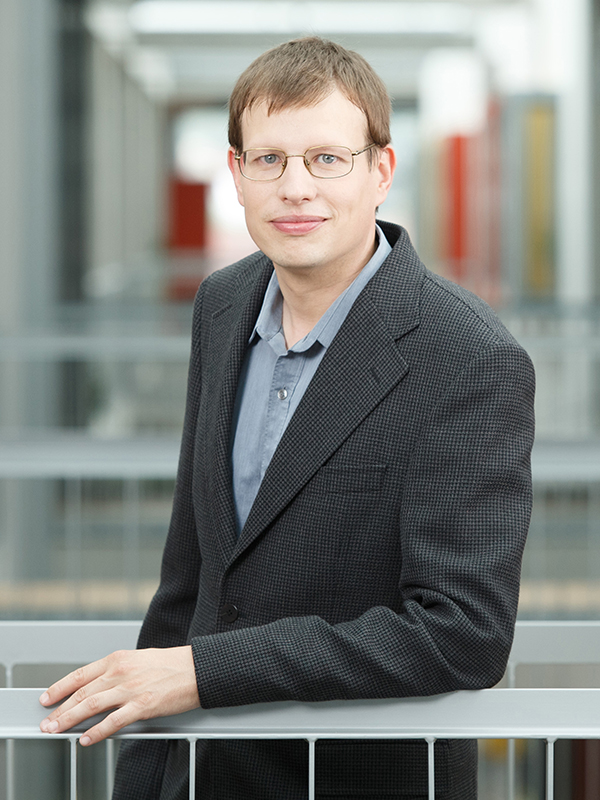
Luka Fürst is an Assistant Professor affiliated with an academic institution, specializing in Computer Science and Software Engineering . His work spans theoretical and applied domains, including Graph Theory , Programming Pedagogy , and Machine Learning . Teaches courses: Programming 2 , Programming 1 , Algorithms and Data Structures 2 , Computability and Computational Complexity Active in the Software Engineering Laboratory as a member Research Focus : Luka Fürst explores graph grammar induction , feature selection in object detection , and innovative programming education methods . His projects include KATARINA (promoting foundational computing knowledge) and legacy work on Computer Vision and Visual Assistant systems. Publications reveal a trajectory centered on formal language processing , machine learning techniques , and interactive educational tools , with recurring themes in software engineering and algorithm design .
Sarah Hermann is a doctoral student and lecturer at the National Institute of Oriental Languages and Civilizations (INALCO) , specializing in Pashtun society and customary law. Her research explores the interplay between Pashtunwali, Islam, and modernity in contemporary Afghanistan. Education : Master 2 in Pashto (LLCER) at INALCO (2021), English degree at Sorbonne Nouvelle University (2017), and a Master in Sound Engineering from CNSDP (2016). Teaching : Lecturer in Pashto grammar at INALCO since 2021. Professional Work : Pashto-English interpreter for the International Committee of the Red Cross (2019–present). Her research leverages oral sources—folktales, proverbs, memes, and social media—to analyze hybridity and social transformation in Pashtun communities. While her published work focuses on language resources, her broader projects span Iranian cultural heritage (Abstracta Iranica), cartography (CartOrient), medieval epigraphy (EpiPOM), and Persian martyr narratives (TransPerse).
Christoph Csallner is a Professor in the Computer Science and Engineering Department at the University of Texas at Arlington (UTA), where he leads research in software engineering, program analysis, and mobile software development. Prior to joining UTA, he worked at Google and Microsoft Research. He directs the SERC lab (Software Engineering Research Center) and has established himself as a leading researcher in automated bug finding, reverse engineering, and Simulink analysis. University of Texas at Arlington, Professor, Computer Science and Engineering Department SERC Lab Director Former researcher at Google and Microsoft Research Dr. Csallner earned his Diplom-Informatiker degree from Universität Stuttgart, Germany, and both his M.S. and Ph.D. in Computer Science from Georgia Tech. His educational background in both European and American institutions has informed his interdisciplinary research approach that bridges theoretical foundations with practical software engineering challenges. Dr. Csallner's research spans multiple areas of software engineering with particular expertise in program analysis, automated bug finding, and mobile software engineering. His work on reverse engineering mobile application user interfaces with REMAUI has been particularly influential in the field. His recent research focuses on Simulink analysis with projects like SLNET, ScoutSL, and EvoSL, which have created foundational datasets and tools for the model-based development community. His work on PSDoodle and D2S2 has advanced mobile app screen search through innovative sketch-based interfaces. His research consistently bridges theoretical program analysis with practical applications for real-world software development challenges. Dr. Csallner's publications demonstrate a consistent pattern of innovation in software testing, analysis, and reverse engineering. His recent work shows a strong focus on mobile application analysis, Simulink model processing, and the application of machine learning techniques to traditional software engineering problems. He has successfully built bridges between formal methods and practical software development tools. Best Paper Award - IEEE ISSRE 2010 ACM SIGSOFT Distinguished Paper Awards - ISSTA 2006, 2012 Best Paper Award - PPREW 2014 Best Paper Award - ASE 2007 ACM SIGSOFT Distinguished Paper Award - ASE 2015 Distinguished Referee Award - ASE 2019 Distinguished Reviewer Award - TOSEM 2011-2012 Dr. Csallner has successfully advised numerous Ph.D. and Master's students who have gone on to prominent positions at companies including Meta, Google DeepMind, BNSF Railway, Bloomberg, and Salesforce. His research has been supported by significant funding from the National Science Foundation, MathWorks, the Alzheimer's Association, and the Texas National Security Network. His work on fake news detection received media coverage from major outlets including the Dallas Morning News, NBC DFW, and WBAP/KLIF. Dr. Csallner directs the Software Engineering Research Center (SERC) lab at UTA, where his team develops innovative tools for software analysis and testing. Notable projects include JCrasher, Check 'n' Crash, DSD-Crasher, Pex/DySy, Dsc, and REMAUI/Pixel to App. His recent work focuses on PSDoodle, TreeVada, ScoutSL, and EvoSL, demonstrating his lab's continued innovation in software engineering research. The SERC lab maintains strong industry connections, particularly with MathWorks, and has produced numerous open-source tools that have influenced both research and practice in software engineering.
Gang Tan is an Associate Professor at the Pennsylvania State University's College of Engineering, Department of Computer Science and Engineering. He also holds the James F. Will Career Development Professorship and is affiliated with the Institute for Computational and Data Sciences (ICDS). His research focuses on binary reverse engineering , cybersecurity , Internet of Things (IoT) security , machine learning fairness , and information flow security . He has led numerous NSF-funded projects, including work on precise binary analysis, IoT policy enforcement, and automated fairness repair in AI systems. Recent work trends include memory safety validation , pseudocode extraction , and control-flow integrity mechanisms. His 127+ research outputs reflect deep engagement with static program analysis , cache side-channel detection , and secure kernel-driver interfaces . Scientific Awards: James F. Will Career Development Professorship Gang Tan has secured multiple grants from the National Science Foundation (NSF) and U.S. Navy for projects like Sliver (information flow verification) and Semantics-Directed Binary Reverse Engineering . His work involves advising teams on IoT safety, and he has 19 active or completed grants since 2008.
Professor Shujun Li is a distinguished academic at the University of Kent , where he has served as a Professor of Cyber Security since November 2017. He is also the Director of the Institute of Cyber Security for Society (iCSS) , a UK government-recognized Academic Centre of Excellence in Cyber Security Research (ACE-CSR), and leads the Cyber Security Research Group at Kent's School of Computing. His research spans interdisciplinary cyber security , focusing on human-centric approaches, privacy, digital forensics, multimedia computing, and AI applications. He actively collaborates across disciplines such as Electronic Engineering, Psychology, Sociology, Law, and Business. Previously held roles include Deputy Director of Surrey Centre for Cyber Security (2014–2017) at the University of Surrey. Key projects include EPSRC-funded initiatives on human-centric cyber security and privacy. His recent publications highlight expertise in areas like data privacy , deepfake analysis , password security , and MaaS (Mobility-as-a-Service) vulnerabilities , with contributions to journals such as IEEE Transactions on Dependable and Secure Computing and Frontiers in Big Data . Scientific Honors: Two Best Paper Awards ISO/IEC Certificate of Appreciation (2012) Fellow of BCS Senior Member of IEEE Member of ACM As a principal/co-supervisor, he has guided students including Mohamad Imad Mahaini , Nandita Pattnaik , and Ali Raza . He also serves on editorial boards and advisory groups like the Scientific Board of RISCS and the Steering Committee of ARES .
Prof. Dr. Mine Özkar Kabakçıoğlu is a leading academic at Istanbul Technical University's Faculty of Architecture, Department of Architecture, with a focus on computational design, digital fabrication, and architectural cultural heritage. She holds a Ph.D. from MIT (1999) and has been a full Professor at ITU since 2016, previously serving as Associate Professor at MIT (2013) and ITU (2011-2015), and Assistant Professor at METU (2006-2011). Research Centers: CMU Code Lab, NAAB Accreditation Committee Expertise: Shape grammars, material manipulation, Seljuk geometric patterns, socio-spatial analysis Her work bridges traditional craftsmanship with computational methods, particularly in Anatolian architectural heritage. She has led projects on brick bond analysis (TÜBİTAK 119K896), medieval stone milling workflows, and digital preservation of polyhedral designs like the Gömeç Hatun tomb. Her pedagogy emphasizes critical technical practice and accountability in computational design education. Scientific contributions include 15+ peer-reviewed articles on topics like Digital workflows for heritage conservation Visual reasoning in brickwork Material-aware shape computation She received the METU Young Researcher Achievement Award (2007) and serves on architectural accreditation boards. Her research group includes students and collaborators such as Sevgi Altun, Begum Hamzaoğlu, and international partners from NYU, MIT, and TU Delft.
Owen Rambow is a Professor at Stony Brook University's AI Innovation Institute, specializing in natural language processing and computational linguistics with a focus on formal linguistic analysis. Education and Career: Ph.D. in Computer and Information Sciences, University of Pennsylvania 15-year tenure as Research Scientist at Columbia University Industry experience at AT&T Labs—Research and Elemental Cognition LLC Research Focus: Rambow's work centers on morphology, syntax, and semantics within Tree Adjoining Grammar (TAG) frameworks, bridging phrase structure and dependency representations. His research spans natural language generation/understanding, discourse analysis of belief/sentiment signaling in email/Twitter communications, and sociolinguistic studies of power/gender dynamics in written conversations across Arabic, English, German, and Hindi. Publication Trends: Recent work (2024-2025) heavily explores large language model capabilities in multi-dimensional writing assessment, emotion recognition, theory of mind validation, and morphophonological processing. Key themes include zero-shot learning limitations, cross-dialectal analysis, and pragmatic marker recognition in specialized domains like roadrunner cartoon dialogues.
Dr. Rickard Karlsson works as a Lecturer at Linköping University's Department for Swedish as a Second Language, Rhetoric and Language Support (SAROS) under the Department of Culture and Society (IKOS). His teaching focuses on Swedish language didactics, grammar, and assessment of learner languages, with supervision across academic levels. PhD in Languages and Cultures of Europe Upper Secondary School Teacher in Swedish as a Second Language Research spans empirical analysis of adult language acquisition , historical linguistics , and multilingualism ideologies . Google Scholar publications reveal interdisciplinary contributions to particle filter algorithms and automotive sensor systems from 2001-2025. Notable collaborations include Fredrik Gustafsson and Per-Johan Nordlund. Recent publications (2025-2016) merge automotive engineering and historical Linguistics, covering tire diagnostics, cultural exchange patterns, and vibration-based navigation. This dual expertise reflects his transition from technical research to language education, maintaining academic connections across disciplines.
Dr. Jiyuan Wang serves as an Assistant Professor in the Department of Computer Science within Tulane University's School of Science & Engineering, commencing his appointment in Fall 2025. Prior to Tulane, he worked as an Applied Scientist at Amazon Web Services, focusing on program analysis and formal verification for cloud systems. His academic background includes a Ph.D. in Computer Science from UCLA (2025) and a B.S. in Physics from Tsinghua University (2019). His educational journey: Doctor of Philosophy (Ph.D.) in Computer Science, University of California, Los Angeles, 2025 Bachelor of Science (B.S.) in Physics, Tsinghua University, 2019 Dr. Wang's research centers on Software Engineering for next-generation computing platforms, with particular emphasis on Quantum Computing and Heterogeneous Computing (including FPGAs and GPUs). He develops innovative techniques for testing and debugging, such as multi-layer compiler debugging, full-stack compiler testing, and fuzz testing tailored for heterogeneous applications. His work bridges the gap between software reliability and the complexities of modern hardware accelerators, addressing critical challenges in compiler correctness and application robustness. An analysis of his publication record from 2020 to 2025 reveals a consistent focus on advancing software testing methodologies for heterogeneous systems. The research evolved from big data analytics (BigFuzz) to compiler testing (HeteroFuzz, DuoReduce) and quantum software stacks (QDiff), demonstrating increasing sophistication in tackling platform-specific challenges. His recent 2025 papers highlight breakthroughs in MLIR compiler debugging and fuzzing. His notable recognitions include: SIGSOFT Research Highlight for QDiff (ASE 2021) Best Poster Award at ICST 2021 Dr. Wang is currently building his research group at Tulane and actively seeks motivated graduate students interested in software engineering for quantum and heterogeneous computing. His industry experience at AWS and strong publication record in top venues (ASE, ICSE, FSE, ASPLOS) indicate active research funding and collaborative opportunities. He teaches Quantum Computing (CMPS-4660/6660) and mentors students in cutting-edge research projects. While a dedicated lab name isn't specified, Dr. Wang's research group focuses on developing practical tools for compiler and application testing in heterogeneous environments, with growing emphasis on quantum software stacks.
Thomas W. Reps is the J. Barkley Rosser Professor & Rajiv and Ritu Batra Chair Emeritus at the University of Wisconsin-Madison , where he has been a faculty member since 1985. He is also President of GrammaTech, Inc., and a co-founder of the company. Education: Ph.D. in Computer Science from Cornell University (1982), winner of the 1983 ACM Doctoral Dissertation Award. Reps’s research spans program analysis , abstract interpretation , model checking , and computer security . His recent work focuses on quantum computing verification , probabilistic program analysis , and symbolic methods for static analysis . His publications (over 225) include foundational contributions to program slicing (1988 paper with Horwitz and Binkley, cited >1,780 times), machine-code analysis (ETAPS Best-Paper Awards in 2004 and 2008), and programming environments (co-author of The Synthesizer Generator ). Key awards include the ACM SIGPLAN Programming Languages Achievement Award (2017) , Guggenheim and Packard Fellowships , and ACM Fellow (2005) . Students: Mentored award-winning graduates like Akash Lal (SIGPLAN Outstanding Dissertation) and Venkatesh Srinivasan (Outstanding Graduate Student Research Award).
National and Kapodistrian University of AthensGreece
Stephen Chong is a Gordon McKay Professor of Computer Science in the Harvard John A. Paulson School of Engineering and Applied Sciences, where he serves as Co-Director of Undergraduate Studies for Computer Science. His academic career spans over a decade of teaching and research at Harvard, where he has made significant contributions to programming languages and information security. Chong received his PhD from Cornell University under the guidance of Andrew Myers, and a bachelor's degree from Victoria University of Wellington, New Zealand. Prior to graduate school, he worked as a consultant and contractor in the software industry, bringing practical experience to his academic research. Professor Chong's research focuses on language-based information security, using programming language techniques to provide information security assurance. His work bridges the gap between theoretical foundations and practical applications, developing tools and frameworks that help programmers write trustworthy programs. His research has evolved to address increasingly complex security challenges in modern computing environments, from web applications to cyber-physical systems. His recent publications reveal a strong trend toward integrating advanced programming language techniques with security analysis, particularly through the use of Datalog, SMT solvers, and program synthesis. His work on Formulog has been particularly influential, extending Datalog with mechanisms to construct and reason about SMT formulas for static analysis. His research has expanded to address security challenges in cyber-physical systems, where sensor attacks pose unique threats to safety-critical infrastructure. Chong has received numerous prestigious awards including an NSF CAREER award, an AFOSR Young Investigator award, and a Sloan Research Fellowship. He has also served in leadership roles for major conferences including CSF 2012-2013, PLMW @ PLDI 2021, and as SIGPLAN-M Chair for 2025-2026. As an educator, Chong has mentored numerous students through Harvard's undergraduate research programs and has served as a thesis advisor. His teaching portfolio includes foundational courses like CS51, systems courses like CS61, and advanced topics in programming languages (CS152) and compilers (CS1530). He has been instrumental in shaping Harvard's computer science curriculum, particularly in security and programming languages. Chong leads a research group focused on language-based security, with projects including Formulog (for SMT-based static analysis), PRINCESS (for autonomous adaptation of software), and work on secure shell scripting (Shill). His group collaborates with researchers across Harvard and other institutions to tackle challenging problems at the intersection of programming languages and security.
National and Kapodistrian University of AthensGreece
Nadia Polikarpova is an Associate Professor in the Computer Science and Engineering Department at the University of California, San Diego. She leads the Programming Systems group and serves as a member of IFIP Working Group 2.8 on Functional Programming since 2022. Her academic journey includes a PhD from ETH Zurich (Switzerland) under Bertrand Meyer's supervision in 2014, followed by postdoctoral work at MIT CSAIL with Armando Solar-Lezama. Her research interests center around program synthesis, program verification, and type systems, with a focus on building practical tools that enhance software security and reliability. Polikarpova's work bridges theoretical foundations with real-world applications, particularly in the emerging area of AI-assisted programming. Her recent publications demonstrate a strong trajectory in program synthesis techniques, with increasing integration of machine learning approaches. The research spans from foundational type-driven synthesis methods to practical applications for validating AI-generated code and synthesizing heap-manipulating programs. Her work frequently appears in top-tier programming languages venues including PLDI, POPL, ICFP, and OOPSLA. 2020 Sloan Fellow 2020 Intel Rising Stars Award 2020 NSF CAREER Award Distinguished paper awards at PLDI'21, ICFP'20, and POPL'19 Best paper award at FM'15 Polikarpova actively mentors PhD students and has advised numerous graduates who now work at Microsoft Research, University of Michigan, and various tech companies. She teaches core programming languages courses including CSE 130 and specialized graduate courses on program synthesis (CSE 291). Her service to the community includes program committee roles for major conferences and co-chairing the Haskell conference in 2022.
National and Kapodistrian University of AthensGreece
Koushik Sen is a Professor in the Department of Electrical Engineering and Computer Sciences at the University of California, Berkeley. His academic career spans major contributions to software engineering and programming languages research through active participation in premier conferences including PLDI, ICSE, and ISSTA. His research focuses on Software Engineering , Programming Languages , and Formal Methods , with particular emphasis on developing software tools that enhance programmer productivity and software quality. Key research thrusts include automated test generation , symbolic execution , fuzzing techniques , and program synthesis . His work bridges theoretical foundations with practical tool development for real-world software verification challenges. Analysis of his publication record reveals consistent contributions to automated testing methodologies, with recent work integrating machine learning (particularly large language models) into traditional program analysis techniques. His research shows strong continuity in improving software reliability through innovative input generation and vulnerability detection approaches. As an active academic leader, he has served as General Chair for MAPL (2020), Program Chair for ISSTA (2017), and committee member for numerous top-tier conferences including PLDI, ICSE, and SPLASH across multiple years. His academic advising manifests through collaborative publications with students on topics like test corpus expansion (Bonsai Fuzzing), visualization synthesis (VizSmith), and smart contract auditing (ItyFuzz), though specific student names aren't listed in the source material. His research has been supported through conference participations and likely associated grants given his extensive publication record.
Max Planck Institute for Security and PrivacyGermany
Christoph Csallner is a Professor in the Computer Science and Engineering Department at the University of Texas at Arlington (UTA). He previously worked at Google and Microsoft Research and holds a Diplom-Informatiker degree from Universität Stuttgart, Germany, and M.S. and Ph.D. degrees in Computer Science from Georgia Tech. His research has received numerous best paper awards at top software engineering conferences including ASE, ISSTA, and ISSRE. Dr. Csallner's research interests focus on software engineering, with particular expertise in program analysis, automated bug finding, software security, and mobile software development. His work bridges theoretical foundations with practical applications, developing tools that have real-world impact in improving software quality and security. Recent research has concentrated on analyzing Simulink models for cyber-physical systems, mobile app screen search and generation, and applying deep learning techniques to software testing problems. His publications show a consistent trajectory of innovation in software testing and analysis, with recent work exploring the intersection of machine learning and software engineering. The research spans from foundational program analysis techniques to practical tools addressing challenges in mobile development and cyber-physical systems. His work on Simulink model analysis has created valuable resources for the research community, including large open-source corpora of Simulink models. Scientific awards include: Best Paper Award at IEEE ISSRE 2010 ACM SIGSOFT Distinguished Paper Awards at ISSTA 2006 and 2012 Best Paper Award at PPREW 2014 ACM SIGSOFT Distinguished Paper Awards at ASE 2007 and 2015 Distinguished Referee Award at ASE 2019 Dr. Csallner has successfully advised numerous Ph.D. and Master's students who have gone on to prominent positions at companies like Meta, Google DeepMind, and Bloomberg. His research has been funded by the National Science Foundation, MathWorks, the Alzheimer's Association, and other organizations. He leads the Software Engineering Research Center (SERC) lab at UTA, where his team develops innovative tools for software analysis, testing, and development.
Max Planck Institute for Security and PrivacyGermany
Bernd Fischer is a Professor and the current Head of Division in the Division of Computer Science at Stellenbosch University, South Africa. Previously, he held positions at TU Braunschweig, NASA Ames Research Center, and University of Southampton, establishing a strong international academic background in software engineering and formal methods. Professor Fischer's research focuses on automated software engineering, particularly logic-based techniques. His work spans specification-based component reuse, program synthesis, and program verification, with current emphasis on annotation inference, software model checking, and human-oriented presentation of verification results. His research bridges theoretical foundations with practical applications, particularly in concurrent program verification, grammar-based testing, and fault localization techniques. His work has significant implications for improving software reliability and developer productivity. Analysis of his recent publications reveals a strong focus on concurrent program verification through lazy sequentialization techniques, with substantial contributions to tools like CSeq and ESBMC. His research demonstrates consistent innovation in software verification, particularly in addressing the challenges of concurrency, bounded model checking, and fault localization. The interdisciplinary nature of his work connects theoretical computer science with practical software engineering challenges. ASE 2012 Most Influential Paper Award ACM Distinguished Paper Award Best Presentation Award Professor Fischer has successfully advised PhD students including Gillian Greene, who defended her thesis on "Concept-Based Exploration of Rich Semi-Structured Data Collections," and Geoff Birch, who completed work on "Fast, Fully-Automated, Model-Based Fault Localisation and Repair with Test Suites as Specification." His mentoring approach integrates theoretical rigor with practical tool development. His research has been supported through various academic grants enabling the development of multiple software verification tools. Professor Fischer leads development of several important software engineering tools including AutoBayes for statistical program synthesis, ConceptCloud for interactive visualization of software repositories, CSeq for concurrent program verification, and ESBMC for software model checking. These tools represent significant contributions to the software engineering research community and have been recognized in international verification competitions.