Sarbinaz Bekmuratova, Ph.D., MS is an Associate Professor in the Department of Occupational Therapy at Creighton University's School of Pharmacy and Health Professions. Her work focuses on human trafficking survivor care, public health equity, and healthcare provider education. She has conducted extensive research in Kyrgyzstan and the U.S., emphasizing interdisciplinary approaches to address structural violence and improve survivor well-being. Her research explores trafficking survivor experiences, healthcare professional preparedness, and community reintegration strategies. Key areas include the intersection of human rights and public health, with a focus on marginalized populations such as racial/ethnic minorities and individuals with disabilities. Dr. Bekmuratova's publications highlight innovative educational interventions for occupational and physical therapists, policy analysis for anti-trafficking efforts, and qualitative studies on clinical outcomes. Her work bridges global health challenges with local community needs, advocating for culturally competent and trauma-informed practices. Though no specific grants or lab affiliations are listed, her scholarship reflects a commitment to translational research that directly impacts clinical practice and policy development.
Res.Asst.Dr. Samet ÖZDEMİR is a faculty member at the Department of Human Resources Management within Sakarya University's Faculty of Business Administration. He holds a Researcher academic rank and teaches courses such as Social Entrepreneurship, Career Planning, Human Resources Management, and Graduation Project supervision. His research focuses on reverse mentoring, HR risk assessment, workplace discrimination, leadership competencies, and sustainable career development. He has published extensively in national and international journals, contributing to organizational behavior and management science domains. Education & Academic Background: While specific educational details are not explicitly stated, his titles (Res.Asst.Dr.) indicate doctoral-level qualifications in a relevant field such as Business Administration or Human Resources Management. His academic contributions include co-authoring book chapters on topics like digital HR management and sustainable entrepreneurship. Research Interests: His work bridges theoretical frameworks with practical HR applications, emphasizing reverse mentoring case studies (e.g., research assistants-advisors dynamics), ethical recruitment practices, and leveraging digital tools for leadership development. He also explores cross-cultural career perceptions and the role of lifelong learning in managerial roles, as seen in his analysis of historical business figures like Madam C.J. Walker. Publication Trends: Recent works (2022-2023) highlight digital transformation in HR practices, entrepreneurship competency frameworks, and LinkedIn-based executive leadership analysis. Earlier studies (2015-2017) addressed blue-collar workforce underrepresentation in academic research and discrimination in HR job advertisements. Teaching & Supervision: He manages various theses and oversees vocational training programs, integrating practical workplace experiences into academic curricula. Courses like 'Vocational Training in Business' and 'Career Planning' reflect his commitment to bridging educational theory with professional readiness. Awards & Grants: No specific awards are mentioned, though his active publication record suggests contributions meriting academic recognition. Grant details are not provided in the text. Labs & Teams: While no specific labs are noted, his collaborative publications indicate involvement in academic teams focusing on human resources innovation, organizational behavior, and sustainable development initiatives.
Julie E. Owen is an Associate Professor of Leadership Studies at the School of Integrative Studies, George Mason University. She coordinates the leadership studies major/minor, serves as graduate faculty in Mason’s Higher Education Program, and is affiliate faculty with Women and Gender Studies. Education: Ph.D. in College Student Personnel, University of Maryland (2008) M.Ed. in College Student Personnel Administration, James Madison University (1996) Certificate in Non-Profit Administration, Duke University (2000) B.A. in Psychology and English, College of William and Mary (1993) Her research focuses on intersections of leadership identity and women’s adult development, critical/emancipatory research methods, and liberatory leadership pedagogy. She explores decolonizing leadership knowledge, equity in leadership education, and narratives of marginalized leaders. Key publications include 8 books and over 60 refereed articles. Recent works address college student activism, leadership burnout, and Japanese-American transnational leadership studies. She leads the Multi-Institutional Study of Leadership (MSL-IS) and co-develops the Leadership Identity Development (LID) model. Scientific Awards: AAC&U K. Patricia Cross Future Leaders Award ACPA Annuit Coeptis & Diamond Honoree NASPA Ruth Strang Research Award George Mason Teaching & Mentoring Excellence Awards University of Maryland Distinguished Alumni Magoon Award Grants include AllState Foundation Youth Leadership Research Awards (2024-2025), Aspen Impact Fellowship (2023), and Bringing Theory to Practice research grants (2015-2018). She frequently presents at the International Leadership Association and ACPA conferences.
Jo Southern is a Lecturer in the School of Nursing and Midwifery at the University of Southern Queensland. She holds qualifications including a BHlthSc (CQU), LLB (JCU), GCertClinNurs (CQU), and MNurs (JCU). Her research focuses on healthcare workforce development, nursing education, and patient safety, with particular attention to early career nurse retention and clinical practice improvement. Southern has contributed to studies exploring nursing career trajectories, medication error prevention in clinical settings, and pressure injury prevention strategies among nursing students. Her recent work includes a 2025 qualitative study examining drivers of nurse retention four years post-graduation and an integrative review of medication errors by nursing students. She has also investigated Australian nursing students' knowledge gaps in pressure injury prevention through a 2018 cross-sectional study. Southern actively publishes in nursing education and practice journals, addressing both systemic and clinical challenges in modern healthcare.
Elaine Wotherspoon is a Lecturer in the School of Education and Social Sciences , specializing in Physical Education and Teacher Education. As Programme Leader for the PGDE Secondary Programme, she contributes to teacher training across various educational levels, including primary and secondary programs. Her roles also include lectures on Health and Wellbeing and Master’s provision. Elaine holds an M.Ed. from the University of Glasgow and is pursuing a PhD investigating graduate preparedness in Initial Teacher Education. She has extensive experience in the U.S., including work in professional sports and education sectors. Her research focuses on optimizing Physical Education’s role in academic performance and teacher readiness. Key research interests include Physical Education pedagogy , teacher preparedness metrics , and health education integration . Her work spans 2017–2023, addressing topics like preservice teacher experiences and educator preparedness in delivering health and wellbeing curricula. Elaine has served as an External Examiner at Cardiff Metropolitan University (PGCE Secondary PE, 2016–2022) and University of Suffolk (Secondary SCITT, 2023–2027). No grants or student advisories are listed in the text.
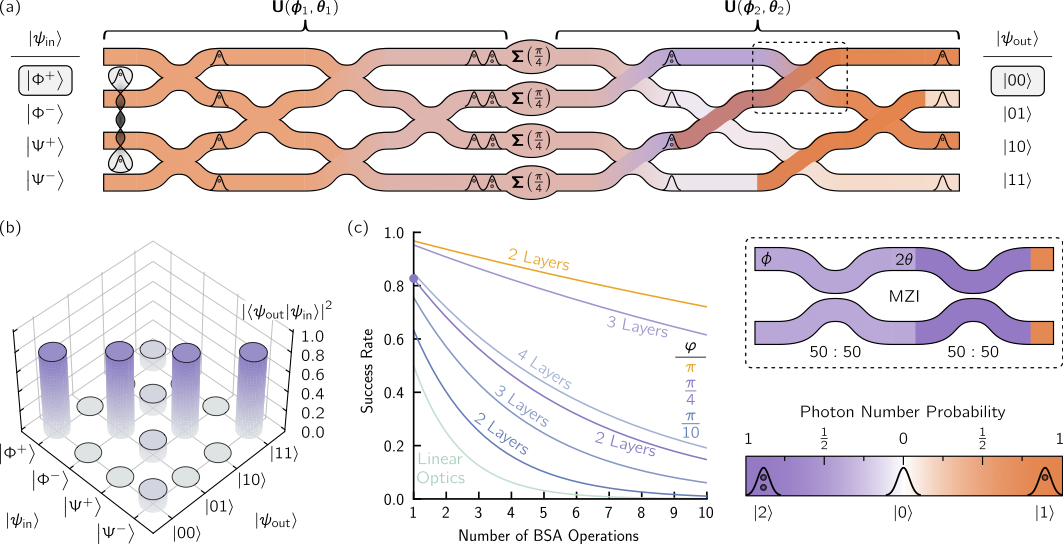
Bhavin J. Shastri is an Assistant Professor in the Department of Physics, Engineering Physics and Astronomy at Queen's University in Canada. His research explores the physics of light for computing , pushing frontiers in information and signal processing through photonic computing and quantum/neuromorphic photonics . He is affiliated with the Centre for Nanophotonics and NUCLEUS , a pan-Canadian photonic computing program funded by NSERC CREATE, bridging artificial intelligence and quantum information . Canada Research Chair & Principal Investigator Faculty Affiliate at Vector Institute (2020-) Editorial Board Member of JPhys Photonics (2019-) Member of IEEE Photonics Society Technical Affairs Council (2019-) Visiting Researcher Scholar at Princeton University (2018-) Shastri Lab members have access to world-class shared facilities, including the Centre for Nanophotonics (CFI-Innovation Fund), Nanofabrication Kingston , the Centre for Advanced Computing , and the Digital Research Alliance of Canada . The lab takes an interdisciplinary approach combining nanophotonics with complex systems on emerging substrates. His research focuses on silicon photonics , nanophonic processors , and photonic integrated circuits with applications to deep learning , nonlinear programming , and quantum information science . His articles show consistent exploration of quantum photonic neural networks , photonic memory systems , and optical signal processing for machine learning and quantum technologies . 2020 IUPAP Young Scientist Prize in Optics 2014 Banting Postdoctoral Fellowship 2012 D. W. Ambridge Prize 2011 IEEE Photonics Society Graduate Student Fellowship 2011 NSERC Postdoctoral Fellowship Multiple Best Student Paper Awards Shastri's lab supervises Ph.D. candidates and postdoctoral fellows working on quantum photonics , neuromorphic computing , and photonic AI systems . His recent work includes photonic tensor cores for scientific computing , quantum photonic neural networks , and all-optical memory systems. Shastri Lab designs programmable nanophotonic processors with potential to outperform microelectronic processors in energy efficiency and computational speeds by seven and four orders of magnitude respectively. Their work spans from device design to system-level implementations in optical computing for machine learning and quantum information processing .
Adlen Ksentini is a Professor at EURECOM, a leading graduate school and research center in Sophia Antipolis, France, specializing in digital science and communication systems. His extensive research focuses on next-generation mobile networks (5G/6G), network management, and the integration of artificial intelligence with telecommunications infrastructure. Dr. Ksentini actively contributes to major EU research initiatives including 6G-BRICKS and AC3, serving as a key researcher and project leader in the development of future network architectures. Dr. Ksentini's research interests center around network slicing, intent-based networking, edge computing, and the application of machine learning to network management problems. His work bridges theoretical advancements with practical implementations in 5G/6G systems, with particular emphasis on zero-touch network management, energy efficiency optimization, quality of service assurance, and the integration of large language models with network operations. His research has significantly contributed to the development of O-RAN (Open Radio Access Network) frameworks and the evolution of network automation. His recent publication trends reveal a strategic shift toward AI-native network architectures, with increasing focus on integrating large language models (LLMs) with network management systems. His work demonstrates a clear progression from traditional network management approaches to more autonomous, AI-powered systems capable of intent-based configuration, self-optimization, and predictive maintenance. The publications show strong emphasis on practical implementations within the 6G research ecosystem, addressing critical challenges in network slicing, resource allocation, and energy efficiency. As a research supervisor, Dr. Ksentini mentors several PhD students including Abdelkader Mekrache, Karim Boutiba, Bouziane Brik, and Houda Hafi, who frequently appear as co-authors on his publications. His research is primarily funded through major EU research projects such as 6G-BRICKS (Building Reusable Testbed Infrastructures for Cloud-to-Device Breakthrough Technologies) and AC3 (which focuses on Cloud Edge Continuum). Dr. Ksentini is actively involved with the 6G-BRICKS project consortium and the AC3 project team, where he contributes to developing next-generation network architectures that integrate communication, computing, and sensing capabilities. His work within these projects focuses on creating reusable testbed infrastructures and addressing security and trust management challenges in the cloud-edge continuum.
Mandy Savitz-Romer serves as the Nancy Pforzheimer Aronson Senior Lecturer in Human Development and Education at Harvard Graduate School of Education (HGSE), where she leads the school counseling strand. Her work critically examines school counseling systems and conditions for effective practice, with focused expertise in college access for students of color and first-generation college students. Her educational foundation includes a Ph.D. from Boston College (2004), which informs her scholarship on developmental approaches to student success. Research interests center on reimagining school counseling through college and career readiness frameworks, addressing systemic barriers for marginalized students. She pioneers intersections of counseling systems, noncognitive skill development, and technology-enhanced support structures that promote equitable outcomes across K-12 and higher education transitions. Publications reveal consistent emphasis on data-driven counseling practices, technology integration for first-generation students, and the critical role of noncognitive skills in college success. Her work bridges research-practice partnerships to transform counseling systems through evidence-based innovation. Recognition includes: ASHE 2018 Book Award for Technology and Engagement NACAC Excellence in Education Award (2016) Her advisory impact spans school districts, foundations, and universities through consultation and research projects expanding access to student support programming. She actively shapes future counseling leaders through HGSE's Human Development and Education program. As faculty lead for school counseling, she directs curriculum development and strategic initiatives advancing the profession's capacity to serve diverse student populations through institutional change.
Rosemary Giuriato is an Associate Professor and Head of the Department of Chiropractic at Macquarie University. She holds a PhD in Anatomy from the University of New South Wales (2013-2022), a Master of Science from UNSW (1992-1994), and degrees in Osteopathy, Chiropractic, and a BSc from the University of Sydney (1981-1983). Her research focuses on chiropractic education, anatomical sciences, curriculum development, and clinical proficiency. She leads the 'Vestibular rehabilitation and manual therapy intervention' project (2025-2026) and has contributed to studies on anatomy knowledge among chiropractors and student preparedness for clinical practice. Giuriato received the 2023 Education Excellence Award for her contributions to teaching innovation. Her work emphasizes evidence-based practice, interprofessional collaboration, and improving educational standards in healthcare programs. Education: PhD in Anatomy, University of New South Wales (2013-2022) MSc, University of New South Wales (1992-1994) Doctor of Osteopathy, Sydney College of Chiropractic and Osteopathy (1986-1987) Graduate Diploma in Chiropractic, Sydney College of Chiropractic Ltd (1983-1985) BSc, University of Sydney (1981-1983) Research Interests: Anatomy education, clinical diagnosis in chiropractic, curriculum design, evidence-based practice, and interprofessional collaboration. Recent Projects: Leading a pilot trial on vestibular rehabilitation for mild traumatic brain injury (2025-2026) Developing digital health education programs (2016-2017) Evaluating chiropractic curricula (2018-2018) Awards: Education Excellence Award 2023
Suzie Goodell is a Professor and Director of the Interdepartmental Graduate Program in Nutrition at North Carolina State University (NC State), located in the Schaub Food Science Building. She holds a Ph.D. in Nutritional Sciences from the University of Connecticut (2007), an M.S. in Food and Nutrition from Texas Tech University (2002), and a B.S. in Biology from Hardin-Simmons University (1999). Her research focuses on childhood obesity prevention, qualitative methodologies, and community/public health nutrition, particularly in low-income and minority populations. She is a leader in developing evidence-based interventions targeting preschool-aged children and their caregivers. Dr. Goodell has received numerous accolades including the Gertrude Cox Award for Teaching Innovation (2020-21), Alumni Distinguished Undergraduate Professor recognition (2017-18), and the USDA Southern Region Excellence in Teaching Award (2017). She actively contributes to professional organizations like the Academy of Nutrition and Dietetics and the Society for Nutrition Education and Behavior. Her teaching portfolio includes courses such as NTR 490: Senior Capstone in Nutrition and NTR 601/801: Nutrition Seminar, emphasizing experiential learning and technology integration. She has pioneered initiatives like the More PEAS Please! program, combining science education with dietary quality promotion in preschool settings. Her recent work explores food insecurity among college students, teacher training in food-based learning, and childcare garden interventions to improve fruit/vegetable consumption. Dr. Goodell's qualitative research expertise includes in-depth interviews and focus groups, often applied in program evaluations and needs assessments. She collaborates with institutions like the NC State Academy of Outstanding Teachers and the Office of Institutional Equality and Diversity on community-engaged projects.
Marie Tejero Hughes is a Professor in Special Education at the University of Illinois at Chicago , focusing on graduate literacy instruction for educators in urban communities. Her work centers on comprehension strategies for culturally/linguistically diverse students and Latino family engagement . PhD in Reading and Learning Disabilities MSEd in Elementary Education BSEd in Early Childhood/Elementary Education Her research examines: Spanish literacy interventions for English learners Teacher leadership in special education MTSS/PBIS implementation in high-need schools Latinx family perspectives on autism education Coaching models for literacy development Recent publications highlight: Teacher leadership frameworks Bilingual literacy outcomes Latinx family expertise in math education Parent training programs in Colombia Technology-enhanced play interactions She has directed multiple US Department of Education grants focused on special education teacher recruitment and retention, and frequently collaborates with Colombian researchers on autism family support systems.
Dr. Stephen Brown is an Associate Professor in the Department of Human Kinetics at the University of Guelph. His research focuses on lumbar spine mechanics, muscle physiology, and injury rehabilitation. He holds a BHK and MHK from the University of Windsor, a PhD from the University of Waterloo, and completed postdoctoral training at the University of California San Diego. Education: BHK, MHK - University of Windsor PhD - University of Waterloo Post-doctoral Fellowship - University of California San Diego His research integrates anatomical studies, mechanical testing, and human participant analysis to address four core themes: lumbar spine function, injury mechanisms, adaptation responses, and rehabilitation strategies. Current work combines novel techniques like laser diffraction with biomechanical modeling to explore muscle-tissue interactions. His lab employs three main methodologies: cadaveric tissue analysis, mechanical testing of muscles/spine tissues, and human movement studies using EMG and kinematic modeling. Recent publications (2016–2018) highlight investigations into spine kinematics, kinesio taping effects, muscle fatigue impacts, and postural control in athletic populations. Advising & Grants: Advises 5 graduate students (3 PhD, 2 MSc) Teaching: HK*4600 Applied Human Kinetics II, HK*4240 Occupational Biomechanics Labs are located in ANNU 358/362. Research aims to reduce low-back pain incidence through mechanistic insights into spine-muscle interactions.
Professor Rashid Rashidzadeh is a faculty member in the Faculty of Engineering at the University of Windsor. He specializes in Machine Learning, IoT Security, and Autonomous Systems, with a focus on integrating these technologies into engineering education. He has advised numerous students in first-year design courses and advanced research projects, including work on autonomous emergency vehicles, IoT security for 5G devices, and hyperloop pod development. His teaching responsibilities include the Cornerstone Design course, where students develop autonomous systems and navigate engineering challenges. He has organized workshops on Python and Machine Learning, engaging both university and high school students. His research projects span industrial automation (e.g., Hiram Walker distillery software integration) and high-stakes competitions like the SpaceX Hyperloop Pod Challenge. Professor Rashidzadeh has mentored over 30 students in projects such as: Programming model railcars to navigate obstacle courses Designing cybersecurity safeguards for 5G IoT devices Building hyperloop pods for high-speed transport competitions His work emphasizes hands-on learning and industry collaboration, with projects showcased in media and academic platforms.
Kasra Sardashti is an Assistant Professor of Physics at the University of Maryland and Principal Investigator at the Laboratory for Physical Sciences. He holds a Ph.D. in Materials Science and Engineering from UC San Diego (2016), and previously served as Assistant Professor of Physics & ECE at Clemson University. His research focuses on hybrid superconductor-semiconductor systems for quantum information processing, sensing, and communication through the Laboratory for Band Engineering of Quantum Systems (LaBEQs). Key research areas include band engineering at superconductor-normal material interfaces, advanced materials growth, nanofabrication, and low-temperature physics. His work is supported by NSF, DOE, AFOSR, and DARPA. He has pioneered voltage-tunable superconducting devices and hybrid quantum systems, with applications in classical-quantum processors and sensors. Notable contributions include studies on niobium-germanium interfaces and epitaxial superconducting heterostructures. Education: Ph.D. in Materials Science & Engineering, UC San Diego (2016) Previous Roles: Research Scientist, Center for Quantum Phenomena, NYU He received the 2021 ORAU Powe Junior Faculty Enhancement Award. His lab actively recruits postdocs, graduate students (Physics/Chemistry/Engineering), and undergraduates. Recent milestones include the 2024 Summer Internship Program and graduating an M.S. student. LaBEQs emphasizes interdisciplinary collaboration, integrating materials science, quantum engineering, and cryogenics. Ongoing projects explore low-loss materials for superconducting electronics and piezo-acoustic quantum transduction in complex oxide heterostructures.
Beth King is an Associate Teaching Professor in the Department of Geography and Assistant Program Manager for Online Geospatial Education at the John A. Dutton e-Education Institute, Pennsylvania State University. She oversees the Master of Geographic Information Systems (MGIS) program, managing student progress, communication, and capstone projects. Her expertise spans GIS data management, geospatial analysis, and online education design. Education: M.Ed. Adult Education (2003) and B.S. Geography (1996), both from Penn State. Research interests focus on effective online education strategies, GIS pedagogy, and supporting adult learners in geospatial programs. She co-authored courses like GEOG 483 and GEOG 482, emphasizing problem-solving and practical GIS applications. Awards : Most Outstanding Online Teaching & Learning Program (Sloan-C, 2009) Special Achievement in GIS Award (ESRI, 2004) She actively advises MGIS students, coordinates program logistics, and mentors peers. Her service includes roles in the Penn State Faculty Senate and leadership in the Dutton Institute.