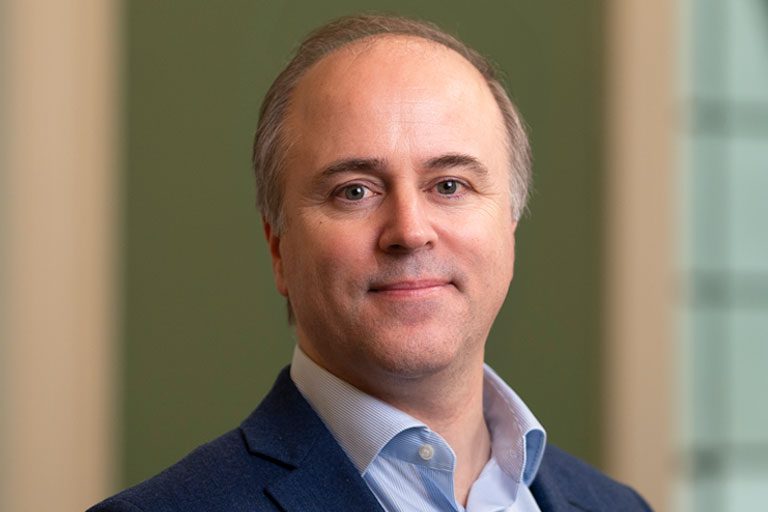
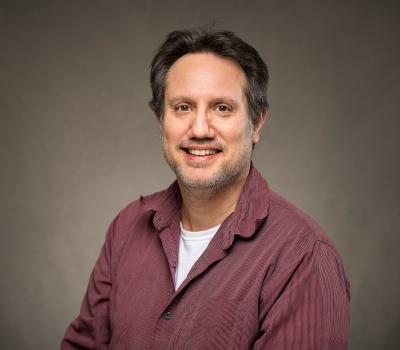
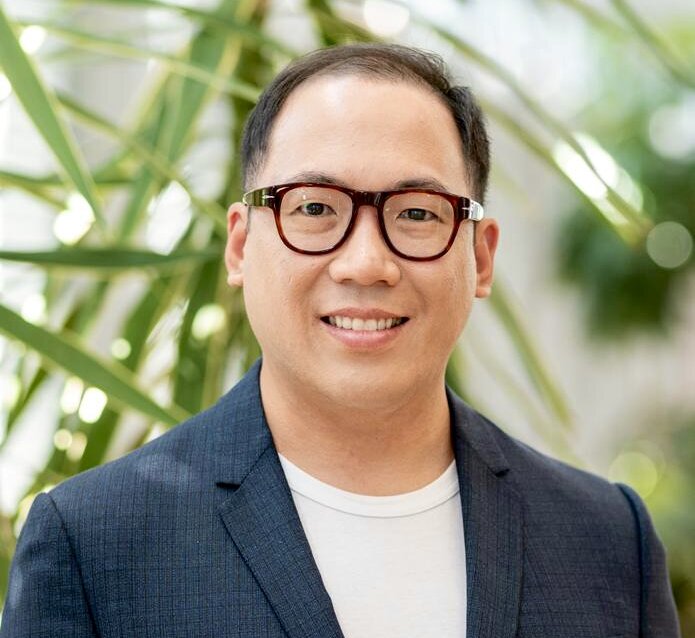
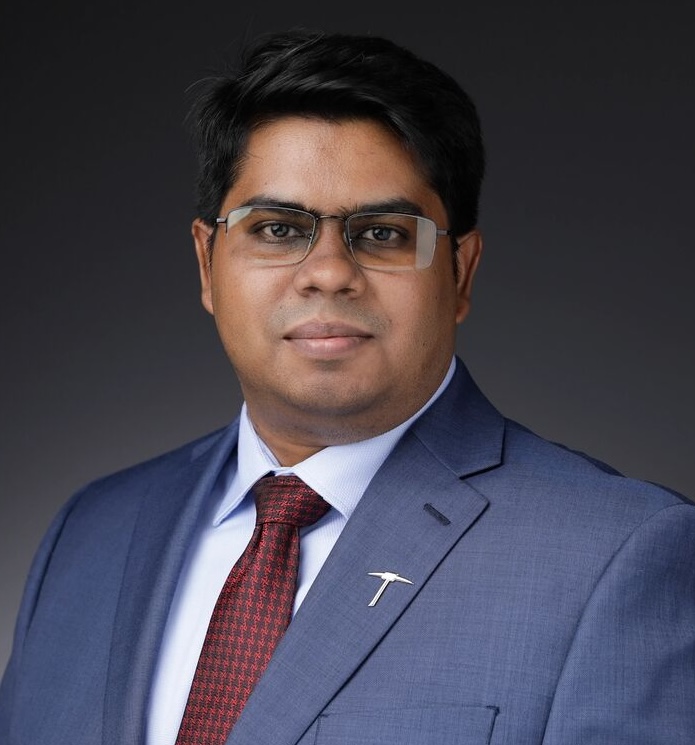
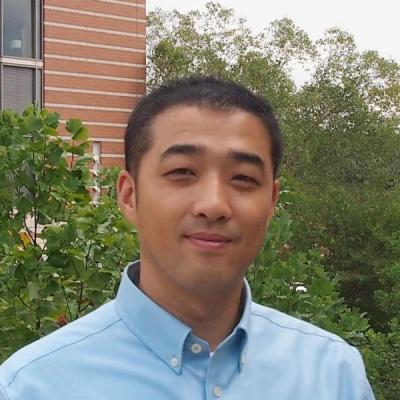
Dean Moyar is a Professor of Philosophy and Vice Dean for Humanities at Johns Hopkins University’s Krieger School of Arts & Sciences. He holds a PhD from the Committee on Social Thought at the University of Chicago and a BS from Duke University. His academic roles include overseeing humanities faculty searches, mentoring, and coordinating departmental leadership. Moyar’s research focuses on German Idealism, particularly Hegel and Fichte, exploring themes of freedom, rationality, and ethical systems. His work bridges historical texts with contemporary philosophical debates, emphasizing inferentialist frameworks and the interplay between theoretical and practical reason. His research interests include social/political philosophy, practical reason, and philosophy in 19th-century American thought. Current projects involve reinterpreting American transcendentalism through German Idealism and editing Moby-Dick for philosophical analysis. Teaching responsibilities span undergraduate and graduate courses in German philosophy and political theory. Publications emphasize Hegel’s contributions to metaethics, political philosophy, and epistemology, with works like Hegel’s Conscience and Hegel’s Value . He advises graduate students and maintains active collaborations across disciplines, including philosophy and literature studies.
Christopher David Viger is an Associate Professor in the Department of Philosophy at Western University, holding a dual affiliation with the Rotman Institute of Philosophy. Based in the Western Interdisciplinary Research Building in London, Ontario, he serves as Assistant Department Chair and contributes to the Philosophy of Mind and Cognitive Science research domain within the Rotman Institute. His educational background includes foundational training in mathematics and logic, followed by retraining in philosophy at Carleton University under Andrew Brook. He completed his PhD in Philosophy at McGill University supervised by Paul Pietroski, after which he held postdoctoral positions at Tufts University (with Daniel Dennett), Dalhousie University, and the CUNY Graduate Center/Rutgers Center for Cognitive Science. Dr. Viger's research centers on the language-thought relationship , where he developed the Acquired Language of Thought Hypothesis (ALOT) challenging traditional LOT models. He argues conceptual structure interfaces specialized processing modules, with compositionality emerging from natural language rather than innate cognition. His newer work investigates neural connectivity to explain implicit bias, dual process theory failures, and limitations in brain training applications, aiming to improve critical thinking pedagogy. His publication trajectory shows consistent focus on foundational cognitive questions, with recent work (2018-2024) examining language ontology and interpretive effects, while maintaining engagement with core themes like conceptual compositionality and the binding problem. Early influential contributions addressed LOT critiques and philosophical logic puzzles. Key recognitions include: Marilyn Robinson Teaching Award (2008) SSHRC Postdoctoral Fellowship Rotman Faculty Fellowship in Philosophy and Neuroscience (2012-2014) Administratively, he served as Undergraduate Chair (2010-2014) while maintaining active research collaborations across institutions. His work bridges philosophy, cognitive science, and neuroscience through the Rotman Institute's interdisciplinary framework, with recent scholarship increasingly addressing educational applications of cognitive theory. Dr. Viger maintains strong institutional presence through the Rotman Institute's Philosophy of Mind and Cognitive Science domain, collaborating with researchers like Tim Bayne and Mel Goodale. His postdoctoral work with Daniel Dennett at Tufts established enduring connections to major cognitive science centers, reflected in ongoing engagement with CUNY and Rutgers research networks.
Graham Tyson is an Adjunct Professor at the School of Psychology, Charles Sturt University, Australia. With a distinguished career spanning several decades, he has made significant contributions to the fields of forensic and cross-cultural psychology. His academic journey began in South Africa where he earned his BSc(Hons) and MSc at the University of Natal, followed by a PhD at the University of the Witwatersrand. Before moving to Australia in 1989, he served as Head of the Division of Experimental Psychology at the University of the Witwatersrand. At Charles Sturt University, he was the first Sub-Dean for Psychology, a position he held for nearly 10 years, and later served as Sub-Dean (Graduate Studies) for the Faculty of Arts and Education for four years. He has also been a Visiting Scholar at the London School of Economics and a Visiting Fellow at Wolfson College, University of Oxford. Professor Tyson's educational background includes: BSc(Hons) from University of Natal, South Africa MSc from University of Natal, South Africa PhD from University of the Witwatersrand, South Africa Professor Tyson's research focuses on applying social psychological theory to investigate pressing social issues, particularly crime and violence. His work spans multiple domains including forensic psychology, cross-cultural comparisons, and educational psychology. He has made significant contributions to understanding bulimia nervosa across cultures, diagnostic accuracy in psychology, and the psychological factors affecting academic success. His research often employs comparative methodologies to examine how cultural contexts shape psychological phenomena and professional practices. Professor Tyson has maintained an active research program throughout his career, with publications spanning from the 1980s to the present day, demonstrating both longevity and continued relevance in his field. Analysis of Professor Tyson's recent publications (2013-2021) reveals a consistent focus on several key areas. His work shows strong emphasis on cross-cultural psychological phenomena, particularly comparing Australian and Japanese perspectives on mental health issues. There is a clear thread of research examining diagnostic processes and cognitive biases among psychologists, with particular attention to the anchoring effect. His scholarship also consistently addresses educational psychology topics, especially related to student well-being, academic performance, and issues affecting students with disabilities. The interdisciplinary nature of his work is evident in how he bridges clinical, social, and educational psychology domains. Professor Tyson's professional recognition includes: Editor-in-Chief of the Australian Journal of Psychology (2011-2014) Fellow of the Australian Psychological Society Member of the British Psychological Society Member of the College of Forensic Psychologists Registered Psychologist with Forensic endorsement Member of the Australian Psychology Accreditation Council working committee since 2005 Throughout his career, Professor Tyson has prioritized the development of psychology as both a discipline and profession. He has been actively involved with the Australian Psychological Society in various roles and has served as a certified assessor for the Australian Psychology Accreditation Council. His extensive research supervision reflects his commitment to mentoring the next generation of psychologists, though specific student names are not documented in the provided materials. His work with the "Think First" program demonstrates applied research aimed at addressing offender behavior in Australian correctional centers, showing his dedication to translating psychological knowledge into practical interventions. Professor Tyson's academic contributions extend to laboratory and team-based research, particularly in cross-cultural studies comparing Australian and Japanese perspectives on mental health. His collaborative work with researchers like Dryer, Manalo, and Uesaka demonstrates his ability to build international research teams focused on culturally relevant psychological questions. His involvement in the diagnostic accuracy research suggests work with clinical psychology teams examining professional decision-making processes.
Dr. Karen Kennedy serves as Senior Associate Dean and Professor of Marketing in the Collat School of Business (CSOB) at the University of Alabama at Birmingham. With over 10 years of marketing management experience prior to earning her PhD, she brings practical expertise to her academic role. As Senior Associate Dean, Dr. Kennedy leads work in academic programs at both graduate and undergraduate levels as well as Professional Education. She has significantly contributed to the development of corporate partnerships, online programs, professional education initiatives, new majors, certificates, and innovative graduation paths at CSOB. Dr. Kennedy's educational background includes: Doctor of Philosophy in Marketing from the University of South Florida (1997) Master of Business Administration from Georgia State University (1988) Master of Science in Apparel and Textiles from Florida State University (1980) Dr. Kennedy's research focuses on the intersection of marketing theory and practice, with particular emphasis on market orientation, customer relationships, and organizational dynamics. Her work explores how cultural shifts within organizations impact performance and how customers' evolving roles shape business strategies. She has published extensively in leading marketing journals including the Journal of Marketing, Journal of the Academy of Marketing Science, and Journal of Personal Selling and Sales Management. Her research bridges academic theory with practical business applications, particularly in business-to-business contexts. Dr. Kennedy's scholarly output reveals a consistent focus on understanding market orientation from multiple perspectives - including managers, salespeople, and customers. Her work spans traditional marketing domains while increasingly incorporating healthcare contexts, reflecting interdisciplinary applications of marketing principles. A notable trend in her recent research involves examining how digital transformation affects buyer-seller relationships and information exchange. Her publications demonstrate a strong commitment to methodological rigor while addressing practical business challenges faced by organizations. Throughout her academic career, Dr. Kennedy has been actively involved in mentoring students and developing educational programs. Her teaching interests include Marketing Strategy, Personal Selling, Sales Management, Negotiation, and Professional Development at undergraduate, MBA, and Executive levels. She has taught courses such as Strategic Marketing (MK450) and Professional Development (BUS305) consistently over multiple semesters. Her administrative leadership as Associate Dean has enabled her to shape curriculum development and foster corporate partnerships that enhance student learning experiences.
Raviv Raich is a Professor in the School of Electrical Engineering and Computer Science at Oregon State University. He holds a B.Sc. and M.Sc. from Tel-Aviv University (1994, 1998) and a Ph.D. from Georgia Institute of Technology (2004). His research focuses on signal processing, machine learning, optimization, and probabilistic modeling with applications in adaptive sensing, manifold learning, and sparse signal reconstruction. He has advised numerous graduate students and contributed to impactful work in bioacoustics, hyperspectral imaging, and medical diagnostics. Notable awards include the NSF CAREER Award (2013) and multiple best paper awards. His academic leadership includes editorial roles at IEEE Transactions on Signal Processing and contributions to the IEEE Signal Processing Society. Education: B.Sc. Electrical Engineering, Tel-Aviv University (1994) M.Sc. Electrical Engineering, Tel-Aviv University (1998) Ph.D. Electrical Engineering, Georgia Tech (2004) Research Interests: Statistical signal processing and machine learning frameworks Adaptive sensing strategies for optimization in imaging and tracking Manifold learning for high-dimensional data analysis Sparse representations in signal reconstruction and inverse problems Publications: Over 100 peer-reviewed articles in top venues like IEEE Transactions on Signal Processing, IEEE Sensors Journal, and Pattern Recognition Letters, emphasizing theoretical guarantees and practical applications in bioacoustics, medical imaging, and environmental monitoring. Grants: Active funding from NSF, DARPA, and industry partnerships supporting research in optimization, multi-instance learning, and hyperspectral sensing.
Dr. Mo Egan is a Senior Lecturer in Law at the University of Stirling and currently serves as Head of Law as of January 2025. Her research focuses on financial crime, privacy regulation in digital spaces, and the role of non-state actors in justice delivery. She holds affiliations with the Centre for Research into Information, Surveillance and Privacy (CRISP), the Scottish Graduate School of Arts and Humanities (SGSAH), and the National Research Centre on Privacy, Harm Reduction and Adversarial Influence Online (REPHRAIN). Her work explores tensions between privacy rights and public security, particularly in anti-money laundering frameworks, and examines how digital advancements impact legal practices. She has presented at major conferences including the American Society of Criminology and the Socio-Legal Scholars Association. Dr. Egan is a Fellow of the Higher Education Academy and has received teaching excellence awards for innovative feedback practices and contributions to learning environments. Research interests include transnational crime control, evidence law, and the ethical integration of technology in legal processes. She supervises postgraduate research in Scottish criminal law, justice & home affairs, compliance, and privacy law. Her interdisciplinary approach is reflected in workshops on data protection and research design, emphasizing collaboration across disciplines to address evolving legal challenges.
Frankie Fong is a Postdoctoral Scientist at the Max Planck Institute for Evolutionary Anthropology (Leipzig, Germany) and an Honorary Research Fellow at the University of Queensland (Australia). His research focuses on social learning mechanisms, cross-cultural comparisons of child development, and the impact of digital media on children's learning. He holds a PhD in Developmental Psychology from the University of Queensland, where he also served as a tutor and guest lecturer. Fong has been awarded the University of Queensland Graduate School Candidate Travel Award and has secured grants including the Issachar Fund Subaward and Texas Global Faculty Research Seed Grant. His work spans experimental studies on children's imitation behavior, cultural transmission, and the role of schooling in cultural reproduction. He contributes to initiatives promoting research generalizability and serves as an Assistant Editor for Infant and Child Development . Education: PhD (Developmental Psychology, UQ, 2019), Visiting Researcher (Washington University in St. Louis, 2018) Affiliations: Max Planck Institute for Evolutionary Anthropology, University of Queensland Editorial Roles: Assistant Editor at Infant and Child Development Fong's research interests include the interplay between cultural norms, digital media exposure, and children's cognitive development. His studies often involve cross-cultural methodologies to explore how diverse environments shape learning strategies and social behavior. Recent work highlights children's capacity for costly ritual replication and their nuanced judgment of artifact functionality based on cultural conventions. Key collaborations include the Comprehensive Assessment of Family Media Exposure (CAFE) Consortium and the Australian Research Council's Digital Child Center. His presentations address methodological challenges in cross-cultural developmental research and post-PhD career pathways.
Mohammad Saidur Rahman is an Assistant Professor in the Department of Computer Science at the University of Texas at El Paso (UTEP) in the College of Engineering. He joined UTEP in Fall 2024 and directs the IQSeC-Lab. Prior to this appointment, he completed his PhD in Computing & Information Sciences from Rochester Institute of Technology (RIT) where he worked with Professor Dr. Matthew Wright at the ESL Global Cybersecurity Institute. PhD in Computing & Information Sciences, Rochester Institute of Technology (RIT) MS in Computing Security, Department of Cybersecurity at RIT (August 2018) Bachelor's in Management Information Systems, University of Dhaka, Bangladesh (2016) Rahman's research sits at the intersection of machine learning, security, privacy, and quantum security. His primary focus is developing ML-driven intelligent systems for malware analysis and network traffic analysis. He has extensively worked on traffic analysis on Tor, including website fingerprinting attacks and defenses since Fall 2016. Recently, he has been exploring quantum key distribution networks and quantum properties to propose quantum-secure solutions against vulnerabilities in classical communication systems. His publication record shows a clear trend toward integrating machine learning with security applications, particularly in malware analysis and quantum security. Recent works demonstrate his shift toward quantum security applications, with multiple 2025 publications on quantum machine learning for malicious code analysis and evaluating post-quantum cryptographic algorithms. His research maintains strong connections between theoretical security concepts and practical implementations, often validated through publications at top security venues like IEEE S&P, ACM CCS, and PETS. Rising Star in AI and ML in Security by IEEE TCCN Special Interest Group Travel Grant to attend ACM CCS 2019 Bronze Medal, UPSTATE Chapters of American Statistical Association (UpStat 2019) 3-Minutes Thesis Presentation Competition Winner 2018 (RIT) Graduate Research Showcase Winner 2017 (RIT) Rahman has served on program committees for prestigious conferences including IEEE EuroS&P, AAAI, PETS, and CAMLIS. His industry experience includes research internships at Mandiant (Google Cloud), Nokia Bell Labs, and Cisco Quantum Lab, leading to collaborative publications. At UTEP, he directs the IQSeC-Lab, focusing on intelligent quantum security and cybersecurity research. His work bridges theoretical security concepts with practical implementations, particularly in developing quantum-secure protocols for communication infrastructure against emerging threats in the post-quantum era.
Julien Musolino is a Professor at Rutgers University, holding dual appointments in the Department of Psychology and the Rutgers Center for Cognitive Science (RuCCS). He is also a member of the Philosophy Department's graduate faculty. His research explores the foundations of human cognition, focusing on language, rationality, agency, memory, and belief formation, with a particular interest in their societal implications. Musolino has been recognized with multiple teaching awards for his outreach efforts, and his work has been supported by NIH and NSF grants. Education: University of Geneva, Switzerland University of North Wales, Bangor, UK University of Maryland University of Pennsylvania Research Interests: Musolino's work bridges cognitive science, linguistics, and philosophy. Key areas include belief dynamics, temporal binding mechanisms, supernatural concept memorability, and the cognitive underpinnings of religious thought. He actively engages in public discourse through lectures, podcasts, and media appearances, addressing topics like free will and the intersection of science and society. Recent Activities: Recent talks include presentations to employment lawyers, physics students, and humanist networks. He debated theologian Brian Brock (2025) and participated in Swiss media interviews (2023). His research has been featured in leading journals and interdisciplinary conferences. Grants & Funding: NIH and NSF grants support his studies on belief formation, temporal binding, and cognitive science outreach. Labs/Teams: Affiliated with RuCCS and collaborates with interdisciplinary teams on projects like the memorability of supernatural concepts and rethinking temporal binding.
Kyu Hyung Lee is an Associate Professor of Computer Science at the University of Georgia (UGA), serving as Associate Director of the Institute of Cybersecurity and Privacy and Graduate Coordinator. His research focuses on system security, software security, digital forensics, software reliability, program analysis, and mobile security. He holds a Ph.D. in Computer Science from Purdue University (2014). Lee’s work emphasizes practical security solutions, including audit logging mechanisms (e.g., FA-SEAL, Graalf), vulnerability detection in web applications (e.g., RaceDB, Synthdb), and IoT security (e.g., ChatterHub, Unveiling IoT Security). His research has led to grants from NSF and U.S. Army, including projects on data provenance infrastructure and online CMS abuse prevention. Notable collaborations include DARPA’s TRACE initiative for enterprise-wide attack tracking. Recent publications highlight advancements in cloud-based defense tools (Goaltender), Rust programming language education (RustLIVE), and anti-forensic attack mitigation (Dazzle-attack). Lee advises PhD Candidate Basanta Chaulagain and maintains active engagement in cybersecurity education through graduate coordination. His grants include a 2019 NSF award for data sharing infrastructure and a 2018 Army grant for asymmetric defender-attacker frameworks. Lee’s contributions bridge theoretical security research with real-world applications in enterprise systems, IoT, and cloud environments.
John Mark Hicks is a part-time Professor of Theology at Lipscomb University's Hazelip School of Theology, within the College of Bible. He has been affiliated with Lipscomb since 2000 and previously taught at Harding University Graduate School of Religion from 1991 to 2000. His academic journey includes a B.A. in Bible (Freed-Hardeman University, 1977), M.A.R. in Theological Studies (Westminster Theological Seminary, 1980), M.A. in Humanities (Western Kentucky University, 1981), and a Ph.D. in Reformation and Post-Reformation Theology (Westminster Theological Seminary, 1985). Teaching Focus: Theology, Biblical Studies, Ecclesiology, Sacramental Theology Key Affiliations: Active in Churches of Christ since 1982, with ministry experience in Virginia, Pennsylvania, Alabama, and Tennessee. Research Interests Hicks' scholarship centers on eschatology (God's redemptive purposes in new creation), sacraments (baptism and Eucharist as divine encounters), ecclesiology (the church as the body of Christ), and soteriology (union with Christ). He emphasizes the sacraments as transformative encounters with God's future, redefining them beyond mere ordinances to dynamic means of grace. His work also explores the historical theology of the Stone-Campbell Movement and contemporary issues like environmental stewardship as part of God's mission. Grants & Advising While specific grants are not listed, Hicks has advised numerous students and contributed to over 40 books and 13 journal articles. His writings often bridge academic theology with practical ministry, advocating for a sacramental vision of Christian life. Labs/Teams Engaged with Lipscomb University's theology faculty and collaborative projects within Churches of Christ, though specific labs are not detailed.
Ronald Spronk is a Professor in the Department of Art History and Art Conservation at Queen’s University, affiliated with the Faculty of Arts and Science. He holds the Jheronimus Bosch Special Chair at Radboud University Nijmegen (since 2010). His research focuses on technical art history, analyzing painting materials and techniques from Early Netherlandish artists (e.g., Van Eyck) to modern figures like Mondrian using methods like infrared reflectography and X-radiography. His work bridges art historical interpretation with scientific analysis, often collaborating with conservators and conservation scientists. Education: PhD (2005) and M.A. (1993) in Art and Architecture History from Groningen University. Before joining Queen’s in 2007, he worked at Harvard Art Museums for 13 years, leading interdisciplinary projects and exhibitions. Research interests include digital imaging applications, technical studies of Netherlandish painting, and digital humanities. He co-curated major exhibitions like *Bruegel, The Hand of the Master* (2018) and coordinated the online tool *Closer to Van Eyck* for the Ghent Altarpiece conservation project. At Queen’s, he established QU-MoLTAH, a mobile lab enabling graduate students to conduct technical examinations in museums. Awards include the 2002 College Art Association Award (for *Mondrian: The Transatlantic Paintings*) and the 2007 George Wittenborn Memorial Book Award (for *Prayers and Portraits*). His contributions span Bosch research, Bruegel digital projects, and advancing technical art history methodologies.
Edlie Wong is Professor and Associate Chair of English at the University of Maryland. Her research bridges African American, Asian American, and Transatlantic literary studies, with emphasis on citizenship, race, and legal history. She directs the Center for Literary and Comparative Studies and has held leadership roles in major academic societies. Research Focus: Interrogates racial formations through legal narratives and periodical culture. Key themes include: Reconstruction-era racial politics Transpacific migration and exclusion Black-Asian comparative racialization Publications analyze how 19th-20th century texts shaped concepts of freedom and belonging, with recent work examining digital methodologies in periodical studies. Awards: NEH and Mellon Foundation fellowships Presidency of C19: Society of Nineteenth-Century Americanists University-level research and service awards Advises graduate students and leads public humanities initiatives exploring race in historical context.
Raffaella Nori is an Associate Professor in the Department of Psychology 'Renzo Canestrari' at the University of Bologna. Her research focuses on cognitive psychology, spatial navigation, creativity, mental imagery, decision-making, and emotion-cognition interactions. She holds academic appointments at one of Europe's oldest universities, with a strong emphasis on interdisciplinary studies. Her work bridges experimental psychology with practical applications in areas like road safety, virtual environments, and clinical interventions for spatial disorders. Research Interests: Dr. Nori investigates spatial cognition mechanisms, including topographical disorientation and navigational strategies. Her work explores how cognitive load, emotions, and individual differences influence decision-making and creativity. She also studies the impact of technology (e.g., virtual reality) on cognitive processes and has pioneered studies on cultural heritage perception using psychometric tools. Recent projects address gender differences in risk-taking behaviors among older drivers and the ethical boundaries of creativity. Recent Trends in Publications: Her recent articles highlight interdisciplinary approaches, such as combining neuroimaging with cognitive modeling to understand spatial memory and creativity. She frequently examines real-world applications like accident prevention in non-expert drivers and the role of Theory of Mind in navigation. Her work also intersects with policy design, as seen in studies on nudges in decision-making and the validation of self-report scales for cultural engagement. Awards: No specific awards are listed in the provided materials, but her extensive publication record reflects sustained scholarly impact. She maintains active collaborations in virtual environment design, clinical psychology, and transportation safety research. Advising & Grants: While student advisees are not explicitly listed, her research themes suggest involvement in mentoring graduate students in psychology, cognitive science, and related fields. Funding sources likely include EU initiatives and Italian research grants focused on applied cognitive studies. Labs & Teams: Her affiliations imply participation in interdisciplinary teams at the University of Bologna, possibly including collaborations with engineering and computer science departments for virtual reality applications. She also engages with legal and public health sectors regarding decision-making and accident prevention.
Professor Helen O'Sullivan is the Provost and Deputy Vice-Chancellor at the University of Chester, where she leads academic strategy, teaching innovation, and digital initiatives like Digital Chester. She holds a Professorship in Medical Education and previously served in senior roles at Keele University and the University of Liverpool, focusing on education leadership and medical curriculum reform. Her research spans emotional intelligence in clinical communication, medical professionalism, and leadership development in healthcare. She chairs the Association for Learning Technology and sits on Jisc’s Board, advocating for digital education. Her work emphasizes integrating emotional competence and leadership skills into medical training. Awards include Principal Fellow of Advance HE. Educations: BSc Molecular Biology, University of Liverpool PhD Bacterial Genetics, University of Liverpool MBA, Open University Her research interests center on medical education innovation, with key contributions to frameworks linking emotional intelligence to clinical communication effectiveness. Recent work explores the role of digital transformation in higher education leadership. She has published extensively on leadership theories, medical curriculum design, and the impact of psychological traits on clinical practice. Publications highlight her focus on validating emotional intelligence’s role in medical education, leadership development for junior doctors, and curriculum reforms. Her scholarly output includes over 48 peer-reviewed articles, book chapters, and guides on professionalism integration in medical training. Awards: Principal Fellow, Advance HE Leadership Contributions: Chaired initiatives on medical professionalism and leadership education Contributed to global discussions on clinical leadership via WonkHE blogs and ITN Business features Her advisory roles include Jisc Board membership and leadership in national education bodies, reflecting her dual focus on academic governance and pedagogical advancement.