Dalpat Rajpurohit is an Assistant Professor at the University of Texas at Austin's College of Liberal Arts, specializing in Hindi language and literature within the College's Asian Studies department. Holding a PhD from Presidency University, Kolkata, he teaches courses exploring South Asian history, religions, and literary traditions through Sanskrit and Hindi texts. Education: PhD in Hindi Literature, Presidency University Affiliations: University of Texas at Austin, Asian Studies, College of Liberal Arts Research: Focuses on pre-modern Hindi/Braj literary intersections with Bhakti, Vedanta, Riti, and colonial language shifts His work challenges simplistic binaries in Hindi literary historiography, demonstrating how early modern Indian poet-saints like Sundardas blended devotional and courtly traditions under Mughal-Rajput multiculturalism. He analyzes how Dādūpanthi saints navigated Jain merchant networks and Mughal imperial policies like sulḥ-i kull while advancing non-dualist Vedanta in Braj poetry. Rajpurohit's research has been recognized with the 30th Devishankar Awasthi Samman and Amar Ujala Best Book Award (2023) . He supervises graduate students in pre-modern Hindi archives, early modern literary networks, and topics like caste, gender, and multilingualism in South Asian literature.
Dr. Ken Ferens is an Assistant Professor in the Department of Electrical and Computer Engineering at the Price Faculty of Engineering, University of Manitoba. He serves as the Computer Engineering Champion in the Centre for Engineering Professional Practice and Engineering Education and directs the Applied Cognitive Intelligence (ACI) Research Group. Dr. Ferens is a senior member of the Institute of Electrical & Electronics Engineers (IEEE), Chair of the EduManCom Chapter of the IEEE, Vice-Chair of the Computer and Computational Intelligence Chapter of the IEEE, and Chair of the Industry, Teaching Assistants, and Student Forums for Engineering Curriculum Review and Improvement. Ph.D. (Computer Engineering), University of Manitoba, 1996 M.Sc. (Computer Engineering), University of Manitoba, 1991 B.Sc. (Electrical Engineering), University of Manitoba, 1989 Dr. Ferens has over 33 years of research experience in computational intelligence, focusing on cognitive machine learning, artificial intelligence, cognitive computational intelligence, chaos theory applications, agent-based models, and various optimization algorithms including simulated annealing, genetic algorithms, artificial neural networks, and particle swarm optimization. His research applies these techniques to develop software and hardware intrusion detection systems for cybersecurity applications. He teaches graduate-level courses on Computer Network Security and Applied Computational Intelligence, providing students with theoretical background and hands-on experience in state-of-the-art security methods. Analysis of Dr. Ferens' recent publications reveals a strong focus on applying cognitive and chaotic computational techniques to cybersecurity challenges, particularly malware detection and network intrusion detection. His work increasingly integrates complexity theory, fractal analysis, and hybrid optimization approaches to enhance security systems' effectiveness. There's a clear progression toward more sophisticated machine learning architectures applied to increasingly complex security scenarios, with growing emphasis on real-world IoT and network security applications. Best Paper Award at IEEE International Conference on Cognitive Informatics and Cognitive Computing (ICCI*CC 2022) Best Paper Award at IEEE International Conference on Cognitive Informatics and Cognitive Computing (ICCI*CC 2015) Best Journal Paper Award for 2013 (Journal of ICT Research and Applications) Best Poster Award at 12th International Conference on e-Health Networking, Application & Services (2010) Best Paper Award at IASTED International Conference on Computer, Electronics, Control, and Communication (1991) Dr. Ferens collaborates with national and international industry partners including the Department of Advanced Information Management, Content Technology Canadian Tire Corporation (CTC), and Magellan Aerospace. His research group has received funding supporting the Cyber-security Research Program, developing practical applications of computational intelligence for security systems. He has supervised numerous graduate students in the Electrical and Computer Engineering department, focusing on research at the intersection of machine learning and cybersecurity. Dr. Ferens leads the Applied Cognitive Intelligence (ACI) Research Group within the Department of Electrical and Computer Engineering, which focuses on applying cognitive, chaotic, and computationally intelligent algorithms to build intrusion detection systems. The group collaborates with industry partners to develop practical security solutions while providing students with hands-on research experience in cutting-edge security technologies. Their work spans both theoretical algorithm development and practical hardware implementation for real-world security applications.
Cynthia Brewer is a Professor of Geography and Information Sciences and Technology at Pennsylvania State University. She currently serves as the Associate Dean for Faculty Affairs in the College of Information Sciences and Technology (IST), a position she began in August 2024. Previously, she was a faculty member in the College of Earth and Mineral Sciences (EMS) where she served as head of the Department of Geography from 2014 to 2021. Dr. Brewer's research focuses on cartographic communication and visualization, map design, color theory, multi-scale mapping, atlas production, and topographic maps. She is especially well known for her ColorBrewer online tool for selecting map color schemes and her work on ScaleMaster for organizing multiscale mapping. Her research falls primarily within the Geospatial Big Data Analytics and Spatial Modeling and Remote Sensing research clusters at Penn State. Her publications include more than 30 peer-reviewed articles and 60 additional publications and cartographic design resources, generating over 7,000 citations. She has authored four books, including the popular 'Designing Better Maps' with the 3rd edition published by Esri Press in 2024. Carl Mannerfelt Gold Medal from the International Cartographic Association (ICA) in 2023 O. M. Miller Cartographic Medal from the American Geographical Society (AGS) in 2019 Henry Gannett Award for Exceptional Contributions to Topographic Mapping from the U.S. Geological Survey (USGS) in 2013 EMS Wilson Award for Outstanding Service in 2014 As an administrator, Dr. Brewer has extensive experience in departmental leadership, having served as head of the Department of Geography for seven years. She has also served on numerous university committees, was elected to the University Faculty Senate, and served as an Administrative Fellow shadowing the Provost. She is not currently taking on graduate advisees due to her full-time administrative role in IST.
Jung Soo Lim is an Assistant Professor in the Department of Computer Science at California State University, Los Angeles, within the College of Engineering, Computer Science, and Technology. He earned his B.S. from Cal State LA and M.S. and Ph.D. from UCLA, returning to his alma mater as a part-time lecturer in 2014 before transitioning to a full-time assistant professor role in 2019. Education: B.S. (Cal State LA), M.S. (UCLA), Ph.D. (UCLA) His research focuses on Internet of Things (IoT) , Cyber-Physical Systems , Wireless Networking , Software Engineering , and Medical Computing . He has active projects in IoT applications for healthcare, urban safety, and wastewater monitoring, including the Center for Inclusive Computing (CIC) Transfer Pathways Project. Recent publications highlight interdisciplinary work bridging IoT, healthcare diagnostics, and smart city infrastructure. Notable topics include stroke detection algorithms , IoT communication protocols , and sensor-based environmental monitoring . Scientific Awards: Outstanding Senior at Cal State LA (1997) He teaches core computer science courses such as Computer Programming Fundamentals and Analysis of Algorithms, and actively mentors graduate students. His lab focuses on developing embedded systems and IoT solutions for real-world challenges.
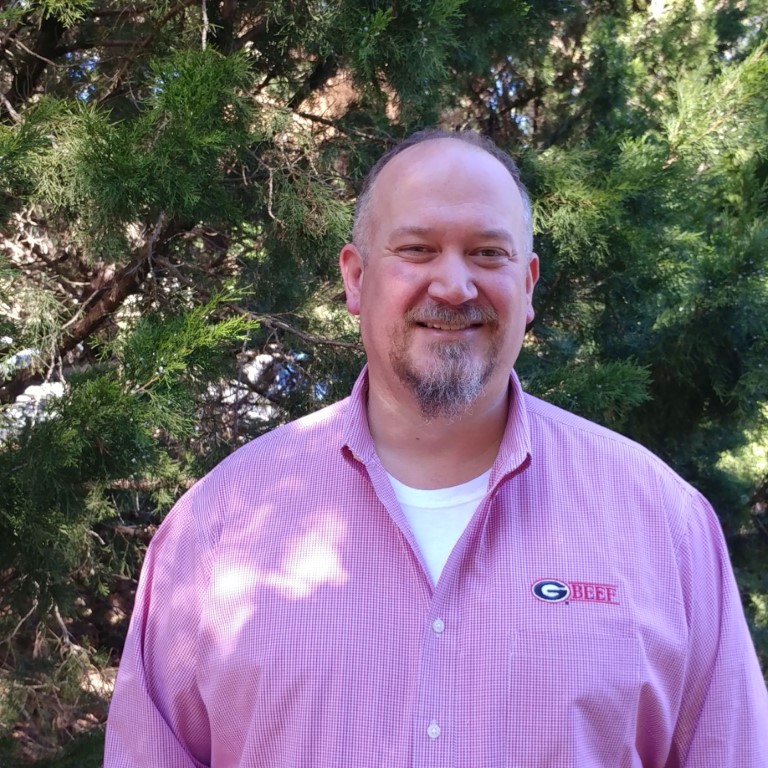
Alexander Stelzleni is a Professor and Graduate Coordinator in the Department of Animal and Dairy Science at the University of Georgia's College of Agricultural & Environmental Sciences. He has been with the University of Georgia since July 2007, progressing from Assistant Professor to Associate Professor in 2013, and ultimately to Professor in 2020. As Graduate Program Coordinator since January 2021, he oversees both the Animal and Dairy Science (ADSC) and Regenerative Bioscience (REBI) graduate programs. Dr. Stelzleni's research program maintains two central foci: (1) the influence of production and management on meat quality and yield with emphasis on southeastern and subtropical beef finishing systems, and (2) further processing to improve quality and safety of red meat and poultry. His lab has been particularly active in studying heat stress mitigation in Southeastern US beef finishing systems, sous vide as a consistent cookery method, further processing of poultry myopathies, and safety of low-thermal meat products. His scholarly work reflects strong expertise in meat science, with recent publications focusing on nicotinamide riboside effects, National Beef Quality Audits, dairy-beef crossbreeding, poultry myopathies, sous vide techniques, and high-pressure processing for pathogen control. The Stelzleni Lab has presented numerous studies at the Reciprocal Meat Conference in recent years, demonstrating consistent productivity and relevance to industry challenges. Student Career Success Influencer Award (2024) Multiple UGA Career Center Awards (2019, 2016, 2015, 2014, 2012) Larry Benyshek Excellence in Teaching Award (2016) ADSC 3650 recognized as top 5 college courses at UGA As an advisor, Dr. Stelzleni has mentored numerous graduate students including Clint Lee (MS thesis on heat stress mitigation), Cameron Catrett (MS 2024), and M. Junaid Nawaz (PhD student). His lab actively involves undergraduates in research and meat judging competitions, with students regularly presenting at professional conferences and winning awards in Iron Chef contests and meat judging events. Dr. Stelzleni directs the Meat Science Technology Center where his team investigates methods to improve meat quality, yield, shelf-life, and safety. The lab maintains strong industry connections with commodity groups, meat processors, and stakeholders to address current challenges in meat production and processing.
Professor Joaquim Pinto is a leading climate scientist at the Karlsruhe Institute of Technology (KIT), where he serves as Head of the Working Group "Regional Climate and Weather Hazards" and as Spokesperson of the collegial institute management team. He holds the prestigious AXA Research Fund Chair position at the Institute of Meteorology and Climate Research - Troposphere Research (IMK-TRO). His academic background includes a Licenciate in Geophysical Sciences - Meteorology from the University of Lisbon (1990-1996), PhD studies at the University of Cologne (1998-2002), and academic positions at the University of Cologne (2002-2016) and University of Reading (2013-2016) before joining KIT in 2016. He became a Privatdozent (lecturer) at the University of Cologne in 2011 and earned his habilitation with research on extreme European wind storms. Professor Pinto's research focuses on mid-latitude meteorology and climatology, with special emphasis on extreme weather events , climate variability in Europe across multiple time scales, regional climate modeling and downscaling methods , and the diagnostic modeling and quantification of risks associated with extreme events affecting Europe. His work bridges fundamental climate science with practical applications for risk assessment and management. His extensive publication record demonstrates expertise in analyzing European windstorms, heatwaves, and compound extreme events. Recent work examines the impacts of climate change on wind energy potential, extreme precipitation events, and the complex interactions between atmospheric circulation patterns and regional climate extremes. His research often employs high-resolution climate modeling, statistical-dynamical downscaling approaches, and interdisciplinary collaborations to address pressing climate challenges. AXA Research Fund Chair in Regional Climate and Weather Hazards Professor Pinto teaches graduate and undergraduate courses including "Climate Modelling and Dynamics with ICON," "IPCC Assessment Report," "Climatology," "Energy Meteorology," "Methods of Data Analysis," and "Regional Climate and Weather Hazards." His teaching reflects his research expertise in climate modeling, extreme events, and regional climate change impacts.
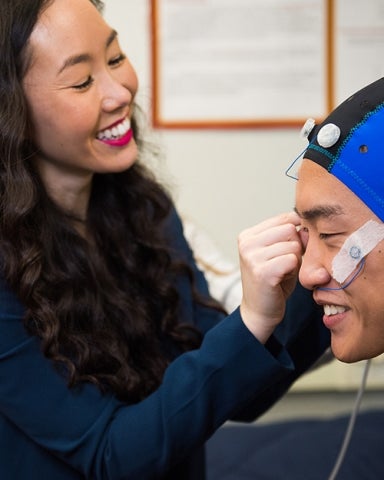
Kelly Bennion serves as an Associate Professor in the Psychology and Child Development Department at California Polytechnic State University. Her research examines how real-life variables—such as emotion, stress, physiological arousal, and sleep—affect memory encoding and consolidation using behavioral experiments, eye tracking, polysomnography, and neuroimaging. She investigates how sleep selectively enhances memories for emotionally salient or future-relevant information in ecologically valid contexts. (78 words) Her educational background includes: Ph.D. and M.A. in Psychology (Cognitive Neuroscience concentration) from Boston College Ed.M. in Mind, Brain, and Education from Harvard Graduate School of Education B.A. in Psychology and Spanish (summa cum laude, Phi Beta Kappa) from Middlebury College Dr. Bennion's work focuses on memory prioritization mechanisms during sleep-wake cycles, particularly how emotional arousal and physiological stress modulate consolidation. She explores real-world applications including educational strategies and mental health interventions, emphasizing the interaction between cortisol levels and sleep-dependent memory processing. Her multi-method approach bridges laboratory findings with naturalistic memory phenomena. (92 words) Analysis of her 2020-2025 publications reveals three dominant research streams: (1) sleep's role in enhancing emotional and future-relevant memories through selective consolidation, (2) cross-episode memory integration via semantic relatedness and surprise mechanisms, and (3) interdisciplinary extensions into public health (postpartum interventions) and environmental toxicology (bisphenol A effects). Her methodology increasingly combines behavioral metrics with physiological monitoring to capture memory dynamics in complex scenarios. (68 words) Dr. Bennion actively mentors undergraduate researchers, evidenced by student co-authorships on publications including Jackson (2019) on school shooter perceptions. While specific grant details aren't provided, her sophisticated research infrastructure implies substantial external funding. She teaches core psychology courses including Research Methods, Biopsychology, and Memory, emphasizing hands-on methodology training. Her laboratory maintains advanced capabilities for sleep monitoring, eye tracking, and neuroimaging to investigate memory consolidation across physiological states. (76 words)
Alessandro Rigolon is an Associate Professor and MCMP Program Coordinator in the Department of City and Metropolitan Planning at the University of Utah, where he has been on the faculty since 2019. A dual-PhD scholar (Design & Planning, University of Colorado Denver; Architecture, University of Bologna), he is internationally recognized for research on environmental justice, green-space equity, and the public-health consequences of urban greening. Education: Ph.D. in Design and Planning, University of Colorado Denver (2015) Ph.D. in Architecture, University of Bologna, Italy (2012) B.Arch. & M.Arch. in Architecture and Urban Design, University of Bologna, Italy (2007) Research Interests: Rigolon’s work sits at the intersection of environmental justice, urban planning, and public health. He investigates four interconnected themes: (1) policy drivers of inequity in green-space provision; (2) the mechanisms and resistance to green gentrification; (3) green infrastructure’s role in equitable climate adaptation; and (4) health impacts of urban nature on marginalized communities. His studies span multiple scales—from census microdata in Miami-Dade County to machine-learning analyses across 263 Chinese cities—deploying mixed-methods, spatial analytics, and community-engaged research. Publications & Impact: Across 89 peer-reviewed outputs, recent work (2024-2025) reveals complex pathways by which gentrification both precedes and follows greening, quantifies disparities in park access among racial/ethnic groups, and evaluates policies aimed at achieving green-space equity. Collectively, these studies highlight the need for fine-scale spatial data, intersectional analyses, and robust procedural justice when designing equitable greening interventions. Scientific Awards & Recognition: Stanford/Elsevier Top 2 % Scientist (2024) Clarivate Highly Cited Researcher (2024) APA-Utah High Achievement Award (2022) Urban Studies Editor’s Featured Articles (2021) University of Utah Celebrate U Researcher Honoree (2020) Arnold O. Beckman Award (2019) Grants & Advising: Rigolon currently leads or co-leads six funded projects totaling over one million dollars from the Center for Equitable Transit-Oriented Communities, Center for Climate Smart Transportation, Prevention Institute, and University of Illinois. These grants support interdisciplinary teams examining transit-oriented green gentrification, climate adaptation for active transportation, and equitable park policy implementation. Graduate students and post-docs are active collaborators on all projects. Teaching & Community Engagement: He teaches graduate courses including Design Ecologies , Plan Making , Professional Project Studio , and Research Design . Through studio courses, students partner with local governments (South Salt Lake City, Liberty Wells Community Council) to produce actionable plans advancing environmental justice.
Tatsuhiro Ueno serves as Professor at Waseda University's Faculty of Law and School of Law, specializing in Intellectual Property Law, Copyright Law, and Information Law. He currently holds leadership positions as Director of the Institute of Comparative Law (since 2024) and President of SARLIB (Society for Administration of Remuneration for Public Transmission by Libraries or Similar Facilities). With extensive international experience including visiting scholar positions at Ludwig Maximilian University of Munich and the Max Planck Institute for Intellectual Property and Competition Law, Professor Ueno has established himself as a leading authority in copyright law reform and international intellectual property matters. Professor Ueno earned his Master of Law from Kyoto University following undergraduate and graduate studies there. His academic career includes teaching positions at Rikkyo University College of Law and Politics and Seijo University Faculty of Law before joining Waseda University in 2013, where he now contributes to shaping Japan's legal education landscape. His research focuses on the critical intersection of intellectual property law with emerging technologies, particularly artificial intelligence systems and digital platforms. Professor Ueno has pioneered work on text and data mining exceptions, copyright limitations in digital environments, and creator-oriented copyright frameworks. His scholarship bridges theoretical analysis with practical policy development, influencing both domestic legislation and international copyright discourse. His recent publications demonstrate a concentrated focus on AI and copyright law, with numerous articles examining the legal challenges posed by generative AI systems, text and data mining exceptions, and the evolving landscape of copyright protection in the digital era. Professor Ueno's work consistently addresses the balance between protecting creators' rights and ensuring public access to knowledge. KDDI Foundation Book Publishing Grant (January 2025) for "Creator-Oriented Copyright System" Professor Ueno actively participates in numerous government committees shaping Japan's copyright law, including serving as Chairman of the Law and Computers Society and as a longstanding member of the Copyright Subcommittee of the Council for Cultural Affairs. His research is supported by multiple grants from the Japan Society for the Promotion of Science, including ongoing projects examining human portraits and voices in the AI age (2025-2029) and AI and intellectual property rights systems (2024-2029). He regularly presents at international forums including WIPO Summer Schools, ATRIP conferences, and copyright forums worldwide, establishing his reputation as a key thought leader in global copyright policy development.
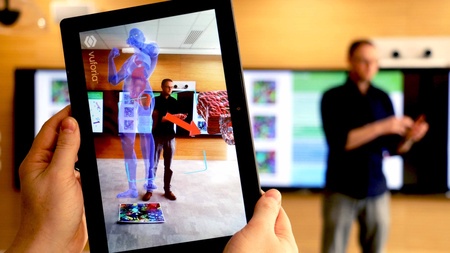
Professor John Barrow is a Professor of Biochemistry & Molecular Biology at the University of Aberdeen, where he also serves as Dean for Employability and Entrepreneurship since 2020. He is affiliated with the School of Medicine, Medical Sciences and Nutrition, based at the Institute of Medical Sciences on the Foresterhill Campus with office address at Ashgrove Road West, AB25 2ZD. Barrow earned his academic qualifications entirely from the University of Aberdeen: a BSc(Hons) in Biochemistry (2002), PhD in Molecular Biology (2005), and PGCert in Higher Education (2011). He was awarded Senior Fellow status with the Higher Education Academy in 2015. His academic career at Aberdeen has progressed from Postdoctoral research scientist (2005-2009), through Teaching Fellow (2009-2013) and Senior Teaching Fellow (2013-2015), to Senior Lecturer (Scholarship) (2015-2021), before becoming Professor in 2021. Professor Barrow's research primarily focuses on innovative approaches to biochemistry education, with particular emphasis on virtual reality and immersive learning technologies. His work bridges traditional biochemical knowledge with cutting-edge educational methodologies, creating engaging learning experiences for students. He has pioneered the use of virtual reality for teaching complex biochemical concepts such as the citric acid cycle and molecular structures. Additionally, his research extends to graduate attributes development, employability skills, and entrepreneurship education, reflecting his dual role as both educator and Dean for Employability and Entrepreneurship. Analysis of his recent publications reveals a strong trend toward educational technology and innovative teaching methods, particularly virtual and augmented reality applications in biochemistry education. His work spans molecular biology education, skills development, and the integration of enterprise and entrepreneurship into the academic curriculum. While his earlier career included more traditional molecular biology research on topics like gene promoters and receptor pathways, his recent focus has shifted predominantly toward educational innovation. His professional recognition includes: Senior Fellow of the Higher Education Academy (2015) As Dean for Employability and Entrepreneurship, Professor Barrow oversees initiatives that connect academic learning with real-world applications, including the ABDN Grad Challenge and Hack 2040 ideathon events. His work focuses on developing students' enterprise skills and preparing them for diverse career paths. He has been instrumental in creating programs like the Employability Boost Award, designed to enhance students' career readiness through structured skill development. Professor Barrow is actively involved in curriculum development at the University of Aberdeen, particularly in transforming and embedding graduate attributes across programs. His leadership extends to external examiner roles for institutions in Pakistan and reviewing for major academic publishers and journals. His innovative approach to education has positioned him as a leader in educational technology within the medical and biochemical sciences.
Antonio Simonetti is an Associate Professor at the University of Notre Dame in the Civil & Environmental Engineering & Earth Sciences department, affiliated with the College of Engineering. He leads the Isotope Geochemistry Laboratory and MITERAC facility, focusing on nuclear forensics, geochronology, and isotope geochemistry. His research spans high spatial resolution analysis of Earth materials, lunar studies, and bioarchaeological mobility tracing. Ph.D., Carleton University (1994) M.S., McGill University (1989) B.S., McGill University (1986) Research interests include: Nuclear Forensics: Developing microanalytical techniques for post-detonation materials and source attribution. Geochronology: Dating igneous and biogenic materials using U-Pb and other isotopic systems. Isotope Geochemistry: Investigating mantle-derived carbonatites and environmental pollution tracing. Bioarchaeology: Using Sr, Nd, Pb isotopes to study ancient human migration in Nubia and the Nile Valley. Recent trends in his publications highlight interdisciplinary applications of isotopic analysis across nuclear materials, lunar science, and archaeological studies. His group employs LA-MC-ICP-MS for high-resolution chemical and isotopic mapping. Students and collaborators span graduate, undergraduate, and international PhD candidates, with projects on uranium isotope signatures, carbonatite petrogenesis, and isotopic tracing of ancient civilizations. Current students include Julia Rufener (lunar KREEP analysis), Jiahua Wu (nuclear fuel cycle signatures), and Bennett Schmitt (REE mineralization in carbonatites). Labs and teams: Directs the Isotope Geochemistry Laboratory and MITERAC facility, supporting advanced ICP-MS and laser ablation analyses. Collaborates with institutions in Brazil, Turkey, China, and Ireland on geological and archaeological projects.
Milette Gaifman is the Andrew Downey Orrick Professor of Classics and History of Art at Yale University , where she serves as Chair of the Department of History of Art. She was previously Director of Undergraduate Studies (2009–2011) and Director of Graduate Studies (2013–2015) in History of Art. She earned her B.A. from the Hebrew University of Jerusalem (1997) and Ph.D. from Princeton University (2005), followed by a Hanadiv Fellowship at Corpus Christi College, Oxford (2004–2005). Her research explores the intersection of visual culture and religion in ancient Greece, focusing on aniconism , libation rituals , artistic media , and the reception of Greek art . She also investigates the historiography of art history and archaeology . Recent work includes editorial roles for The Art Bulletin (2019–2022) and a visiting professorship at the University of Aberdeen (2023). Her publications span aniconism , votive practices , statue cults , and the materiality of Greek art , with a focus on the Archaic and Classical periods. Articles often address divine representation , ritual objects , and cross-cultural exchanges . She has received the Jane Faggen Dissertation Prize (2007), Samuel Heyman Prize (2009), and Gaddis Smith Book Prize (2013). Her books include Aniconism in Greek Antiquity (Oxford, 2012) and The Art of Libation in Classical Athens (Yale, 2018). Professor Gaifman advises graduate students in Greek art and architecture , Greco-Roman religious art , intercultural exchanges , and the reception of ancient art . She co-edited Exploring Aniconism (Religion 47, 2017) and The Embodied Object in Classical Antiquity (Art History, 2018).
Aayush Jain is an Assistant Professor in the Computer Science Department at Carnegie Mellon University. Previously, he was a Postdoctoral Fellow at NTT Research and a PhD student at UCLA, advised by Professor Amit Sahai. His work bridges theoretical and applied cryptography with core computer science principles. Education PhD in Computer Science, University of California, Los Angeles (UCLA) Postdoctoral Fellowship, NTT Research Research Focus His research explores: foundational cryptography, indistinguishability obfuscation, functional encryption, lattice-based cryptography, secure multi-party computation, and post-quantum security. Work emphasizes rigorous theoretical frameworks with practical implications. Publication Trends Recent articles (2021-2024) demonstrate consistent focus on cryptographic primitives, obfuscation techniques, and security reductions. Dominant venues include CRYPTO, EUROCRYPT, FOCS, and STOC with emerging work in machine learning interfaces. Awards Best Paper Award at STOC 2021 for foundational contributions to indistinguishability obfuscation Advising and Collaboration Current PhD advisees: Alper Cakan, Quang Dao (co-advised), Sagnik Saha, Noah Singer (co-advised). Mentored postdocs: Mitali Bafna (2022-2023) and Rex Fernando (2022-2023). Teaches graduate courses in cryptography and theoretical tools. Leadership Leads the CMU Cryptography research group; organized the CMU Cryptography Workshop. Program committee member for FOCS, TCC, ITCS, and ICALP.
Na'ama Pat-El is a Professor in the Department of Middle Eastern Studies at the University of Texas at Austin, affiliated with the College of Liberal Arts and the Middle Eastern Languages and Cultures Graduate Studies Committee (MELC GSC). She holds a Ph.D. (2008) in Semitic Philology from Harvard University, preceded by studies at Hebrew University under Gideon Goldenberg and Harvard under John Huehnergard. Education: Ph.D., 2008, Harvard University (Semitic Philology) B.A. and M.A., Hebrew University of Jerusalem Her research focuses on Comparative Semitic Linguistics, Historical Linguistics, Syntax, and Language Contact , with a particular emphasis on syntactic change and morphological evolution. She investigates phenomena such as the development of verbal paradigms, plural morphemes, and copulae across Semitic languages, including Akkadian, Hebrew, and Aramaic. Recent publications address topics like the nondevelopment of third-person nominative pronouns in Semitic perfect/stative paradigms, the diachronic shift of East Semitic subordination markers into West Semitic indicative markers, and the reevaluation of Hebrew 'sign' terminology through epigraphic and comparative evidence. Her work also challenges assumptions about paired body part gender assignment in Semitic languages. Selected Publications (2025–2020) explore: Proto-Semitic verbal morphology Historical syntax in Akkadian and Neo-Assyrian Plural-gender mismatches in Hebrew Substrate influences in Levantine Arabic Biblical text linguistics
Robert G. Morrison is the George Lincoln Skolfield, Jr. Professor of Religion and Middle Eastern and North African Studies at Bowdoin College, where he also directs the Middle Eastern and North African Studies Program. He joined Bowdoin in 2008 after serving on the faculty at Whitman College from 2001 to 2008. His research lies at the intersection of religion, science, and intellectual history, with a focus on the academic study of Islam and Judaism. His work explores the role of science—particularly astronomy, cosmology, and natural philosophy—in Islamic and Jewish texts, as well as in broader comparative theological frameworks. His publications reflect a deep engagement with medieval Islamic and Jewish scientific thought, including major contributions to the New Cambridge History of Islam and the Cambridge History of Science . His articles examine topics such as lunar crescent visibility, celestial motion, natural theology, and the ethical dimensions of astronomy, revealing a consistent interest in how religious worldviews shape and are shaped by scientific reasoning. 2009 World Prize for the Book of the Year of the Islamic Republic of Iran in Islamic studies Morrison has advised numerous graduate students and mentored junior scholars, though specific names are not listed in the available text. His research has been supported by academic institutions and scholarly presses, enabling the publication of monographs and co-edited volumes on intellectual exchange in the medieval Mediterranean. He has also delivered public lectures at Harvard Divinity School and participated in media discussions on Islam and science. He is affiliated with the Department of Religion at Bowdoin College, where his work contributes to interdisciplinary programs in Middle Eastern and North African Studies. His forthcoming book, Merchants of Knowledge , promises to further illuminate the networks of scholarly exchange between the Ottoman Empire and Renaissance Europe.