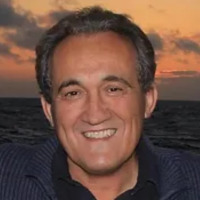
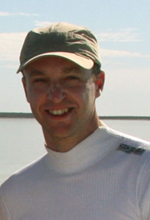
Norm Murray is a Professor at the Canadian Institute for Theoretical Astrophysics (CITA) within the University of Toronto . With a Ph.D. from UC Berkeley (1986), his research spans nonlinear dynamics , planetary formation , solar system evolution , and active galactic nuclei . His work combines theoretical physics with observational data from radio telescopes, X-ray satellites, and cosmological simulations. Recent research focuses on galaxy formation (via FIRE simulations), dark matter interactions in dwarf galaxies, and AGN disk dynamics . He employs machine learning for planetary collision modeling and investigates the interplay of magnetohydrodynamics and radiative transfer in quasar environments. Publications highlight his expertise in computational astrophysics, spanning topics from cosmic molecular gas mapping to the stability of exoplanetary systems.
Tian-Jian “Tom” Hsu is the Donald C. Phillips Professor of Civil, Construction and Environmental Engineering at the University of Delaware (UD) and Director of the Center for Applied Coastal Research. He holds a Ph.D. in Civil Engineering from Cornell University (2002) and a Bachelor's in Ocean Engineering from National Taiwan University (1994). Prior to UD, he was an Assistant Professor at the University of Florida (2006–2008) and an Assistant Scientist at Woods Hole Oceanographic Institution (2004–2006). His research focuses on numerical modeling of sediment transport, including cohesive and non-cohesive sediments, flocculation processes, and heterogeneous sediment dynamics. Key areas include wave-driven sediment transport, bedform evolution, and open-source tool development (e.g., sedInterFoam). He pioneered turbulence-resolving simulations for fine sediment transport and contributed to understanding oil-mineral interactions in marine environments. Education: Ph.D. in Civil Engineering, Cornell University, 2002 Master of Science, Cornell University, [Year not specified] Bachelor of Science in Ocean Engineering, National Taiwan University, 1994 Dr. Hsu’s work bridges computational models with field observations, emphasizing coastal resilience and environmental sustainability. He received the NSF CAREER Award (2007) and led initiatives in CSDMS and the Journal of Geophysical Research: Oceans (Associate Editor, 2011–2019). Awards: NSF Early Career Development (CAREER) Award, 2007 His group collaborates on projects like oil-sediment interaction modeling and extreme scour analysis under coastal flooding. The Center for Applied Coastal Research (CACR) under his direction focuses on applied coastal science and engineering solutions.
Jiaqi Ma is an Assistant Professor at the University of Illinois at Urbana-Champaign (UIUC), holding dual appointments in the School of Information Sciences and the Siebel School of Computing and Data Science. Their research focuses on machine learning, graph neural networks, and data attribution, with particular emphasis on fairness in AI, large language models, and scalable algorithms. Ma has contributed to frameworks like dattri for efficient data attribution and GraSS for scalable influence functions. Research interests include graph learning (e.g., structural information analysis in text-attributed graphs), fairness in ML models (e.g., mitigating disparities in unlearning processes), and ethical AI applications. Collaborations span topics like data curation (DCA-Bench benchmark) and reinforcement learning transparency (A Snapshot of Influence). Key contributions include improving data removal while maintaining fairness (Fair Machine Unlearning), analyzing LLMs' graph structural utilization, and developing open-source tools like OpenHexAI for explainable ML evaluation. No scientific awards are explicitly listed, but their work reflects significant contributions to trustworthy AI and machine learning systems. Advising and grants: While specific students/grants are unlisted, Ma leads research teams advancing graph learning (e.g., Graph Learning Indexer platform) and safety-critical AI (e.g., unsafe data detection via attribution). Their work bridges theoretical foundations (e.g., influence functions) with practical applications (e.g., MNL model rankings).
Prof. C. Armando Duarte is the Nathan M. Newmark Distinguished Professor in Civil and Environmental Engineering at the University of Illinois at Urbana-Champaign (UIUC). He holds affiliations with the Computational Science and Engineering Program and the National Center for Supercomputing Applications (NCSA). His research focuses on computational mechanics, particularly the Generalized Finite Element Method (GFEM/XFEM), multiscale modeling, fracture mechanics, and hydraulic fracturing. He has authored/co-authored over 100 publications and co-edited books on computational methods. Education: Ph.D. (1996) and M.Sc. (1991) in Engineering Mechanics from the University of Texas at Austin and Federal University of Santa Catarina, respectively, and a B.Sc. in Mechanical Engineering from the Federal University of Pernambuco. Professional Roles: Professor at UIUC since 2015, previously at the University of Alberta and visiting roles at institutions in Brazil, Portugal, and the Netherlands. He serves on editorial boards of computational mechanics journals and chairs committees for professional societies like USACM and ASCE. Research Interests: Multiscale problems, computational fracture mechanics, meshfree methods, and multiphysics simulations. His work emphasizes 3D fracture analysis, hydraulic fracturing, and thermal gradient modeling. Awards: Recognitions include the Nathan Newmark Professorship, USACM Fellowship, and multiple best paper awards. His work has been cited over 9,000 times, with papers featured in top journals like Computer Methods in Applied Mechanics and Engineering . Teaching: Renowned for excellence in courses like Finite Element Methods, Structural Analysis, and Computational Plates and Shells. His teaching accolades span over two decades at UIUC.
Aniket Ambekar is a Research Fellow at the Department of Chemical Engineering and Chemistry, Eindhoven University of Technology. His research focuses on multiphase flow dynamics in porous media, with expertise in computational fluid dynamics (CFD) and experimental validation techniques. He holds a PhD in Chemical Engineering from the Indian Institute of Technology Delhi (2022), an MSc in Computational Fluid Dynamics from National Institute of Technology (2016), and a BSc in Chemical Technology from the University of Pune (2013). Research interests include packed bed hydrodynamics, gas-liquid flow mechanisms, and the role of wettability in two-phase systems. His work combines high-resolution simulations (e.g., volume-of-fluid method) with experimental measurements to study flow regimes, interfacial dynamics, and phase distribution. Notable contributions address perforation effects in structured packings, particle aspect ratio impacts, and monolith gas-liquid interactions. He has received prestigious awards including the Marie Skłodowska-Curie postdoctoral fellowship (2022) and the Outstanding Ph.D. Thesis Award (2024). Collaborations span European institutions, focusing on energy-efficient separation processes and reactor design optimization.
Howard Rundle is a Full Professor in the Department of Biology within the Faculty of Science at the University of Ottawa. His research laboratory focuses on empirical studies in evolutionary ecology and evolutionary genetics, utilizing both laboratory and field approaches with model systems including various Drosophila species and the antler fly ( Protopiophila litigata ). His work is conducted both in controlled laboratory settings and in natural environments, particularly in Algonquin Park's Wildlife Research Station. Dr. Rundle's primary research interests span evolutionary ecology and evolutionary genetics, with particular emphasis on: The role of sexual selection in adaptation and purging of deleterious mutations Sexual conflict and its ecological context The evolutionary divergence of mate preferences and its contribution to speciation Quantitative genetics of sexual displays, particularly cuticular hydrocarbons in insects The impact of ecological complexity on evolutionary processes His recent publications reveal a consistent focus on how mating environments influence the dynamics of sexual conflict, adaptation, and speciation. Much of his work examines whether sexual selection helps or hinders adaptation, with growing emphasis on genomic approaches to understand the genetic basis of evolutionary responses. His research program demonstrates how ecological context fundamentally shapes evolutionary outcomes, particularly in the interface between natural and sexual selection. Dr. Rundle collaborates extensively with researchers at other institutions including Aneil Agrawal (University of Toronto), Russell Bonduriansky (University of New South Wales), Vincent Careau (University of Ottawa), Kelly Dyer (University of Georgia), Amanda Moehring (Western University), and Locke Rowe (University of Toronto). These collaborations enhance the scope of his research across multiple dimensions of evolutionary biology. The Rundle Lab maintains a strong commitment to equity, diversity, and inclusion, explicitly welcoming and supporting members from all racial, religious, and cultural backgrounds, as well as those from the LGBTQ+ community, operating under the University of Ottawa's principles in these areas.
Alexander Rodríguez is an Assistant Professor in the Department of Computer Science and Engineering at the University of Michigan. His research focuses on advancing AI methods for modeling complex spatiotemporal dynamics, particularly in applications related to population health and community resilience. He specializes in machine learning, time series analysis, uncertainty quantification, and multi-agent systems, with an emphasis on scientific modeling and data-driven decision-making. Recent contributions include keynote talks at AAMAS 2025 (Autonomous Agents for Social Good workshop), presentations at the US National Academies Symposium, and invited talks at AAAI 2025 on topics like knowledge-guided machine learning and public health prediction. He co-organizes AAMAS 2025 as sponsorship co-chair and leads initiatives in AI for science and epidemic forecasting. His publications emphasize neural networks for time series forecasting, biomedical foundation models, and epidemic surveillance systems. Notable work includes 'Neural Conformal Control for Time Series Forecasting' (AAAI 2025) and 'Deepcovid: An operational deep learning-driven framework for explainable real-time forecasting' (2021). No scientific awards explicitly listed in available texts. His research group actively collaborates on grants related to AI applications in public health and infrastructure resilience, with a focus on data-centric methodologies and multi-agent systems.
Don Butler is a Professor at the ANU College of Law, Governance and Policy within the ANU Law School. He holds a BSc (hons 1) and PhD from the University of Queensland. His research focuses on climate change mitigation, carbon sequestration, biodiversity conservation, and environmental policy. He leads projects addressing carbon offset integrity, forest regeneration, and policy reform. His work spans savanna ecosystems, forest management, and the impacts of climate policy on land-use practices. Education: BSc (hons 1) and PhD (University of Queensland). Research Interests: Climate Change, Carbon Offsets, Biodiversity Conservation, Environmental Policy, Vegetation Dynamics, and Sustainable Agriculture. Collaborations include analyses of carbon projects in Australia, policy evaluations for the Clean Energy Regulator, and studies on groundwater-vegetation interactions. Projects: Includes developing improved carbon accounting methods for native regrowth, analyzing the National Stewardship Trading Platform, and investigating maladaptation risks in savanna carbon projects. His work emphasizes policy integrity and ecological outcomes. Advocacy and Grants: Focuses on policy reforms to enhance carbon market integrity and biodiversity co-benefits. Engages with government agencies and NGOs to shape climate and land management policies. Labs/Teams: Collaborates with the ANU Climate Change Institute and interdisciplinary teams on carbon offset methodologies and environmental governance.
Liqiang Wang is a Professor in the Department of Computer Science at the University of Central Florida (UCF), where he directs the Big Data Lab. Previously, he served as faculty at the University of Wyoming (2006-2015). He holds a Ph.D. in Computer Science from Stony Brook University (2006) and spent a visiting research period at IBM T.J. Watson Research Center (2012-2013). His research focuses on big data analytics, high-performance computing, parallel systems optimization, and applying deep learning to detect programming errors and enhance model robustness. Education: Ph.D., Computer Science, Stony Brook University (2006); Visiting Researcher, IBM Watson (2012-2013). Research Interests: Improving accuracy and security of big data models, optimizing parallel computing systems (HPC, Cloud, GPUs), program analysis for concurrency errors, and deep learning applications in anomaly detection and adversarial robustness. Notable projects include scalable LSQR algorithms for seismic tomography and the OpenMP Analysis Toolkit (OAT) for concurrency error detection. Key Awards: NSF CAREER Award (2011), Castagne Faculty Fellowship (2013-2015), UCF Mid-Career Refresh Award (2020), and grants including a $50K NSF CIVIC-PG grant (2022) and Google/Meta donations. Advising and Grants: Supervises over 20 Ph.D./M.S. students and has secured grants totaling over $100K. Notable collaborations include seismic tomography with NCAR and cloud computing optimization. Labs/Teams: Director of UCF’s Big Data Lab, collaborating on projects like Parallel LSQR and Anti-Neuron Watermarking.
Lesley W. Chow is an Associate Professor in Bioengineering and Materials Science & Engineering at Lehigh University. She leads the Chow Lab, focusing on designing biomaterials for regenerative medicine and tissue engineering, particularly musculoskeletal interfaces like the osteochondral junction. Her work integrates 3D printing, peptide-polymer conjugates, and self-assembly techniques to create hierarchical scaffolds mimicking native tissues. Chow holds a Ph.D. in Materials Science and Engineering from Northwestern University and a B.S. in Materials Science and Engineering from the University of Florida. Her research emphasizes understanding how tissue organization influences cell behavior and improving clinical translation of biomaterials. Key areas include osteochondral interface regeneration, immunomodulatory biomaterials, and spatially functionalized scaffolds using additive manufacturing. Her lab’s innovations address challenges in musculoskeletal repair, such as creating gradient scaffolds to replicate native tissue properties. Collaborations span biomaterials science, engineering, and clinical translation. She also advocates for diversity in engineering through frameworks promoting institutional accountability. Major grants include the NSF CAREER Award for spatially organized biomaterials. Her work is published in journals across biomaterials science and tissue engineering, with a focus on interdisciplinary solutions for complex tissue regeneration.
Nabil Kahale is an Associate Professor of Finance at ESCP Business School in Paris. His research focuses on financial derivatives, Monte Carlo methods, optimization, and machine learning. He holds a PhD in theoretical computer science from MIT (1993) and an HDR (French habilitation) from Université Paris 1 Panthéon-Sorbonne (2020), enabling him to supervise PhD students. His academic career includes prior roles in theoretical computer science and consulting for banks. He has published widely in top journals such as Mathematical Finance , Management Science , and SIAM Journal on Computing . Education: Bachelor of Science in Engineering, École Polytechnique (1987) PhD in Theoretical Computer Science, MIT (1993) HDR in Economics, Université Paris 1 Panthéon-Sorbonne (2020) Research Interests: His work bridges finance and computational methods, emphasizing practical applications of stochastic models and algorithmic efficiency. Key areas include derivative pricing, risk management, and the integration of machine learning into financial systems. Professional Contributions: He has served as a consultant for banking institutions and a referee for the French Ministry of Economy and Finance. His research also intersects with social and economic policy analysis, such as evaluating the economic impact of public health measures. Labs/Teams: While no specific lab affiliation is mentioned, his collaborations span interdisciplinary teams in finance, computer science, and applied mathematics through his publications and consulting work.
Kourosh Davoudi is an Associate Professor of Computer Science at Ontario Tech University's Faculty of Science. He holds a PhD in Computer Science from York University with a focus on Machine Learning and Data Mining. Prior to joining Ontario Tech in 2019, he was a postdoctoral research fellow at the University of Waterloo's Department of Management Sciences. His research interests span Natural Language Processing, Deep Learning, Reinforcement Learning, Graph Mining, and Machine Learning. He actively supervises graduate students in these areas and teaches courses such as Data Mining and Artificial Intelligence. His research emphasizes practical applications of AI techniques in areas like outbreak detection, sentiment analysis, and automated grading systems. Recent work includes innovations in neural document segmentation, vision-language models, and hybrid outbreak detection using social media data. His publications consistently address challenges in algorithm design, explainable AI, and domain-specific NLP applications. Dr. Davoudi has contributed to conferences such as COLING, EMNLP, and IEEE transactions, focusing on interdisciplinary applications of machine learning. His work bridges theoretical advancements with real-world problems in healthcare, education, and social media analysis.
Prof. Amir A. Zadpoor holds dual roles as Antoni van Leeuwenhoek Professor at TU Delft (Department of Biomechanical Engineering) and Professor of Orthopedics at Leiden University Medical Center. He leads the Additive Manufacturing Lab and specializes in biomaterials, tissue biomechanics, and orthopedic implants. His research focuses on 3D/4D printing, meta-biomaterials, and biodegradable metals for clinical applications. Key research interests include: designing function-tailored implants, antimicrobial biofunctionalized materials, and mechanically adaptive meta-implants. He has pioneered projects like 'Metallic clay' and 'Mechanobiology in-silico,' with applications in orthopedics and regenerative medicine. Notable awards include ERC grants, Vidi/Veni awards, and the Jean Leray Award. His lab develops deployable implants, self-folding origami lattices, and smart meta-implants. Ancillary roles include editorial positions at Springer Nature and directorships at Sylvanity/Zagres. Teaching includes courses on biomaterials, regenerative medicine, and computational biomechanics. Research outputs span over 150 peer-reviewed articles. Current priorities include sustainable biomaterials, AI-driven design optimization, and translating additive manufacturing innovations into clinical practice.
Javier Arístegui Ruiz is a Full Professor of Ecology at the University of Las Palmas de Gran Canaria (ULPGC), affiliated with the Faculty of Marine Sciences and the Department of Ecology. He has directed key institutions like the Institute of Oceanography and Global Change (2011-2012) and the Marine Technological Service (2015-2018). Presently, he leads the Canaries Observatory of Harmful Algae (OC-HABs) and the UNESCO Chair on Coastal and Marine Sustainability (since 2021). His research focuses on biological oceanography, climate change impacts, biogeochemical cycles, and pelagic ecosystem dynamics. Notable contributions include studies on plankton ecology, microbial oceanography, and nature-based solutions for carbon dioxide removal. He has published over 160 peer-reviewed articles, coordinated 35+ projects, and advised 17 PhD students in Biological Oceanography. Key awards include the Helmholtz International Fellow Award (2015). He serves as Co-Editor-in-Chief of Deep Sea Research II and Associate Editor of Frontiers in Marine Science , with extensive editorial and review roles in major journals. His work has influenced global initiatives like the IPCC Special Report on the Ocean and Cryosphere (2017-2019). Research highlights include climate-change stressors on plankton, carbon fluxes in the dark ocean, and mesoscale/submesoscale oceanographic processes. His fieldwork spans 35 oceanographic cruises across polar to tropical seas, emphasizing interdisciplinary collaboration with physical oceanographers.
Tjisse van der Heide is a Professor of Coastal Ecology at the Groningen Institute for Evolutionary Life Sciences (GELIFES) at the University of Groningen and a researcher for the Royal Netherlands Institute for Marine Research (NIOZ). He also serves as Vice Chair of the Dutch OBN Knowledge Network for Nature Restoration and Management's team of experts on dune and coastal landscapes. Van der Heide's research focuses on coastal ecosystems and the role of ecosystem engineers—organisms that create suitable living circumstances for themselves and other species through environmental modification. His work examines how ecosystems function and how dissipated ecosystems can be restored, combining field and lab experiments with computer models. In 2024, he received a prestigious Vici-grant for his research on restoration of coastal ecosystems by temporarily mimicking habitat-forming species, developing a framework that integrates ecology, industrial design, and engineering principles. Analyzing his recent publication record reveals strong emphasis on ecosystem engineering processes, habitat restoration techniques, and climate change impacts on coastal systems. His research spans seagrass beds, mussel and oyster reefs, salt marshes, and dune ecosystems, with particular focus on how biotic interactions shape coastal landscapes and influence restoration success. His interdisciplinary approach frequently bridges theoretical ecology with practical conservation applications. Van der Heide has received significant recognition including the Vici-grant (2024) and the Heineken Young Scientist Award. His research has direct policy implications, as evidenced by his media commentary on coastal development projects like power cables through the Wadden Sea. His work involves extensive collaboration with researchers across multiple institutions, focusing on both fundamental ecological processes and applied restoration techniques. Van der Heide's research group conducts field studies throughout the Wadden Sea region and other coastal areas, contributing to our understanding of ecosystem dynamics and developing practical solutions for coastal conservation challenges.