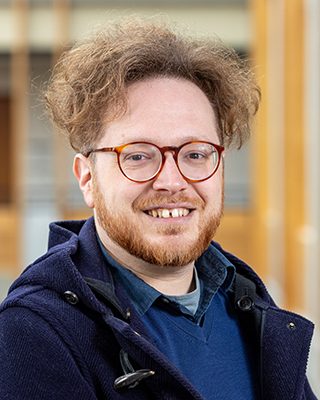
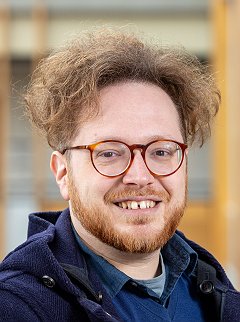
Erik Härkönen is a Doctoral Researcher in the Department of Computer Science at Aalto University , focusing on machine learning, generative adversarial networks (GANs), and computational imaging. His research explores latent space manipulation, anti-aliasing techniques, and high-resolution image synthesis. University: Aalto University Department: Department of Computer Science Academic Rank: Researcher His work has been published in venues like ACM Transactions on Graphics and NeurIPS, covering areas from gradient-domain rendering to robust perceptual metrics. Recent research includes disentangling temporal patterns in time-lapse sequences and improving GAN interpretability through latent space controls.
Samuel DELEPOULLE is an Associate Professor (Maître de Conférences) at the University of the Littoral Opal Coast, France, holding an HDR (Habilitation à Diriger des Recherches) qualification for PhD supervision. His research centers on visual perception and image synthesis within computer graphics and interdisciplinary applications. His core research domains include: Visual Perception mechanisms in human-computer interaction Image Synthesis techniques for realistic rendering Computer Graphics algorithms for Monte Carlo rendering Machine Learning applications in noise reduction Neuroscience collaborations on action representation Computer Vision for biological imaging analysis Recent publications reveal dominant trends in deep learning architectures for rendering optimization, interdisciplinary neuroscience collaborations, and software development for video-microscopy. His work bridges technical computer graphics with cognitive science and biological applications, particularly through the IC research team. Scientific recognition: No specific awards documented in source materials As an HDR-qualified researcher, Delepoulle supervises doctoral candidates though no student names are publicly listed. His grant activity appears concentrated in computer graphics research with biological and neurological applications, evidenced by cross-disciplinary publications. He maintains active affiliation with the IC research team at University of the Littoral Opal Coast, focusing on image processing and computational perception systems.
Jim McCann is an Associate Professor at the Robotics Institute of Carnegie Mellon University. He holds a PhD from Carnegie Mellon University (2010), advised by Nancy Pollard, and has held positions at Adobe Research and Disney Research Pittsburgh. His academic journey includes postdoctoral work and industry experience in game development before joining CMU's faculty in 2017. His research focuses on creativity support tools spanning real-time systems, textiles fabrication, machine knitting, and interactive design. Key themes include: Developing compilers and interfaces for machine knitting (e.g., 3D shape knitting, knitout semantics) Building accessible fabrication tools for textiles and soft objects Creating parameterized design spaces enhanced with machine learning Advancing physics-based animation and simulation tuning His publications demonstrate strong interdisciplinarity, with recent work emphasizing textiles computing (knitting compilers, fabric 3D printing), human-AI collaboration (design adjectives), and novel interfaces (infinity mirrors, RFID systems). Earlier contributions established foundations in gradient-domain editing, fluid control, and motion synthesis. He leads the Carnegie Mellon Textiles Lab and has advised 9+ graduate students on topics ranging from knit microstructures to robot design. His teaching includes courses on Algorithmic Textiles Design, Real-Time Graphics, and Game Programming.
Gilbert Bernstein is an Assistant Professor at the University of Washington in the Computer Science & Engineering department within the Paul G. Allen School of Computer Science & Engineering . He specializes in Computer Graphics and Programming Languages , with a focus on high-performance domain-specific languages (DSLs). Postdoctoral scholar at UC Berkeley and MIT with Jonathan Ragan-Kelley PhD from Stanford University under Pat Hanrahan His research spans Human-Centered Computing , Interaction with the Physical World , and Software & Hardware Systems , including projects in: Compiler design for knitting machines using knot theory Differentiable rendering of neural signed distance fields Hardware DSLs for accelerator programming Geometric pattern completion for quilting Responsive web retargeting His recent publications demonstrate expertise in combining Mathematical Modeling with Language Design for applications in Graphics , Simulation , and Fabrication .
Jaakko Lehtinen is a Professor in the Department of Computer Science at Aalto University, affiliated with the School of Science. His research group focuses on computer graphics, computer vision, and machine learning, particularly in generative modeling, realistic image synthesis, and appearance acquisition. They explore combining machine learning with physical simulators to develop robust and interpretable AI systems. Their work contributes to Visual Computing and Human-Computer Interaction. Lehtinen has supervised doctoral researchers including Erik Härkönen and Tuomas Kynkäänniemi. Notable awards include the Best MSc Thesis Award (2020) and Best PhD Thesis Awards (2017). He has contributed to high-impact publications in venues like NeurIPS and Neural Computation, addressing topics like diffusion models, EEG forecasting, and generative adversarial networks. Key Collaborations: International partnerships in machine learning and visual computing. Media Engagement: Regular commentary on AI trends in Finnish and global media. Professional Activities: Served as a PhD thesis committee member for institutions like UC Berkeley and MIT. His research extends to medical imaging, environmental modeling, and neural rendering, with applications in tomography, audio processing, and dynamic scene generation. Lehtinen’s group actively publishes datasets (e.g., for gradient-domain rendering) and engages in open-source software contributions.
Sara Fridovich-Keil is an Assistant Professor in the School of Electrical and Computer Engineering at Georgia Tech, where she is also program faculty in machine learning. Previously, she was a postdoctoral researcher at Stanford University (2023–2025), advised by Gordon Wetzstein and Mert Pilanci, and completed her Ph.D. in Electrical Engineering and Computer Sciences at UC Berkeley in 2023 under the guidance of Ben Recht. Her research focuses on the foundations of machine learning, signal processing, and optimization, with applications to computational imaging, medical imaging (e.g., MRI, CT, cryo-EM), and inverse problems. Her work bridges theory and practice, addressing challenges such as nonlinear tomographic reconstruction, data-driven prior design, and signal representation for inverse problems. Key contributions include Plenoxels (radiance field reconstruction without neural networks) and K-Planes (space-time appearance modeling). She is supported by an NSF Mathematical Sciences Postdoctoral Research Fellowship and has received the UC Berkeley Demetri Angelakos Memorial Achievement Award (2022). Her lab at Georgia Tech seeks to develop scalable, provably accurate algorithms for imaging applications. She advises students interested in machine learning, optimization, and signal processing. Professional activities include membership on the IEEE Signal Processing Society’s Computational Imaging Technical Committee (2025–2027). Personal interests include hiking, gardening, and open-source contributions (e.g., GitHub repositories like Plenoxels and FingertipVideo for vital sign estimation).
Yunhui Guo is an Assistant Professor in the Department of Computer Science at the Erik Jonsson School of Engineering and Computer Science, University of Texas at Dallas. His research focuses on advanced machine learning techniques including multimodal learning, continual learning, audio-visual recognition, and domain adaptation. He explores challenges in model robustness, cross-modal interactions, and efficient training strategies for deep neural networks. Key research areas include: Developing robust multimodal models for video entailment and dynamic 3D human reconstruction Improving audio-visual segmentation and sound separation through novel adaptation frameworks Advancing continual learning methods to handle domain shifts and out-of-distribution data Creating submodular optimization strategies for active learning in 3D object detection His recent work emphasizes real-world applications like medical image analysis (skin cancer sub-typing), robotics (LiDAR segmentation), and secure AI systems (model watermarking). The research also addresses foundational AI topics such as model uncertainty quantification and adaptive predictive systems. Publications focus on cutting-edge areas like multimodal LLM adaptation, hierarchical out-of-distribution detection, and bimodal online adaptation techniques. Current projects explore the intersection of multimodal perception and lifelong learning systems.
Xiaoming Liu is a Professor at Michigan State University with extensive contributions to computer vision and biometrics. His research spans face recognition, 3D reconstruction, image forgery detection, and adversarial machine learning, with over 300 publications from 1999 to 2025. His primary research interests include Computer Vision , Biometrics , and Adversarial Machine Learning . Liu's work focuses on developing robust systems for face recognition at scale, detecting image manipulations, and creating 3D reconstruction techniques. Recent projects include SapiensID for human recognition, FRCSyn for synthetic face recognition, and proactive watermarking schemes. Liu's publication trends show increasing focus on multi-modal biometrics (combining face, body, and gait), image forgery detection using hierarchical approaches, and adversarial defense mechanisms . His 2023-2025 work emphasizes synthetic data applications and physics-driven recognition systems. Liu has mentored numerous students including Feng Liu, Minchul Kim, and Xiao Guo, who frequently co-author his papers. His research has been supported by grants enabling projects like FarSight (long-range biometrics) and ProMark (proactive watermarking). He leads research in biometrics security and computer vision, with recent work focusing on ethical AI applications and robust recognition systems. His team develops tools for detecting deepfakes and improving recognition in challenging conditions.
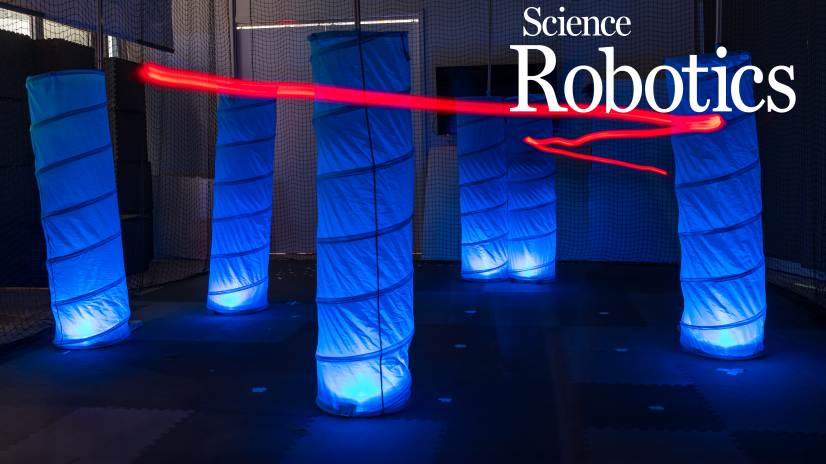
Nitin J Sanket is an Assistant Professor in the Robotics Engineering Department at Worcester Polytechnic Institute, where he leads the Perception and Autonomous Robotics Group (PeAR) founded in 2022. His research focuses on advancing autonomy for tiny mobile robots through bio-inspired approaches that enable on-board sensing and computation without external infrastructure. Ph.D. in Computer Science from University of Maryland, College Park (2021) M.S. in Robotics from University of Pennsylvania (2016) B.E. in Electronics and Communication from M. S. Ramaiah Institute of Technology, Bangalore, India (2013) Professor Sanket's research centers on four interconnected thrusts: Active perception (using movement to simplify perception problems), Interactive perception (selectively interacting with the environment), Novel perception (using data statistics like neural network uncertainty), and Novel sensing (employing sensors like event cameras). His work targets extreme resource-constrained robots, exemplified by the world's first RoboBeeHive prototype – hummingbird-sized nano-quadrotors capable of pollination with all sensing and computation performed on-board. His lab's 'Minimal-AI' philosophy emphasizes efficiency, using perception-action synergy to solve complex problems with minimal computational resources. His recent publications reveal a strong focus on efficient vision algorithms for tiny robots, with papers in Science Robotics (featured on the cover), IEEE ICRA, IROS, and CVPR. Key themes include uncertainty modeling for resource-constrained systems, event-based vision, and bio-inspired navigation. His work frequently bridges theoretical innovation with practical implementation on real hardware. Larry S. Davis Award for Best Computer Science PhD Thesis at University of Maryland (2021) MDPI Drones 2021 PhD Thesis Award Brin Family Prize (2018) Science Robotics cover feature (2023) Professor Sanket actively mentors 19 students (3 PhD, 6 Masters, 10 undergraduates) and recently secured a $705K NSF grant (September 2025) for bio-inspired sound navigation in tiny robots. His lab emphasizes hands-on experience with real hardware systems rather than pure simulation. His research on bat-inspired drones for search and rescue operations has received extensive media coverage from Associated Press, Washington Post, NPR, and other major outlets, demonstrating the real-world relevance of his work. The Perception and Autonomous Robotics Group (PeAR) provides students with opportunities to work on cutting-edge problems in nano-drone development, bio-inspired navigation, and minimal-AI approaches, preparing them for careers at the forefront of robotics innovation.
Gilbert Bernstein is an Assistant Professor in the Computer Science & Engineering department within the College of Engineering at the University of Washington. His research bridges computer graphics and programming languages, with a focus on high-performance domain-specific languages. Previously, he was a post-doctoral scholar at UC Berkeley and MIT working with Jonathan Ragan-Kelley, and received his PhD from Stanford University under Pat Hanrahan. His research interests span Computer Graphics, Programming Languages, High-Performance DSLs, Physical Simulation, Geometry & Topology, Differentiable Programming, Hardware DSLs, Tools for Artists, Fabrication, and Human-Computer Interaction. Bernstein develops languages and compilers that enable efficient computation for creative applications, physical simulations, and graphics rendering systems. His recent publications reveal strong trends in differentiable programming for graphics applications, domain-specific languages for hardware acceleration, and computational approaches to traditional crafts like quilting and knitting. His work consistently combines formal language theory with practical applications in graphics and fabrication. Bernstein actively mentors students across multiple institutions including current advisees Felix Hahnlein (UW Postdoc), Ryan Zambrotta (UW PhD), Haoran Peng (UW PhD), and previous students including Alex Reinking (UC Berkeley PhD 2022, now at Qualcomm) and MacKenzie Leake (Stanford PhD 2021, now at Adobe Research). His lab works on diverse projects including debugging CAD programs, compilers for finite element methods, semantics for knitting machines, algebraic scheduling of tensor programs, and exocompilers for hardware accelerators. Bernstein also collaborates on DSLs for networking, Counterstrike bots, gradient-based optimization, memory management, hardware design, and garment design tools.