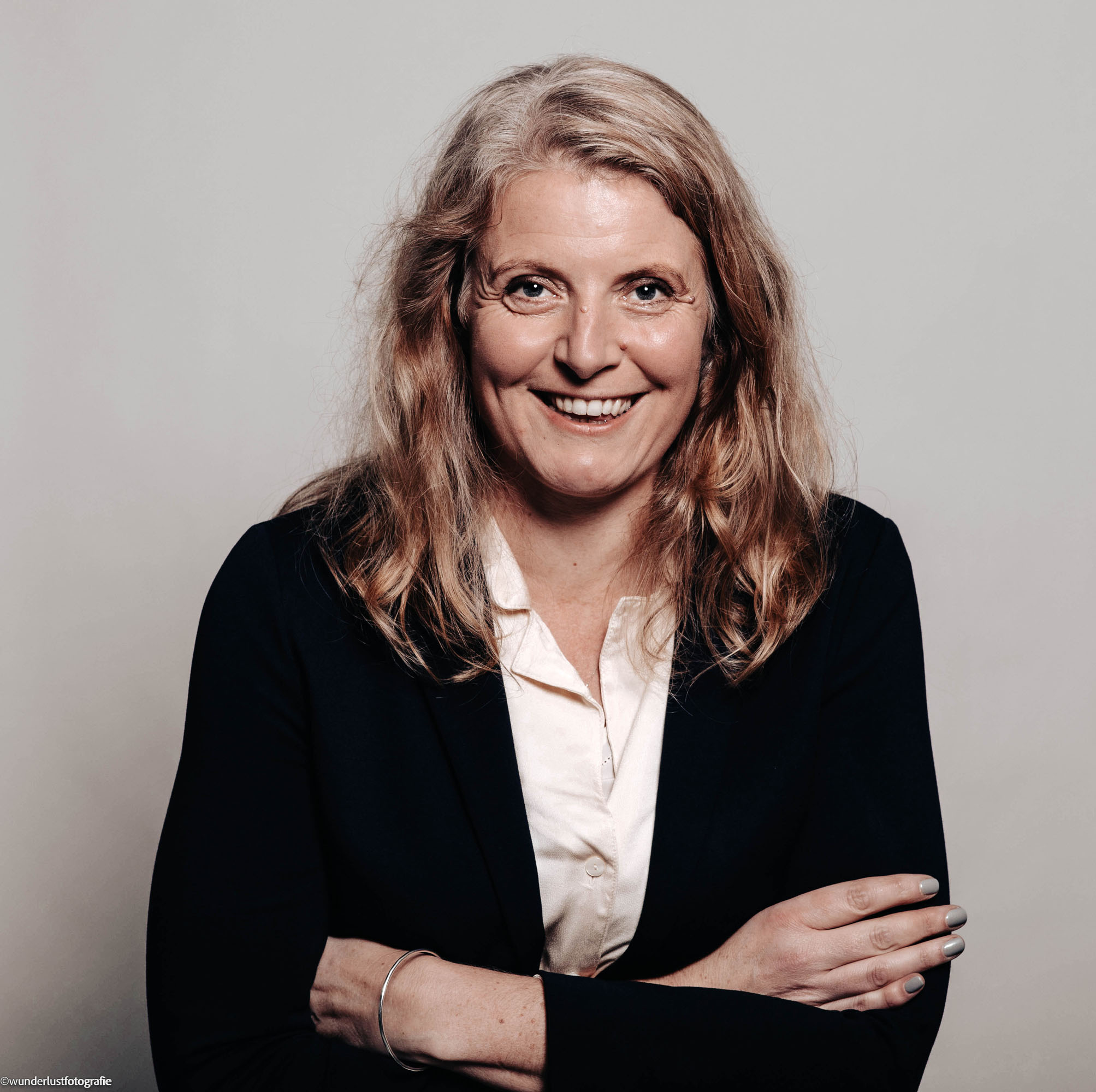
Harriet Bulkeley is a Professor of Geography and Deputy Executive Dean for Research in the Faculty of Social Sciences and Health at Durham University, alongside a part-time Professorial role at Utrecht University's Copernicus Institute of Sustainable Development. Her expertise spans climate governance, urban sustainability, and environmental justice, with a focus on cities' roles in addressing global challenges. She leads projects like the Horizon Europe NATURESCAPES initiative, exploring nature-based solutions for biodiversity and climate resilience. Key Roles: Full Professor at Durham University, Deputy Executive Dean, and part-time role at Utrecht University. Research: Prioritizes climate policy, urban low-carbon transitions, and the governance of sustainability experiments. Her research has secured over £19M in funding and includes influential works like An Urban Politics of Climate Change . Bulkeley serves on high-profile advisory bodies, including the ERC Scientific Council and the American Academy of Arts & Sciences. She is a recipient of the Back Award (2017) and multiple fellowships.
Dr. David Mills is an Associate Professor in Pedagogy and the Social Sciences within the Department of Education. His work focuses on postcolonial African higher education systems, doctoral training methodologies, and the ethical dimensions of academic publishing in global contexts. Trained in anthropology, his research interrogates colonial legacies in academia, publishing inequities, and the socio-political dimensions of knowledge production. David holds a PhD from the University of London, an MA from Oxford University, and another MA from the University of Florida. His interdisciplinary approach bridges anthropology, education studies, and publishing economics. Research interests include decolonial methodologies, the political economy of scholarly communication, and the intersection of education policy with global development agendas. Recent work critiques 'predatory publishing' discourses and examines how African scholars navigate bibliometric pressures in global research ecosystems. Key themes across his publications include: challenges facing African universities, reforming doctoral pedagogies, and reimagining publishing practices through decolonial frameworks. His work often highlights systemic inequities perpetuated by citation indices and commercial publishing giants. No scientific awards are explicitly listed in the provided materials. His academic contributions focus on critical analysis of educational and publishing systems rather than individual accolades. While no formal advising relationships are listed, his research engages deeply with doctoral student experiences and pedagogical strategies in global contexts. No specific grants or funding sources are mentioned in the text.
Joram Tarusarira is an Associate Professor in Religious Studies at the University of Groningen, affiliated with the Faculty of Religion, Culture and Society. His work bridges religion, conflict, and climate security. He holds a PhD from the University of Leipzig (2015) and has extensive post-doctoral and field experience in Africa. Expertise: Religion & Conflict, Climate Security, Peacebuilding Leadership: Coordinator of MA Religion, Conflict and Globalisation Funding: NWO Idea Generator Grant for 'Invoking the Sacred' project Research focuses on sacred dimensions of climate conflicts, African peacebuilding strategies, and religion's role in human security. He leads interdisciplinary projects like CGIAR Climate Security Initiative and contributes to policy frameworks globally. Awards: NWO Grant (2020), CGIAR Recognition (2023) Teaching: Methodology clinics, Ethics & Secularity courses His 70+ publications analyze intersections of religion, climate change, and security in Africa. Current projects investigate Northern Mozambique's climate conflicts and Ugandan veterans' identity dynamics.
Dr. Michael (Miek) Dunbar is a Lecturer in Communication Design at RMIT University's School of Design , specializing in interaction and service design for regenerative futures. He co-leads the Greater Melbourne City Portrait initiative with Regen Melbourne, focusing on creating safe social and ecological urban frameworks. His work challenges anthropocentric data practices while developing digital public tools for urban decision-making. Key research areas include: Regenerative Design, More-than-human Data Sets, Collaborative Design Teams Teaching: Master of Communication Design program, Service Design, Work Integrated Learning His publications address urban data infrastructures, collaborative design methods, and regenerative practices. Projects like Australia's first Housing Monitor demonstrate his focus on civic data systems and urban sustainability. Current research explores: Relational ontologies in data visualization Multi-species sensing apparatuses Expanded participatory data governance
Khalid Mustafa Medani is an Associate Professor of Political Science and Islamic Studies at McGill University, serving as Director of the Institute of Islamic Studies and Chair of the African Studies Program. He holds a joint appointment between the Department of Political Science and the Institute of Islamic Studies. His academic journey includes degrees from Brown University, Georgetown University, and the University of California, Berkeley. Specializing in Comparative Politics, his research focuses on globalization, political economy, and the intersection of Islamism, ethnicity, and conflict in Africa and the Middle East, with a particular emphasis on Sudan, Egypt, and Somalia. His seminal work Black Markets and Militants: Informal Networks in the Middle East and Africa (2021) earned the APSA Best Book Award in 2022 for its groundbreaking analysis of informal financial networks and Islamist movements. Medani has contributed to numerous peer-reviewed journals, including Middle East Report , African Political Economy , and Political Islam . He has held visiting appointments at Stanford University and taught at Oberlin College. Beyond academia, he is a frequent commentator on Sudan’s political crises, offering insights into regional geopolitics, resource conflicts, and democratization processes through media engagements like Democracy Now!, Al Jazeera, and the Globe and Mail . His work bridges theoretical political economy with empirical case studies, emphasizing transnational migration, labor remittances, and the impact of global capital flows on local political dynamics. Educations: PhD (UC Berkeley, 2003), MA (Political Science, UC Berkeley, 1995), MA (Development Studies, Georgetown, 1990), BA (Brown University, 1987) Key Research Themes: Informal economies, Islamist politics, ethnic conflict, globalization, Sudanese history Recent Engagements: Author of award-winning Black Markets and Militants ; panelist on Sudan’s war dynamics at institutions like the University of Michigan and Northwestern University; frequent media contributor on Sudanese politics Medani’s academic leadership includes directing interdisciplinary programs and mentoring students in political science, Islamic studies, and African studies. His work underscores the importance of linking global economic trends to localized political struggles, particularly in conflict-prone regions.
Silvia Pazzi is a Lecturer in Accounting and Finance at the School for Business and Society, University of York, since September 2022. Previously, she worked at the University of Leicester from 2013 and earned her PhD in Business Administration from the University of Pisa (Italy) in 2012. She is a Fellow of the Higher Education Academy (2014). Her primary roles include Programme Leadership for the BSc in Accounting and Finance and contributions to teaching modules like Advanced Financial Accounting and Management Accounting. Her research focuses on public sector accountability, NGO governance, financial reporting transparency, and risk communication. Key projects include a BAFA-funded study on governmental reporting trust (2019–2021) and a current co-investigator role in a Vrije Universiteit Amsterdam project analyzing risk reporting in the UK and Netherlands (2022–present). She has supervised two PhD completions and secured multiple grants, including a seed corn grant for 'Accounting for Trust in Governmental Reporting' and a College Research Development Fund project on citizen-centered local government reporting. Publications highlight her work on NGO accountability frameworks, governmental risk disclosure strategies, and cost efficiency in public utilities. She actively presents at international conferences, such as the EIASM Public Sector Conference and the British Accounting and Finance Association events. Beyond academia, she contributes to professional bodies like ACCA and engages in policy-oriented research to enhance public trust in financial reporting systems.
Dr Folahanmi Aina is a Lecturer in Development Studies at SOAS University of London, specializing in the Political Economy of Violence, Conflict, and Development. He holds a PhD in Leadership Studies from King’s College London, with academic qualifications from institutions including the University of Oxford and Seoul National University. His research focuses on peace, security, and development challenges in West Africa’s Sahel and Lake Chad Basin regions, particularly addressing terrorism, insurgency, and governance failures. Education: BSc (Zaria) → MSc (Oxford) → MA (Seoul) → PhD (King’s College London). Research emphasizes transnational security dynamics, counterterrorism strategies, and the interplay between climate change and violent extremism. He has published in journals like African Security and Democracy and Security , and received the prestigious General Lamine Cissé Young Researcher Award. Recent work examines armed banditry in Nigeria, exploring its linkages to drug trafficking, pandemic impacts, and humanitarian crises. His studies highlight the need for process-based leadership and credible governance to address sub-national fragility.
Iyare Otabor-olubor is a Senior Lecturer in Economics and International Business at Aston Business School, Aston University. He specializes in International Commercial Law, Secured Transactions, and African Union Law. His research focuses on legal frameworks for emerging economies, particularly in Africa, and the digital economy's impact on commercial law. He holds a PhD in Secured Transactions Law and has taught at Anglia Ruskin University. His current roles include Module Leader for Law and Business in the Global Context (LLM) and Legal Challenges: Starting an Innovative Business (MBA). Research Interests: Secured Transactions, Aviation Law, OHADA Law, and socio-legal studies in Africa. Awards: AARM Early Career Award (£1k) and GCRF Pump Priming (£9.9k). He advises on legal matters through UNIDROIT’s Rail Working Group and contributes to policy guides on international investment in Africa.
Dr. Vivian Visser is an Assistant Professor in Governance & Pluralism at the Department of Public Administration and Sociology, Erasmus School of Social and Behavioural Sciences, Erasmus University Rotterdam. Her research lies at the intersection of Public Administration and Sociology, focusing on citizen participation, community self-organization, and the reproduction of social inequalities in governance processes. Her research interests include: Citizen participation and invitational governance Social and emotional dynamics in public engagement Status and educational disparities in civic initiatives Role of civil servants in inclusive governance Urban sociology and neighborhood livability Visser employs an interdisciplinary, mixed-methods approach—combining vignette survey experiments, ethnographic observations, and in-depth interviews—to investigate how public professionals can tailor participation strategies to diverse citizen groups. Her recent publications reflect a strong trend toward understanding the emotional, cultural, and structural barriers to inclusion, especially among less-educated populations. The research emphasizes actionable insights for policymakers and practitioners. She has received the Erasmus Graduate School Award for Best Dissertation and has been recognized for her impactful work through media coverage in outlets like NRC Handelsblad, De Jortcast, and Binnenlands Bestuur. Her research has also informed public discourse on participation through expert contributions. Visser is actively involved in knowledge exchange through initiatives such as: Kenniswerkplaats Leefbare Wijken : Co-creating knowledge on neighborhood livability GovLab010 : Fostering innovation in local governance She coordinates the Master’s program Polarisatie, Democratie en Samenleving and develops post-academic courses to equip public professionals with tools for inclusive participation. She is currently developing new educational content focused on engaging discontented citizens.
Marcel Broersma is a full Professor of Media and Journalism Studies at the University of Groningen's Faculty of Arts, leading the Journalism department and directing the Centre for Media and Journalism Studies. He specializes in journalism history, digital transformation of news media, and political communication. Broersma holds an MA in History and Journalism and a PhD from the University of Groningen (2002, cum laude). His research explores media innovation, the evolution of journalistic practices, and the role of social media in political discourse. Director of the Centre for Media and Journalism Studies Academic Director of the Dutch Research School for Media Studies (RMeS) Coordinator of the UNL Digital Society research program Chair of the Digital Literacy Coalition and the Board of Advisers for the CIT RUG His research interests include the transformation of journalism, digital literacy, and the historical and comparative analysis of media systems. Notable grants include a VIDI grant (NWO, 2007) and AHRC/NWO funding for studies on journalism’s evolving role. Broersma has authored/co-authored over 40 books and edited volumes, including Betrokken en gericht (2014) and Form and Style in Journalism (2007). Recent work focuses on marginalized citizens' digital inclusion, algorithmic systems, and Chinese social media’s political dynamics. He actively advises media institutions and government bodies, including the Dutch Frisian Media Fund and the Mediawijzer.net scientific board. His teaching includes master’s courses on journalism theory and history at the University of Groningen. Broersma supervises numerous PhD candidates and postdoctoral researchers, contributing to interdisciplinary projects on media innovation and public communication.
Camilo Mora is a Professor in the Department of Geography at the University of Hawaii at Manoa, where he maintains an active research laboratory and teaches courses on environmental issues, biogeography, and data analysis. His academic journey began with a BSc in Marine Biology from Universidad del Valle in Colombia (1999), followed by a PhD in Biology from the University of Windsor, Canada (2005). He completed postdoctoral fellowships at the University of Auckland (2005), Scripps Institution of Oceanography (2006-2008), and Dalhousie University (2008-2010). BSc, Marine Biology, Universidad del Valle, Colombia (1999) PhD, Biology, University of Windsor, Canada (2005) Postdoctoral Fellow, University of Auckland (2005) Postdoctoral Fellow, Scripps Institution of Oceanography (2006-2008) Postdoctoral Fellow, Dalhousie University (2008-2010) Mora's research spans interconnected lines focused on understanding biodiversity patterns and their modification by human activities, with particular emphasis on climate change impacts. His lab specializes in big data analytics applied to diverse environmental challenges including heatwaves, disease transmission, marine ecosystems, and even unconventional topics like Bitcoin's environmental footprint. The Mora Lab operates on a 'divide and conquer' approach to tackle large research questions by breaking data gathering into individual parts that can be concatenated into central databases. Mora has received the CSS Excellence in Research award (2014) for his significant contributions to environmental science. His influential publications include groundbreaking work on the global risk of deadly heat (2017), the projected timing of climate departure from historical variability (2013), and the finding that over half of known human pathogenic diseases can be aggravated by climate change (2022). CSS Excellence in Research (2014) Highly cited publications in Nature and Nature Climate Change Research featured in major international media outlets Development of innovative research methodologies for large-scale analyses Mora leads an active research group that engages students in the full scientific process from idea generation to publication. His approach to mentoring involves creating yearly classes where graduate students, professors, and international advisors collaborate to tackle significant research questions, with papers typically completed within a single semester. His Carbon Neutrality Challenge project, spearheaded by his daughter Asryelle Mora, provides a practical mechanism for individuals to offset carbon emissions through tree planting. The Mora Lab maintains a distinctive approach to environmental research, working on seemingly diverse topics from reef fishes to Bitcoin, united by their reliance on big data analytics. This interdisciplinary methodology has produced impactful research across multiple domains of environmental science and climate change impacts, establishing Mora as a significant contributor to our understanding of humanity's environmental challenges.
Prof. Dr.-Ing. Daniela Thrän serves as Professor of Bioenergy Systems at the University of Leipzig's Faculty of Economics and Head of the Department of Bioenergy at the Helmholtz Centre for Environmental Research (UFZ), positions she has held since 2011. She concurrently leads Germany's delegation in IEA Bioenergy Task 44 on Flexible Bioenergy and System Integration and chairs the Social Sustainability Transformations group at UFZ, bridging academic research with national climate policy through roles in the Federal Bioeconomy Council (2012-2023) and Thuringia's Climate Advisory Board. Her academic background includes: Engineering studies in Technical Environmental Protection at Technical University of Berlin (1989-1995) Doctorate at Bauhaus University Weimar (1998-2001) on material flow management in rural regional development Thrän's research centers on bioenergy's role in climate neutrality, specializing in carbon dioxide removal (CDR) via bio-based methods including BECCS, life cycle sustainability assessment, and spatial modeling of renewable energy systems. She analyzes biomass resource potentials within circular bioeconomy frameworks and investigates socio-economic drivers of energy transitions, with recent work focusing on urban-rural biomass integration and flexible bioenergy services for grid stability. Her 2023-2025 publications reveal intensifying focus on bio-CDR implementation challenges and policy frameworks, alongside systematic assessments of biomass allocation in Germany's net-zero pathways. Key trends include AI-enhanced literature mapping for climate research, municipal-scale renewable integration dynamics, and cross-national comparisons (e.g., Germany/Canada biogas systems), with growing emphasis on socio-technical trade-offs in land use and stakeholder acceptance. No scientific awards, prizes, or fellowships were documented in the provided text. Thrän actively mentors doctoral candidates as DBFZ's representative for bioenergy colloquia and leads major initiatives: IEA Bioenergy Task 44: National Team Leader for Germany (2019-present) Helmholtz Climate Initiative (HI-CAM): Co-author of spatial energy transition reports Editor-in-Chief of Springer's "energy, sustainability and society" (2017-present) She directs UFZ's Department of Bioenergy (BEN) and Models team, developing spatially resolved energy system tools like BENOPTex. Her groups focus on techno-economic analysis of biogenic resources, smart bioenergy system services, and socio-ecological impacts of renewable energy expansion, with strong links to European standardization bodies (ISO/TC 238, CEN TC 335) and Germany's aviation biofuels advisory board (aireg).
Prof. Kristina Afrić Rakitovac is a full Professor at the Faculty of Economics and Tourism, University of Primorska (Pula, Croatia), employed since 1996. She holds positions in three departments: Department of National and International Economics, Department of Tourism, and Department of Management. Her academic background includes a PhD (2006) and MSc (2000) in economics, along with a bachelor's degree (1995). Her research focuses on sustainable tourism development, cultural heritage valorization, corporate social responsibility, and regional economic policies. She has led projects like ArchaeoCulTour, promoting innovative cultural tourism in Istria. Her work emphasizes stakeholder participation, community engagement, and environmental protection in tourism practices. In teaching, she coordinates courses such as Sustainable Development Management, Corporate Social Responsibility, and Special Forms of Tourism. Her over 60 publications span journals and conferences, addressing topics like overtourism mitigation, heritage preservation, and post-pandemic recovery strategies. Education: Bachelor’s Degree: 1995 MSc: 2000 PhD: 2006 Key Research Themes: Sustainable Tourism Policy Cultural Heritage Management Community-Based Development Environmental Economics Teaching Focus: Applied Economics Sustainable Development Tourism Innovation Her work bridges academic research with practical applications, contributing to Croatia’s tourism strategy and EU-funded initiatives in sustainable development.
Dr. Mehmet Emin Yakut is an Assistant Professor at Bingöl University's Faculty of Arts and Sciences, Department of Architecture and Urban Planning. He holds a PhD in Social Sciences from Marmara University (2020), following a Master's from Fırat University (2013) and a Bachelor's from Selcuk University (2001). Prior to his academic career, he served as a teacher in Turkey's Ministry of National Education from 2001 to 2021. His research focuses on urban geography, population dynamics, and administrative geography, with particular attention to urban transformation projects, housing policies, and regional development. Recent work includes studies on Diyarbakır's urban renewal impacts, Bingöl's administrative geography, and toponymic analysis in Hasankeyf. His courses include Population Geography, Settlement Geography, and Human Economic Geography of Turkey. Dr. Yakut has presented at international conferences such as the Batman Symposium (2022–2024) and contributed chapters to books like Gercüş Kitabı (2021) and Seçilmiş Örneklerle Türkiye'de Yer Değiştiren Yerleşmeler (2022). His research bridges historical, cultural, and spatial dimensions of geography with contemporary urban challenges.
Jaskiran Kaur Chohan is a Senior Lecturer in the School of Geographical Sciences at the University of Bristol. Her research focuses on political ecology, with an emphasis on peasant agriculture, agroecology, food systems, decolonization, and sustainable development in Latin America. She explores topics such as corporate food regimes in conflict zones, socio-environmental tensions in rural Colombia, and the impacts of global crises like the Covid-19 pandemic on food systems. Education: Holds an MSc, BA, and PhD in relevant disciplines (specific details not provided in text). Research Interests: Jaskiran’s work bridges social sciences and environmental studies, addressing issues like agro-extractivism, campesino livelihoods, gender dynamics in rural areas, and the role of peasant reserves in resisting corporate influence. Her recent projects highlight Colombia’s Boyacá páramos and the Zona de Reserva Campesina, emphasizing the intersection of ecological conservation and social justice. Publications: Her recent articles analyze the corporate food regime in conflict zones, agroecology as a social movement, and food system resilience during crises. These works contribute to debates on decolonizing agriculture and achieving sustainable rural futures. Awards: No awards explicitly mentioned in the provided text. Grants and Advising: No explicit details on grants or student advising are provided, though her publications suggest ongoing research collaborations. She is affiliated with related researchers like Mark Eisler (Bristol Veterinary School). Labs/Teams: No specific lab affiliations mentioned, but her work aligns with interdisciplinary teams focusing on Latin American studies and sustainable development.