Dr. Golam Rabbani is a Contract Lecturer in the School of Creative Industries at Toronto Metropolitan University. He holds a Ph.D. in Cultural Studies from Queen’s University and has taught at institutions like Queen’s University, Carleton University, and various universities in Bangladesh. His research focuses on Baul spirituality, cultural industries, and postcolonial studies, with a particular emphasis on Bangladesh’s folk traditions and immigrant identities in Canada. He has received prestigious awards including the SSHRC Doctoral Fellowship and Erasmus Mundus Scholarship. Education: Ph.D. in Cultural Studies, Queen’s University (2021) MA in Literature and Linguistics (Distinction), University of Antwerp (2015) BA (Hons) and MA in English Literature, Jahangirnagar University (Bangladesh) Research Interests: Creative Industries, Cultural Studies, Ethnomusicology, Postcolonial Theory, South Asian Popular Culture, Baul Spirituality. His work explores intersections between spirituality, music, and contemporary consumer culture in Bangladesh, while also examining immigrant experiences in Canada through creative research initiatives. Grants and Awards: SSHRC Doctoral Fellowship Award Erasmus Mundus Scholarship Queen’s Graduate Award PKSF Best Volunteer Award (2010) Dr. Rabbani’s academic contributions span interdisciplinary courses on creative processes, media representation, and cultural theory. He collaborates with creative industries in Bangladesh and Canada, blending scholarly research with community-based projects addressing EDII (Equity, Diversity, Inclusion, and Indigeneity) in workplaces and cultural spaces.
Raúl Álvarez Moreno is an Associate Professor at the University of British Columbia, affiliated with the Faculty of Arts and the Department of French, Hispanic & Italian Studies. He has taught Medieval and Early Modern Spanish literature, culture, and language since joining UBC in 2009, with expertise in historical Spanish linguistics and business Spanish. His academic work bridges literary analysis with economic thought, focusing on Iberian cultural history. Education : Ph.D. from Michigan State University, B.A./R.S. from Universidad Complutense de Madrid. Research interests center on intersections of literature and economic theory in medieval Spain, language-ideology dynamics, visual culture, and travel literature. His work reinterprets scholastic economic frameworks through texts like Celestina and Cervantes, while examining how medieval spatial practices inform modern cultural studies. Recent publications highlight trends in economic discourse, intertextuality (e.g., Aesop-Cervantes connections), and the re-functionalization of medieval motifs in Latin American contexts. His scholarship spans annotated editions, specialized journal articles, and collaborations with editorial boards like Celestinesca and Revista Canadiense de Estudios Hispánicos , where he serves as Book Review Editor. Current projects include a monograph on Spanish scholastic economic thought and co-editing a special issue on literature-economy interplay (2023). He actively supervises graduate students in Hispanic Studies, emphasizing rigorous engagement with primary sources and interdisciplinary methodologies.
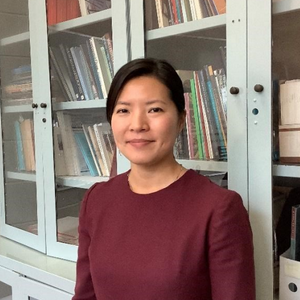
Emy Kim is an Assistant Professor of Artifacts Conservation at Queen’s University, affiliated with the Department of Art History and Art Conservation. She leads the Master of Art Conservation Program and specializes in interdisciplinary approaches to material preservation. Her research focuses on plastics conservation, metal coatings, and collaborations with artists and archaeologists. Emy holds a PhD from the University of Toronto (History of Technology), an MA from Williams College (Art History), and a BA from Princeton University (Art History and Visual Arts). Her teaching spans foundational courses in conservation history, technology, and hands-on practice (ARTC 811-813, 850-853). Research interests include innovative adhesion techniques for cellulose nitrate and integrating numismatics into conservation education. Recent work explores technological unemployment in historical context and ethical preservation of Indigenous materials like birch bark. Publications highlight technical studies (e.g., polymer adhesion, coin conservation) alongside interdisciplinary collaborations. She advocates for stronger ties between conservation science and archaeological fieldwork through pedagogical innovation. No scientific awards are listed, but her work demonstrates significant contributions to both technical conservation practice and historical scholarship.
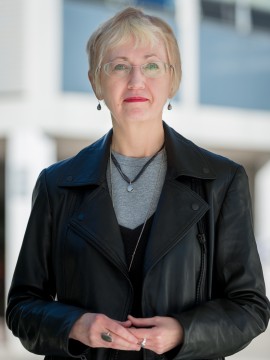
Gisèle Baxter is a Sessional Lecturer (Continuing) in the Department of English Language and Literatures at the University of British Columbia's Faculty of Arts. She has taught at UBC since 1997 after moving from Nova Scotia, specializing in literary and cultural studies across multiple periods and genres. Her research interests span a wide spectrum of literary fields including Gothic studies, Victorian literature, Modernism (particularly British and Irish), science/speculative fiction and fantasy, dystopian/post-apocalyptic narratives, children's literature, and rhetoric and composition including technical/professional communication. Baxter's scholarly work demonstrates a consistent engagement with gender studies, film adaptation, and the intersections between literature and cultural phenomena. Baxter's recent publications and conference presentations reveal a strong focus on Gothic science fiction, particularly examining gender representations in films like Blade Runner 2049 and Ex Machina. Her work often explores the Gothic heroine archetype, Bluebeard narratives, and dystopian literature, as evidenced by her co-edited volume Blast, Corrupt, Dismantle, Erase: Contemporary North American Dystopian Literature (2014) and her book chapter 'Bluebeard's Women Fight Back' (2019). Ian Fairclough Teaching Prize (2019-20 and 2002-03) SSHRC Postdoctoral Fellowship (1992-94) SSHRC Doctoral Fellowship (1989-90) Izaak Walton Killam Memorial Scholarship (1988-90) Baxter has supervised numerous undergraduate honors theses at UBC, with topics spanning Gothic literature, children's literature, science fiction, and film studies. She has also served as faculty sponsor for multiple Student Directed Seminars on topics including zombies in literature, Gothic literature, science fiction, and chick lit. Her pedagogical contributions include developing online courses and technical writing workshops, particularly for the Master of Food Science program.
Dr. Maryna Romanets is a Professor of English and Program Coordinator for Women's and Gender Studies at the University of Northern British Columbia (UNBC). She holds dual PhDs from the University of Saskatchewan and the Ukrainian National Academy of Arts and Sciences. Her expertise spans Comparative Literature, Postcolonial Studies, Gender Studies, and Gothic Studies. Dr. Romanets has held academic positions since 1978, including roles at Chernivtsi State University, University of Lethbridge, and UNBC since 2003. She has supervised over 20 graduate students and published extensively on topics such as cultural decolonization, postcolonialism, and transgressive narratives. Her research focuses on intersections of gender, sexuality, and postcolonial theory in literature and culture. Notable works include Ukrainian Erotomaniac Fictions: First Postindependence Wave (2019) and co-edited volumes like Beauty, Violence, Representation (2017). She has received SSHRC grants and was nominated for prestigious awards, including the CAS/Taylor & Francis Book Prize. Dr. Romanets teaches courses in gender studies, postcolonial literature, and cultural theory. She has served on numerous academic committees and held leadership roles in professional societies like the Canadian Association of Slavists. Her work bridges Ukrainian, Irish, and global literary traditions, emphasizing decolonial and transnational frameworks.
Jill Caskey is a Professor at the University of Toronto, holding dual appointments as Chair of the Department of Visual Studies at the Mississauga campus (UTM) and faculty in the Department of Art History at the St. George campus. Her cross-disciplinary role reflects her expertise in medieval art , architecture , and cultural exchange across the Mediterranean. PhD, Yale University MA, Yale University AB, Bryn Mawr College Her research focuses on cultural dynamics among religious communities in southern Italy and Sicily, examining portable arts , pilgrimage practices , and liturgical spaces . Caskey's work challenges traditional Eurocentric art historical narratives, advocating for a Global Middle Ages framework that highlights interconnected artistic traditions. Key publications include co-authoring the textbook Art and Architecture of the Middle Ages: Exploring a Connected World (2022) and analyzing case studies like the Angevin-era seal at Bari (2021), Salerno ivories, and Norman stucco reliefs. Her grants from the Getty Foundation , Kress Foundation , and SSHRC support fieldwork and collaborative initiatives like The Global Past Research Initiative (2023). Fellow, American Academy in Rome 2022-2024 Connaught Global Challenge Award Caskey's administrative service as Chair of Visual Studies and her contributions to academic discourse through conference presentations (e.g., 'Webs of Gold' at the 2022 Naples Field Seminar) further demonstrate her leadership in expanding medieval art historiography.
John Savarese is an Associate Professor of English at the University of Waterloo, specializing in Romantic-era literature, the relationship between literature and science, and Gothic traditions. His interdisciplinary work bridges literary studies with cognitive science, examining how Romantic writers conceptualized mind, cognition, and sociability within their historical context, with particular attention to ballad traditions and Gothic literature. Dr. Savarese completed his PhD at Rutgers University in 2012, following an MA from Rutgers and a BA from New York. Prior to joining Waterloo in 2014, he held postdoctoral fellowships at the University of Texas at Austin and the University of California, Berkeley. His research explores how Romantic poets engaged with emerging sciences of the mind, revealing connections between poetic form and cognitive processes. Dr. Savarese investigates how literary traditions like ballads and Gothic narratives served as vehicles for exploring theories of social cognition, distributed mind, and environmental relations, demonstrating literature's role in shaping conceptual frameworks that anticipated contemporary cognitive theories. UW/SSHRC Explore Grant, 2020-2022 David L. Kalstone Award, Rutgers University (English alumni award), 2019 UW/SSHRC Insight Development Grant 4A Funding, 2015-2016 Travel stipend, University of Edinburgh, 2015 UW/SSHRC Travel Grant, 2014 American Council of Learned Societies New Faculty Fellowship, 2013-2014 Postdoctoral Fellowship, University of Texas at Austin, 2012-2013 As an educator, Dr. Savarese supervises graduate students in Romantic literature, Gothic studies, and the history of science. His interdisciplinary approach extends to collaborations with Waterloo's Cognitive Science program and the History of Distributed Cognition project at the University of Edinburgh. His creative work in sound design and field recording for projects including 'Cities and Memory' and 'Gothic Listening' demonstrates his commitment to exploring literary studies through multiple sensory and technological modalities.
Chris Koenig-Woodyard is a Sessional Lecturer III at the University of Toronto Mississauga (UTM) in the Department of English and Drama. He has been teaching for 20 years, specializing in 18th-21st-century literature with a focus on genre studies, particularly Gothic and Monster Studies, Transatlantic Romanticism, Victorianism, and the interplay between literature and pop culture (e.g., Twilight , Lady Gaga, Dungeons & Dragons). Education: BA (Wilfred Laurier University), MA (University of Western Ontario), DPhil (University of Oxford). His research explores Posthumanism, Gothic literature, and pedagogical innovation. He founded the Monster Studies Lab and co-edited Transatlantic Romanticism: An Anthology and Sullen Fires Across the Atlantic . He has contributed to major anthologies like The Broadview Anthology of British Literature and published extensively on vampire demography, gothic typology, and transatlantic literary exchange. Key awards include the Undergraduate Teaching Award at the University of Toronto and multiple teaching excellence nominations. His courses span topics from Jane Eyre to Taylor Swift, reflecting his commitment to bridging historical and contemporary cultural analysis. He emphasizes critical thinking through ambiguity in Gothic literature and maintains a 'pedagogy of care' in his teaching approach. Scientific Awards: Undergraduate Teaching Award (University of Toronto) TVO’s Best Lecturer competition finalist Leadership in Faculty Teaching award (Ontario) Faculty Teaching Excellence Award (UTM) As a co-editor of the Transatlantic Romanticism anthology and a contributor to Mixed-Race Superheroes , Dr. Koenig-Woodyard’s work spans both traditional literary scholarship and modern genre analysis. His research on the Anthropocene in The Bone Clocks and gothic pedagogy demonstrates interdisciplinary engagement.
Maggie Kilgour is the Molson Professor of English Language and Literature at McGill University’s Department of English Language and Literature. Her research focuses on Early Modern British literature, particularly John Milton and William Shakespeare, alongside classical reception studies, Renaissance poetry, and Gothic fiction. She advocates strongly for the humanities’ societal value, emphasizing literature’s role in understanding human experience beyond economic metrics. Dr. Kilgour holds a Ph.D. from Yale University and a B.A. from the University of Toronto. Her work spans monographs, edited volumes, and over 25 scholarly articles, including *Milton’s Poetical Thought* (OUP, 2021), which defends literature’s relevance in contemporary society. She has held prestigious fellowships at Trinity College, Cambridge, and All Souls College, Oxford, and is a Royal Society of Canada Fellow. Her research interrogates literary traditions, challenging oppositions like ‘natural genius vs. learned craft’ between Milton and Shakespeare. Current projects include a SSHRC-funded monograph on their intertextual relationship and a new Milton edition for OUP. She also explores classical legacies in Renaissance literature, examining how figures like Virgil and Ovid shaped English poetic traditions. Teaching and advocacy are central to her career: she has won McGill’s Principal’s and Louis Dudek Awards for Excellence in Teaching and writes public essays defending poetry’s intellectual rigor. As an editorial board member for *Milton Quarterly* and *Milton Studies*, she promotes interdisciplinary scholarship while mentoring students in Milton, 17th-century literature, and classical reception.
Melissa Gniadek is an Associate Professor in the Department of English at the University of Toronto, where she also serves as Associate Director of the MA program. She teaches American literature and culture with a focus on the nineteenth century across both the University of Toronto Mississauga (UTM) and St. George campuses. Her academic journey includes positions as Assistant Professor at U of T (2015-2021) and Lecturer at Rice University (2011-2015). Her educational background reflects her transnational scholarly interests: she earned her A.B., magna cum laude in History and Literature of America from Harvard University (2002), followed by an M.A. in English from the University of Auckland, New Zealand (2005), and completed her Ph.D. and another M.A. in English at Cornell University (2011 and 2008). Gniadek's research centers on how relationships to place are negotiated through literature and historical writings, with particular expertise in American literature to 1900. Her work bridges American literature with Oceanic Studies, Australasian/Pacific literature, and settler colonial theory. She examines the intersections of maritime spaces, domestic realms, and continental American identity formation, challenging Atlantic-centric approaches to American literary studies. Her scholarship reveals how white, middle-class women writers engaged with oceanic circulations to confront gender restrictions and racial prejudice central to settler colonialism, expanding traditional archives of American literature. Her recent publications demonstrate a sophisticated engagement with temporal and spatial dimensions of American literature. The 15 most recent works show consistent focus on settler colonialism's temporalities, oceanic American studies, and the representation of space in 19th-century texts. Her scholarship moves fluidly between literary analysis, spatial theory, and historical contextualization, with increasing attention to deep time, indigenous studies, and environmental humanities. She frequently connects 19th-century American literature to contemporary concerns about place, belonging, and historical memory. Co-winner Richard Beale Davis Prize for best essay published in Early American Literature (2015) Honorable mention Norman Foerster Prize for best essay published in American Literature (2014) Guilford Prize for dissertation excellence (Cornell, 2012) Martin Sampson Teaching Award and Dean's Prize for Distinguished Teaching (Cornell, 2010) Journal of New Zealand Literature Emerging Scholar Award (2005) Thomas T. Hoopes Prize for Outstanding Senior Thesis (Harvard, 2002) Gniadek actively mentors graduate students as a member of four current PhD committees and has served on three successfully defended dissertation committees. Her research is supported by significant grants including a SSHRC Insight Grant (2022-2026) for her monograph project 'Unsettled Times: Temporalities of Settlement in Nineteenth-Century American Literature,' a University College London-University of Toronto Joint Research Grant (2019-2020), and a Connaught New Researcher Award (2016-2018). She serves as President of the Lydia Maria Child Society and participates in Jackman Humanities Institute working groups focused on 'Visual Cultures of the Circumpolar North' and 'Nineteenth-Century Time.'
Kim Snowden is an Assistant Professor of Teaching in Feminist Media Studies and Popular Culture at the Institute for Gender, Race, Sexuality, and Social Justice within UBC's Faculty of Arts. She has held this position since completing her PhD in Women's and Gender Studies from UBC in 2004 and currently serves as the Undergraduate Co-Chair and Academic Advisor for GRSJ students. Her scholarly work spans multiple disciplines with particular expertise in cultural studies, literary studies, film studies, popular culture, and fairy tale studies . Dr. Snowden teaches a diverse range of courses including social media, folk and fairy tales, vampires, science fiction and fantasy, social justice storytelling, young adult literature, and monsters. In recent years, she has developed and taught GRSJ 225 (Youth Activism and Social Justice) which explores youth movements, digital activism, fan cultures, and literature by and for youth. Dr. Snowden's publication record demonstrates consistent scholarly engagement with fairy tale studies, feminist media analysis, and cultural criticism. Her research trajectory shows an evolution from traditional literary and film analysis toward contemporary explorations of fandom cultures and digital media. Her most recent work examines the gendered, sexual, and racial politics of shipping in television fandoms like The Vampire Diaries and The 100, analyzing how fan communities create space for queer readings while also navigating problematic behaviors like harassment and entitlement. She has taught continuously at UBC since 2004 and currently teaches GRSJ 224B and C (Gender, Race, Sexuality, and Social Justice in Literature) as well as GRSJ 225 (Youth Activism and Social Justice) across multiple academic terms through 2025. Her teaching portfolio reveals a commitment to intersectional approaches that connect literary analysis with contemporary social justice issues, particularly through the lens of youth culture and digital media.
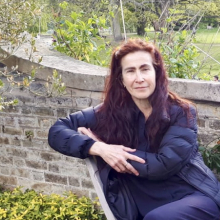
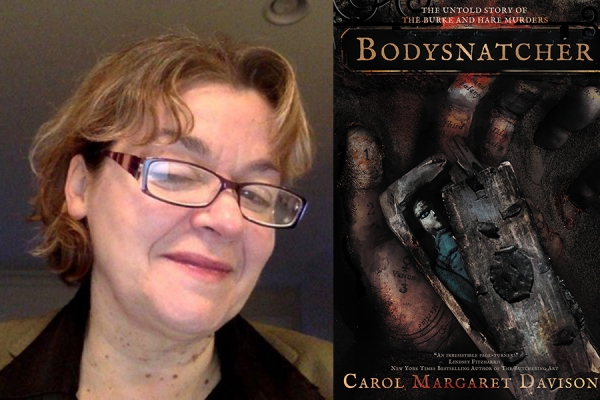
Carol Davison is a Professor of English at the University of Windsor, specializing in Gothic literature, Victorian studies, and death studies. She holds a prominent role in the Faculty of Arts, Humanities, and Social Sciences, contributing significantly to academic discourse through her research and publications. Her work focuses on exploring themes like monstrosity, cultural anxieties, and literary symbolism in Gothic traditions. Professor Davison has edited influential collections such as Gothic and Death (2017), which won the International Gothic Association’s Allan Lloyd Smith Prize in 2019, and Gothic Dreams and Nightmares (2024). She has also authored novels like Bodysnatcher (2023), inspired by historical artifacts, and actively promotes her works through international tours. Her research spans topics including vampire symbolism, Scottish Gothic, and the intersection of gender and Gothic themes. Her academic contributions include over 50 peer-reviewed articles and chapters, with a focus on Gothic literature’s evolution, cultural impact, and intersections with modernity. Awards and recognitions highlight her scholarly excellence, including the University of Windsor’s Celebration of Excellence in Research (2022). Davison’s work bridges literary analysis with broader cultural critiques, making her a leading voice in contemporary Gothic studies. Scientific Awards: International Gothic Association’s Allan Lloyd Smith Prize (2019) University of Windsor Excellence in Research Award (2022) Grants & Advising: Recipient of research grants supporting Gothic literature studies Supervised numerous graduate projects in Gothic and Victorian literature Labs/Teams: Leads the Gothic Literature Research Group at the University of Windsor Collaborates with international scholars on Gothic cultural heritage projects
Candace Iron is a Part-Time Lecturer and Program Coordinator in Liberal Studies at Humber College's College of Arts and Humanities, Toronto. She holds a PhD in Humanities from York University and is actively engaged in research on 19th-century religious architecture in Canada, with a focus on adaptive reuse across religious traditions. She is also the Vice-President of Membership of the Society for the Study of Architecture in Canada. Her research interests include Architectural History , Religious Architecture , Heritage Conservation , Adaptive Reuse of Buildings , Gothic Revival Architecture , and Aesthetic Theory . Her work explores the transformation of sacred spaces, the preservation of ecclesiastical buildings, and the cultural significance of architectural design in Canada, particularly in Ontario. Candace has published extensively on Canadian church architecture, with recent and forthcoming articles analyzing architectural lineages, design principles, and the socio-religious context of Gothic Revival buildings. Her publications demonstrate a consistent scholarly trajectory in architectural history and heritage studies, often in collaboration with experts like Malcolm Thurlby. She has presented over 30 scholarly papers at national and international conferences, contributing to academic discourse on heritage, sacred spaces, and architectural conservation. Her work bridges academic research and public engagement, as seen in her contributions to platforms like Raise the Hammer and Heritage Matters Magazine . While no specific students or scientific awards are mentioned, her role as a program coordinator and active researcher indicates leadership and mentorship within her academic community. She is involved in professional societies and contributes to the evaluation and preservation of built heritage in Ontario.
Aren Roukema is a Sessional Lecturer and Postdoctoral Researcher at the Department of English Language and Literatures , University of British Columbia , with research funded by the Social Sciences and Humanities Research Council of Canada . His work bridges literary criticism, cultural studies, and religious thought to analyze intersections of narrative and secular/post-secular discourses. Research Interests focus on marginal cultural spaces where heterodox traditions like Theosophy and Parapsychology interact with science fiction, gothic literature, and genre fiction. Key themes: Transmission of racisms and racial hierarchies Occult empiricism in Victorian and contemporary texts Cultural-historical analysis of esoteric traditions Decolonial implications in secular societies Publication Trends include interdisciplinary studies of Charles Williams ’s occult fiction, alchemy in fantasy literature, and spiritualism in science fiction. His 2018 monograph Esotericism and Narrative remains a seminal text in occult literary studies. Scientific Awards include Social Sciences and Humanities Research Council of Canada fellowship Wellcome Trust postdoctoral funding Teaching emphasizes first-year writing, critical theory, and analysis of texts from Gothic to postcolonial contexts. Courses often explore conflict, identity, and narrative’s role in cultural dialogue.
Patrick Bergeron is a full Professor in the Department of French Studies at the University of New Brunswick (Fredericton), where he has taught since 2005. He holds a joint PhD in Comparative Literature from Université Laval, Quebec and Université Paul-Valéry, Montpellier. His research focuses on Decadence and Fin de Siècle Culture, Viennese Modernism, Women’s Writing, and Genre Literature (especially dystopian and post-apocalyptic fiction). He has led major SSHRC-funded projects exploring women’s writing in France (1900-1945) and the marginalization of women in genre literature. Teaching highlights include courses on Popular Fiction, French Literature from 1800-1950, and the UNB Paris Travel Study program. His scholarly books include *Nécrophilie, un tombeau nommé désir* (2013) and *Le point doré de périr* (2013), along with edited collections like *C’était demain* (2018) and *Habiter la littérature* (2016). His work frequently intersects with science fiction studies, humor theory, and comparative literature. Key awards include the Jamie Bishop Memorial Award (2016) and a Prix de l’Académie nationale des sciences, belles lettres et arts de Bordeaux (2016). Over 70 refereed publications demonstrate his expertise in French literature’s dark aesthetics, gender studies, and modernist reinventions.