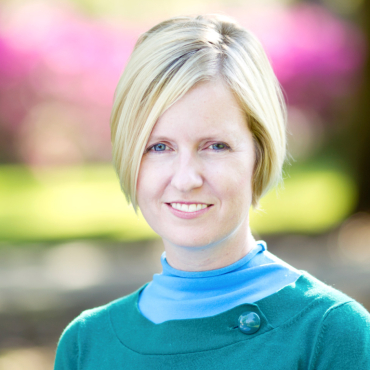
Rehema White is a Senior Lecturer at the University of St Andrews' School of Geography & Sustainable Development, actively contributing to research on sustainable development, biodiversity conflicts, and biosecurity. Her work bridges natural and social sciences through interdisciplinary knowledge production and exchange. Education: University of Aberdeen (Agriculture) University of Manitoba (MSc in Animal Science) Australian National University (PhD in Endocrinology & Reproductive Ecology) Rhodes University (Postdoctoral Fellowship) Her research focuses on integrating biodiversity conservation with development goals, multi-level natural resource governance, and sustainability in practice (e.g., golf, tree health). Recent projects include SCALE and BRIGIT , addressing sustainable forest management and plant biosecurity. Scientific Awards: No specific awards mentioned in the text. She coordinates interdisciplinary research groups and has led 12 projects funded by entities like the Scottish Funding Council and European Commission, emphasizing community-scale sustainability solutions and UN SDGs. Her team collaborates with academics, practitioners, and policymakers to address climate change, ecological transitions, and sustainable livelihoods across Scotland, Latin America, and sub-Saharan Africa.
Dr Chris Mackintosh is a Senior Lecturer at Manchester Metropolitan University specialising in sport policy analysis, physical activity promotion, and qualitative research methodologies. He serves as an External Examiner for multiple UK institutions, including Leeds Beckett University and Southampton Solent University. His research focuses on the societal impacts of sport and outdoor recreation policies, with notable contributions to the House of Lords Inquiry into the National Plan for Sport, Health and Wellbeing (2021). Mackintosh has advised international bodies like the Canadian government and UK agencies such as Sport England and DCMS on policy design and evaluation. He has secured over £950,000 in research grants, leading projects on military veteran transition programs, golf club volunteer retention, and LGBTQ+ inclusion in sport. Mackintosh currently supervises five PhD students and has completed over 120 evaluation projects. His media engagements include BBC Radio 4, Sunday Telegraph, and Big Issue North. He actively promotes community health initiatives through academic-industry collaborations and chairs the Active Communities Network charity. Key professional roles include National Advisor for England Golf and Sport and Recreation Alliance (2013–2019), plus consultancy for the Lawn Tennis Association’s EDI initiatives. His teaching emphasizes global sport policy and qualitative methods, with a focus on translating research into practical policy solutions.
Kristina Janét-Sherrill serves as a Lecturer in the Department of Public Relations & Strategic Communication Management within Texas Tech University's College of Media and Communication, while concurrently pursuing her doctorate in the same college. Her academic credentials include: B.A. in Public Relations from Texas Tech University M.A. in Mass Communication from Texas Tech University Her research specializes in science communication and environmental communication, examining persuasive techniques and source credibility mechanisms to promote pro-environmental behaviors like water conservation. She employs experimental methodologies and continuous response surveys to investigate how scientific information gains public trust and drives behavioral change regarding environmental issues. Professional experience spans graphic design, print journalism at family-owned West Texas newspapers, public relations consulting, and music venue operations. She brings practical industry insights to her teaching, which she describes as a true passion. Outside academia, she pursues travel, culinary exploration, and golf improvement.
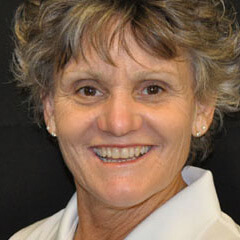
Donna White is a Professor at Keiser University College of Golf, where she serves as an LPGA and PGA Member instructor. With a distinguished career spanning decades, she brings extensive expertise in golf instruction, business management, and industry trends to her academic role. Her passion for promoting golf to players of all ages and abilities has made her a respected figure in both academic and professional golf circles. Dr. White earned her BSPE degree with certification for grades K-12 from the University of Florida in 1976, after transferring from the University of North Carolina-Greensboro. During her collegiate career, she won multiple titles including the 1976 United States Women's Amateur Championship and, while at UNCG, teamed with Candy Sibbick to win the 1973 Women's Two Person National Championship. Professor White's research and professional interests focus on the multifaceted aspects of the golf industry. Her work spans golf instruction methodologies, business management strategies for golf facilities, and the evolving role of women in the sport. She has particular expertise in golf course profitability, marketing strategies, and the economic impact of the golf industry, which she integrates into her teaching at Keiser University. Her insights into industry trends, particularly regarding the growing participation of women and the post-pandemic golf boom, have made her a sought-after commentator on golf business matters. Her recent publications reflect a comprehensive approach to golf industry analysis, covering technical aspects of the game, business operations, and social trends. White's writing consistently connects practical golf instruction with broader business and cultural contexts, demonstrating how golf facilities can adapt to changing demographics and economic conditions while maintaining quality experiences for players. LPGA Teaching & Club Professional Hall of Fame Inductee (one of only 25 inductees since 2000) 2021 LPGA Professionals Rolex Award - President's Award Winner of Three LPGA Tour Events 1976 United States Women's Amateur Championship As an instructor for the LPGA Player Development program, Professor White works with LPGA and PGA club professionals twice annually to enhance their teaching skills. She also conducts corporate golf schools across the United States and Canada, extending her expertise beyond the university setting. Her practical experience as a competitive golfer, combined with her academic knowledge, provides students with a comprehensive understanding of both the technical and business aspects of the sport. Professor White maintains strong connections with the golf industry through her work with Keiser University's College of Golf, which prepares students for careers in golf management, instruction, and operations. Her insights into course management, marketing strategies, and industry trends provide valuable guidance for students entering the golf profession.
John Callahan is a Professor at Keiser University College of Golf since 2011. He is a PGA Professional and Golf Magazine Adjunct Top 100 Instructor of America (2011), specializing in short game instruction. A former Vermont PGA Stroke Play and Match Play Champion, Callahan has taught over 30,000 lessons and operates The Callahan Golf Learning Center (since 2007). Education : Stonehill College graduate His research interests include golf biomechanics , swing analysis , and short game techniques , with a focus on tempo and balance . Articles highlight his expertise in equipment optimization , mental acuity , and practice efficiency . Key trends include technology integration (e.g., video analysis, hickory putters), physiological training , and community engagement through events like the Special Olympics and Cystic Fibrosis fundraisers . Scientific Awards : Golf Magazine Adjunct Top 100 Instructor of America (2011) Callahan organizes student training clinics , collaborates with PGA professionals like Brian Hughes and Ken Martin, and contributes to high school golf coaching programs . His full description includes extensive equipment specifications and instructional philosophy emphasizing subconscious distance perception and stress-reduction techniques in golf.
Kendall Anigian, MD, is a Clinical Assistant Professor in the Department of Orthopaedics at the University of Texas Health Science Center at San Antonio. She specializes in pediatric orthopaedics, with a focus on spinal deformity and pediatric trauma. Her clinical approach emphasizes both operative and non-operative care, prioritizing children's return to normal function and quality of life. Dr. Anigian holds degrees from Washington and Lee University (BS) and the University of Texas Health Science Center at San Antonio (MD). She completed her residency at UT Southwestern Medical Center/Parkland Hospital and a fellowship at Cincinnati Children’s Hospital. Her professional background includes extensive clinical experience in pediatrics, and she values holistic care that involves families. She joined her current institution to contribute to the community where she and her husband Paul, a San Antonio native, now reside with their first child (born July 2023). Outside of work, she enjoys traveling, golf, Pilates, and family time.
Heather Neyedli, PhD, is an Associate Professor in the School of Health and Human Performance at Dalhousie University. Her research focuses on human-technology interaction in military and sports contexts, motor learning, and decision-making processes. She leads the Cognitive and Motor Performance Lab and coaches the Dalhousie Women’s Rugby Team. Education: Postdoctoral Fellowship: Nuffield Department of Clinical Neurosciences, University of Oxford PhD: Kinesiology and Physical Education, University of Toronto M.A.Sc: Mechanical and Industrial Engineering, University of Toronto BSc (Honours): Kinesiology, Dalhousie University Research Interests: Dr. Neyedli explores how humans interact with AI, automated systems, and technology. Key areas include: Trust in automation (e.g., military systems, sports technology) Cognitive and motor performance adaptation Error correction and skill acquisition Human decision-making under uncertainty Recent Publications: Her work spans VR training efficacy, trust calibration in automation, and team performance in complex missions. Recent studies examine navigation performance with haptic feedback and the impact of automated planning aids on situation awareness. Labs/Teams: Directs the Cognitive and Motor Performance Lab, collaborating on projects involving neurorehabilitation, sports biomechanics, and human-technology interfaces.
Michael Pohl is an Associate Professor and Chair of the Exercise Science department at the University of Puget Sound since 2016. He holds a BS from the University of Bath (2002) and a PhD from the University of Leeds (2002). His research focuses on lower extremity biomechanics in normal and pathological gait, with over 24 peer-reviewed publications. He teaches courses like Biomechanics of Sports Injury and Senior Capstone . Contact: mpohl@pugetsound.edu , Weyerhaeuser 325. Research Interests: Dr. Pohl’s work examines gait biomechanics in athletic and clinical populations, including iliotibial band syndrome, hip abductor strength, and tactical performance. He employs systematic reviews, meta-analyses, and kinematic/kinetic assessments to investigate injury mechanisms and rehabilitation strategies. Recent studies explore load carriage effects on SWAT operators, gait modifications in runners, and the role of hip anatomy in movement patterns. Advising & Grants: While no advisees are listed, his research programs address biomechanical interventions for musculoskeletal health. Funding sources and grant details are not specified in the provided data. Labs/Teams: No specific labs or collaborative teams are mentioned, though his work aligns with biomechanics and sports medicine initiatives at the university.
Univ.Prof. Dr. José Luis Toca-Herrera is a distinguished Professor of Biophysics at the University of Natural Resources and Life Sciences Vienna (BOKU), where he serves as Head of the Institute of Biophysics within the Department of Natural Sciences and Sustainable Resources. With a career spanning over two decades in biophysics and nanotechnology, he has established himself as an international leader in the application of atomic force microscopy to biological systems. His research bridges physics, chemistry, and biology to investigate the mechanical properties of biological materials at micro- and nanoscales. Prof. Toca-Herrera's research focuses on colloidal and molecular interactions, mechanical properties of biological materials, cell-substrate and cell-cell interactions, and self-assembly interfacial phenomena. His work applies mathematical and physical models to life sciences, social sciences, and education. He specializes in spectroscopy, surface analytical techniques, soft matter physics, and scanning probe microscopy. His laboratory investigates how physical forces influence cellular behavior, particularly in cancer research, where mechanical properties serve as biomarkers for disease progression. His publication record demonstrates a consistent trajectory of high-impact research in biophysics, with recent work spanning cancer cell mechanics, protein-lipid interactions, environmental applications of nanotechnology, and interdisciplinary studies bridging physics with social sciences. His team regularly publishes in top journals across physics, biophysics, and materials science, with multiple cover features recognizing the significance of their work. Scientific Recognition: Multiple cover features in prestigious journals including Small, Microscopy Research and Technique, Biotechnology Journal, and Toxins Visiting professorships at AGH University of Science and Technology in Krakow, Poland Best poster awards at European Colloid and Interface Society conferences Major research grants including Marie Curie, Ramón y Cajal, and Wellcome Trust funding Prof. Toca-Herrera leads several major research projects including the Human ECM-based platform for anti-cancer drug testing (CARES), Hierarchical polymer niches for enhanced cell attachment, and Adaptations for fog and dew harvesting in cactus spines. His international collaborations span Europe, Asia, and the Americas, with presentations delivered in over 15 countries. His laboratory combines atomic force microscopy with other biophysical techniques to create a comprehensive understanding of biomaterials at multiple scales. His research group operates within BOKU's advanced facilities for biophysics and nanotechnology, contributing significantly to the university's research profile in sustainable resource management and life sciences. The team's work has important implications for cancer diagnostics, drug delivery systems, and environmental applications of nanotechnology.
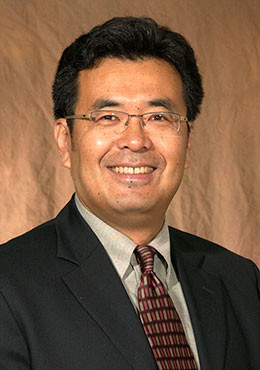
Lee D. Han is a Professor in the Department of Civil and Environmental Engineering at the University of Tennessee, Knoxville, within the College of Engineering. He is also a Collaborating Scientist at Oak Ridge National Laboratory (ORNL), reflecting his strong ties to national research initiatives. His work bridges academia and applied transportation systems, with a focus on intelligent transportation, traffic operations, and emergency management. Dr. Han earned his PhD from the University of California, Berkeley, an MS from Virginia Tech, and a BS from National Taiwan University, all in Civil & Environmental Engineering. His educational background reflects a strong foundation in transportation systems and infrastructure. His research interests are centered on traffic engineering, intelligent transportation systems (ITS), traffic flow theory, emergency evacuation, crash analysis, and transportation data systems. He has pioneered work in evacuation modeling, license plate recognition, and adaptive signal control. His research integrates simulation, data analytics, and real-world applications to improve safety and efficiency in transportation networks. The recent articles highlight a consistent focus on intelligent transportation technologies, including driver behavior analysis, incident detection, evacuation modeling, and freight systems. His work often combines empirical data with advanced computational methods such as machine learning, fuzzy logic, and optimization. There is a clear trend toward real-time, adaptive systems that enhance traffic safety and operational efficiency. TCE Teaching Fellow, 2019 L.R. Hesler Award for Excellence, 2017 Chancellor's Citation for Research, 2014 TCE Research Achievement Award, 2014 TCE Teaching Fellow, 2013 Leon & Nancy Cole Superior Teaching Award, 2012 Chair of Faculty Senate Research Council, 2011-13 TRB University Representative, 2007- Charles E. Ferris Faculty Award, 2007 COE Teaching Fellow Award, 2013 Closest to Hole prize at the 15th ASCE Scholarship Golf Tournament, 2012 Dr. Han has secured over $10 million in externally sponsored research funding, significantly reducing institutional fiscal burden by recovering much of his salary. He advises PhD students, including Stephanie Hargrove, who has received the NSF EPASI and Dwight D. Eisenhower Fellowships. He leads the Transportation Systems Laboratory (TSL) and an eFacility for data transfer, supporting collaborative research with sponsors, visiting scholars, and students. He leads the Transportation Systems Laboratory (TSL) at Perkins Hall and has established an eFacility for secure data exchange. The lab supports research in traffic modeling, simulation, and ITS applications, serving as a hub for students, faculty, and collaborators. His team engages in both theoretical and applied research, often in partnership with federal and state agencies.
Michael Aronson serves as Associate Professor and Department Head of Cinema Studies and Theatre Arts within the University of Oregon's College of Arts and Sciences. Based in PLC 101, Eugene, he teaches courses including History of Motion Pictures, Exhibition & Audiences, and Cinematography Theory & Practice, while maintaining active research in early cinema history and digital scholarship. His educational background features a BA in Film Studies from Penn State University (1990) and MA/PhD in Cultural and Critical Studies from the University of Pittsburgh (2002). Research Focus: Early and transitional cinema (particularly 1910s) Exhibition and moviegoing culture Digital humanities applications in film history Cinematography history and theory Silent film era studies Industry-exhibition community dynamics Aronson's work bridges academic film history with practical filmmaking experience, emphasizing how communities created and consumed films through collaborative projects like the Oregon Theater Project. His publication trends reveal consistent exploration of regional cinema history through digital methodologies, with recent works focusing on Pacific Northwest exhibition networks, independent theater operations, and the integration of archival research with student-led digital projects. The 2024 monograph on Blue Mouse Cinemas exemplifies his deepening analysis of regional exhibition patterns. Scientific Awards: No major scientific awards are documented in the provided materials. Advising and Grants: Aronson co-teaches CINE 335 with Librarian Elizabeth Peterson, guiding undergraduate students in producing original research for the Oregon Theater Project. This sustained collaboration represents significant investment in student research mentorship, though specific grant funding details remain unlisted in available sources. Labs and Teams: The Oregon Theater Project functions as Aronson's primary research collective—a digital humanities lab where students, faculty, and librarians collaboratively document and analyze Oregon's cinematic history through geospatial mapping, archival digitization, and public-facing digital scholarship.
Gil Feagin serves as the Director of PGA Golf Management and Lecturer at the College of Business , Coastal Carolina University . A PGA member since 2001, he brings extensive industry expertise to his academic role. Education: Coastal Carolina University graduate Professional Background: Former PGA director of golf at Bay Tree Golf Plantation Leadership Roles: Carolinas Section PGA Board of Directors (2008–2011), chaired Apprentice Education Committee and Awards and Honors Committee Feagin’s research interests focus on golf management , sports administration , and PGA education , reflecting his deep engagement with the golf industry’s business and operational frameworks.
Amanda Kulkoski is a Professor of Film and Television at the Savannah College of Art and Design (SCAD), holding this position since 2008. She specializes in film production, cinematography, and documentary filmmaking, with a focus on narrative and experimental works. Her professional experience spans over two decades, encompassing roles as a producer, director, cinematographer, and camera operator across feature films, documentaries, music videos, and television productions. She holds an M.F.A. in Film and Television from SCAD and a B.A. in Communication Arts from the University of Wisconsin–Madison. Her creative work includes the award-winning 2010 short film Shades of Truth , which received the Best Cinematography award at the 48 Hour Film Festival in Savannah. Notable projects include the 2017 feature documentary Through the Windmill (as producer/director) and the 2012 music video Stronger (director of photography). Kulkoski has contributed to major productions such as X-Men First Class (2011) and Bay Watch (2016), while maintaining technical expertise in camera operation, lighting design, and sports broadcasting (e.g., NFL Football and PGA Golf coverage). She is an active member of IATSE unions, serving as former president of IATSE 320 in Savannah. Her work bridges academic instruction with professional industry experience, emphasizing practical skills in filmmaking and media production.
Paul Walters is a Lecturer in Business Management with Sport at Salford Business School, University of Salford, where he leverages extensive industry experience to shape curriculum and mentor future business leaders in the sports and events sectors. He joined the university in 2022, returning as an alumnus with deep personal and professional ties to the institution. Research Interests: Paul's research focuses on innovative applications of immersive technologies in cultural spaces. He is currently leading work on enhancing art gallery experiences through augmented reality (AR), virtual reality (VR), and machine learning, with a case study centered on Tate Modern. His expertise bridges creative industries, event management, and digital transformation in experiential design. Publications Overview: His most notable publication is the co-authored textbook Events Management: Principles and Practice (3rd ed., 2017), a comprehensive guide used in academic and professional settings. The work reflects broad expertise in global event operations, risk management, stakeholder coordination, and sustainable practices across music festivals, international exhibitions, and sports events. Teaching & Industry Engagement: With a career spanning decades in high-profile events—including Creamfields, Parklife, the PGA Golf Tour, and the Dubai International Airshow—Paul brings real-world insights into the classroom. He has previously taught at Leeds Beckett University and held a flying faculty position at ANGELL Business School in Germany. At Salford, he plays a key role in aligning academic programs with current industry demands. Leadership & Career Highlights: A significant academic highlight includes managing an off-campus provision at the University of Greater Manchester, where he led program development and achieved outstanding student feedback and improved National Student Survey results. In industry, he cites meeting Tony Wilson—founder of Factory Records and The Hacienda—as a pivotal moment that deepened his involvement in the creative sector.
Victor Ignacio Robaina serves as a Professor in the Department of Economics and Business Management within the School of Tourism and Sustainable Economic Development at the University of Las Palmas de Gran Canaria. His academic affiliation centers on the Institute of Tourism and Sustainable Economic Development (IU TIDES), where he operates under the Branch of Knowledge Social and Legal Sciences within the Area of Knowledge Business Organization. His research focuses on sustainable tourism practices, environmental management systems in hospitality, and business organization frameworks. Key interests include Biosphere Sustainable Lifestyle certification audits, customer satisfaction analysis across tourism sectors, and quality management system implementation in service industries. His work frequently examines capital structure evolution, solvency metrics, and environmental compliance through EMAS standards in Canary Islands tourism enterprises. Professor Robaina has supervised 20 master's and undergraduate theses between 2012-2025, demonstrating consistent mentorship in tourism management and business administration. His students' research spans hotel environmental audits, shopping center user satisfaction, vacation rental customer reviews, and strategic tourism models for Gran Canaria's northern region. Notable thesis topics include sustainability certification of Bungalows Cordial Green Golf (2024), Agüimes Municipal Tourist Office audits (2023), and Puertos de Las Palmas capital structure analysis (2022). His operational framework integrates practical business management with sustainable tourism development, evidenced through repeated collaborations with Canary Islands hospitality entities including Bull Hotel Dorado Beach & Spa, EXE Las Canteras Hotel, and Cordial Mogán Playa Hotel. Current research trajectories indicate deepening focus on Biosphere certification compliance and digital platform-based customer satisfaction metrics in tourism contexts.